Knowledge Base
Property advice that actually helps
Researched, UK-specific guides for every stage of homeownership — from buying and surveys to retrofit, planning and major works.
 Buying & Moving
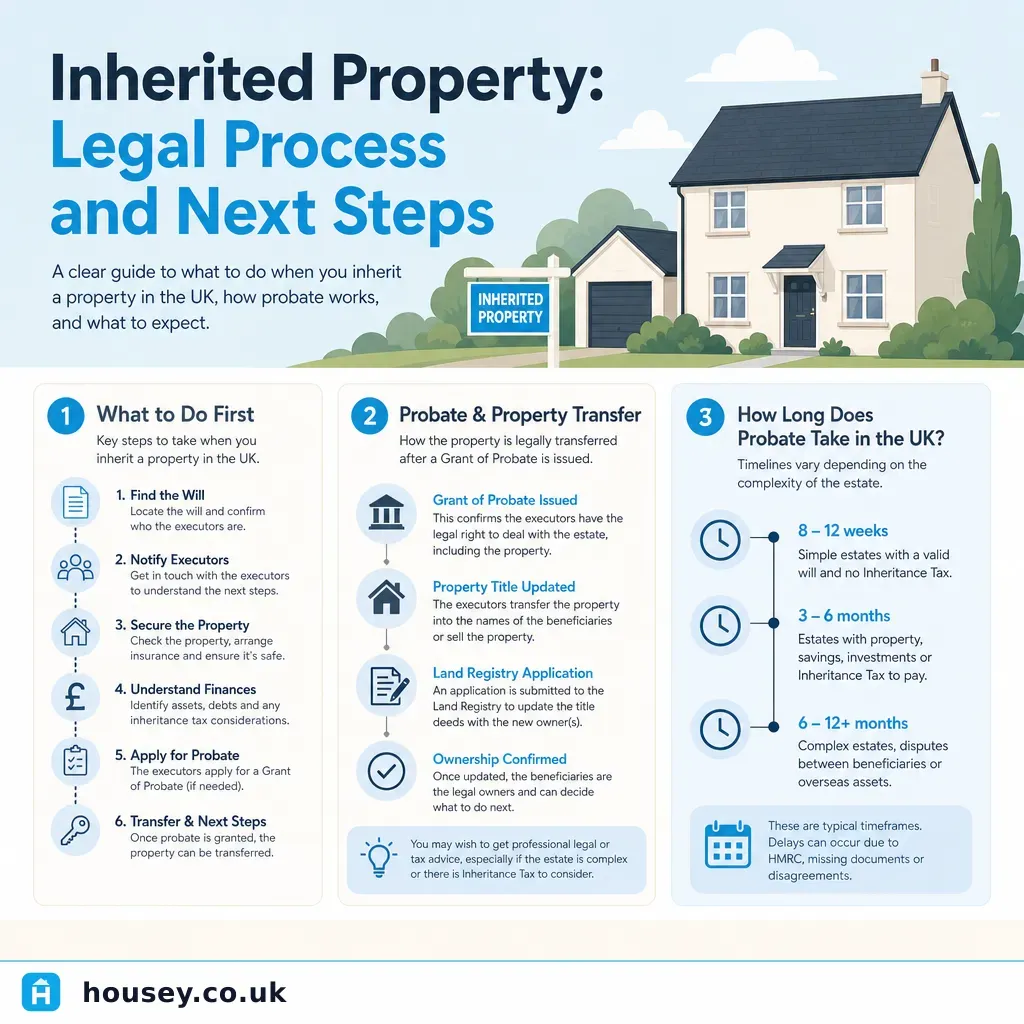
Inherited Property: Legal Process and Next Steps
When you inherit a property in the UK, the estate's executor must obtain probate — or letters of administration if there is no will — before the property can be transferred or sold. Once probate is granted, a conveyancing solicitor handles the legal transfer. Key decisions include whether to keep, let, or sell the property, and whether inheritance tax is due.
 Buying & Moving
Referral Fees in Conveyancing: Impact on Your Service Choice
Referral fees in UK conveyancing are legal but must be disclosed to you. Estate agents and mortgage brokers who recommend conveyancers often receive £100–£300 per transaction, and this cost is typically built into the conveyancer's quote. You are never obliged to use a recommended conveyancer. Always ask whether a referral fee is being paid and compare at least two independent quotes before instructing.
 Buying & Moving
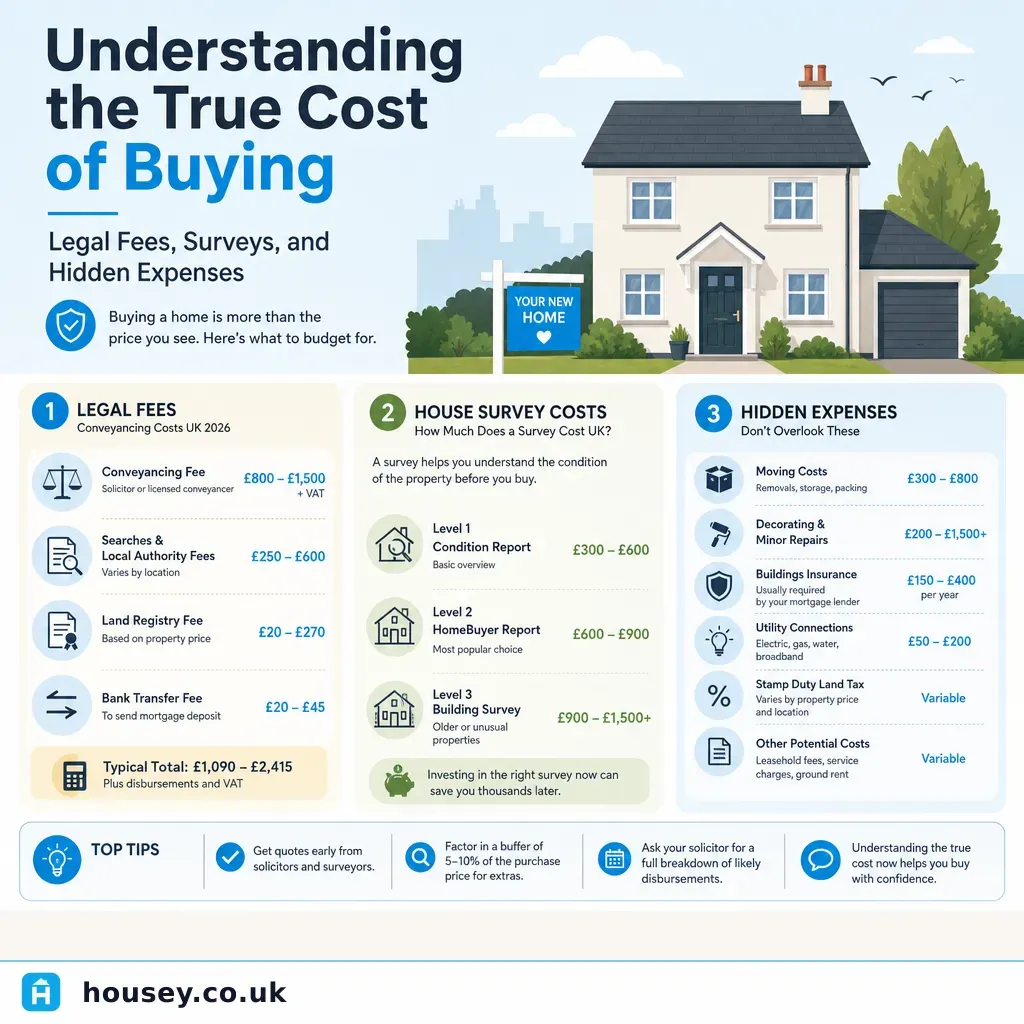
Understanding the True Cost of Buying: Legal Fees, Surveys, and Hidden Expenses
The true cost of buying a UK home typically adds 3–5% on top of the purchase price. Key costs include Stamp Duty Land Tax, solicitor fees, a RICS survey, mortgage arrangement fees, and Land Registry charges. On a £325,000 purchase, additional costs for a non-first-time buyer can reach around £11,000, depending on survey level, mortgage product, and SDLT band.
 Buying & Moving
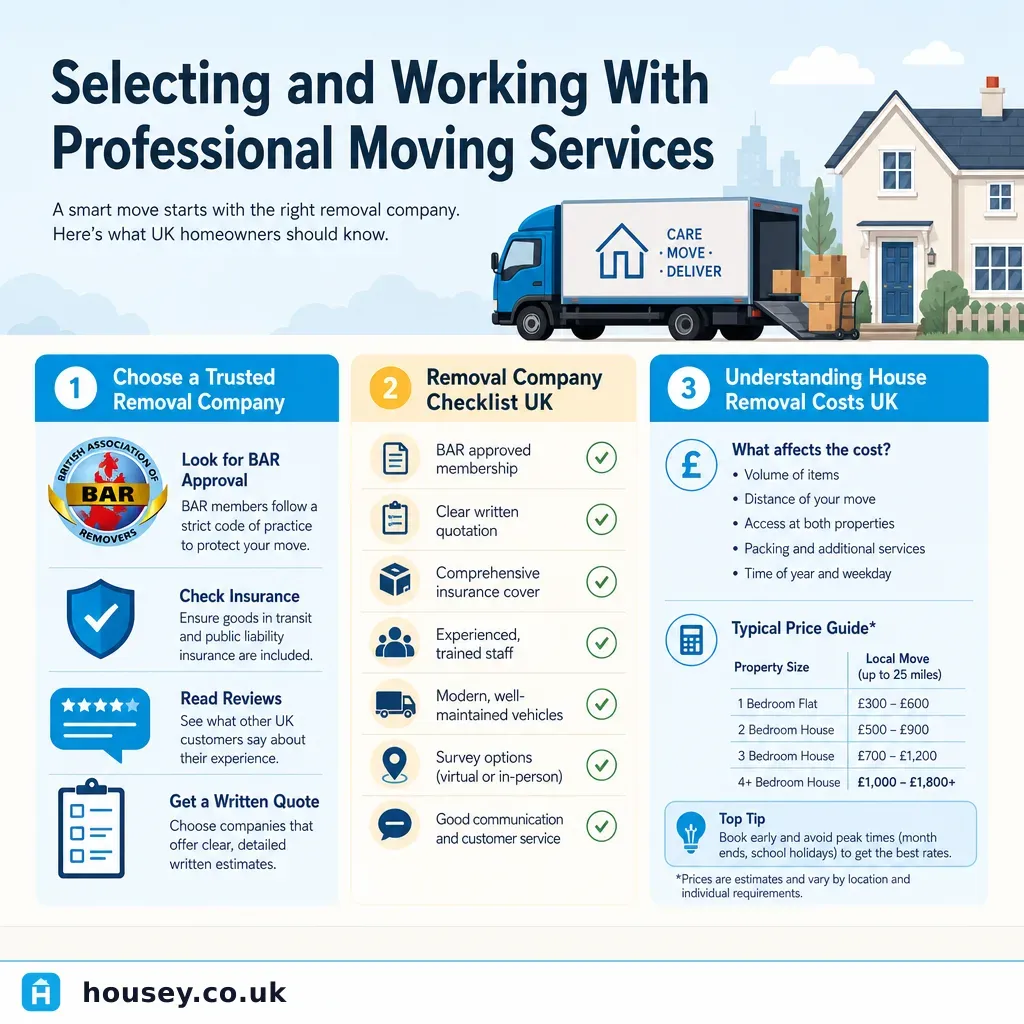
Selecting and Working With Professional Moving Services
Choose a removal company that is a British Association of Removers (BAR) member, has its own employed staff and vehicles, and provides a written quote after a survey. Get at least three quotes, check transit insurance policy limits, and brief the team on fragile or high-value items. Book 6–8 weeks ahead for Friday or end-of-month completion dates.
 Buying & Moving
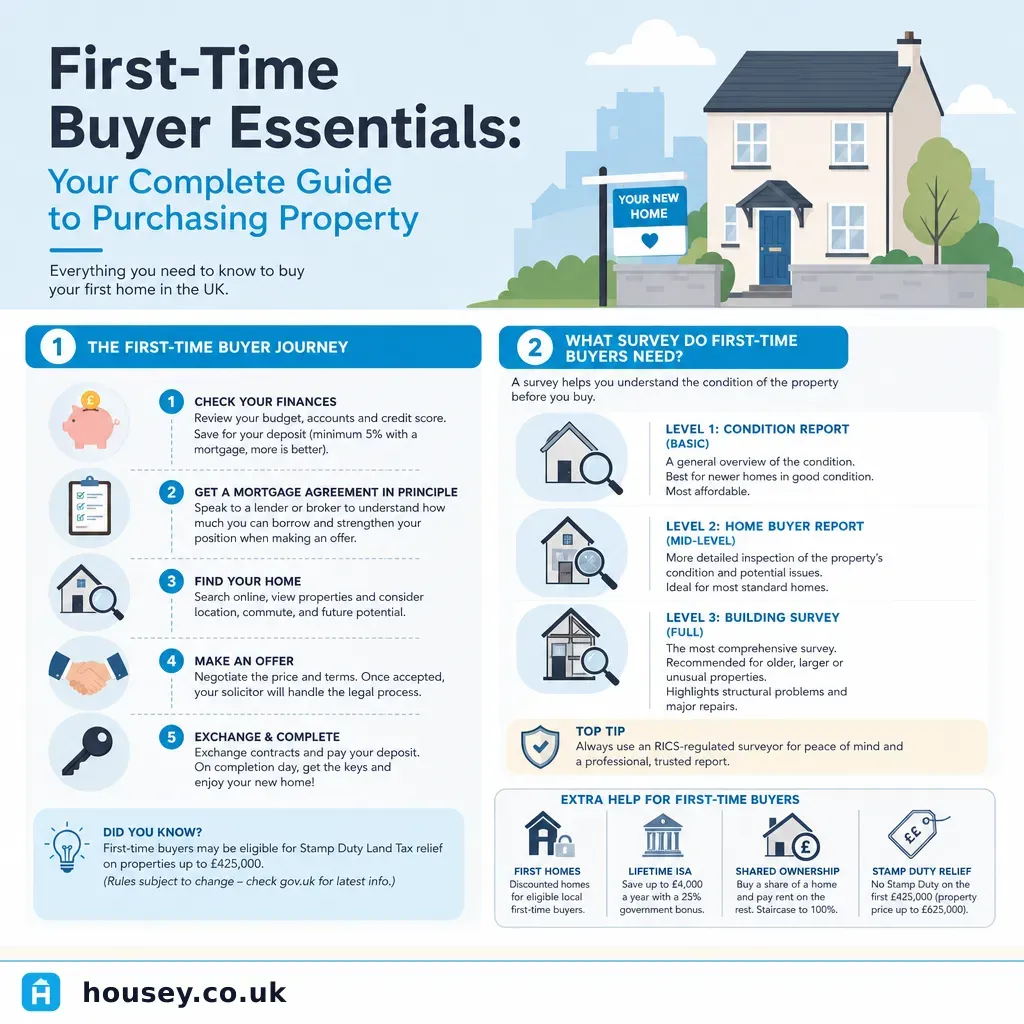
First-Time Buyer Essentials: Your Complete Guide to Purchasing Property
Buying your first UK home involves six key stages: securing a mortgage Agreement in Principle, making an offer, instructing a solicitor, commissioning an independent RICS survey, exchanging contracts (the legally binding point), and completing. In England and Wales, neither party is bound until exchange — so acting quickly and choosing the right professionals significantly reduces risk and cost.
 Buying & Moving
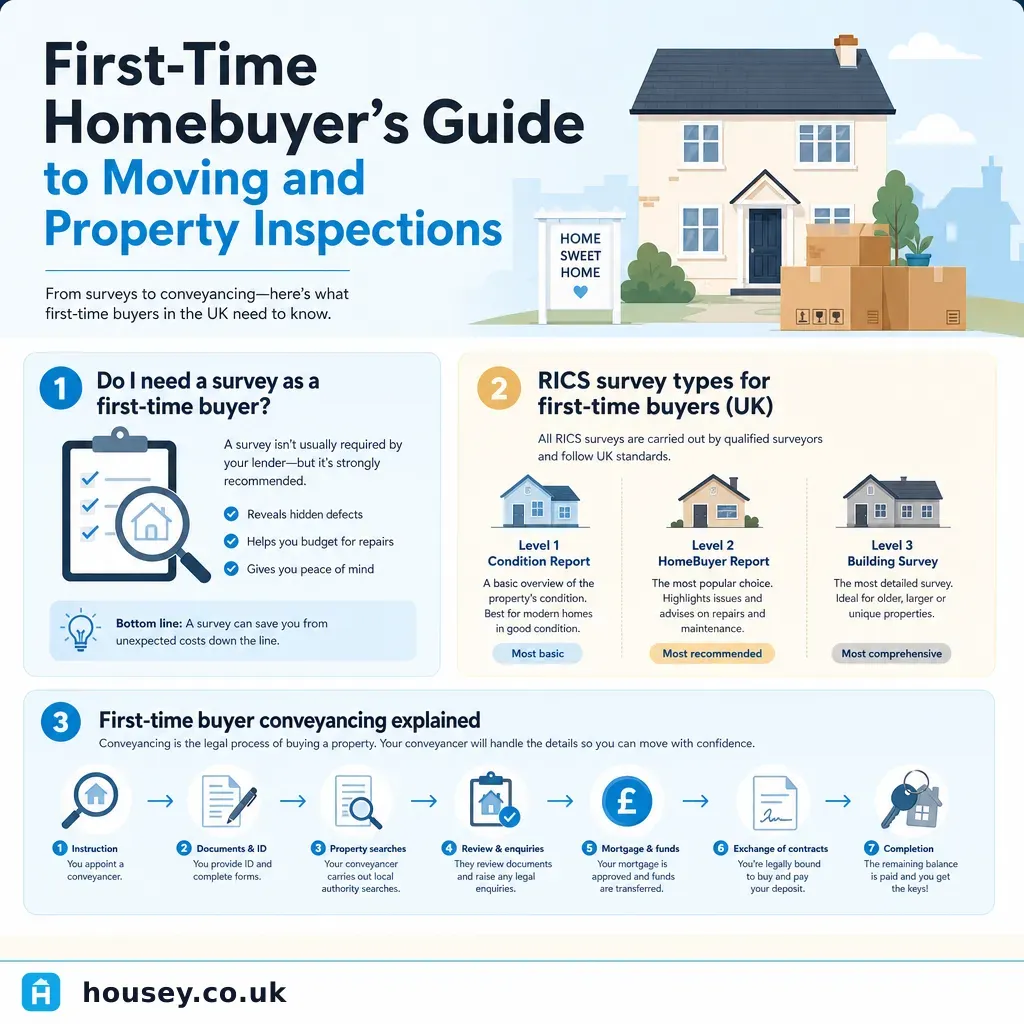
First-Time Homebuyer's Guide to Moving and Property Inspections
First-time buyers in the UK should know that a lender's mortgage valuation is not a property survey and does not protect the buyer. Instructing a RICS Home Survey and a regulated conveyancer before exchange of contracts are both essential. Booking removals around your expected completion date and knowing keys are usually released in the afternoon helps completion day run smoothly.
 Buying & Moving
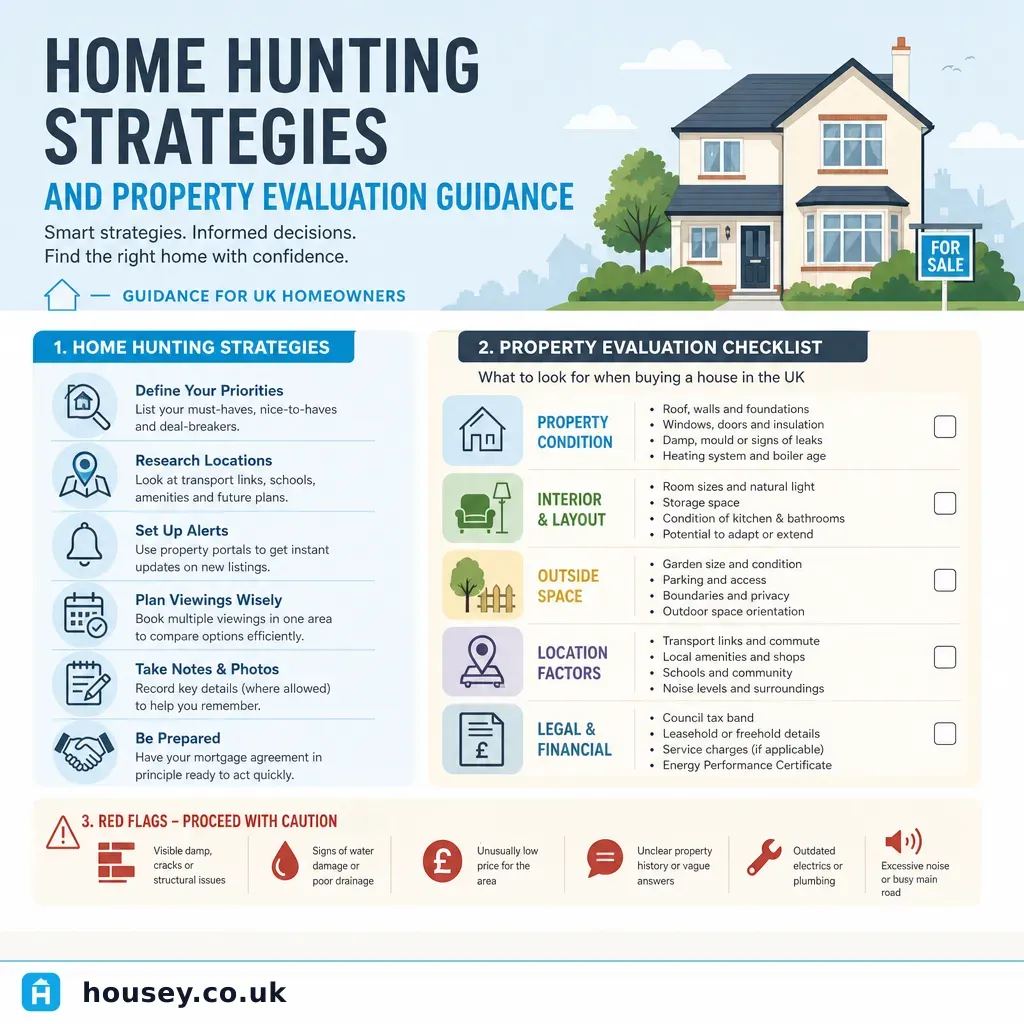
Home Hunting Strategies and Property Evaluation Guidance
To find and evaluate the right home, define your non-negotiable criteria before browsing, use HM Land Registry sold prices to check comparables, and inspect properties systematically for structural, damp, and electrical issues. Always commission a RICS Level 2 or Level 3 survey before exchange — the lender's mortgage valuation does not assess property condition for the buyer.
 Buying & Moving
Understanding How Home Improvements Affect Property Valuations
Home improvements can increase a property's market value, but the uplift depends on the type of work, local market conditions, and property type. Major projects like loft conversions and extensions often add measurable value, while cosmetic upgrades are less predictable. A RICS-registered valuer assesses the property as a whole, using comparable sales rather than individual improvements in isolation.
 Buying & Moving
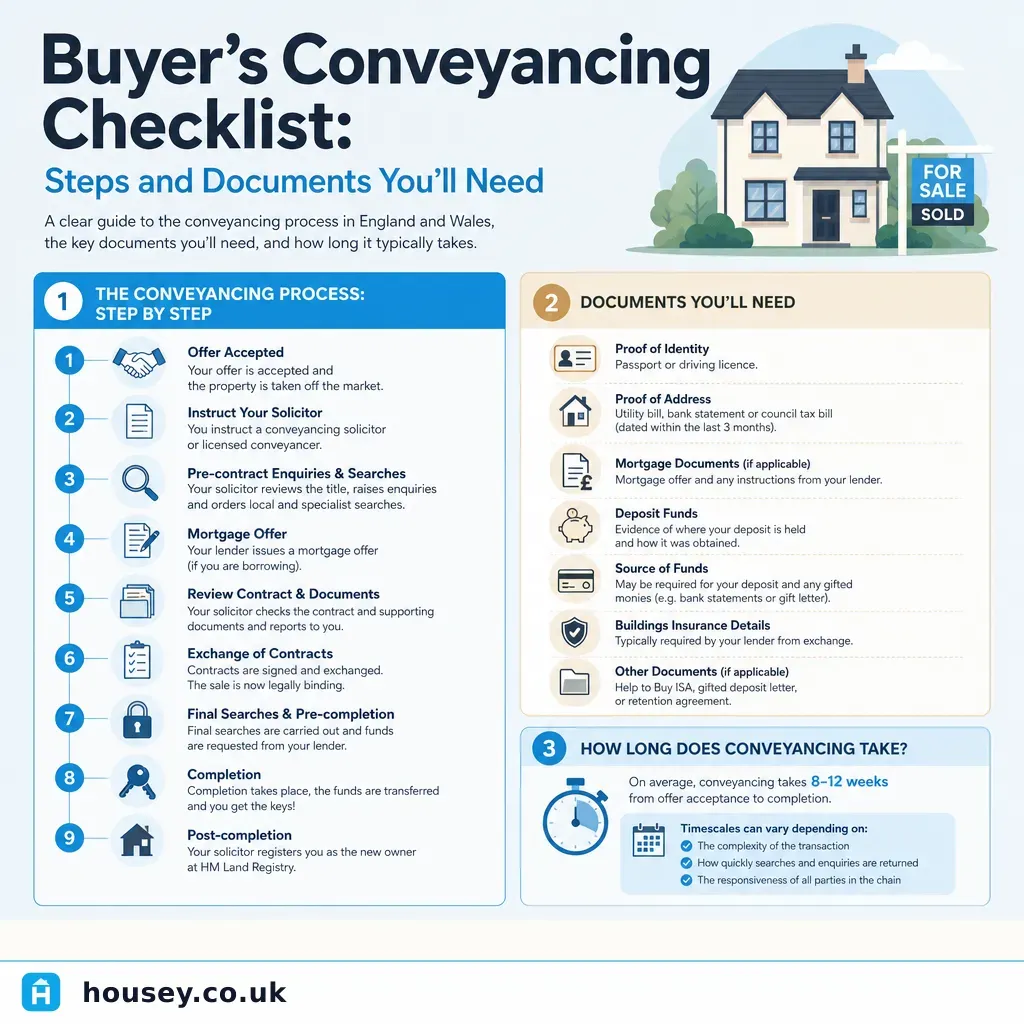
Buyer's Conveyancing Checklist: Steps and Documents You'll Need
Conveyancing for buyers in England and Wales typically takes 8–16 weeks across five stages: instruction and ID checks, searches, mortgage offer and enquiries, exchange, and completion. You will need identity documents and proof of deposit early on; your conveyancer handles searches, raises enquiries with the seller's solicitor, and registers your ownership at HM Land Registry after completion.
 Buying & Moving
Accelerating Your House Move: Strategies for Faster Property Transactions
The average time from offer to completion in England and Wales is around 12–16 weeks. The main causes of delay are slow conveyancing searches, mortgage processing, and missing documents. Instructing a solicitor before an offer is accepted, providing identity documents immediately, and responding promptly to lender requests can each remove weeks from the process.
 Buying & Moving
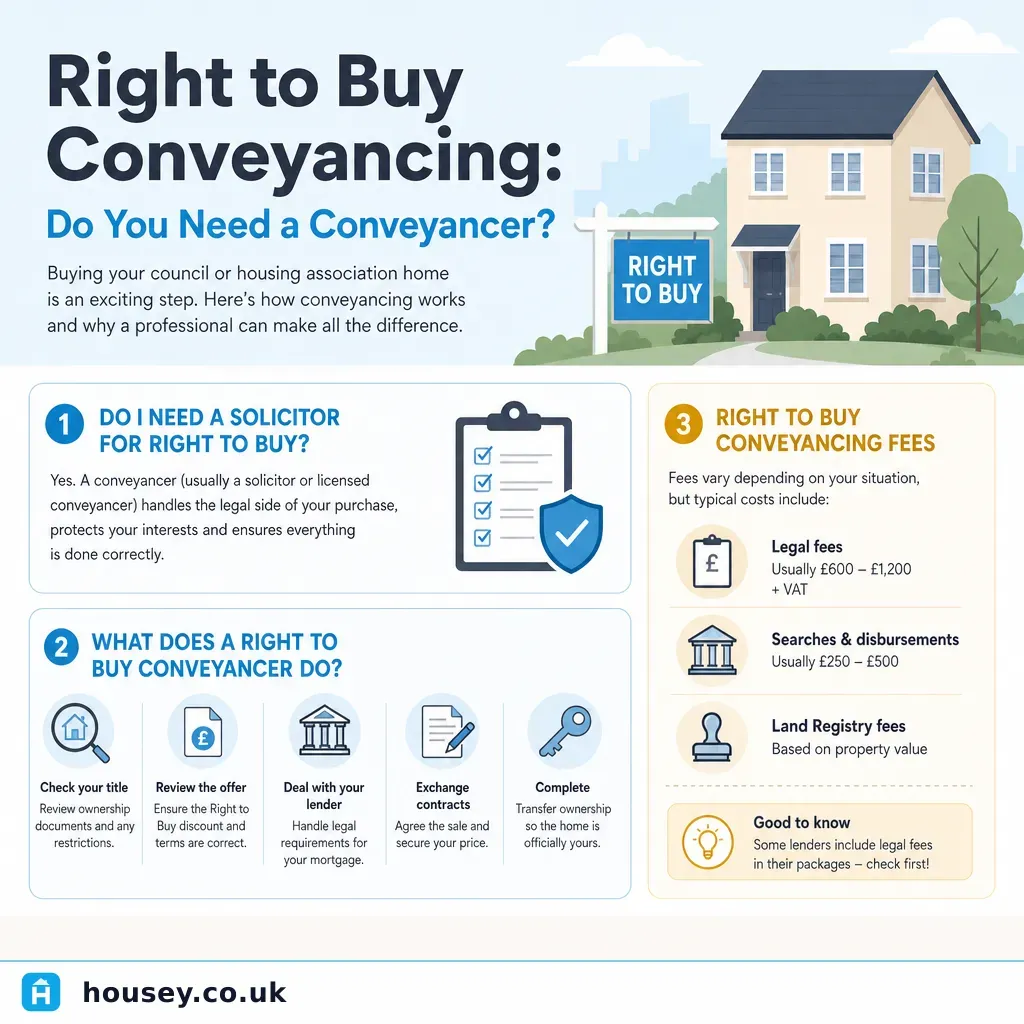
Right to Buy Conveyancing: Do You Need a Conveyancer?
You are not legally required to instruct a conveyancer for a Right to Buy purchase, but it is strongly advisable. The council will have its own solicitor, and any mortgage lender will require you to use an approved conveyancer. A qualified professional will check title, covenants, and lease terms, and ensure you understand the discount repayment rules before completion.
 Buying & Moving
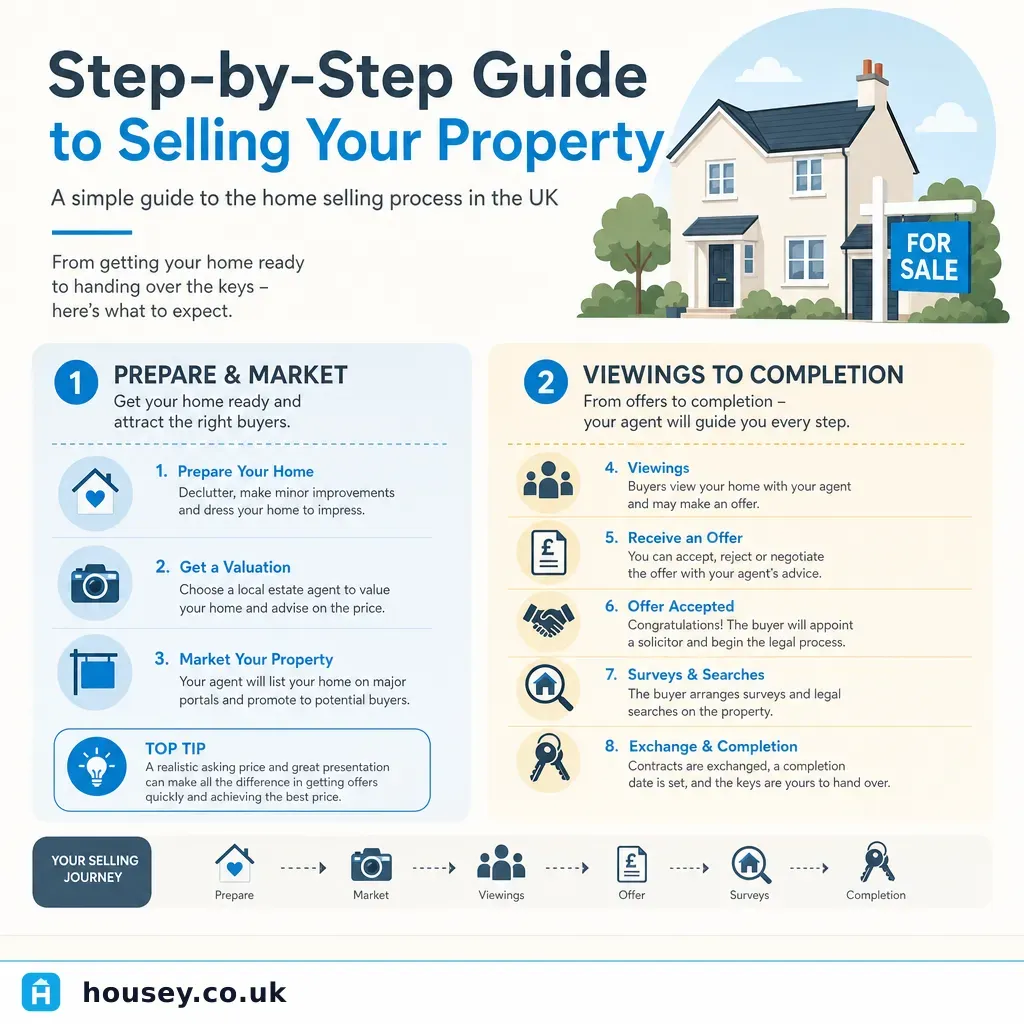
Step-by-Step Guide to Selling Your Property
Selling a property in the UK involves six main stages: getting a valuation, instructing an estate agent, preparing legal documents with a conveyancer, accepting an offer, exchange of contracts, and completion. The full process typically takes 3–6 months, though the timeline varies by chain complexity, mortgage requirements, and local market conditions.