Knowledge Base
Property advice that actually helps
Researched, UK-specific guides for every stage of homeownership — from buying and surveys to retrofit, planning and major works.
 Buying & Moving
How to Buy Property at Auction: Valuations, Surveys, and Legal Pack Essentials
Buying at auction means contracts exchange the moment the hammer falls — there is no cooling-off period. You must obtain a RICS valuation, a building survey, and a solicitor's review of the legal pack before bidding. A 10% deposit is payable on the day, with completion usually required within 28 days. Skipping this preparation carries serious financial and legal risk.
 Buying & Moving
How to Facilitate a Successful House Move: Steps to Take
Start planning your move at least 8 weeks before completion day. Book a removal firm early, notify key organisations — DVLA, HMRC, utility providers, and your bank — in the weeks before, and prepare a room-by-room packing plan. On the day, take meter readings, check the property condition, and keep essential documents and keys to hand throughout.
 Buying & Moving
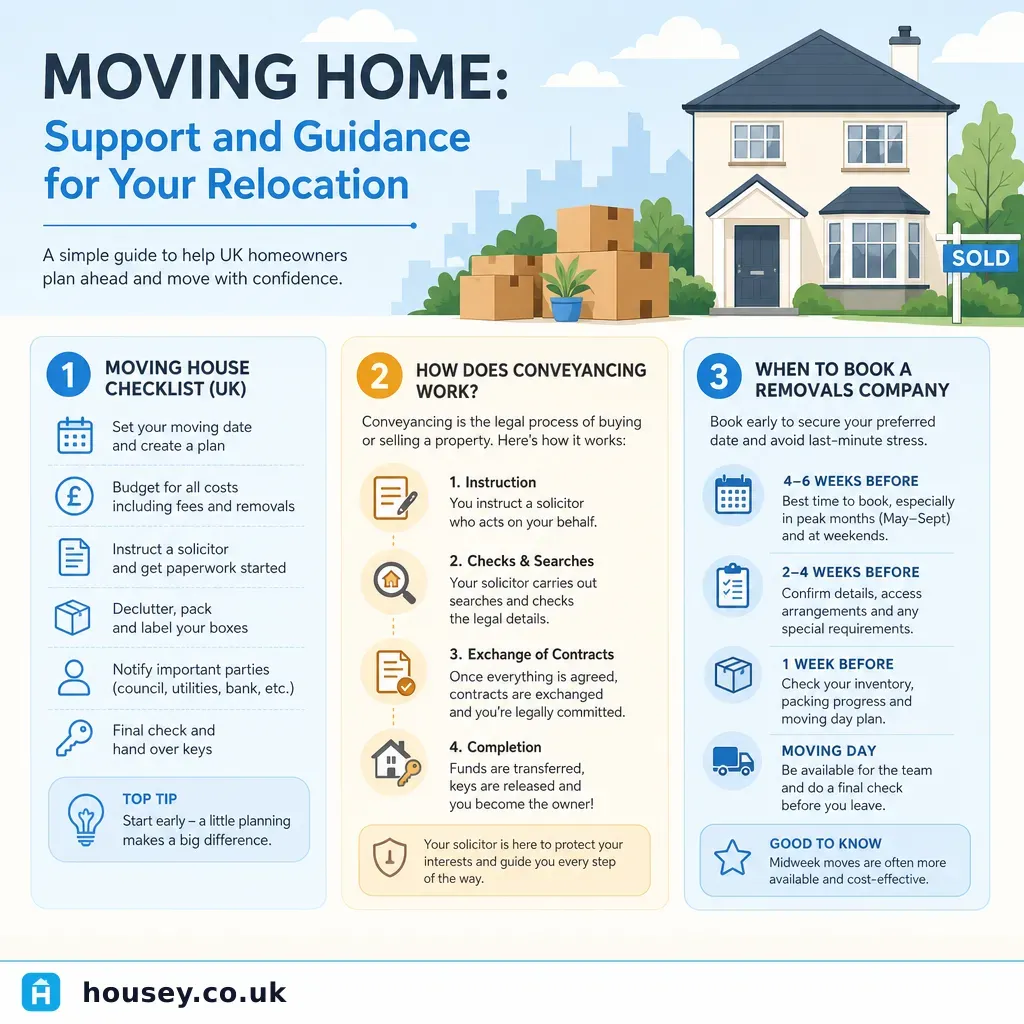
Moving Home: Support and Guidance for Your Relocation
Moving home involves coordinating conveyancing, removals, and logistics across 8–16 weeks. Instruct a solicitor or licensed conveyancer as soon as your offer is accepted, book a removals company early, and prepare a completion-day checklist covering meter readings, keys, and address changes.
 Buying & Moving
What Property Covenants Are and How They Affect Your Home
A property covenant is a legally binding promise attached to land rather than to a specific owner, recorded in the title deeds and registered at HM Land Registry. Restrictive covenants prevent certain uses or works; positive covenants require maintenance or contribution. Once imposed, covenants bind every future owner and can affect planning, development, and the resale of your home.
 Buying & Moving
Small-Load Removals: Services and Providers for Flexible Moves
Small-load removal services in the UK include man-and-van hire, groupage (shared-load) removals, and small specialist removal companies. The right choice depends on volume, distance, timescale, and budget. For single-room or studio flat moves over short distances, a man-and-van is usually the most cost-effective option; groupage suits long-distance moves with small volumes. Always verify goods-in-transit insurance limits before booking.
 Buying & Moving
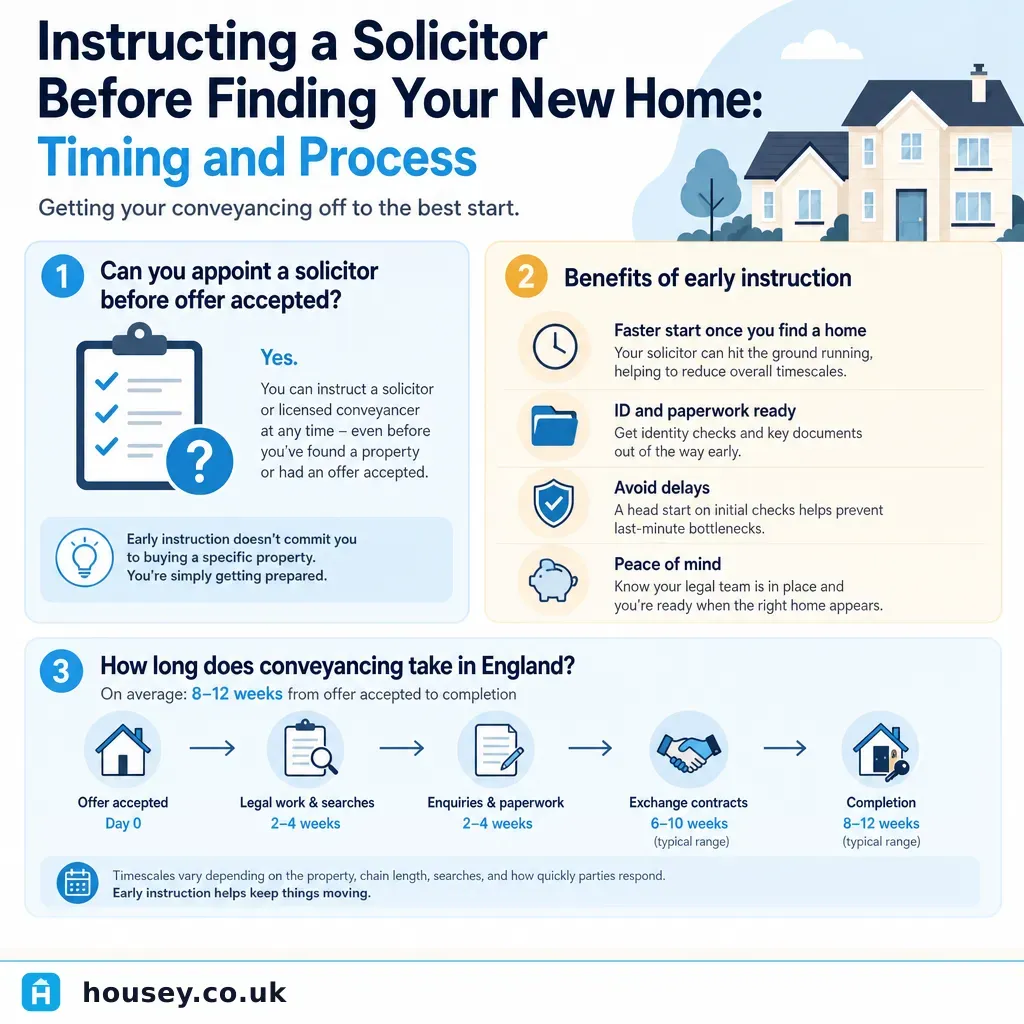
Instructing a Solicitor Before Finding Your New Home: Timing and Process
You can instruct a solicitor or licensed conveyancer before you find a property. Most firms will complete anti-money laundering identity checks and initial onboarding in advance, saving one to two weeks at the start of a transaction. Early instruction is especially useful in competitive markets or for buyers with complex funding arrangements who want to be ready to move quickly once an offer is accepted.
 Buying & Moving
Avoiding Hidden Costs in Removals: What to Watch For
UK removal quotes often exclude packing materials, dismantling fees, parking surcharges, waiting time charges, and VAT from headline prices. The gap between the initial quote and the final invoice is most often explained by these items not being addressed in writing before moving day. Comparing quotes on a consistent, itemised basis — and checking BAR membership — significantly reduces the risk of unwelcome surprises.
 Buying & Moving
Professional House Clearance Services for Your Home
A professional house clearance firm removes all or part of a property's contents and disposes of them at licensed facilities. Always verify the company holds an Environment Agency waste carrier registration, request a waste transfer note, and confirm their approach to recycling and charitable donation before you book.
 Buying & Moving
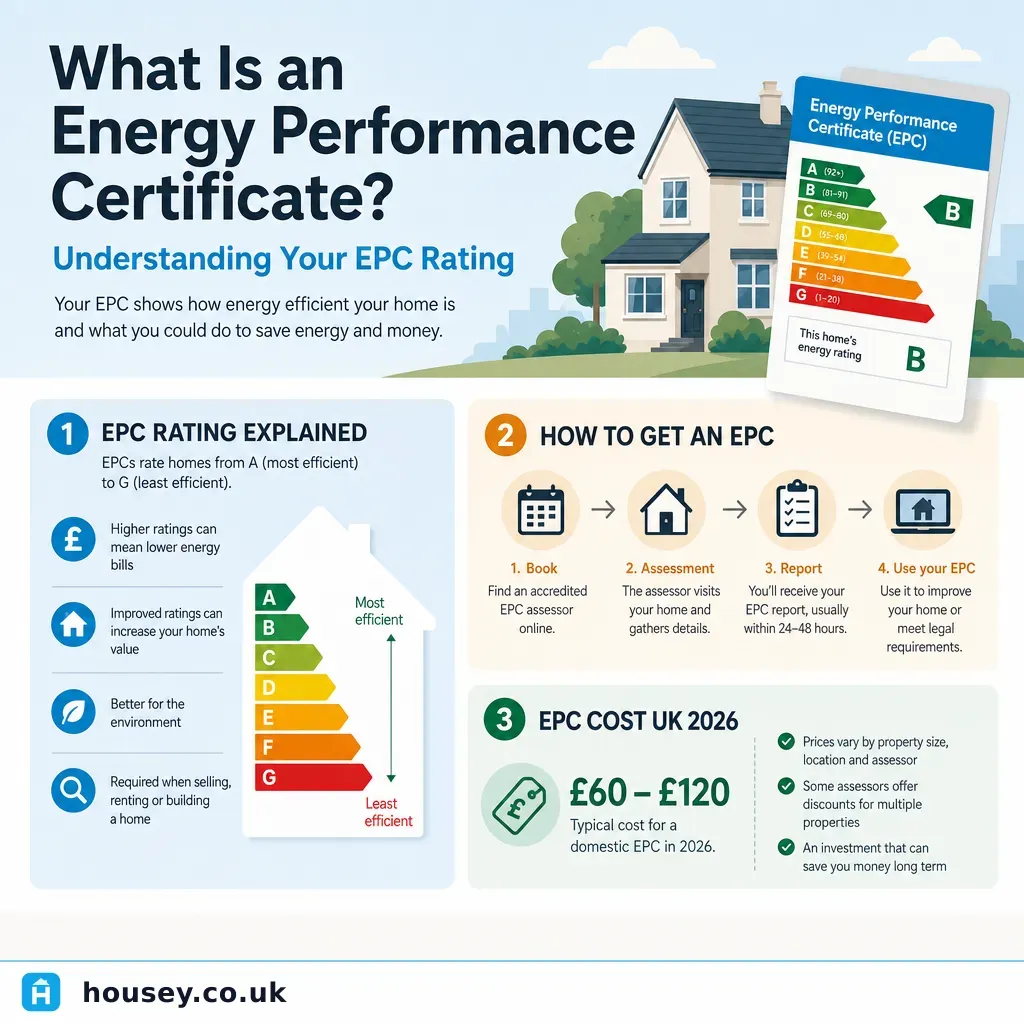
What Is an Energy Performance Certificate: Understanding Your EPC Rating
An Energy Performance Certificate (EPC) rates a property's energy efficiency from A (most efficient) to G (least efficient) using a 1–100 SAP score. Required by law before selling or letting a home in England and Wales, EPCs are issued by accredited Domestic Energy Assessors, are valid for 10 years, and are lodged on a publicly searchable national register at GOV.UK.
 Buying & Moving
What to Look for When Viewing New Build Properties
Before completing on a new build, check every door, window, socket, and tap in person and look for cracks, damp patches, and missing fittings. Most new builds contain snags — defects ranging from cosmetic to regulatory. Booking a professional snagging survey before legal completion gives you a formal report to submit to the developer.
 Buying & Moving
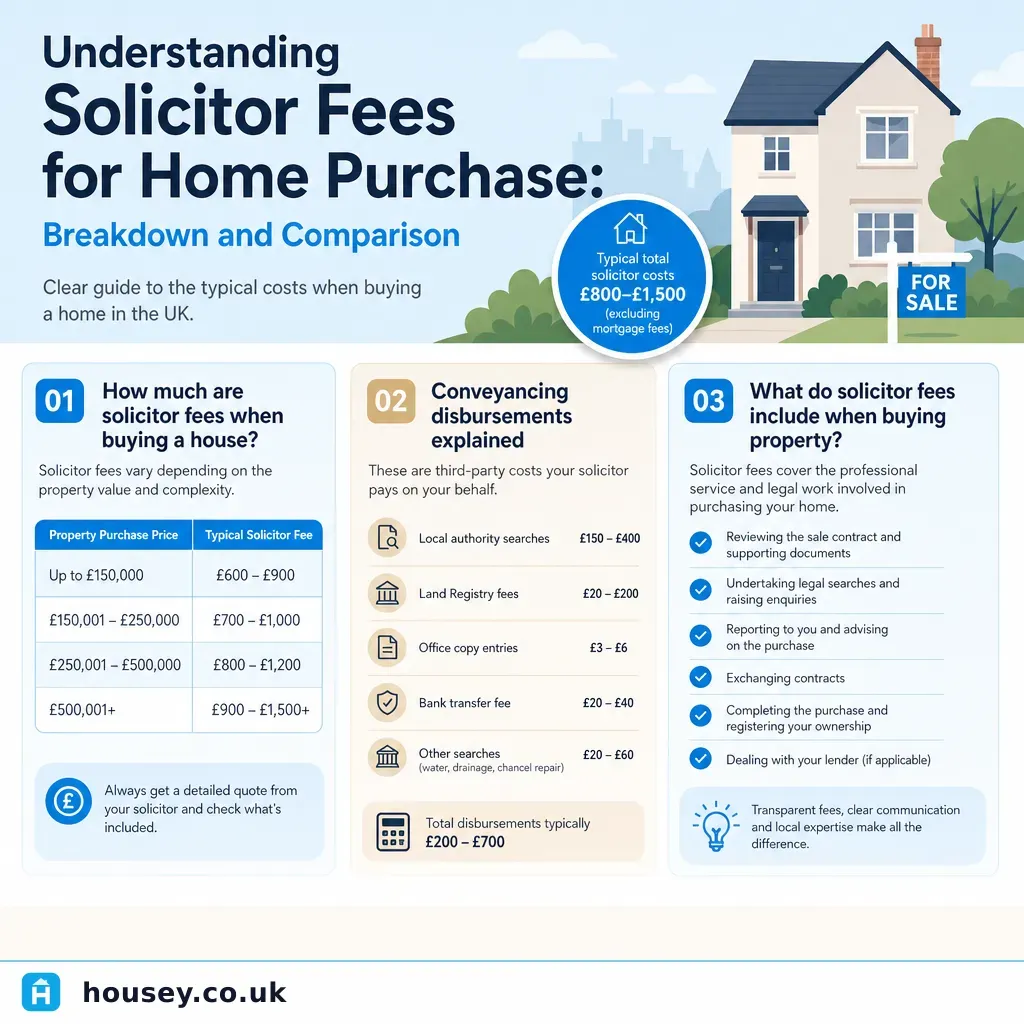
Understanding Solicitor Fees for Home Purchase: Breakdown and Comparison
Solicitor fees for buying a house in England and Wales have two parts: the professional legal fee, typically £850–£1,500 plus VAT for a standard freehold purchase, and disbursements — third-party costs such as search fees, Land Registry registration, and an electronic transfer charge. Stamp Duty Land Tax is a separate tax liability payable to HMRC, not a legal fee, and is listed separately on your completion statement.
 Buying & Moving
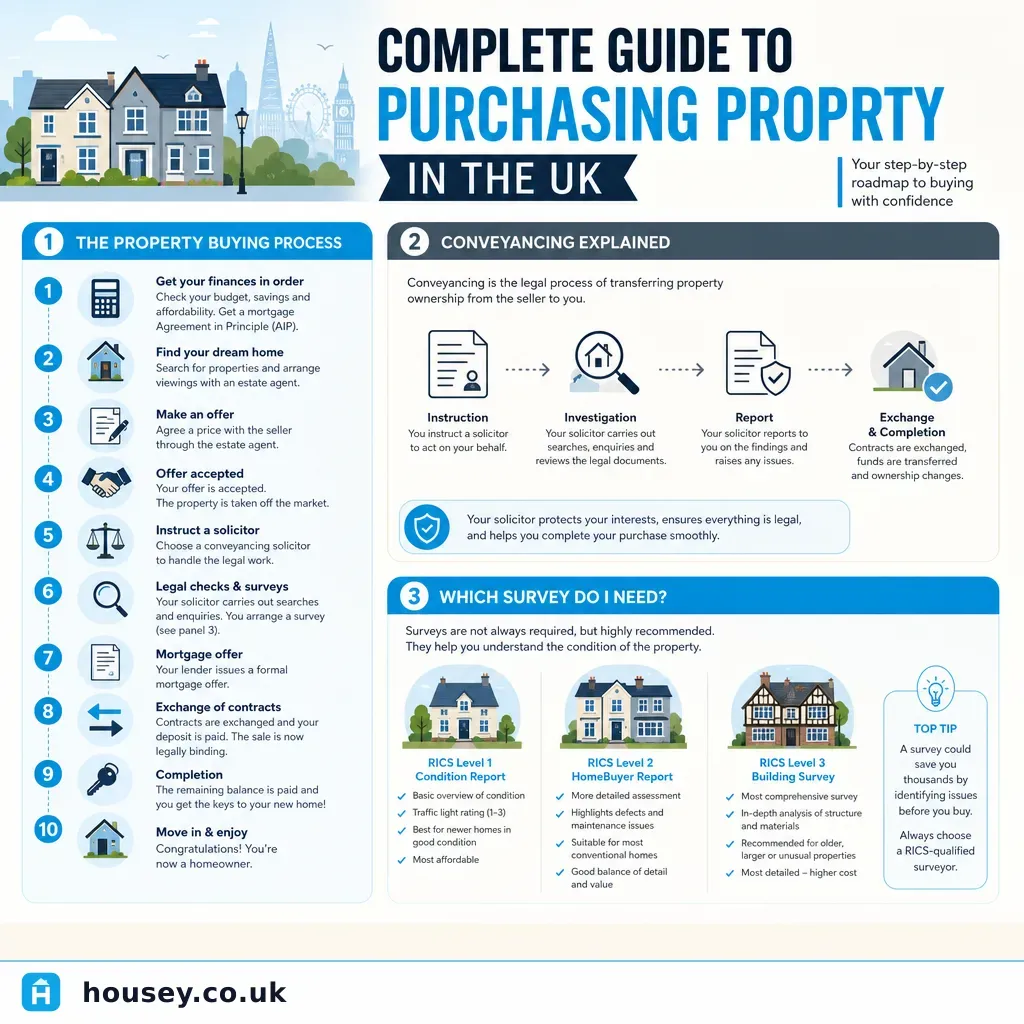
Complete Guide to Purchasing Property in the UK
Buying property in England and Wales typically takes 12 to 16 weeks from offer acceptance to completion. The process involves instructing a conveyancer, commissioning an independent survey, applying for a mortgage, and exchanging contracts before completion. Contracts are not legally binding until exchange, and a lender's valuation does not protect the buyer — always commission your own RICS survey.