Knowledge Base
Property advice that actually helps
Researched, UK-specific guides for every stage of homeownership — from buying and surveys to retrofit, planning and major works.
 Buying & Moving
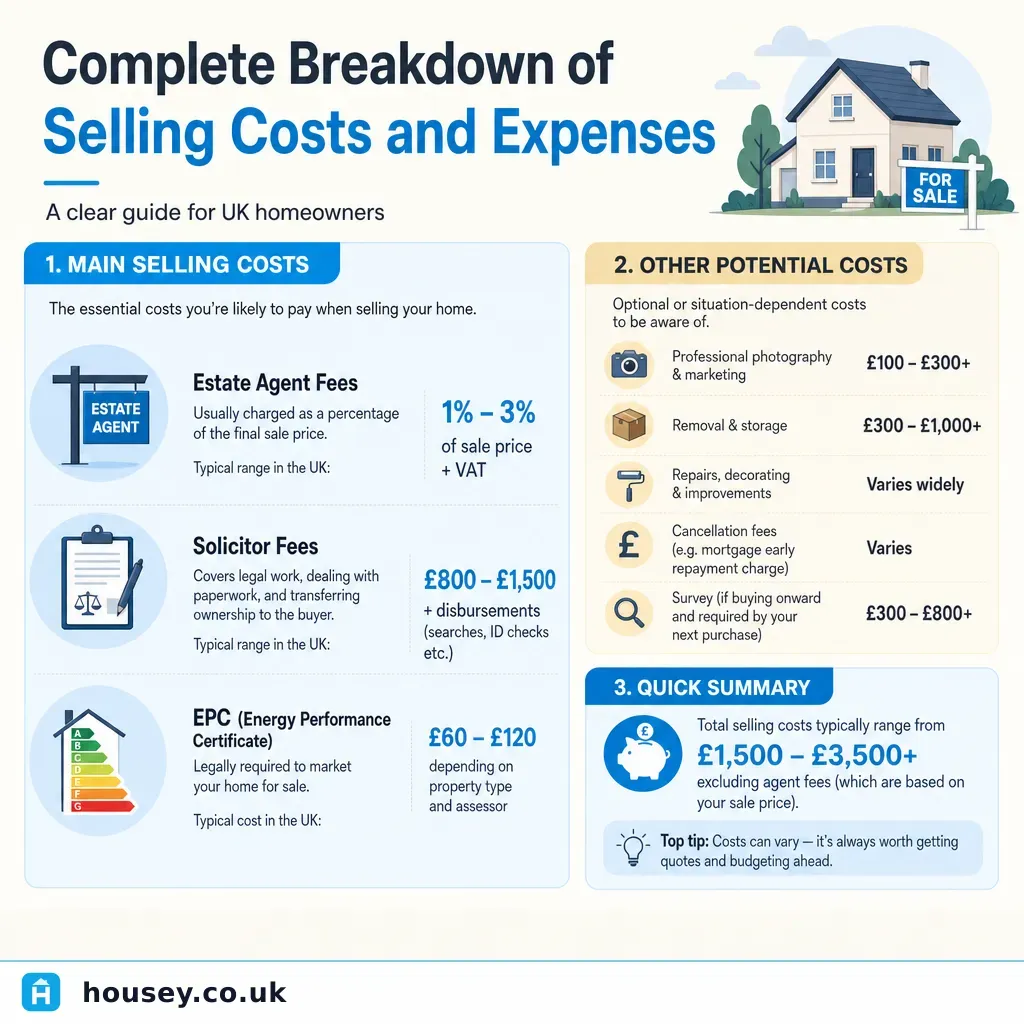
Complete Breakdown of Selling Costs and Expenses
Selling a house in England typically costs 3–5% of the sale price in total fees. Expect to pay 1–3% plus VAT in estate agency fees, £800–£1,800 for a solicitor, and around £60–£120 for an EPC if one is needed. Removal costs and Capital Gains Tax may apply on top, depending on your circumstances.
 Buying & Moving
Property Conveyancer Licensing: Professional Qualifications and Regulation
In England and Wales, conveyancing can only be carried out by authorised persons. Licensed conveyancers are regulated by the Council for Licensed Conveyancers (CLC), solicitor-conveyancers by the Solicitors Regulation Authority (SRA), and Chartered Legal Executives by CILEx Regulation. All must hold professional indemnity insurance and be listed on a public register before you instruct them.
 Buying & Moving
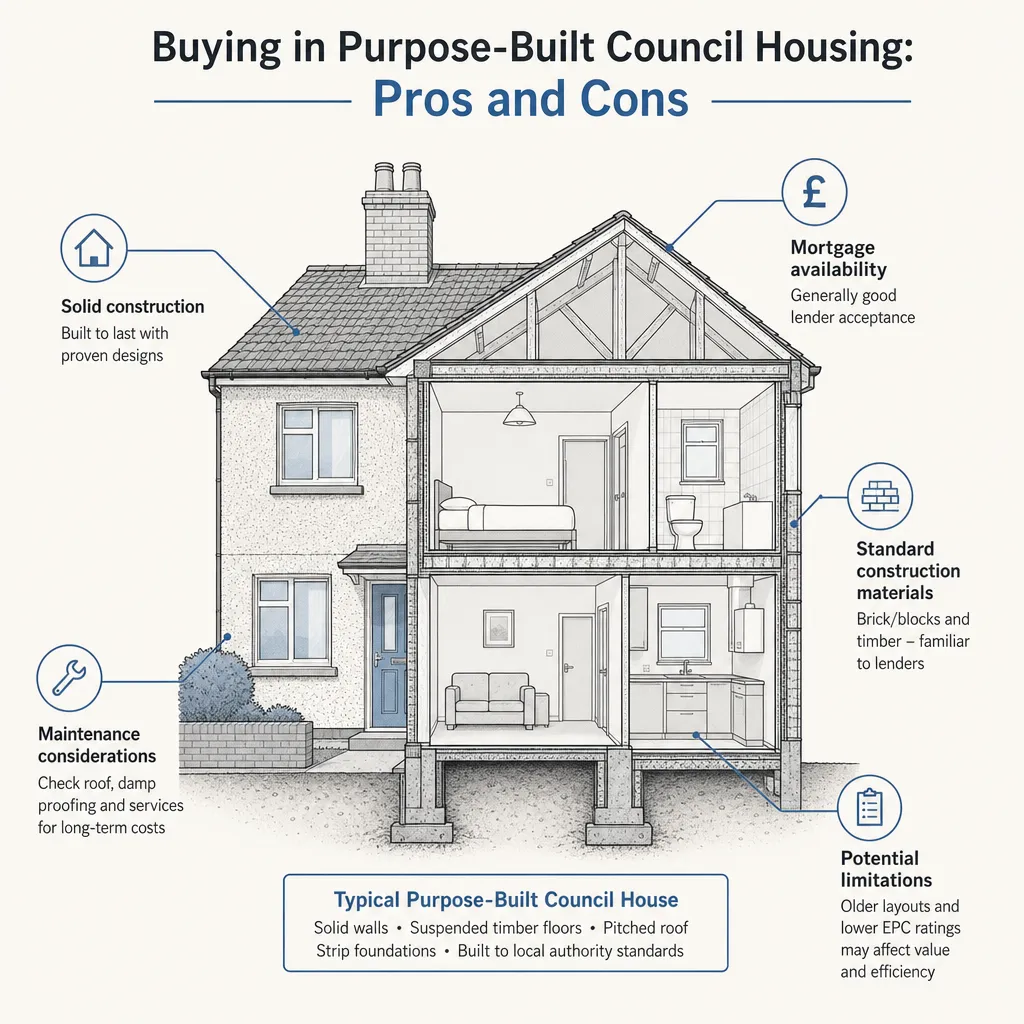
Buying in Purpose-Built Council Housing: Pros and Cons
Purpose-built council housing — typically 1950s–1980s blocks, maisonettes, or estate houses — can offer good value and generous room sizes, but buyers should check construction type before applying for a mortgage. Many lenders decline non-standard builds such as concrete panel or steel-frame properties. Restrictive covenants, leasehold complications, and service charges also require careful legal review before exchanging contracts.
 Buying & Moving
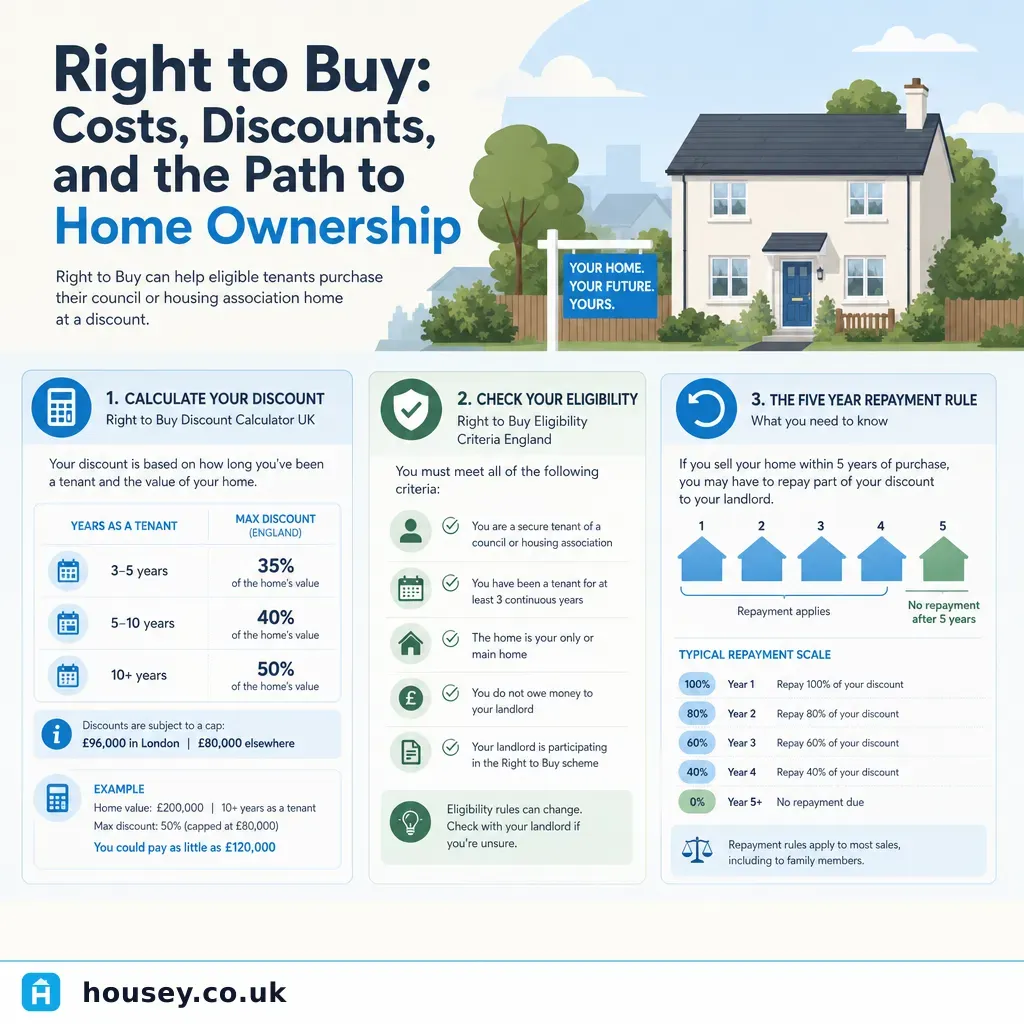
Right to Buy: Costs, Discounts, and the Path to Home Ownership
Right to Buy lets eligible council tenants in England buy their home at a government-funded discount — between 35% and 70% of its value, depending on tenancy length and property type. You will still need a mortgage, legal fees, and an independent survey. The maximum cash discount is currently £96,010 outside London and £127,940 in London.
 Buying & Moving
Essential Actions for New Homeowners in Their First Year
In your first year as a UK homeowner, prioritise safety checks covering gas, electrics, and smoke and CO alarms, confirm your buildings insurance reflects the correct rebuild value, and track down any missing completion certificates for previous works. Getting to know your property across all four seasons helps you catch maintenance issues early and avoid larger repair bills later.
 Buying & Moving
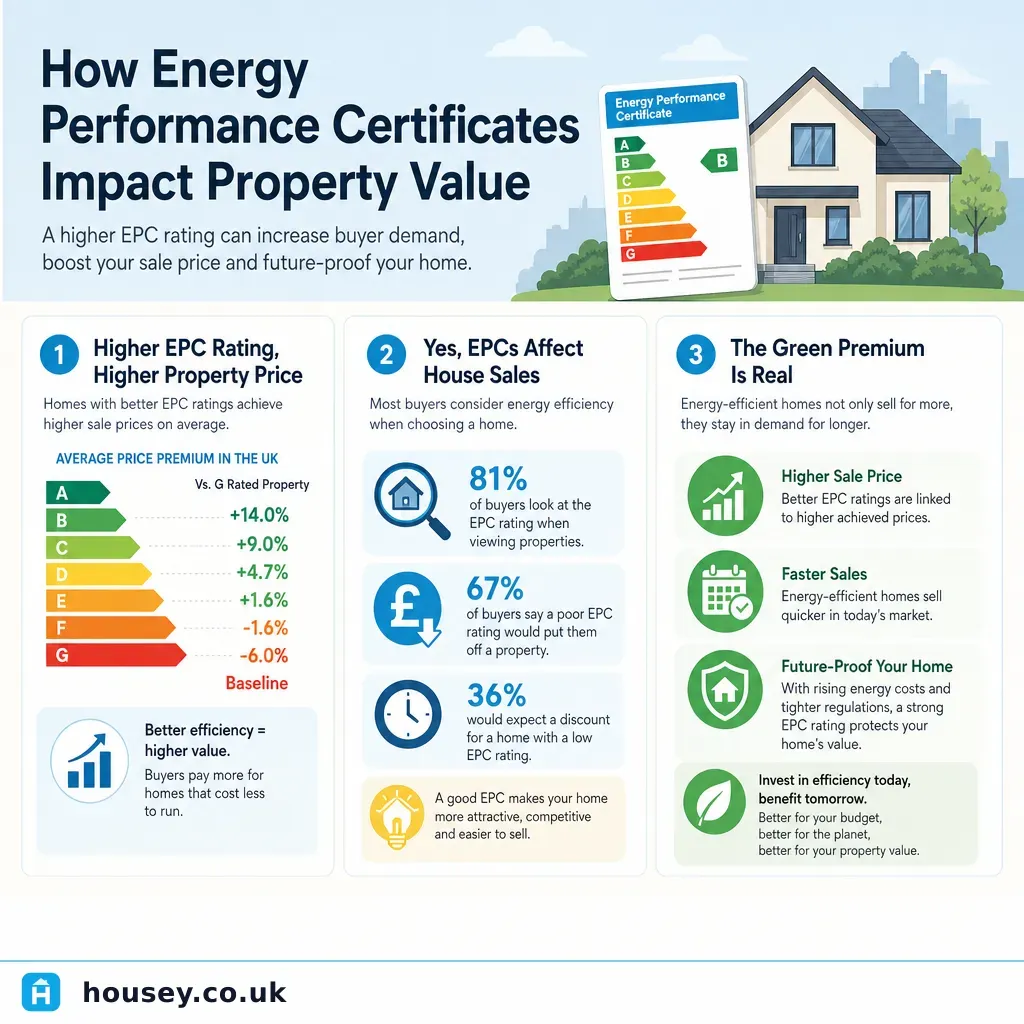
How Energy Performance Certificates Impact Property Value
A higher EPC rating can add measurable value to a UK property through a 'green premium' on open market sales, preferential green mortgage rates, and stronger buyer confidence. An EPC F or G can deter buyers, justify price reductions, and prevent a residential property from being legally let in England and Wales without a registered exemption.
 Buying & Moving
Managing Property Relocation in Major Urban Centres
Urban house moves require planning beyond a standard removal, particularly around vehicle emission zone compliance, parking bay suspensions, and lift access in purpose-built flats. In London, a parking suspension typically needs two to three weeks' notice with your borough council, and the Congestion Charge and ULEZ daily charges are often not included in removals quotes — always confirm in writing before booking.
 Buying & Moving
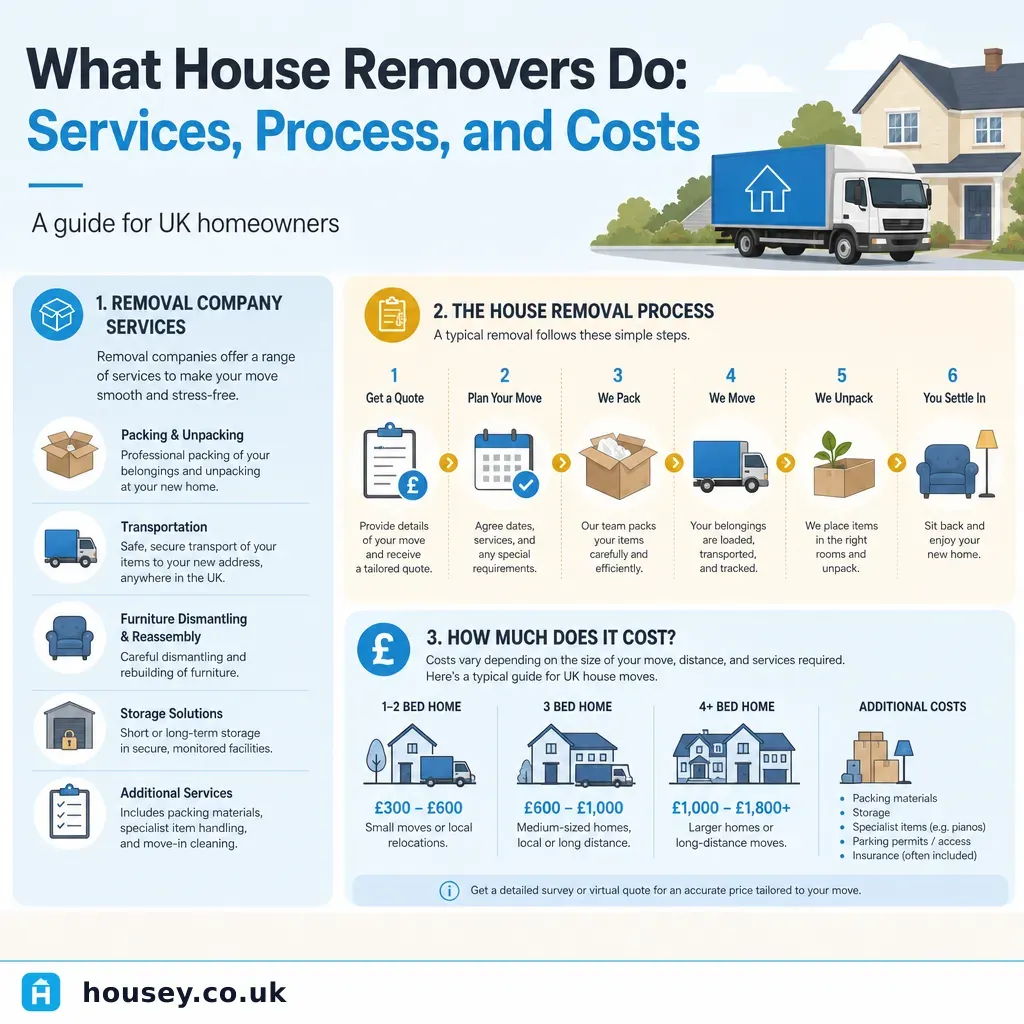
What House Removers Do: Services, Process, and Costs
House removers load, transport, and unload your belongings between properties. Core services include vehicle hire, crew labour, and Goods in Transit insurance; packing, unpacking, storage, and specialist item handling are usually optional extras. A reputable company will conduct a pre-move survey to estimate volume and provide a written, itemised quote before moving day.
 Buying & Moving
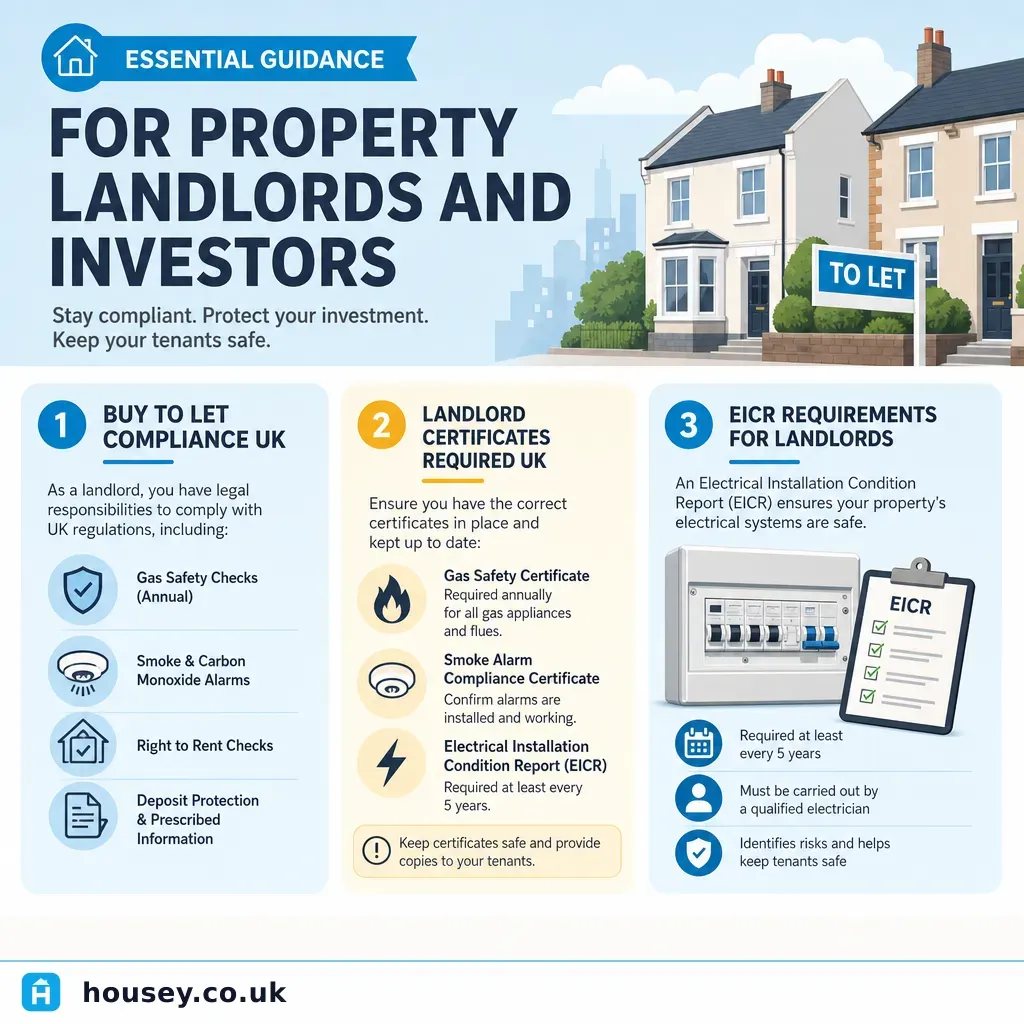
Essential Guidance for Property Landlords and Investors
UK landlords must hold valid gas safety records, electrical installation condition reports, and energy performance certificates before letting a property. Deposits must be protected within 30 days, right to rent checks completed, and the current How to Rent guide provided. Tax rules, licensing requirements, and eviction grounds are all subject to ongoing regulatory change.
 Buying & Moving
Essential Steps to Selling Your Home Successfully
Selling your home successfully in the UK involves obtaining a valid EPC, choosing an estate agent or alternative method, instructing a solicitor or conveyancer early, and completing the Seller's Property Information Form accurately. Most sales in England and Wales take 4–6 months from listing to completion, with leasehold properties typically taking longer due to the management pack requirement.
 Buying & Moving
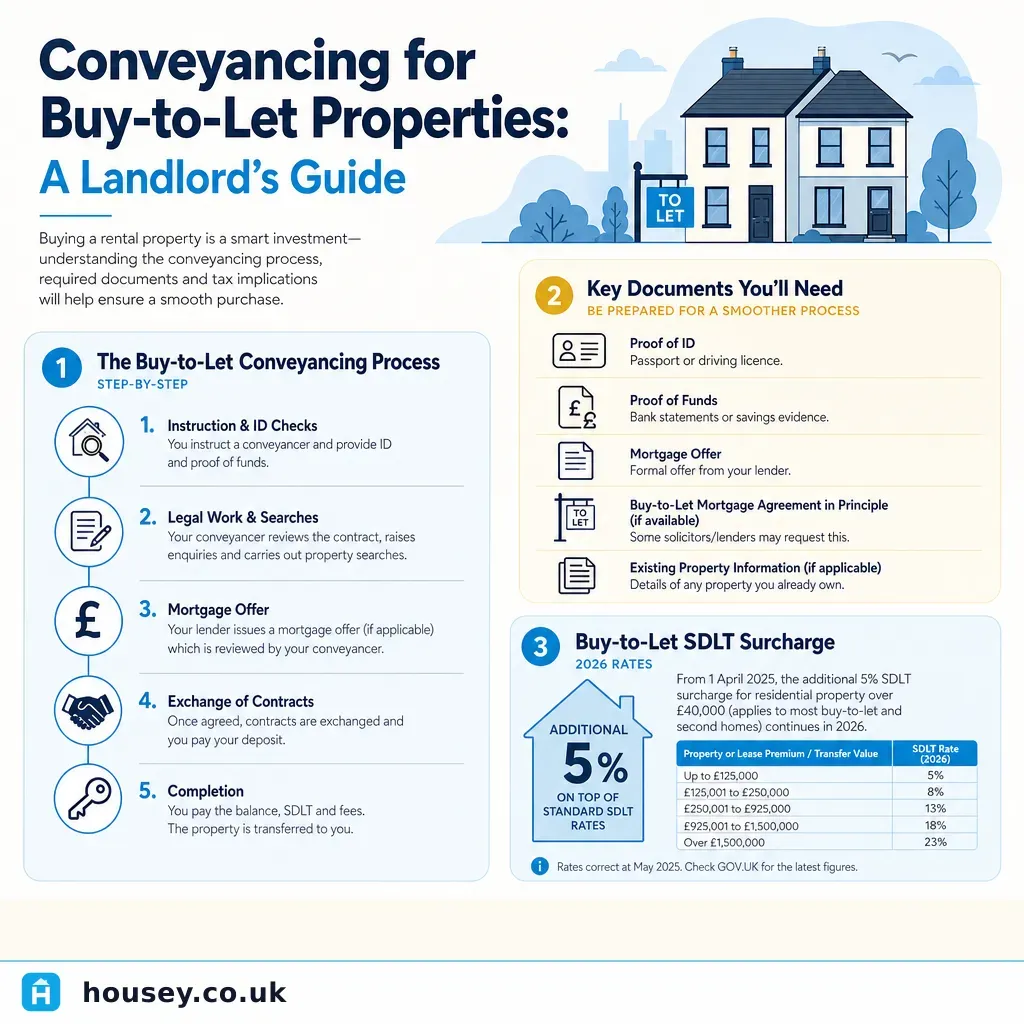
Conveyancing for Buy-to-Let Properties: A Landlord's Guide
Buy-to-let conveyancing follows the same legal process as any residential purchase but adds several layers: a 5% SDLT additional dwelling surcharge in England, review of any existing tenancy agreements, checking local authority licensing requirements, and ensuring buy-to-let mortgage conditions are correctly recorded. Instructing an experienced conveyancer is essential, and preparing identity, source of funds, and tenancy documents in advance speeds the process considerably.
 Buying & Moving
Selling Your Home Faster: Strategies for a Quicker Sale
To sell your home faster in the UK, price it accurately from the outset, invest in professional photography, and present the property without clutter or visible defects. Instruct a conveyancing solicitor before offer acceptance to shorten the legal stage, and prepare key documents — including building regulations certificates and title deeds — before listing.