Knowledge Base
Property advice that actually helps
Researched, UK-specific guides for every stage of homeownership — from buying and surveys to retrofit, planning and major works.
 Buying & Moving
Achieving Show-Home Presentation and Professional Styling
Show-home presentation involves decluttering, deep cleaning, neutral redecoration, and optimising lighting before photography and viewings. The goal is to help buyers visualise themselves in the space rather than see past the seller's personal style. Professional photography and a measured floorplan are widely considered the highest-return steps for UK sellers, particularly in competitive markets.
 Buying & Moving
Identifying and Resolving Delays in Property Transactions
Delays in UK property transactions most often arise from slow local authority searches, incomplete identity documents, mortgage hold-ups, leasehold complications, or a problem elsewhere in the chain. Identifying which party is causing the issue and putting your requests in writing is usually the fastest way forward. Most transactions take 12–20 weeks; persistent delays may need formal escalation through your solicitor.
 Buying & Moving
When to Engage a Structural Engineer During Home Purchase
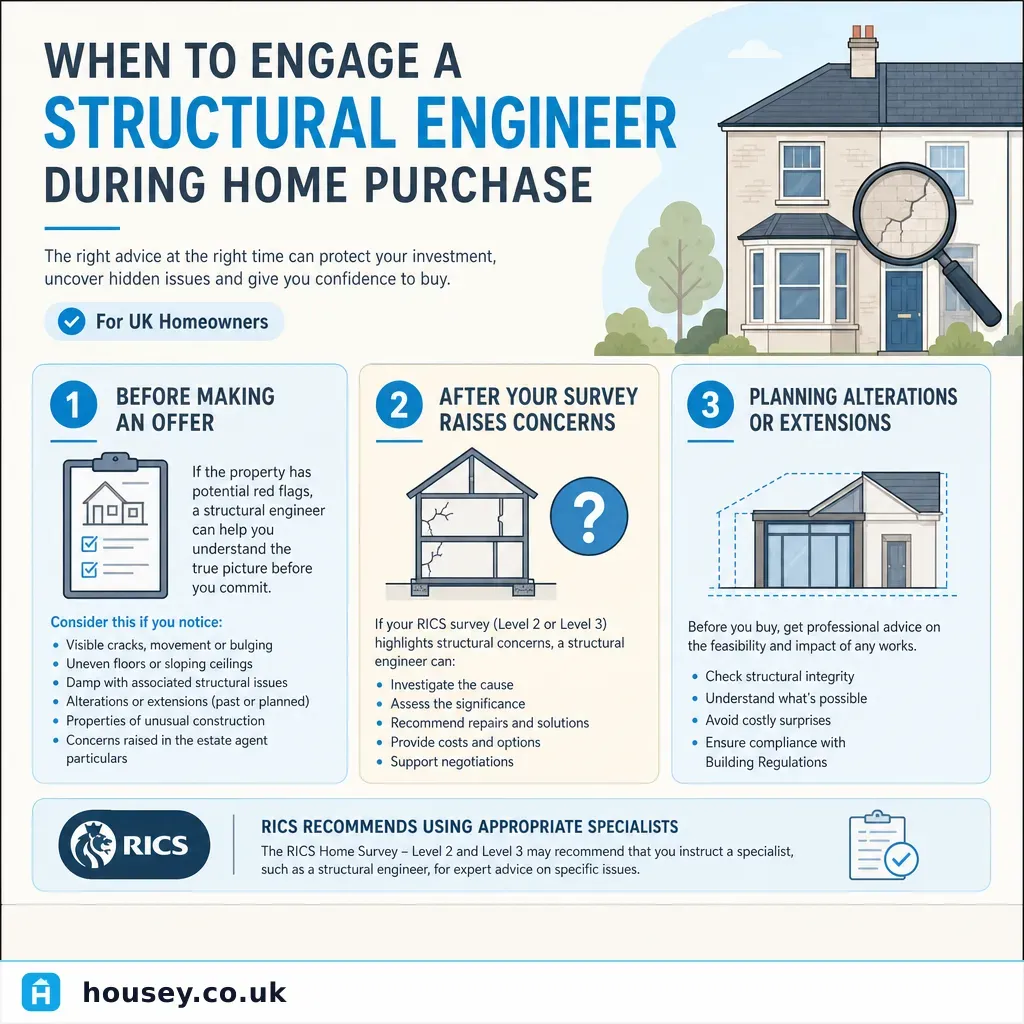
Instruct a structural engineer before exchange if your RICS survey flags movement, cracking rated condition 3, or suspected subsidence. Older properties — Victorian terraces, pre-war semis, solid-wall homes — carry higher structural risk. A structural engineer provides an engineering opinion that a general home survey cannot, helping you negotiate, proceed with confidence, or withdraw before exchange.
 Buying & Moving
Shared Ownership vs Renting: Making the Right Choice for You
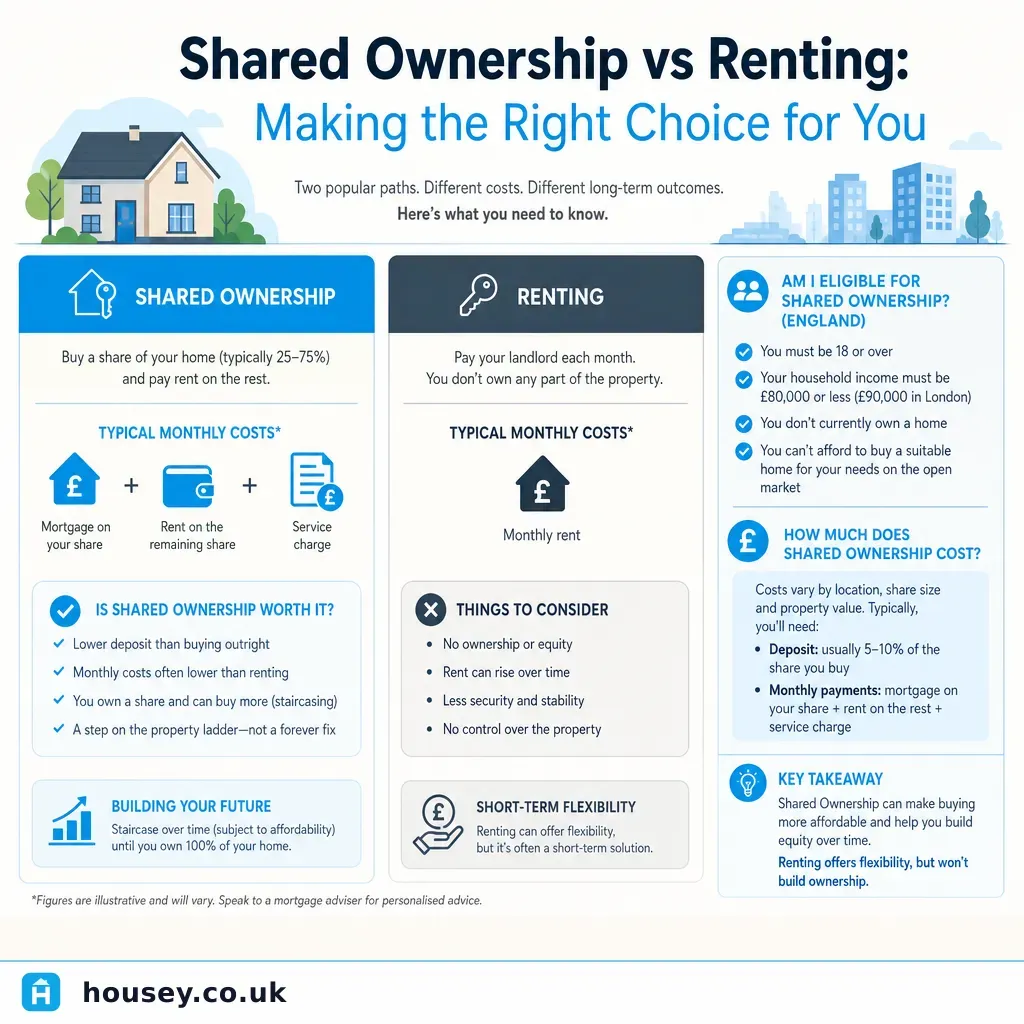
Shared ownership lets you buy a share of a property — typically 10% to 75% — and pay subsidised rent on the rest, building equity over time. Renting offers more flexibility with lower upfront costs and fewer legal obligations. The right choice depends on your income, deposit, long-term plans, and whether you meet the shared ownership eligibility criteria.
 Buying & Moving
Understanding Local Property Values: What Homes Sold For in Your Area
Sold prices for UK properties are publicly recorded by HM Land Registry for England and Wales, Registers of Scotland, and Land and Property Services in Northern Ireland. Search by postcode at gov.uk to see what individual properties actually sold for. Records typically lag completion by six to eight weeks, and useful comparisons require filtering by property type and tenure.
 Buying & Moving
Selling Your Property Privately: Process and Considerations
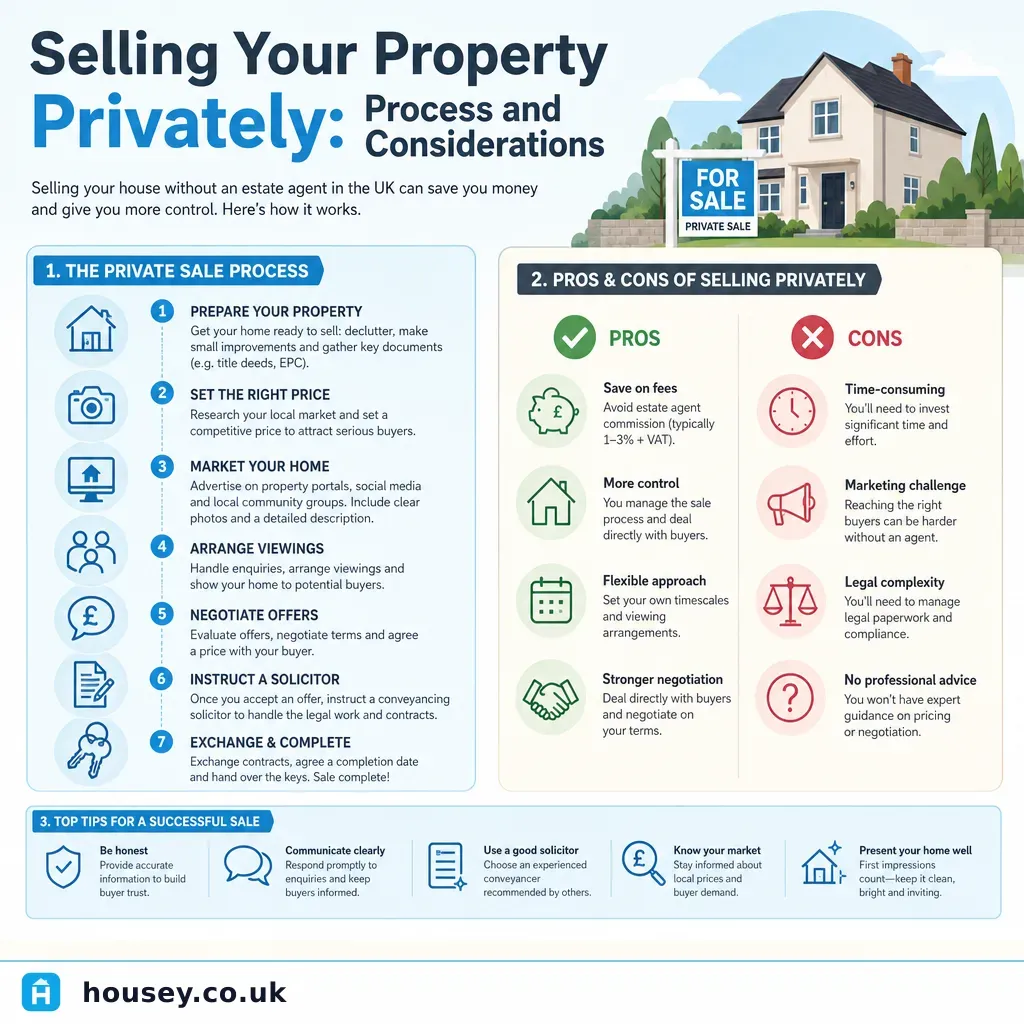
Selling a property privately in the UK means handling marketing, viewings, negotiations, and buyer communication yourself, saving estate agent fees typically of 1–3% of the sale price. You still need a licensed conveyancer or solicitor to manage the legal transfer. Private sales suit motivated sellers with time, local knowledge, and confidence in negotiation, but carry real risks if legal or disclosure steps are missed.
 Buying & Moving
Council for Licensed Conveyancers: Professional Standards and Regulation
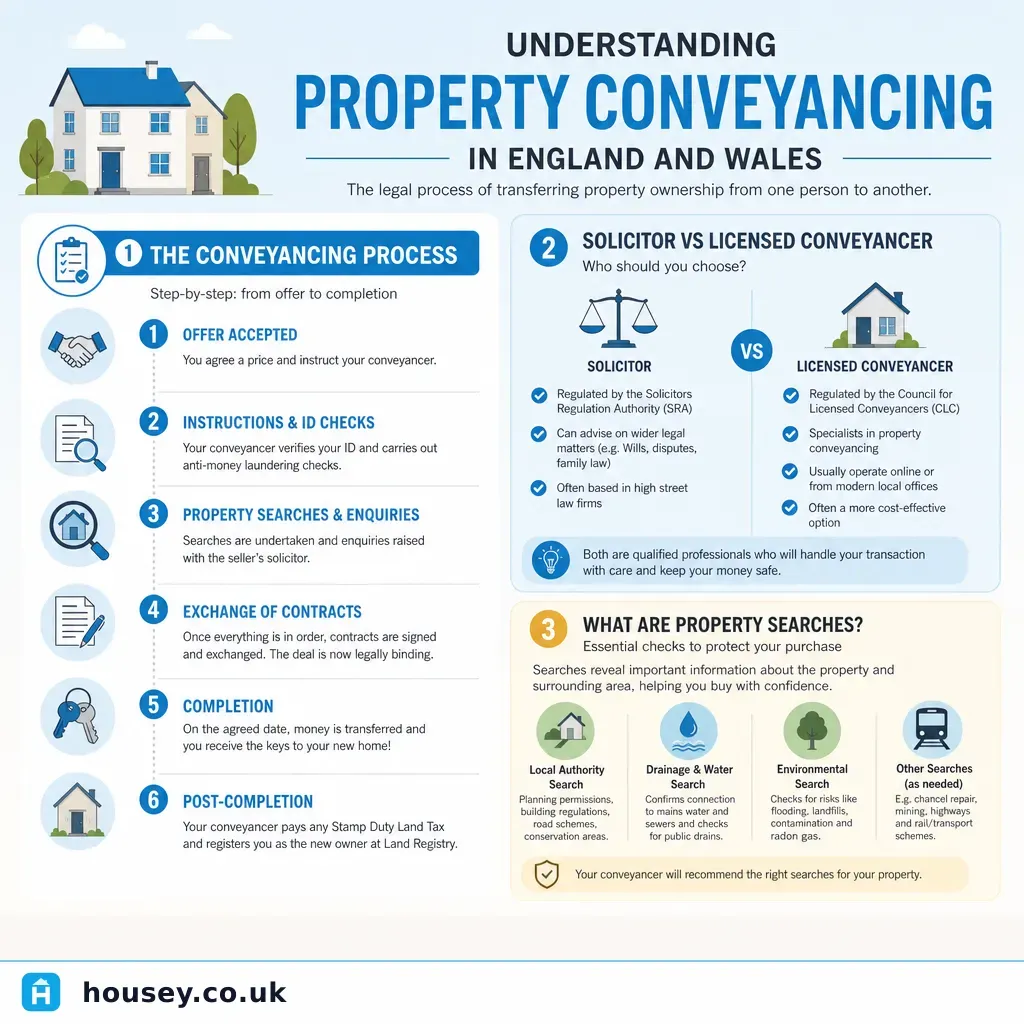
The Council for Licensed Conveyancers (CLC) is the regulatory body for licensed conveyancers in England and Wales, established under the Administration of Justice Act 1985. It sets conduct standards, maintains a public register, runs a compensation fund to protect client money, and operates a consumer redress scheme. Both solicitors and licensed conveyancers can handle residential conveyancing, but each answers to a different regulator.
 Buying & Moving
Storage Solutions and Container Rental Options for House Moves
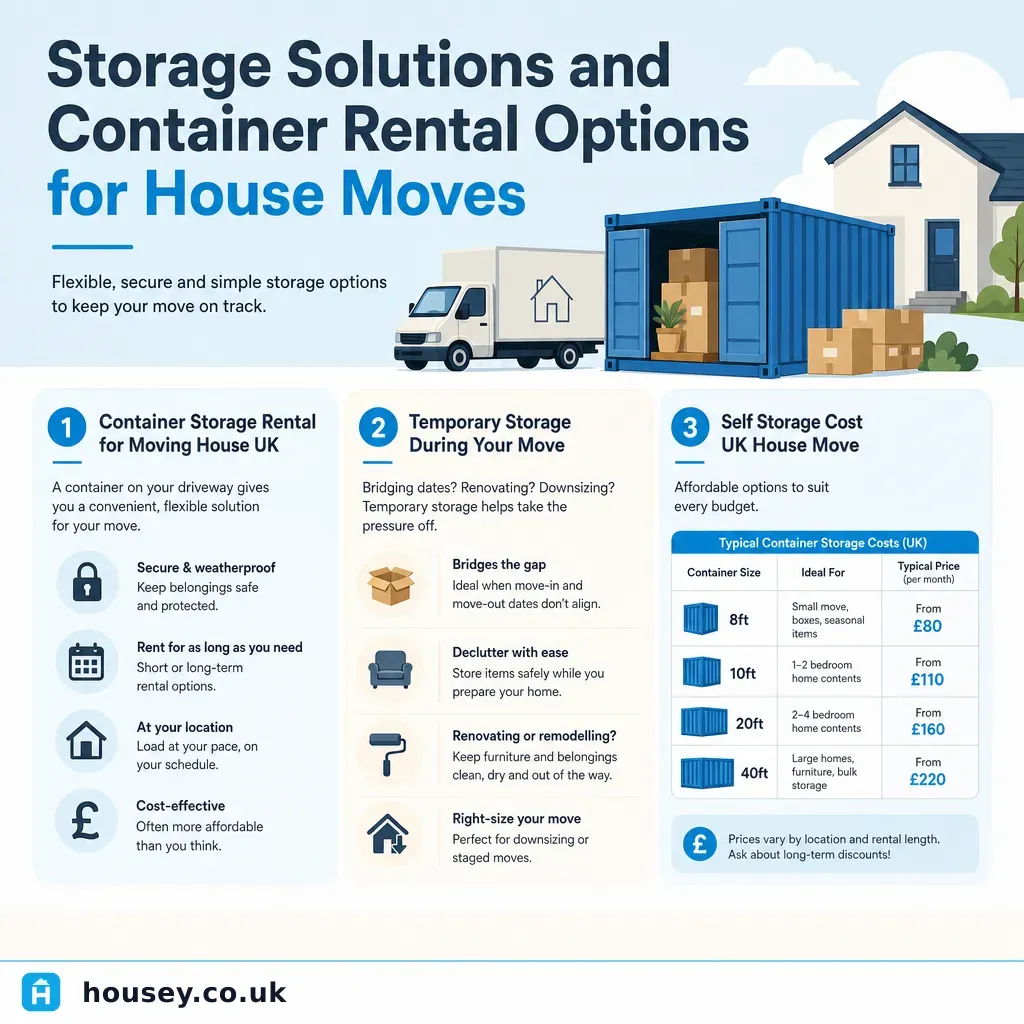
When moving house in the UK, temporary storage options include self-storage units, portable storage containers delivered to your door, and removal company storage vans. Costs vary by volume, location, and duration. Most people need storage for days to weeks when completion dates do not align or renovation work delays a move-in date.
 Buying & Moving
Does Your Conveyancing Solicitor Need to Be Local?
No law in England and Wales requires your conveyancing solicitor to be based near the property or your home. Most transactions are now handled digitally by email, secure portal, and post. Local knowledge can occasionally help for leasehold blocks or complex planning histories, but is rarely a decisive factor. Any SRA- or CLC-regulated firm can act nationally.
 Buying & Moving
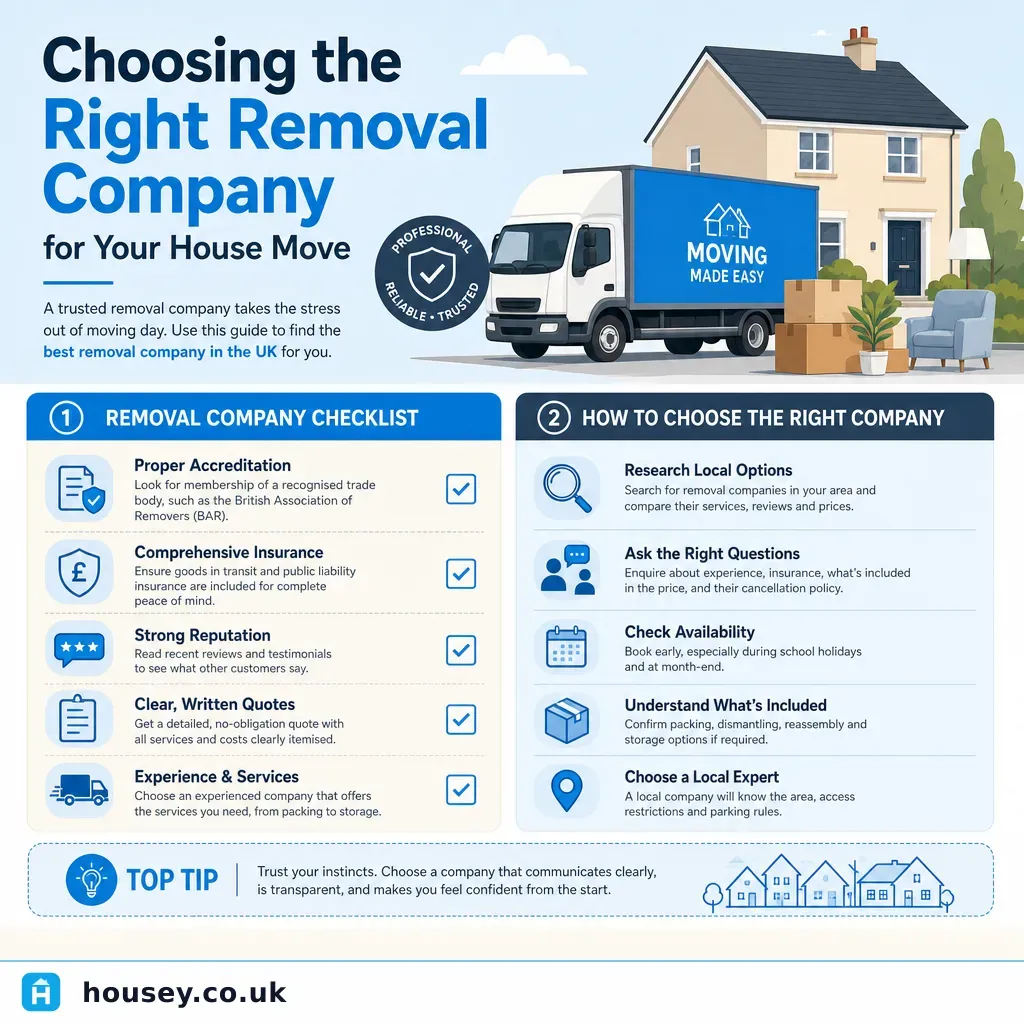
Choosing the Right Removal Company for Your House Move
To choose the right removal company, get three quotes from British Association of Removers (BAR) members or similarly accredited firms. Book six to eight weeks before completion, confirm goods in transit insurance limits, and ask whether high-value items need a separate declaration. Avoid companies that skip the pre-move survey or request full cash payment in advance.
 Buying & Moving
Understanding Property Conveyancing in England and Wales
Conveyancing is the legal process of transferring property ownership in England and Wales. It involves four stages: instruction, pre-exchange work including searches and enquiries, exchange of contracts which makes the deal legally binding, and completion. The process typically takes 12–20 weeks and must be handled by a solicitor regulated by the SRA or a licensed conveyancer regulated by the CLC.
 Buying & Moving
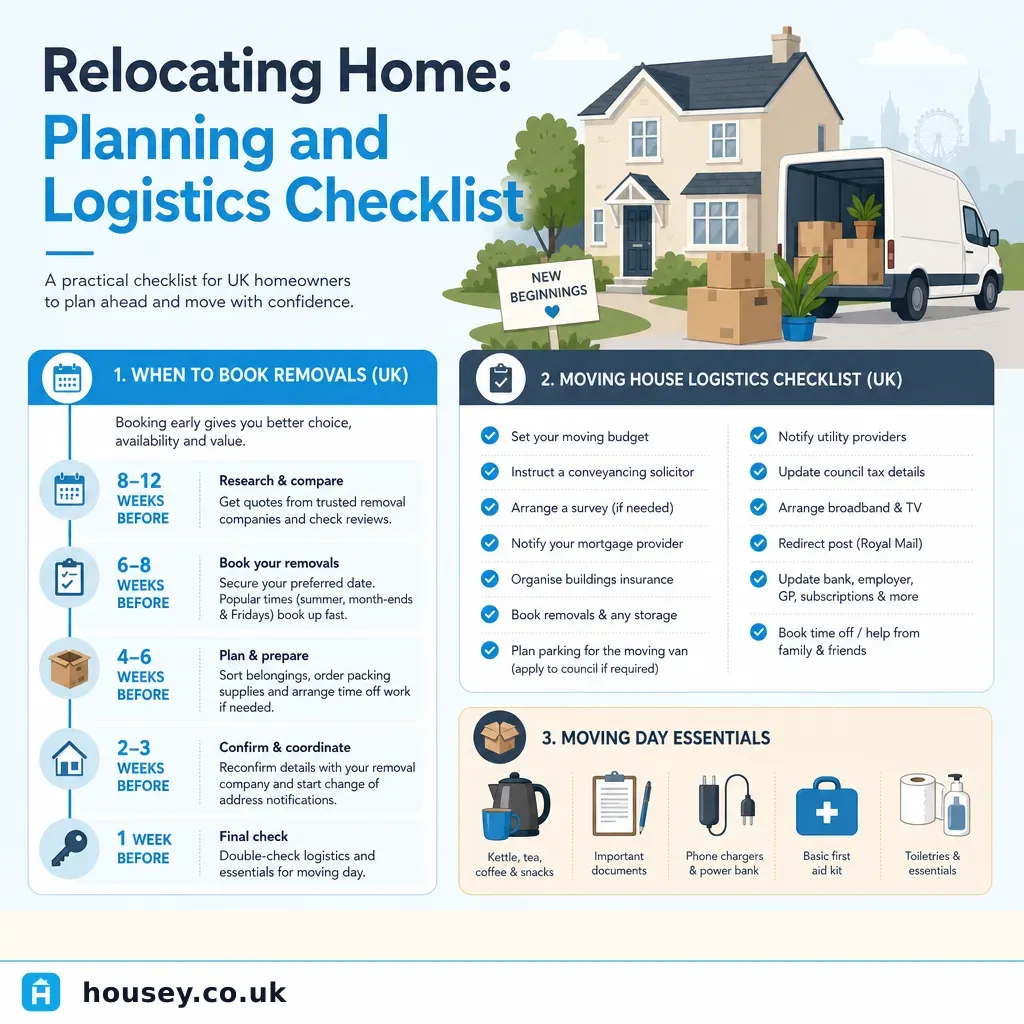
Relocating Home: Planning and Logistics Checklist
Successful home relocation in the UK typically requires 8–12 weeks of advance planning. Book a removal firm early, notify utility providers and the DVLA at least four weeks before moving, arrange Royal Mail redirection from completion day, and prepare a room-by-room inventory. Completion day key handover is often the tightest logistical pinch point.