Knowledge Base
Property advice that actually helps
Researched, UK-specific guides for every stage of homeownership — from buying and surveys to retrofit, planning and major works.
 Buying & Moving
Safeguarding Your Property Purchase: Fraud Prevention Strategies
Property purchase fraud in the UK most commonly involves criminals intercepting emails to redirect completion funds to fraudulent bank accounts. Protect yourself by verifying your solicitor's details on the SRA register, confirming bank account details by phone before any transfer, and signing up for HM Land Registry's free Property Alert service.
 Buying & Moving
Using Art and Decor to Enhance Property Appeal When Selling
Thoughtfully chosen art and décor can make rooms feel larger, lighter, and more aspirational to buyers. Neutral palettes, scaled artwork, and decluttered surfaces help buyers visualise themselves in the space. Professional photography then captures these improvements, maximising their impact in online listings where most UK property searches begin.
 Buying & Moving
Property Terminology and Listing Definitions: Buyer's Reference Guide
UK property listings and conveyancing documents use specific terms that affect buying decisions. Freehold means you own the property and land outright; leasehold means you own the property for the lease term, not the land. Sold STC means an offer is accepted but not legally binding. Guide price is an indication, not a firm commitment. Understanding these terms helps avoid costly misunderstandings.
 Buying & Moving
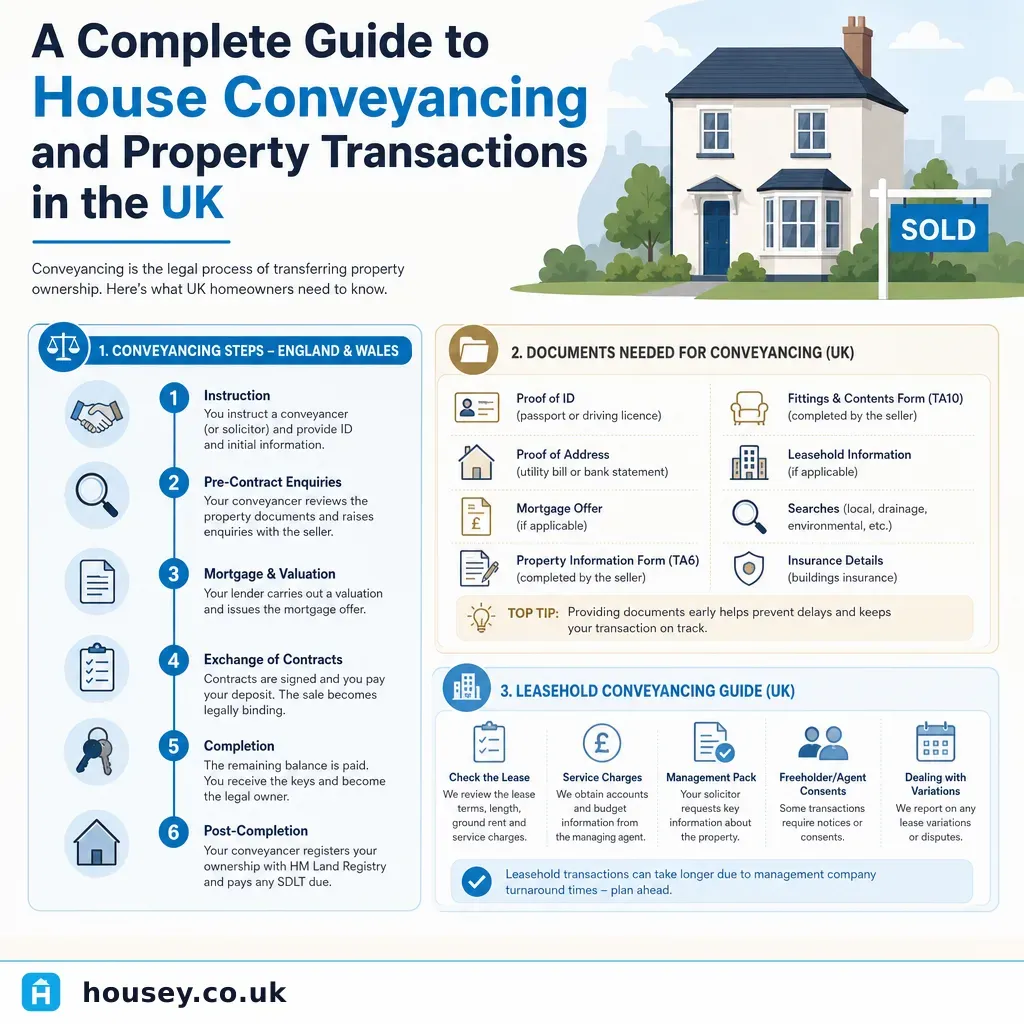
A Complete Guide to House Conveyancing and Property Transactions in the UK
House conveyancing in England and Wales follows four phases: instruction, pre-exchange work including searches and enquiries taking 8–14 weeks, exchange of contracts which makes the deal legally binding, and completion. Sellers should prepare title documents, TA6 and TA10 forms, and building certificates before listing. Buyers need ID, mortgage offer details, and source of funds evidence. Leasehold transactions typically take 4–8 weeks longer than freehold.
 Buying & Moving
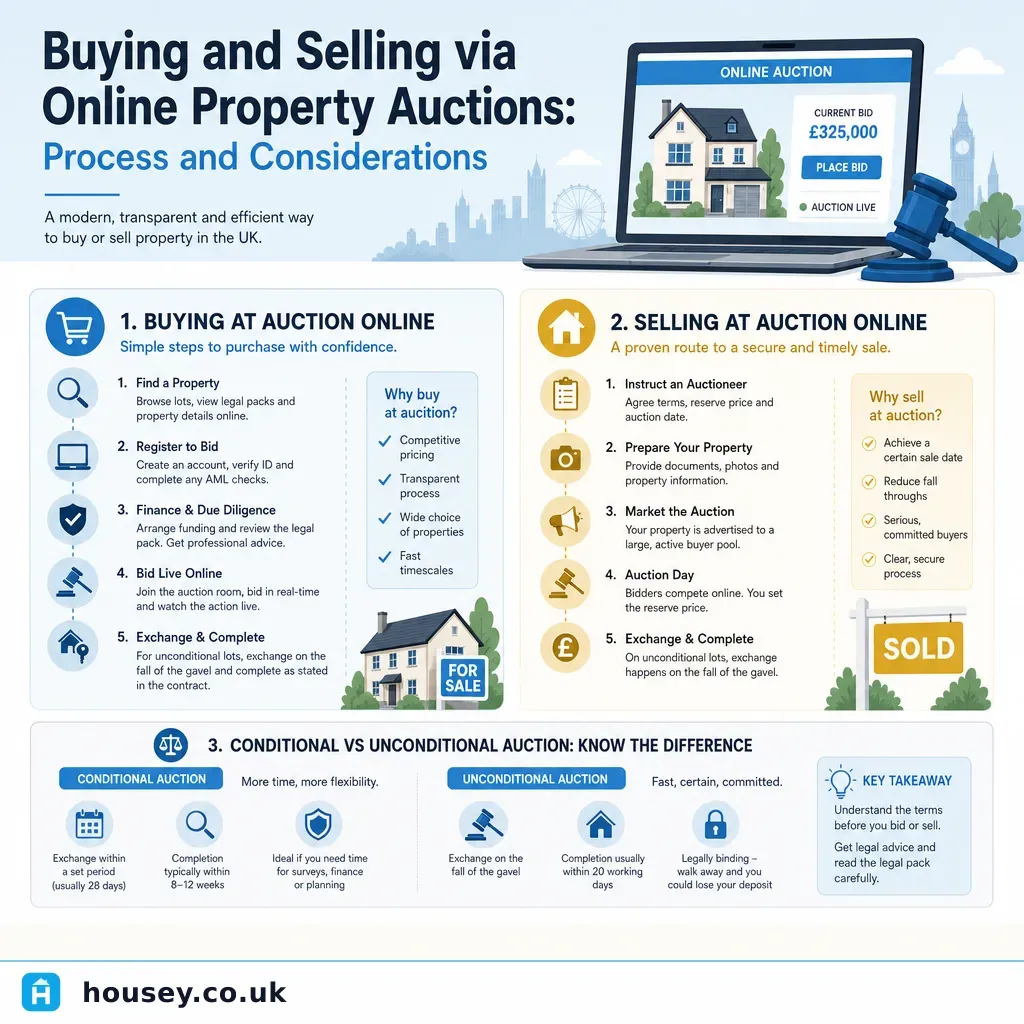
Buying and Selling via Online Property Auctions: Process and Considerations
UK online property auctions use two main formats: traditional auction, where exchange is legally binding the moment a bid is accepted; and the Modern Method of Auction, which gives buyers 28 days to exchange and a further 28 days to complete. Both formats require buyers to review the legal pack and arrange a survey before bidding — costs incurred before exchange are not recoverable if you withdraw.
 Buying & Moving
Professional House Removal Services: Costs and Logistics
Professional house removal services in the UK typically cost £800–£2,000 for a 3-bedroom local move, rising to £1,500–£4,000 for long-distance relocations. Costs depend on volume, distance, access, and whether packing is included. Always get at least three written quotes, confirm Goods in Transit insurance is held, and check whether the price is fixed or hourly.
 Buying & Moving
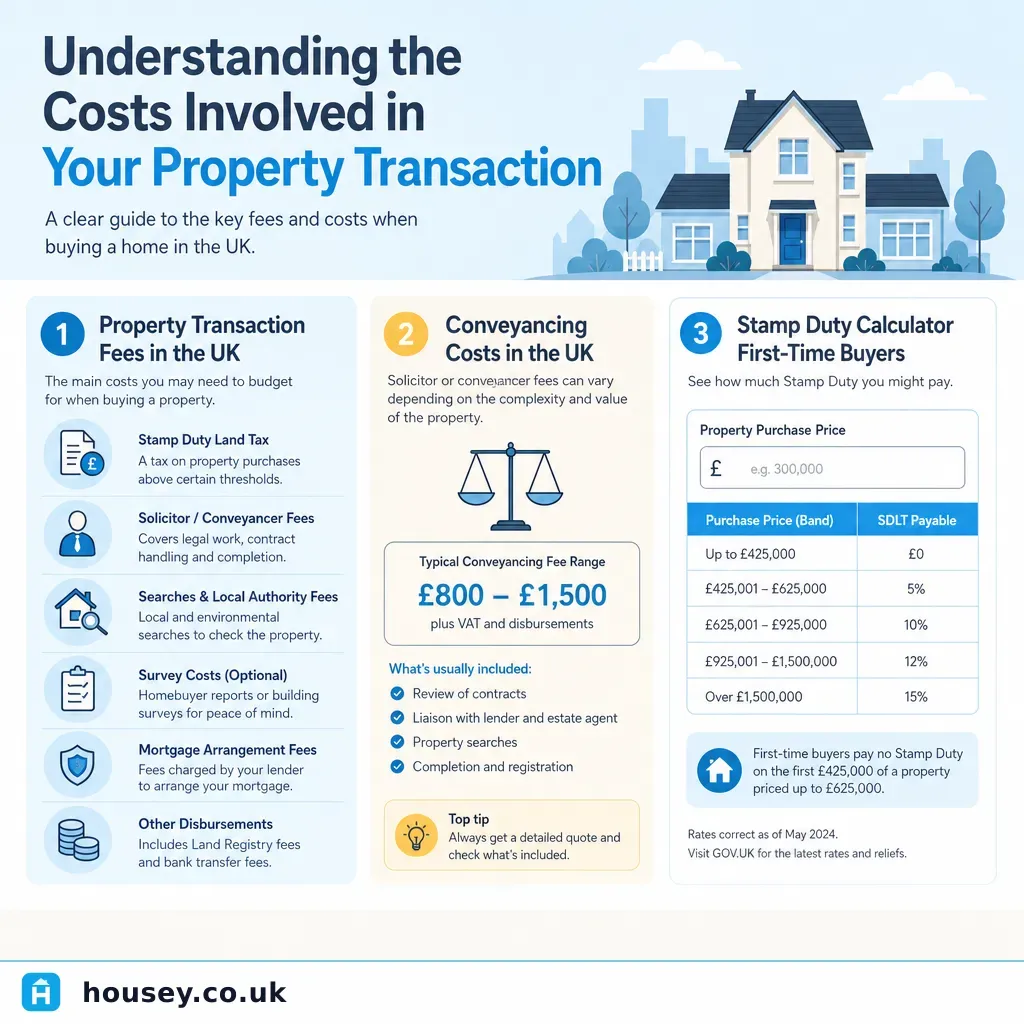
Understanding the Costs Involved in Your Property Transaction
Buying a property in the UK typically costs 2–5% above the headline price once stamp duty, conveyancing fees, survey costs, mortgage arrangement fees, and removal costs are added. The exact total depends on property price, tenure, UK nation, and mortgage product. Preparing an itemised budget before exchange — using figures specific to your transaction — is essential to avoid last-minute shortfalls.
 Buying & Moving
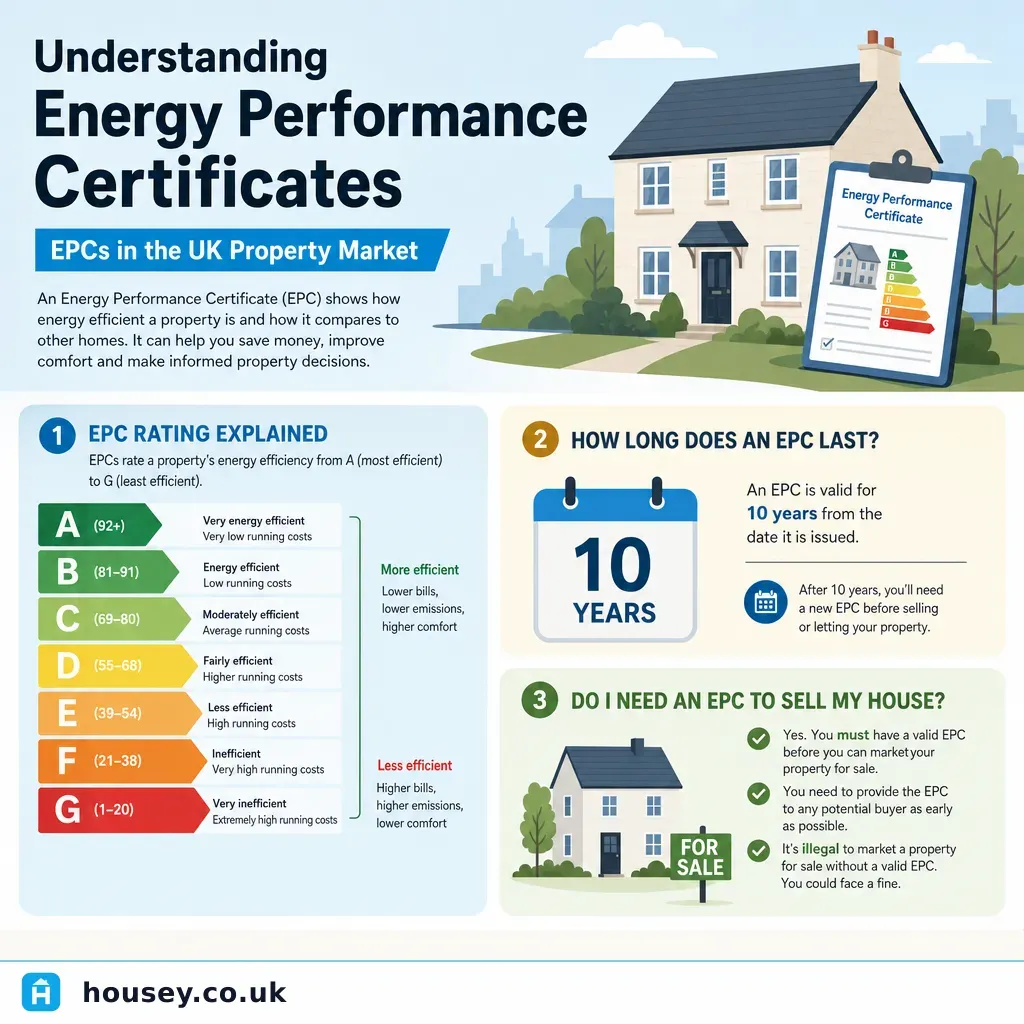
Understanding Energy Performance Certificates: EPCs in the UK Property Market
An Energy Performance Certificate (EPC) rates a property's energy efficiency on a scale from A (most efficient) to G (least efficient). In the UK, a valid EPC is legally required before marketing a property for sale or let. Certificates are produced by an accredited assessor, last 10 years, and are based on construction, heating, insulation, and glazing — not actual energy bills.
 Buying & Moving
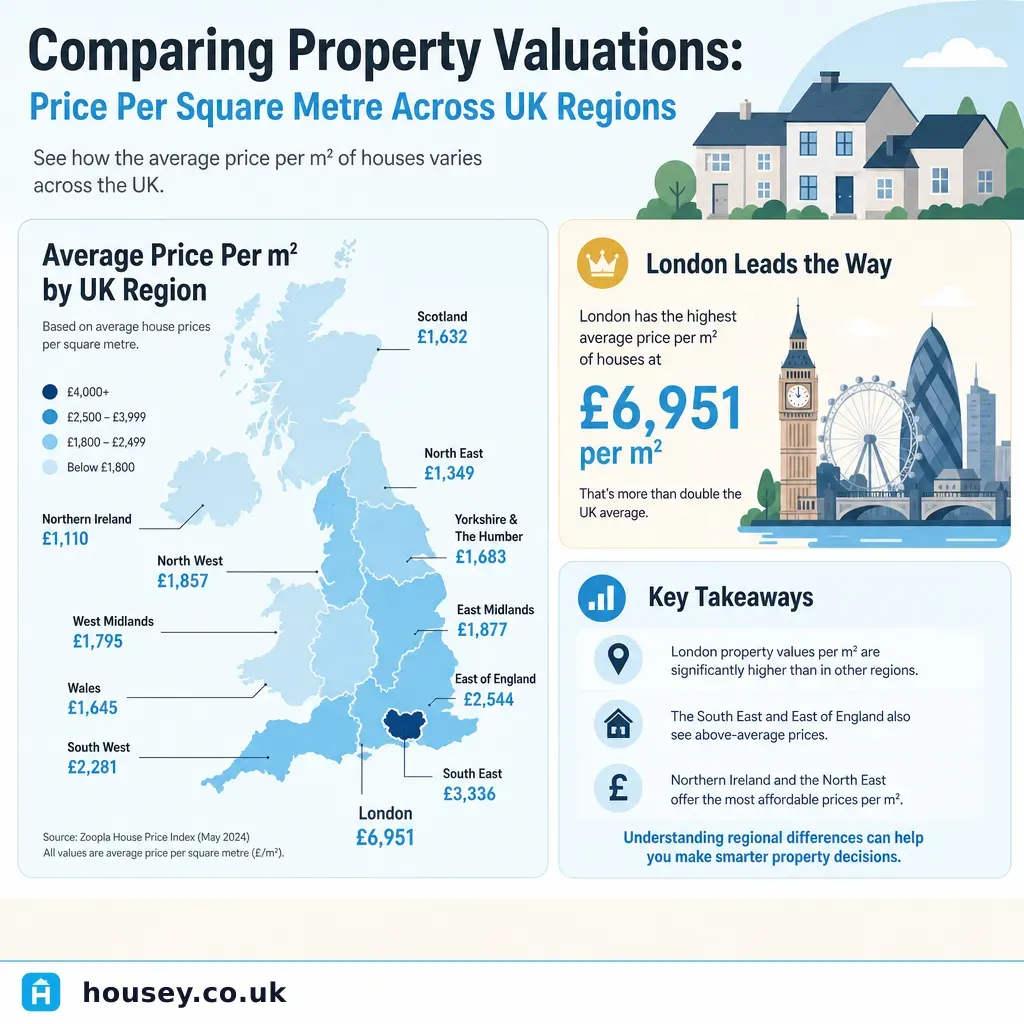
Comparing Property Valuations: Price Per Square Metre Across UK Regions
Property prices per square metre vary dramatically across UK regions. Central London can exceed £10,000/m², while parts of the North East average below £1,500/m². These regional differences reflect local demand, transport links, and property types. A professional valuation gives you an accurate figure for a specific property.
 Buying & Moving
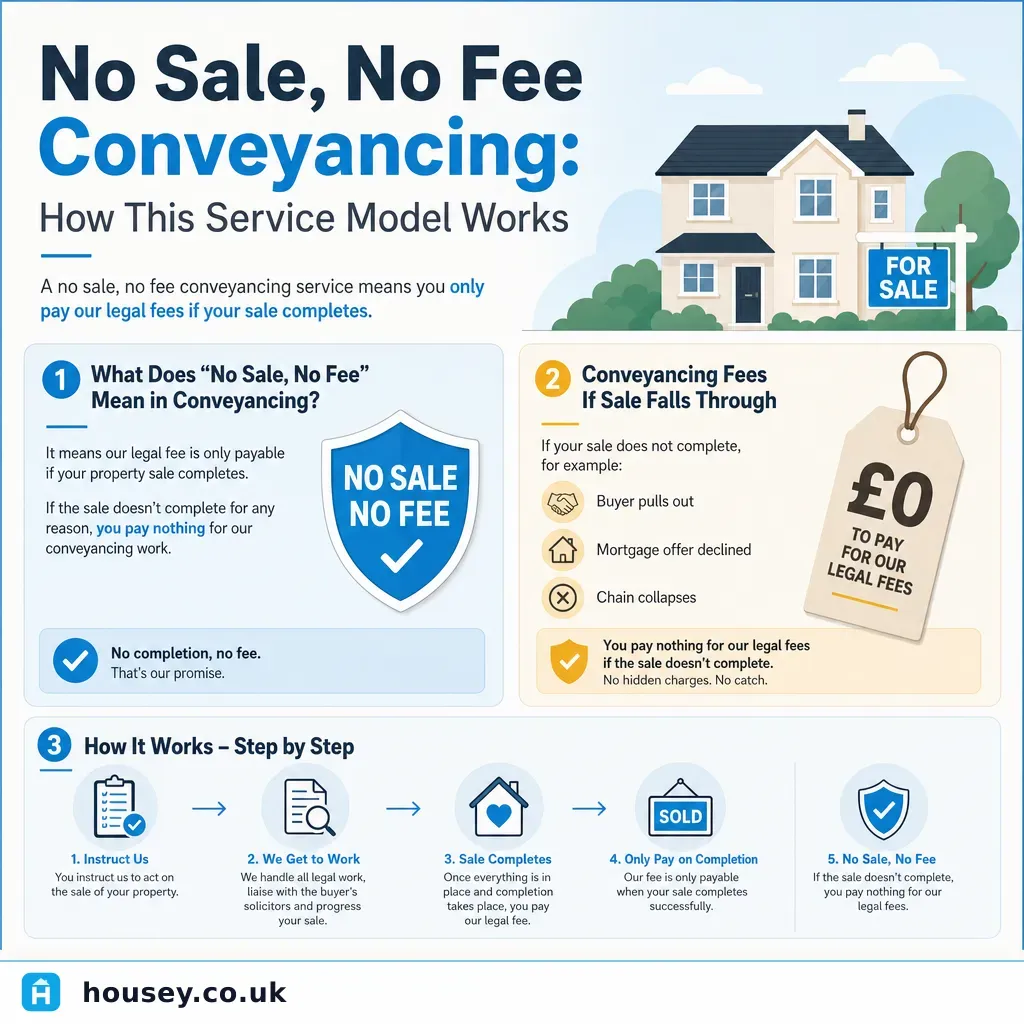
No Sale, No Fee Conveyancing: How This Service Model Works
No sale, no fee conveyancing means a solicitor or licensed conveyancer will not charge their professional legal fee if your transaction does not reach completion. However, disbursements already incurred — chiefly search fees of around £250–£450 — are almost always still payable. The professional fee is typically priced slightly higher than a standard quote to offset the firm's abortive risk.
 Buying & Moving
Conveyancing Glossary: Key Terms and Definitions for Property Buyers
Conveyancing involves specific legal terms that appear throughout a UK property purchase. The most important are: exchange (when the sale becomes legally binding), completion (when funds transfer and keys are released), disbursements (third-party costs your solicitor pays on your behalf), title (legal ownership of the property), and requisitions (formal questions about title raised before completion). Leasehold adds further terms around lease length, ground rent, and service charges.
 Buying & Moving
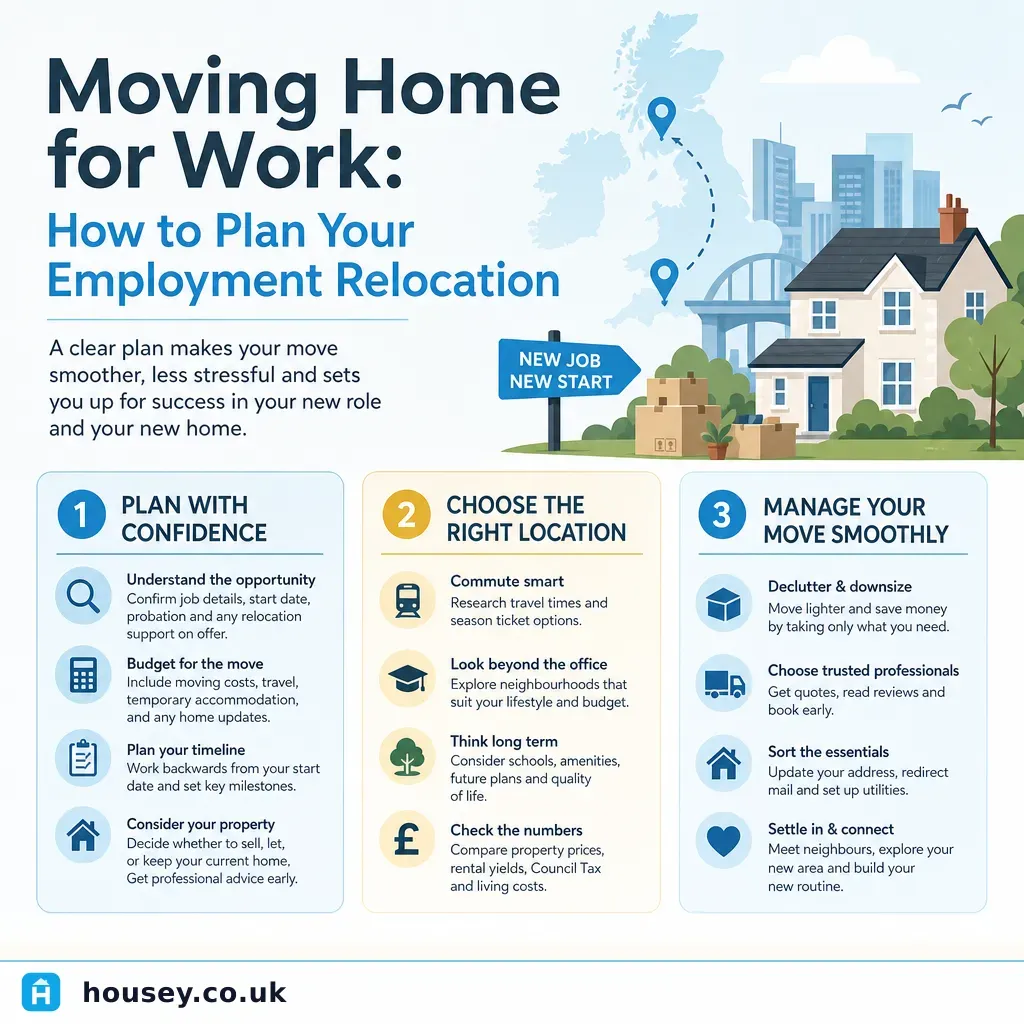
Moving Home for Work: How to Plan Your Employment Relocation
Moving home for a new job requires coordinating property timelines, removal logistics, and employer reimbursement simultaneously. HMRC allows up to £8,000 in qualifying relocation expenses tax-free. Booking removal companies 4–6 weeks ahead, arranging storage if move-in dates do not align, and confirming your employer's reimbursement documentation requirements in writing before instructing any supplier are the three most practical early steps.