Knowledge Base
Property advice that actually helps
Researched, UK-specific guides for every stage of homeownership — from buying and surveys to retrofit, planning and major works.
 Buying & Moving
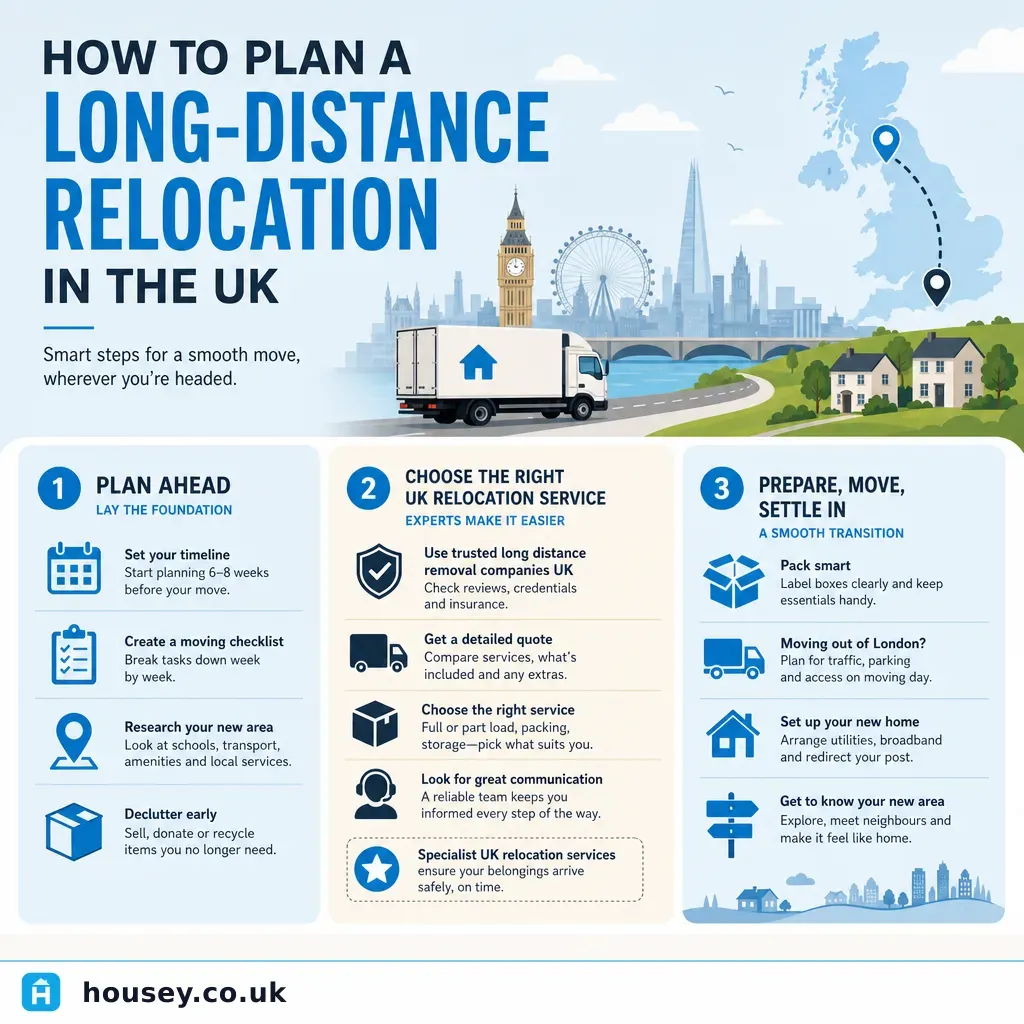
How to Plan a Long-Distance Relocation in the UK
A successful long-distance relocation in the UK involves coordinating removals, conveyancing, storage, and area research well in advance. Most moves benefit from instructing a solicitor 8–12 weeks before completion and booking a removal firm 4–6 weeks out. Planning each stage in the right sequence reduces the risk of delays and unexpected costs.
 Buying & Moving
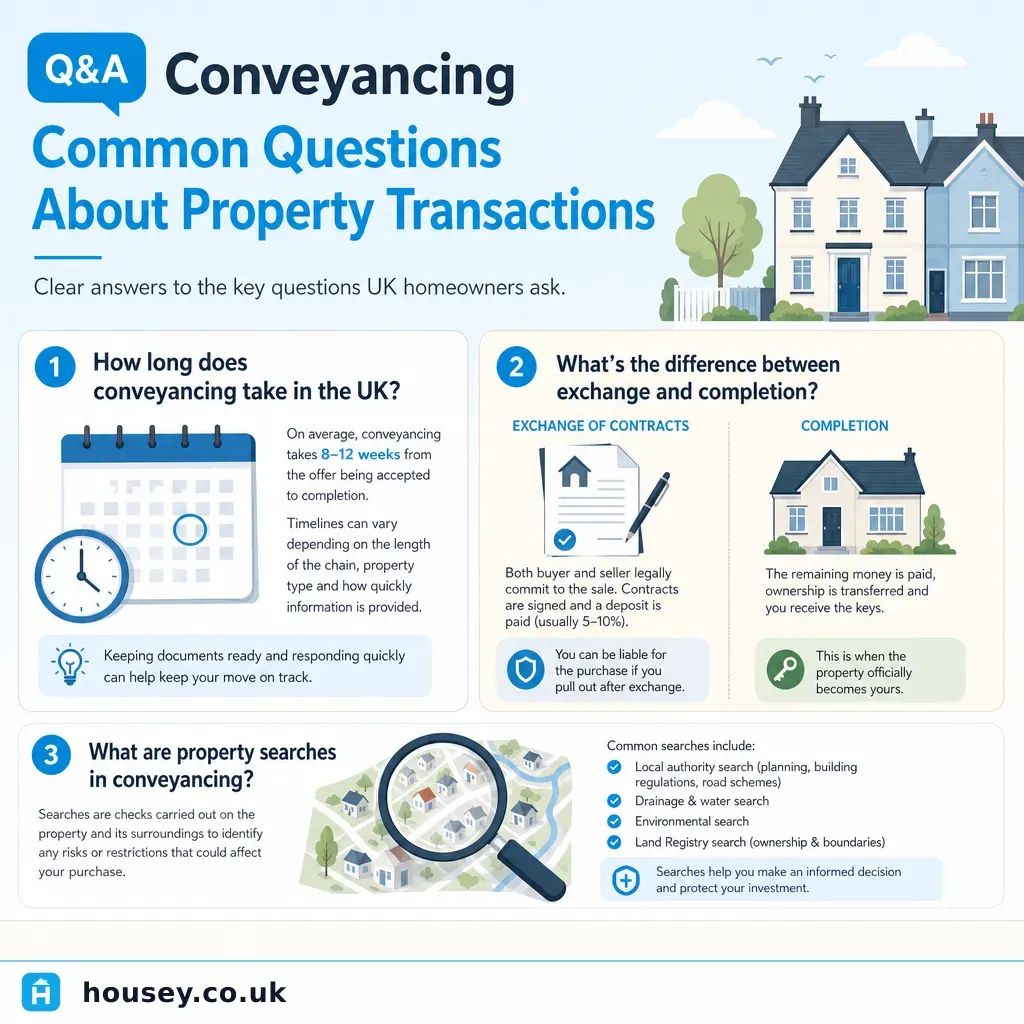
Conveyancing Q&A: Common Questions About Property Transactions
Conveyancing is the legal transfer of property ownership, typically taking 12 to 16 weeks in England and Wales. Exchange of contracts is the legally binding moment — before that, either party can withdraw without contractual penalty. Completion transfers legal ownership and releases the keys. Searches, enquiries, and mortgage requirements must all be resolved before your solicitor can recommend exchange.
 Buying & Moving
Acquiring Multiple Properties in the Cotswolds: Conveyancing and Bulk Transaction Essentials
Acquiring multiple Cotswolds properties in one transaction requires specialist conveyancing for each title, careful attention to SDLT — Multiple Dwellings Relief was abolished for most transactions from June 2024 — and awareness of listed building and conservation area constraints. Many Cotswolds properties fall outside standard mortgage criteria. Take legal and tax advice before exchange; SDLT errors cannot be corrected after completion.
 Buying & Moving
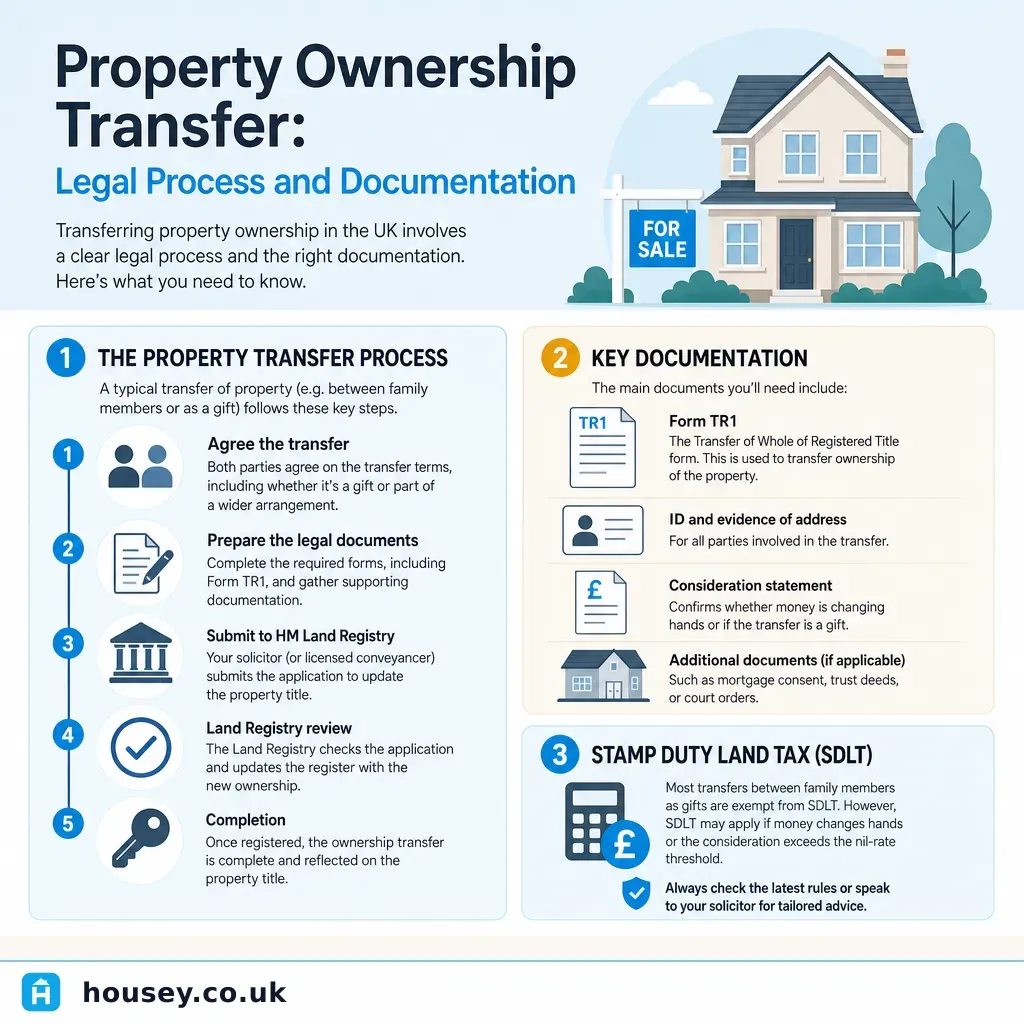
Property Ownership Transfer: Legal Process and Documentation
Transferring property ownership in England and Wales involves a formal legal deed — usually the TR1 form — submitted to HM Land Registry alongside an SDLT return filed within 14 days of completion. A solicitor or licensed conveyancer manages the process. The transfer is not legally complete until the Land Registry updates the title register, which can take weeks to months after completion.
 Buying & Moving
First-Time Home Buyer's Guide: From Search to Completion
Buying your first home in the UK typically takes 3–6 months from offer acceptance to completion. You'll need a deposit (usually at least 5–10%), a mortgage in principle, a solicitor for conveyancing, and a property survey. Exchange of contracts legally commits both parties; completion transfers ownership. Budget for stamp duty, survey fees, legal costs, and moving expenses.
 Buying & Moving
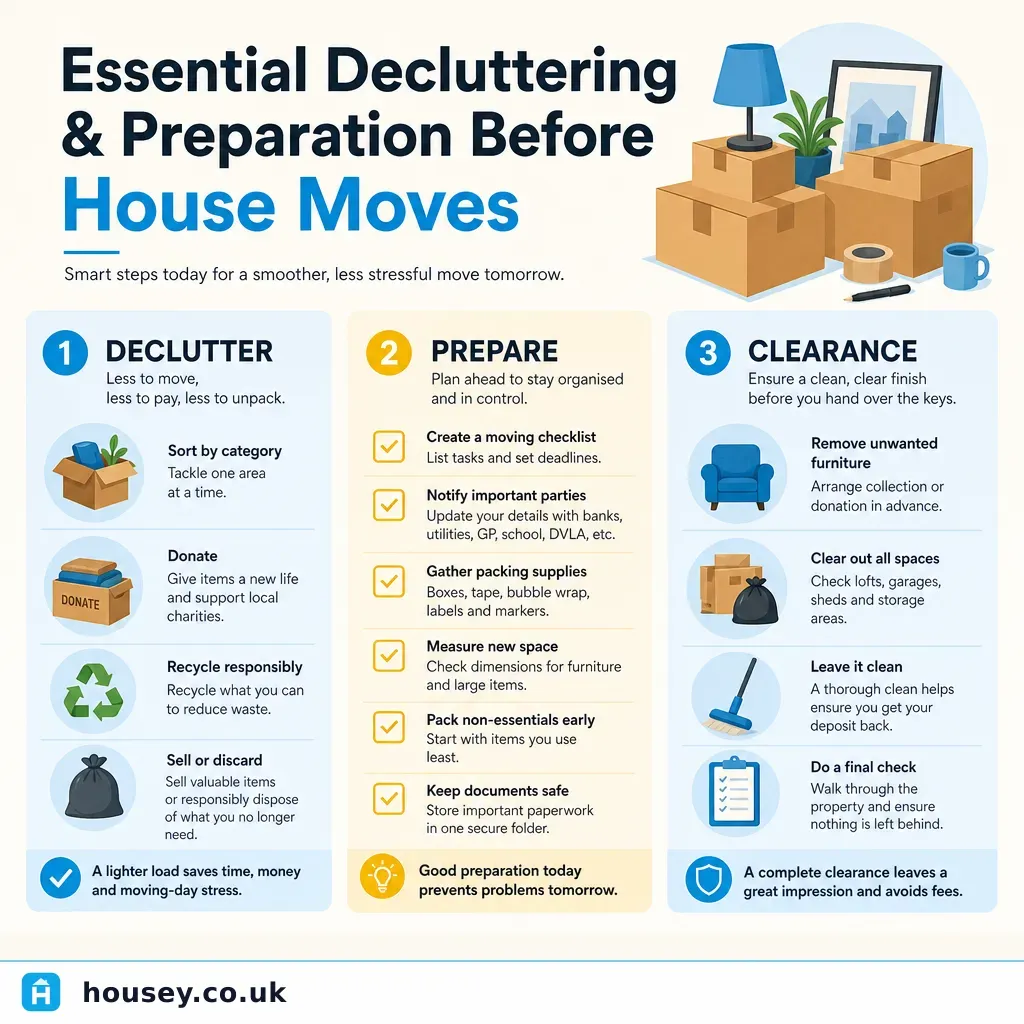
Essential decluttering and preparation before house moves
Decluttering before a house move reduces removal costs, improves property photographs, and simplifies unpacking. Start eight to twelve weeks before your target moving date using a four-category system: keep, sell, donate, and dispose. Prioritise the kitchen, bedrooms, garage, and loft. Hire a clearance company if you have a full property to empty or face a tight completion deadline.
 Buying & Moving
Recognising the Right Time to Sell Your Property
The right time to sell is shaped as much by your personal circumstances as by the property market. Spring and autumn are traditionally the strongest windows in the UK for buyer activity, but life events, financial needs, and property condition often matter more than calendar timing. An independent valuation before you list can prevent costly misjudgements.
 Buying & Moving
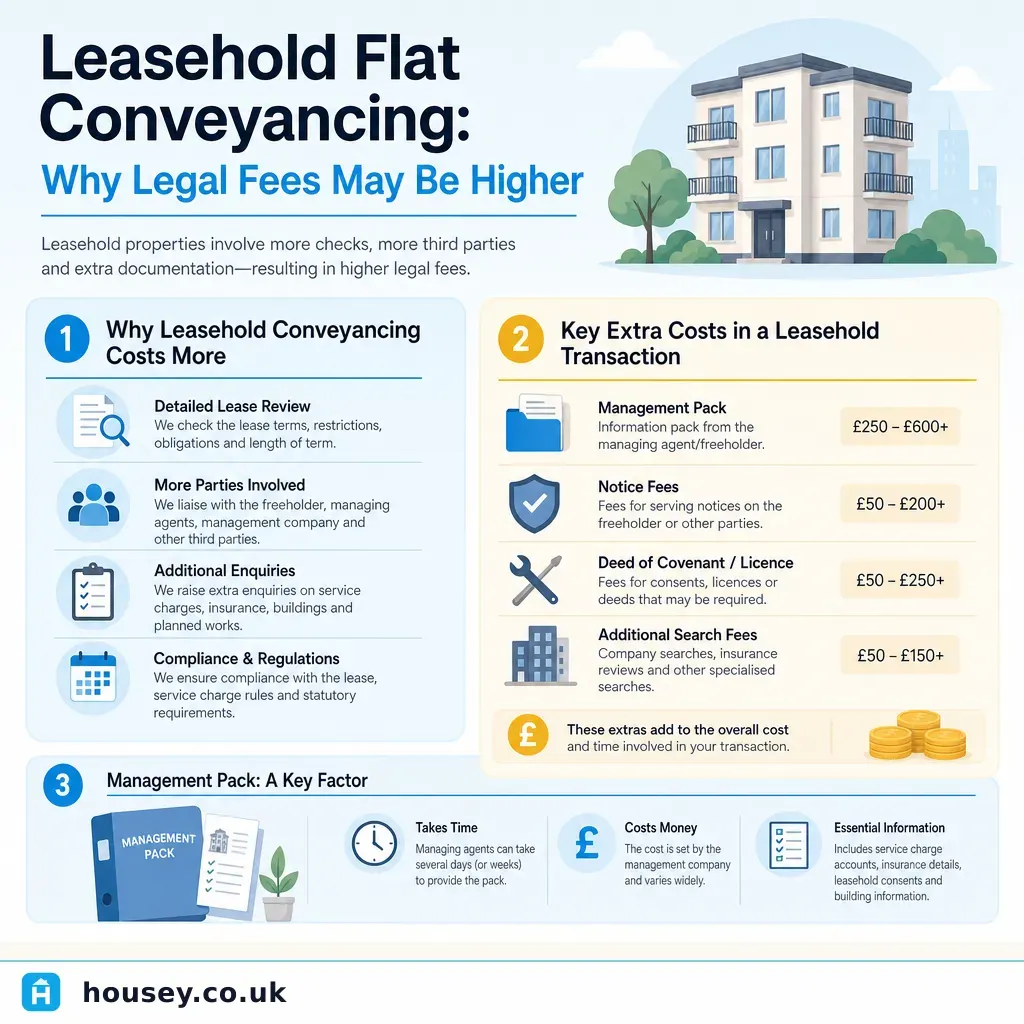
Leasehold Flat Conveyancing: Why Legal Fees May Be Higher
Leasehold flat conveyancing typically costs more than freehold because solicitors must review the lease, check service charge accounts, obtain a management information pack, and handle freeholder consents and notice fees. The additional documentation — sometimes running to hundreds of pages — takes more time to examine, and issues with the lease term, ground rent, or pending major works can add further rounds of enquiries.
 Buying & Moving
Planning Your Home Removal: What to Expect from Professional Services
A professional removal company loads, transports, and unloads your household belongings between properties. Most UK firms price by volume and distance, with packing, storage, and specialist-item handling available as extras. Checking BAR membership, getting at least three written quotes, and confirming the firm's policy on completion-day delays can help you avoid problems on moving day.
 Buying & Moving
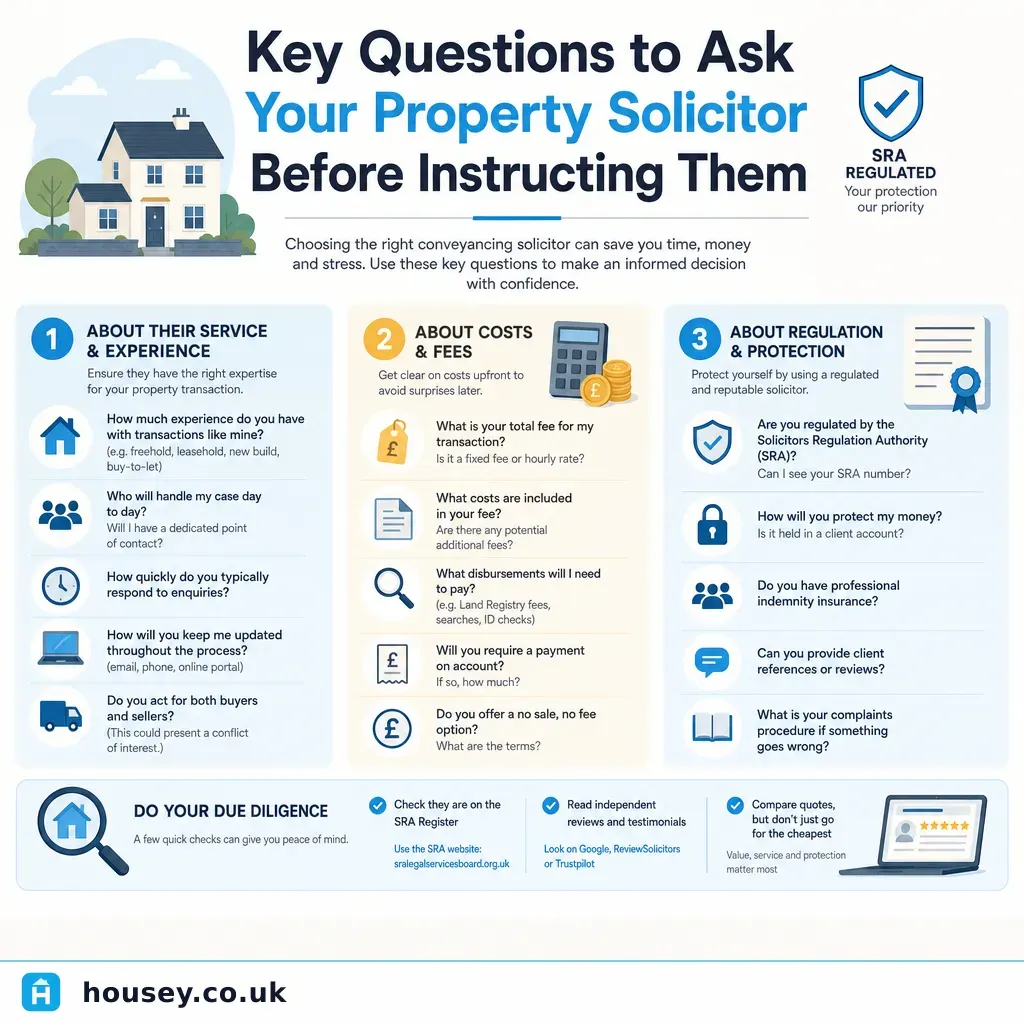
Key Questions to Ask Your Property Solicitor Before Instructing Them
Before instructing a property solicitor, ask whether they are on your mortgage lender's approved panel, whether their quote is fixed and includes VAT and all disbursements, who will personally handle your case, and what their abortive-fee policy is. Verifying their regulatory status on the SRA or CLC register takes two minutes and should always be done before instructing.
 Buying & Moving
Preparing Your Home for Sale: Flooring and First Impressions
Before marketing a property in the UK, flooring condition and room presentation directly affect buyer interest and offer levels. Focus on hallways and reception rooms first. Replace only visibly damaged or stained flooring; a professional clean is often sufficient. Complete all preparation before booking a professional photography session for portal listings.
 Buying & Moving
Rubbish Removal and House Clearance Costs
House clearance in the UK typically costs £150–£400 for a single room and £500–£1,500 for a full three-bedroom property, depending on volume, access, and hazardous items. Most companies price by van load or property size. Always verify that your carrier holds a current Environment Agency waste carrier licence before agreeing a price.