Knowledge Base
Property advice that actually helps
Researched, UK-specific guides for every stage of homeownership — from buying and surveys to retrofit, planning and major works.
 Energy & Retrofit
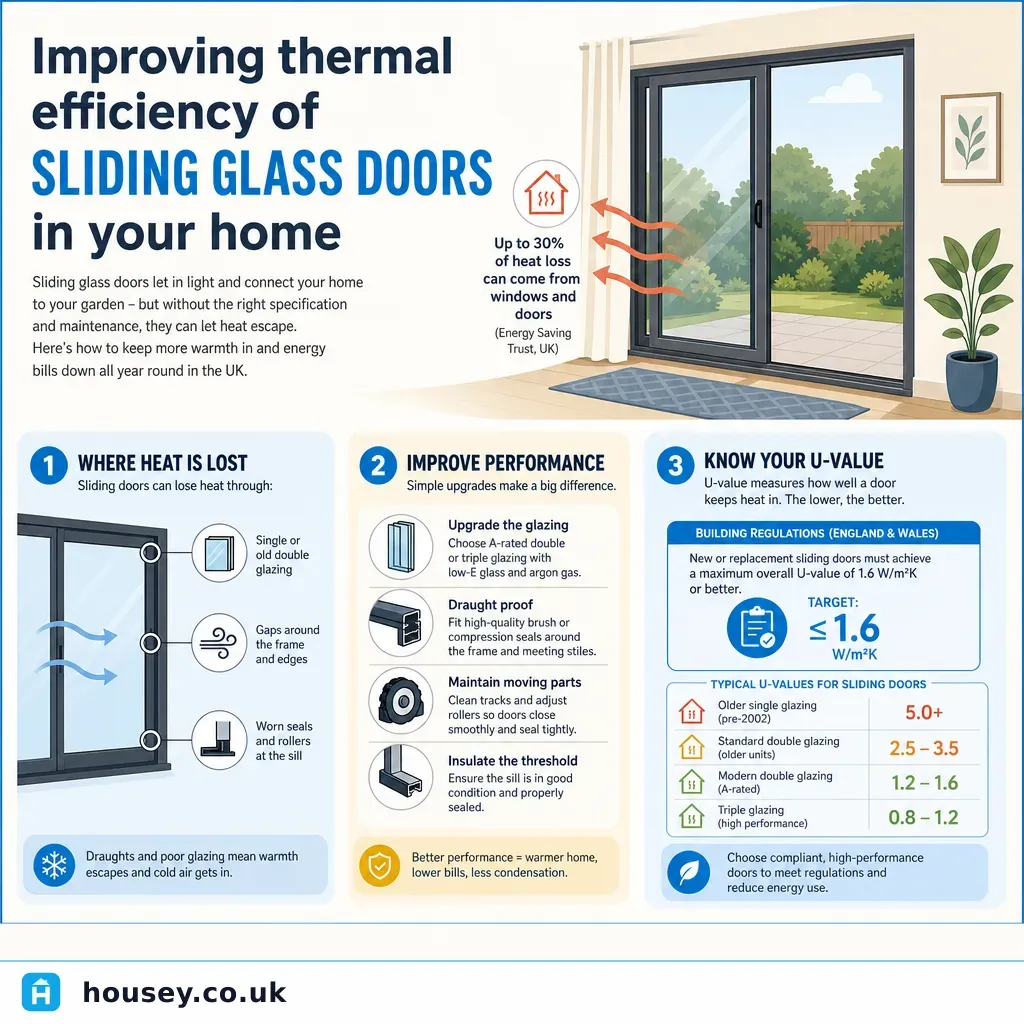
Improving thermal efficiency of sliding glass doors in your home
Sliding glass doors lose heat through the glazing unit, the frame, and air gaps in worn seals. Replacing worn brush seals is the cheapest first step; fitting a replacement door with a whole-door U-value of 1.4 W/m²K or better satisfies Building Regulations Part L requirements for replacement doors in existing dwellings in England.
 Energy & Retrofit
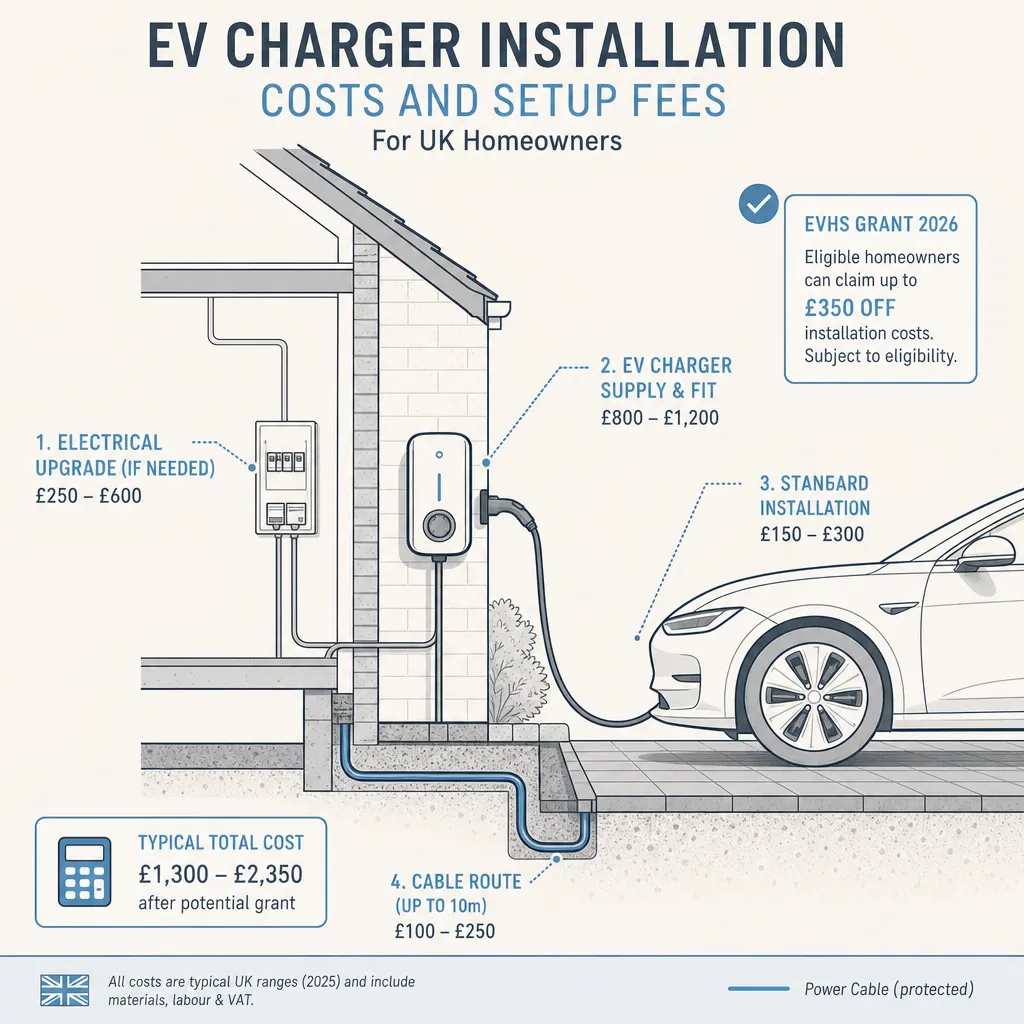
EV Charger Installation Costs and Setup Fees
A home EV charger typically costs £700–£1,200 installed in the UK, including unit and labour. All new domestic chargepoints must be smart chargers under the EV (Smart Charge Points) Regulations 2021, fitted by an OZEV-authorised installer. Costs vary by cable run length and consumer unit condition. Eligible renters and flat owners may claim up to £350 via the EVHS grant.
 Energy & Retrofit
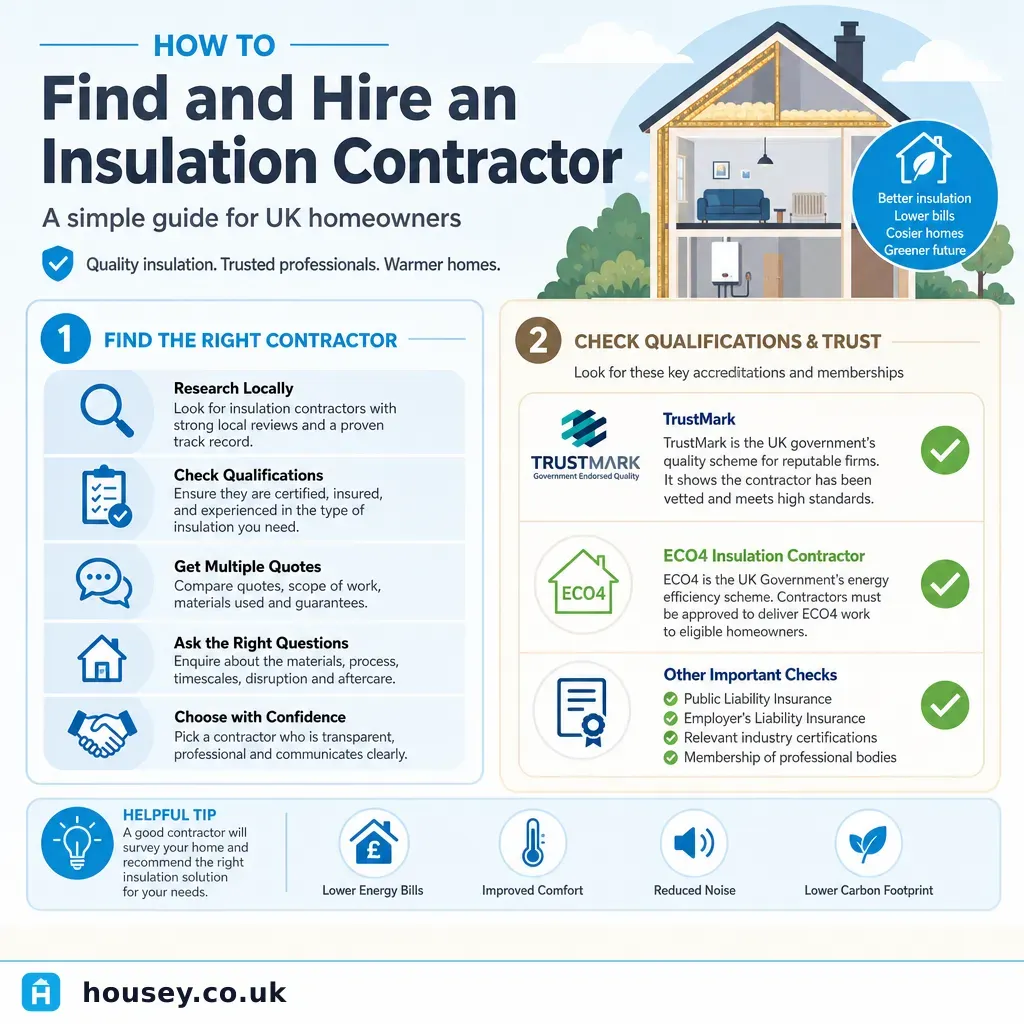
How to Find and Hire an Insulation Contractor
Look for contractors registered with TrustMark, the government-endorsed quality scheme for energy efficiency retrofit work. For cavity wall insulation, CIGA membership and the 25-year guarantee are important quality markers. For funded schemes such as ECO4 or the Great British Insulation Scheme, contractors must hold TrustMark and comply with the PAS 2030 installation standard.
 Energy & Retrofit
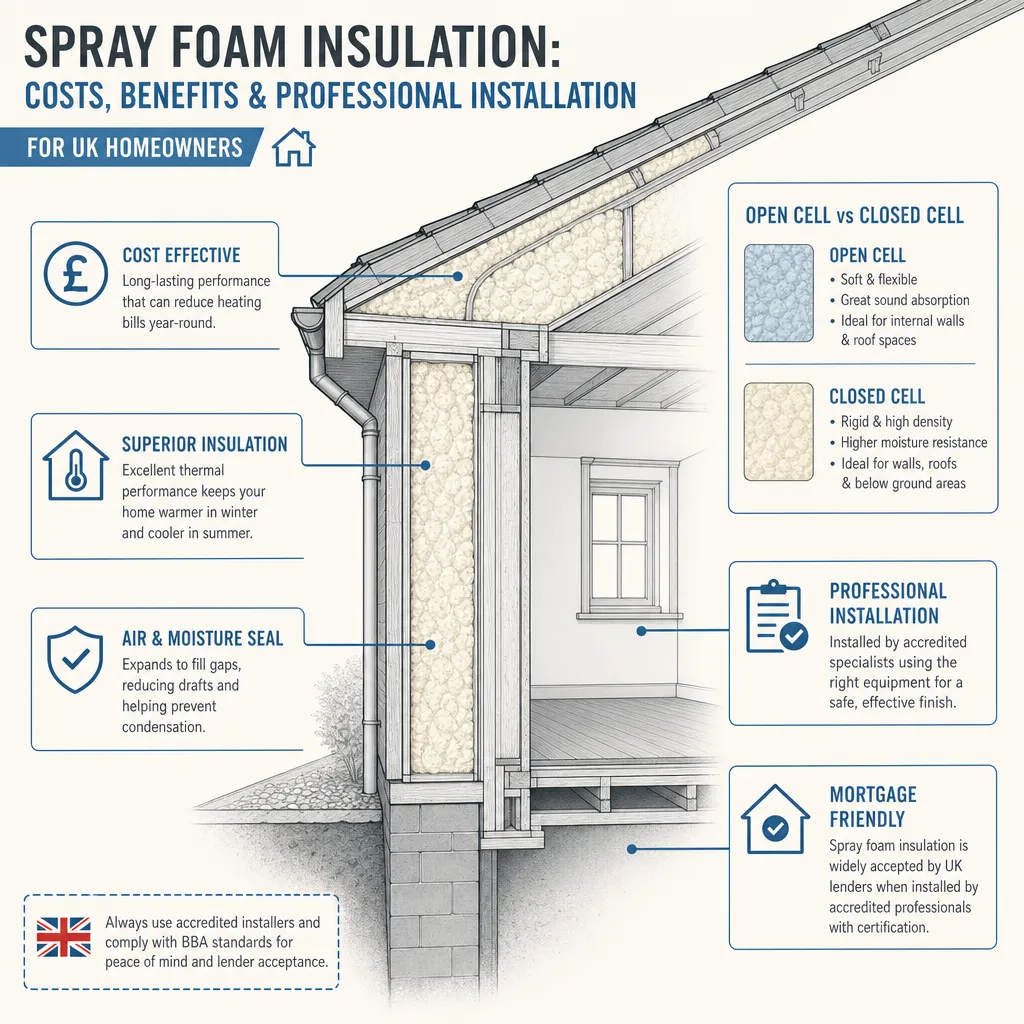
Spray foam insulation: costs, benefits and professional installation
Spray foam insulation costs between £15 and £60 per square metre installed in the UK, depending on whether open-cell or closed-cell foam is used. Closed-cell foam delivers higher thermal performance but carries a greater risk of trapping moisture. UK homeowners should also be aware that spray foam in a roof space can affect mortgage eligibility — professional assessment is essential before installation.
 Energy & Retrofit
Green Roofs: Environmental Benefits and Installation Considerations
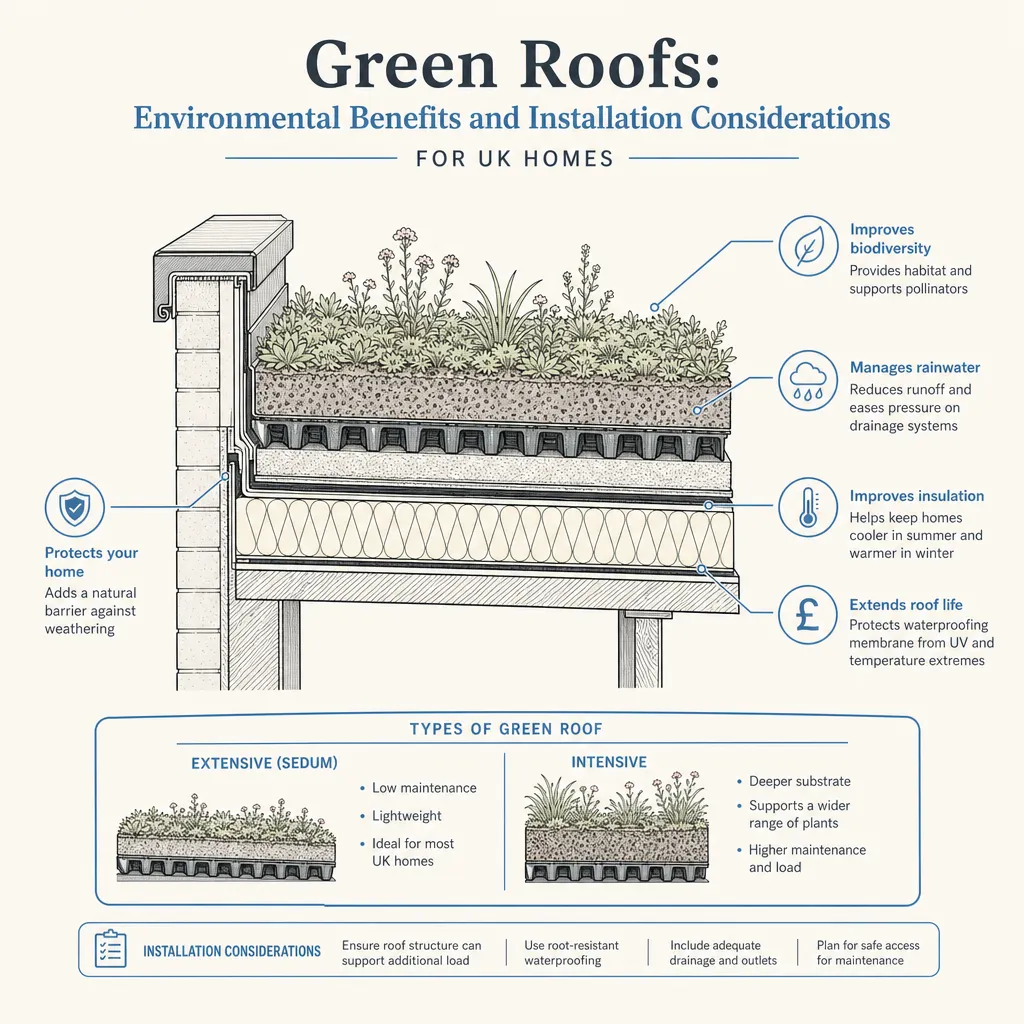
A green roof supports vegetation on a waterproof membrane above your building. Extensive systems use lightweight sedum or wildflower mixes and suit most flat roofs; intensive systems support deeper planting but add significant structural load. Before installation, a structural engineer should confirm your roof can bear the additional weight — typically 70–150 kg/m² for extensive and 200–500 kg/m² for intensive systems.
 Energy & Retrofit
Professional Home Energy Assessment: Understanding Your Property's Efficiency
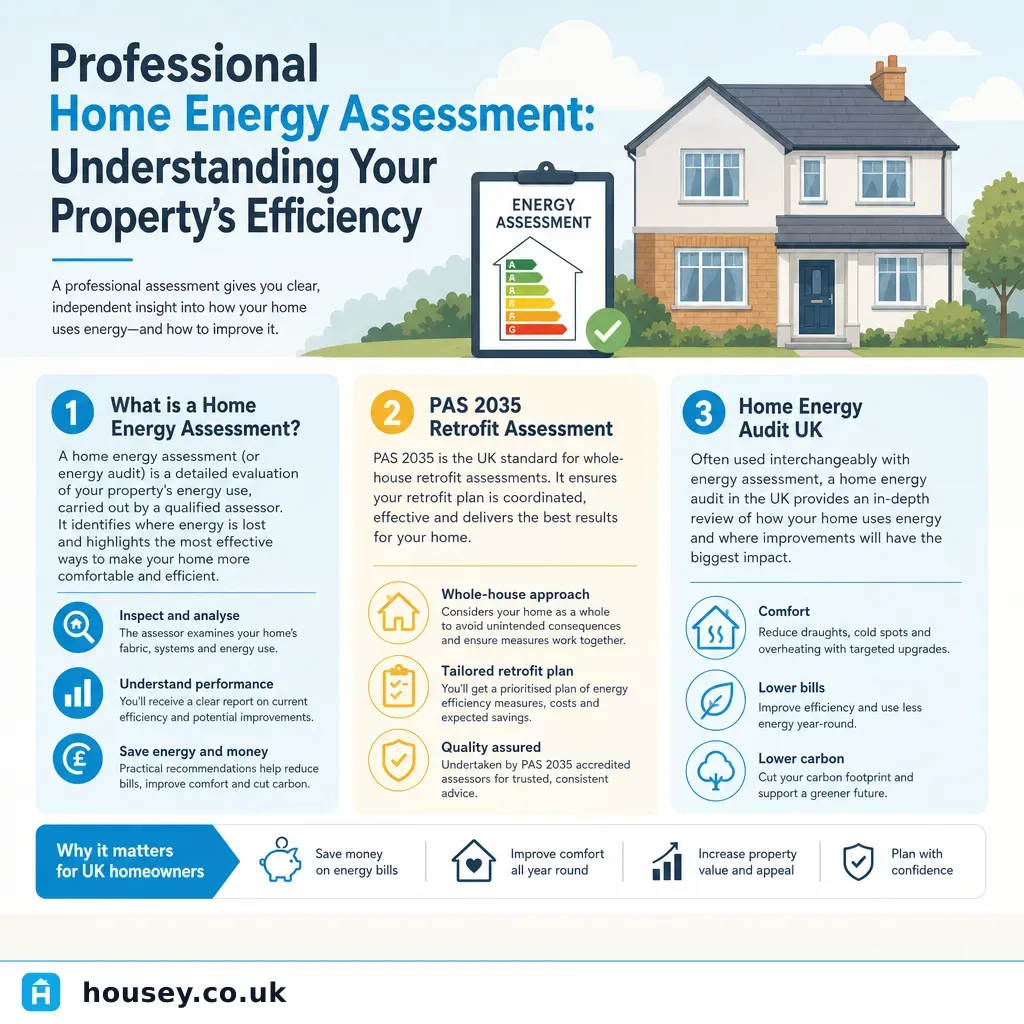
A professional home energy assessment goes beyond an EPC to evaluate how your property loses heat, where insulation is inadequate, and what improvements should be made in what order. For retrofit work, a PAS 2035 Retrofit Assessment by a qualified assessor is strongly recommended. It covers building fabric, ventilation, heating systems, and the moisture risk that arises if insulation is added without proper analysis.
 Energy & Retrofit
Improving Garage Door Insulation for Energy Efficiency
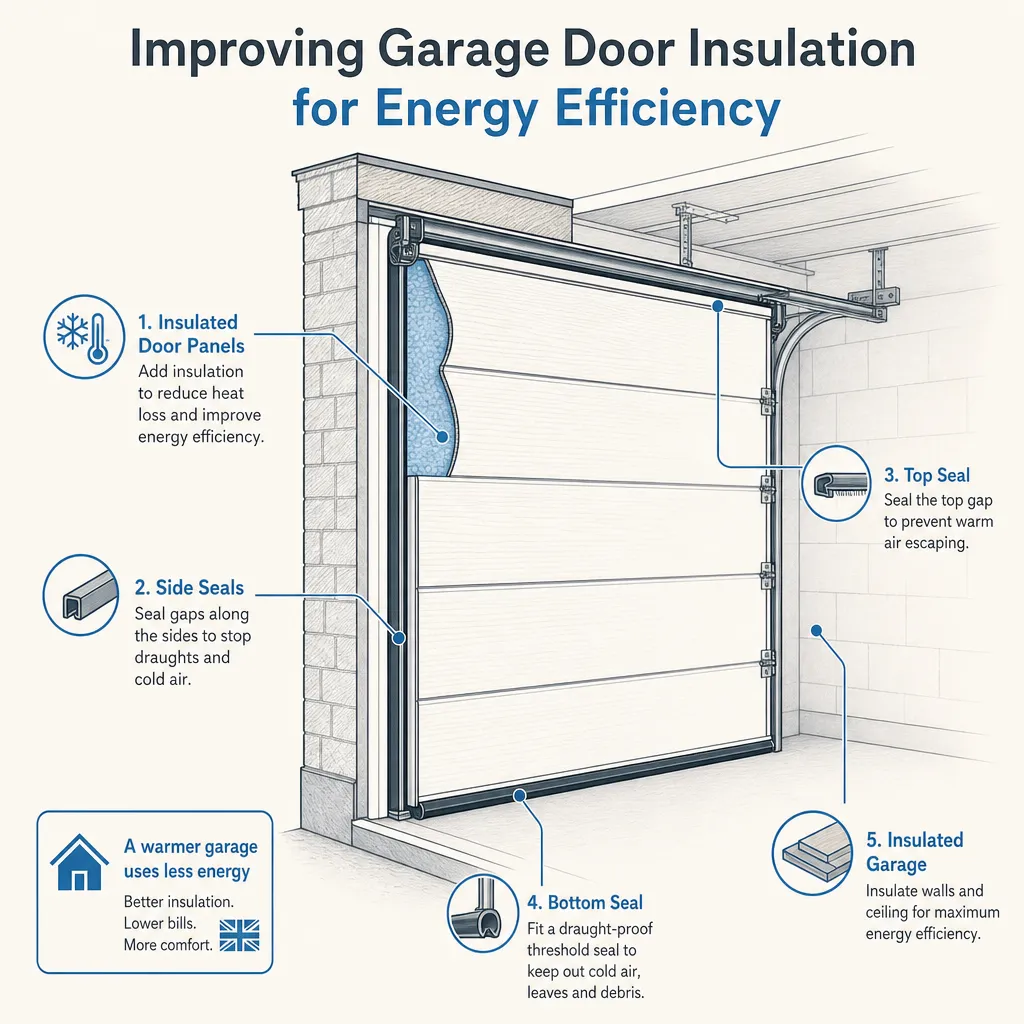
Improving garage door insulation typically involves fitting a retro-fit panel kit to an existing door, replacing a single-skin door with an insulated sectional model, or adding draught seals around the frame. For attached or integral garages, good door insulation can noticeably reduce heat loss into the main house and help trim energy bills.
 Energy & Retrofit
Understanding Solar Inverters: How They Work in Solar Installations
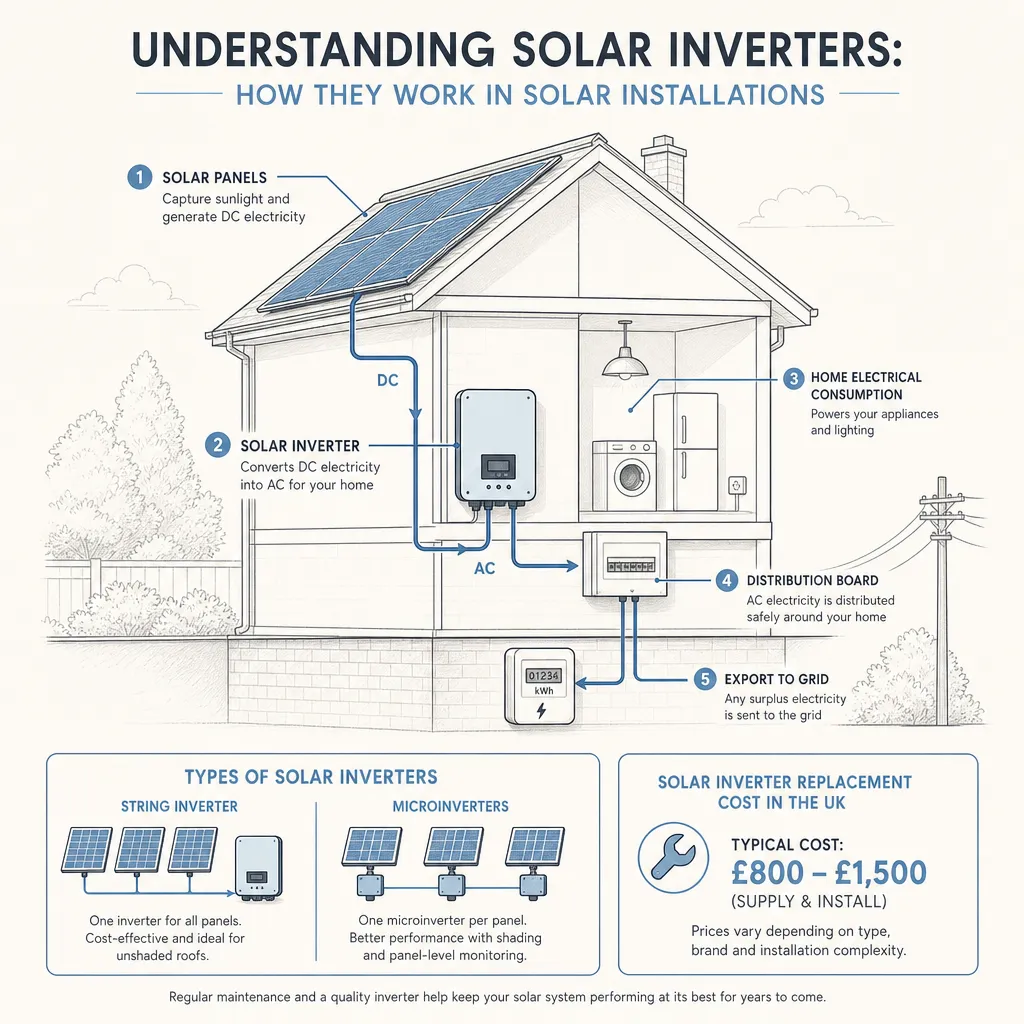
A solar inverter converts direct current (DC) electricity from solar panels into 230V alternating current (AC) that UK home appliances and the grid can use. It is the central component of any solar PV installation. Without an inverter, the power generated by panels cannot run standard appliances or be exported under the Smart Export Guarantee.
 Energy & Retrofit
Which Household Appliances Consume the Most Energy?
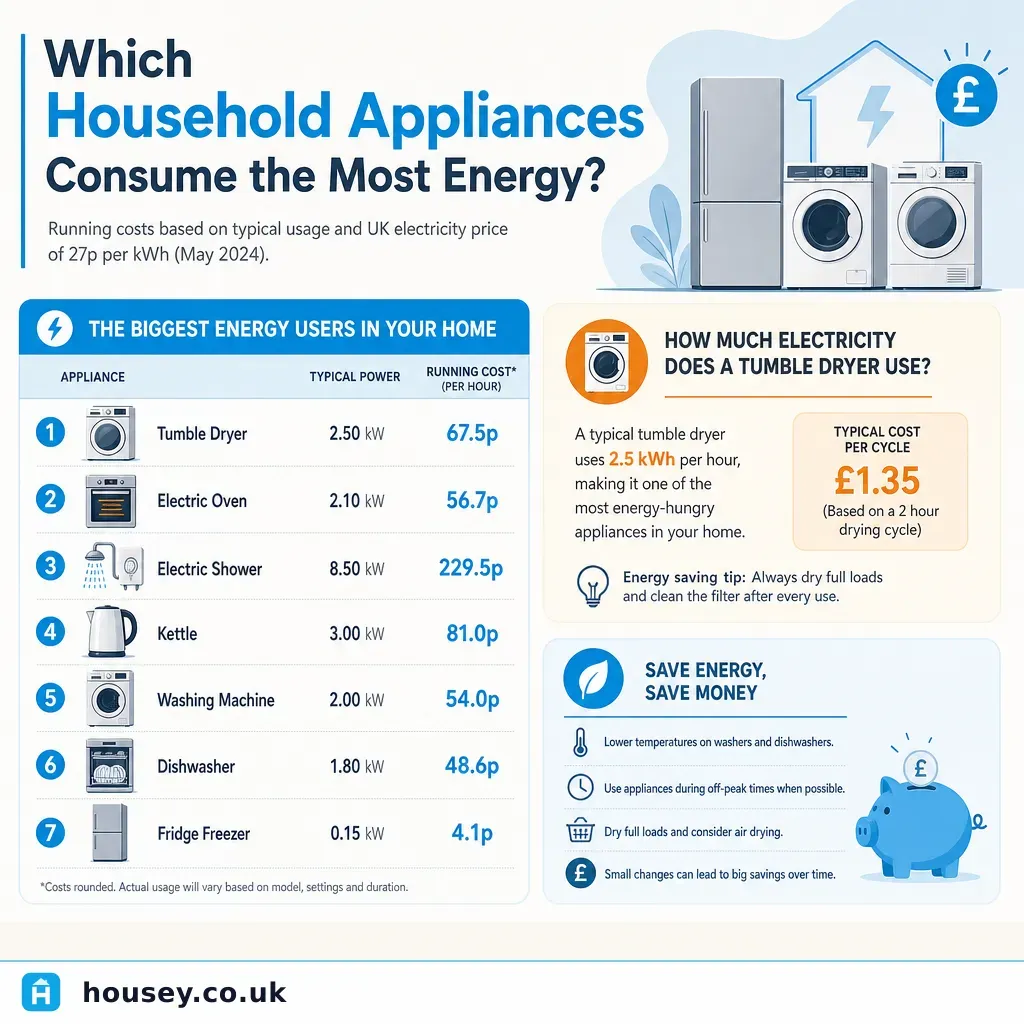
Tumble dryers, fridge-freezers, and electric showers are typically the biggest electricity consumers in a UK home. Running a tumble dryer costs around £1.20 per cycle at current rates. Appliances left on standby can add £35–£55 annually. Switching to lower wash temperatures, running full loads, and eliminating standby power saves most households £50–£100 per year without any capital outlay.
 Energy & Retrofit
Sustainable Homes: Features That Reduce Environmental Impact
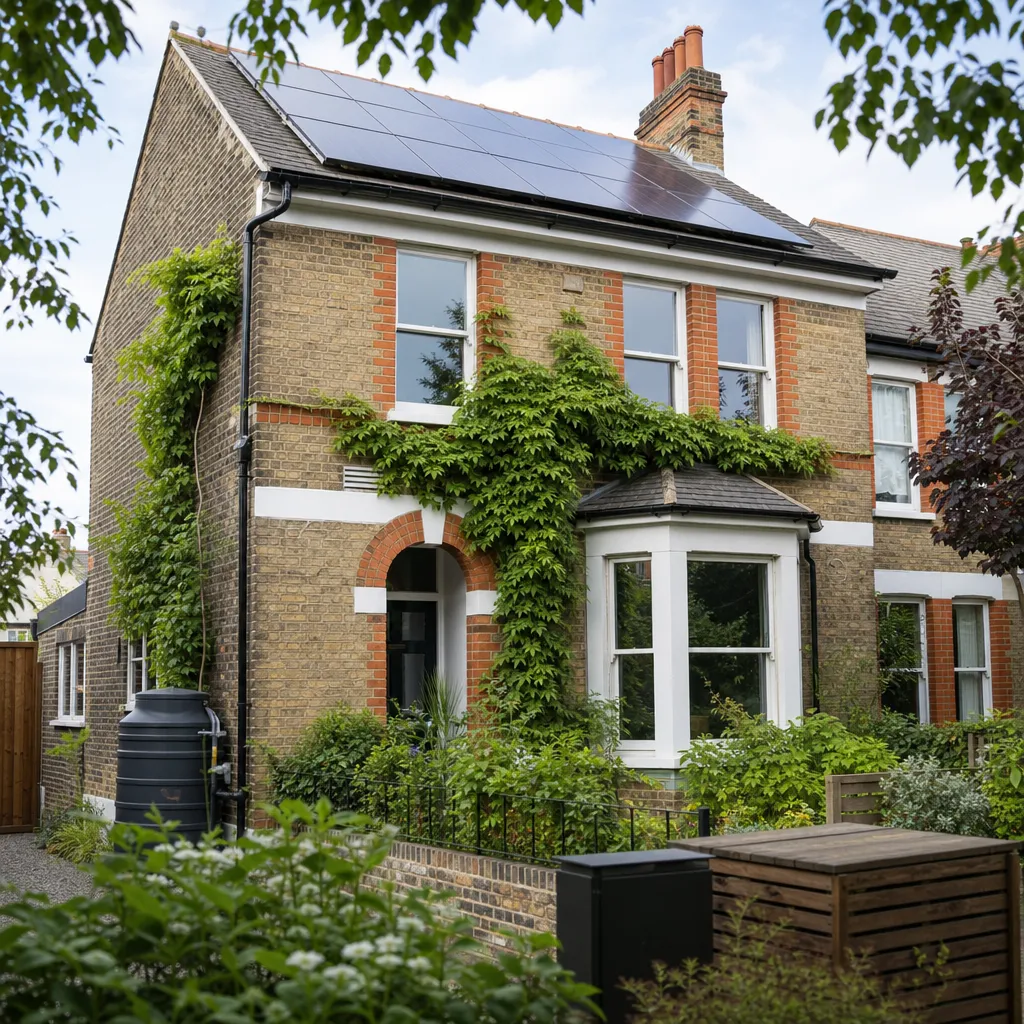
Sustainable homes reduce environmental impact through high levels of insulation, airtight construction, low-carbon heating such as heat pumps, solar energy generation, efficient water use, and responsibly sourced materials. For existing UK homes, the most impactful starting points are usually improving the building fabric — walls, roof, and windows — before switching to a low-carbon heat source.
 Energy & Retrofit
Retrofit Energy Assessment Costs and Process
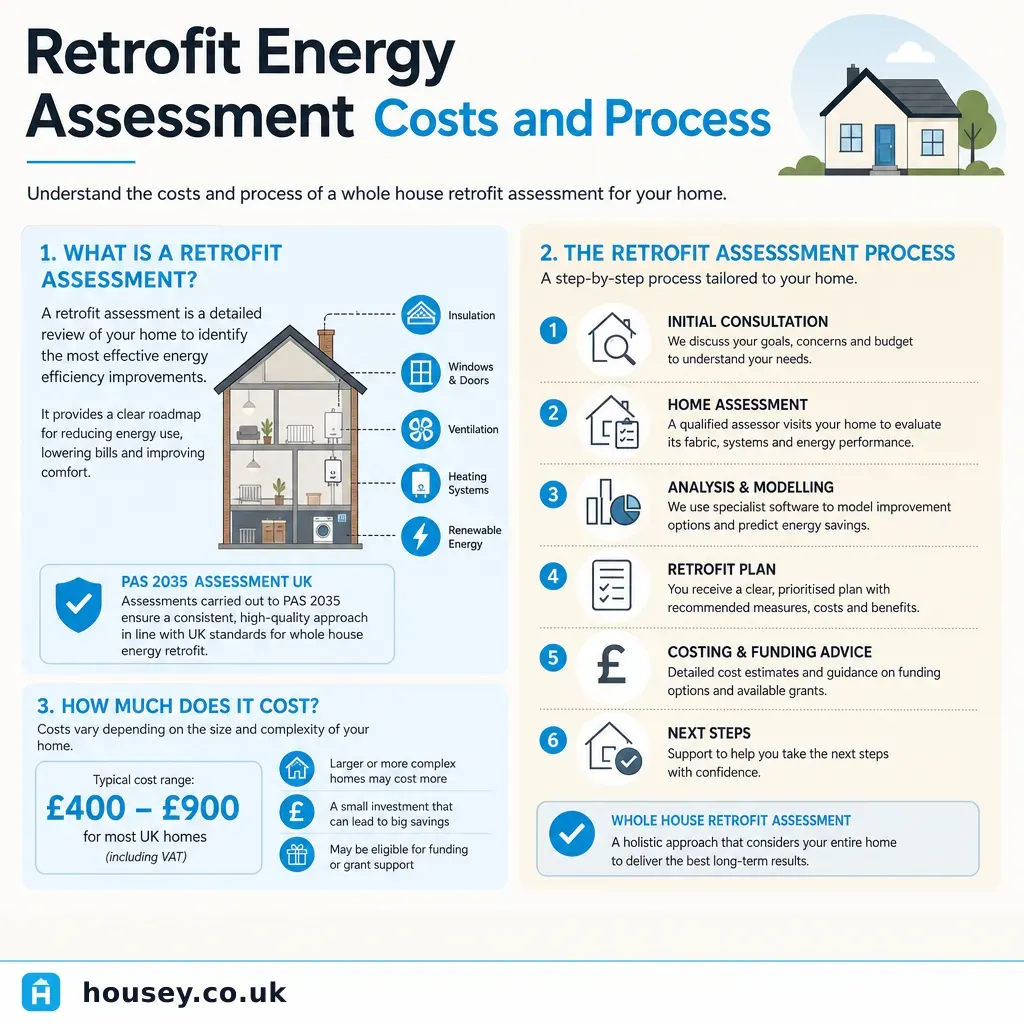
A retrofit energy assessment is a formal inspection of your home's fabric, heating, ventilation, and moisture risk, carried out by a TrustMark-registered assessor. It produces a Retrofit Assessment Document underpinning your improvement plan. Whole-house assessments typically cost £300 to £800, and a PAS 2035-compliant assessment is required for ECO4 and GBIS grant funding.
 Energy & Retrofit
Renewable Energy Technologies for Homes
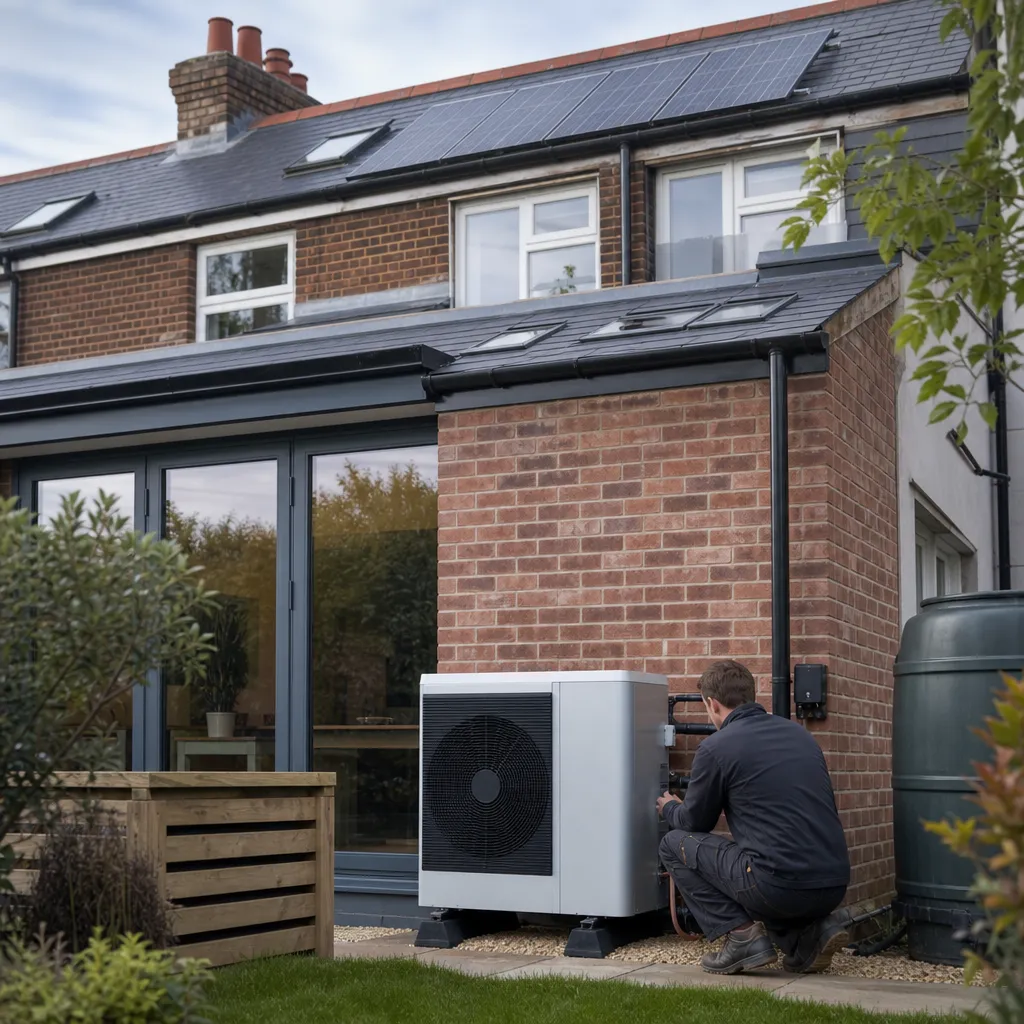
UK homes can choose from solar photovoltaic panels, air source heat pumps, ground source heat pumps, and battery storage as the main residential renewable technologies. Each suits different property types and budgets. Heat pumps attract the £7,500 Boiler Upgrade Scheme grant and solar qualifies for Smart Export Guarantee payments. All installations require MCS-certified installers for grant eligibility and building regulations compliance.