Knowledge Base
Property advice that actually helps
Researched, UK-specific guides for every stage of homeownership — from buying and surveys to retrofit, planning and major works.
 Energy & Retrofit
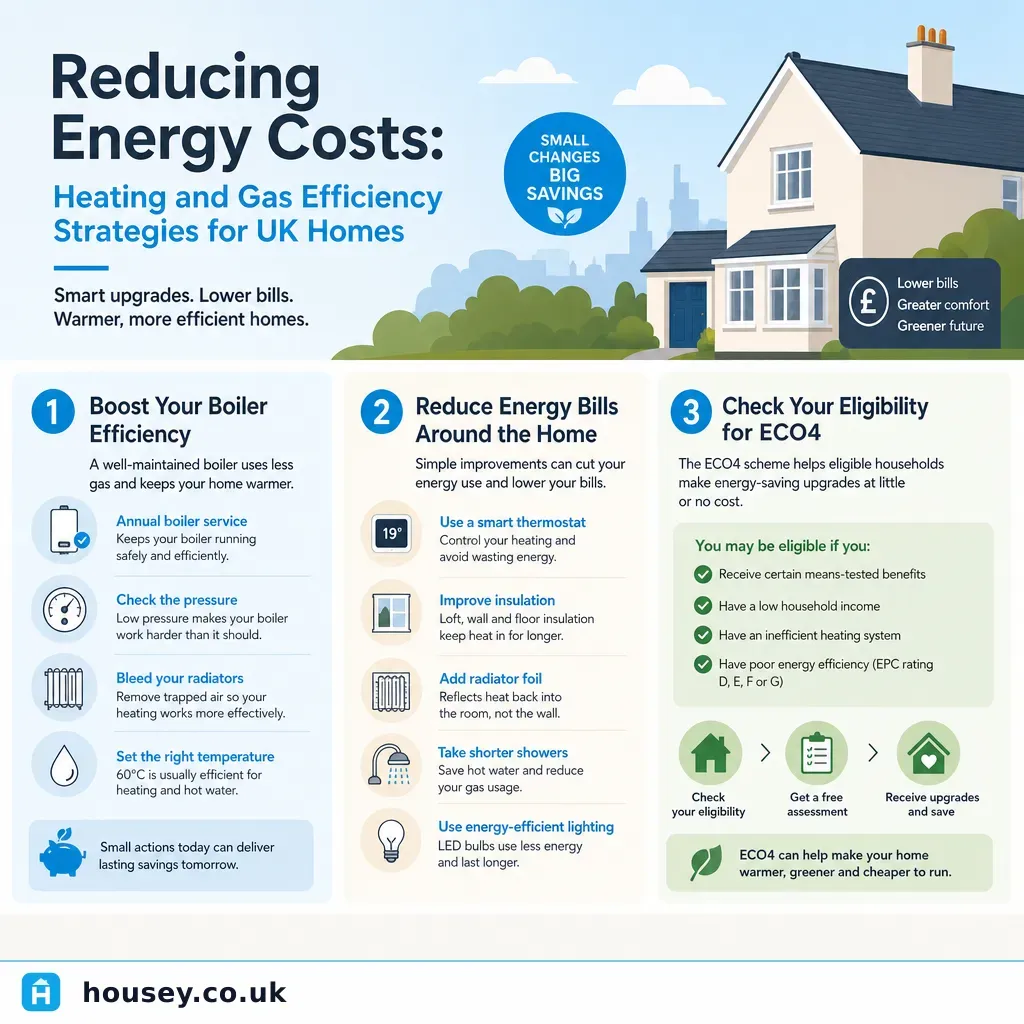
Reducing Energy Costs: Heating and Gas Efficiency Strategies for UK Homes
Most UK households spend around 55–60% of their energy bill on heating. Setting your boiler flow temperature to 55–60°C, improving loft or cavity wall insulation, and installing a smart thermostat are among the most effective steps. ECO4 and the Great British Insulation Scheme may fund upgrades for eligible households at no cost.
 Energy & Retrofit
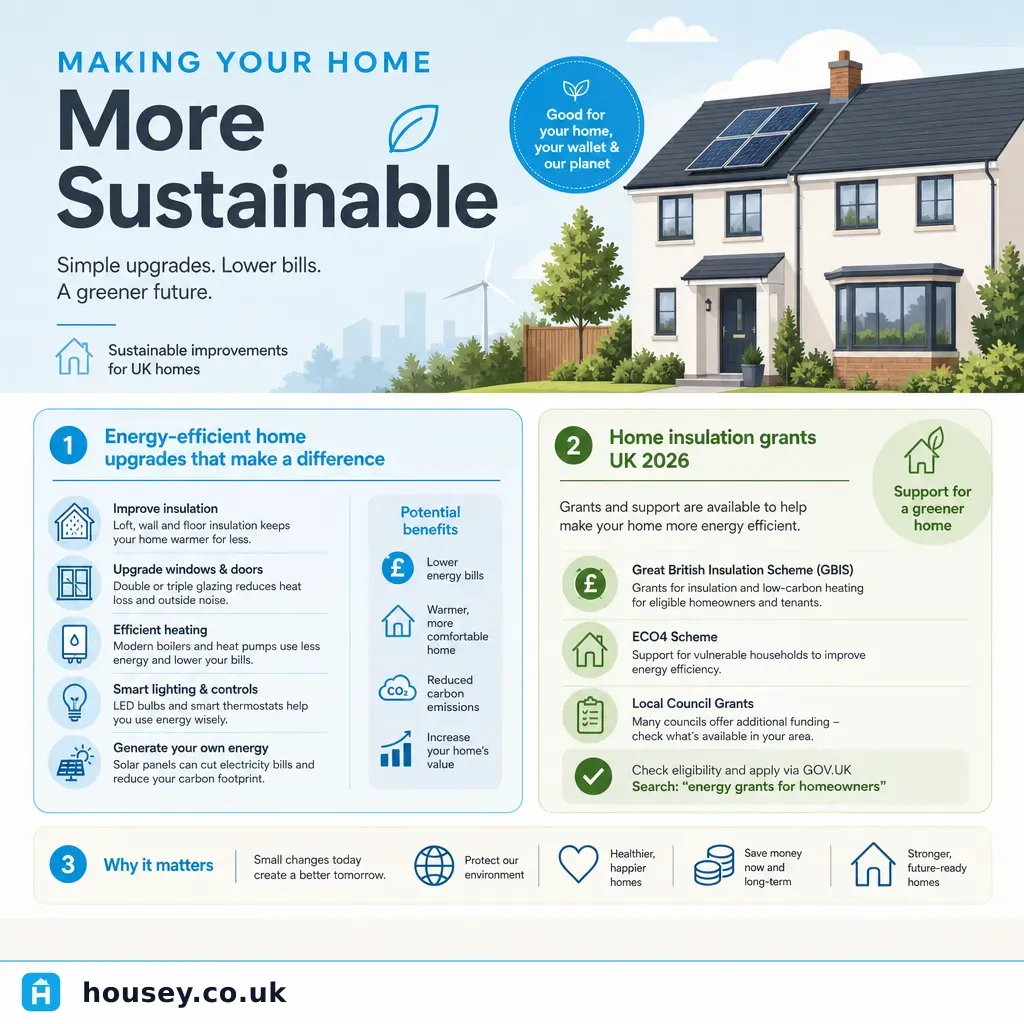
Making your home more sustainable
Making a UK home more sustainable usually starts with fabric-first improvements such as insulation, draught-proofing, and efficient glazing before adding renewable energy systems like solar panels or a heat pump. Government schemes including ECO4, the Great British Insulation Scheme, and the Boiler Upgrade Scheme may reduce costs. A PAS 2035 retrofit assessment helps prioritise measures and avoid moisture problems.
 Energy & Retrofit
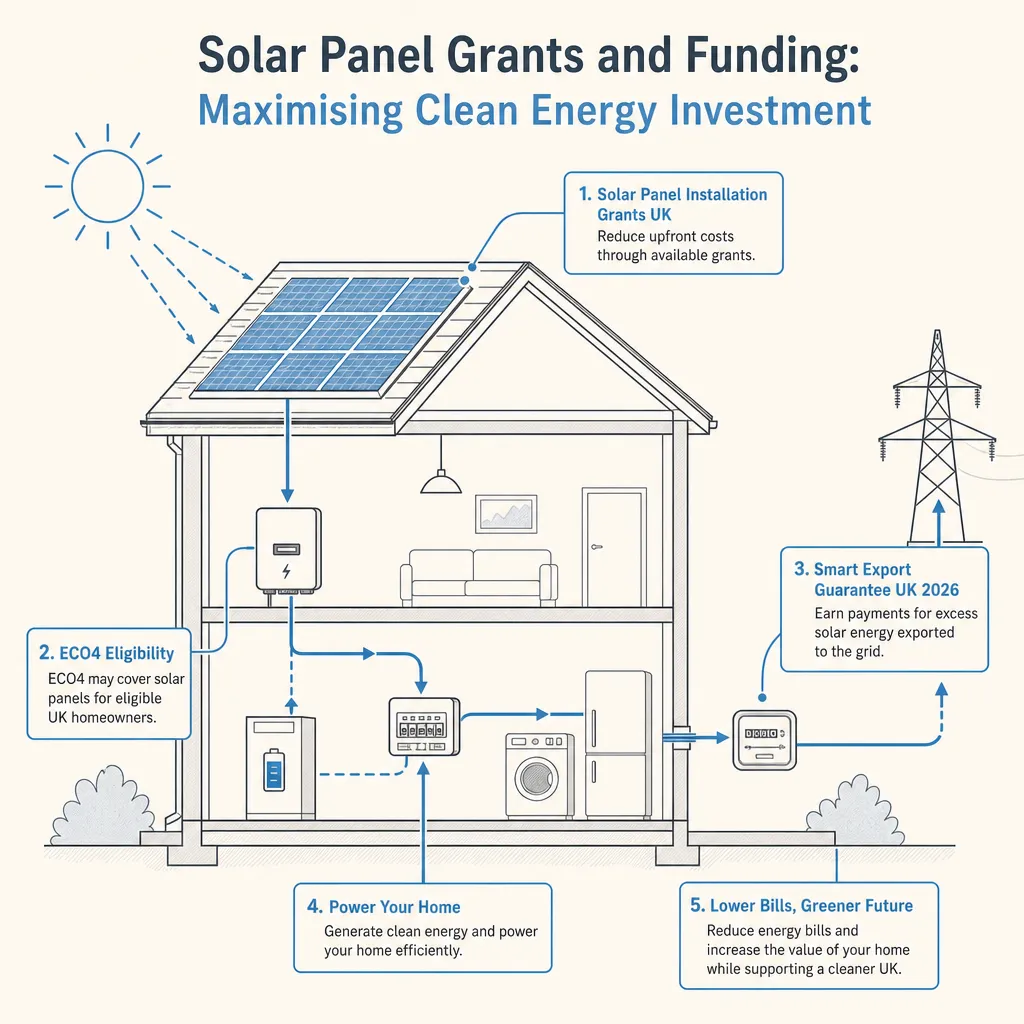
Solar Panel Grants and Funding: Maximising Clean Energy Investment
Several UK solar funding schemes are currently open: the Smart Export Guarantee pays homeowners for surplus electricity exported to the grid, ECO4 can fund free or subsidised panels for eligible low-income households, and 0% VAT on installation applies until at least March 2027. MCS accreditation of your installer is required for most schemes.
 Energy & Retrofit
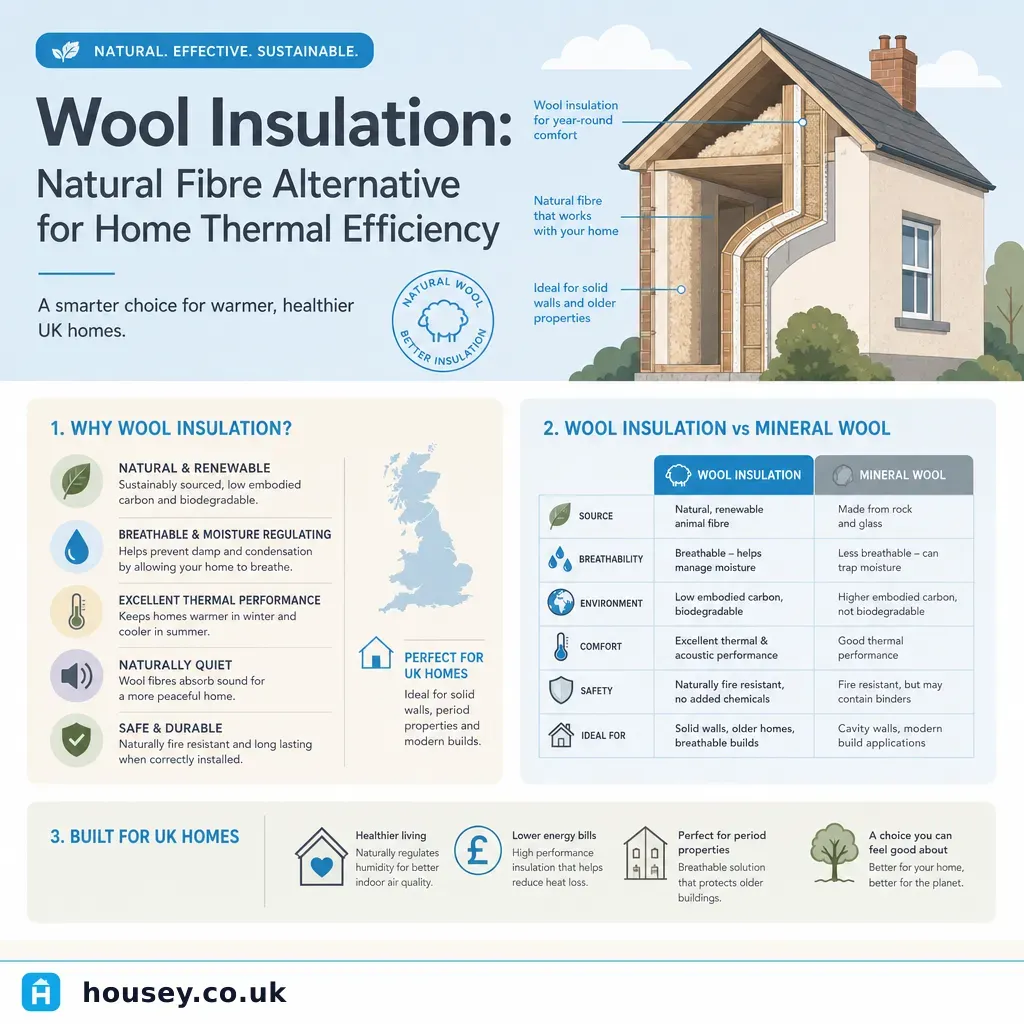
Wool Insulation: Natural Fibre Alternative for Home Thermal Efficiency
Sheep wool insulation achieves a thermal conductivity of 0.035–0.040 W/mK — comparable to mineral wool — and is particularly suited to pre-1919 solid-wall UK properties because it is vapour-permeable, allowing moisture to pass through the wall fabric rather than becoming trapped. It typically costs more than mineral wool but performs well in timber-frame, loft, and breathable wall assemblies.
 Energy & Retrofit
Solar Battery Storage Systems: Investment and Returns
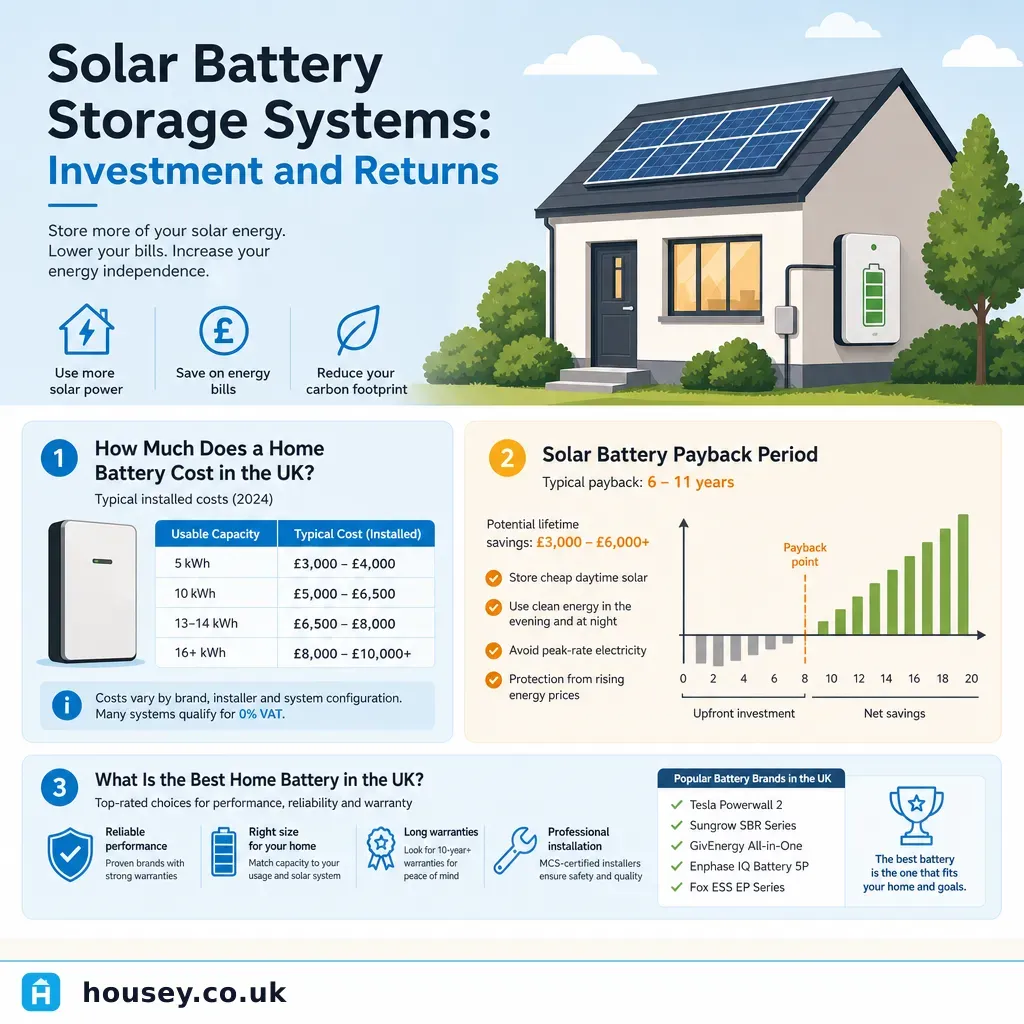
A home battery storage system stores surplus solar energy for use in the evening, reducing grid electricity imports. Lithium iron phosphate batteries with 5–10 kWh capacity suit most UK homes. Payback periods typically run 8–14 years. MCS-certified installation is required for grid connection and incentive eligibility. Returns depend heavily on your electricity tariff and export rate.
 Energy & Retrofit
Solar panel maintenance: service costs and system upkeep
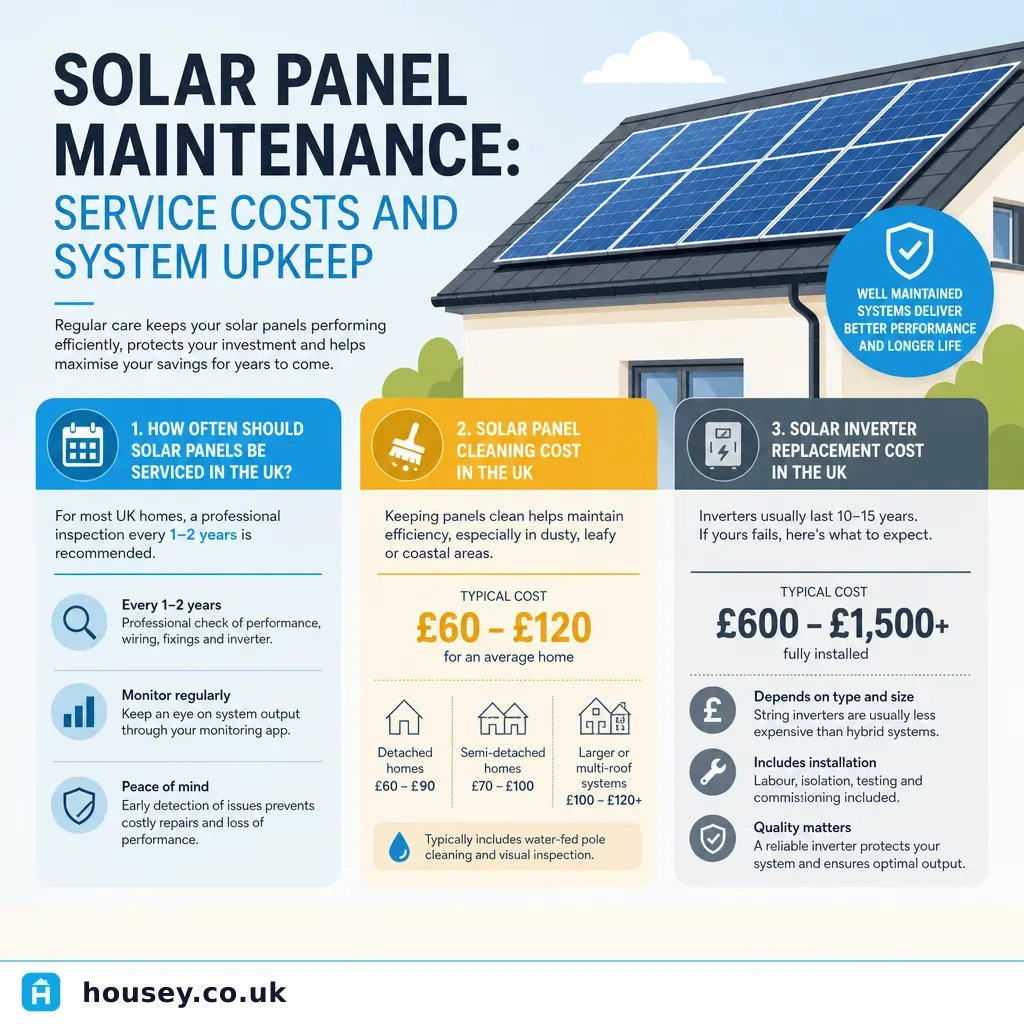
Solar panels need a professional inspection every one to three years and cleaning every one to two years, costing roughly £100–£200 for a service visit and £60–£150 to clean a standard 3–4 kWp system. The biggest long-term cost is inverter replacement, typically due between years ten and fifteen, at around £800–£1,500 installed.
 Energy & Retrofit
Making Your Home More Energy Efficient and Sustainable
The most effective approach to home energy efficiency is fabric-first: insulate the loft, walls, and floor before upgrading the heating system. For most UK homes, loft insulation offers the fastest payback; solid wall insulation and heat pumps deliver greater savings but require professional assessment, particularly in pre-1920s properties where retrofit can introduce moisture risk if poorly specified.
 Energy & Retrofit
Removing Cavity Wall Insulation: When and How Much It Costs
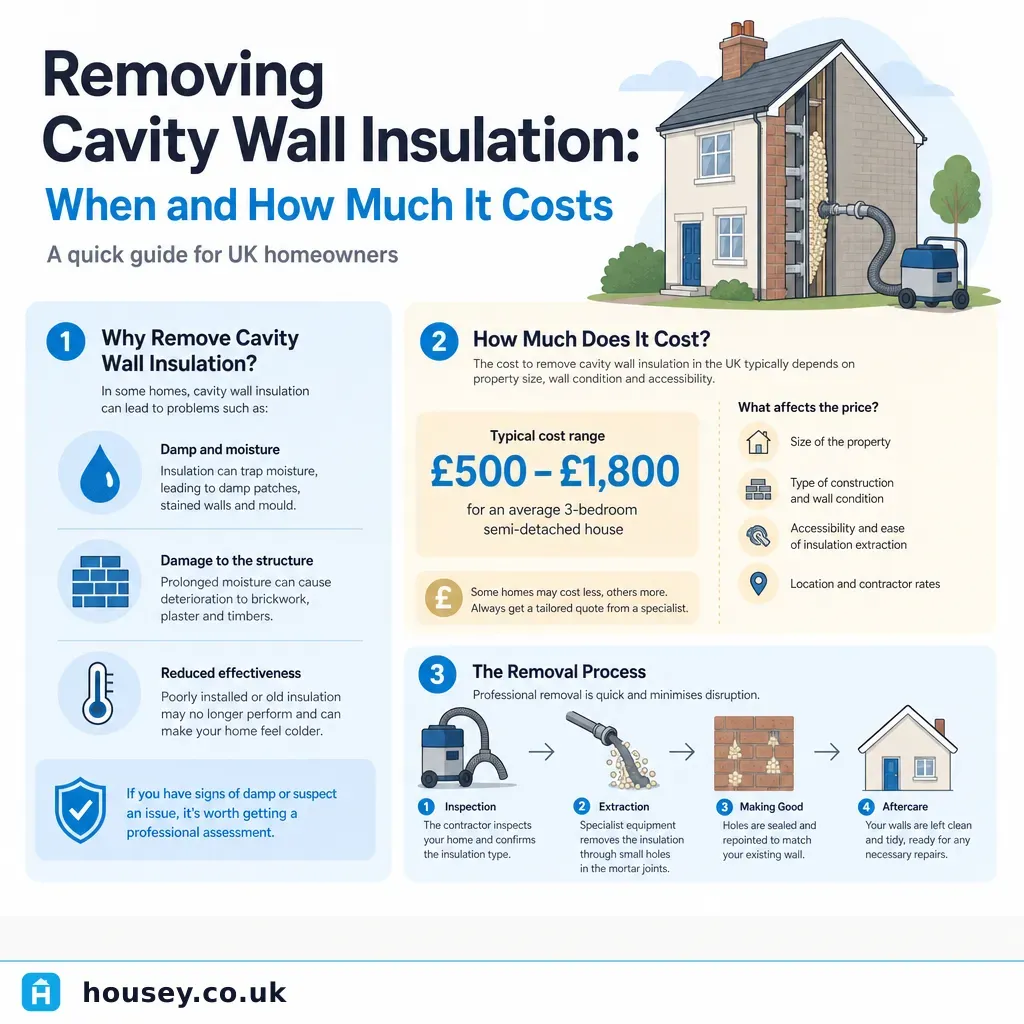
Cavity wall insulation is usually removed when it is causing penetrating damp, has degraded, or was poorly installed. Removal typically costs £2,000–£6,000 for a semi-detached house, depending on insulation type and access difficulty. A specialist contractor drills out the old material and may re-inject new insulation once the wall is confirmed dry.
 Energy & Retrofit
Solar Shingles: Integrated PV Technology for Roofing
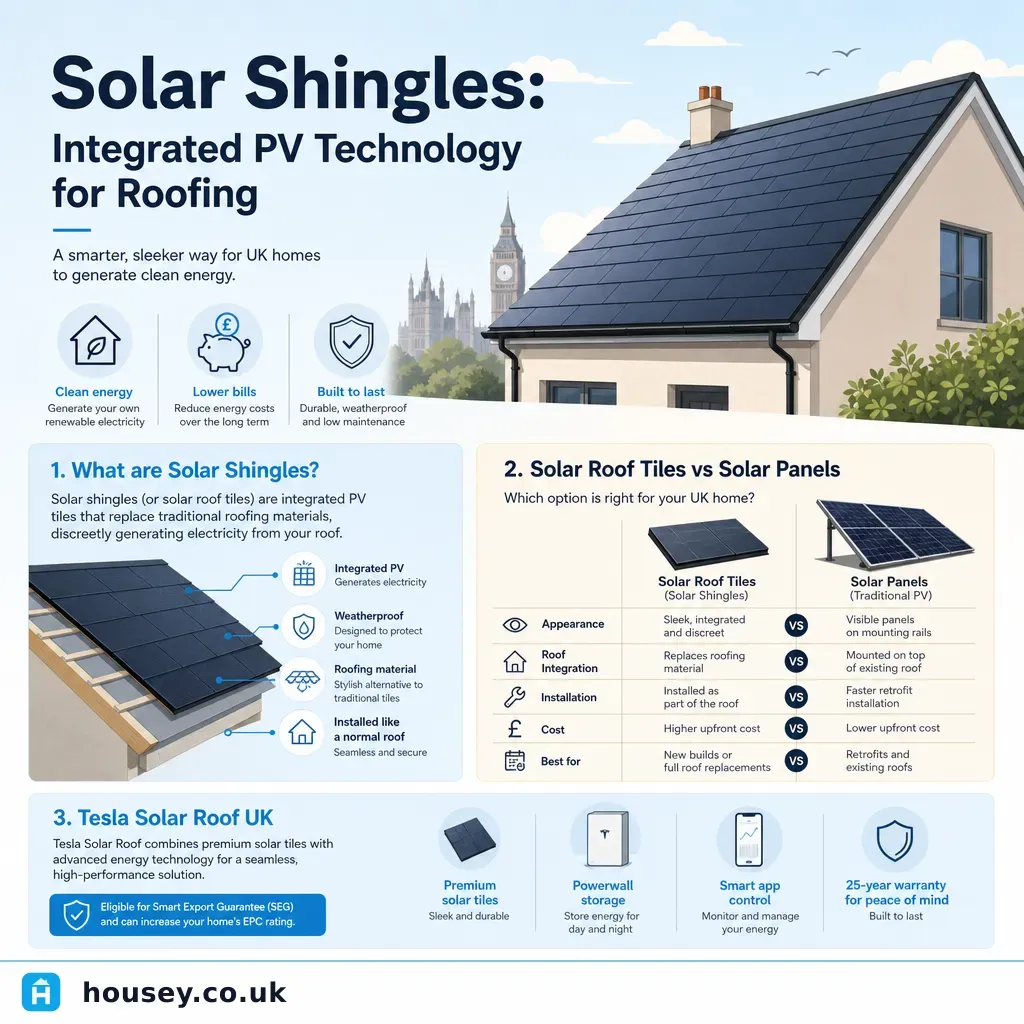
Solar shingles are photovoltaic cells built into individual roofing tiles, generating electricity while serving as the weatherproof roof covering. In the UK they are significantly more expensive than conventional solar panels — typically £15,000–£30,000+ for a full roof installation — but remove the need for a separate panel array and suit properties where aesthetics or planning restrictions rule out conventional panels.
 Energy & Retrofit
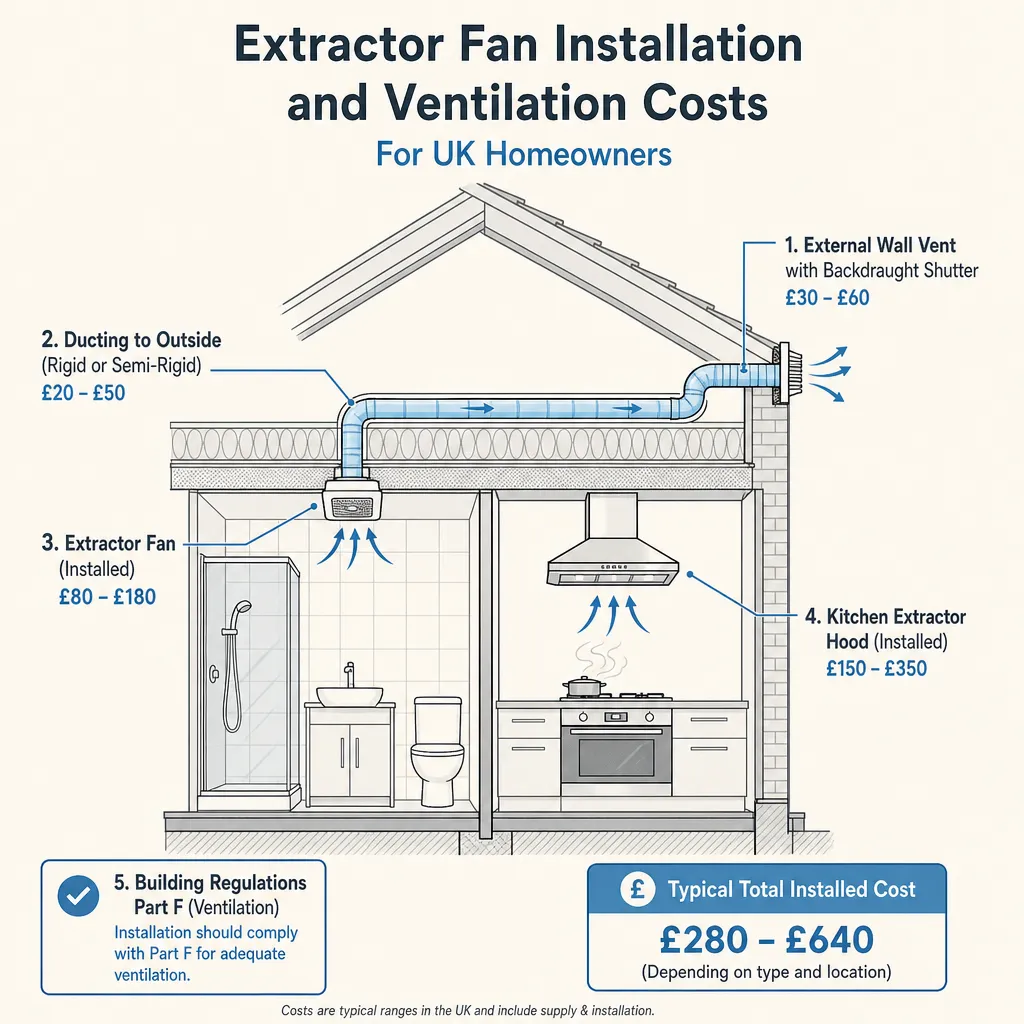
Extractor Fan Installation and Ventilation Costs
Installing a standard bathroom extractor fan in the UK typically costs £150–350 supply and fit, including Part P electrical compliance. Bathrooms require at least 15 l/s extract capacity under Approved Document F. Persistent condensation often warrants a full ventilation assessment rather than a simple fan replacement.
 Energy & Retrofit
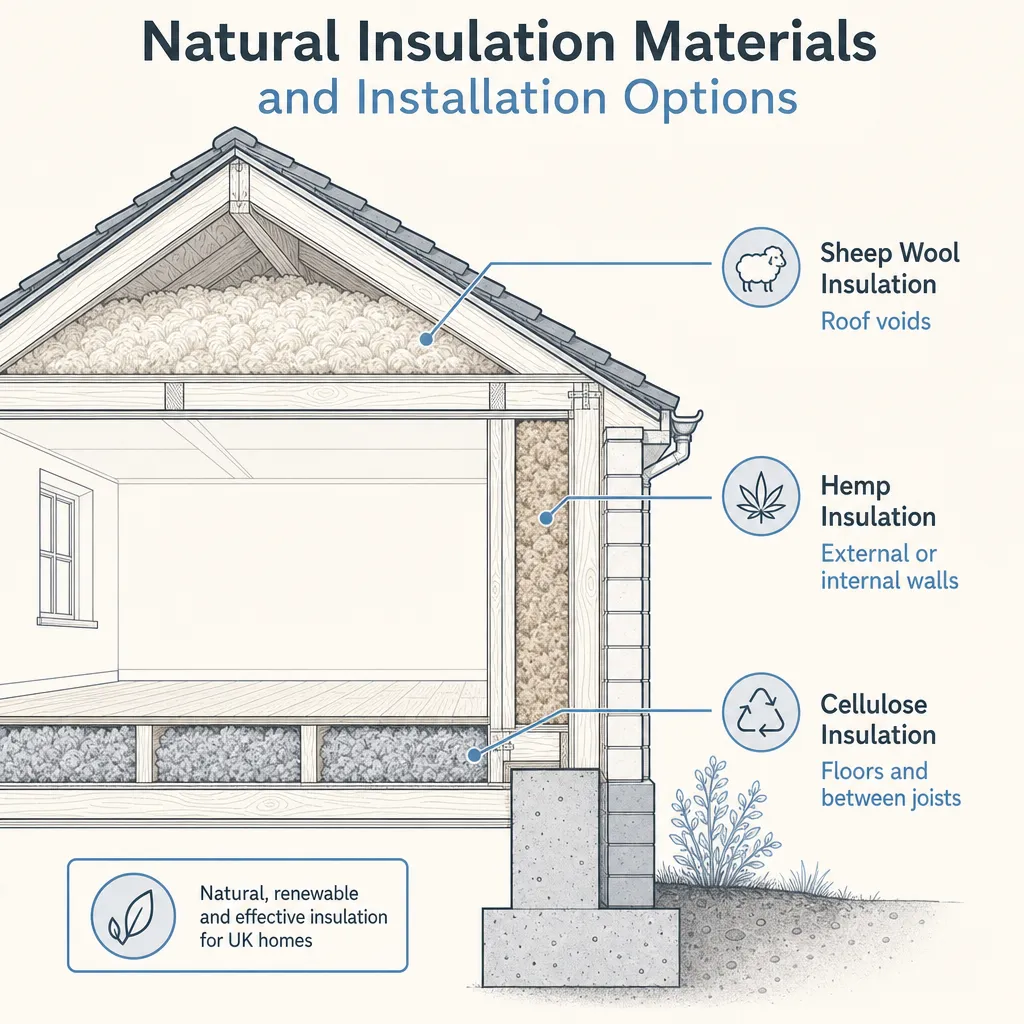
Natural Insulation Materials and Installation Options
Natural insulation materials such as sheep wool, hemp, cellulose, wood fibre, and cork can match mineral wool for thermal performance and offer additional benefits including moisture buffering and lower embodied carbon. The right choice depends on your property type, the area being insulated, moisture risk, and whether the project is privately funded or grant-supported.
 Energy & Retrofit
Solar window film: enhancing thermal performance and energy efficiency
Solar window film is a thin laminate applied to glass that reduces solar heat gain by 30–80% depending on specification. It controls glare and blocks up to 99% of UV radiation, slowing furniture fading. Most homes do not need planning permission for interior film, though listed buildings and conservation areas may have restrictions. It costs significantly less than replacing glazing.