Knowledge Base
Property advice that actually helps
Researched, UK-specific guides for every stage of homeownership — from buying and surveys to retrofit, planning and major works.
 Energy & Retrofit
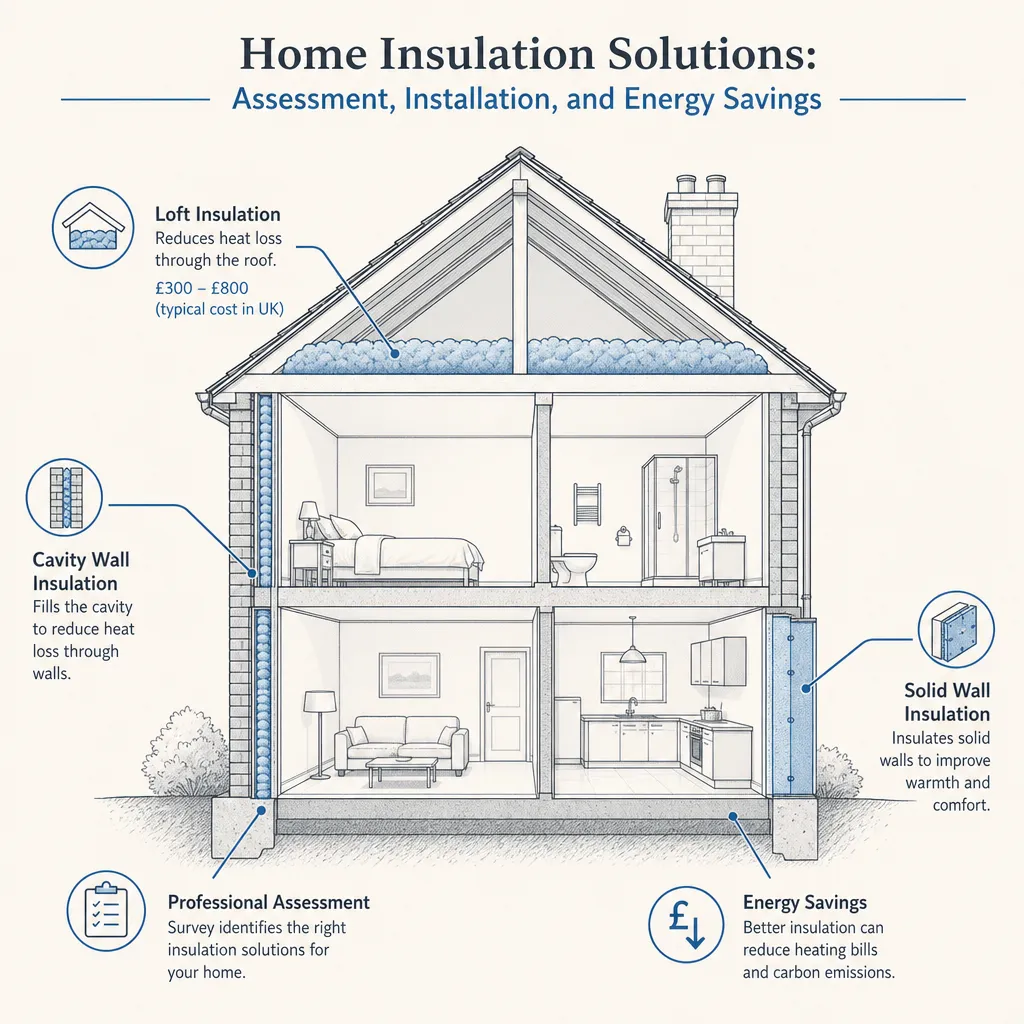
Home Insulation Solutions: Assessment, Installation, and Energy Savings
Home insulation in the UK covers loft, cavity wall, solid wall, and floor insulation. The right solution depends on your property's construction, age, and current energy performance. Properly installed insulation can reduce heat loss, lower energy bills, and improve your EPC rating. Retrofit work should comply with PAS 2035 and be carried out by a TrustMark-registered installer.
 Energy & Retrofit
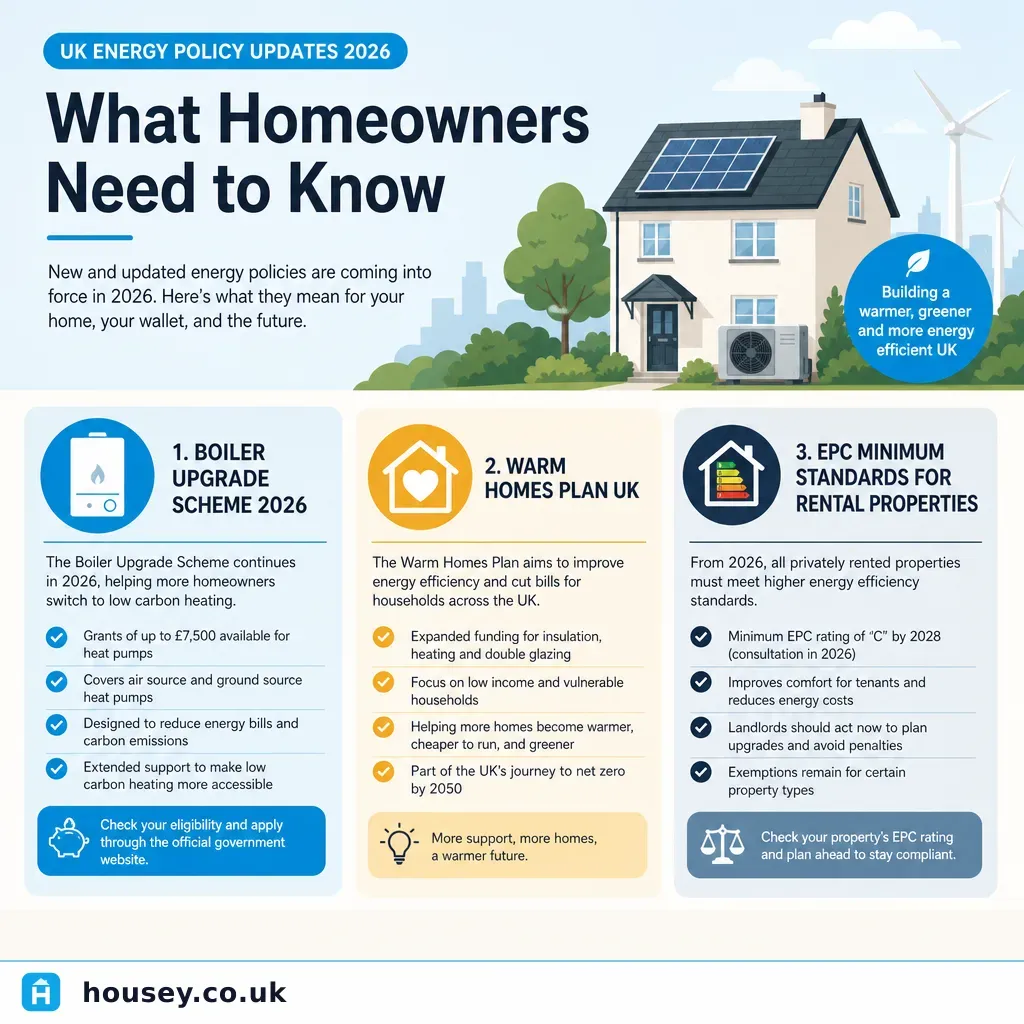
UK Energy Policy Updates 2026: What Homeowners Need to Know
The UK energy policy landscape in 2026 is shaped by the Warm Homes Plan, the Boiler Upgrade Scheme (£7,500 for eligible heat pumps), and proposed EPC minimum standards for private rentals. Homeowners planning retrofits and landlords with low-rated properties should check GOV.UK for current scheme availability and confirmed regulatory timelines.
 Energy & Retrofit
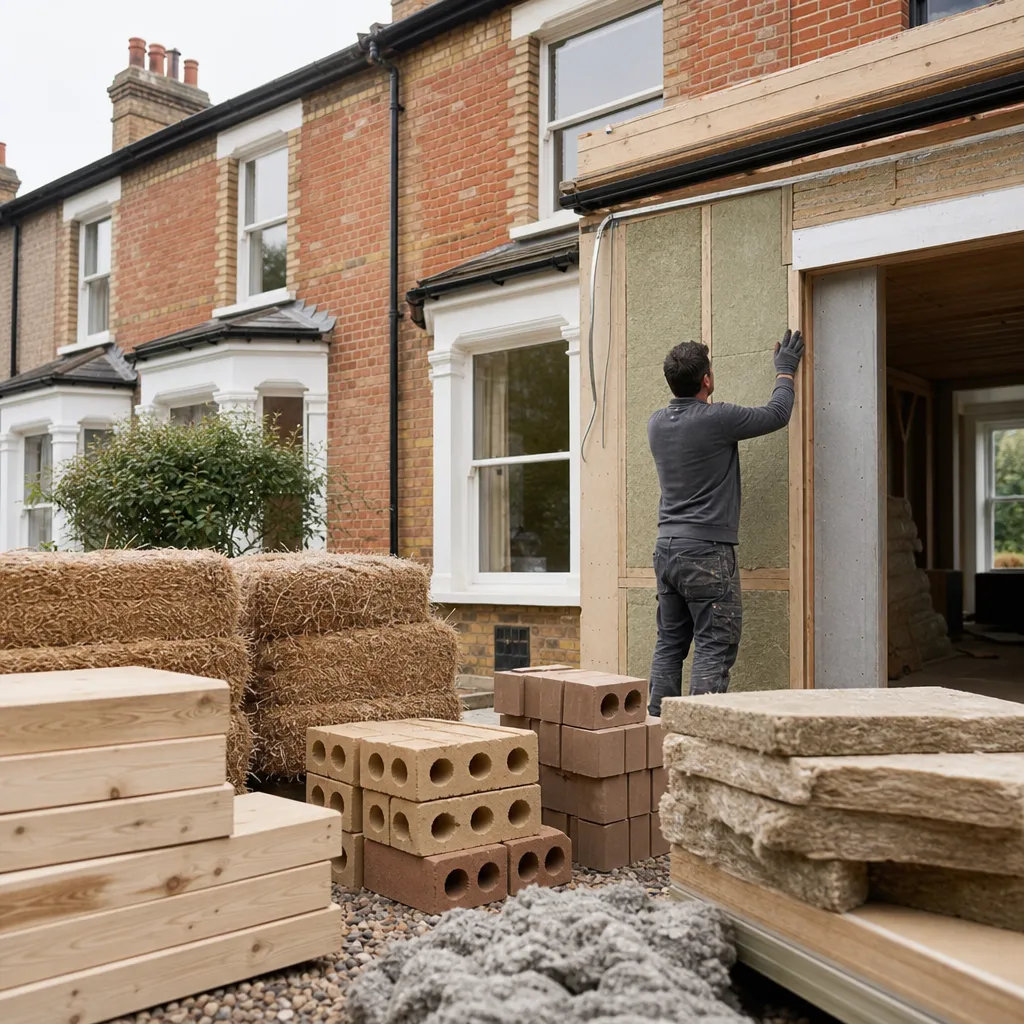
Sustainable Building Materials for Home Projects and Retrofits
Sustainable building materials for UK homes range from low-embodied-carbon insulation — wood fibre, sheep's wool, hemp — to FSC-certified structural timber and reclaimed stone or brick. The right choice depends on your building's construction, moisture dynamics, and the retrofit standard you are working to. For older UK homes with solid walls, professional moisture risk assessment is essential before specifying any insulation product.
 Energy & Retrofit
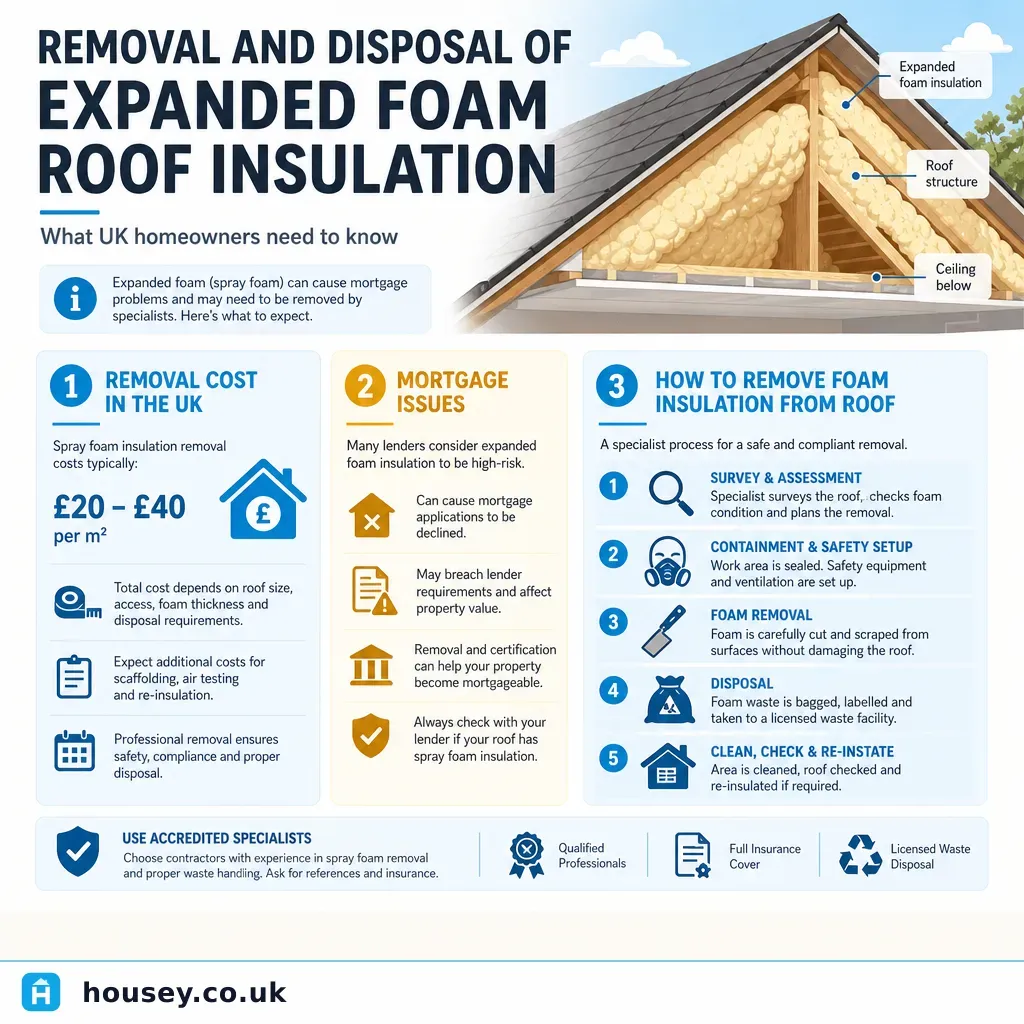
Removal and Disposal of Expanded Foam Roof Insulation
Expanded foam roof insulation — including spray polyurethane foam — should only be removed by specialist contractors. An asbestos survey is required before any work in pre-2000 properties under the Control of Asbestos Regulations 2012. Spray foam can affect mortgage applications and must be disposed of by a licensed waste carrier. Always seek professional assessment before instructing removal.
 Energy & Retrofit
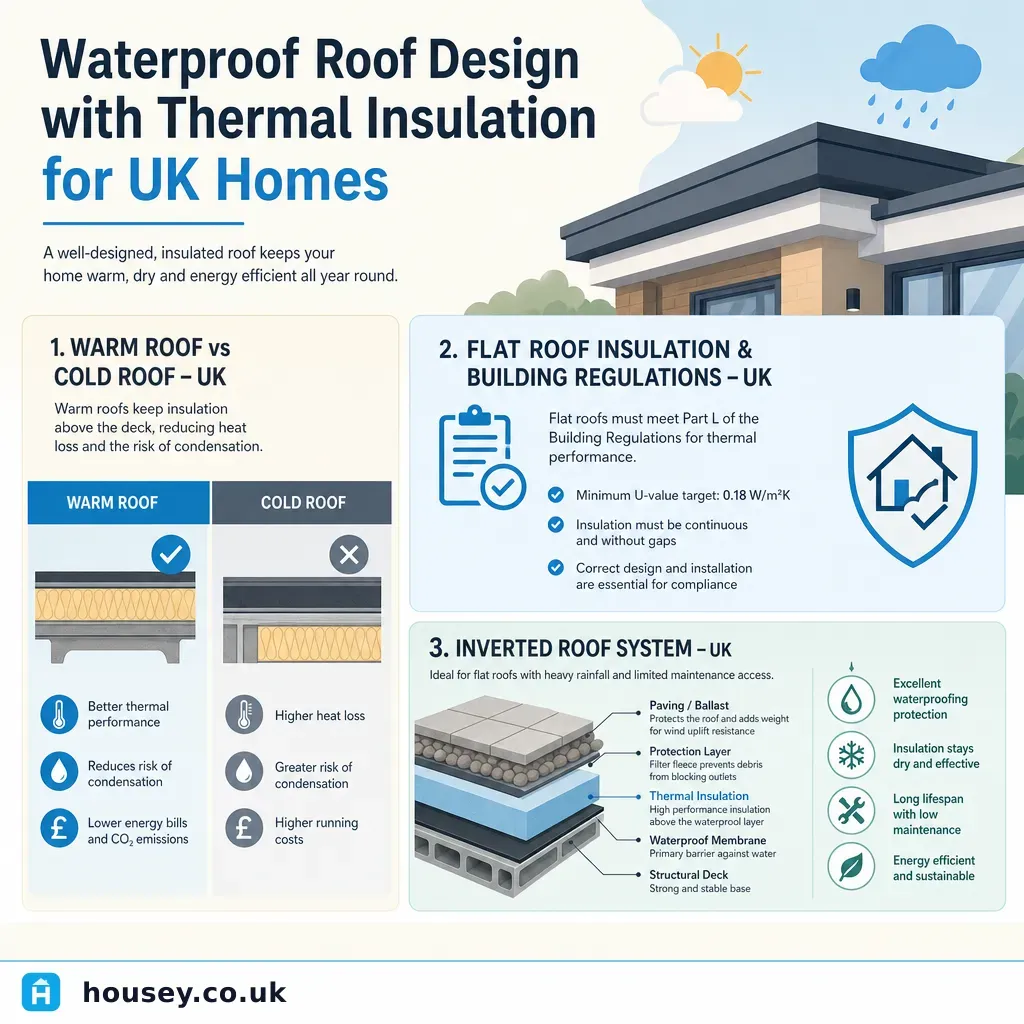
Waterproof Roof Design with Thermal Insulation for UK Homes
The two main approaches to combining waterproofing and thermal insulation in a roof are warm roof and cold roof construction. Warm roofs place insulation above the structural deck, reducing condensation risk; cold roofs place insulation between rafters with a ventilated void. For flat roofs, warm roof or inverted roof construction is usually recommended under Building Regulations Part L.
 Energy & Retrofit
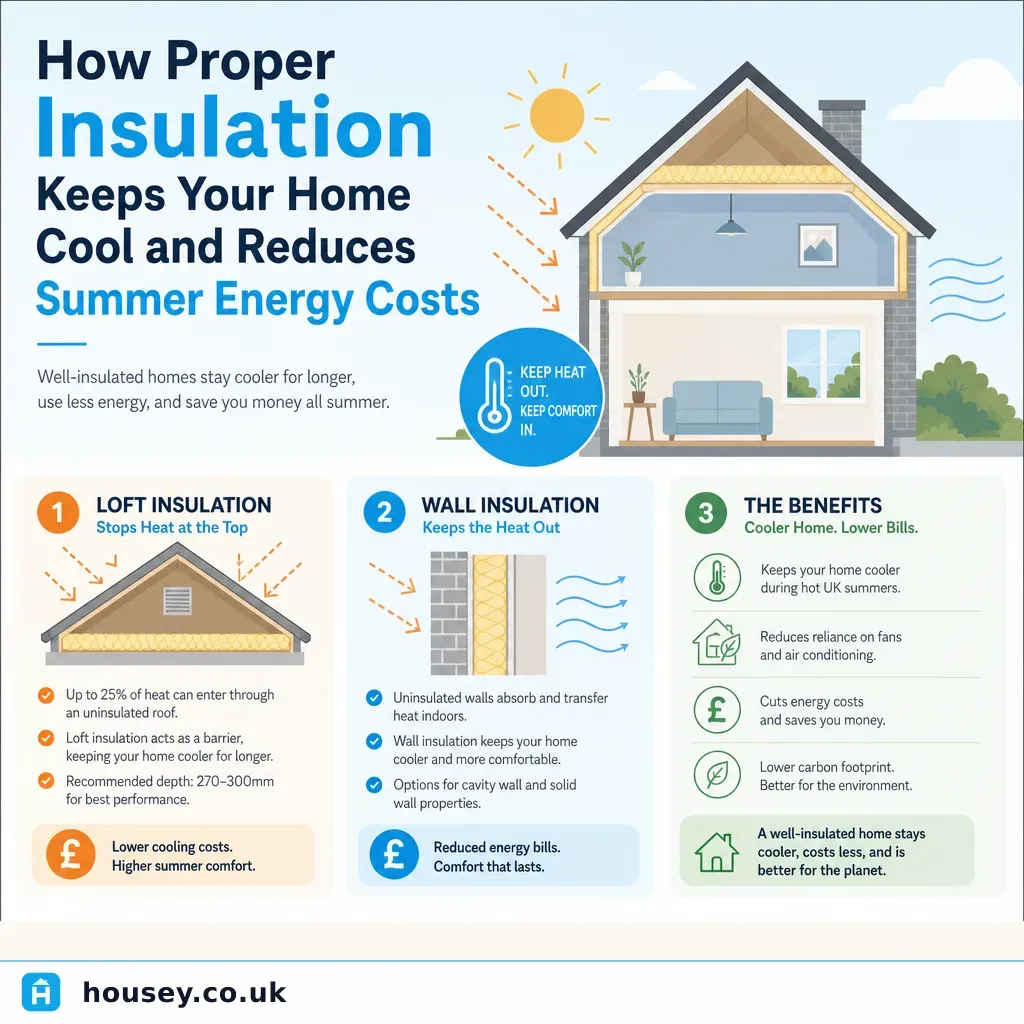
How Proper Insulation Keeps Your Home Cool and Reduces Summer Energy Costs
Insulation slows the flow of heat in both directions — in summer, it reduces how quickly outdoor heat enters your home. Loft insulation at the recommended 270mm depth significantly cuts heat gain through the roof. However, wall insulation carries moisture risk in older UK properties and should be specified by a qualified Retrofit Assessor following PAS 2035 principles.
 Energy & Retrofit
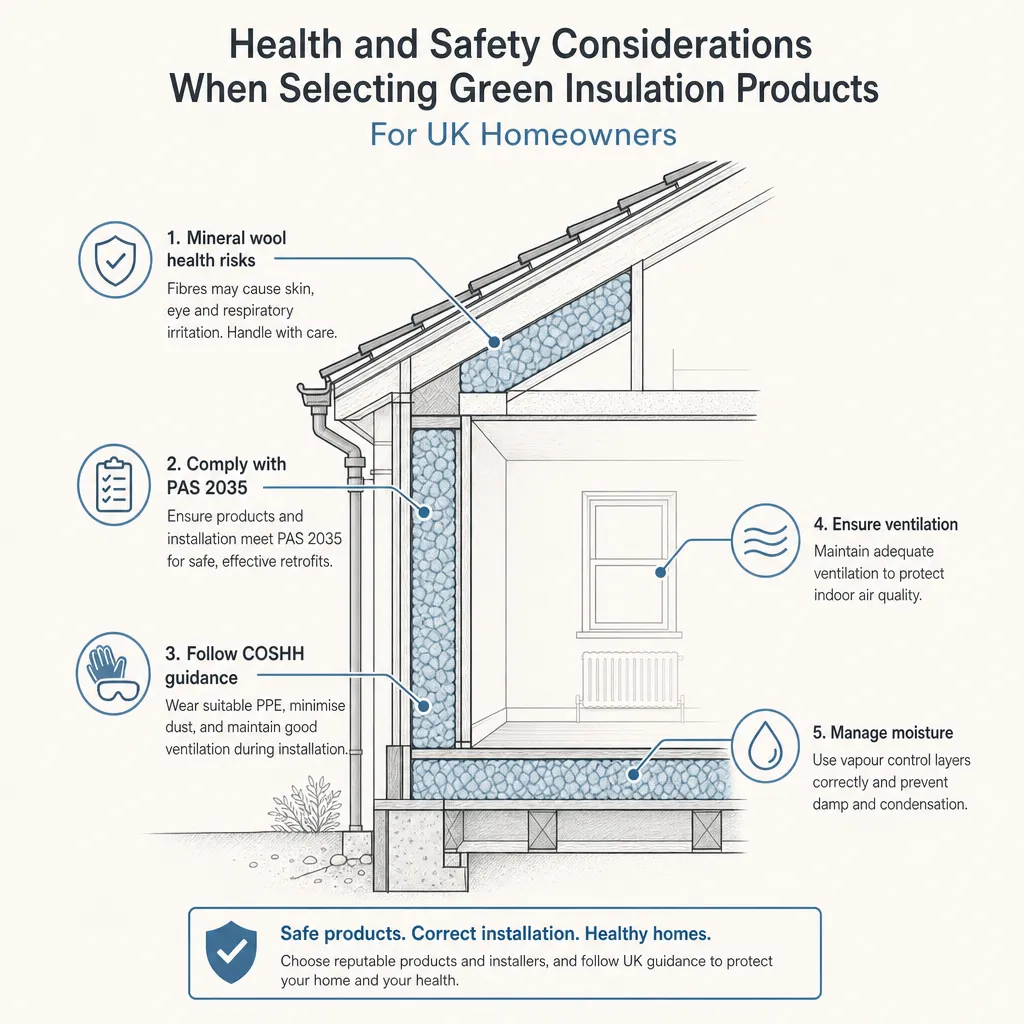
Health and Safety Considerations When Selecting Green Insulation Products
Selecting green insulation in the UK involves genuine health risks alongside environmental claims. Man-made mineral fibres, boron treatments, and blown cellulose all require specific PPE during installation. More significantly, poorly specified insulation in a solid-wall home can cause interstitial condensation and mould growth affecting occupant health. A retrofit assessment under PAS 2035 should precede any significant insulation works.
 Energy & Retrofit
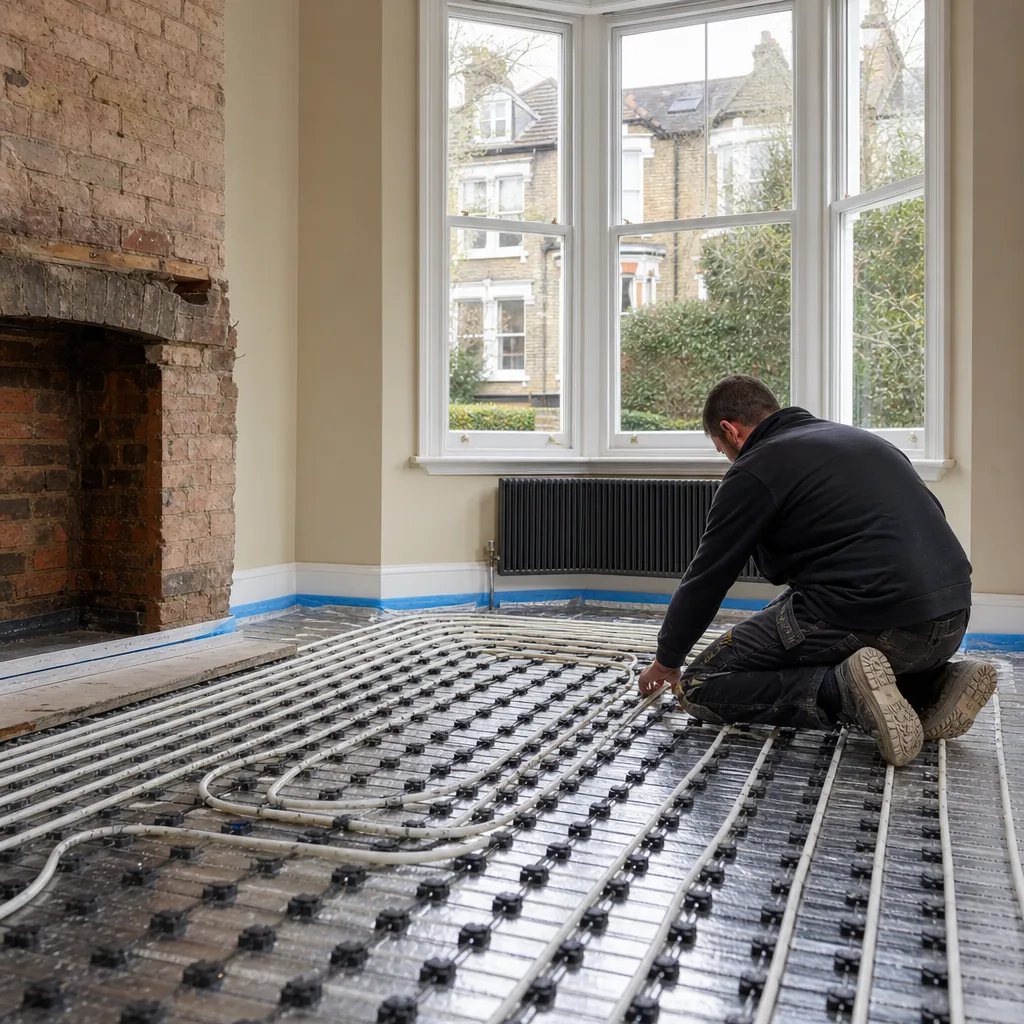
Heating Elements and Radiant Systems in Concrete Floors
Underfloor heating embedded in a concrete floor or screed delivers radiant heat at low flow temperatures (35–50°C), making it highly compatible with heat pumps. Wet systems suit new builds and major renovations; electric mat systems work for single-room retrofit. Sub-floor insulation is essential for both to meet Part L requirements and avoid heat loss into the ground.
 Energy & Retrofit
Diagnosing and Resolving Central Heating System Failures
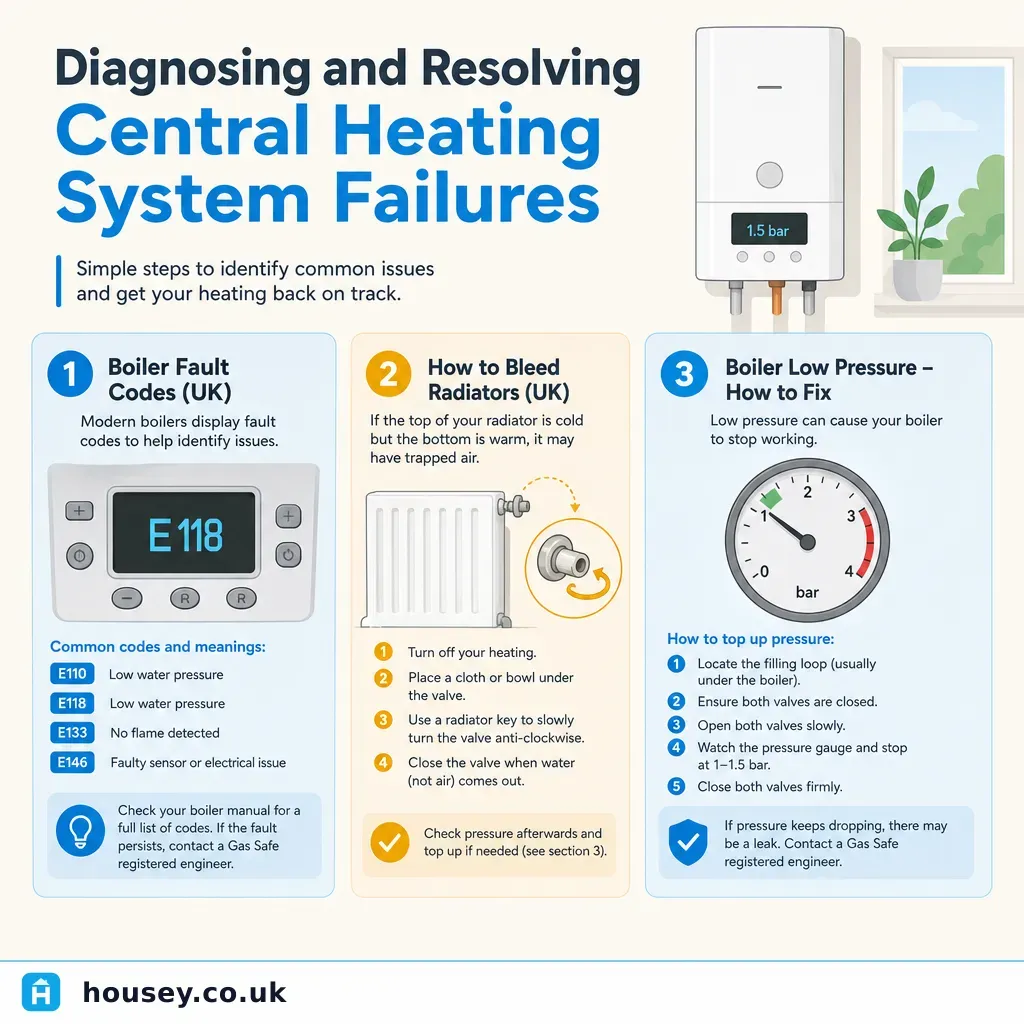
Many central heating failures have simple causes — low boiler pressure, trapped air in radiators, or incorrect programmer settings. Homeowners can safely check these themselves. However, any fault involving gas, combustion, or carbon monoxide requires a Gas Safe registered engineer. Never attempt to repair or dismantle a gas boiler without Gas Safe registration.
 Energy & Retrofit
Cavity Wall Insulation: Costs and Installation Options
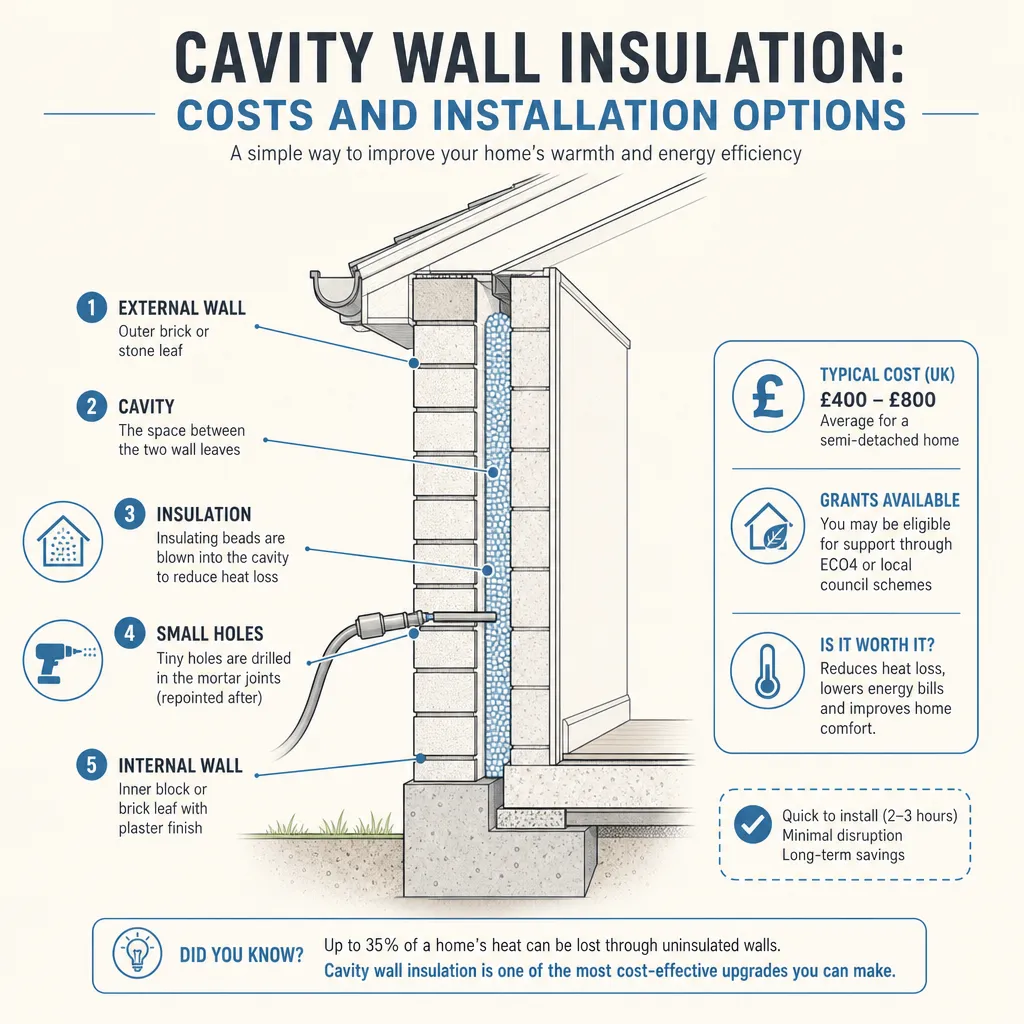
Cavity wall insulation typically costs £400–£1,200 for a standard UK semi-detached home, though eligible households may pay nothing under ECO4. Most homes built between 1920 and 1995 are suitable, but those in exposed locations, with narrow cavities, or with existing fill need a pre-installation survey first. Work must be carried out by a PAS 2030-certified, TrustMark-registered installer.
 Energy & Retrofit
Underfloor Heating System Installation Costs
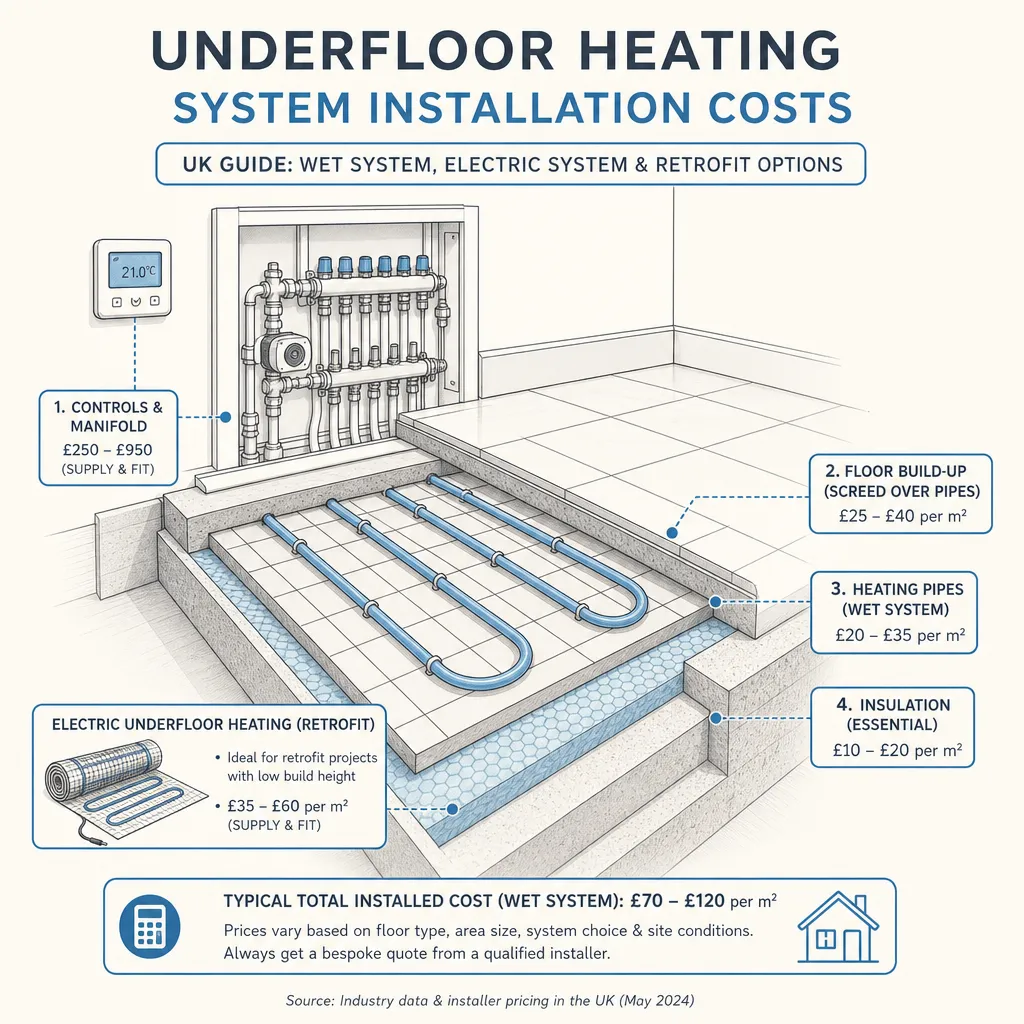
Underfloor heating installation in the UK typically costs £20–£50 per m² for electric mat or foil systems and £50–£150 per m² for wet (hydronic) systems, including labour. A full ground-floor retrofit in an average semi-detached home may run £3,000–£12,000 depending on system type, floor area, and existing heating infrastructure.
 Energy & Retrofit
Fan-Assisted Radiator Installation and Heating System Costs
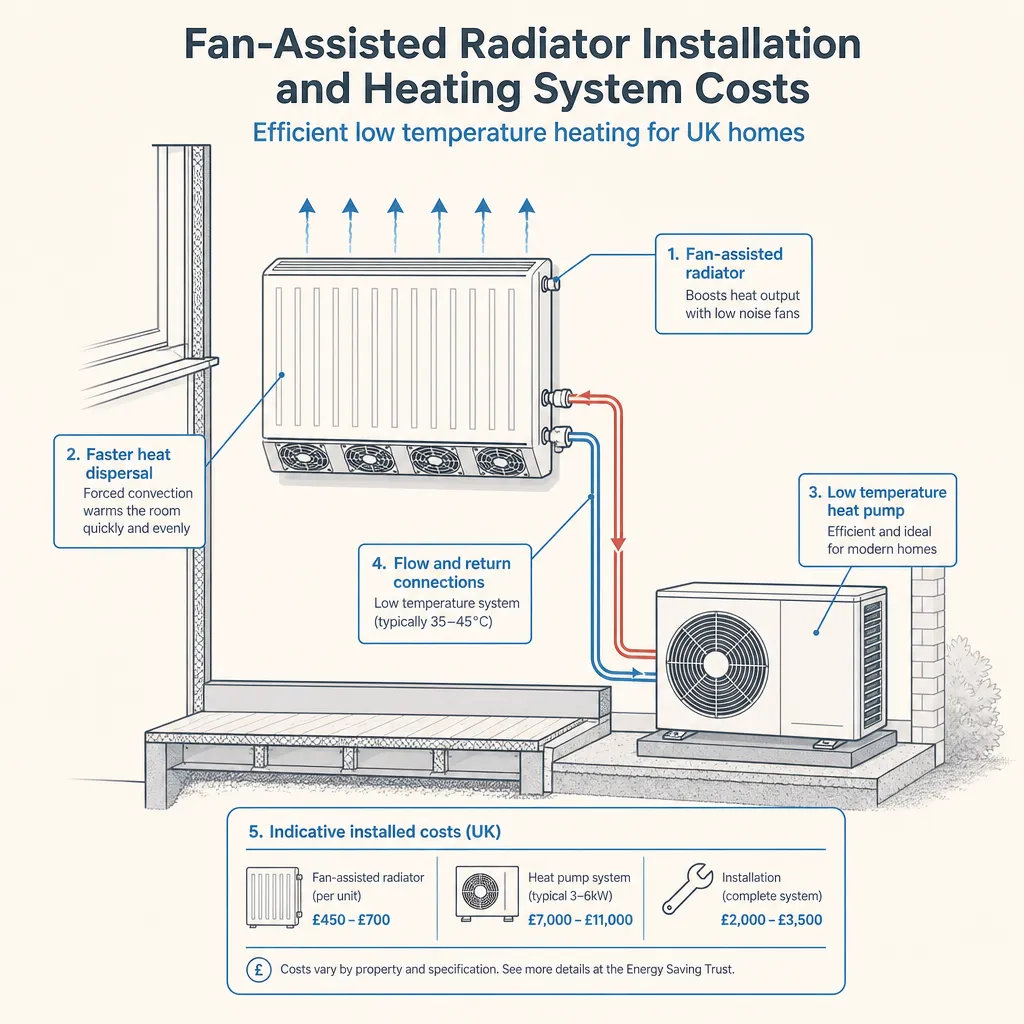
Fan-assisted radiators use an integral fan to force air across a water-heated element, delivering roughly 2–3 times more heat than a standard panel radiator at the same low flow temperature. UK installed costs typically run £500–1,400 per unit. They require both plumbing and electrical connections and suit heat pump systems particularly well.