Knowledge Base
Property advice that actually helps
Researched, UK-specific guides for every stage of homeownership — from buying and surveys to retrofit, planning and major works.
 Planning & Pre-Build
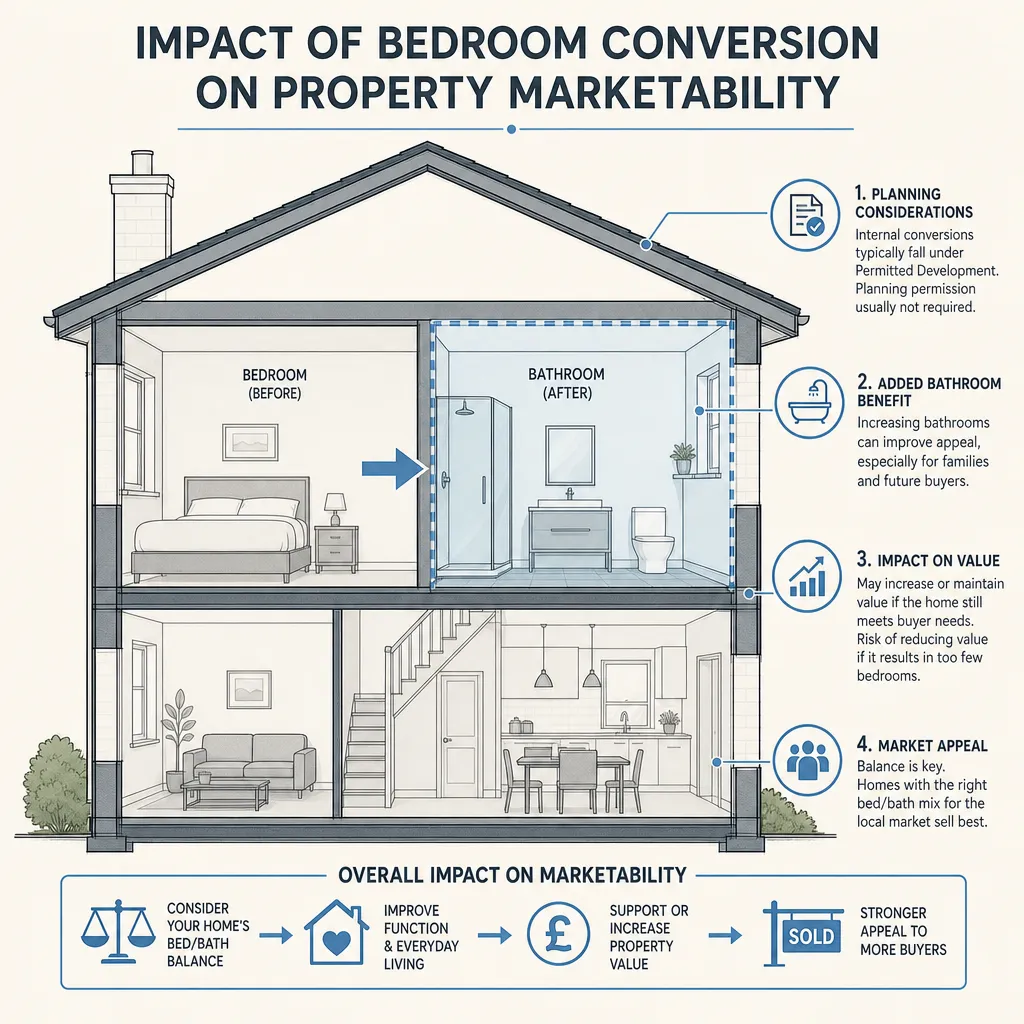
Impact of Bedroom Conversion on Property Marketability
Converting a bedroom in the UK can reduce your property's value and narrow the buyer pool, since estate agents and mortgage lenders categorise homes by bedroom count. Most internal reconfigurations are permitted development, but removing a load-bearing wall requires building regulations Part A approval. Listed buildings and conservation areas may also restrict internal works.
 Planning & Pre-Build
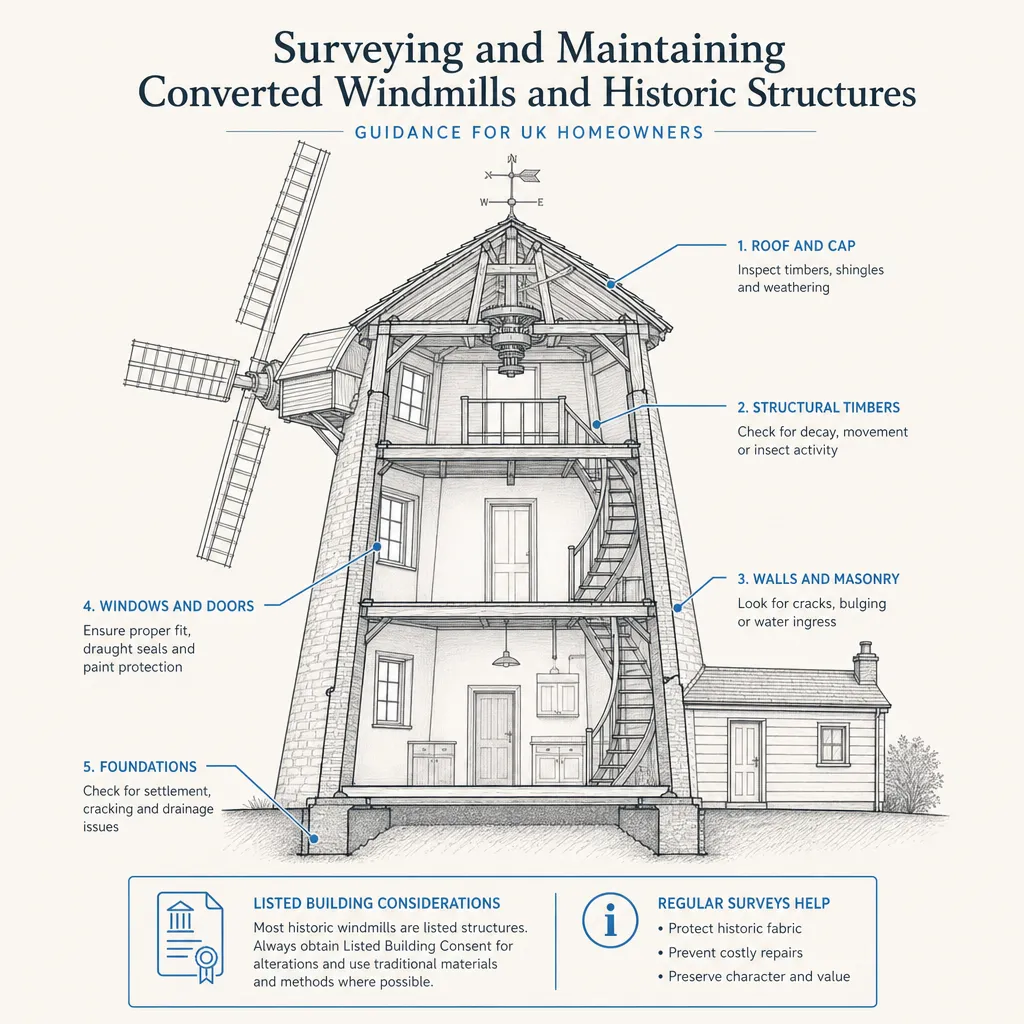
Surveying and Maintaining Converted Windmills and Historic Structures
Converted windmills and other historic structures typically require a specialist heritage building survey, not a standard RICS inspection. Most are listed buildings, meaning alterations — including many repairs — require Listed Building Consent. Use a chartered surveyor with historic buildings experience and consult your local conservation officer before starting any works.
 Planning & Pre-Build
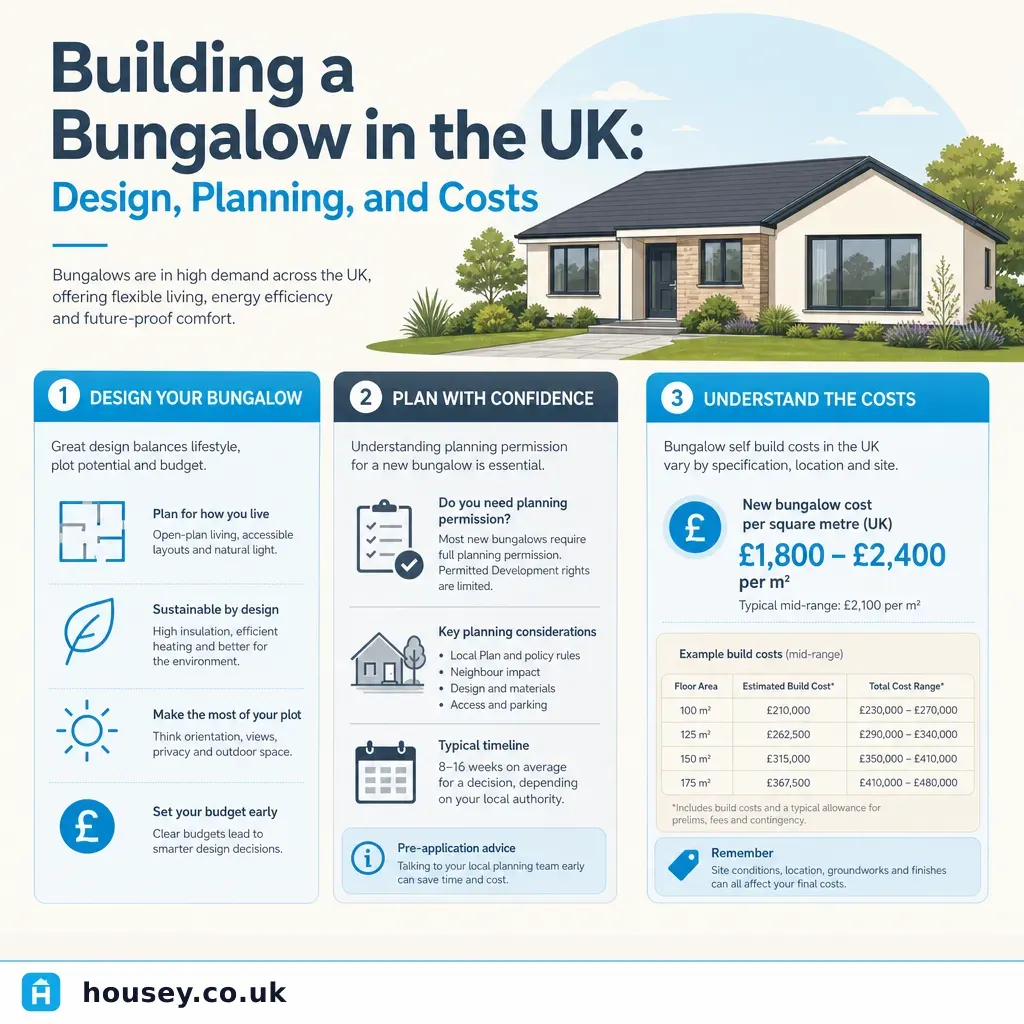
Building a Bungalow in the UK: Design, Planning, and Costs
Building a bungalow in the UK typically costs £1,500–£3,000 per square metre, putting a 100m² bungalow at roughly £150,000–£300,000 in build costs before land, professional fees, and VAT. Planning permission is always required for a new bungalow. Total project costs vary significantly by location, specification, and site conditions.
 Planning & Pre-Build
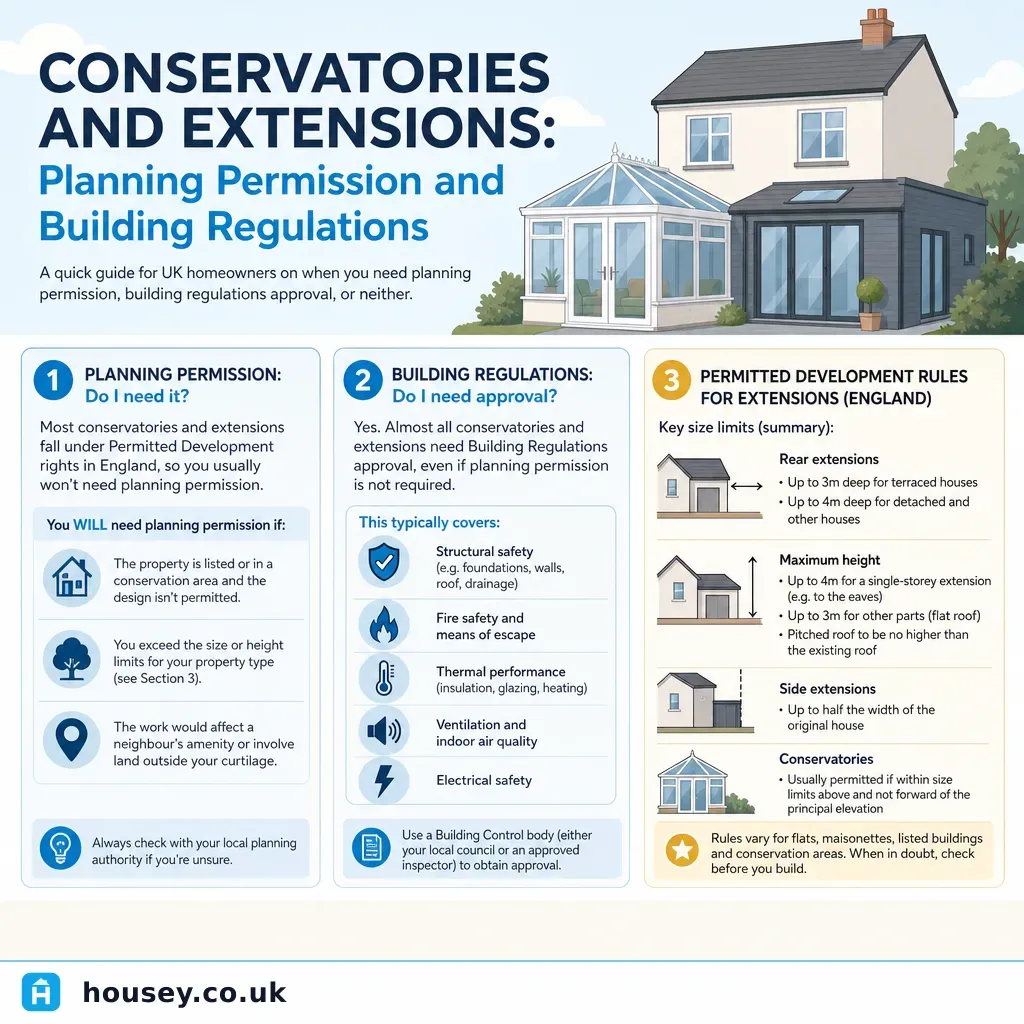
Conservatories and Extensions: Planning Permission and Building Regulations
Whether your conservatory or extension needs planning permission depends on its size, height, position, and property type. Most single-storey rear extensions under 4m (detached) or 3m (other houses) qualify as permitted development. Conservatories meeting specific glazing and separation criteria may be exempt from building regulations, but extensions almost always require building control approval.
 Planning & Pre-Build
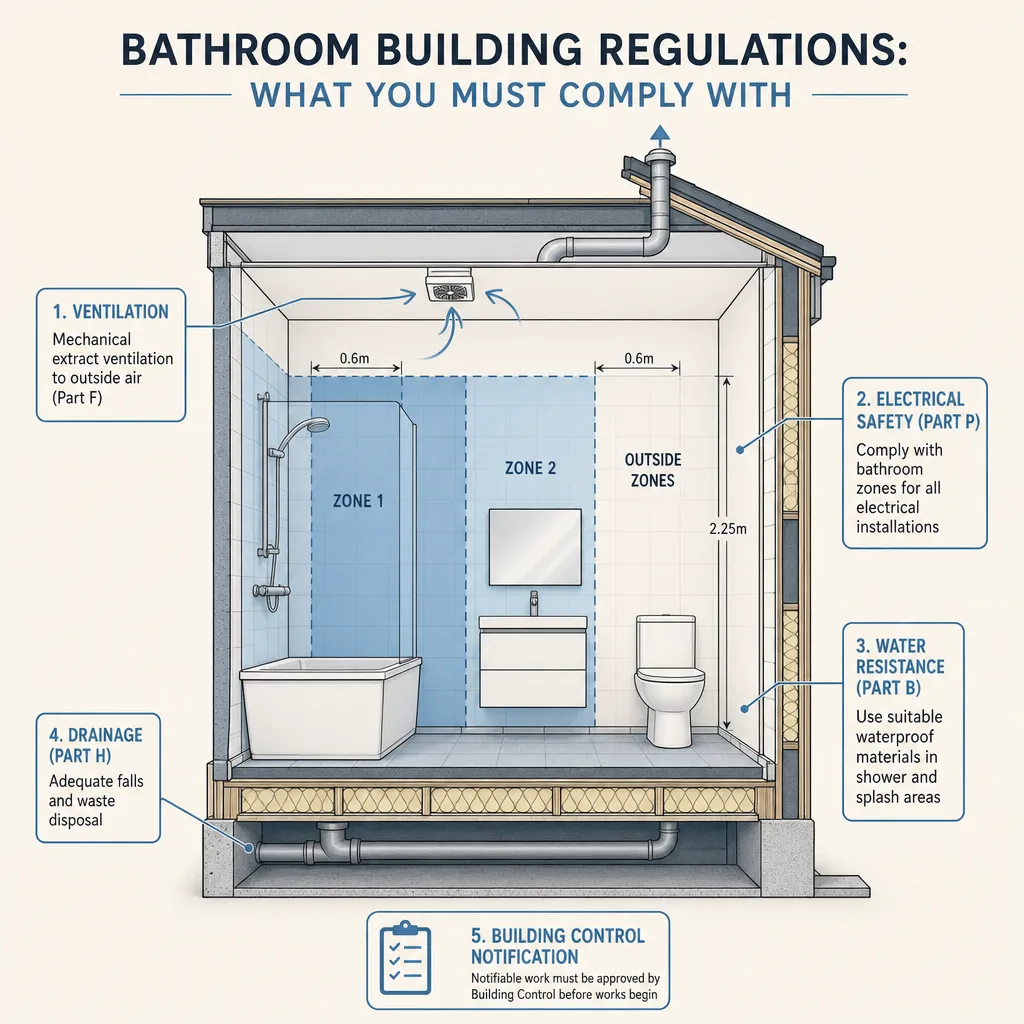
Bathroom building regulations: what you must comply with
Bathrooms in England are subject to several Approved Documents: Part G covers hot water temperature limits and water efficiency, Part F sets minimum ventilation at 15 litres per second, and Part P governs electrical safety in defined zones. New bathrooms, altered drainage, and new electrical circuits are notifiable to building control unless a Part P registered electrician self-certifies.
 Planning & Pre-Build
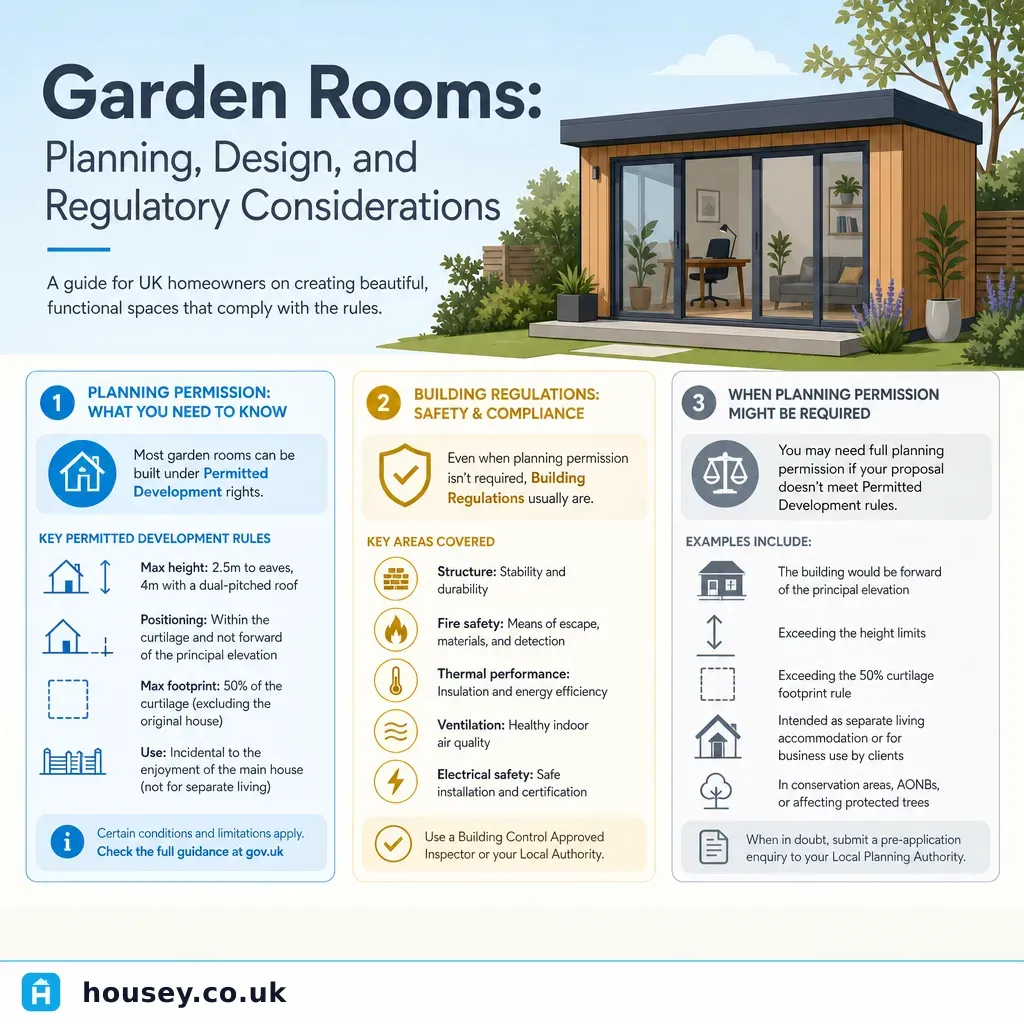
Garden Rooms: Planning, Design, and Regulatory Considerations
Most garden rooms in England fall within permitted development rights under Class E and do not need planning permission, provided they meet size, height, and use conditions. However, listed buildings, flats, conservation areas, and sleeping use trigger additional requirements. Building regulations may apply regardless of planning status.
 Planning & Pre-Build
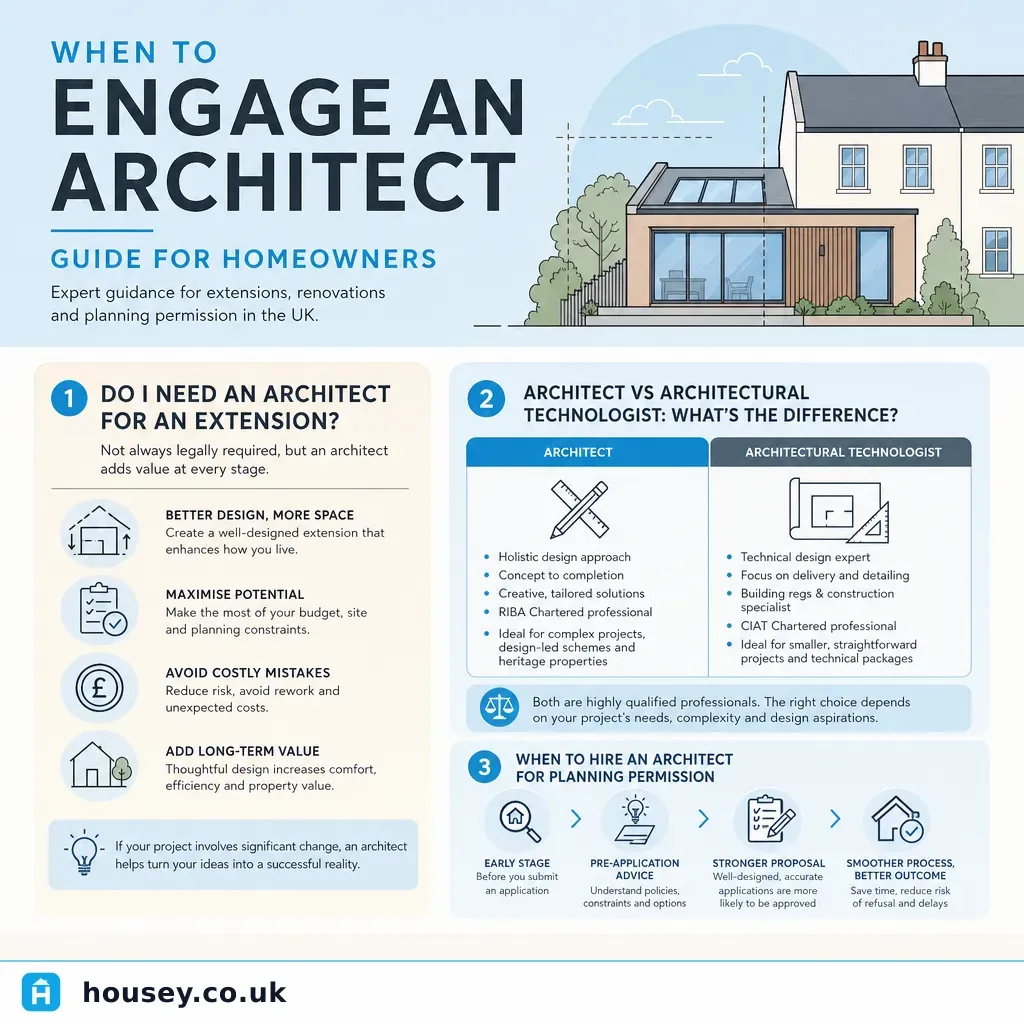
When to Engage an Architect: Guide for Homeowners
You usually need an architect for complex extensions, new builds, listed building works, conservation area projects, or contentious planning applications requiring detailed design drawings. For simpler permitted-development projects, a CIAT-registered architectural technologist or competent designer is often sufficient. Always verify that your chosen professional is ARB-registered or holds appropriate CIAT or RTPI accreditation for the task.
 Planning & Pre-Build
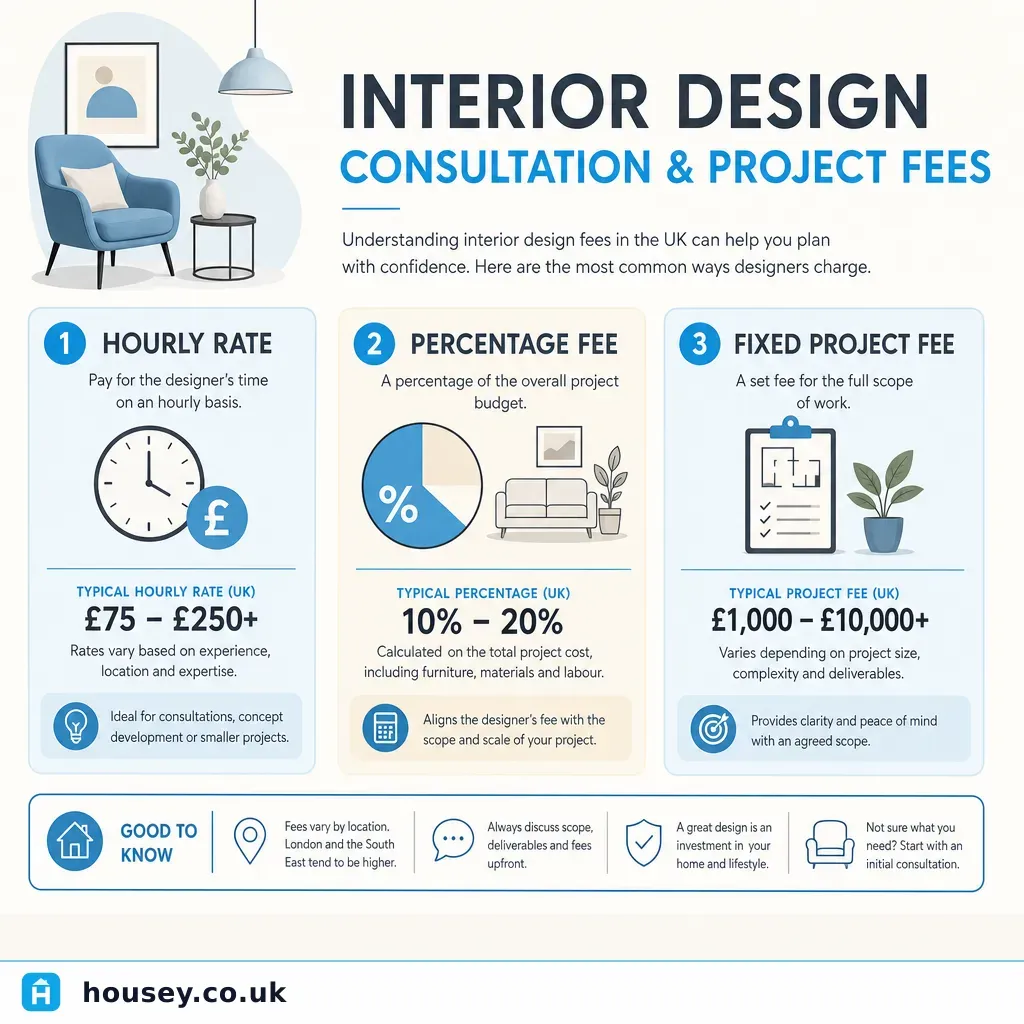
Interior Design Consultation and Project Fees
Interior designers in the UK typically charge hourly rates of £75–£200, day rates of £300–£800, or a percentage fee of 10–20% of total project spend. A one-off design consultation usually costs £150–£400. Fees vary by experience, location, and scope — from concept design only to full project management including trade procurement.
 Planning & Pre-Build
Purchasing Listed Buildings: Special Considerations and Requirements
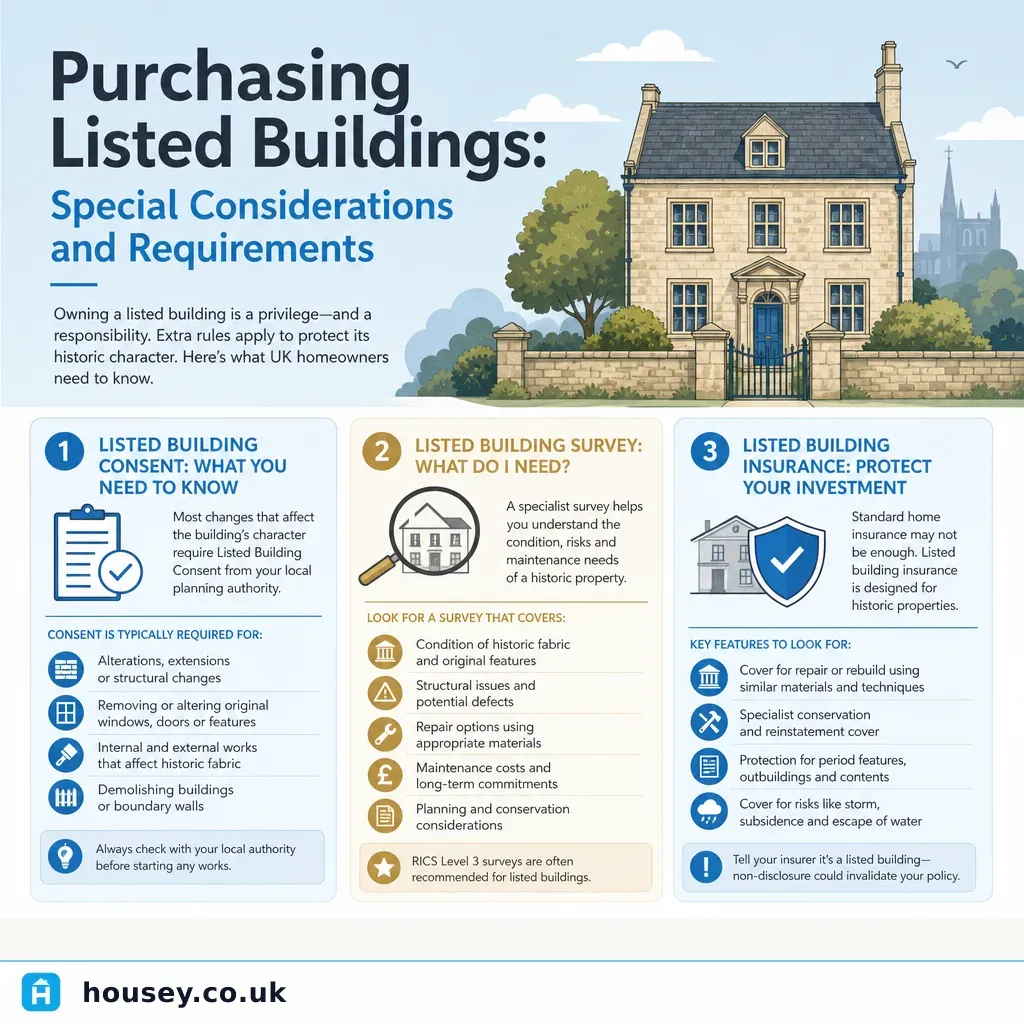
Buying a listed building means any works affecting its character require Listed Building Consent — separate from planning permission. The designation covers the whole structure and curtilage, transfers to new owners, and unauthorised alterations by previous owners can create legal liability. A specialist heritage survey and solicitor experienced in listed property are essential before exchanging contracts.
 Planning & Pre-Build
Construction Documentation and Drawings: Essential Planning Records
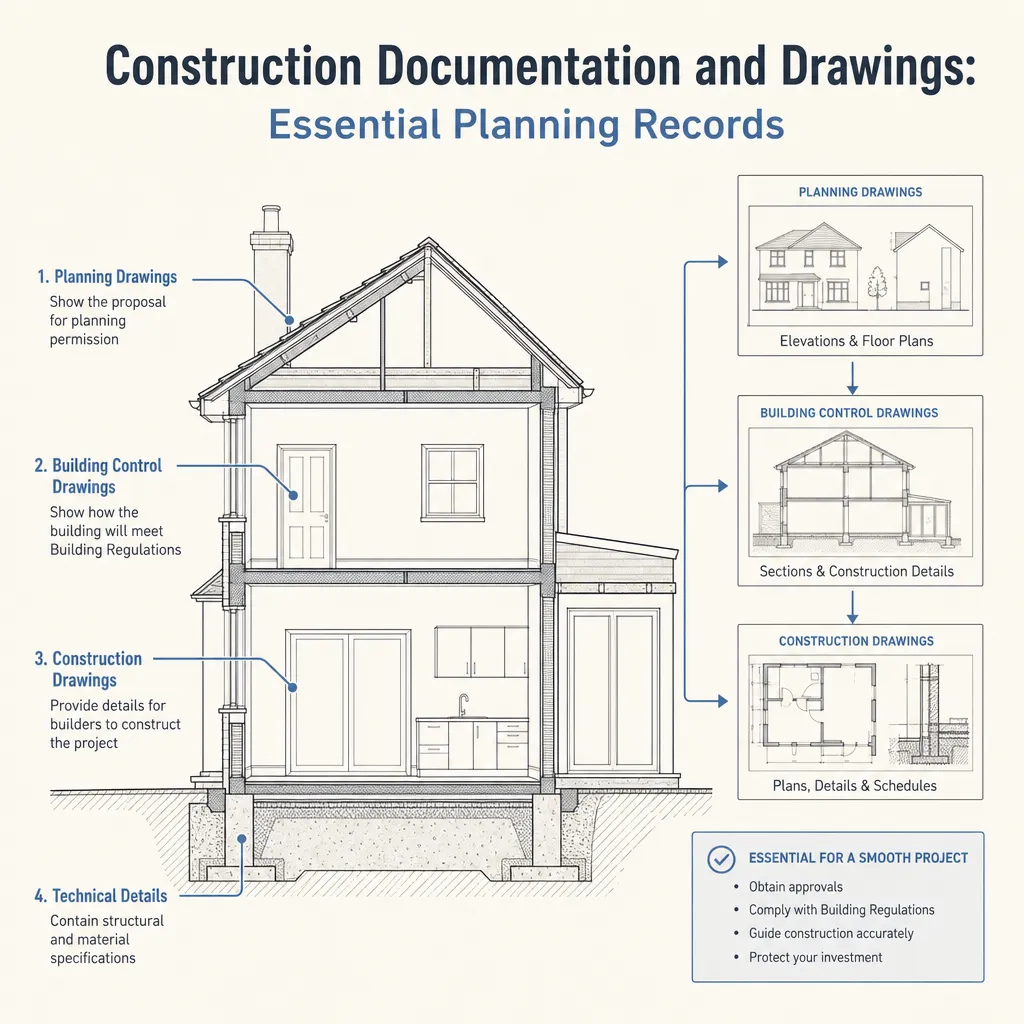
Construction documentation covers all drawings, specifications, and records needed to design, build, and inspect a project. For UK homeowners this typically includes planning drawings, Building Regulations drawings, structural calculations, and as-built records. The type and depth of documentation required depends on the scale of the project, the approvals needed, and the stage of work.
 Planning & Pre-Build
Underground and Below-Ground Construction: Methods and Structural Considerations
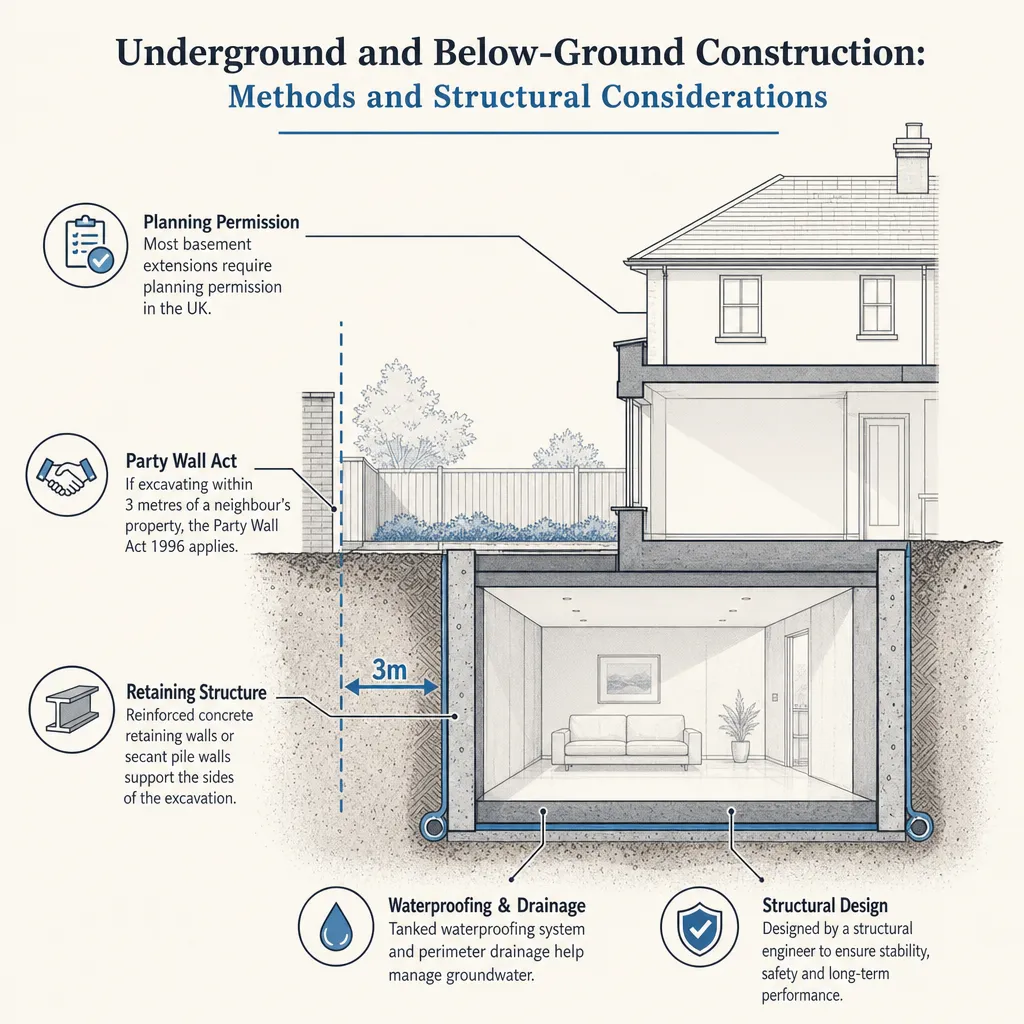
Below-ground and underground construction in the UK — including basement extensions and earth-sheltered structures — always requires building regulations approval and usually full planning permission. A geotechnical ground investigation, structural engineering input, and party wall notices to neighbours are typically needed from the earliest stage. Ground conditions, groundwater, and waterproofing strategy must all be established before design work begins.
 Planning & Pre-Build
Prefabricated vs. Modular Home Construction: Methods Explained
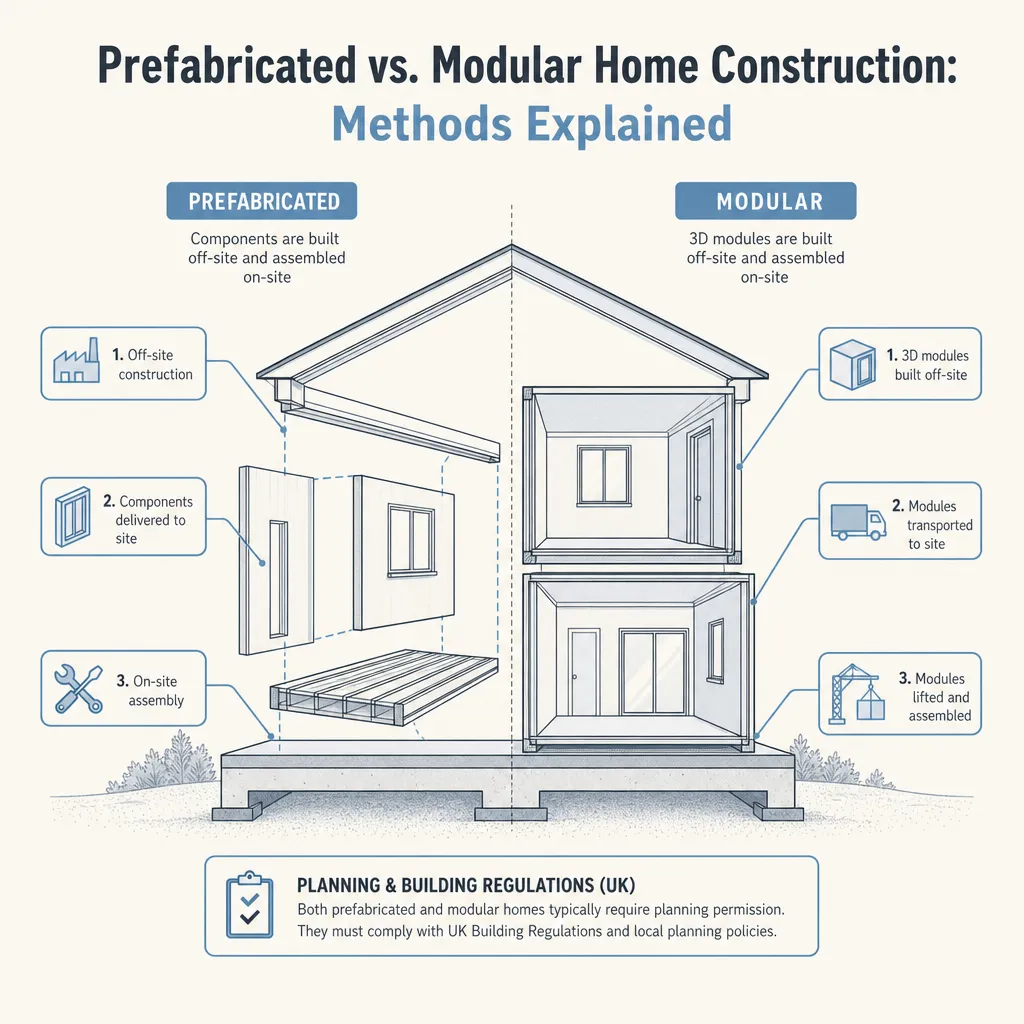
Prefabricated construction covers any home built partly or fully off-site, while modular construction is a specific type where factory-built volumetric units are craned into position. Both fall under Modern Methods of Construction, can achieve building regulations approval, and typically build faster than traditional methods — but they differ in design flexibility, mortgage availability, and site requirements.