Knowledge Base
Property advice that actually helps
Researched, UK-specific guides for every stage of homeownership — from buying and surveys to retrofit, planning and major works.
 Planning & Pre-Build
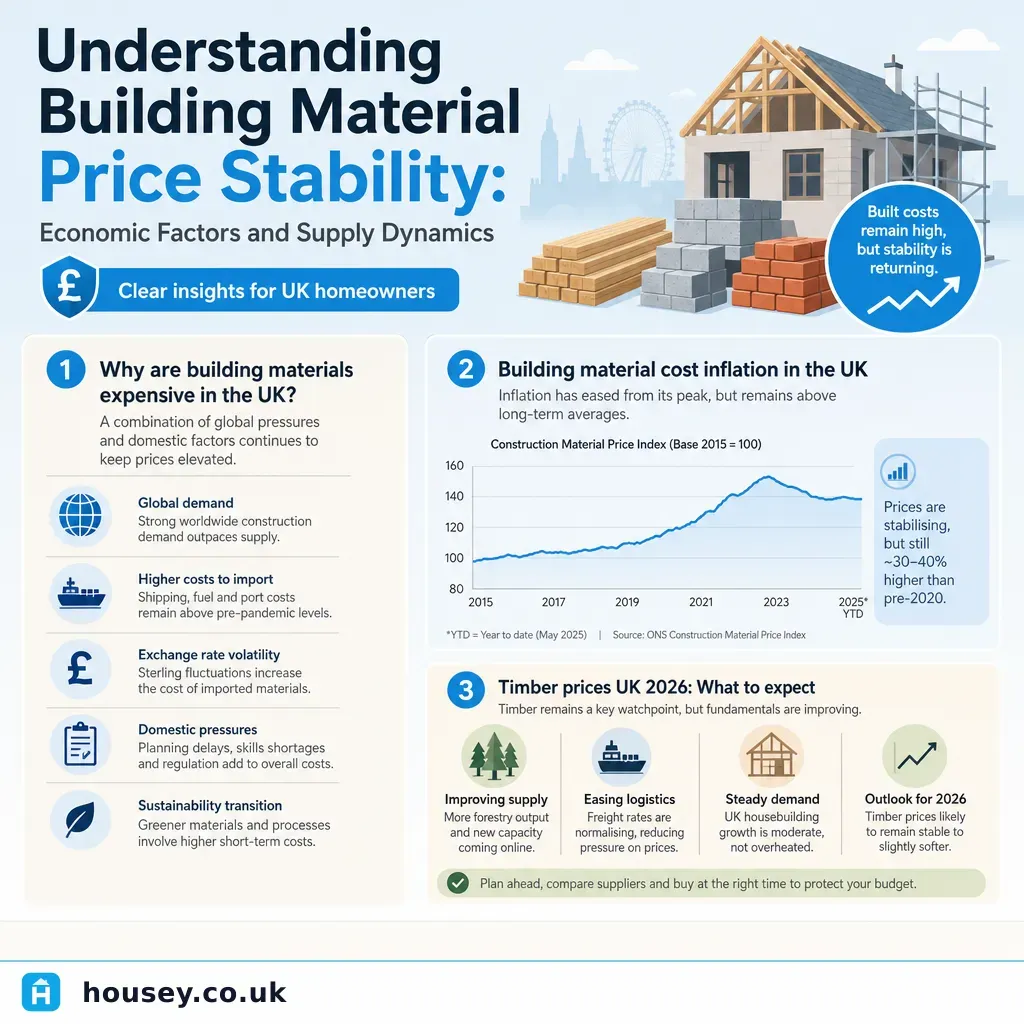
Understanding Building Material Price Stability: Economic Factors and Supply Dynamics
Building material prices in the UK are shaped by global commodity markets, energy costs, exchange rates, and domestic construction demand. Prices rose sharply in 2021–2022 but have since stabilised, though many materials remain above pre-pandemic levels. Understanding the right contract structure — fixed-price or cost-plus — is key to managing price risk on any building project.
 Planning & Pre-Build
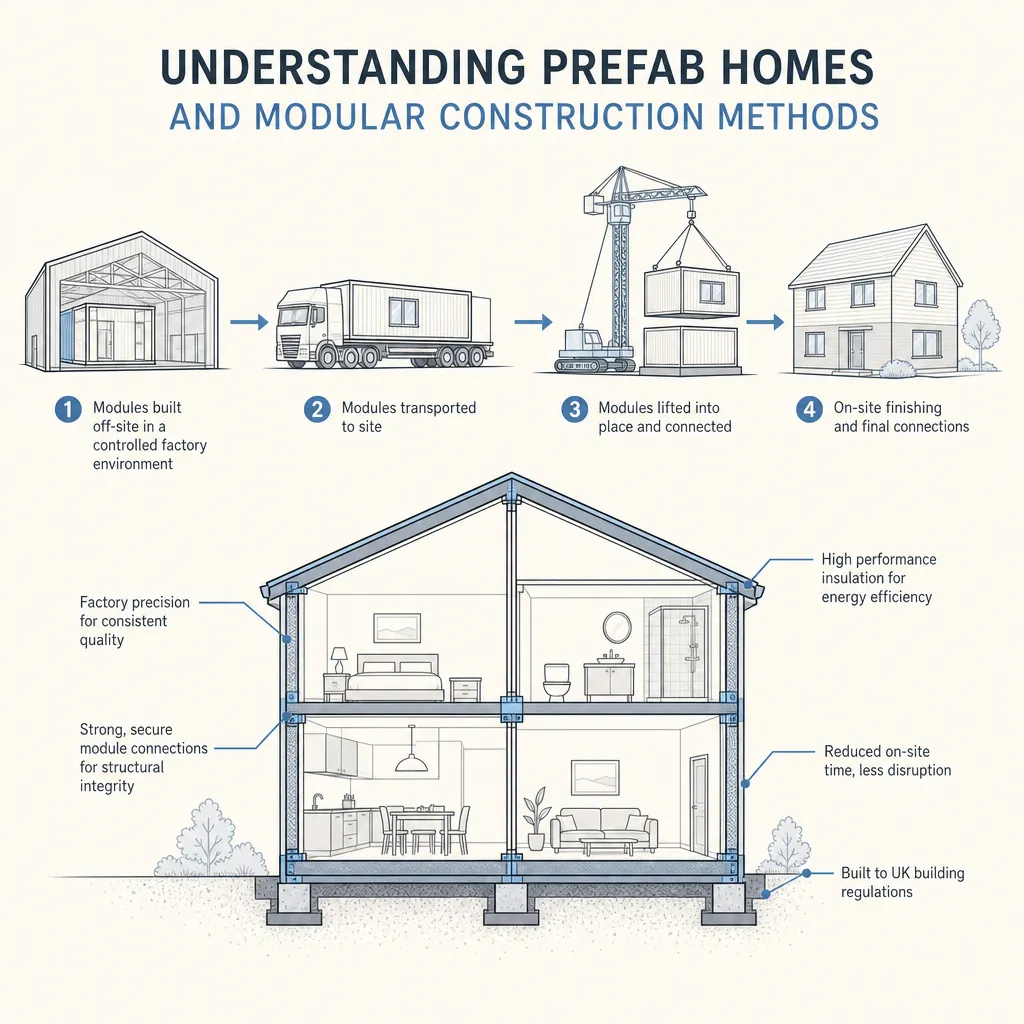
Understanding prefab homes and modular construction methods
Prefab and modular construction covers a range of off-site manufacturing methods, from timber frame panels to fully volumetric room modules craned into position. Both require planning permission and Building Regulations approval like any new build. Modular construction can reduce on-site build time by 30–50%, but mortgage availability varies significantly and BOPAS accreditation is worth confirming early if lending is needed.
 Planning & Pre-Build
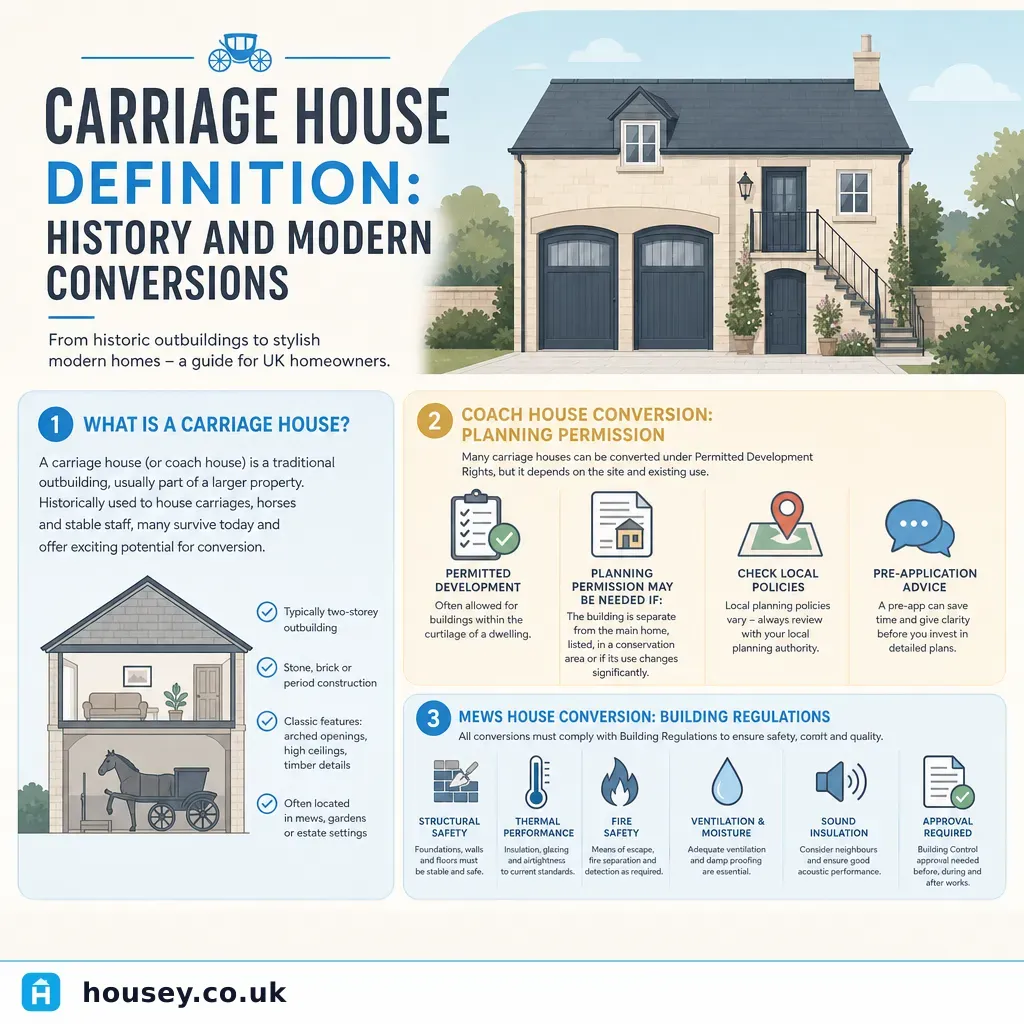
Carriage House Definition: History and Modern Conversions
A carriage house is a Victorian or Edwardian outbuilding originally used to shelter horse-drawn vehicles, often with groom's accommodation above. In the UK, surviving examples are commonly converted to residential use and marketed as mews or coach houses. Conversion almost always requires planning permission for change of use and Building Regulations approval; listed building consent is also needed where the main property is listed.
 Planning & Pre-Build
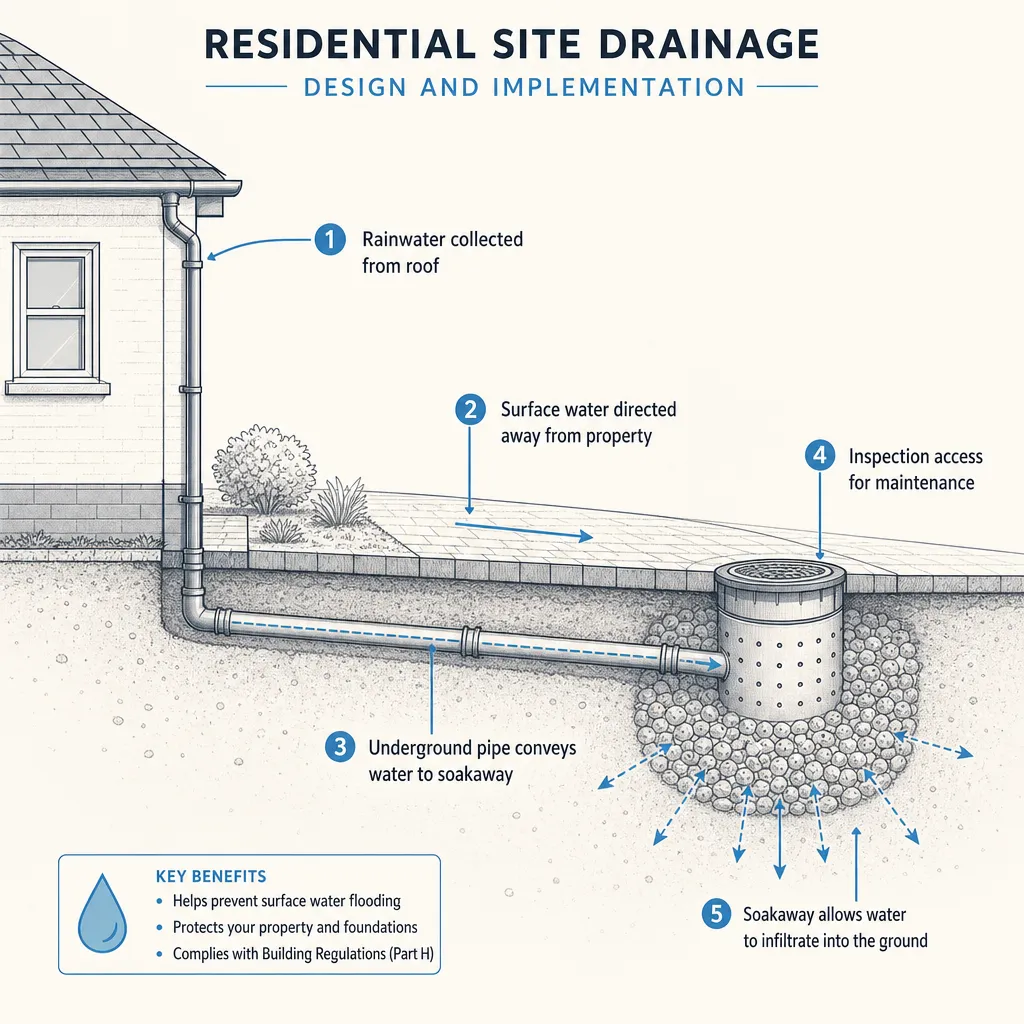
Residential Site Drainage Design and Implementation
Residential site drainage covers three distinct systems — surface water, subsoil water, and foul water — each requiring separate design and regulatory compliance. Key decisions include soakaway viability (which requires a percolation test), SuDS compliance, and connecting to available discharge points. Building Regulations Approved Document H sets the minimum standards for all residential drainage in England and Wales.
 Planning & Pre-Build
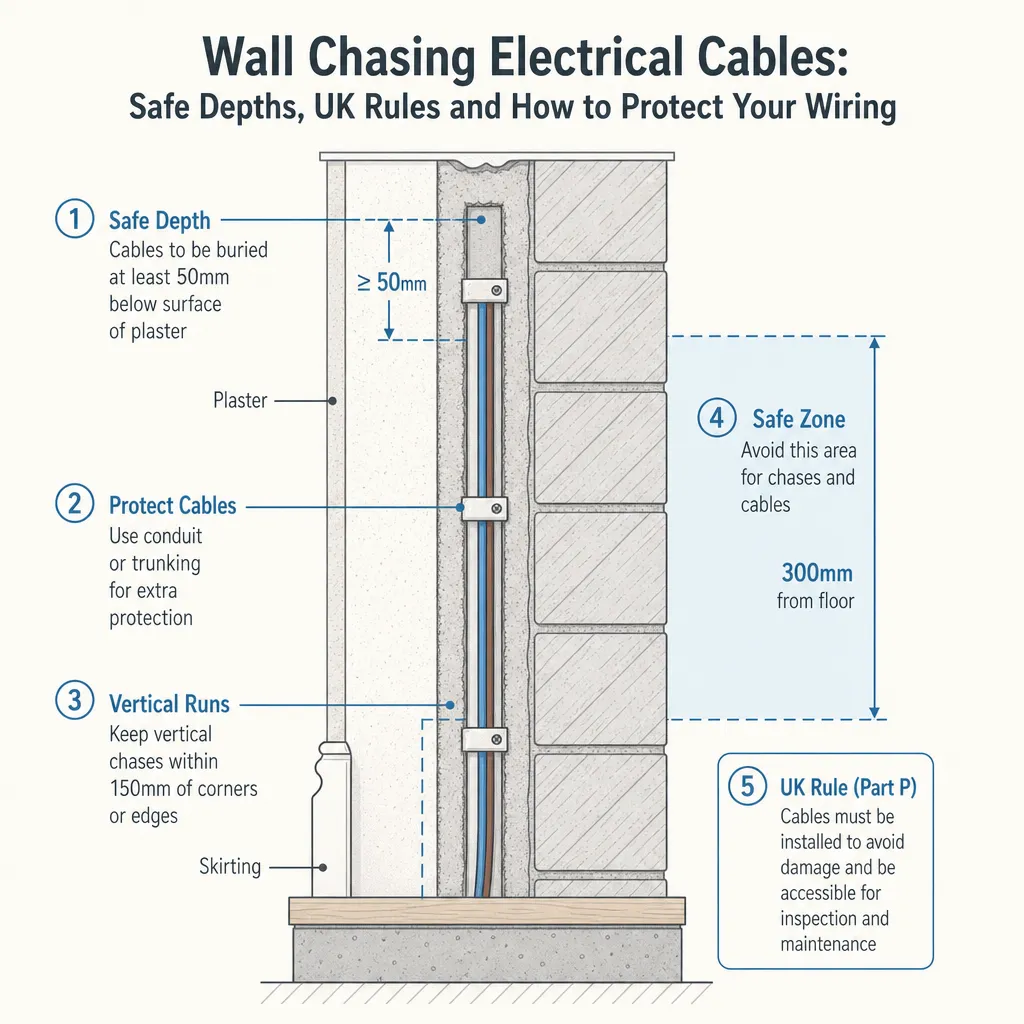
Wall Chasing Electrical Cables: Safe Depths, UK Rules and How to Protect Your Wiring
Wall chasing depth for electrical cables in UK homes must allow around 25mm of plaster or render cover over the cable. Cables must follow safe zone routes under BS 7671 Regulation 522.6.6, and all cables concealed in walls require 30mA RCD protection since Amendment 2 (2022). New circuits must be notified under Building Regulations Part P in England.
 Planning & Pre-Build
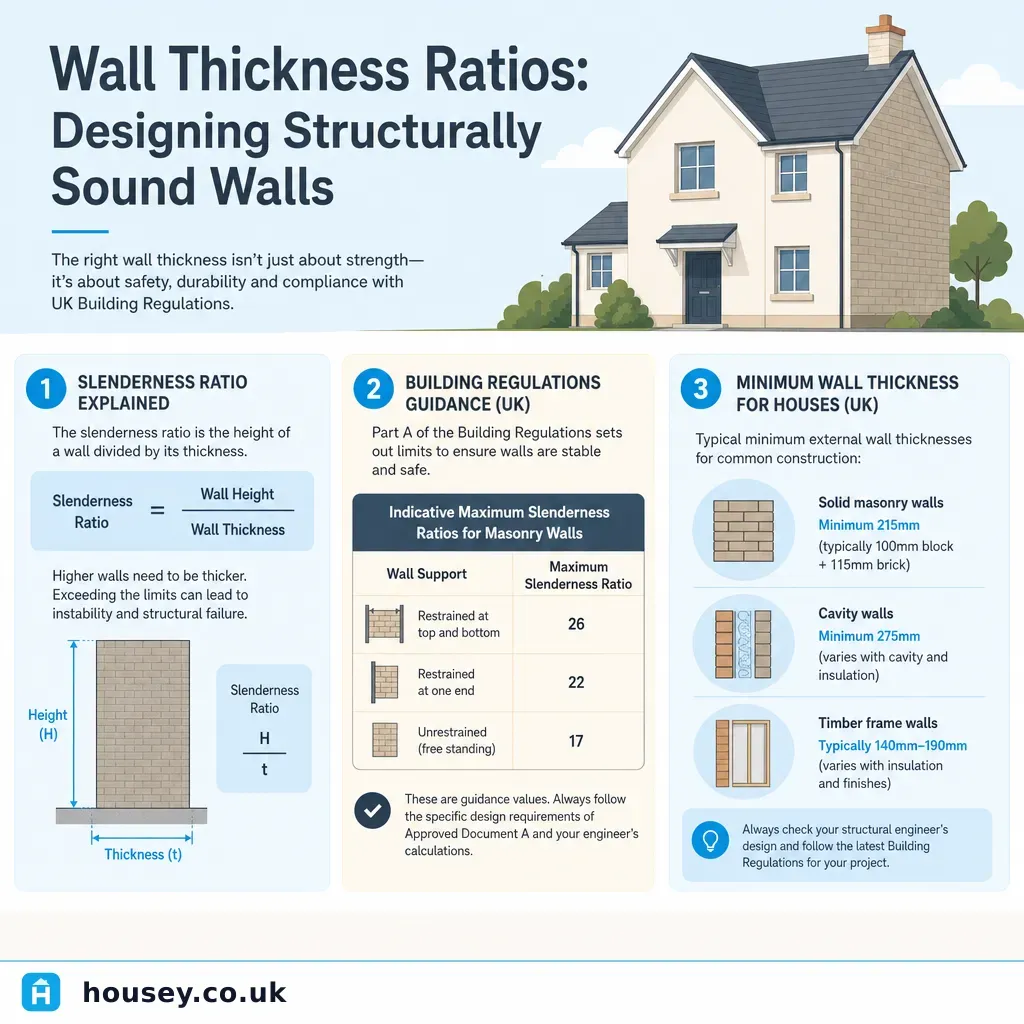
Wall Thickness Ratios: Designing Structurally Sound Walls
Wall thickness ratios — particularly the slenderness ratio (effective height divided by effective thickness) — determine whether a wall can safely carry load without buckling. For UK masonry walls, Eurocode 6 (BS EN 1996-1-1) typically sets a maximum slenderness ratio of 27. Every wall design must comply with Building Regulations Approved Document A and be confirmed by a qualified structural engineer.
 Planning & Pre-Build
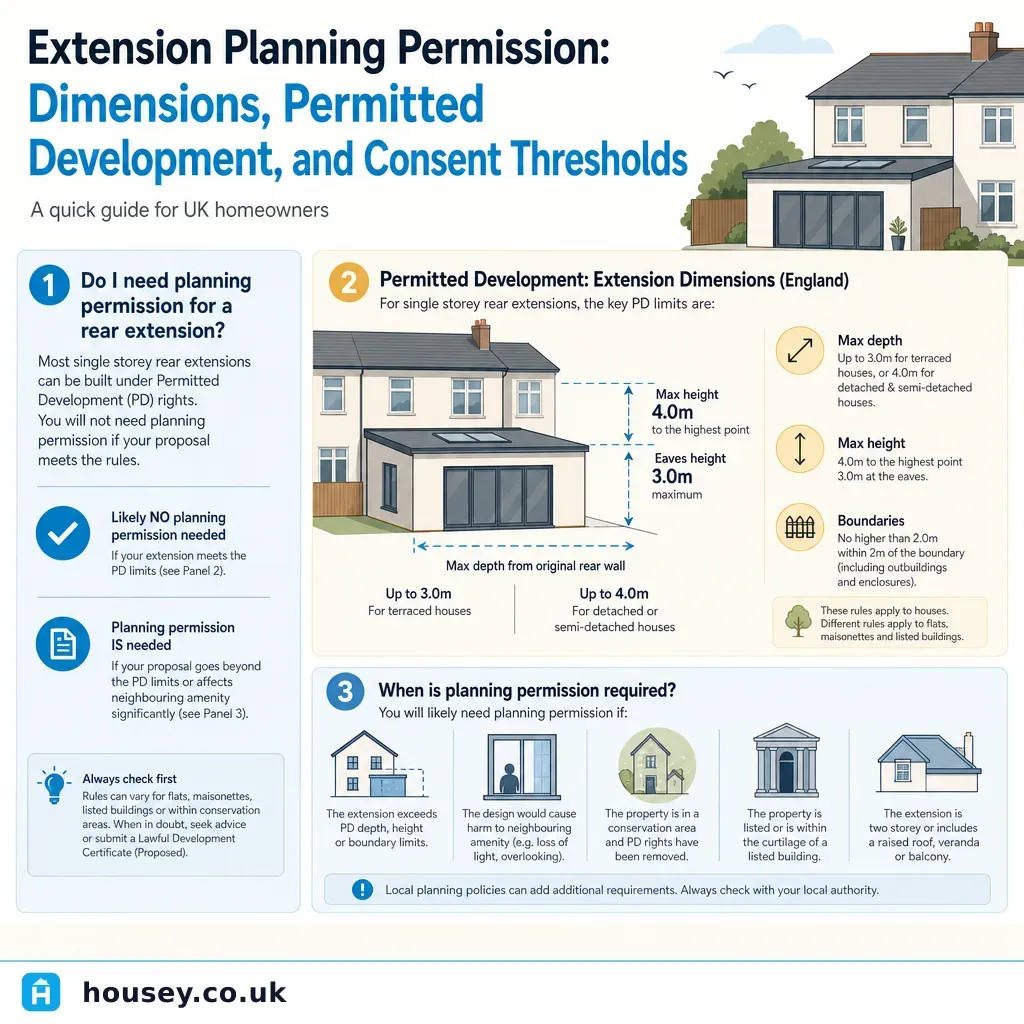
Extension Planning Permission: Dimensions, Permitted Development, and Consent Thresholds
Single-storey rear extensions up to 4m (detached) or 3m (other houses) are usually permitted development in England without planning permission. Extensions up to 8m or 6m may qualify under Prior Approval. Building regulations approval is always required separately. Rules differ for flats, listed buildings, conservation areas, and properties with Article 4 Directions — always verify with your local planning authority before starting work.
 Planning & Pre-Build
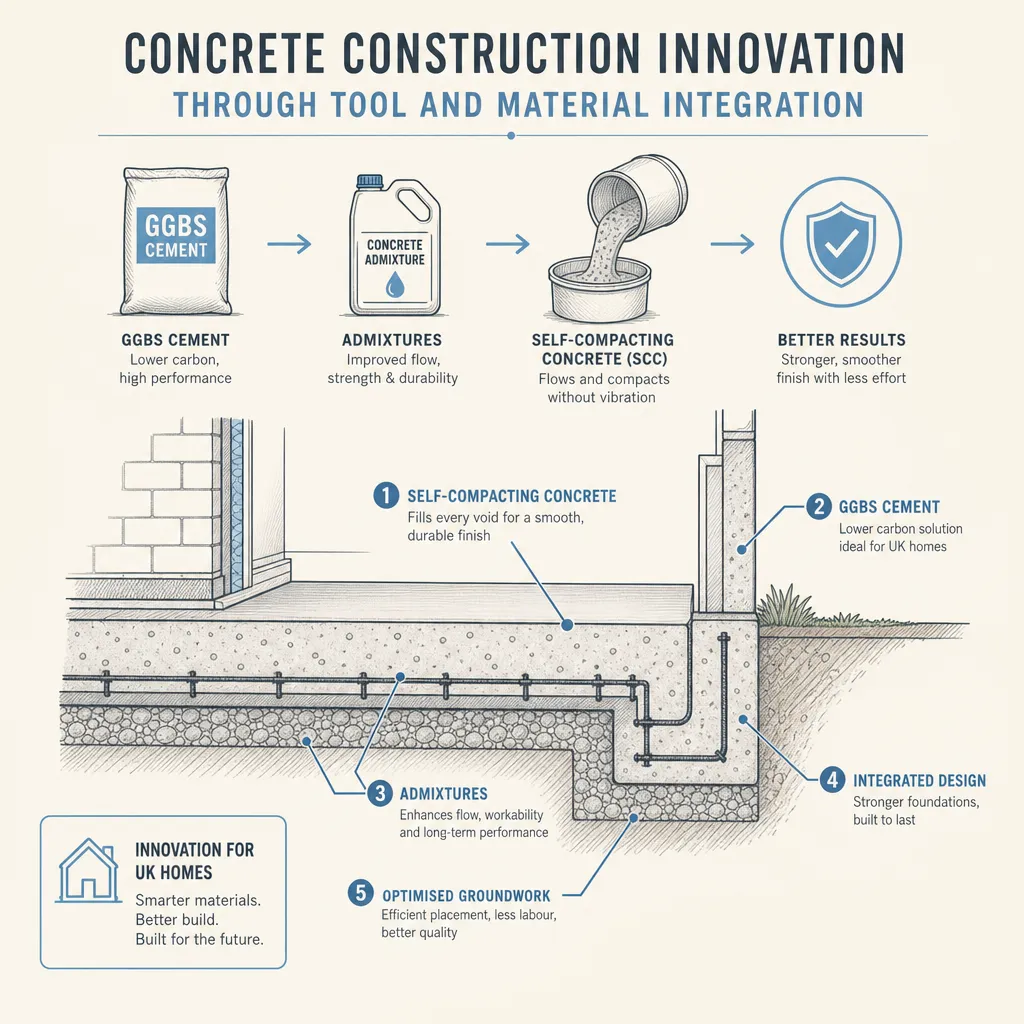
Concrete Construction Innovation Through Tool and Material Integration
Modern concrete mixes — self-compacting, fibre-reinforced, and low-carbon GGBS blends — require specific placement equipment and admixtures to perform correctly. Matching slump class to pump specification, understanding admixture effects on workability and curing, and using building control-compliant structural design are the key factors that determine whether a UK concrete project succeeds or fails.
 Planning & Pre-Build
Sourcing Reclaimed and Salvaged Building Materials for Period Renovation
Reclaimed materials — including original bricks, flooring, roof tiles, lime mortar, and architectural salvage — are often the best match for period properties and may be required by conservation officers or planning conditions. In the UK, specialist salvage yards, online architectural salvage platforms, and demolition contractors are the main sources. Always check material condition, provenance, and any listed building or conservation area requirements before purchasing.
 Planning & Pre-Build
Building Regulations and Window Replacement in Bedrooms
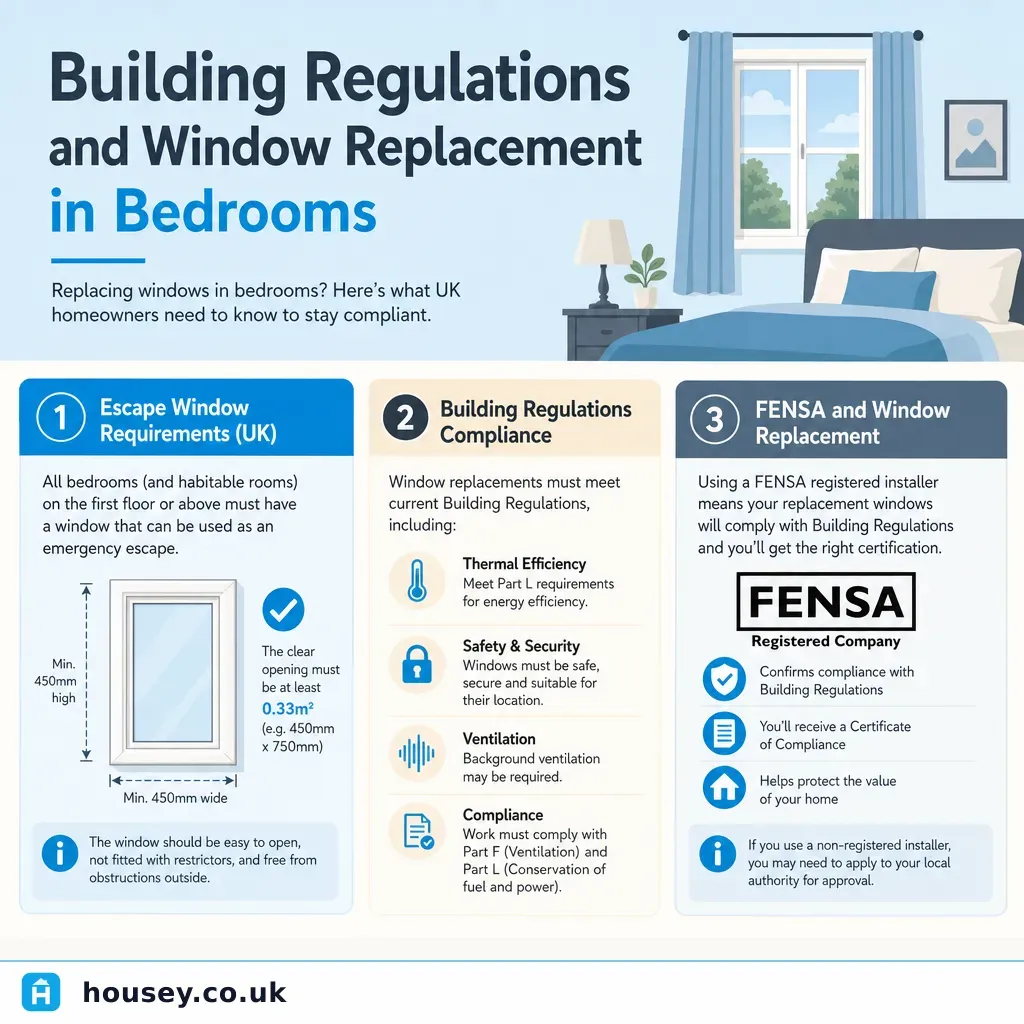
Most bedroom window replacements in England trigger building regulations under Part L (energy) and Part B (fire escape). A FENSA- or CERTASS-registered installer can self-certify and notify the local authority on your behalf. Escape windows must achieve a minimum 0.33 m² unobstructed opening, with no dimension below 450 mm and a sill no higher than 1,100 mm from the floor.
 Planning & Pre-Build
Understanding Barn Conversions: Property Types and Characteristics
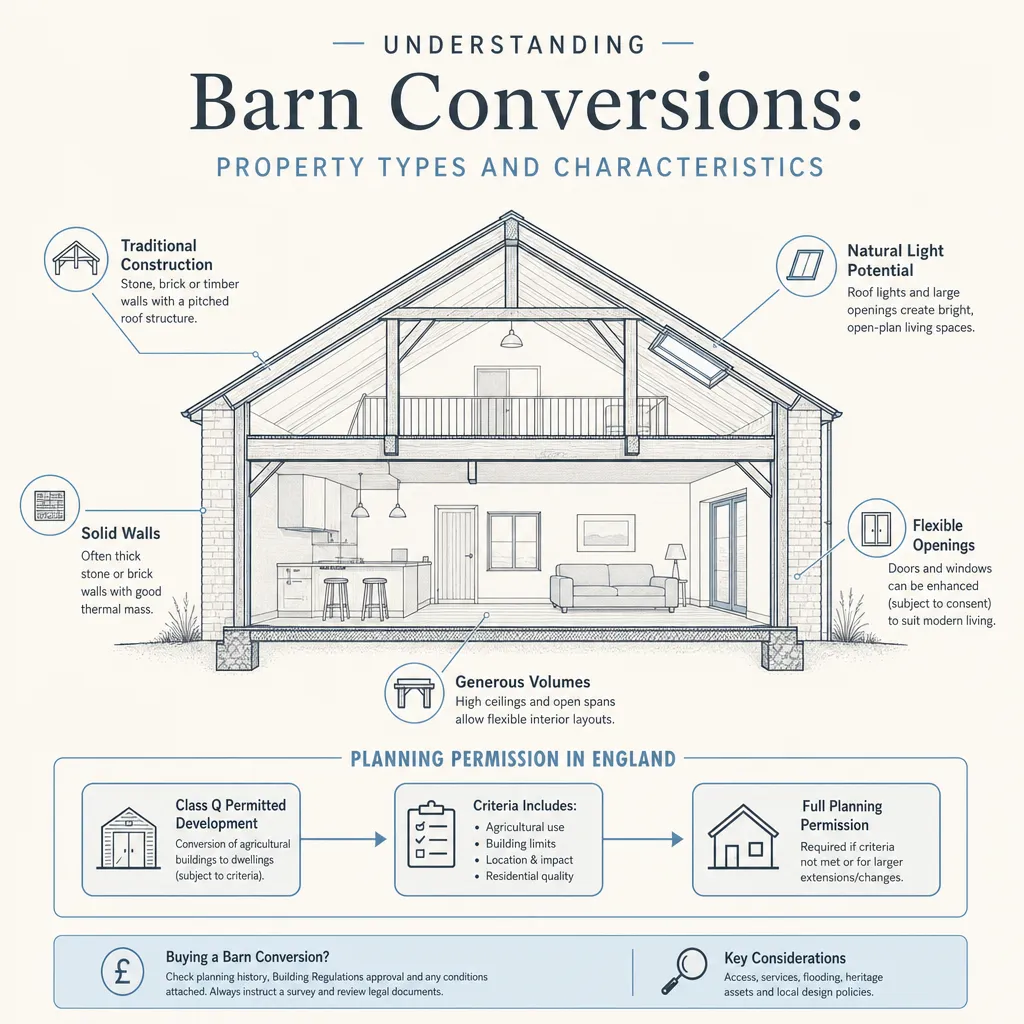
A barn conversion is an agricultural building — typically a former threshing barn, cattle shed, or granary — converted into residential use. In England, this most often requires either full planning permission or a prior approval application under Class Q permitted development rights. Each conversion is unique: construction type, insulation strategy, planning history, and tenure all vary significantly and affect value and mortgageability.
 Planning & Pre-Build
Structural considerations for internal walls
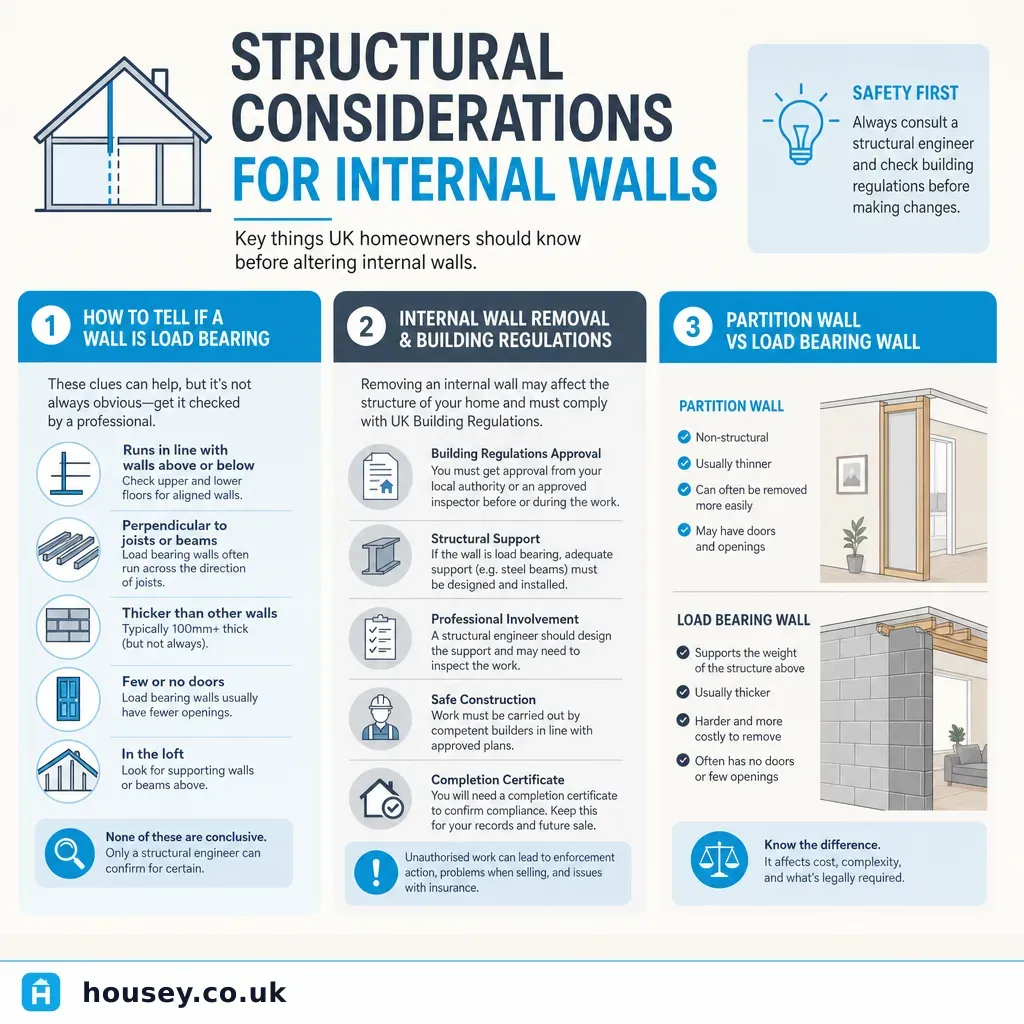
Whether a wall is load-bearing depends on its position, orientation relative to floor joists, and the property's construction. Removing or altering a load-bearing wall requires structural engineer calculations and Building Regulations approval under Part A in England and Wales. Non-load-bearing partitions can usually be removed without calculations, but may still need building control notification for fire compartmentation reasons.