Knowledge Base
Property advice that actually helps
Researched, UK-specific guides for every stage of homeownership — from buying and surveys to retrofit, planning and major works.
 Planning & Pre-Build
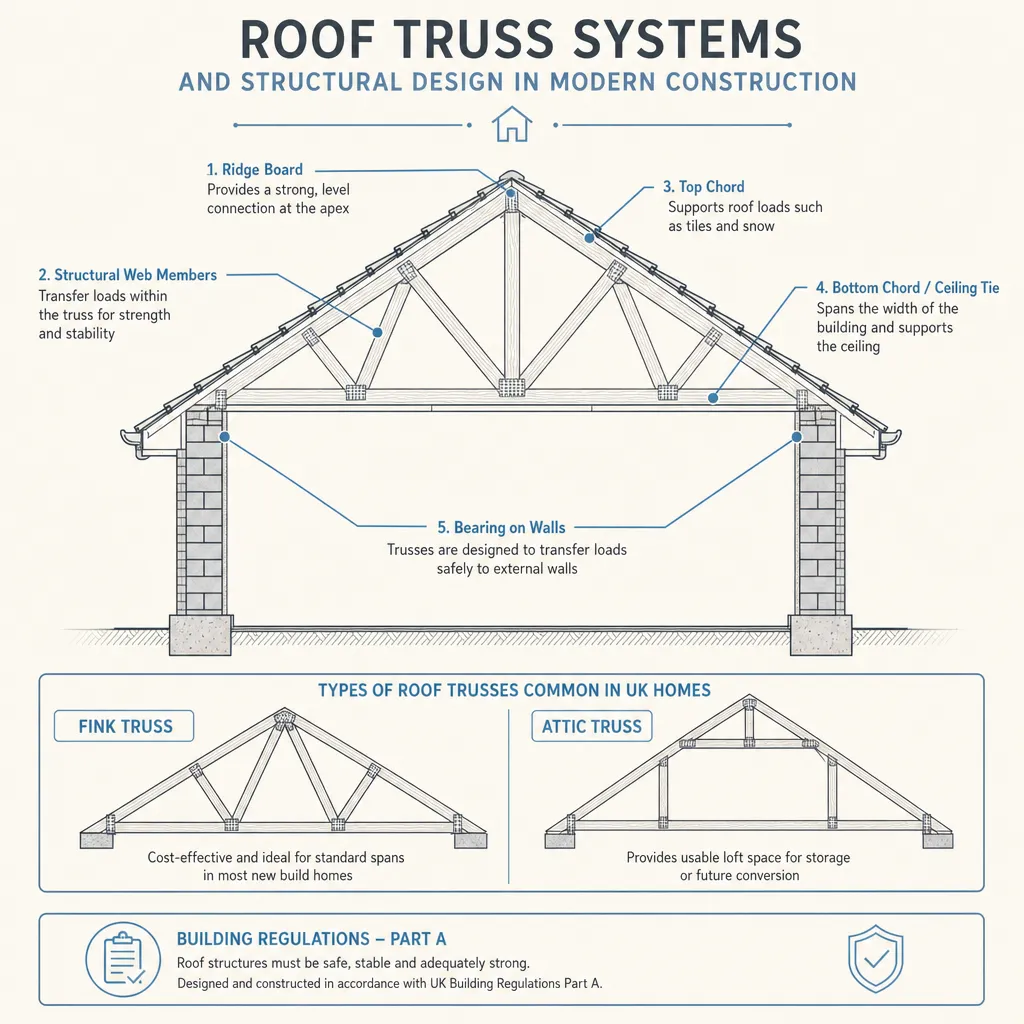
Roof Truss Systems and Structural Design in Modern Construction
Roof trusses are factory-engineered frames that carry roof loads to load-bearing walls. Common types include fink, attic, mono-pitch, and hip trusses. They must be designed to BS EN 1995 (Eurocode 5) and installed with correct bracing under Building Regulations Part A. Any structural alteration to roof trusses — including for loft conversions — requires input from a structural engineer.
 Planning & Pre-Build
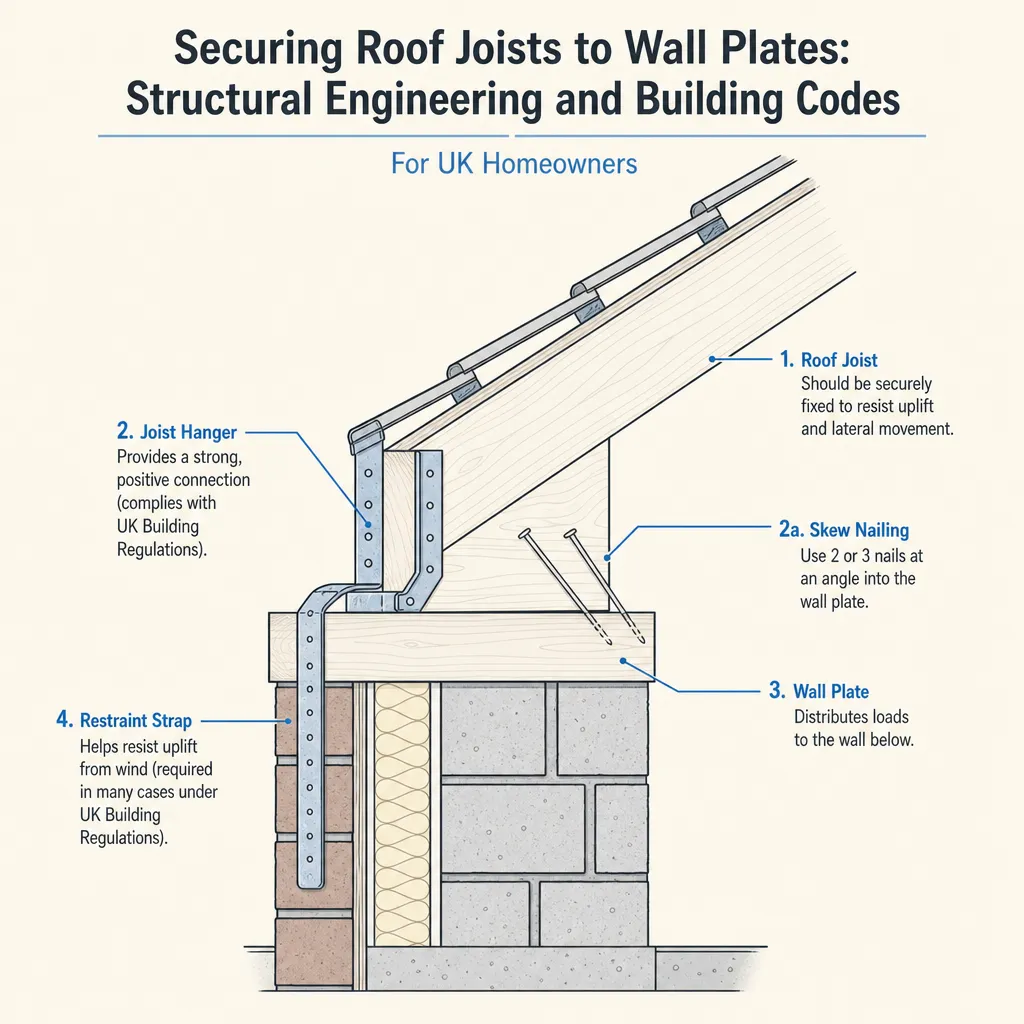
Securing Roof Joists to Wall Plates: Structural Engineering and Building Codes
Roof joists must be positively fixed to wall plates under Building Regulations Approved Document A — either by skew nailing with 100 mm nails at 45° or by joist hangers to BS EN 845-1. Separate restraint straps at 2-metre centres provide lateral stability. A structural engineer is needed for loft conversions, non-standard spans, or any roof showing signs of movement.
 Planning & Pre-Build
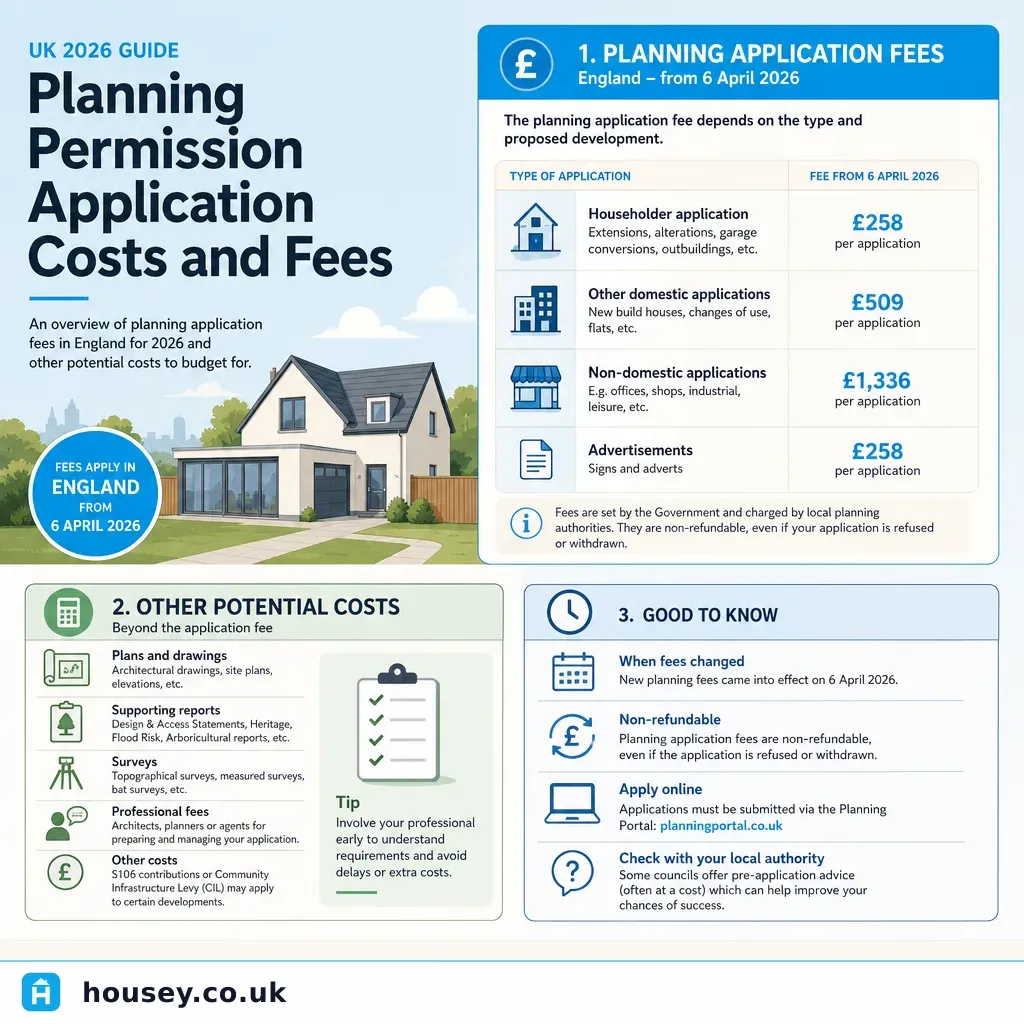
Planning Permission Application Costs and Fees
In England, the statutory fee for a householder planning application (extension, loft conversion) is £258. A full application for a new dwelling costs £578 per dwelling. These LPA fees are non-refundable. Professional fees for drawings, planning statements, and supporting reports are separate and often exceed the statutory charge.
 Planning & Pre-Build
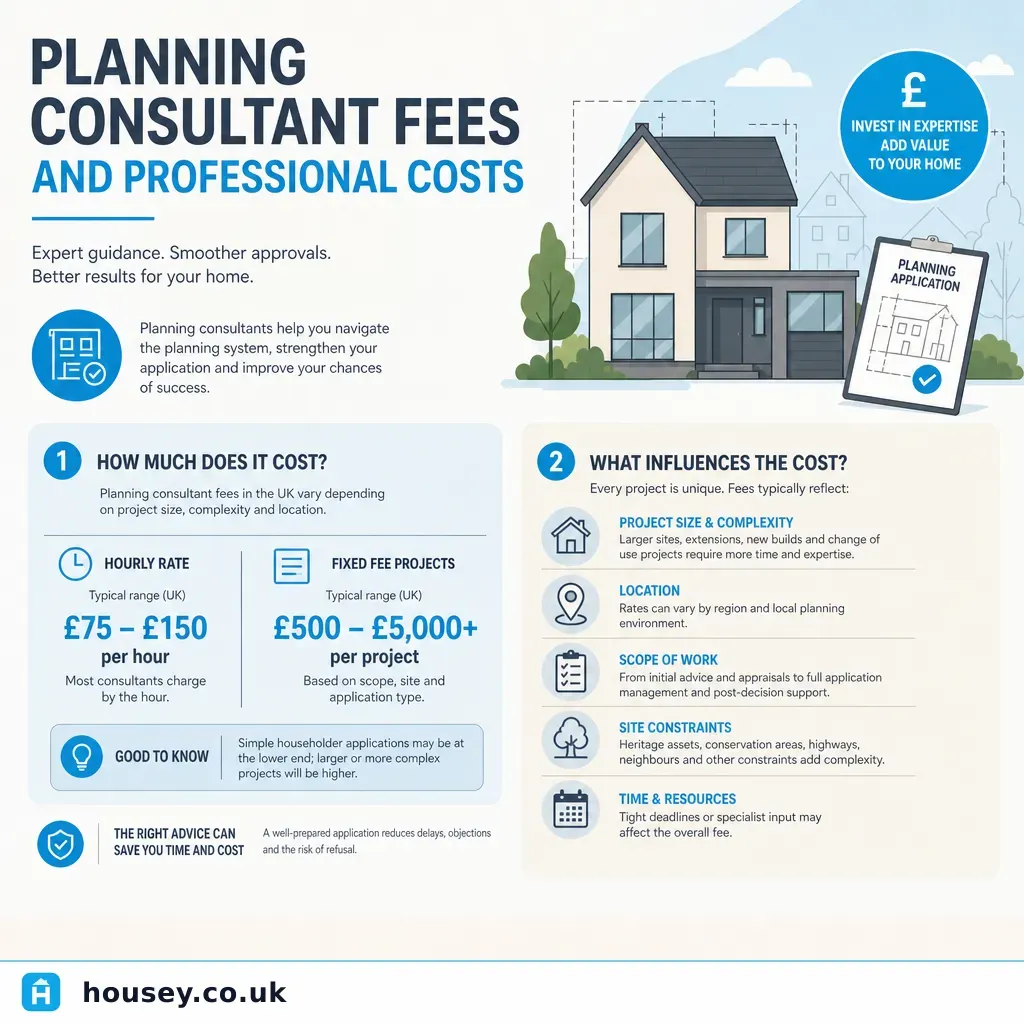
Planning Consultant Fees and Professional Costs
Planning consultant fees in the UK typically range from £75–£200 per hour, or around £500–£2,500 as a fixed fee for a householder application. More complex projects — new dwellings, appeals, or commercial schemes — cost £3,000–£15,000 or more. Fees vary by consultant seniority, project complexity, and site designation.
 Planning & Pre-Build
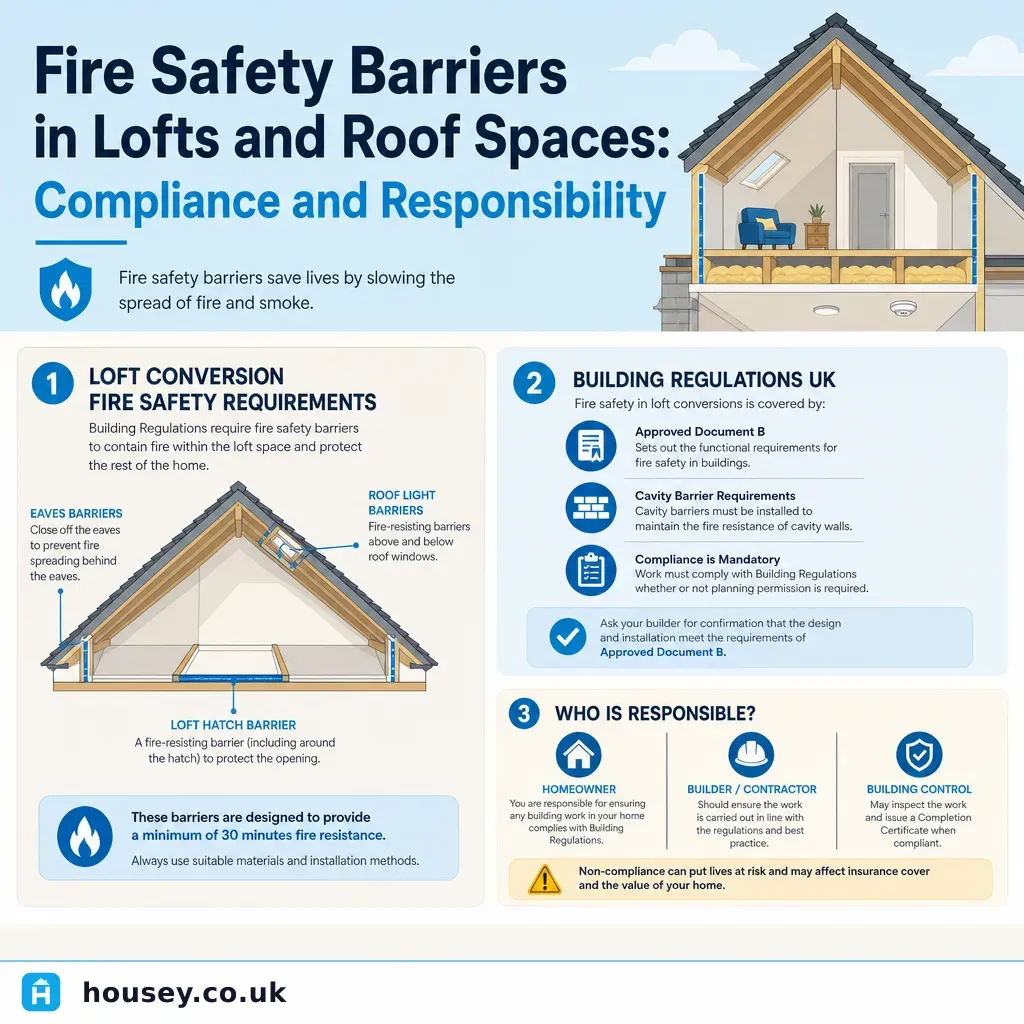
Fire Safety Barriers in Lofts and Roof Spaces: Compliance and Responsibility
Fire safety barriers in loft and roof spaces are required under Approved Document B of the Building Regulations to prevent fire and smoke spreading through concealed cavities. Key requirements include cavity barriers at party wall junctions, 30-minute fire-resisting floors in loft conversions, and a protected escape route. Missing or incorrect barriers should always be assessed by a qualified professional.
 Planning & Pre-Build
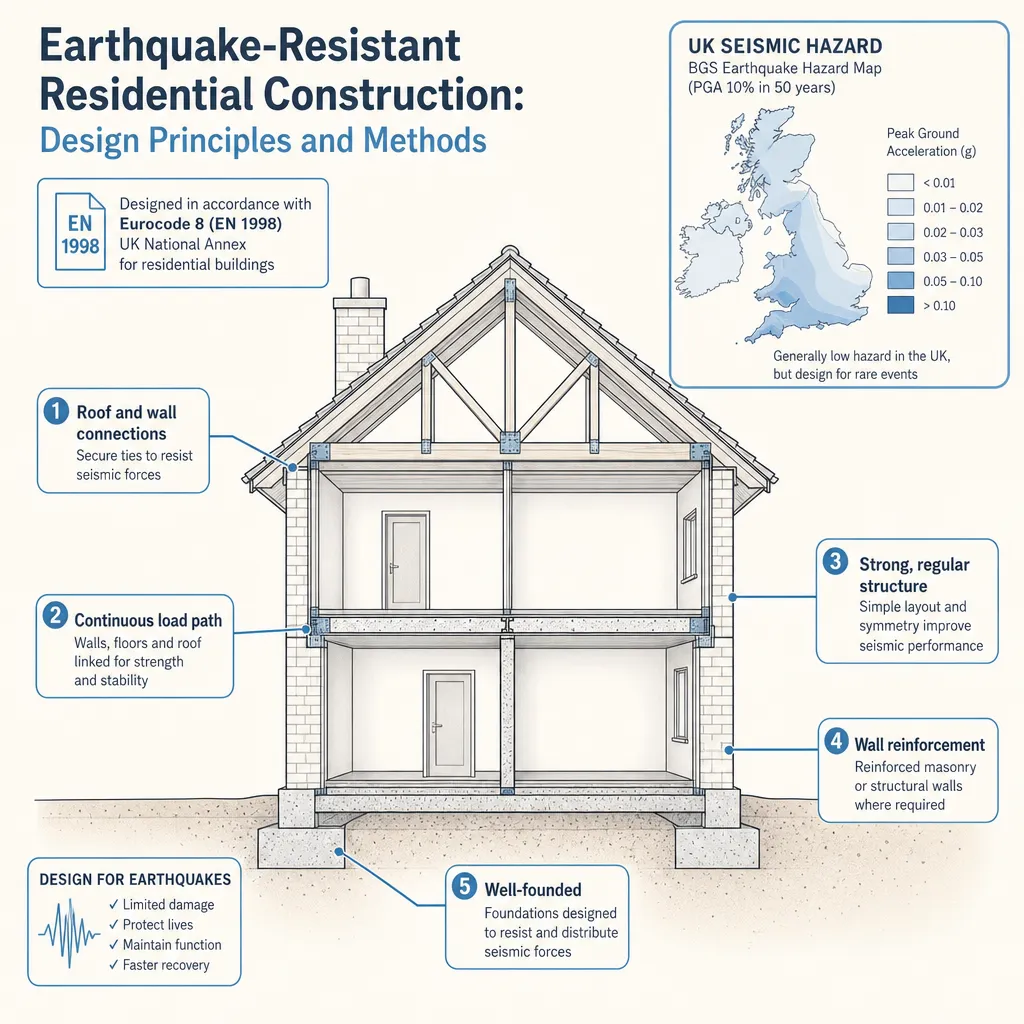
Earthquake-Resistant Residential Construction: Design Principles and Methods
The UK is a low-seismic-hazard country, and for most residential buildings, Building Regulations Part A structural requirements provide adequate resilience without specific seismic design. Eurocode 8 (BS EN 1998-1) is adopted in the UK but the National Annex sets very low design values that trigger a no-seismic-design zone across most of Britain for standard residential construction.
 Planning & Pre-Build
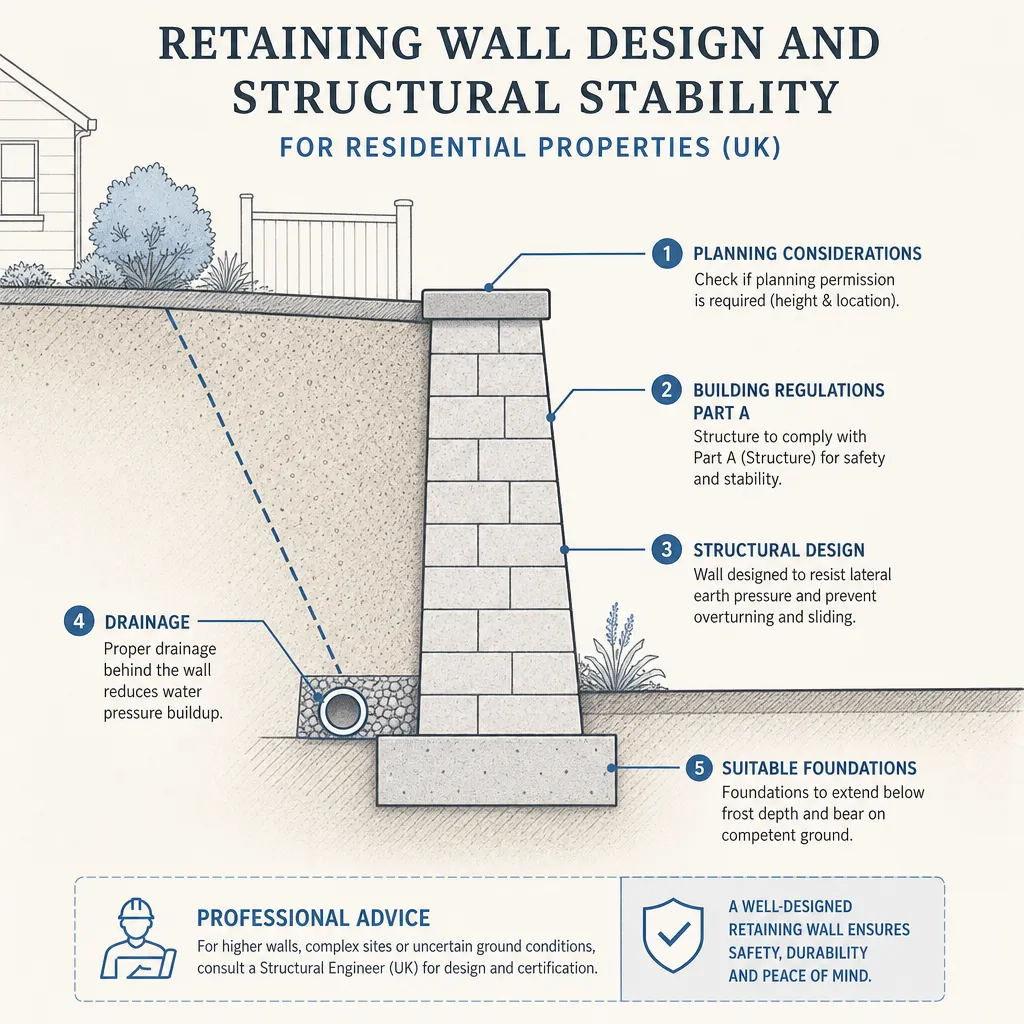
Retaining Wall Design and Structural Stability for Residential Properties
Retaining walls over around 1 m in height usually need structural engineer assessment; walls over 2 m almost always require a formal structural design and building control approval. Planning permission is required for walls exceeding 2 m, or 1 m adjacent to a highway. Good drainage behind the wall is as critical as the structure itself.
 Planning & Pre-Build
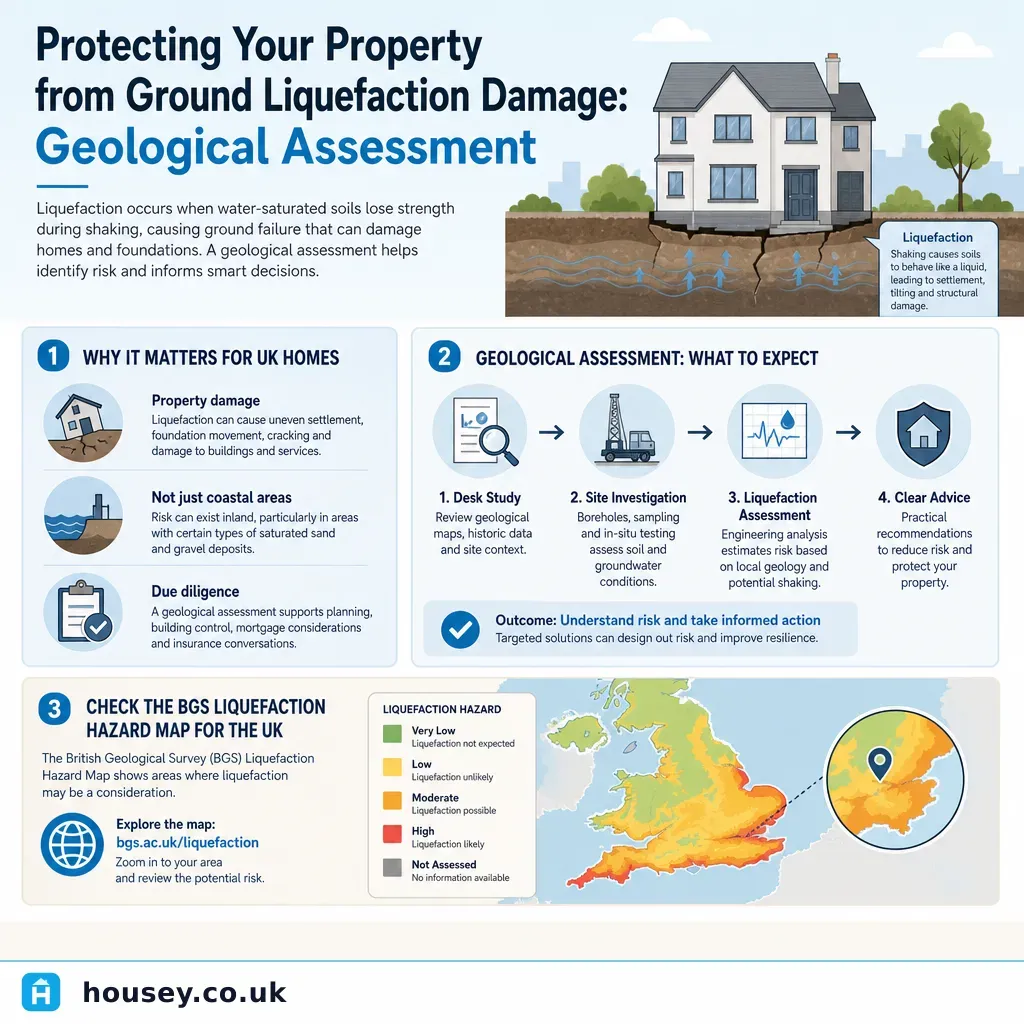
Protecting Your Property from Ground Liquefaction Damage: Geological Assessment
Ground liquefaction occurs when saturated, loose granular soils temporarily lose bearing capacity under vibration or shaking. In the UK, risk is most associated with river floodplain deposits, reclaimed land, and post-industrial made ground. A geotechnical investigation by a Chartered Engineer is the only reliable way to assess site-specific risk and determine whether mitigation measures are needed for foundations.
 Planning & Pre-Build
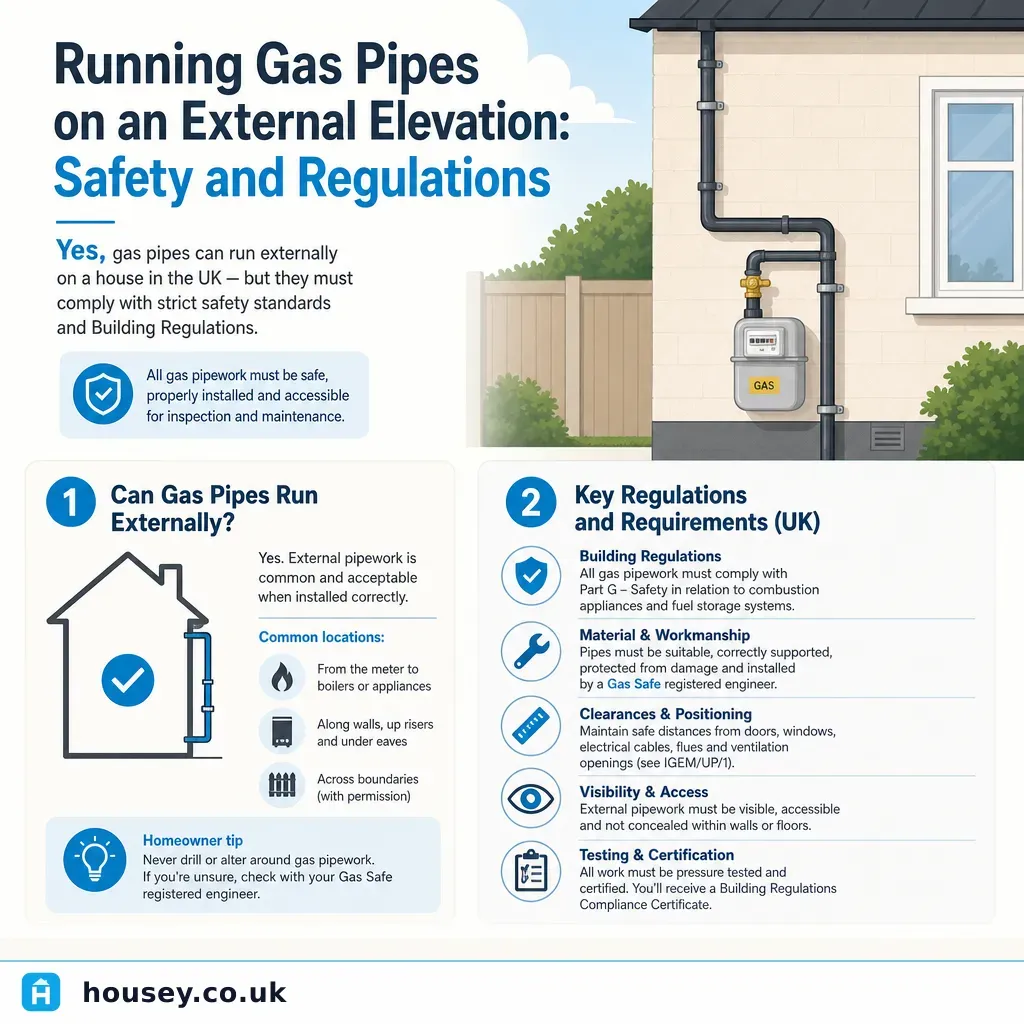
Running Gas Pipes on an External Elevation: Safety and Regulations
External gas pipework is permitted on UK property elevations and is often the preferred route when internal runs are impractical. However, it must be installed and certified solely by a Gas Safe Register-registered engineer under the Gas Safety (Installation and Use) Regulations 1998. Requirements cover pipe material, corrosion protection, ground-level mechanical protection, and clearances from openings and electrical installations.
 Planning & Pre-Build
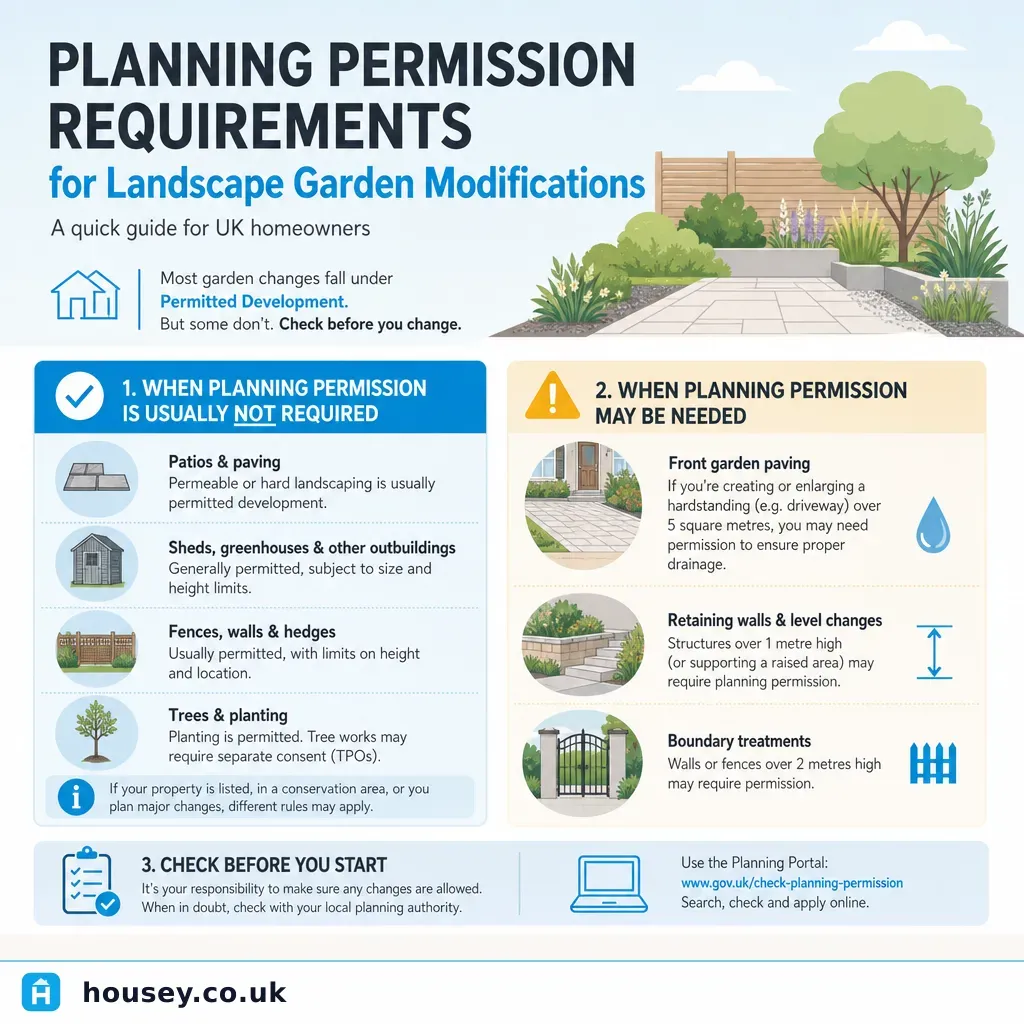
Planning Permission Requirements for Landscape Garden Modifications
Most garden landscaping in England does not require planning permission. The main exceptions are impermeable front garden surfaces over 5 m², decking more than 30 cm above ground level, retaining walls above the GPDO height thresholds, and any work affecting trees with preservation orders. Always check whether an Article 4 Direction or conservation area status applies to your property.
 Planning & Pre-Build
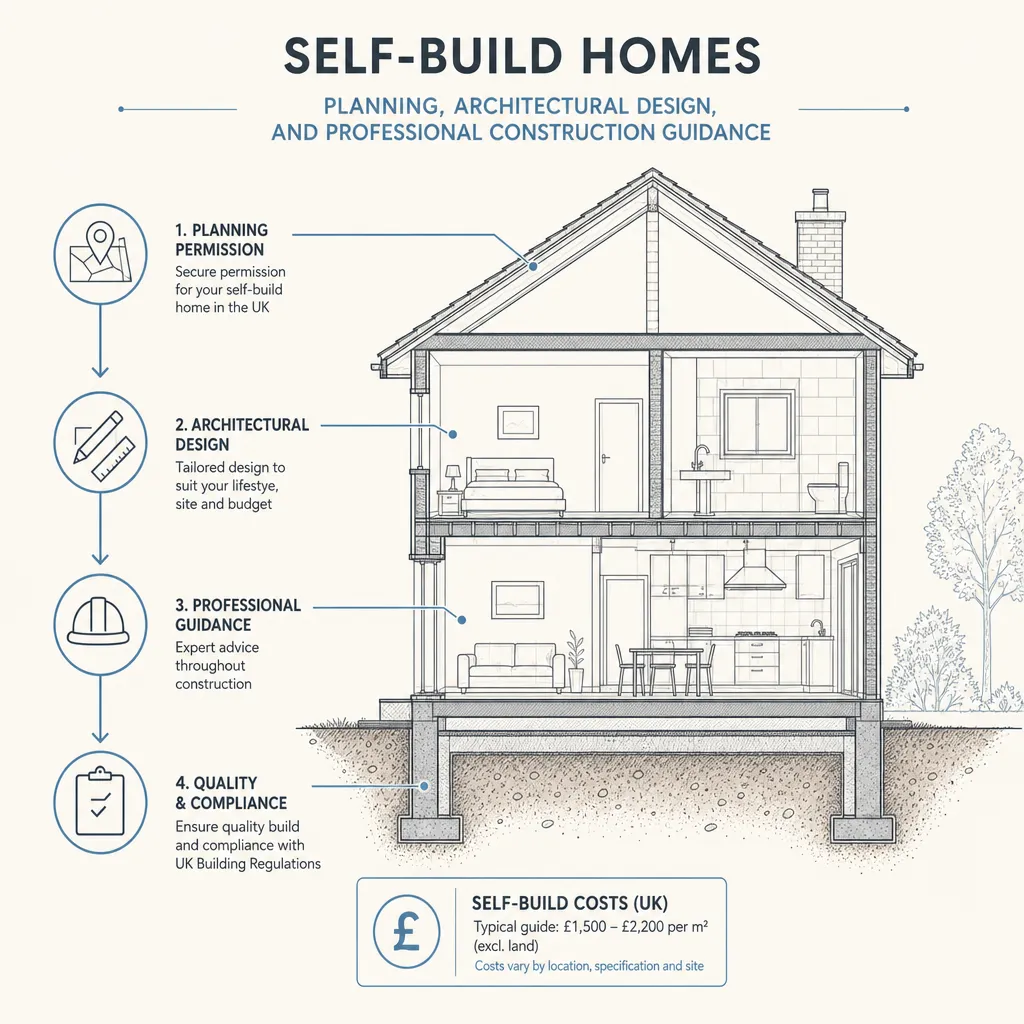
Self-build homes: planning, architectural design, and professional construction guidance
A UK self-build requires planning permission, separate building regulations approval, and a professional team typically including an architect, structural engineer, and building control body. Build costs range from roughly £1,500 to £3,000 per square metre, excluding land and fees. Eligible new builds can reclaim VAT through HMRC's DIY Housebuilders Scheme, and councils must maintain a Self-Build Register for those seeking plots.
 Planning & Pre-Build
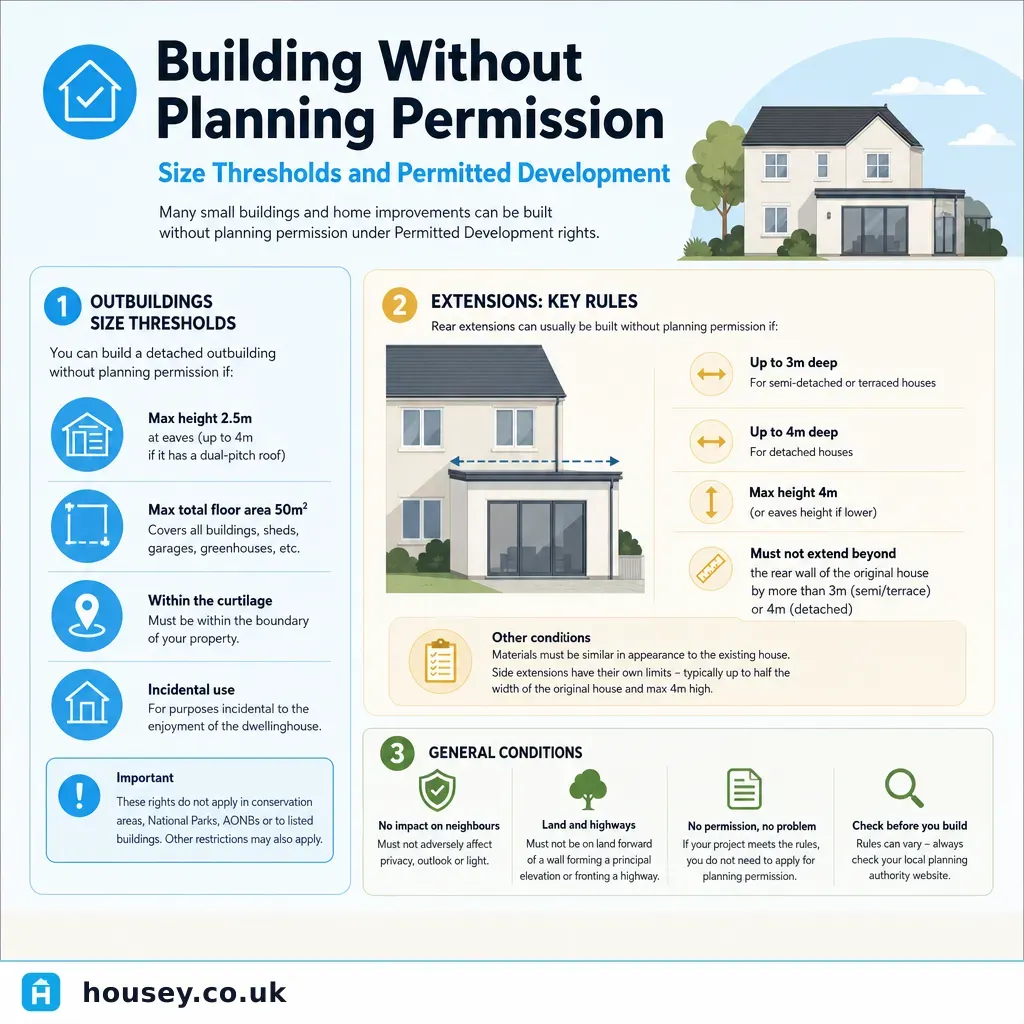
Building Without Planning Permission: Size Thresholds and Permitted Development
In England, most house extensions, loft conversions, and outbuildings can go ahead without planning permission under permitted development rights, provided size thresholds are met. Key limits include single-storey rear extensions up to 4m deep (detached) or 3m (other houses), loft conversions up to 50 cubic metres, and outbuildings covering no more than 50% of the garden. Flats and listed buildings are excluded.