Knowledge Base
Property advice that actually helps
Researched, UK-specific guides for every stage of homeownership — from buying and surveys to retrofit, planning and major works.
 Planning & Pre-Build
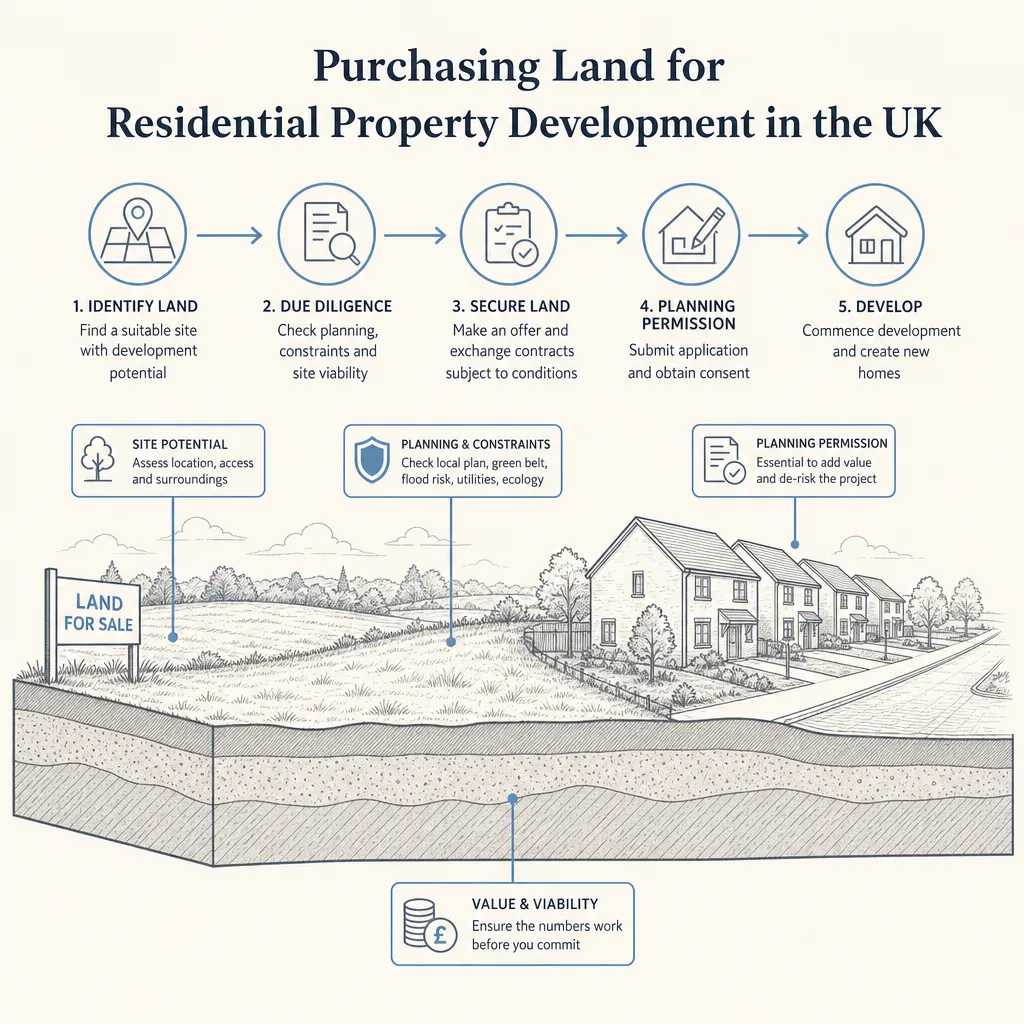
Purchasing Land for Residential Property Development in the UK
Buying development land in the UK involves due diligence on planning status, ground conditions, legal title, and utilities access before exchange. Land is sold with full or outline permission, subject to planning, or with no permission at all — and the price reflects that status. Instructing a planning consultant, solicitor, and civil engineer before exchange is strongly advisable given the financial complexity involved.
 Planning & Pre-Build
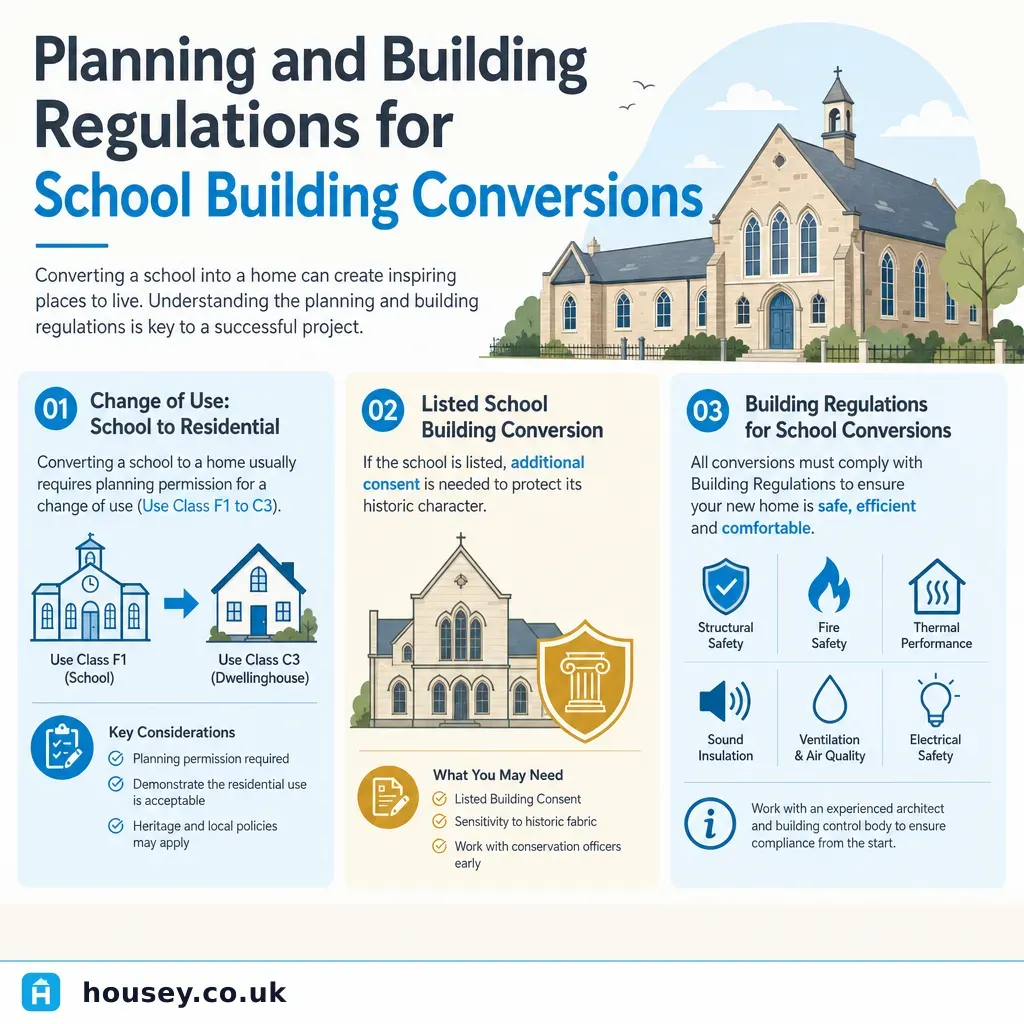
Planning and Building Regulations for School Building Conversions
Converting a school to residential use in England requires full planning permission — there is no permitted development right for this change of use. If the building is listed, Listed Building Consent is also required. Building regulations must be met across fire safety, energy efficiency, ventilation, and accessibility. Early engagement with a planning consultant and heritage consultant is essential before design work begins.
 Planning & Pre-Build
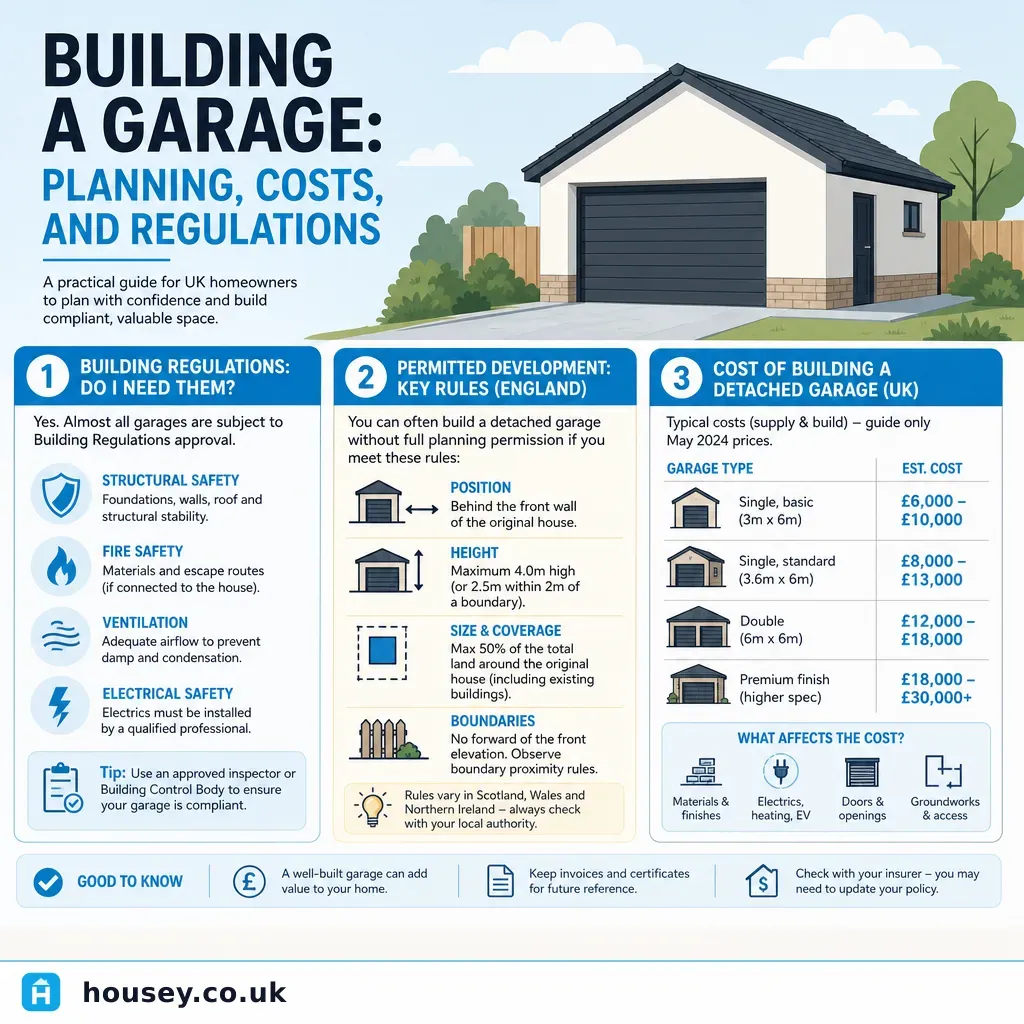
Building a Garage: Planning, Costs, and Regulations
Building a detached garage usually falls within permitted development in England, meaning no planning permission is needed if it meets size, height, and position limits. Building regulations approval is generally not required for garages under 15 square metres. Attached garages always need building regulations approval. Costs typically range from £15,000 to £45,000 depending on size and specification.
 Planning & Pre-Build
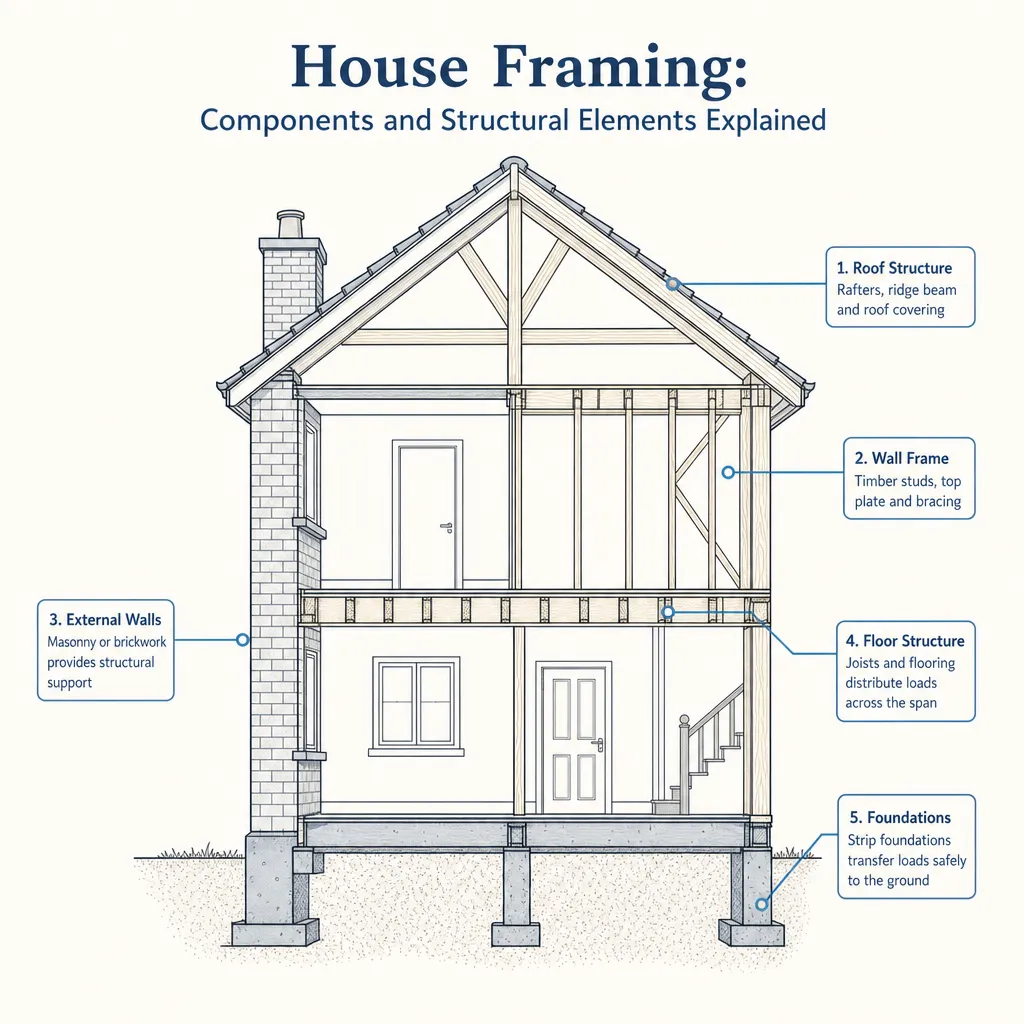
House Framing: Components and Structural Elements Explained
Most UK homes are built from load-bearing masonry — brick and block cavity walls — or, increasingly, from factory-engineered timber frames where the masonry outer leaf is non-structural cladding. Load-bearing walls, floor joists, lintels, and the roof structure all work together to transfer loads to the foundations. Any alteration to a structural element requires calculations from a chartered structural engineer and building regulations approval before work begins.
 Planning & Pre-Build
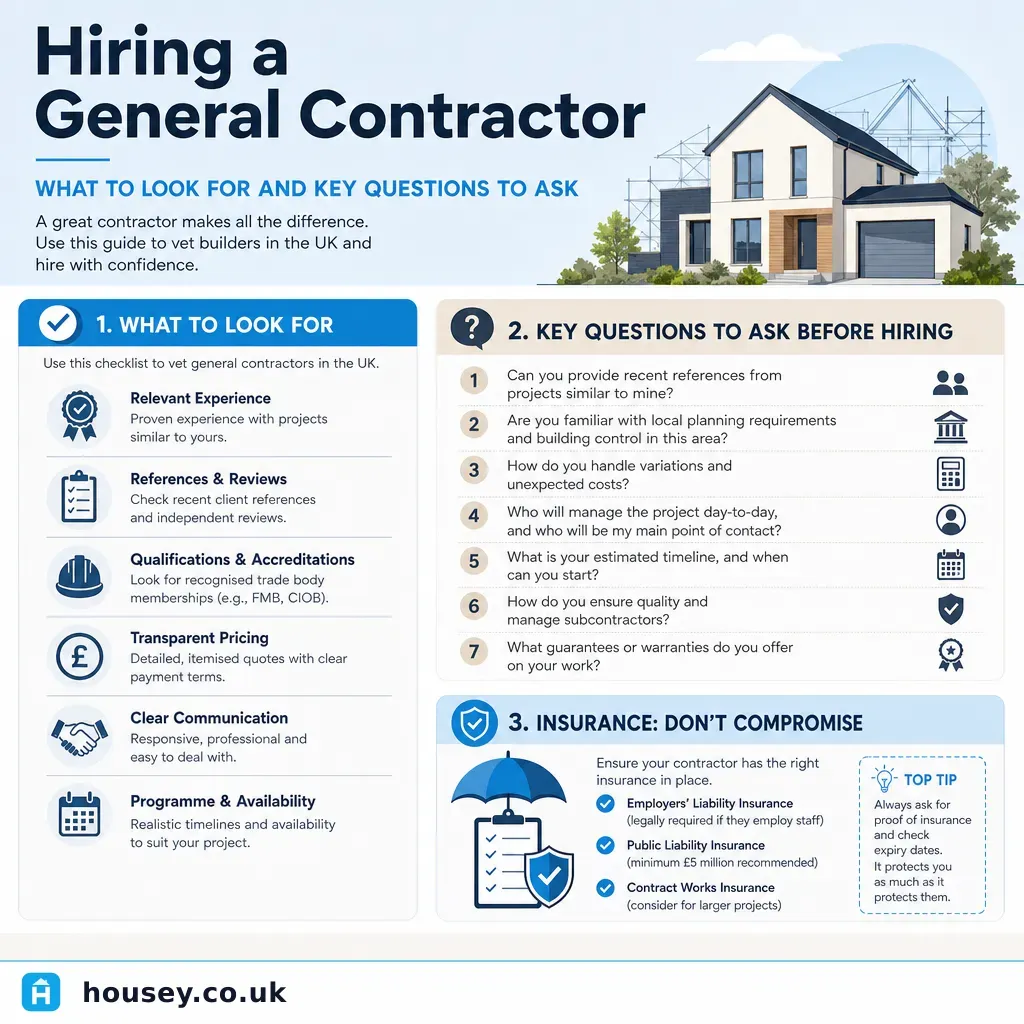
Hiring a General Contractor: What to Look For and Key Questions to Ask
Hiring a general contractor in the UK requires verifying FMB or TrustMark membership, checking that public liability and employers' liability insurance certificates are current, obtaining at least three written quotes against the same specification, and signing a written contract — ideally a JCT form — with stage payments tied to verified milestones rather than calendar dates.
 Planning & Pre-Build
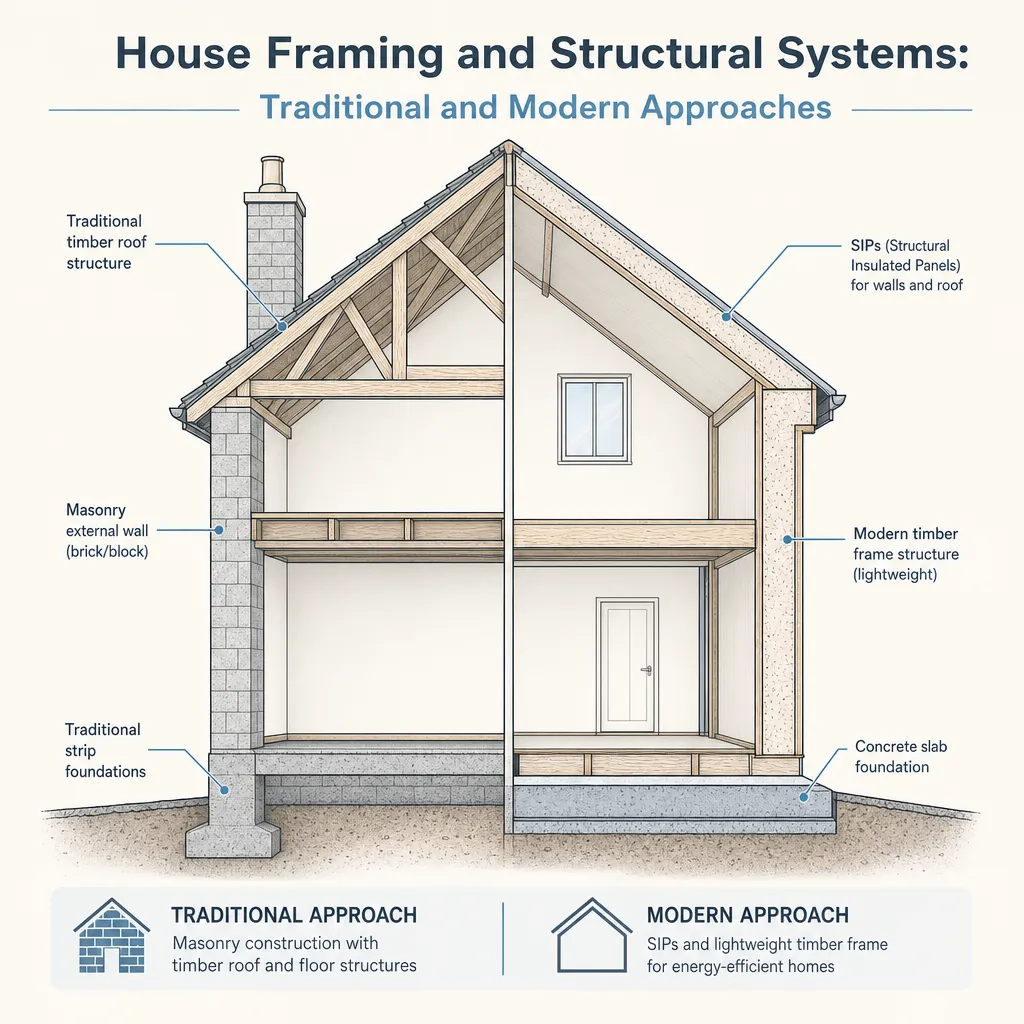
House Framing and Structural Systems: Traditional and Modern Approaches
UK homes are built using four main structural systems: traditional masonry (brick and block), timber frame, structural insulated panels (SIPs), and insulated concrete formwork (ICF). Traditional masonry dominates the existing housing stock, but timber frame is common in new builds — especially in Scotland. The right system depends on site conditions, budget, thermal performance targets, and planning context.
 Planning & Pre-Build
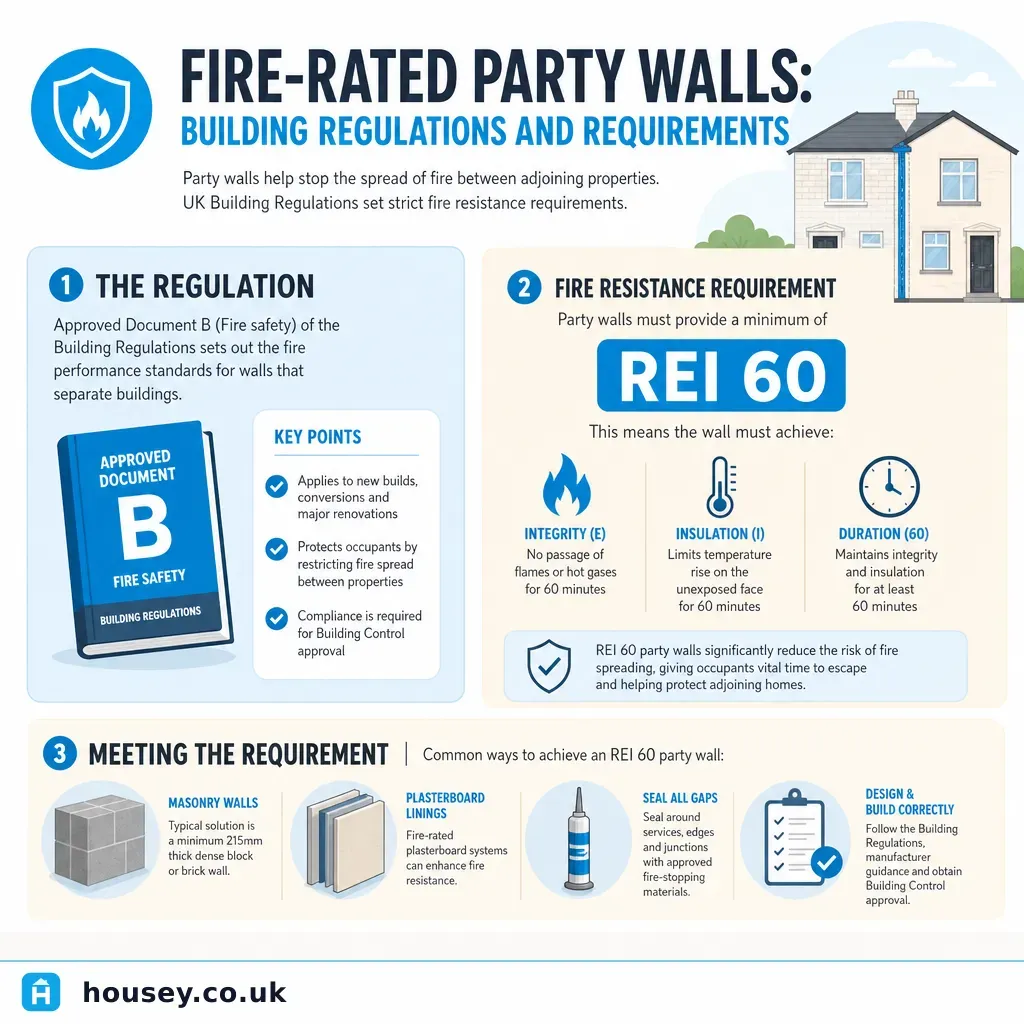
Fire-Rated Party Walls: Building Regulations and Requirements
Party walls between dwellings must achieve at least 60 minutes' fire resistance, expressed as REI 60, under Building Regulations Approved Document B. This requires the wall to maintain load-bearing capacity, prevent gaps through which fire can pass, and limit heat transfer. Building control approval is required for any new or altered party wall, and the Party Wall etc. Act 1996 is a separate obligation.
 Planning & Pre-Build
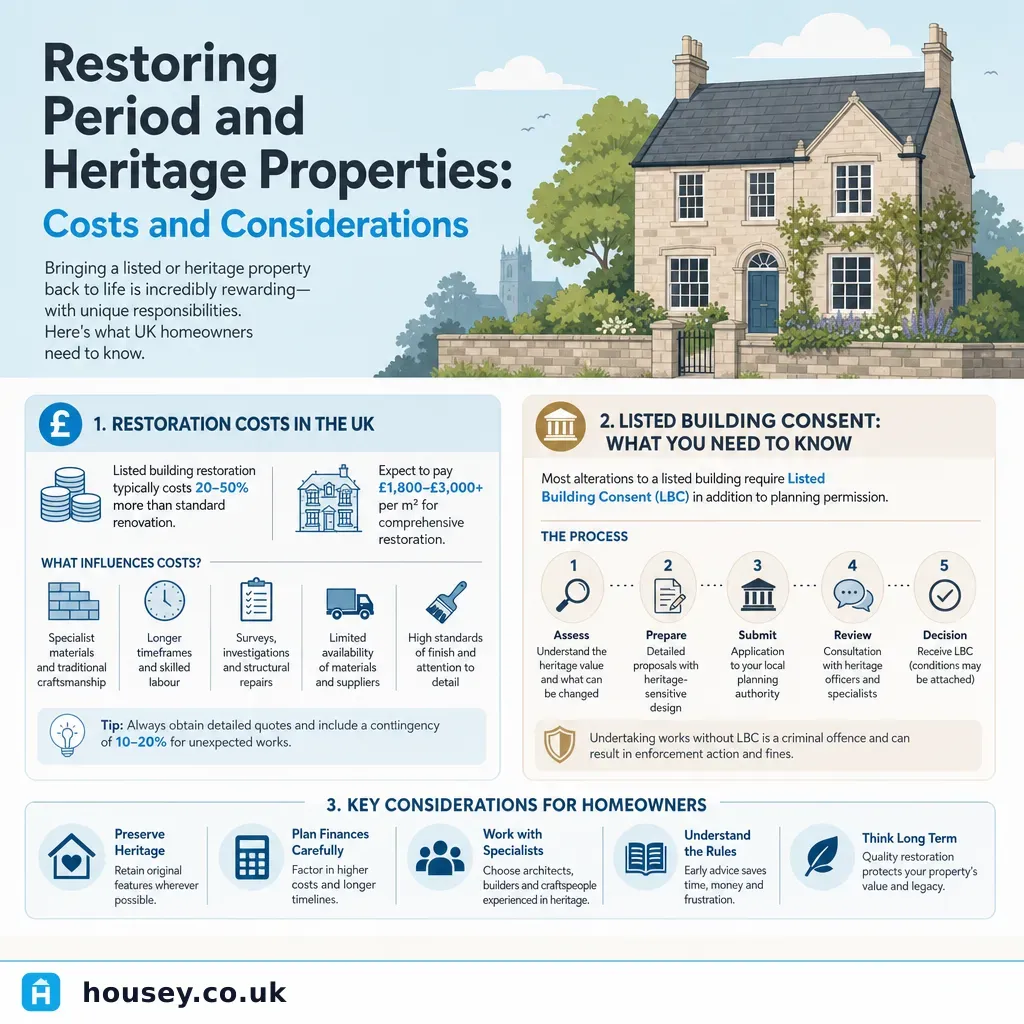
Restoring Period and Heritage Properties: Costs and Considerations
Restoring a period or heritage property requires listed building consent for most alterations, use of traditional materials such as lime mortar, and specialist contractors. Costs range from tens of thousands for targeted repairs to hundreds of thousands for substantial works. Engaging a heritage consultant and your local planning authority before starting any work is essential to avoid enforcement action.
 Planning & Pre-Build
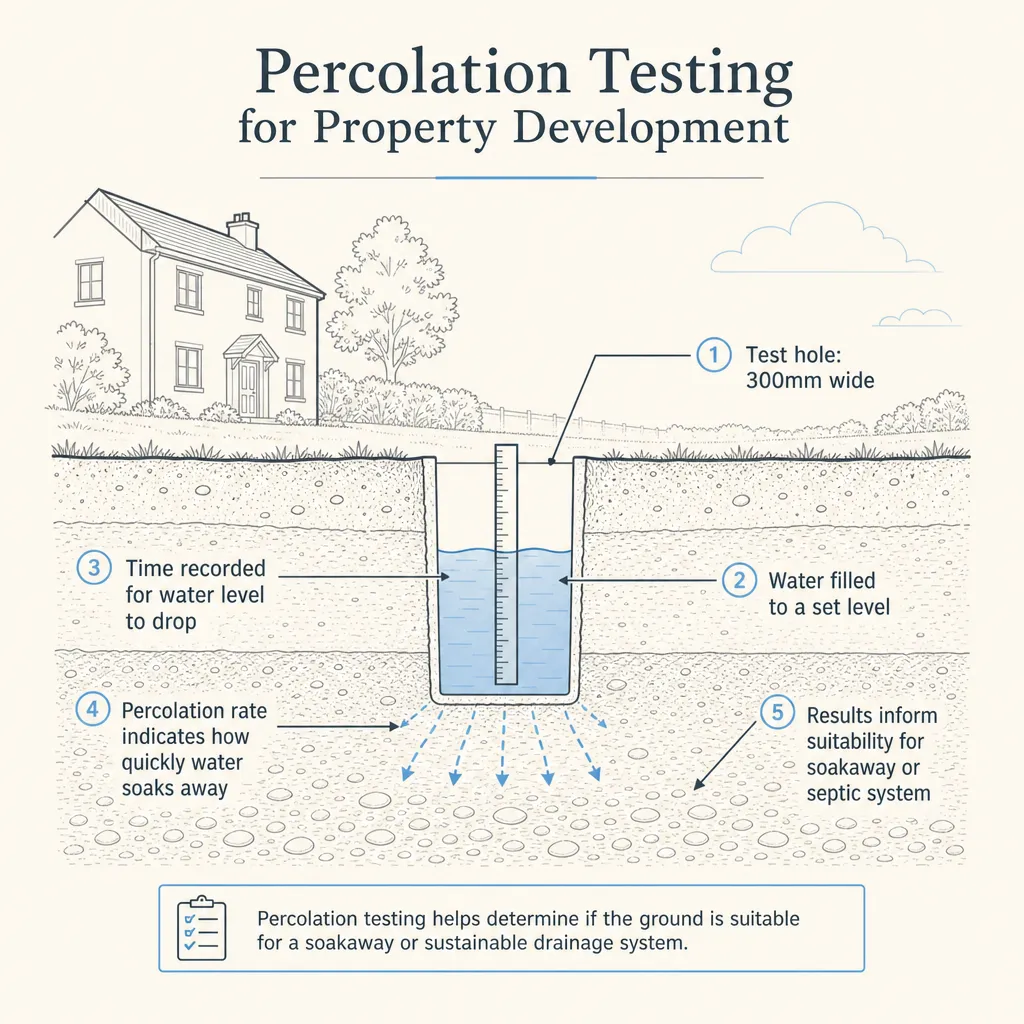
Percolation Testing for Property Development
A percolation test measures how quickly water drains through soil to determine whether a soakaway or septic system is viable. Required by Building Regulations Approved Document H when no mains connection is used, results must show a percolation value (Vp) of 15–100 seconds per millimetre. Most tests are carried out by a geotechnical engineer or qualified site investigator.
 Planning & Pre-Build
Electrical Panel Replacement: When and Why Your Home Needs an Upgrade
Most UK homes need a consumer unit replacement when they have rewirable fuse wire, lack residual current devices (RCDs), or experience frequent circuit tripping. Replacement is notifiable work under Part P of the Building Regulations and must be carried out by a competent, registered electrician — typically NICEIC or NAPIT registered.
 Planning & Pre-Build
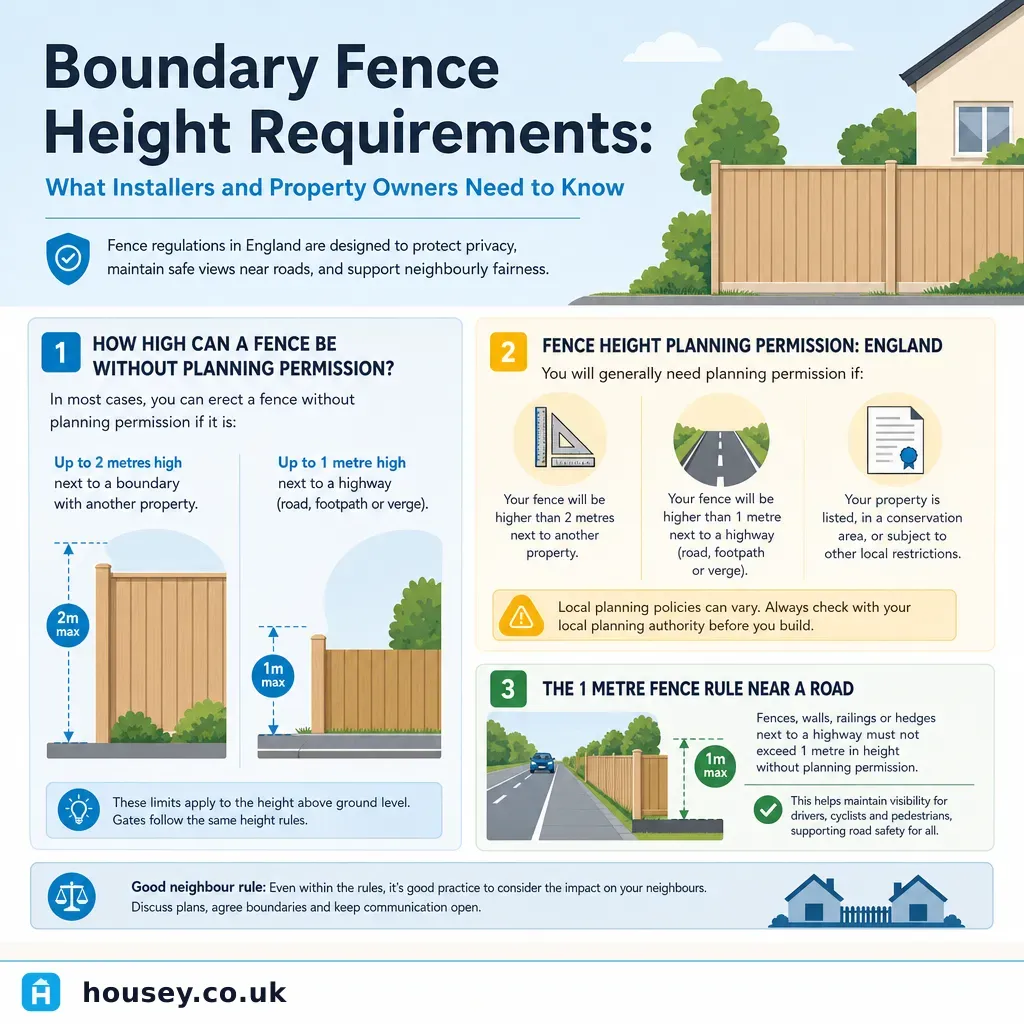
Boundary Fence Height Requirements: What Installers and Property Owners Need to Know
In England, a fence can be up to 2 metres high without planning permission, reducing to 1 metre when adjacent to a highway used by vehicles. Conservation areas, Article 4 Directions, listed building status, and private deed covenants can further restrict what is permitted. Always verify with your local planning authority and check your title deeds before erecting any boundary structure.
 Planning & Pre-Build
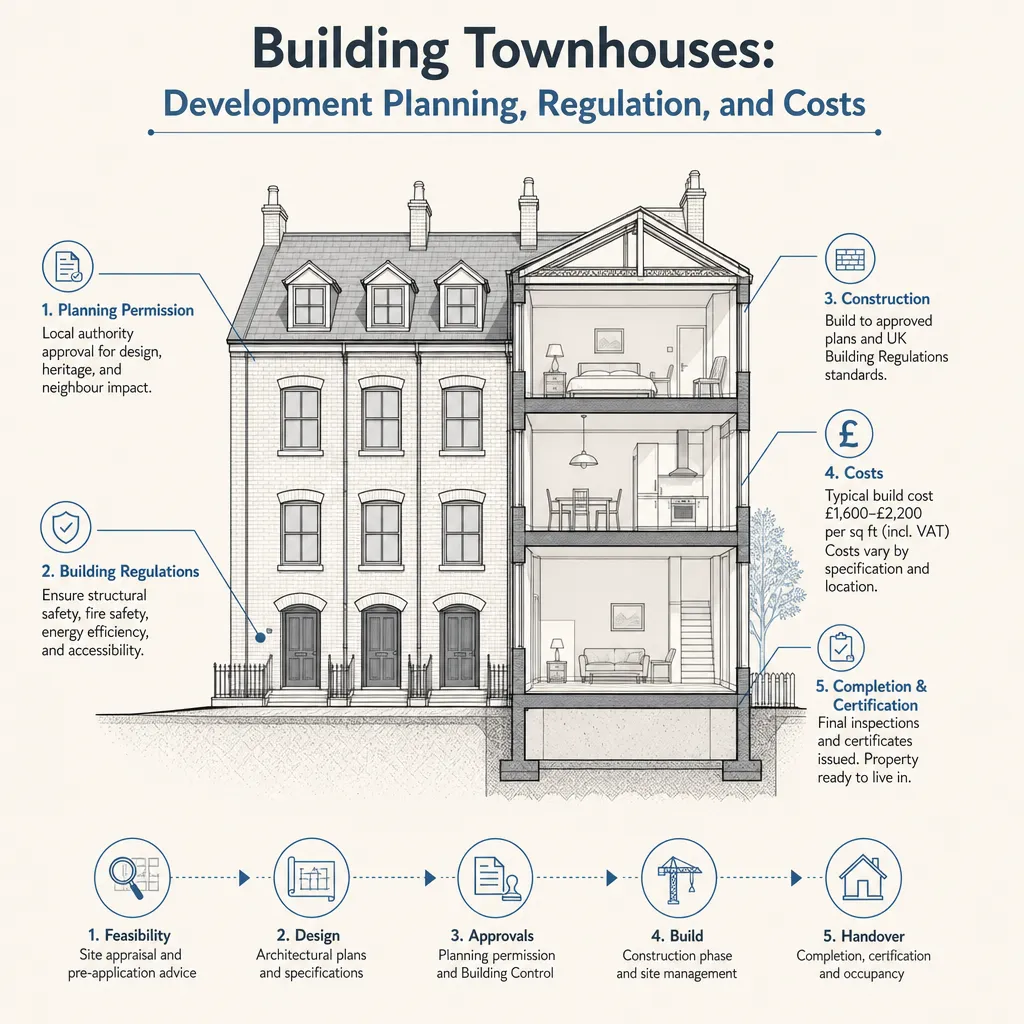
Building Townhouses: Development Planning, Regulation, and Costs
Building townhouses in the UK requires full planning permission for all new dwellings — permitted development rights do not apply to new residential construction. Building Regulations Parts A, B, E, F, L, and M all apply. Costs vary by region and scheme size, and CIL or Section 106 obligations can add significantly to the total development budget.