Knowledge Base
Property advice that actually helps
Researched, UK-specific guides for every stage of homeownership — from buying and surveys to retrofit, planning and major works.
 Planning & Pre-Build
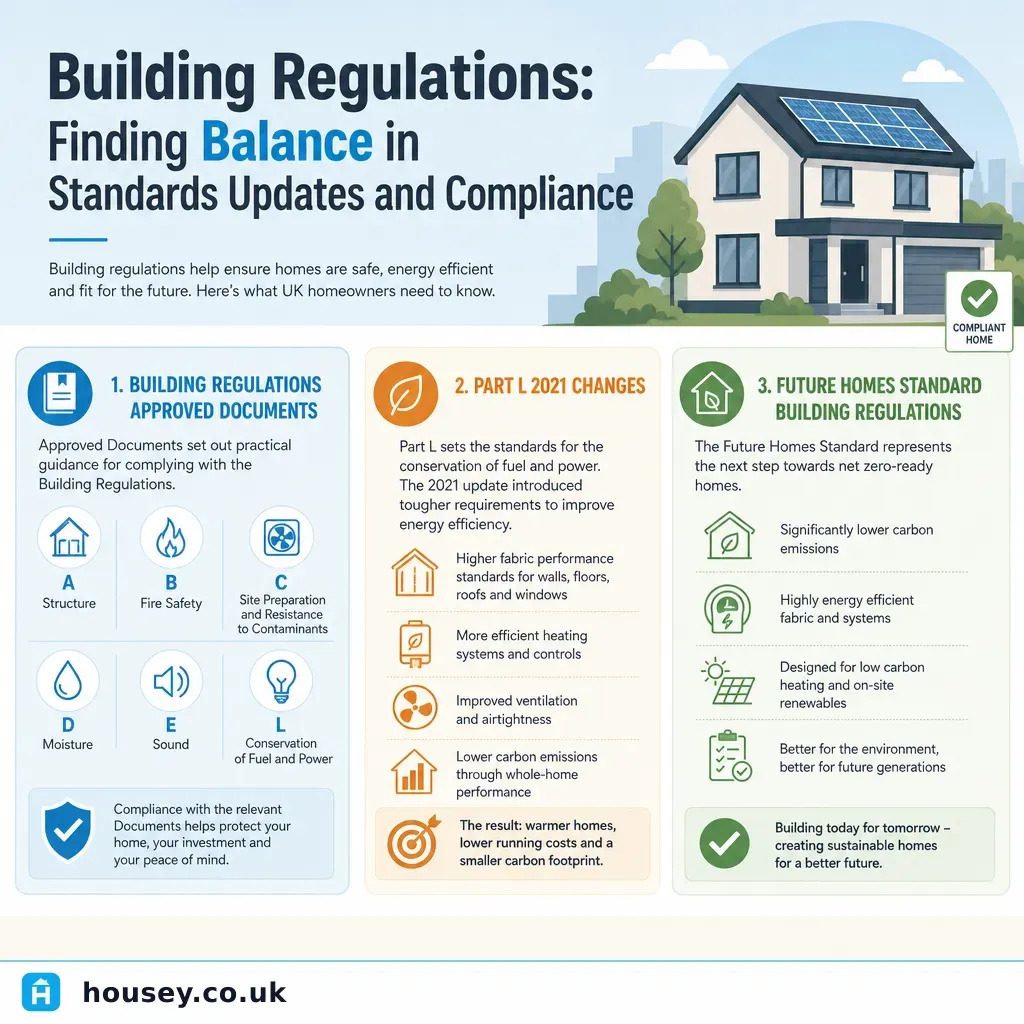
Building Regulations: Finding Balance in Standards Updates and Compliance
Building regulations in England and Wales set minimum standards for construction, covering structure, fire safety, energy efficiency, and ventilation. Updated in 2021 and through the Building Safety Act 2022, they require approval — via local authority building control, a registered approver, or a Competent Person Scheme — before most notifiable building work begins.
 Planning & Pre-Build
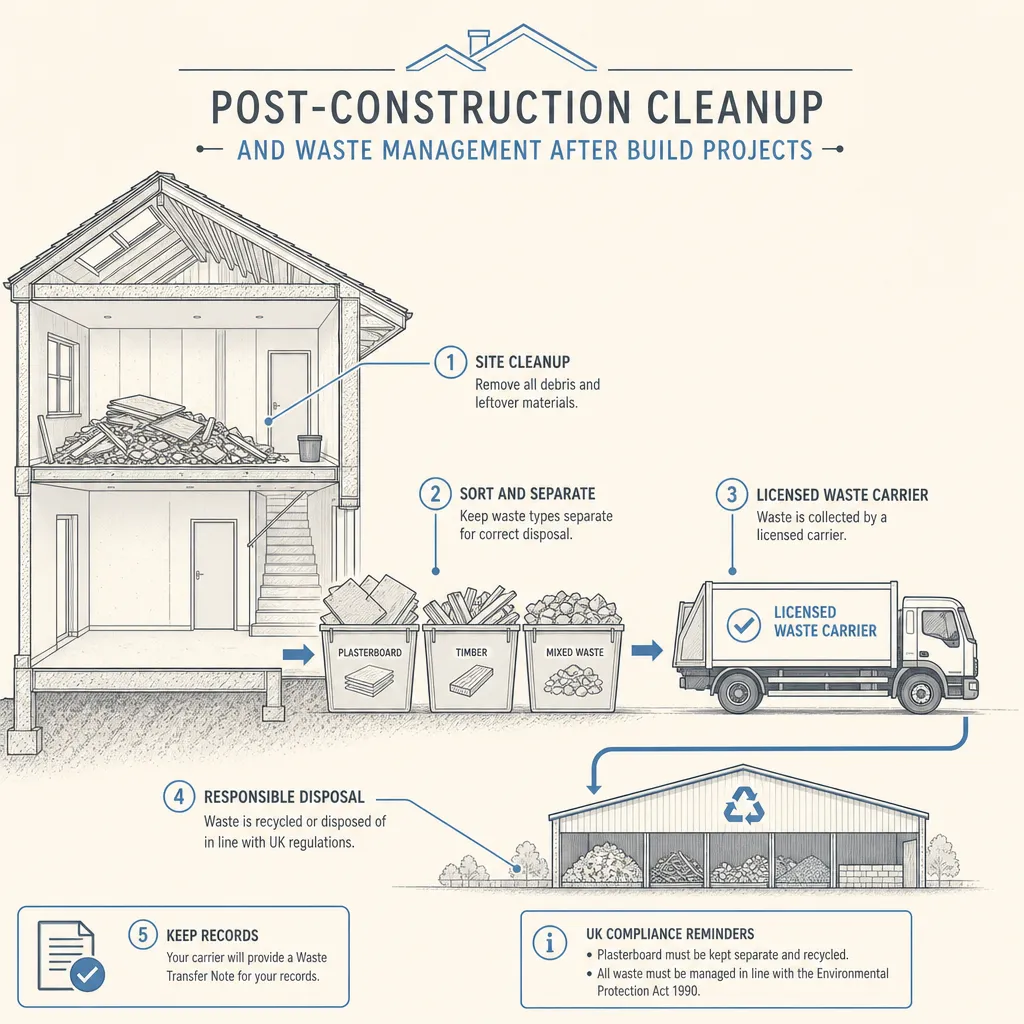
Post-Construction Cleanup and Waste Management After Build Projects
After a UK build project, the homeowner is legally responsible for ensuring waste goes to a licensed carrier under the Environmental Protection Act 1990 Duty of Care. Always obtain a waste transfer note, keep plasterboard separate from general rubble, and use a specialist contractor for asbestos or hazardous materials — these cannot go in a standard skip.
 Planning & Pre-Build
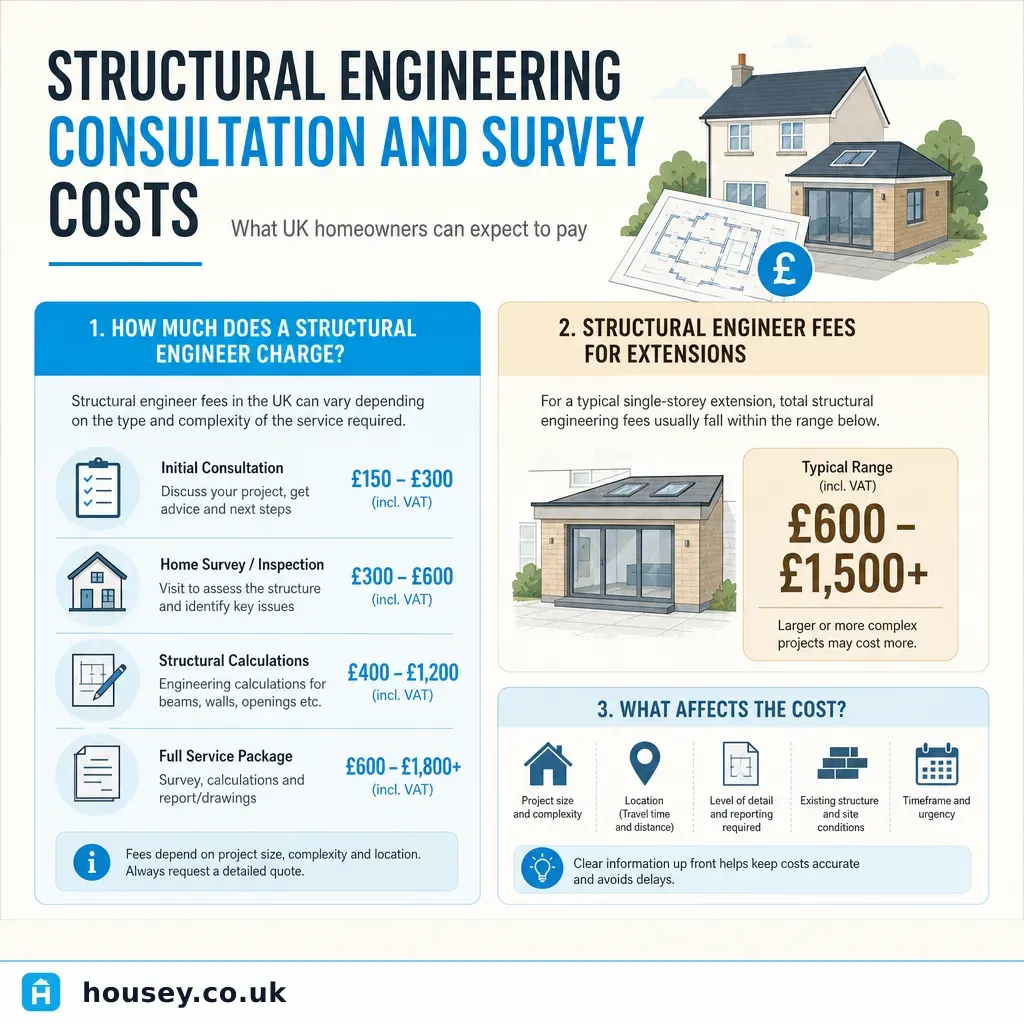
Structural Engineering Consultation and Survey Costs
A structural engineer consultation in the UK typically costs £300–£800 for a specific defect report or pre-purchase assessment. Full structural design for an extension or loft conversion ranges from £1,000 to over £2,500, depending on complexity and scope. Fees are unregulated and vary by professional experience, location, and the deliverables required.
 Planning & Pre-Build
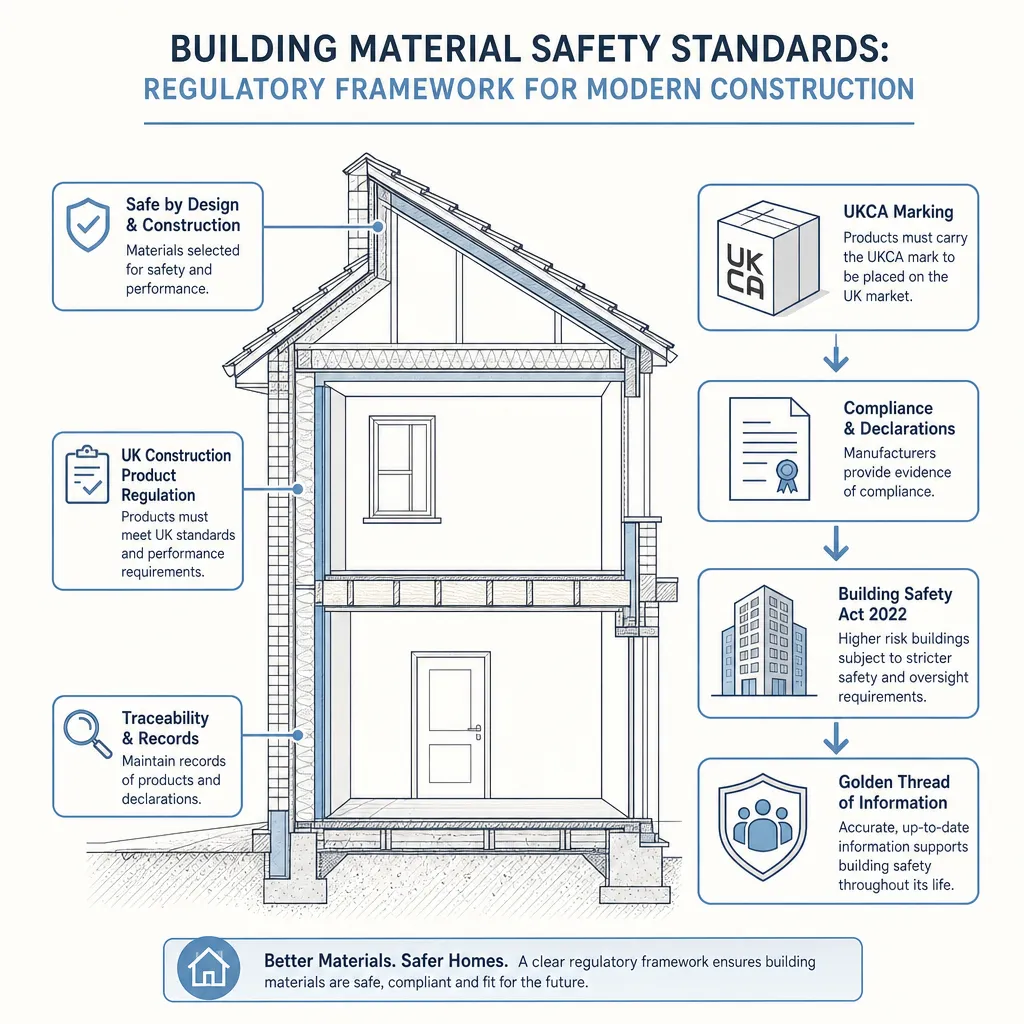
Building Material Safety Standards: Regulatory Framework for Modern Construction
UK building material safety standards are set through the Building Regulations 2010 and associated Approved Documents covering structure, fire, damp, energy, and ventilation. Products placed on the Great Britain market must carry the UKCA mark. Higher-risk residential buildings of 18 metres or seven or more storeys face additional requirements under the Building Safety Act 2022.
 Planning & Pre-Build
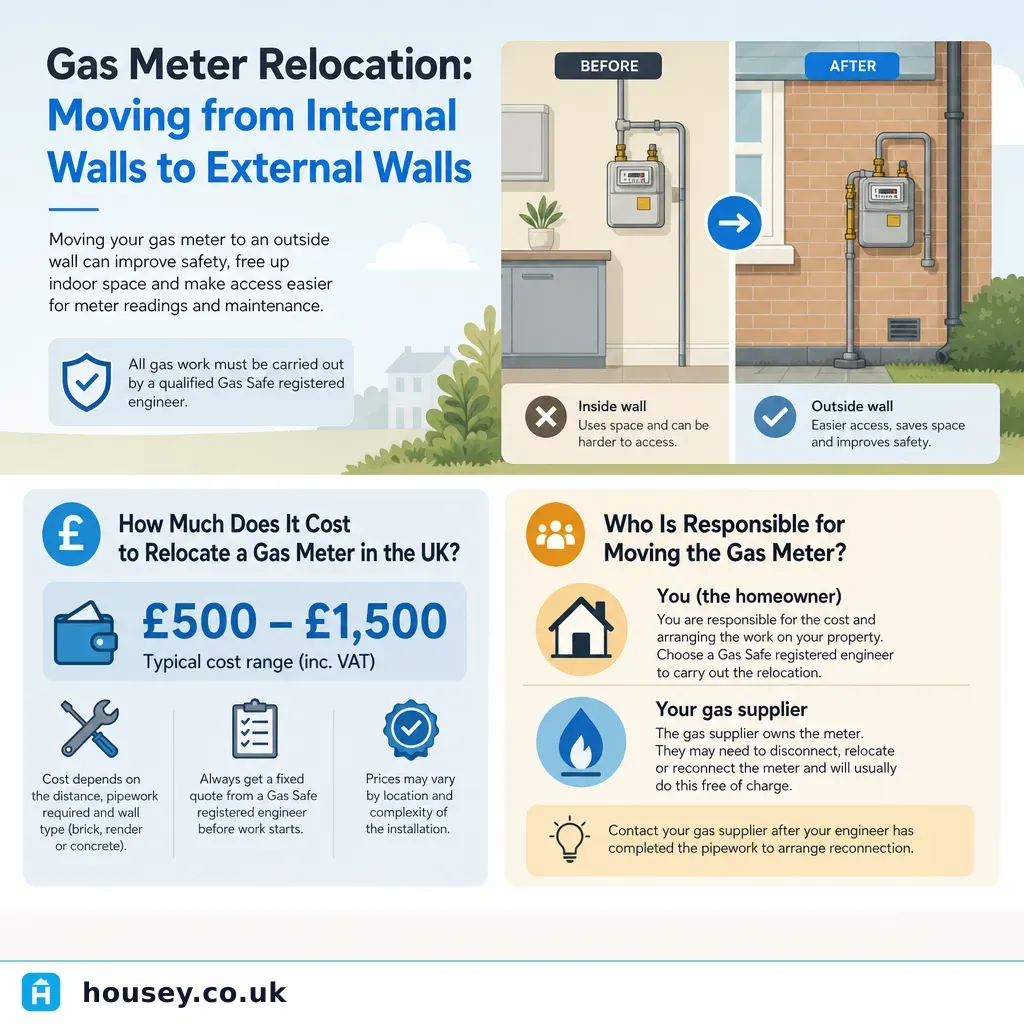
Gas Meter Relocation: Moving from Internal Walls to External Walls
In the UK, your gas meter is owned by your regional gas transporter — not your energy supplier — and only they can move it. Contact your transporter to request the work. A Gas Safe registered engineer must handle any consumer pipework changes. Costs range from free for safety-related moves to over £1,000 for complex relocations.
 Planning & Pre-Build
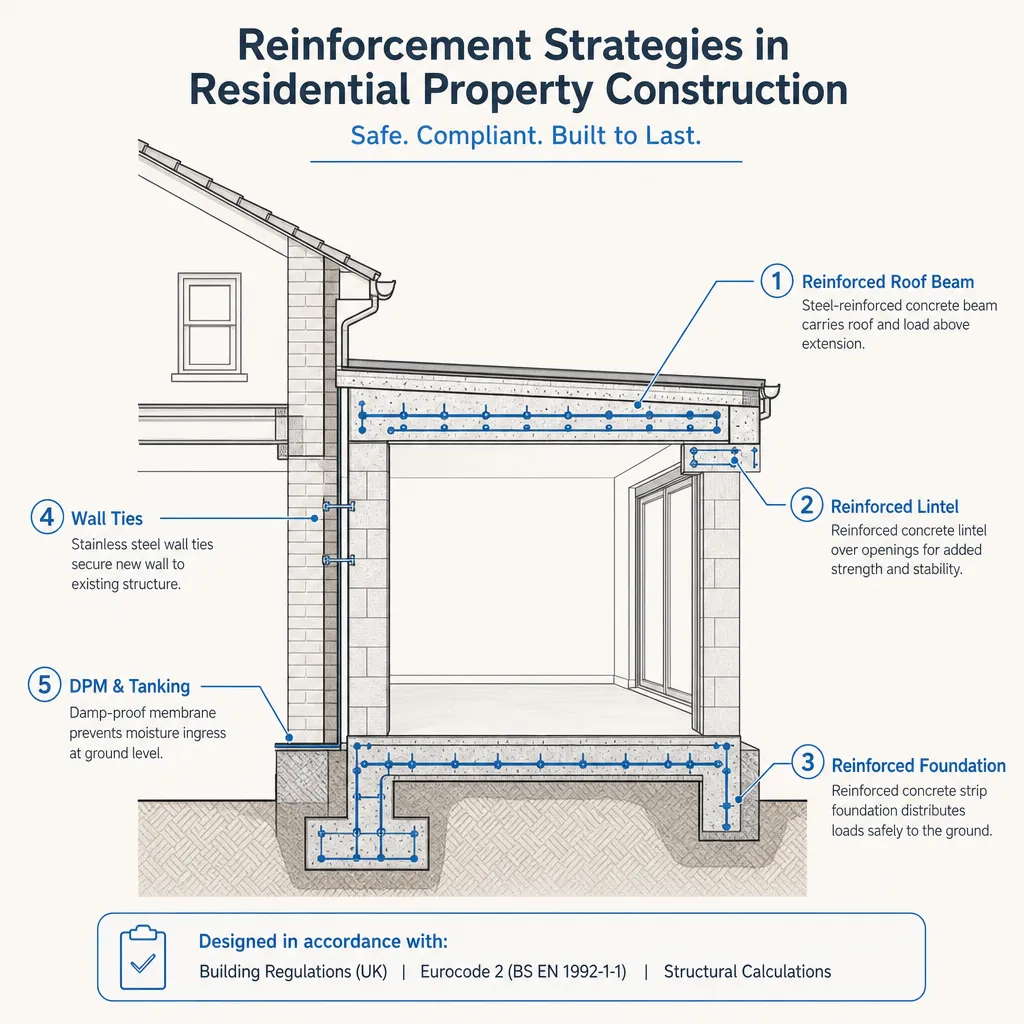
Reinforcement Strategies in Residential Property Construction
In UK residential construction, reinforcement is specified by a chartered structural engineer and must comply with Eurocode 2 and Building Regulations Approved Document A. Grade B500B or B500C steel bar is most common. Concrete cover varies by exposure class, typically 25 mm to 50 mm. Structural calculations are required for Building Control approval of any reinforced concrete element.
 Planning & Pre-Build
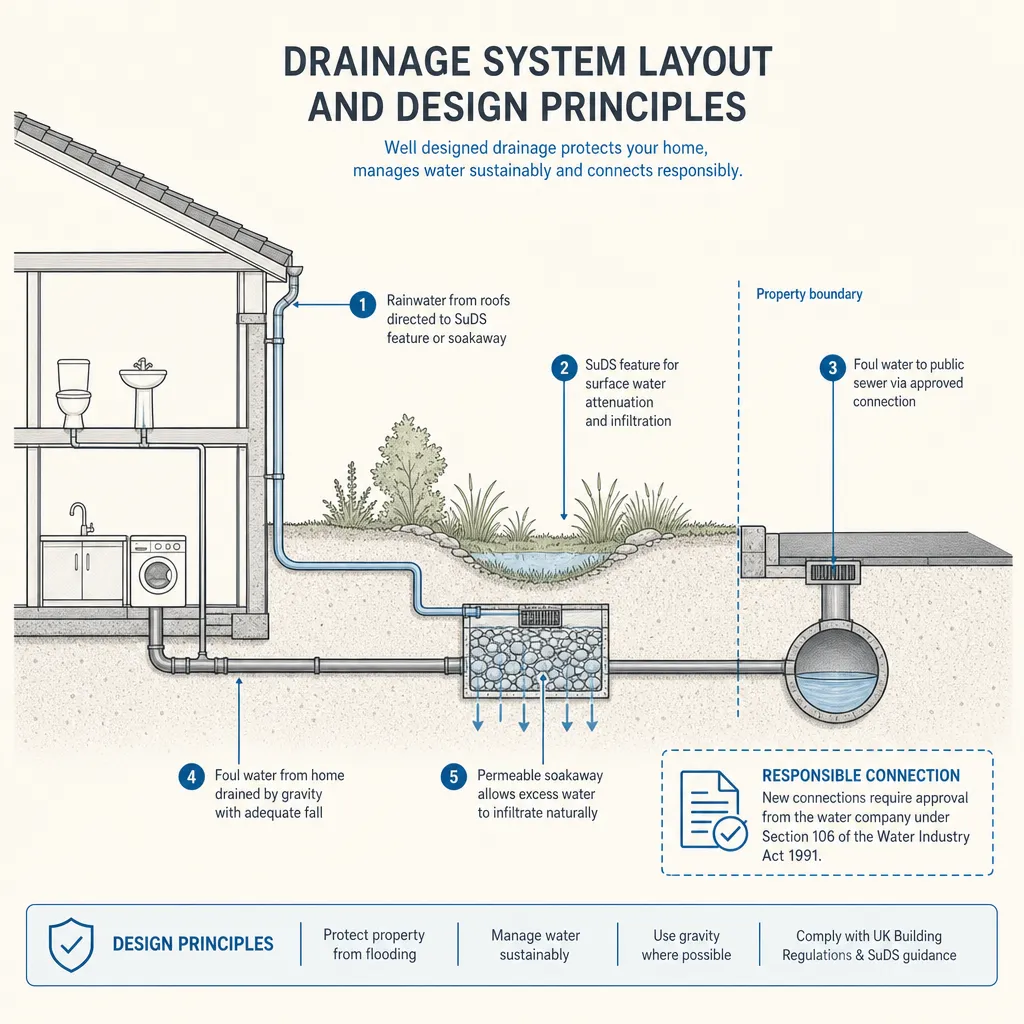
Drainage System Layout and Design Principles
A UK drainage layout separates foul water from surface water, routes both via correctly graded pipes to the public sewer, a soakaway, or a treatment plant, and incorporates Sustainable Drainage Systems where required. Approved Document H sets the design standard, and a Section 106 notice to the sewerage undertaker is needed before any new connection to the public sewer.
 Planning & Pre-Build
Construction Plant and Equipment: What Homeowners Should Know
Construction plant covers scaffolding, skips, excavators, cranes, and other site machinery. As a homeowner commissioning work, you need to understand which items require local authority licences, how plant affects neighbours and the highway, and what safety regulations your contractor must follow under PUWER 1998 and LOLER 1998.
 Planning & Pre-Build
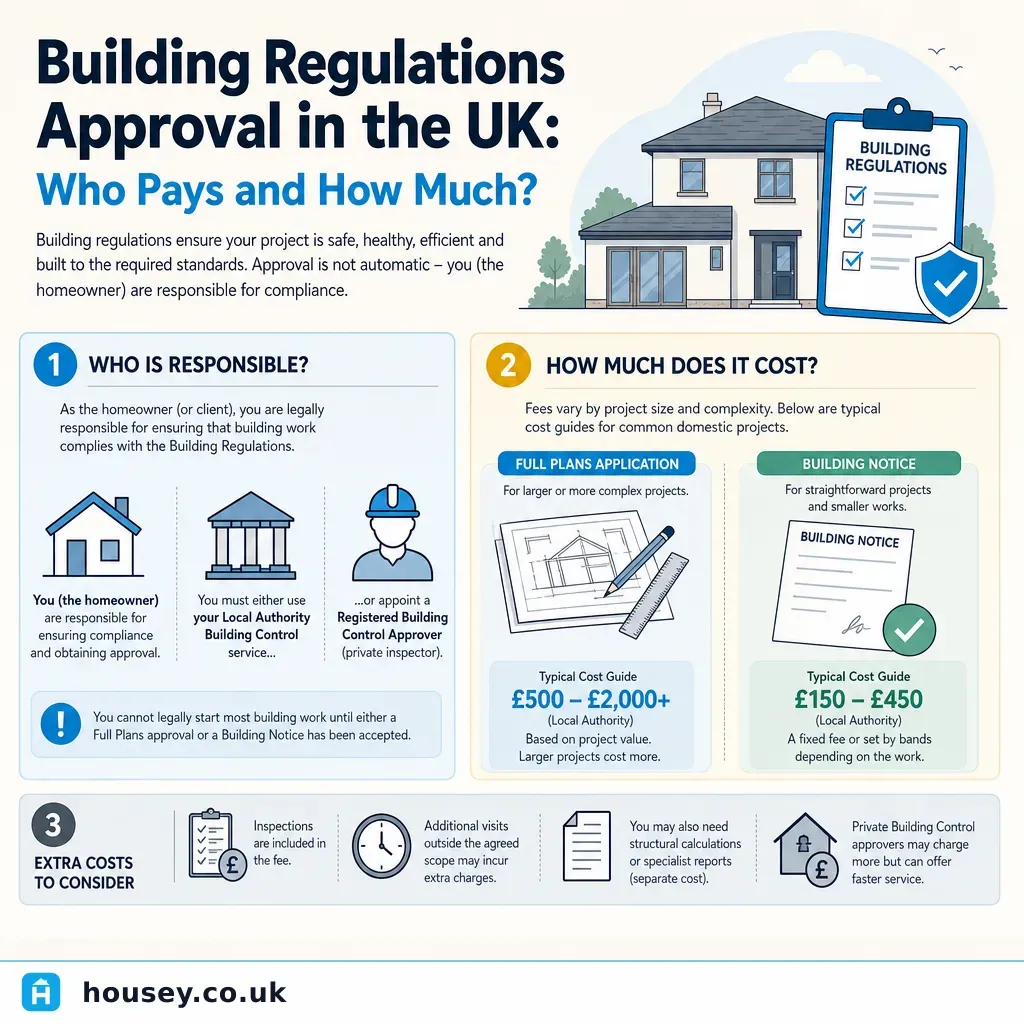
Building Regulations Approval in the UK: Who Pays and How Much?
Building regulations approval fees are almost always paid by the homeowner or the person commissioning the work, not the contractor. Contractors can apply on your behalf and may include the cost in their quote, but the legal responsibility — and the completion certificate — belong to the building owner. Fees vary by project type, local authority, and application route.
 Planning & Pre-Build
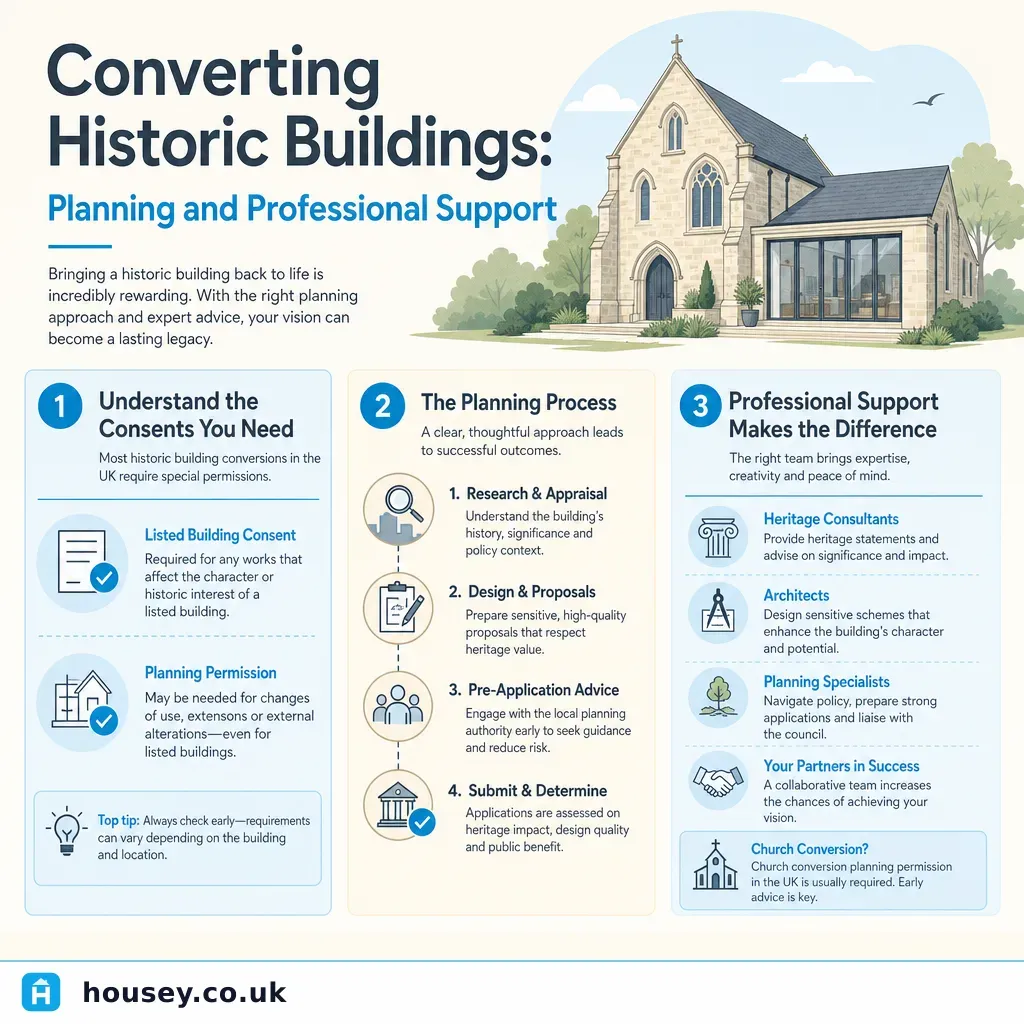
Converting Historic Buildings: Planning and Professional Support
Converting a historic or listed building in the UK requires Listed Building Consent in addition to planning permission, both granted by the local planning authority. Works affecting a listed building's character must be approved before starting — unauthorised alterations are a criminal offence. Early engagement with a conservation architect or heritage consultant is essential before committing to any design.
 Planning & Pre-Build
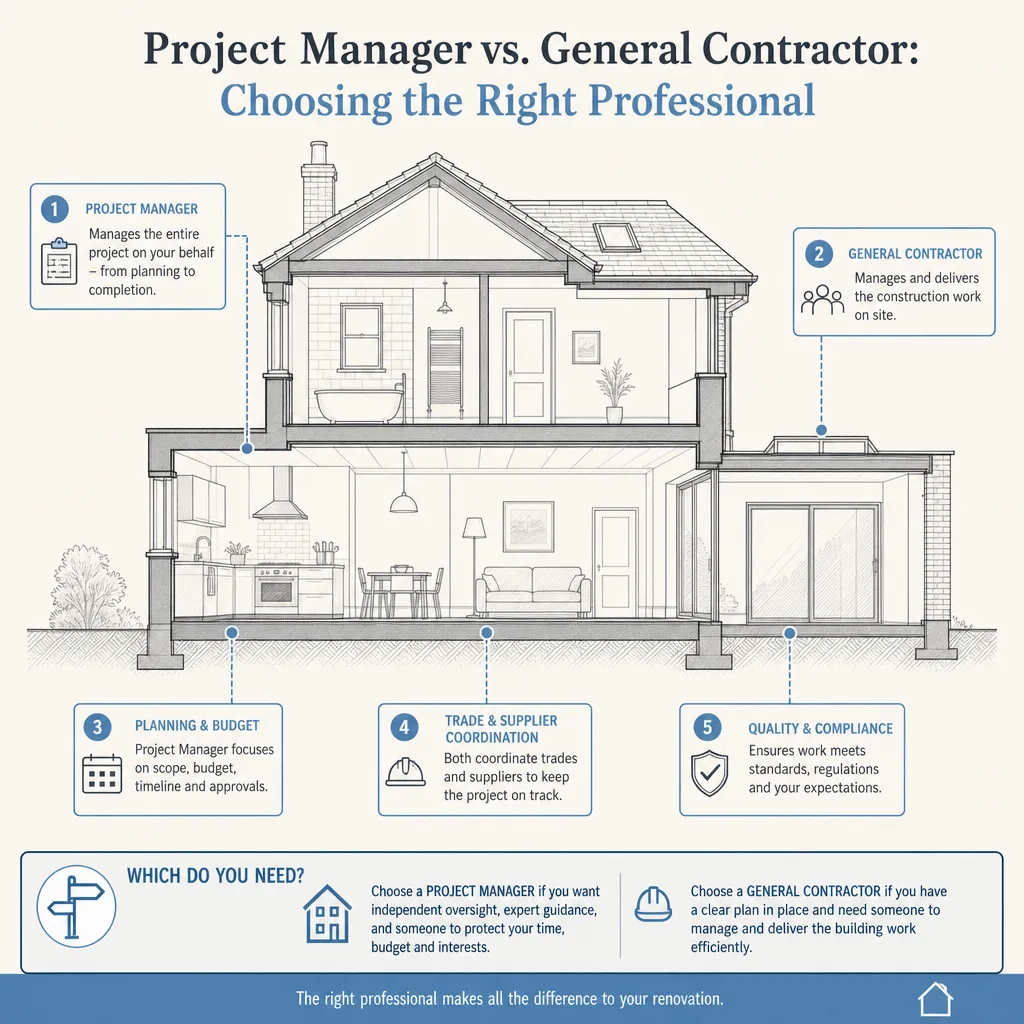
Project Manager vs. General Contractor: Choosing the Right Professional
A project manager works on your behalf to oversee programme, costs, and contractor performance — they do not carry out building work themselves. A main contractor holds the build contract and manages tradespeople on site. On most domestic UK projects a main contractor alone is sufficient; larger or more complex builds benefit from independent project management alongside the contractor.
 Planning & Pre-Build
Sunroom Window Design: Material Options and Installation Planning
Sunroom windows in the UK typically use double or triple glazing in uPVC, aluminium, or timber frames. Double glazing suits most builds; triple glazing is worth considering for north-facing or year-round rooms. Building Regulations Part L sets minimum thermal performance standards. Solar-control glass reduces summer overheating in south-facing or fully glazed roof sections.