Knowledge Base
Property advice that actually helps
Researched, UK-specific guides for every stage of homeownership — from buying and surveys to retrofit, planning and major works.
 Planning & Pre-Build
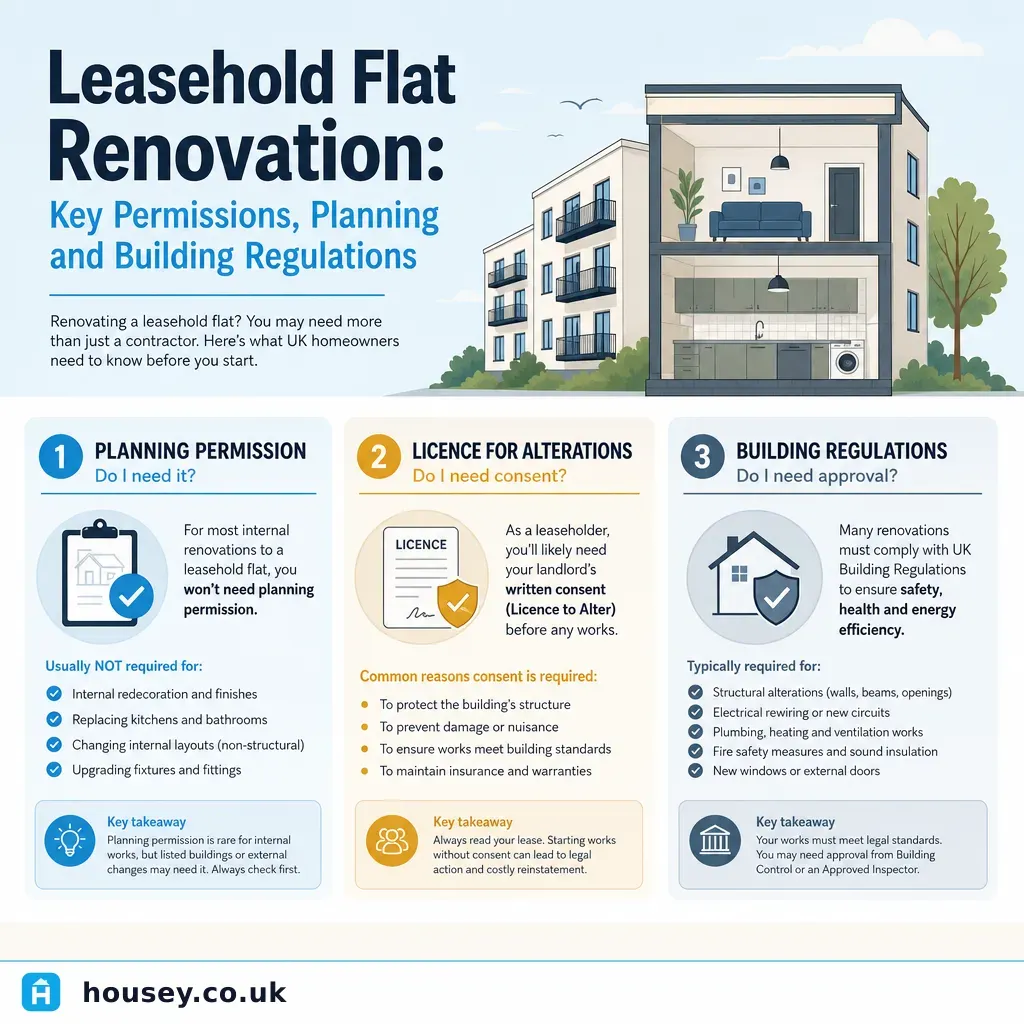
Leasehold Flat Renovation: Key Permissions, Planning and Building Regulations
Most leasehold flat renovations require written consent from your freeholder or managing agent before work begins — this is usually called a licence for alterations. You may also need building regulations approval for structural, electrical, plumbing or drainage work. Planning permission is rarely needed for internal alterations, but always check your lease and contact your freeholder before instructing contractors.
 Planning & Pre-Build
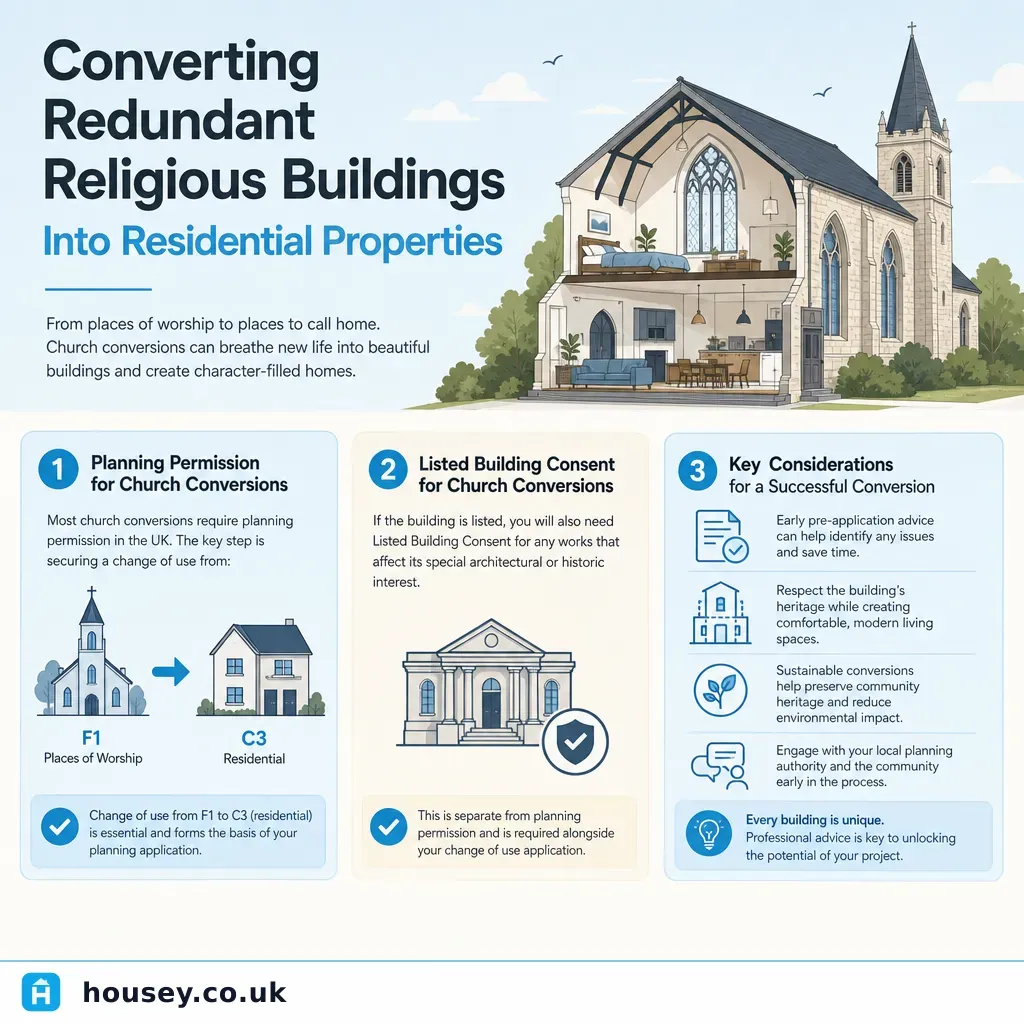
Converting Redundant Religious Buildings Into Residential Properties
Converting a redundant religious building to residential use in the UK requires planning permission for change of use from Use Class F.1 to C3, and listed building consent if the building is listed. Most such conversions need full planning applications, specialist structural assessments, and careful handling of heritage, acoustic, and thermal performance requirements under Building Regulations.
 Planning & Pre-Build
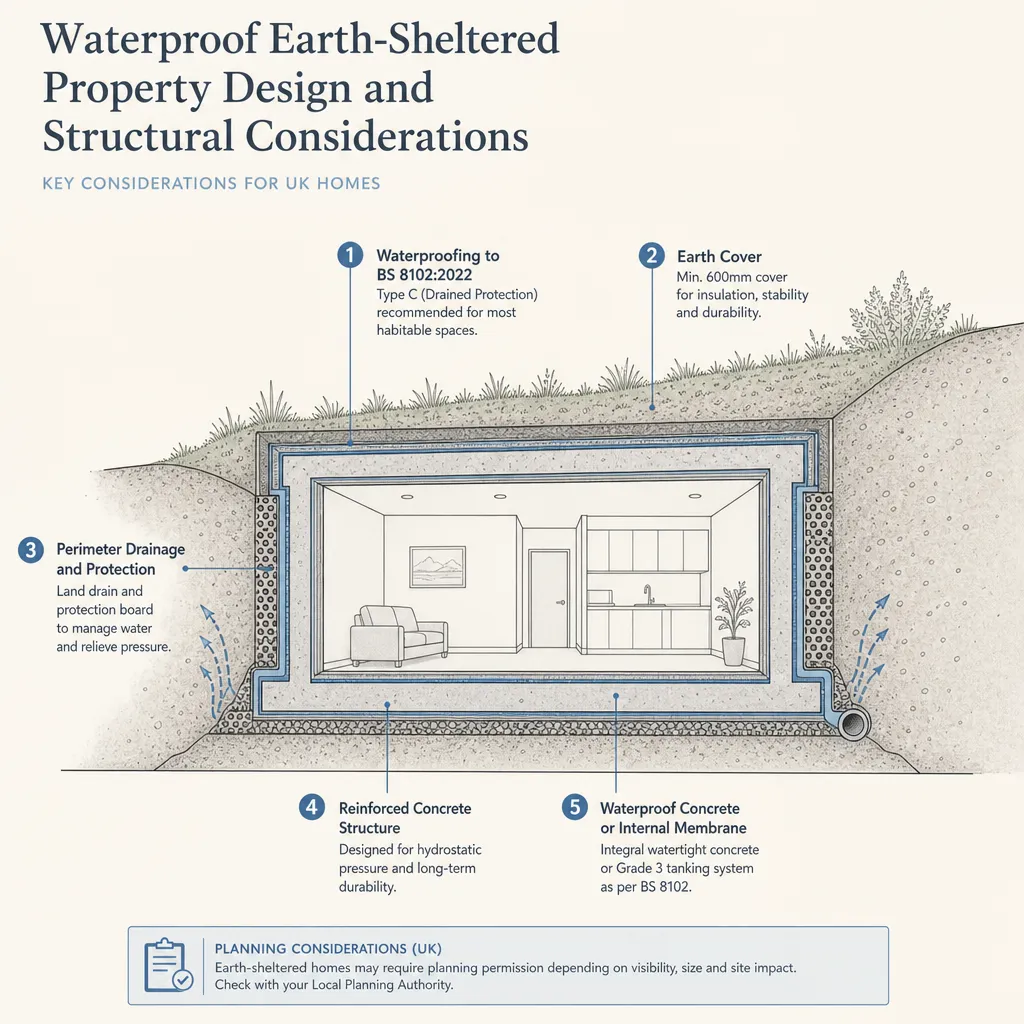
Waterproof Earth-Sheltered Property Design and Structural Considerations
Earth-sheltered homes in the UK require specialist structural design to manage lateral soil pressure and hydrostatic loads, along with a waterproofing strategy compliant with BS 8102:2022. Planning permission is always required and a geotechnical investigation must be completed before structural design can begin. Most habitable earth-sheltered spaces need Grade 3 protection, typically achieved by combining two or more waterproofing types.
 Planning & Pre-Build
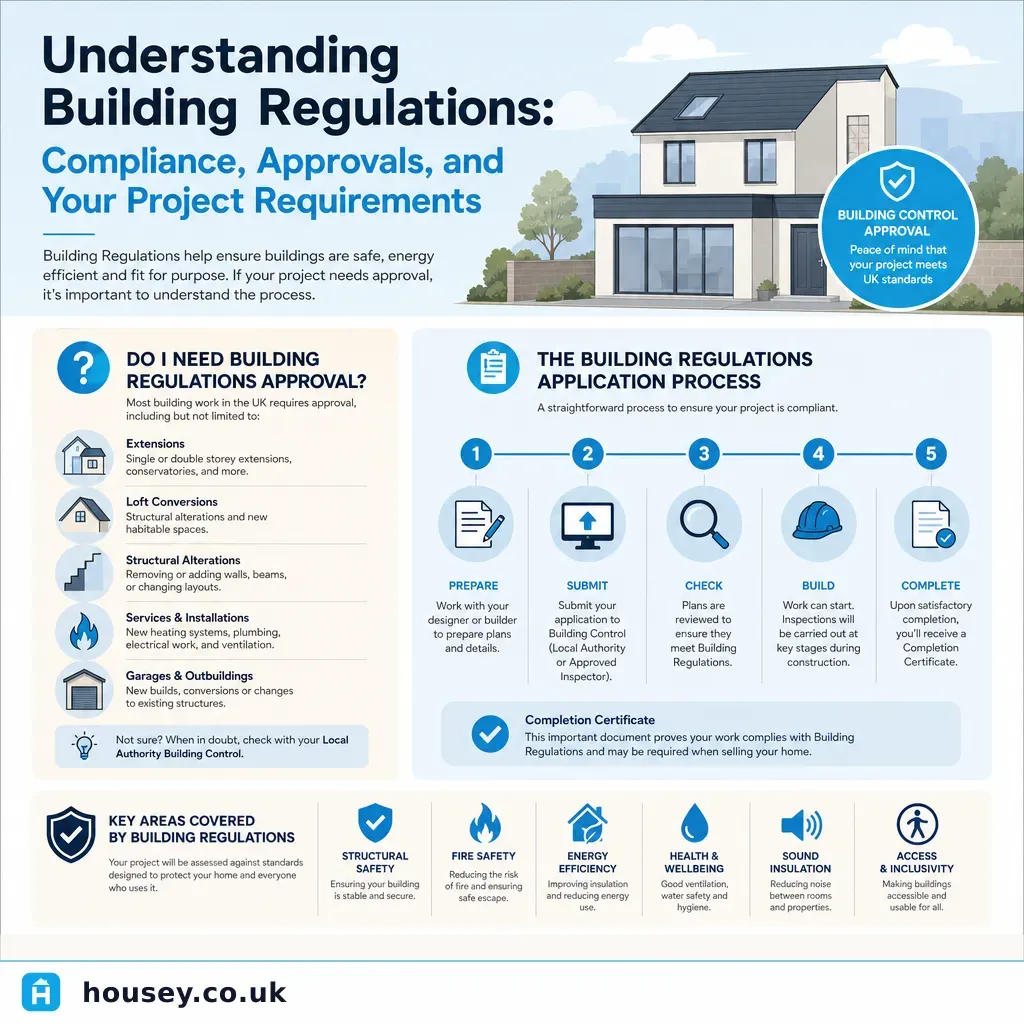
Understanding Building Regulations: Compliance, Approvals, and Your Project Requirements
Building regulations set minimum standards for design, construction, and alterations to buildings in England and Wales. Most structural, electrical, plumbing, and energy-efficiency work requires approval before you start. You apply via your local authority building control department or a private approved inspector, and a completion certificate is issued once all inspections pass.
 Planning & Pre-Build
Herringbone Drainage System Design and Function
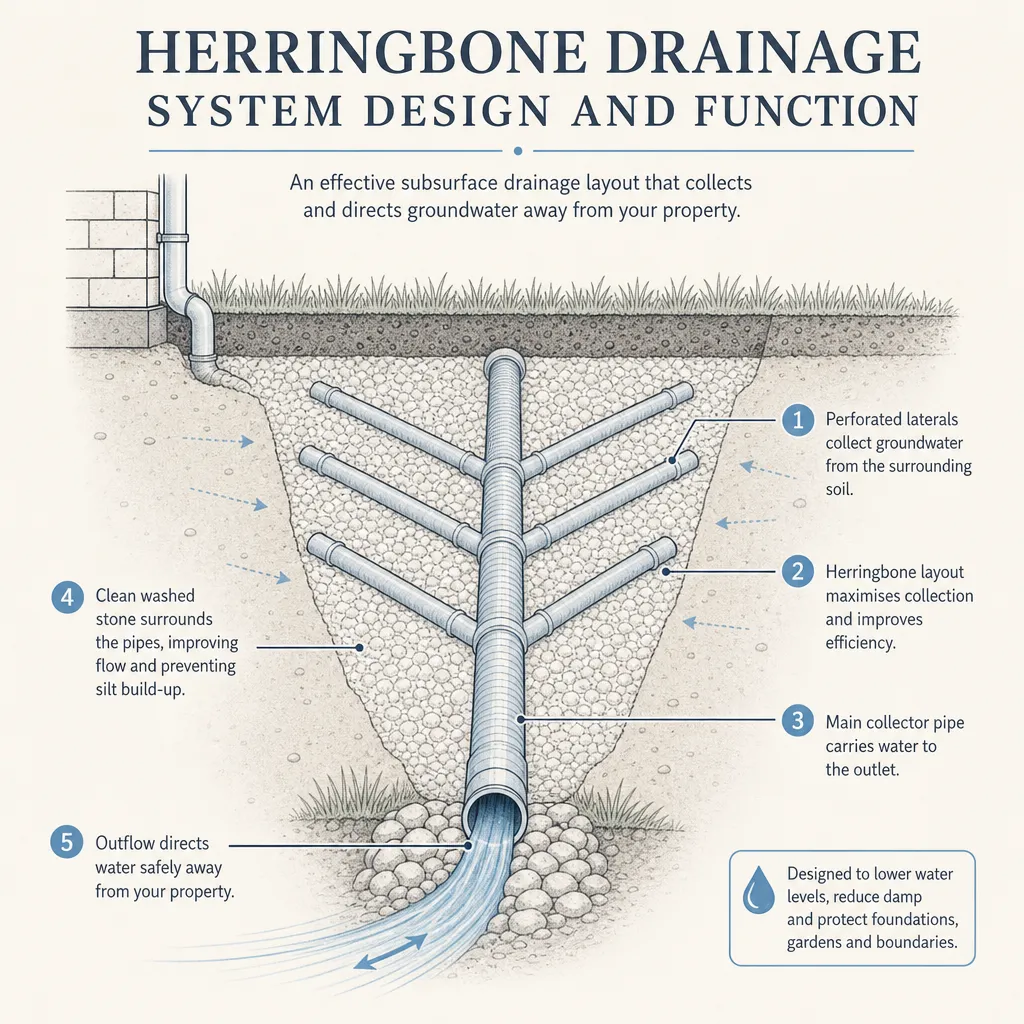
A herringbone drainage system uses a central collector drain with angled lateral branches — like a fishbone — to carry subsurface water away from a site by gravity. It suits flat or gently sloping land with reasonably uniform soils. Lateral spacing, pipe sizing, and outfall consent requirements depend on soil permeability, catchment area, and local flood authority rules.
 Planning & Pre-Build
Concrete Homes: Durability and Weather Resistance Explained
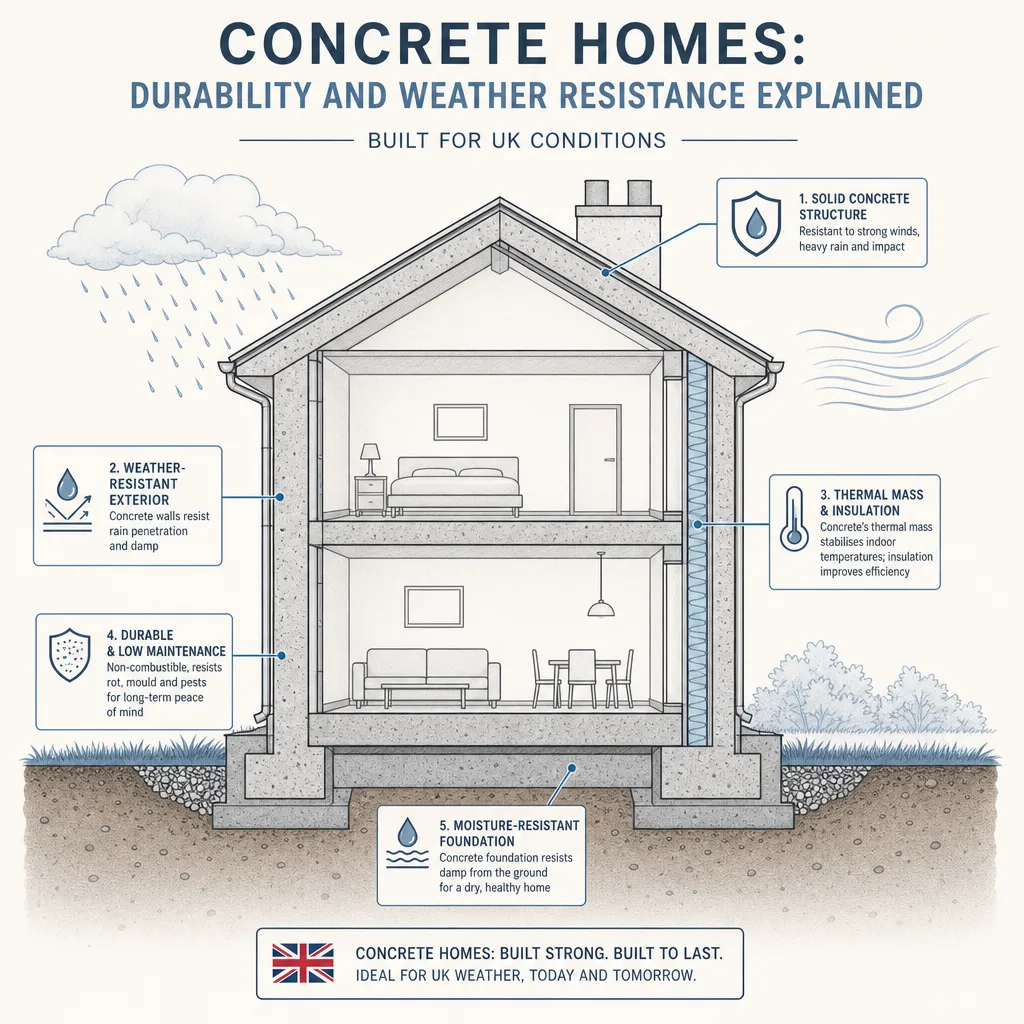
Concrete homes can be highly durable and weather-resistant when correctly specified and built. Modern insulated concrete formwork (ICF) construction typically achieves a design life of 100 years or more. Older non-traditional PRC homes may face carbonation and reinforcement corrosion, and are classified as non-standard construction by most UK mortgage lenders, affecting saleability.
 Planning & Pre-Build
Building Conversion Projects: Planning and Costs
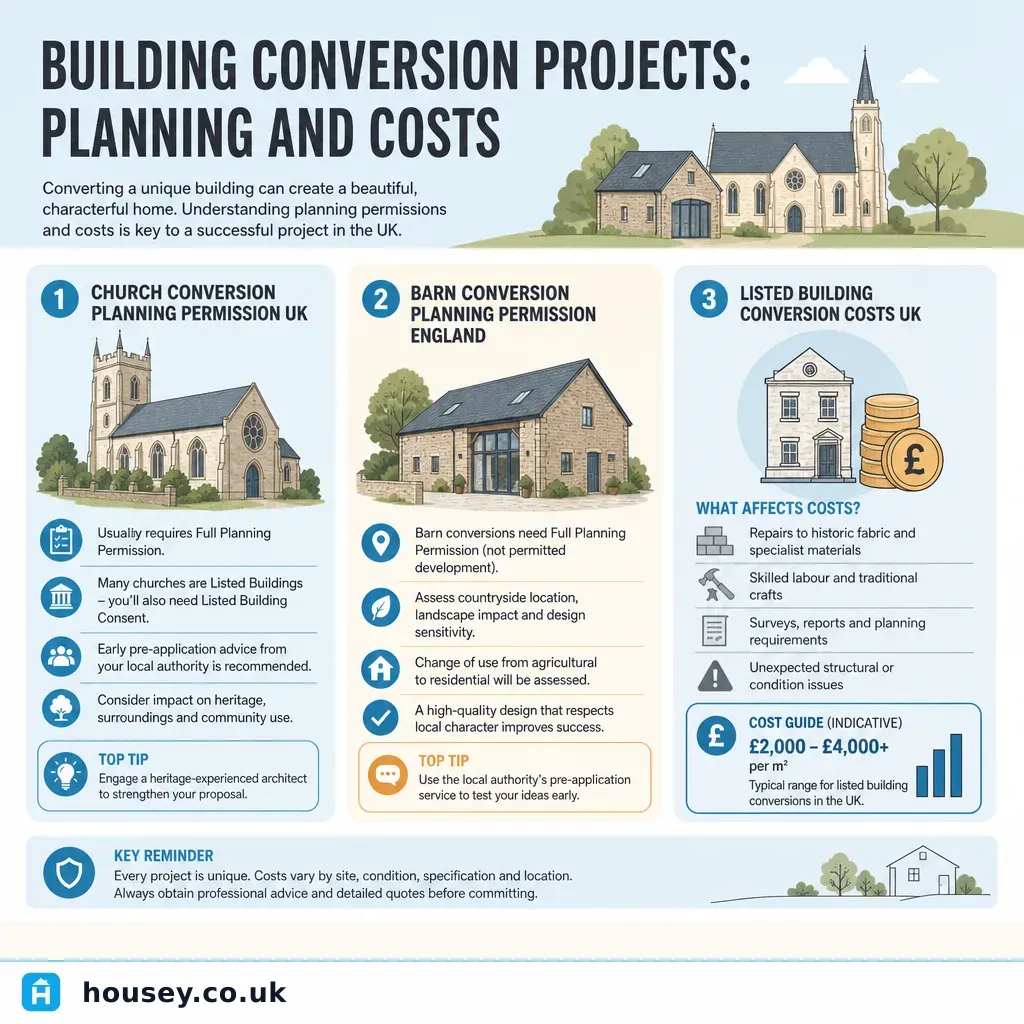
Converting a non-residential building in the UK — such as a barn, church, or commercial property — typically requires full planning permission and often Listed Building Consent. Costs range from roughly £1,200 to £4,000+ per square metre depending on the building type, condition, and heritage status. A planning consultant, structural engineer, and architect are usually essential from the outset.
 Planning & Pre-Build
Water Well Pump Replacement: Costs and Installation
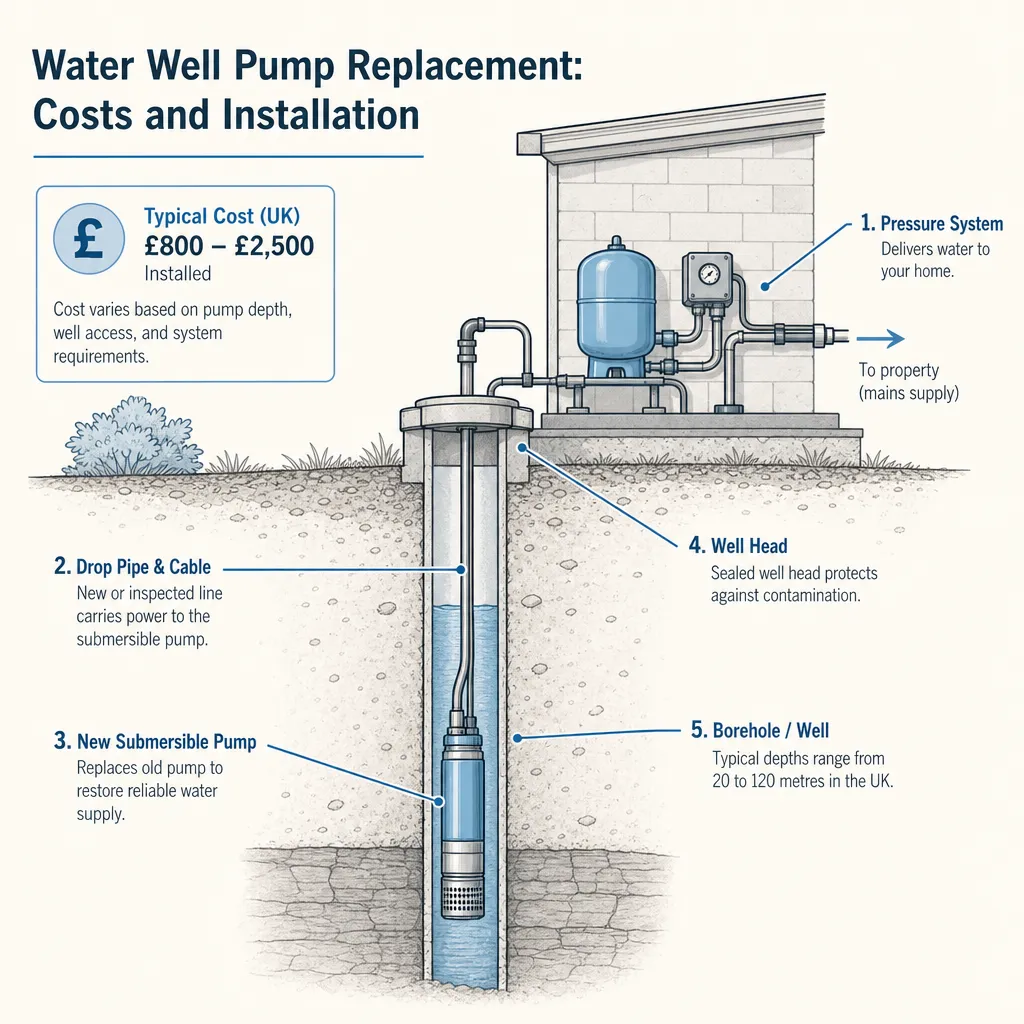
Private water supplies in rural UK rely on well or borehole pumps that typically last 10–15 years. Replacement involves extracting the existing submersible unit, fitting a new pump sized for your depth and flow requirement, then testing water quality afterwards. Expect to pay £800–£3,500 for a typical residential installation; always use a British Drilling Association-registered contractor.
 Planning & Pre-Build
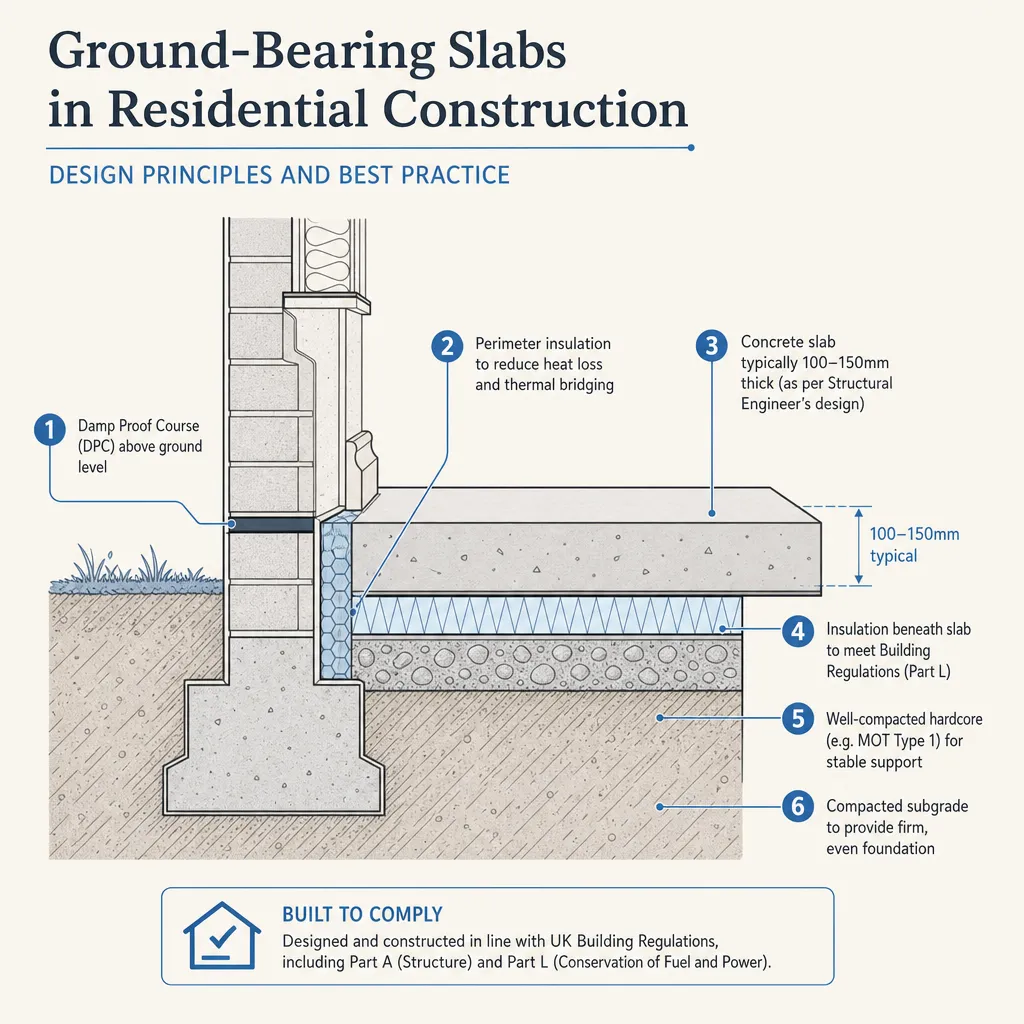
Ground-Bearing Slabs in Residential Construction: Design Principles and Best Practice
A ground-bearing slab sits directly on compacted ground and must comply with Building Regulations Approved Documents A, C, and L. A sound sub-base, damp-proof membrane, adequate insulation to meet the Part L U-value of 0.13 W/m²K, and correctly positioned steel mesh are all essential. Ground conditions should be assessed before design, and a structural engineer should be involved on any complex or uncertain site.
 Planning & Pre-Build
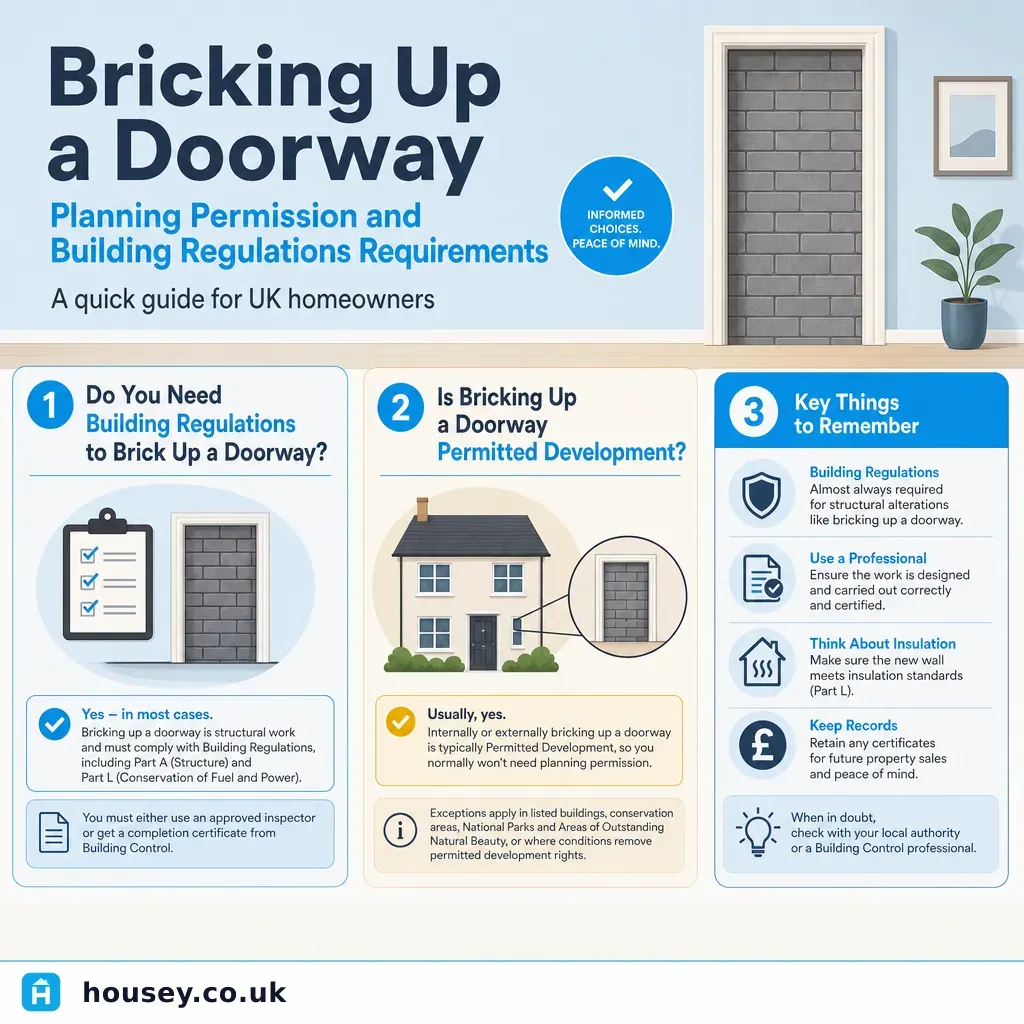
Bricking Up a Doorway: Planning Permission and Building Regulations Requirements
Bricking up a doorway usually does not require planning permission — internal alterations are permitted development and external closures on standard properties are also generally allowed. Building Regulations apply if the wall is load-bearing or the doorway is external, covering structural, thermal, and weatherproofing standards. Listed buildings and conservation area properties have additional consent requirements.
 Planning & Pre-Build
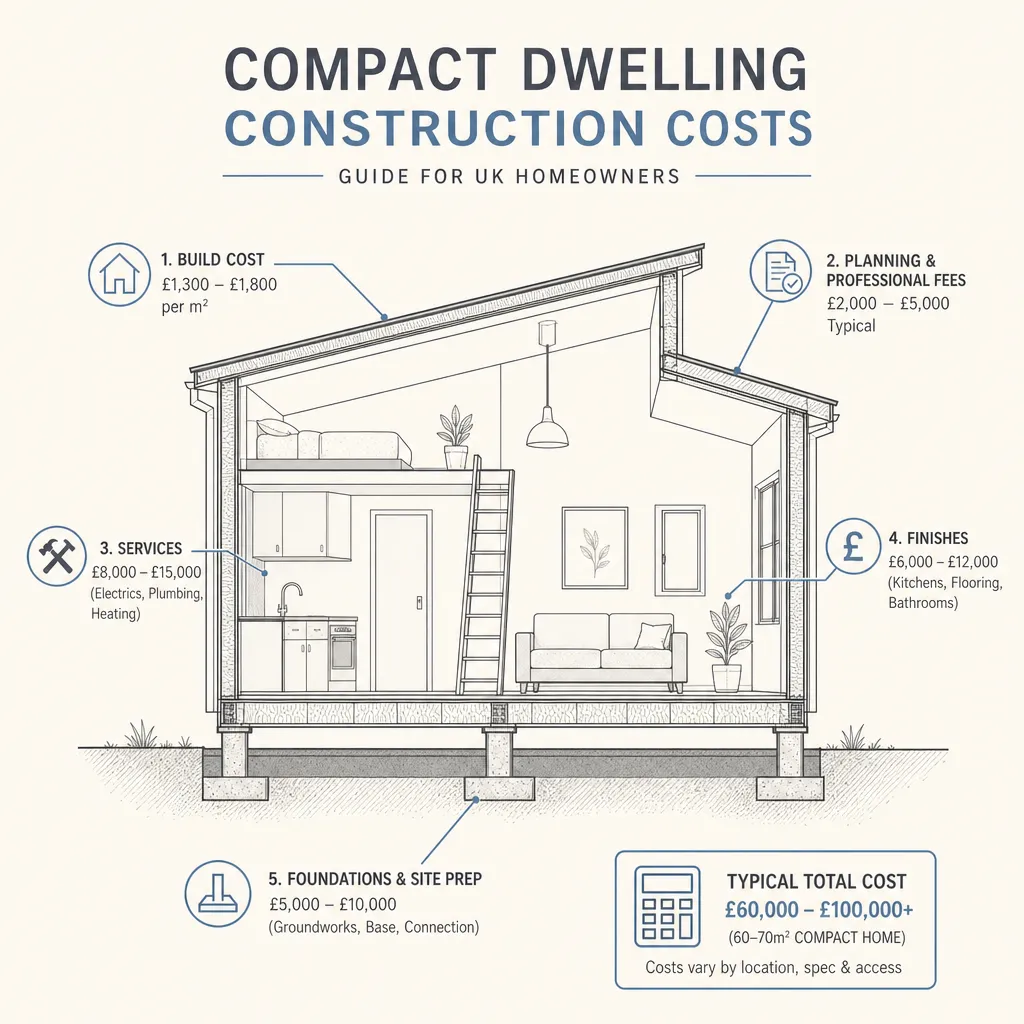
Compact Dwelling Construction Costs
A compact dwelling in the UK costs roughly £50,000–£200,000 or more to build, depending on design, build route, and specification. Any permanent new dwelling requires planning permission regardless of size. Modular or prefab units offer cost certainty; bespoke designs give more flexibility. Get planning advice before committing to any design spend.
 Planning & Pre-Build
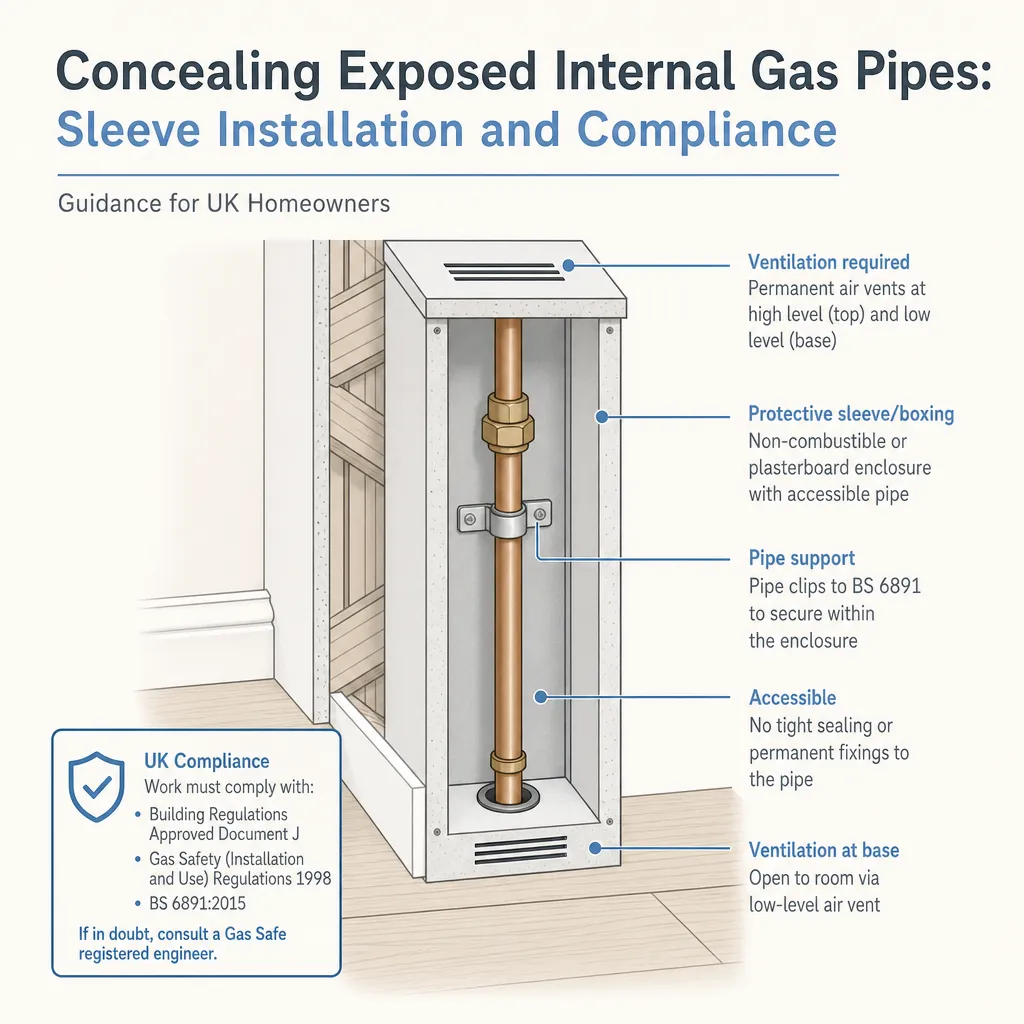
Concealing Exposed Internal Gas Pipes: Sleeve Installation and Compliance
Exposed internal gas pipes can be concealed using ventilated boxed casings or correctly sleeved chases, but only under the supervision of a Gas Safe registered engineer following the Gas Safety (Installation and Use) Regulations 1998. Any enclosure must allow gas to disperse safely — sealed, airtight voids around gas pipes are prohibited. A Gas Safe engineer must inspect pipe condition before work begins and confirm compliance on completion.