Knowledge Base
Property advice that actually helps
Researched, UK-specific guides for every stage of homeownership — from buying and surveys to retrofit, planning and major works.
 Surveys & Inspections
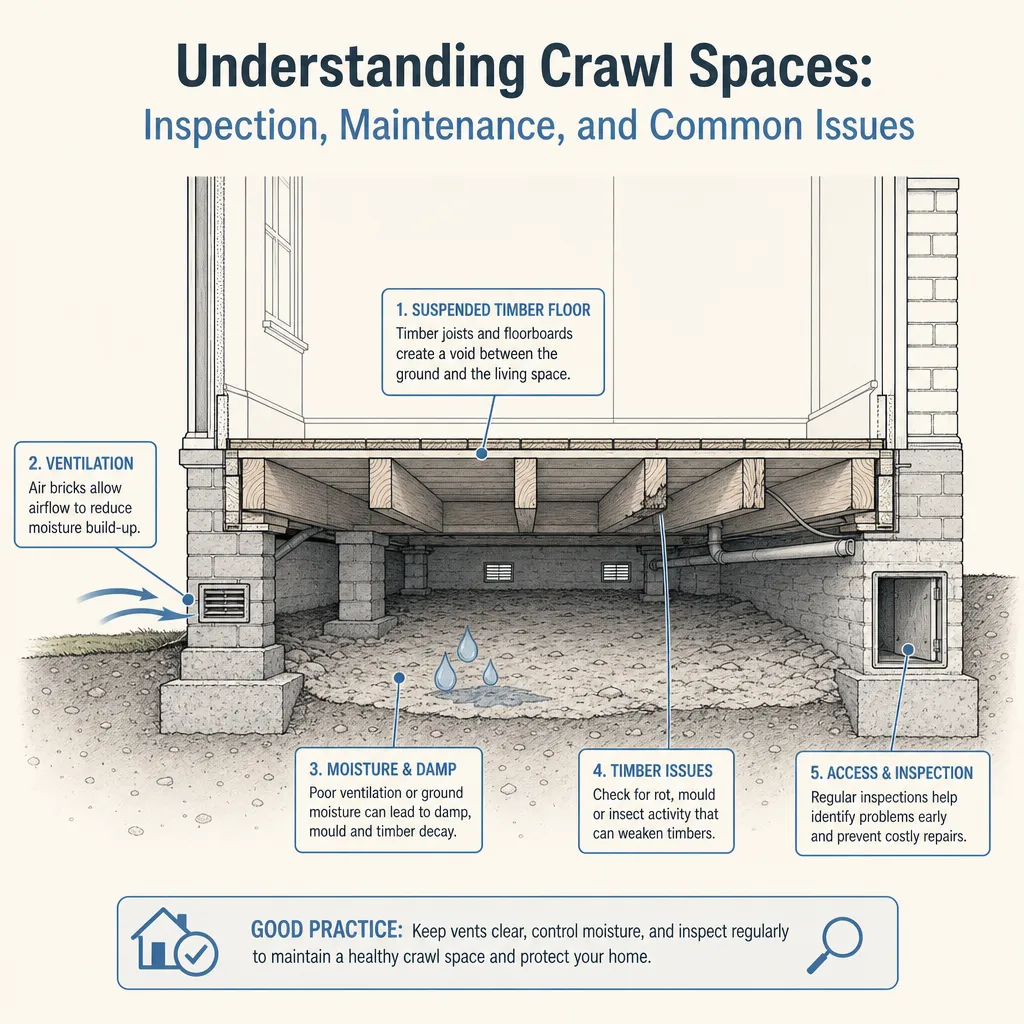
Understanding Crawl Spaces: Inspection, Maintenance, and Common Issues
Sub-floor voids beneath suspended timber ground floors in pre-1960 UK homes need cross-ventilation through airbricks to prevent dry rot and wet rot in floor timbers. Blocked or buried airbricks are the most common cause of ventilation failure. A RICS Level 3 survey or dedicated damp and timber survey is advisable if decay, damp smells, or springy floors are found.
 Surveys & Inspections
Drone Technology in Building Surveys and Roof Inspections
Drone surveys use unmanned aerial vehicles (UAVs) to capture high-resolution images of roofs, chimneys, gutters, and other inaccessible areas without scaffolding. UK commercial operators must hold a CAA Flyer ID and appropriate Operational Authorisation. Drone surveys are useful for condition screening and pre-purchase assessments but do not replace a hands-on RICS inspection for pre-exchange survey reports.
 Surveys & Inspections
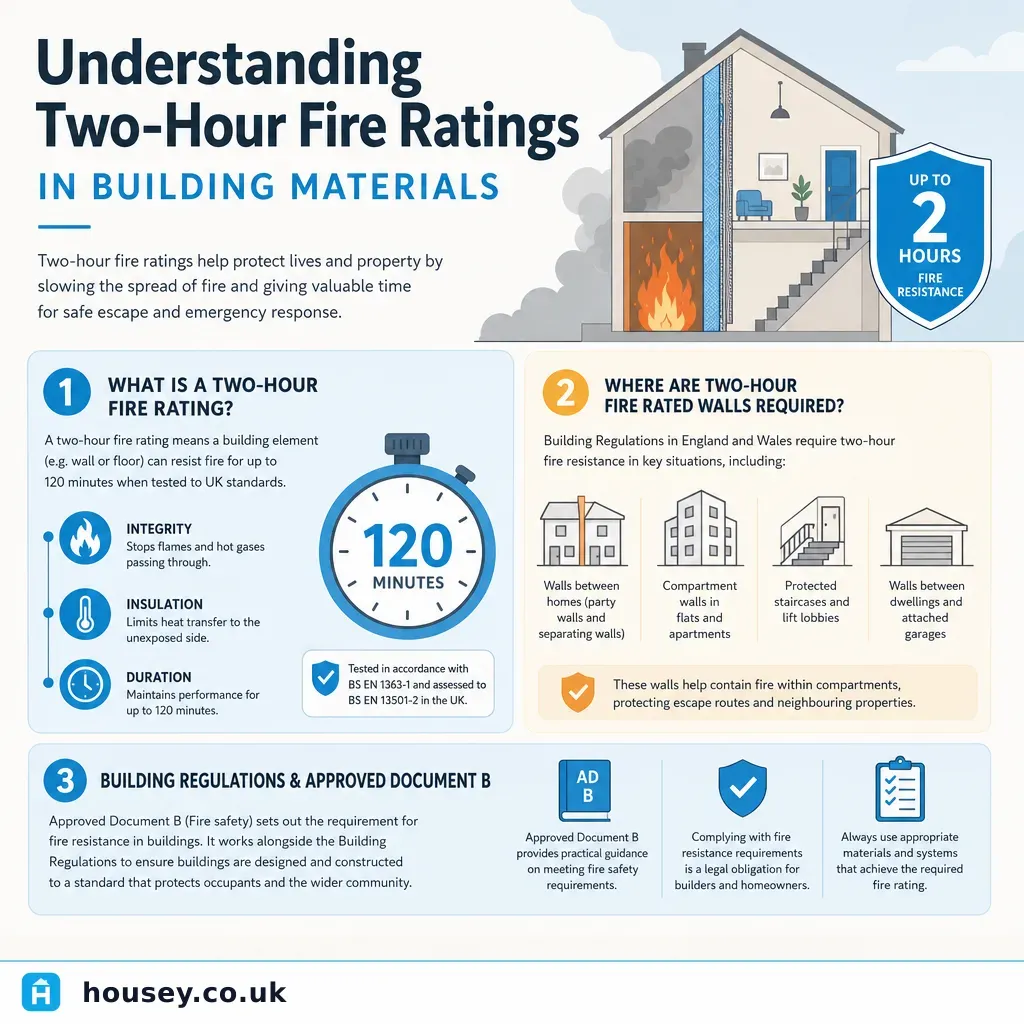
Understanding Two-Hour Fire Ratings in Building Materials
A two-hour fire rating — FR 120 or REI 120 — means a building element maintains loadbearing capacity, resists flame penetration, and limits heat transfer for 120 minutes under standardised test conditions to BS EN 13501-2. In UK Building Regulations, the required fire resistance period for elements of structure depends on the building's purpose group, height, and storeys; two-hour ratings are not required for most standard dwellinghouses.
 Surveys & Inspections
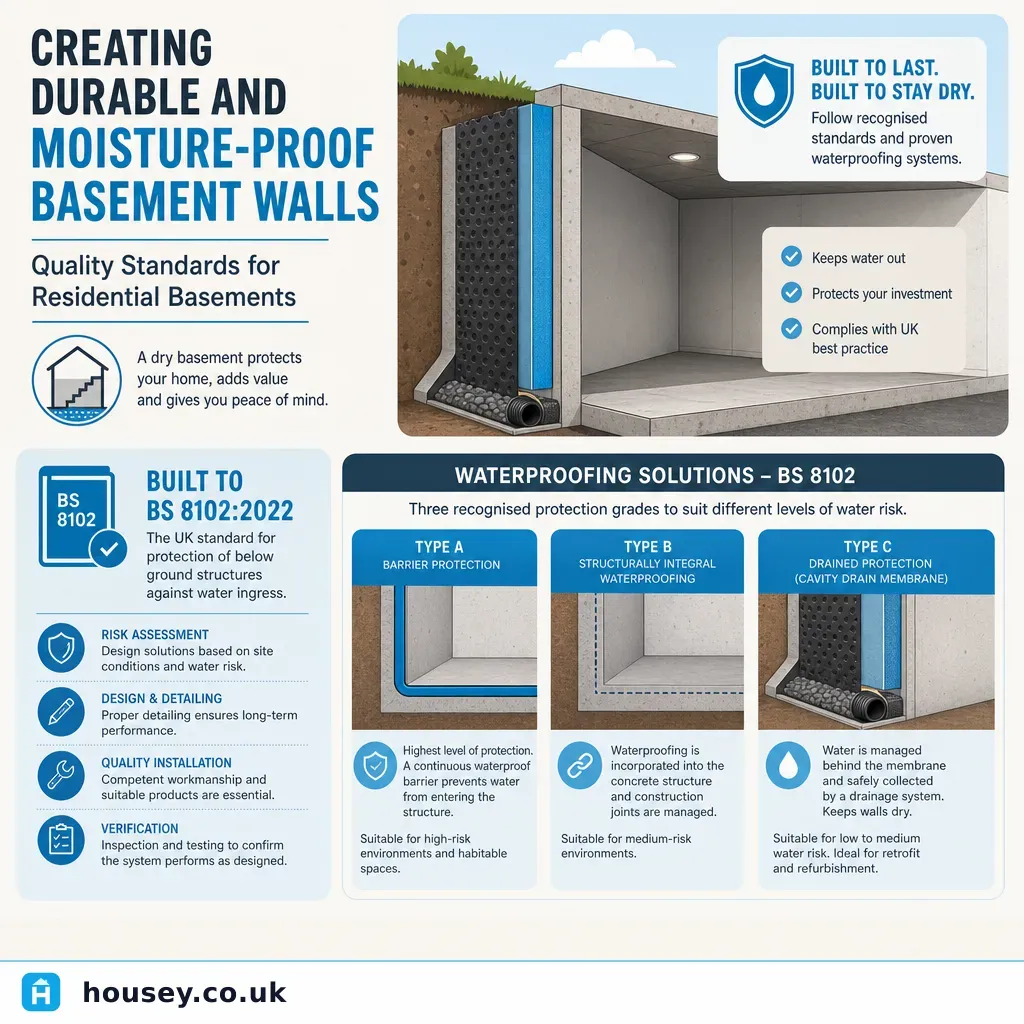
Creating Durable and Moisture-Proof Basement Walls: Quality Standards for Residential Basements
Basement waterproofing in UK homes must meet BS 8102:2022 requirements. Three system types are available — Type A barrier tanking, Type B structurally integral concrete, and Type C cavity drain membranes. The right system depends on ground conditions, water table level, intended grade of use, and whether the project is new build or retrofit. A CSSW-qualified specialist should always design the system.
 Surveys & Inspections
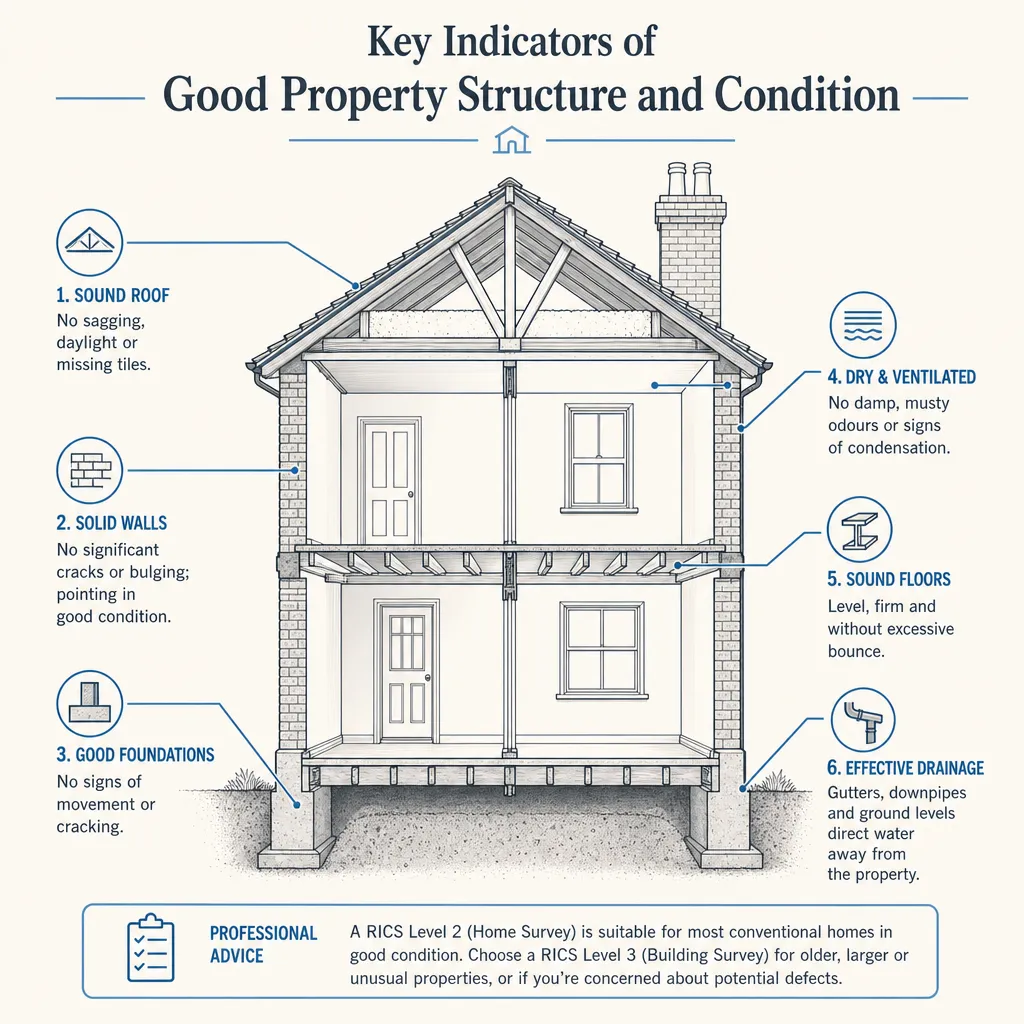
Key Indicators of Good Property Structure and Condition
Good property structure is indicated by plumb walls, level floors, crack-free masonry at corners and above openings, an intact roof covering, and dry internal surfaces. These visual indicators help you decide what survey to commission, but only a RICS Level 2 or Level 3 Home Survey can reliably confirm structural condition before you buy.
 Surveys & Inspections
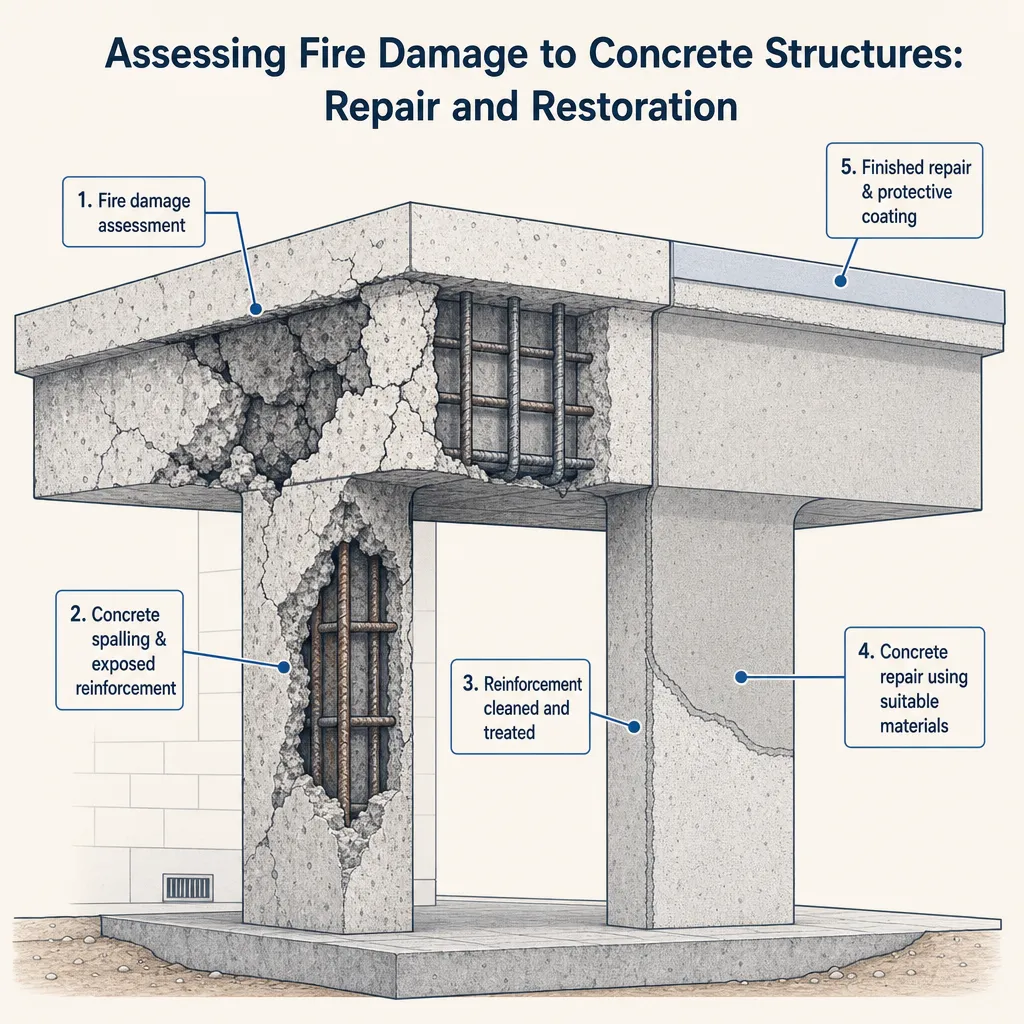
Assessing Fire Damage to Concrete Structures: Repair and Restoration
After a building fire, concrete is assessed by a chartered structural engineer using colour mapping, core sampling, and laboratory strength testing. The depth of heat penetration determines whether elements can be repaired — through patch mortar, sprayed concrete, or jacketing — or must be demolished. Do not re-enter the building until an engineer confirms it is structurally safe.
 Surveys & Inspections
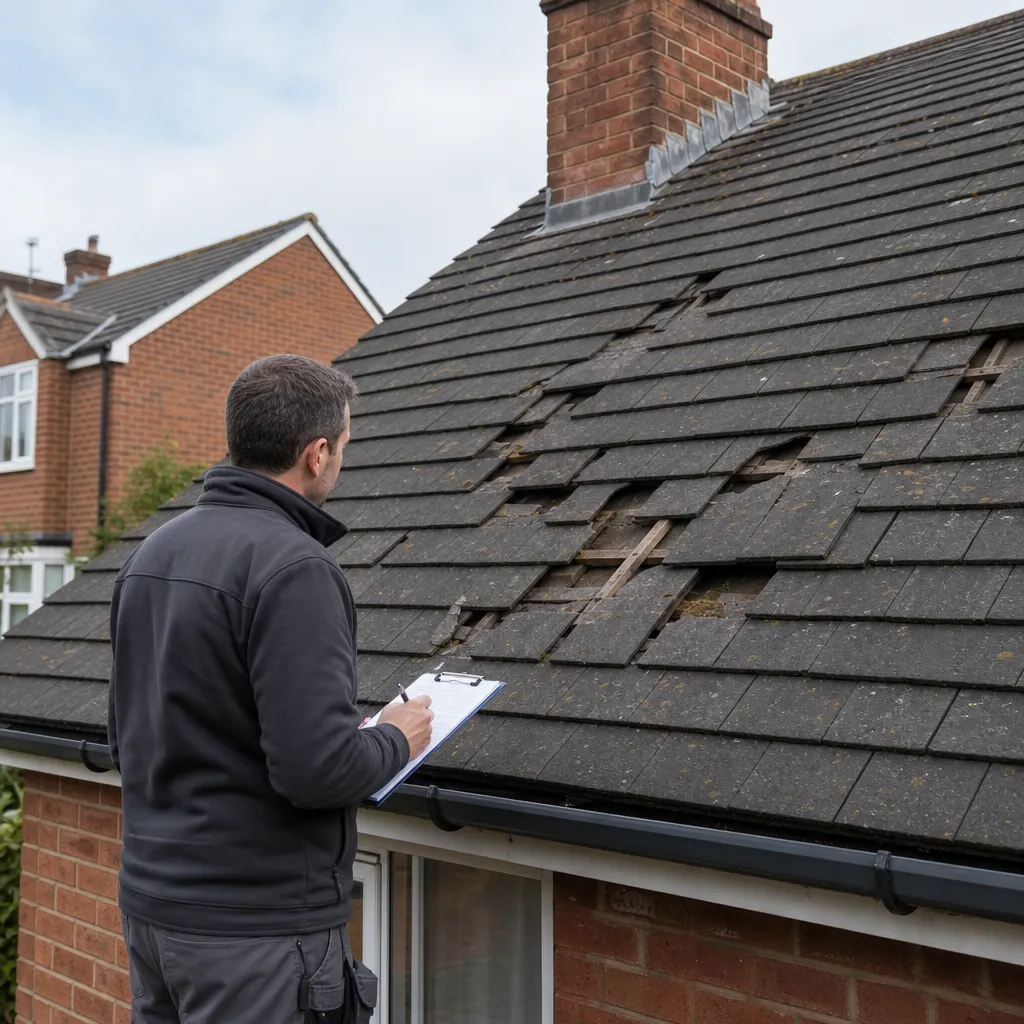
Wind Damage to Roof Tiles and Shingles: Inspection and Repair Guidance
After a storm, inspect your roof from ground level using binoculars before attempting access. Missing tiles, displaced ridge tiles, detached flashings, or a sagging roofline all need prompt attention from a qualified roofer or surveyor. Photograph all damage before starting repairs — most UK insurers require documented evidence before approving storm damage claims.
 Surveys & Inspections
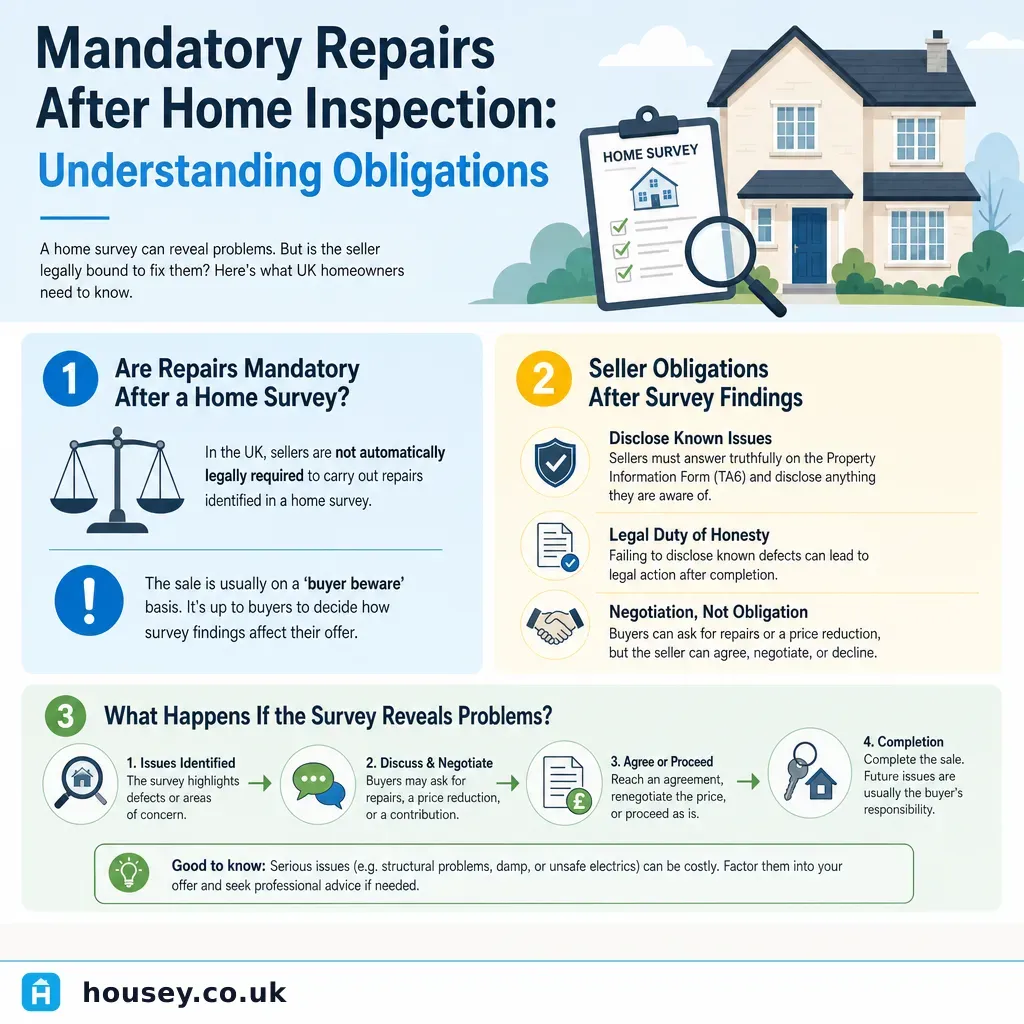
Mandatory Repairs After Home Inspection: Understanding Obligations
In England and Wales, no repairs are legally mandatory after a home survey. The survey is a buyer's tool for negotiation, not a legal obligation on the seller. Sellers can agree to repairs, reduce the asking price, offer a retention via solicitors, or decline entirely. Buyers can then renegotiate, accept the property as seen, or withdraw from the purchase.
 Surveys & Inspections
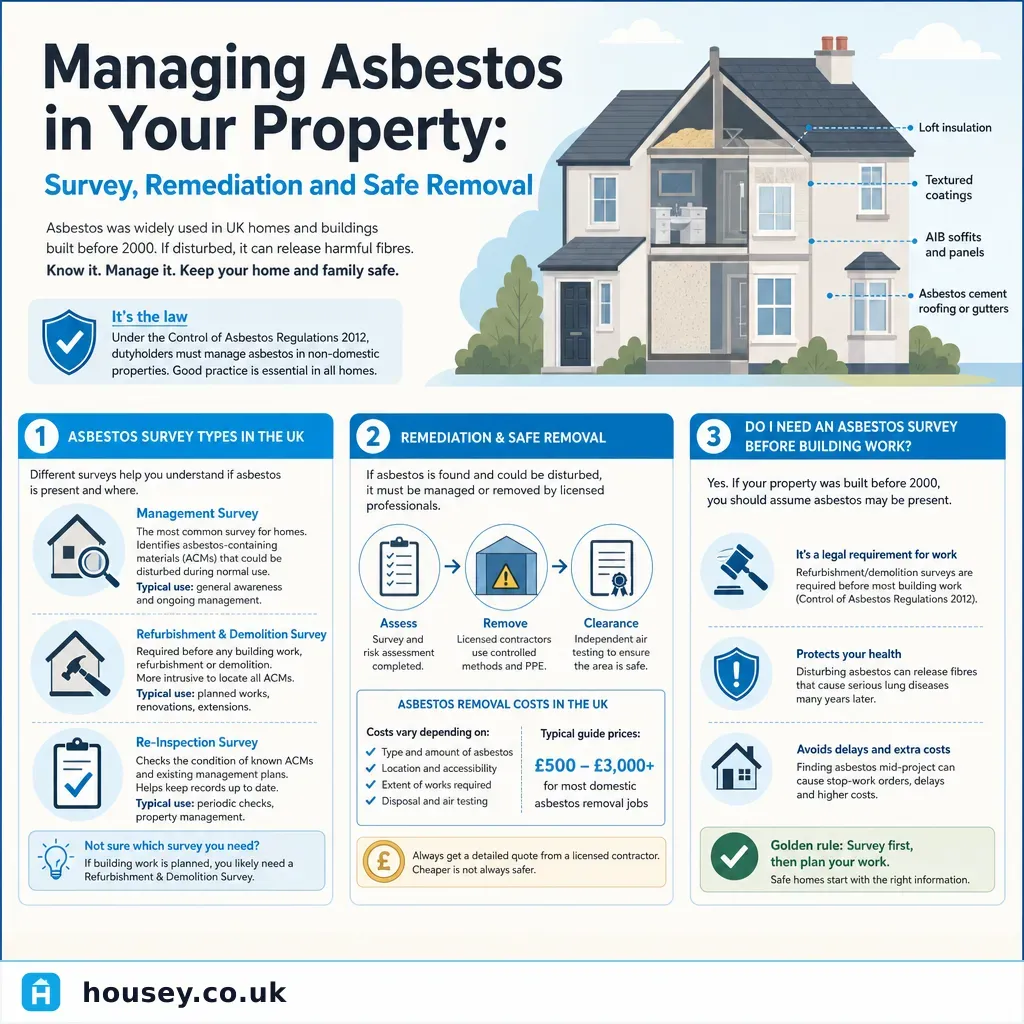
Managing Asbestos in Your Property: Survey, Remediation and Safe Removal
Asbestos was commonly used in UK buildings until its full ban in 1999. If your property was built or substantially refurbished before 2000, asbestos-containing materials may be present. A management survey identifies location and condition; a refurbishment and demolition survey is required before intrusive works. Disturbing asbestos without professional assessment is a serious health risk.
 Surveys & Inspections
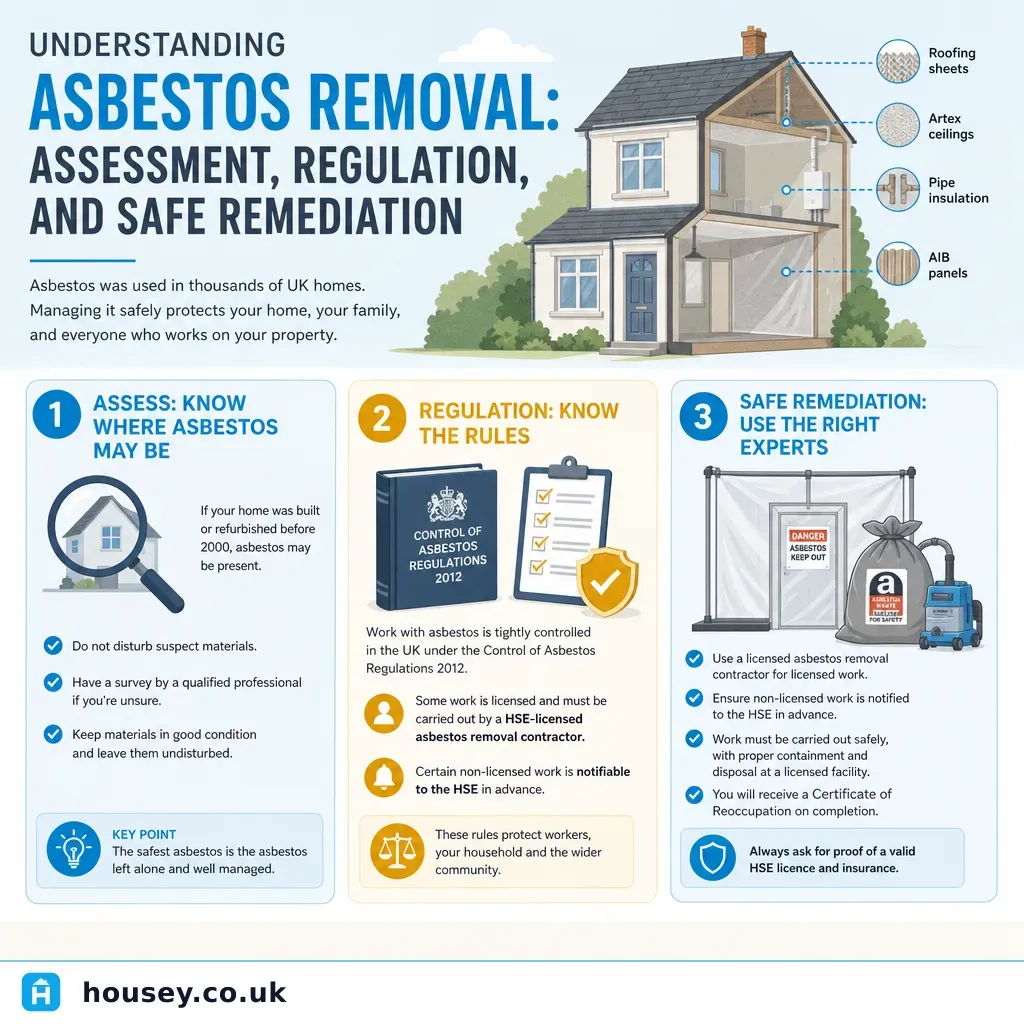
Understanding Asbestos Removal: Assessment, Regulation, and Safe Remediation
In the UK, asbestos removal is governed by the Control of Asbestos Regulations 2012. Removal of asbestos insulation, insulation board, and coating must be carried out by an HSE-licensed contractor. Any building built before 2000 may contain asbestos-containing materials. Non-licensed work still requires a risk assessment, proper controls, and in some cases notification to the HSE before work begins.
 Surveys & Inspections
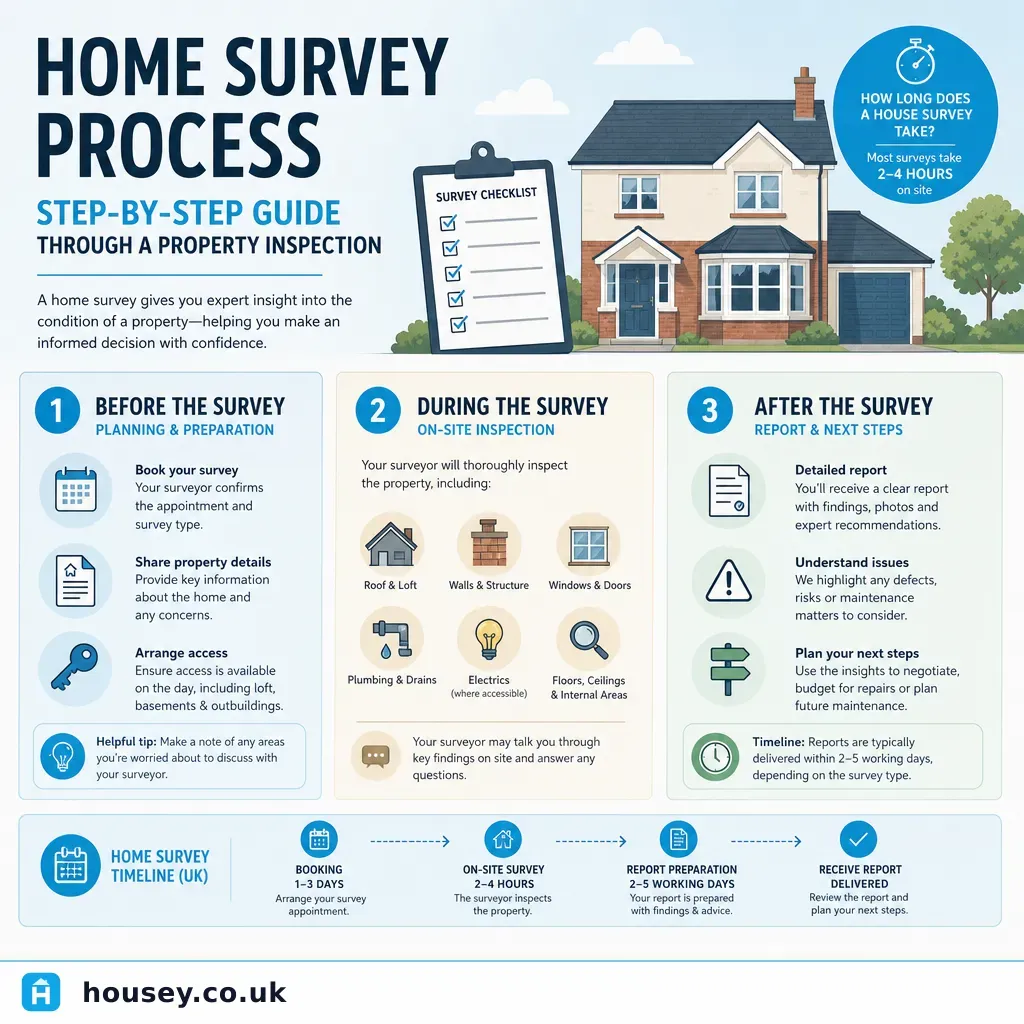
Home Survey Process: Step-by-Step Guide Through a Property Inspection
A RICS surveyor books and attends the property — usually 1–2 weeks after instruction — inspects accessible internal and external elements over 2–4 hours, and delivers a written report within 3–5 working days. The report uses a traffic-light condition rating system to flag defects, with recommendations for specialist investigation where needed.
 Surveys & Inspections
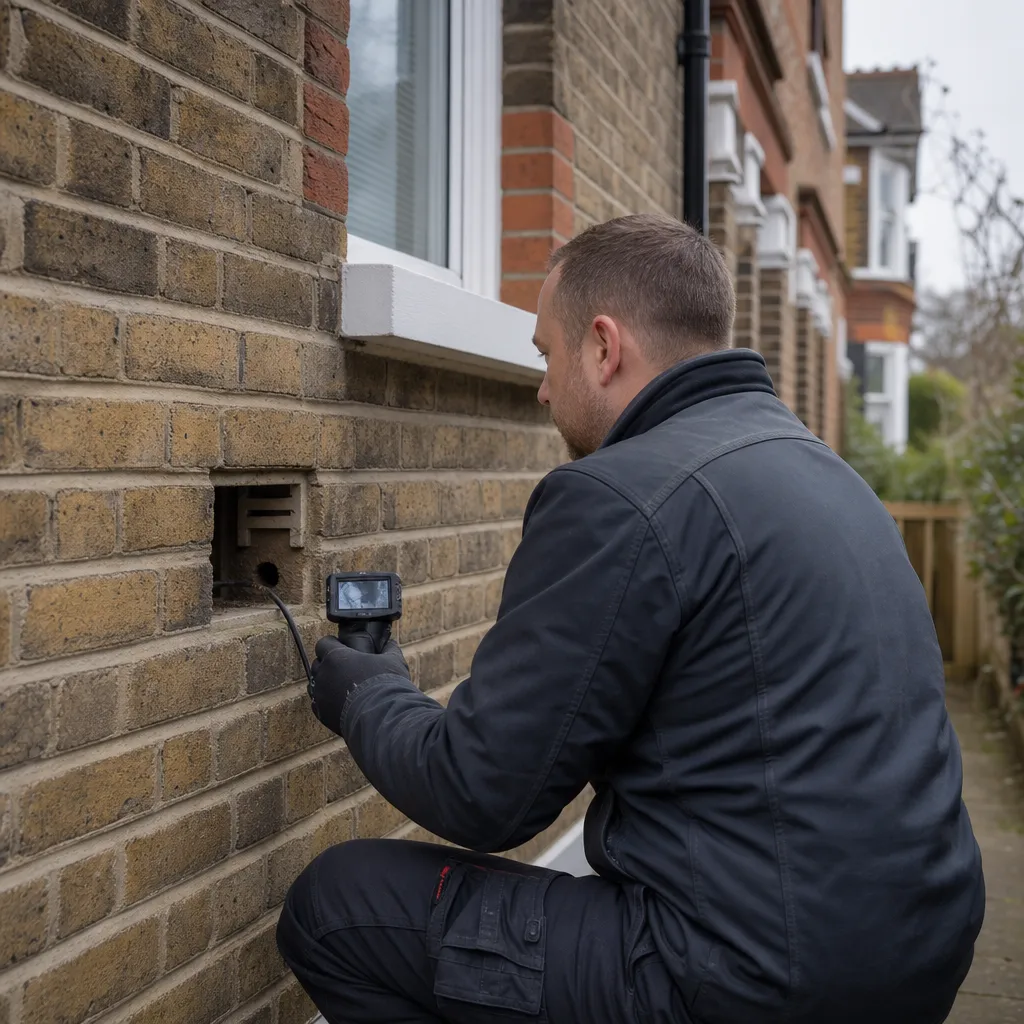
Removing Mice from Cavity Walls: Identification and Solutions
Mice in cavity walls are identified by light scratching sounds at night, small droppings near skirting boards, and gnawed materials. Removal requires sealing entry points, placing bait at accessible locations, and checking for insulation damage. Professional pest controllers are usually more effective than DIY for cavity wall infestations, which are difficult to access and treat thoroughly.