Knowledge Base
Property advice that actually helps
Researched, UK-specific guides for every stage of homeownership — from buying and surveys to retrofit, planning and major works.
 Surveys & Inspections
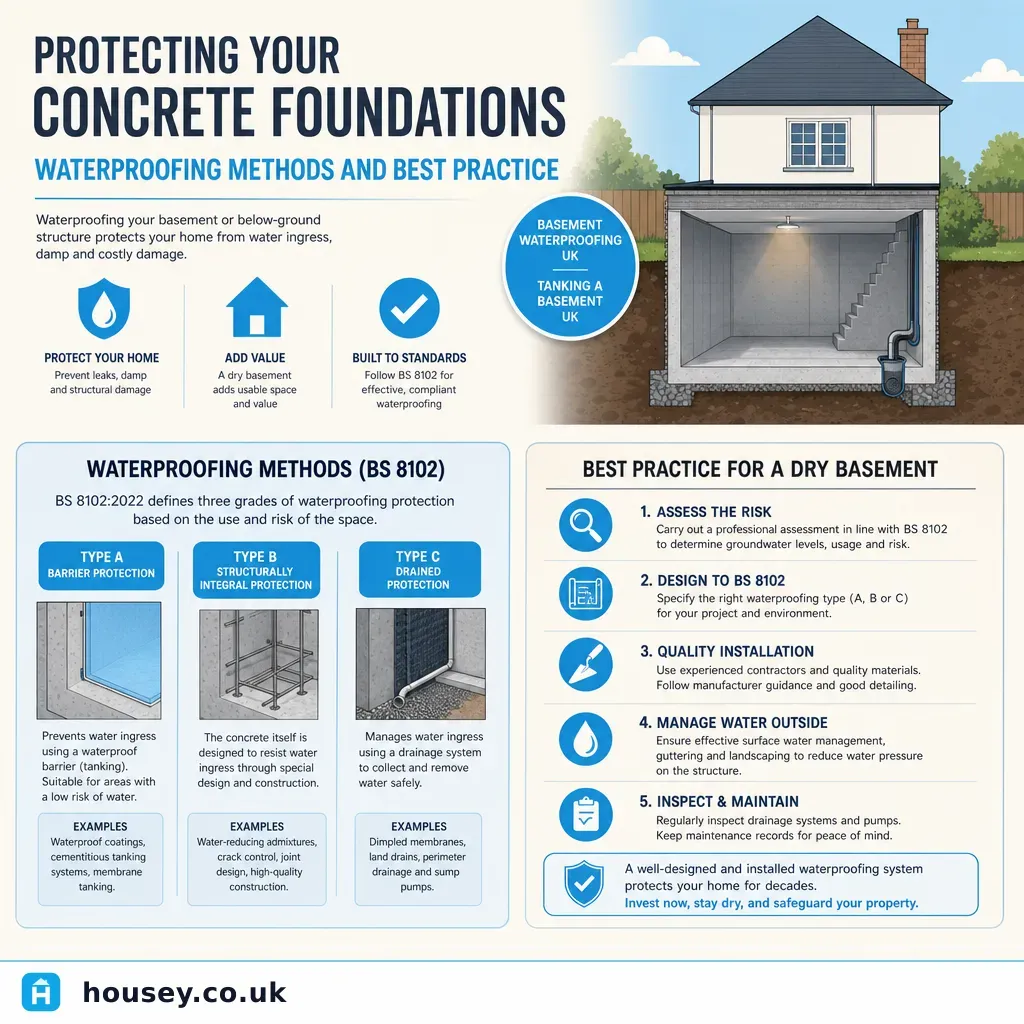
Protecting Your Concrete Foundations: Waterproofing Methods and Best Practice
Foundation waterproofing protects below-ground concrete structures from hydrostatic pressure and soil moisture. Under BS 8102:2022, three technical types are recognised in the UK: Type A barrier tanking, Type B structurally integral waterproof concrete, and Type C drained cavity systems. For habitable basement conversions, a combined Grade 3 system is usually required. A specialist survey should always precede any specification.
 Surveys & Inspections
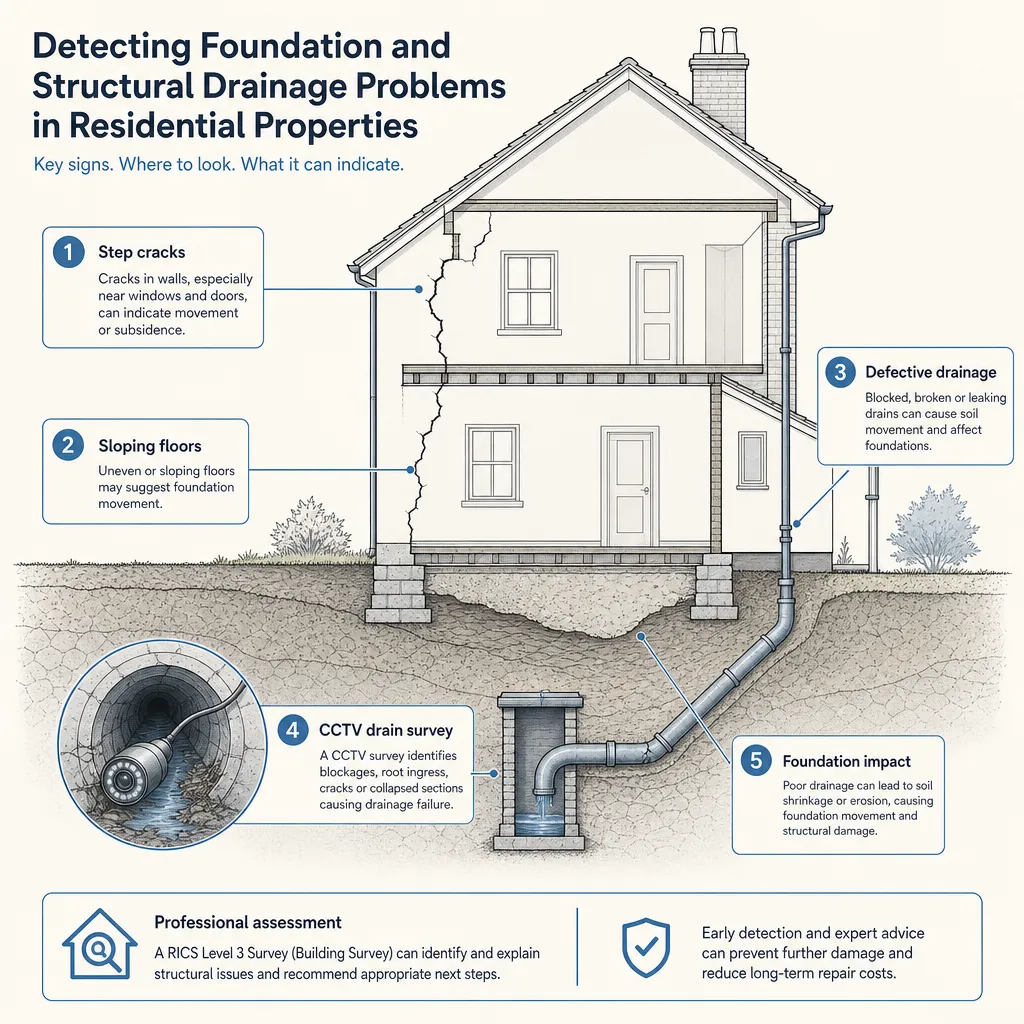
Detecting Foundation and Structural Drainage Problems in Residential Properties
Foundation and drainage problems in UK homes often appear as stepped cracks in brickwork, sticking doors, or slow-draining fixtures. The two issues frequently occur together — a failing drain beneath load-bearing ground can cause ongoing structural movement. A RICS Level 3 Building Survey and a CCTV drain survey are the appropriate professional investigations when these signs are present.
 Surveys & Inspections
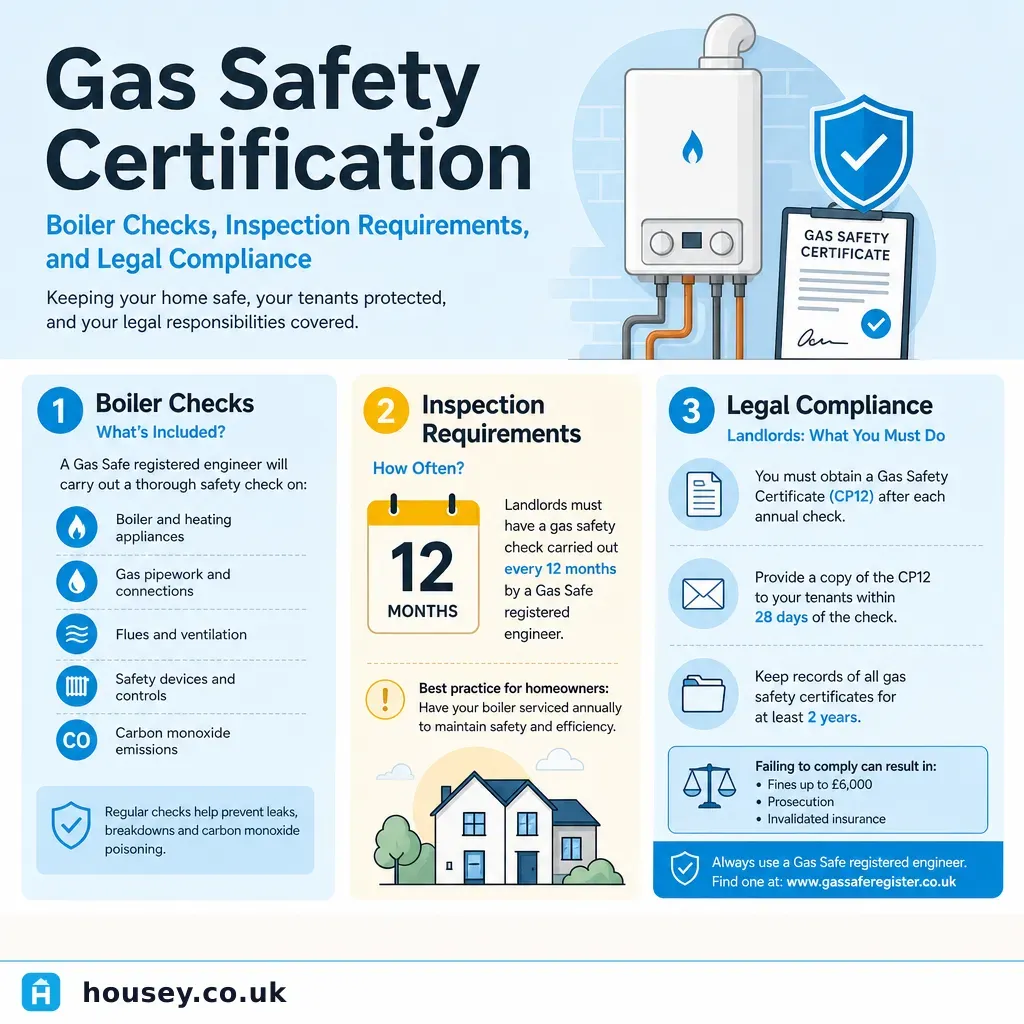
Gas Safety Certification: Boiler Checks, Inspection Requirements, and Legal Compliance
A gas safety certificate — officially a Gas Safety Record — is issued by a Gas Safe registered engineer after inspecting all gas appliances, pipework, and flues in a property. Landlords must arrange this check annually under the Gas Safety (Installation and Use) Regulations 1998. Owner-occupiers have no legal obligation but an annual service is strongly recommended by the HSE.
 Surveys & Inspections
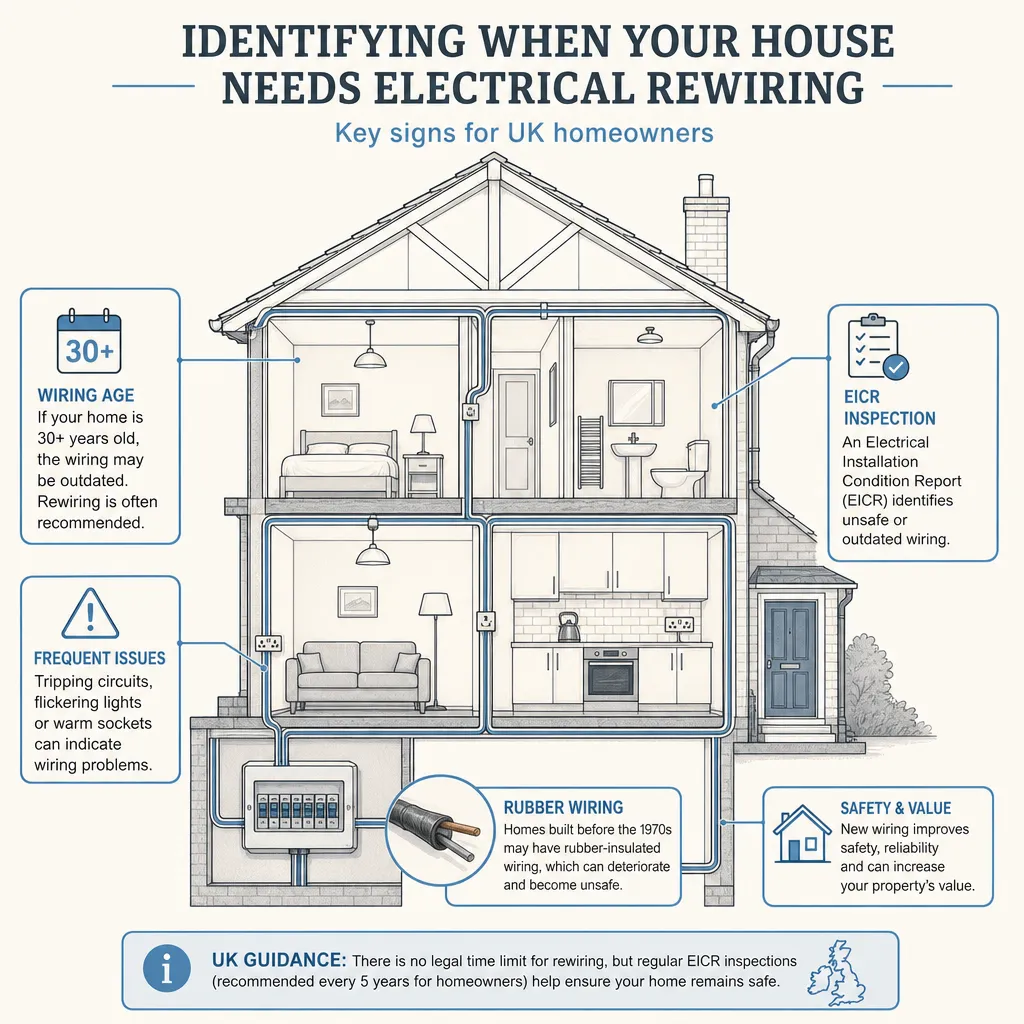
Identifying When Your House Needs Electrical Rewiring
A house may need rewiring if it has rubber-insulated cables (pre-1966), round-pin sockets, rewirable fuses, or no RCD protection. Common warning signs include discoloured sockets, frequent circuit tripping, burning smells, and hot plugs. An Electrical Installation Condition Report (EICR) by a registered electrician is the correct way to formally assess any installation.
 Surveys & Inspections
Asbestos in UK Properties: Identification, Survey and Safe Management
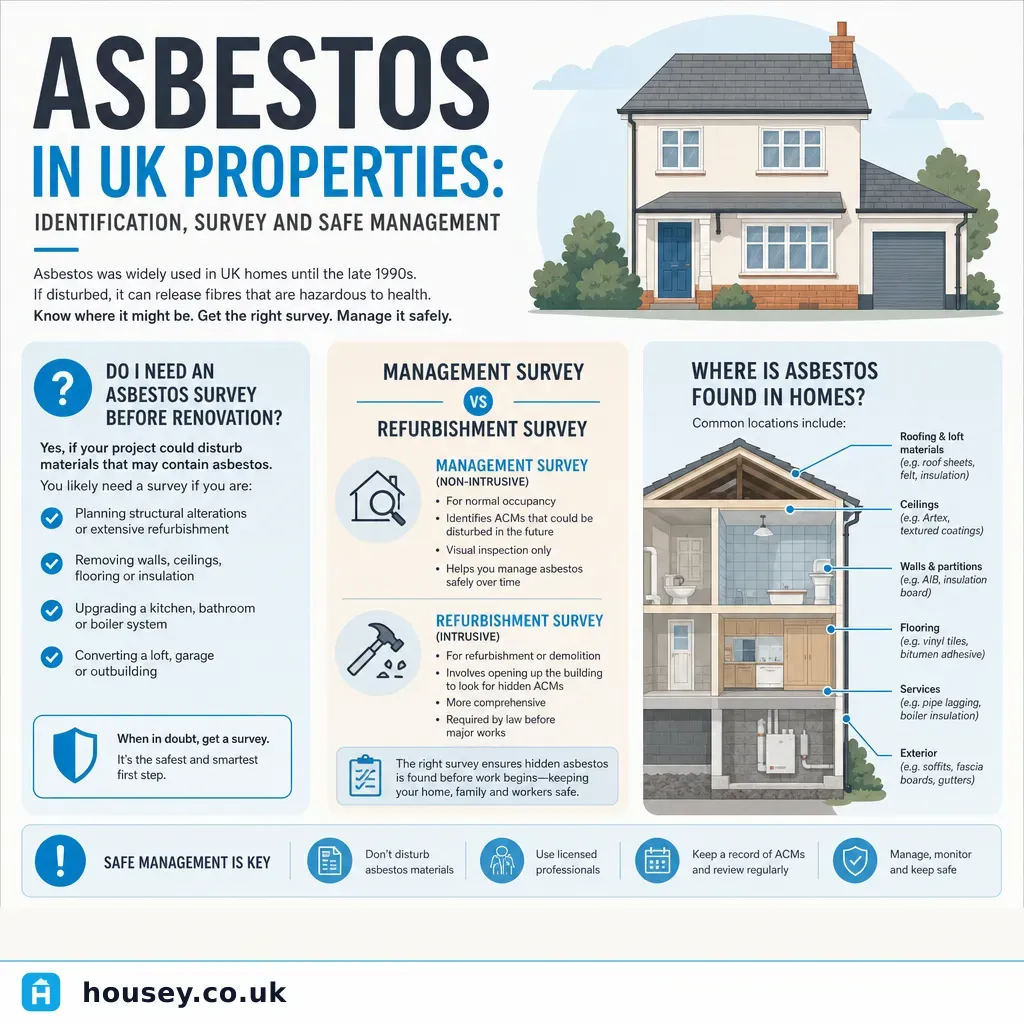
Asbestos may be present in any UK property built or refurbished before 2000. If you are planning renovation work, you need a Refurbishment/Demolition Survey of affected areas before starting — not just a Management Survey. Undisturbed asbestos in good condition is often safer left in place and managed than removed. Only a qualified, UKAS-accredited surveyor can confirm whether a material contains asbestos.
 Surveys & Inspections
Land and Property Surveying Costs
Land survey costs in the UK typically range from around £400 for a simple boundary check to £3,000 or more for a detailed topographical or measured building survey of a large site. Fees depend on property size, site complexity, survey type, and the level of detail required in the output.
 Surveys & Inspections
Specialist Properties: Barges and Houseboats for Living
Buying a houseboat or barge in the UK requires a specialist marine surveyor rather than a RICS surveyor, a Boat Safety Scheme certificate every four years, and a clear understanding of your mooring tenure. Standard residential mortgages do not apply; marine finance is needed. Mooring security and hull condition are the two most critical factors to assess before any offer.
 Surveys & Inspections
Emergency Roof Protection and Temporary Weather Damage Assessment
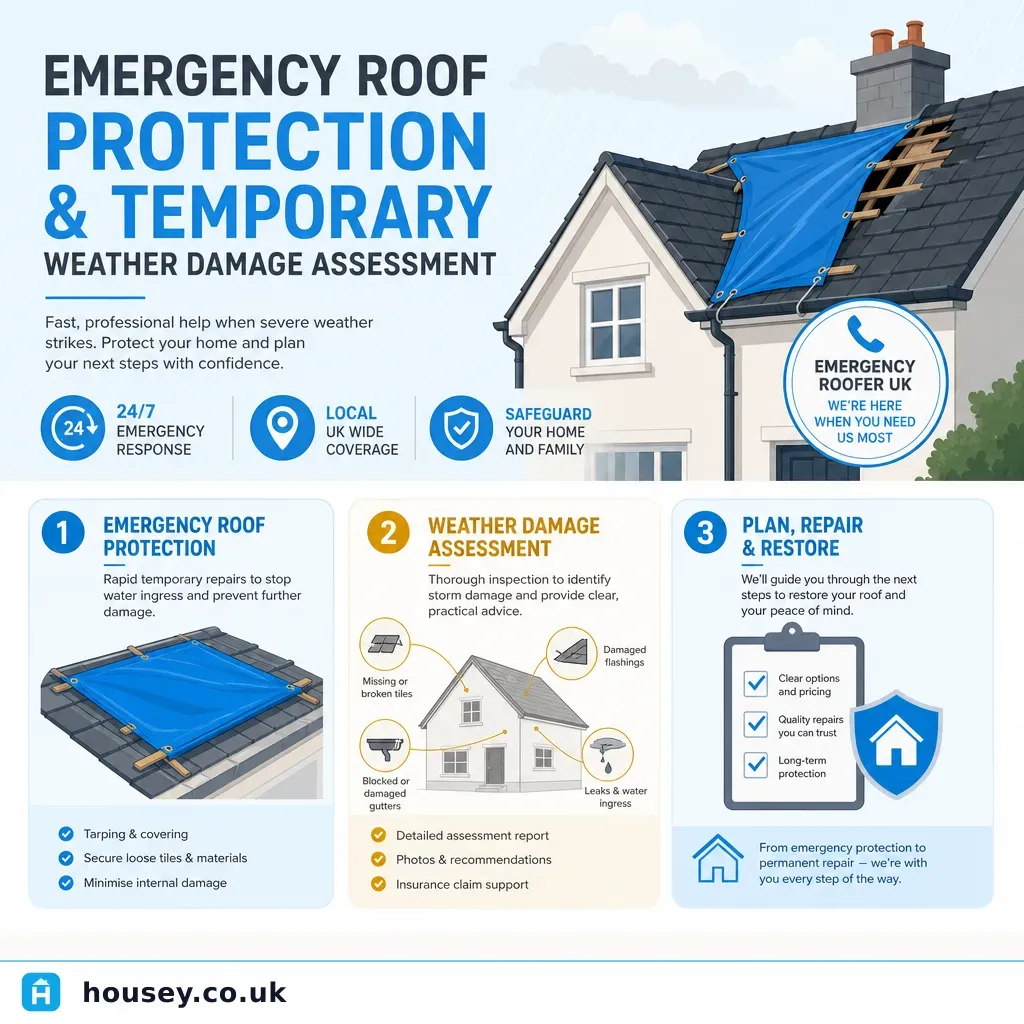
After roof damage, your priority is safe temporary protection — typically a tarpaulin secured by a roofer — followed by a professional inspection to assess structural impact. Do not attempt roof access yourself. Document all damage with photographs before any repairs, and notify your insurer promptly; most policies require notification within 24 to 48 hours of discovery.
 Surveys & Inspections
Asbestos in homes: identification, risks and management
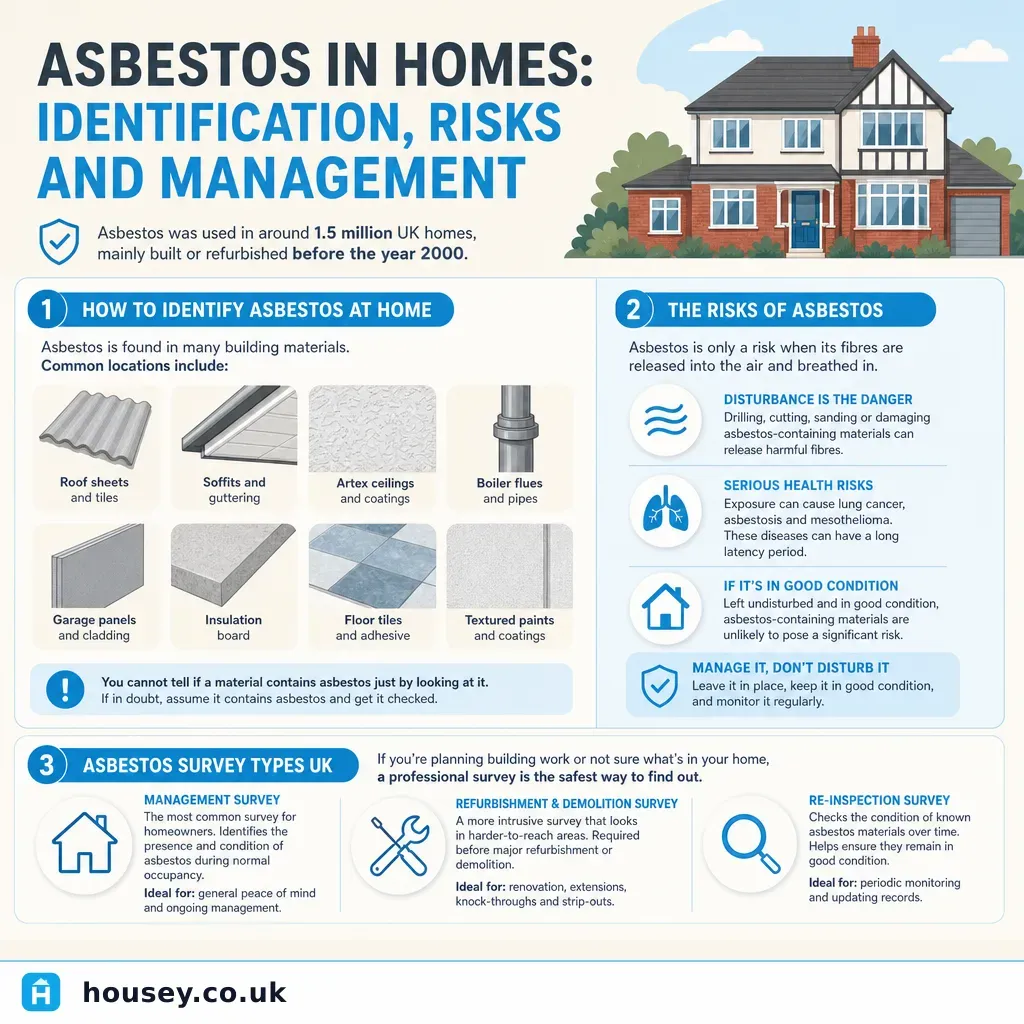
Asbestos was widely used in UK construction until it was banned in November 1999, so any home built before 2000 may contain asbestos-containing materials. Undisturbed ACMs in good condition are typically managed in place rather than removed. Before any renovation work on a pre-2000 property, a professional asbestos survey is essential — disturbing ACMs without proper precautions poses serious health risks.
 Surveys & Inspections
Managing Humidity in the Home: Dehumidification Solutions
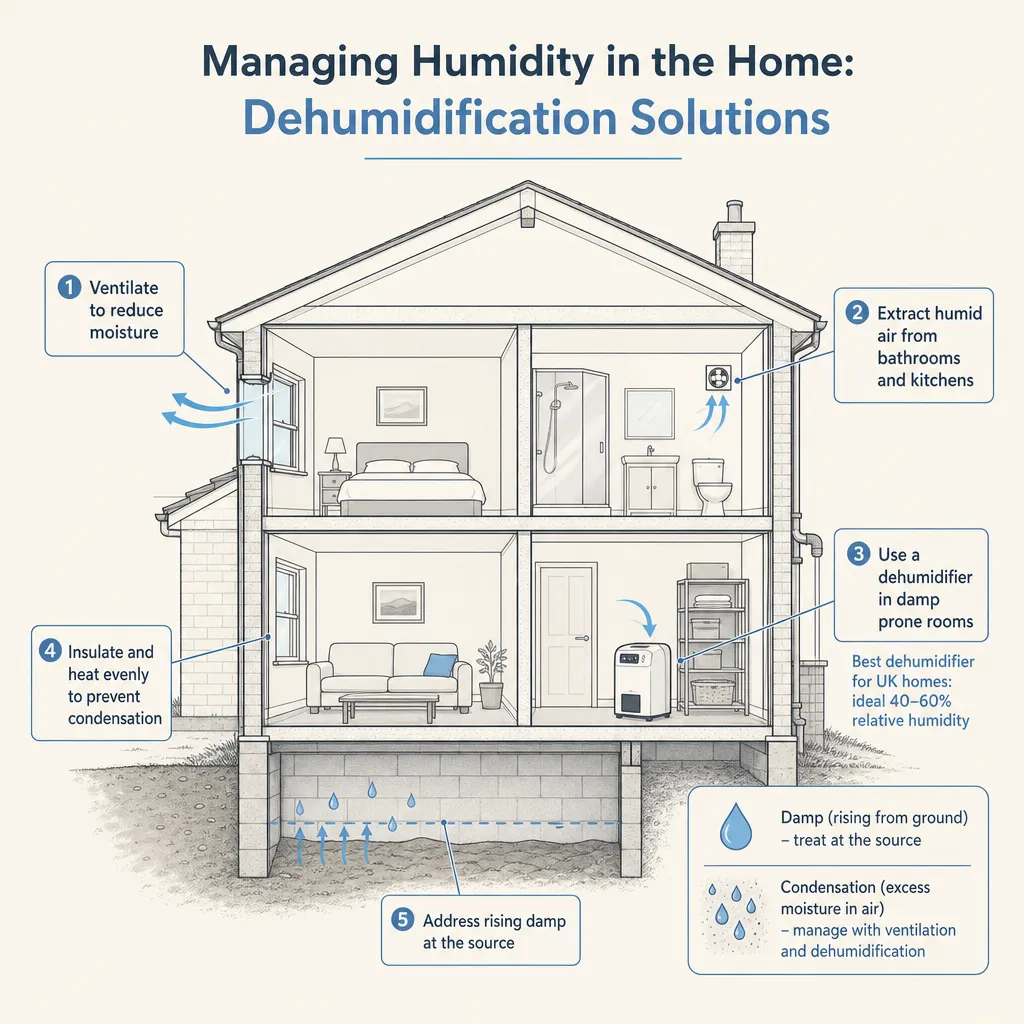
Managing indoor humidity usually means combining adequate ventilation with a correctly sized dehumidifier. Aim for 40–60% relative humidity. Portable refrigerant dehumidifiers suit heated rooms above 15°C; desiccant models work better in cold spaces. Persistent damp on walls, recurring mould, or planned retrofit work under PAS 2035 warrants a professional damp or ventilation survey rather than relying on a dehumidifier alone.
 Surveys & Inspections
Surveying Large Estates and Acreage: What Property Owners Should Know
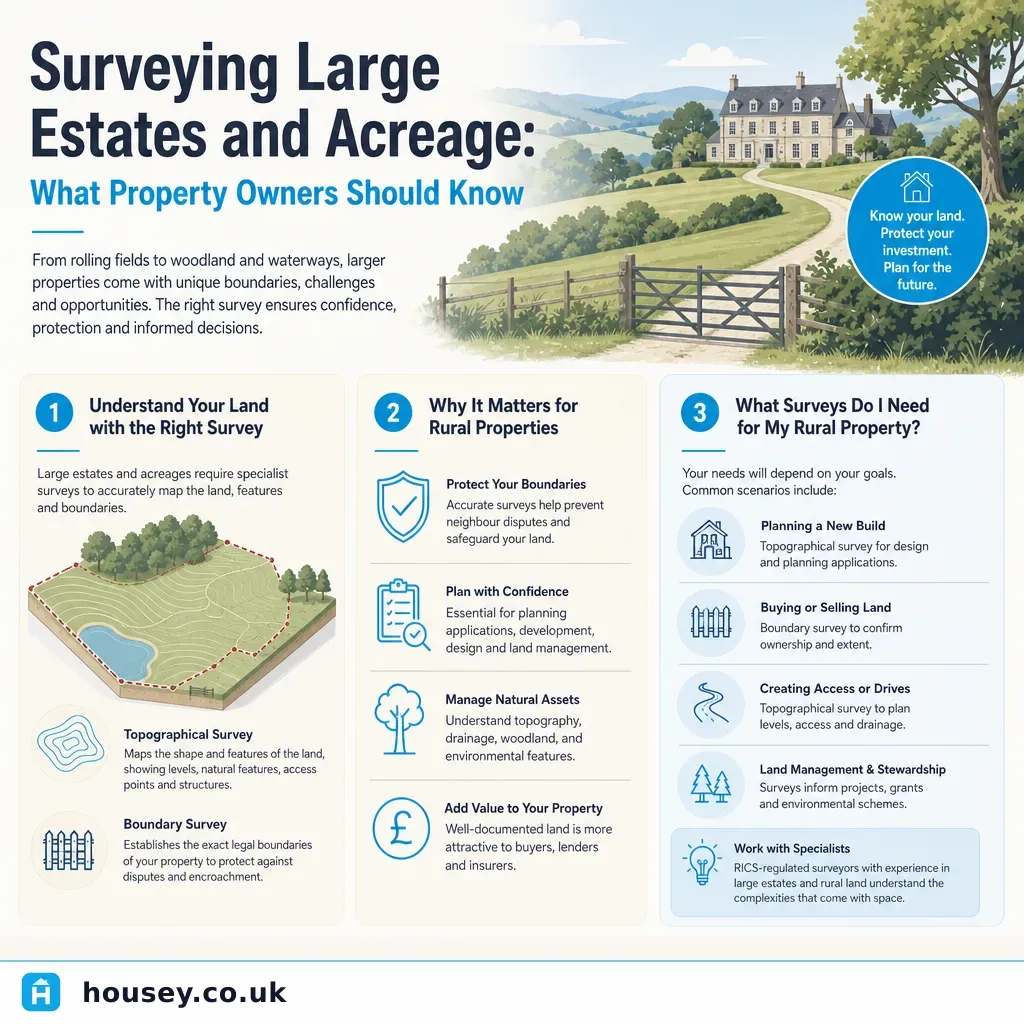
Large estates and acreage typically require a combination of surveys: a topographical survey to map contours and features, a boundary survey to confirm legal extents, and often an ecological or environmental assessment. The right combination depends on the estate's size, proposed use, and development plans — costs and timescales vary significantly and more than one professional is usually needed.
 Surveys & Inspections
Gas Bonding and Earth Meter Installation Costs
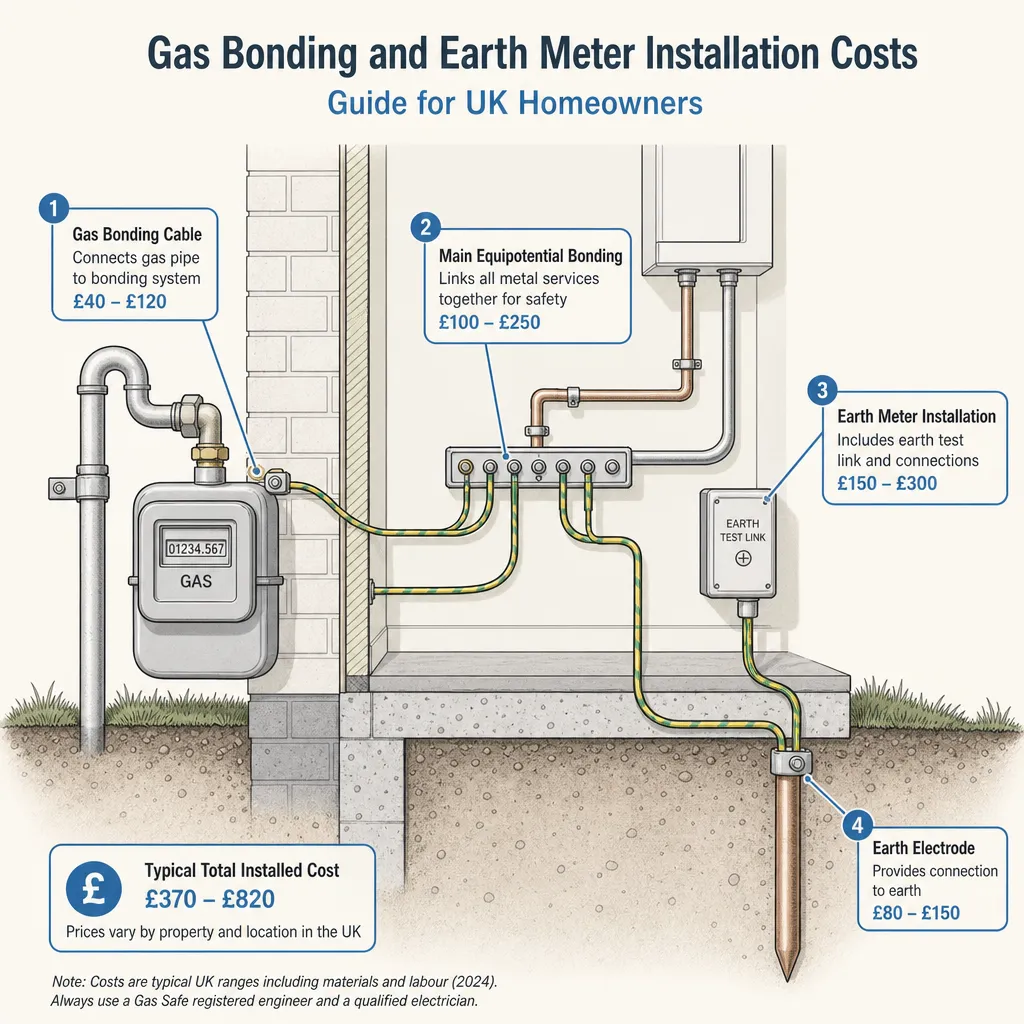
Main gas bonding connects your gas pipework to the electrical earthing terminal, preventing dangerous voltage differences. Required under BS 7671, it costs around £150–£400 for a standard run. An EICR will flag missing bonding as a code-C2 or C1 observation, requiring prompt remediation by a registered electrician.