Knowledge Base
Property advice that actually helps
Researched, UK-specific guides for every stage of homeownership — from buying and surveys to retrofit, planning and major works.
 Surveys & Inspections
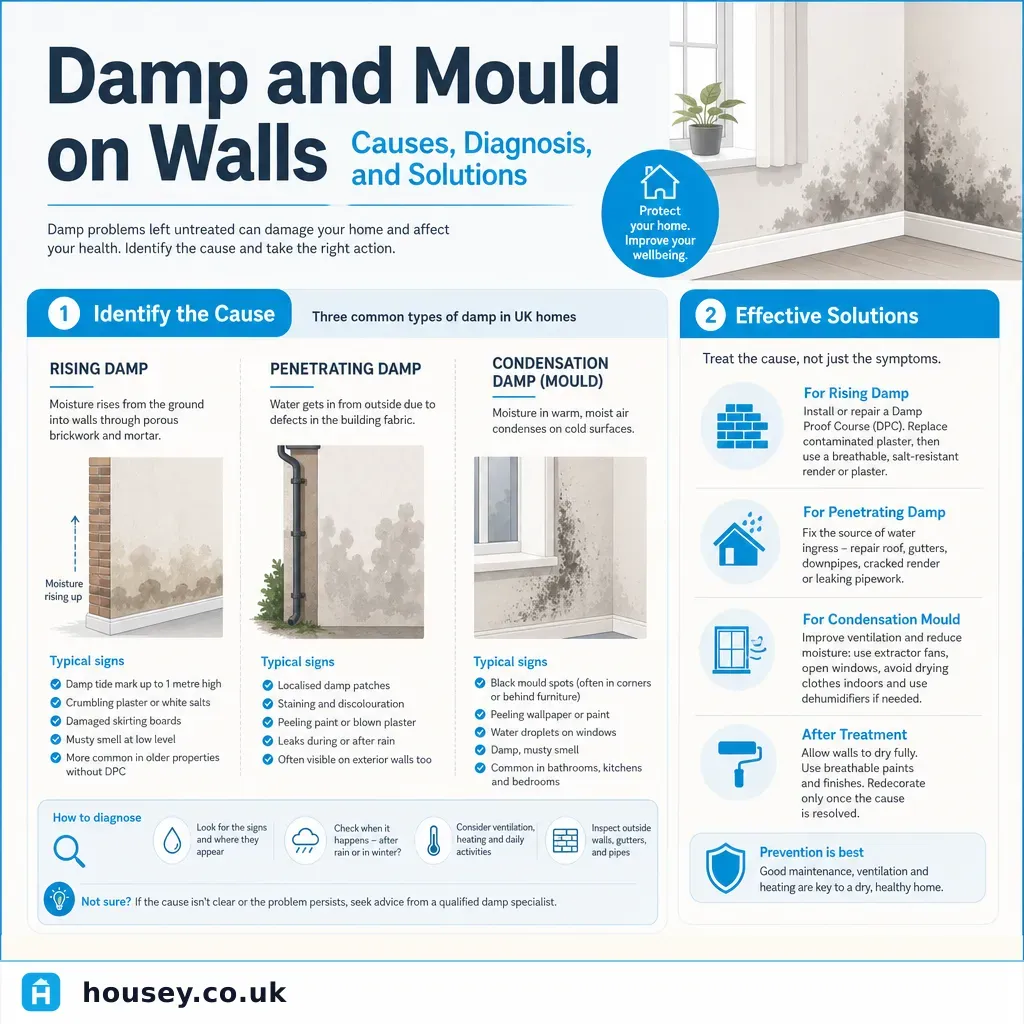
Damp and Mould on Walls: Causes, Diagnosis, and Solutions
Damp and mould on walls usually result from rising damp, penetrating damp, or condensation — each with different symptoms and fixes. Rising damp affects ground-floor walls; penetrating damp follows rainwater paths; condensation is the most common and often easiest to address. A professional damp survey can confirm the cause before any treatment begins.
 Surveys & Inspections
Land Surveys and Boundary Measurement: Who Pays
There is no statutory rule in England and Wales that determines who pays for a boundary or land survey. On a property purchase, the buyer typically commissions and pays for any survey they need. In a boundary dispute, each party usually pays for their own surveyor independently. A residential boundary determination report typically costs between £600 and £2,500, depending on complexity.
 Surveys & Inspections
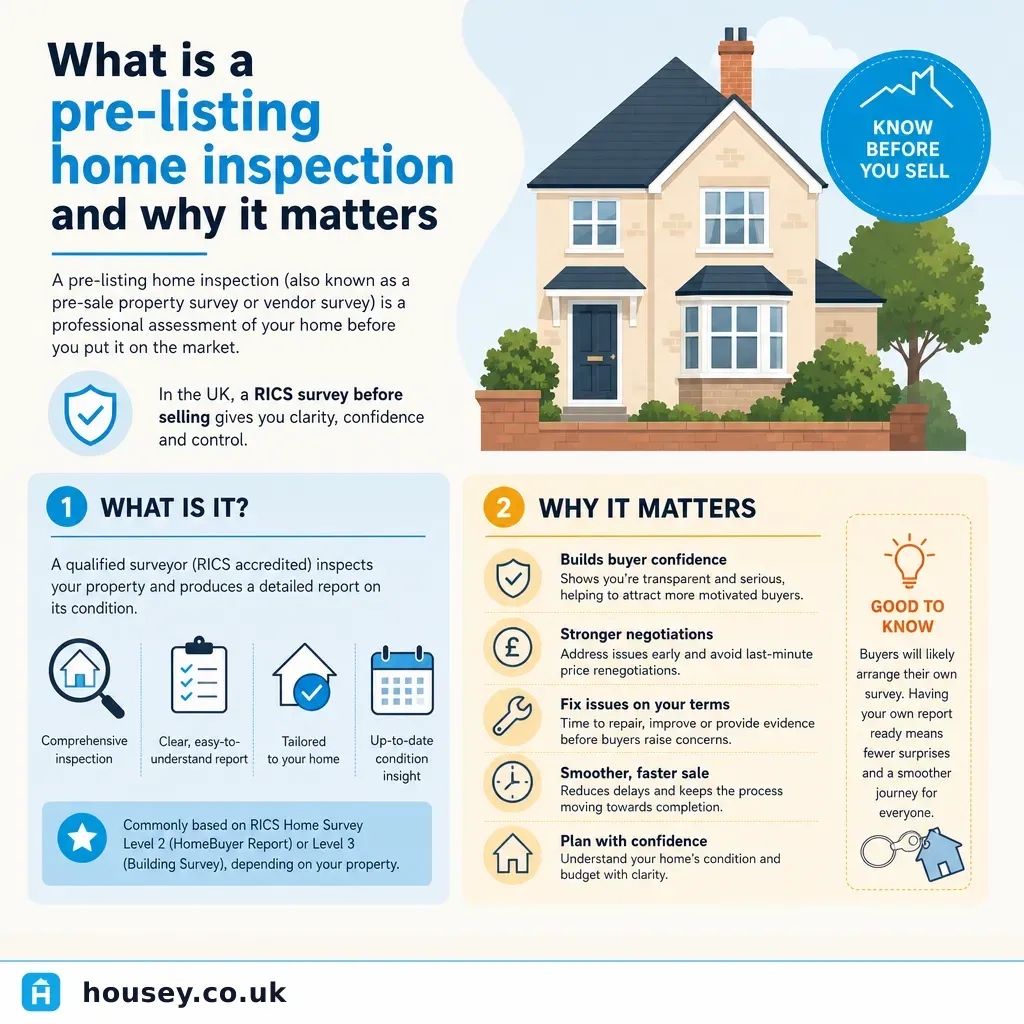
What is a pre-listing home inspection and why it matters
A pre-listing home inspection is a survey commissioned by the seller before marketing begins. It identifies defects early, helps set a realistic asking price, and reduces the risk of buyer renegotiations at exchange. In England and Wales it is not legally required but can accelerate conveyancing. In Scotland, the Home Report serves this function and is mandatory for most residential sales.
 Surveys & Inspections
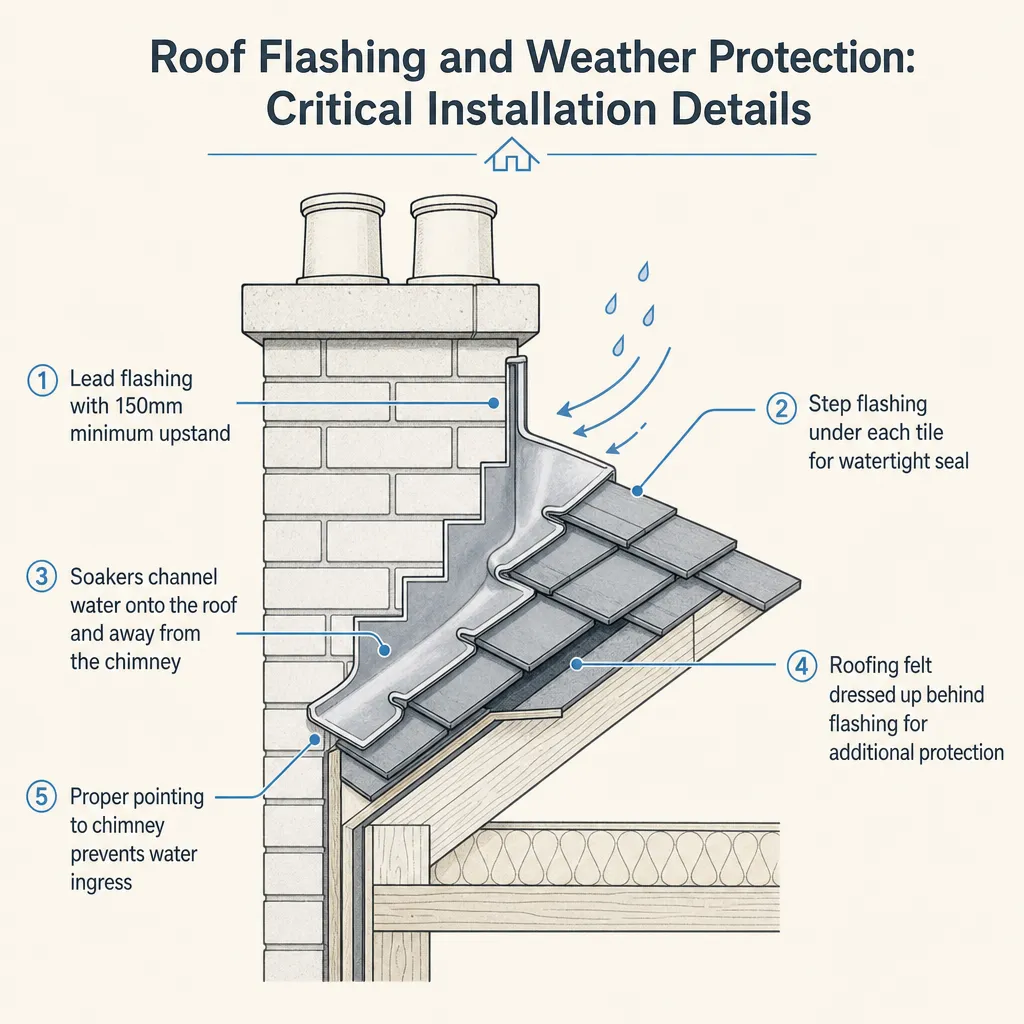
Roof Flashing and Weather Protection: Critical Installation Details
Roof flashing is waterproof material — usually lead or a metal alternative — installed at junctions between roof surfaces and vertical elements such as chimneys, dormers, and abutments. Lead to BS EN 12588 is the UK benchmark and can last 60–100 years when correctly detailed. Flashing failure is one of the most common defects identified in UK building surveys.
 Surveys & Inspections
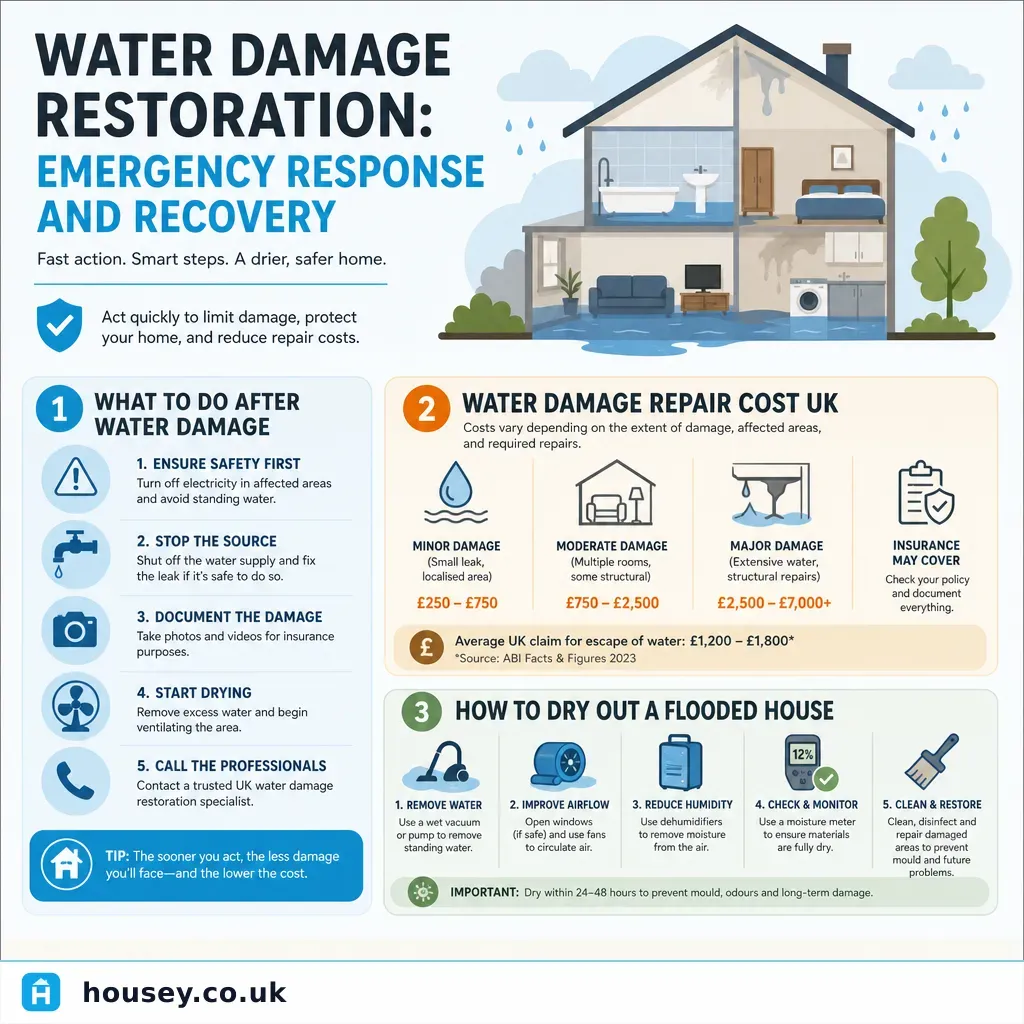
Water Damage Restoration: Emergency Response and Recovery
After a water event, act within hours: stop the water source, switch off electricity if safe, photograph the damage, and contact your insurer promptly. Professional restoration involves extraction, structural drying — typically three to six weeks — antimicrobial treatment where needed, and post-drying moisture verification. Mould can begin to establish within 24 to 48 hours in wet structural materials.
 Surveys & Inspections
Types of Land Surveys: Choosing the Right Survey for Your Needs
UK land surveys fall into distinct types: topographical surveys map terrain and features for planning and design; measured building surveys record existing structures for extension or conversion work; boundary surveys establish legal property limits; and ground investigation surveys assess soil and foundation conditions. The right choice depends on your project stage and specific objective.
 Surveys & Inspections
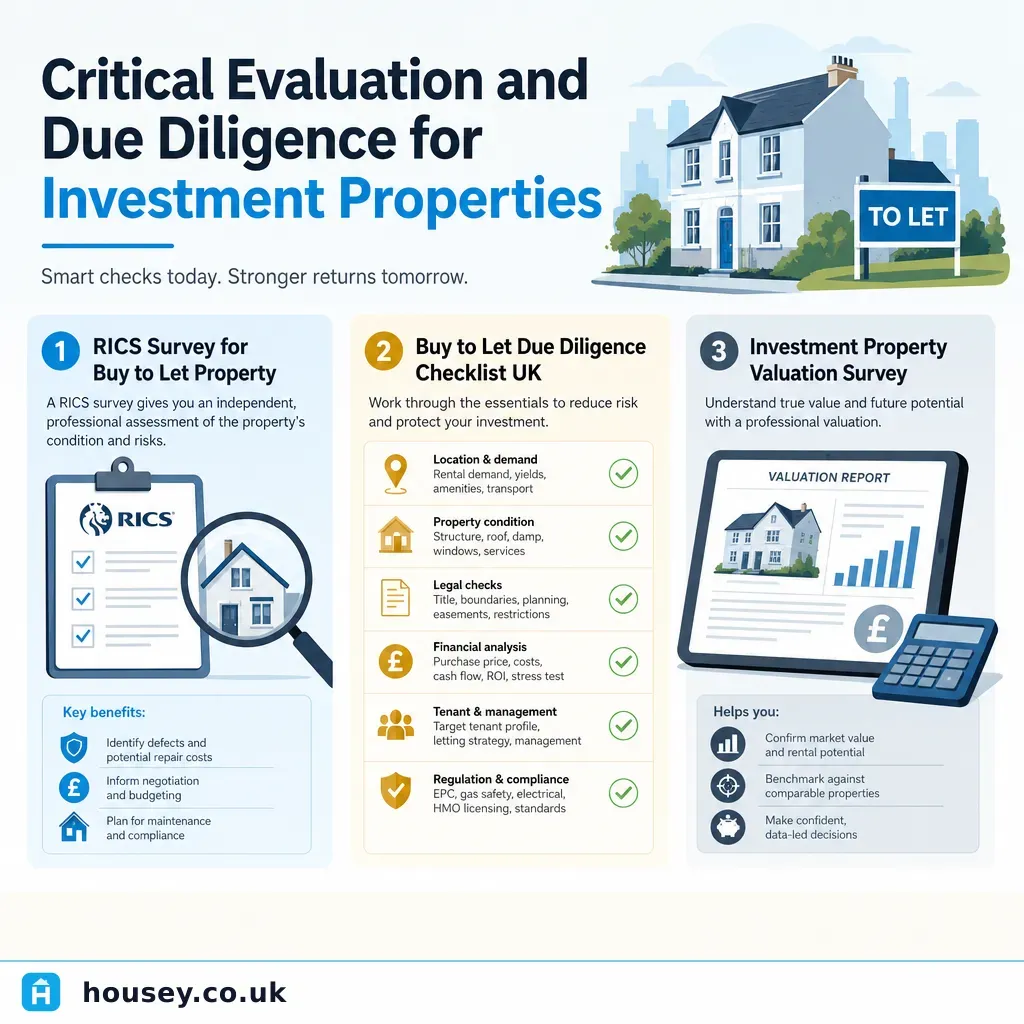
Critical Evaluation and Due Diligence for Investment Properties
Investment property due diligence in the UK should cover a RICS condition survey, an independent valuation, EPC rating, local rental demand, HMO licensing requirements where relevant, and legal title checks. For older or tenanted stock, a RICS Level 3 Building Survey is usually the most appropriate starting point before committing to purchase.
 Surveys & Inspections
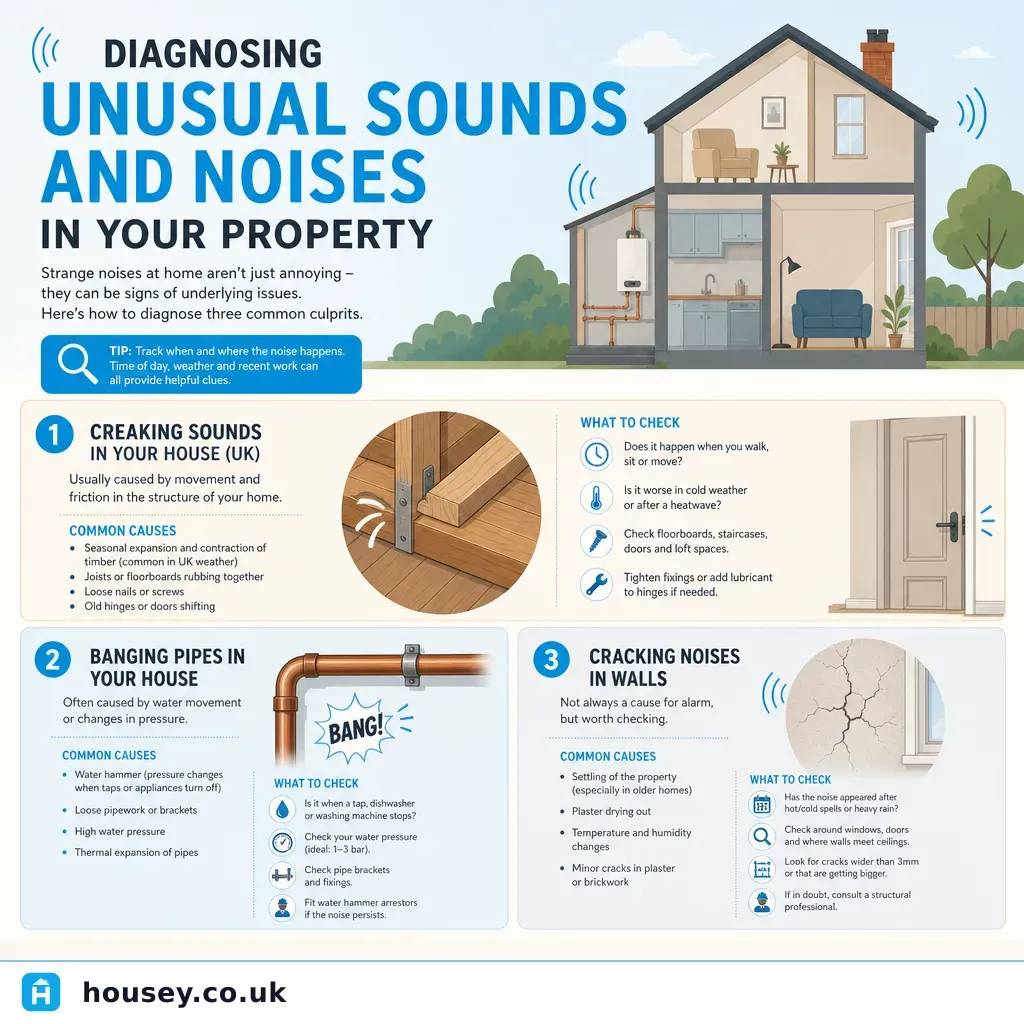
Diagnosing Unusual Sounds and Noises in Your Property
Most unusual sounds in a UK home have benign causes — thermal movement in roof timbers, water hammer in heating pipes, or normal settlement in new builds. But cracking sounds with visible wall movement, hissing near gas appliances, or sounds combined with sticking doors and sloping floors all warrant an urgent professional inspection. Match the sound to the symptoms to decide your next step.
 Surveys & Inspections
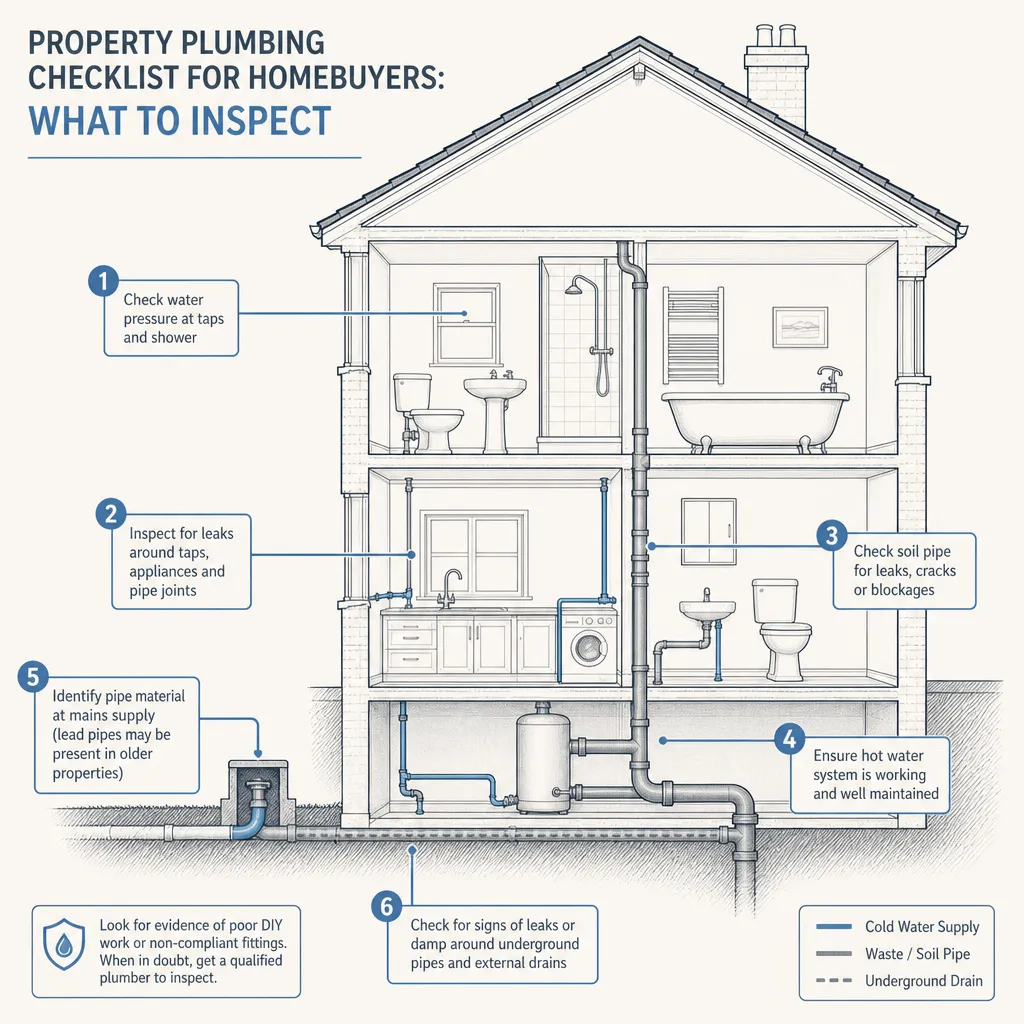
Property Plumbing Checklist for Homebuyers: What to Inspect
Before exchanging on a UK property, check water pressure at multiple outlets, look for signs of damp or staining around pipes, confirm whether any lead pipework remains, inspect the boiler age and service history, and ask your surveyor about drainage. A RICS survey will flag visible plumbing defects, but a specialist drain survey gives a fuller picture of underground systems.
 Surveys & Inspections
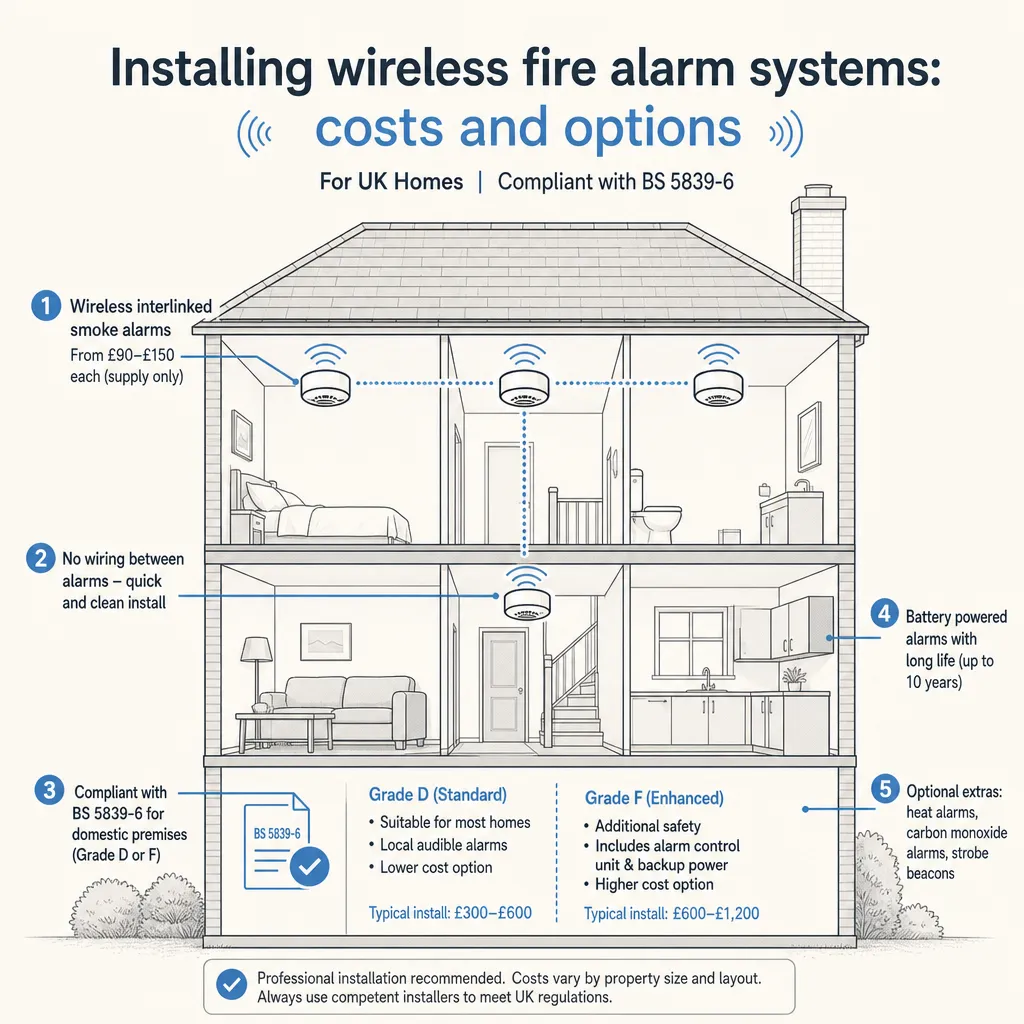
Installing wireless fire alarm systems: costs and options
Wireless interlinked fire alarm systems for a three-bedroom UK home typically cost £200–£600 installed. Battery-only Grade F systems suit straightforward retrofit; mains-connected Grade D systems need a Part P electrician. Landlords must comply with the Smoke and Carbon Monoxide Alarm Regulations 2022. For HMOs, a BS 5839-1 Grade A panel system is required.
 Surveys & Inspections
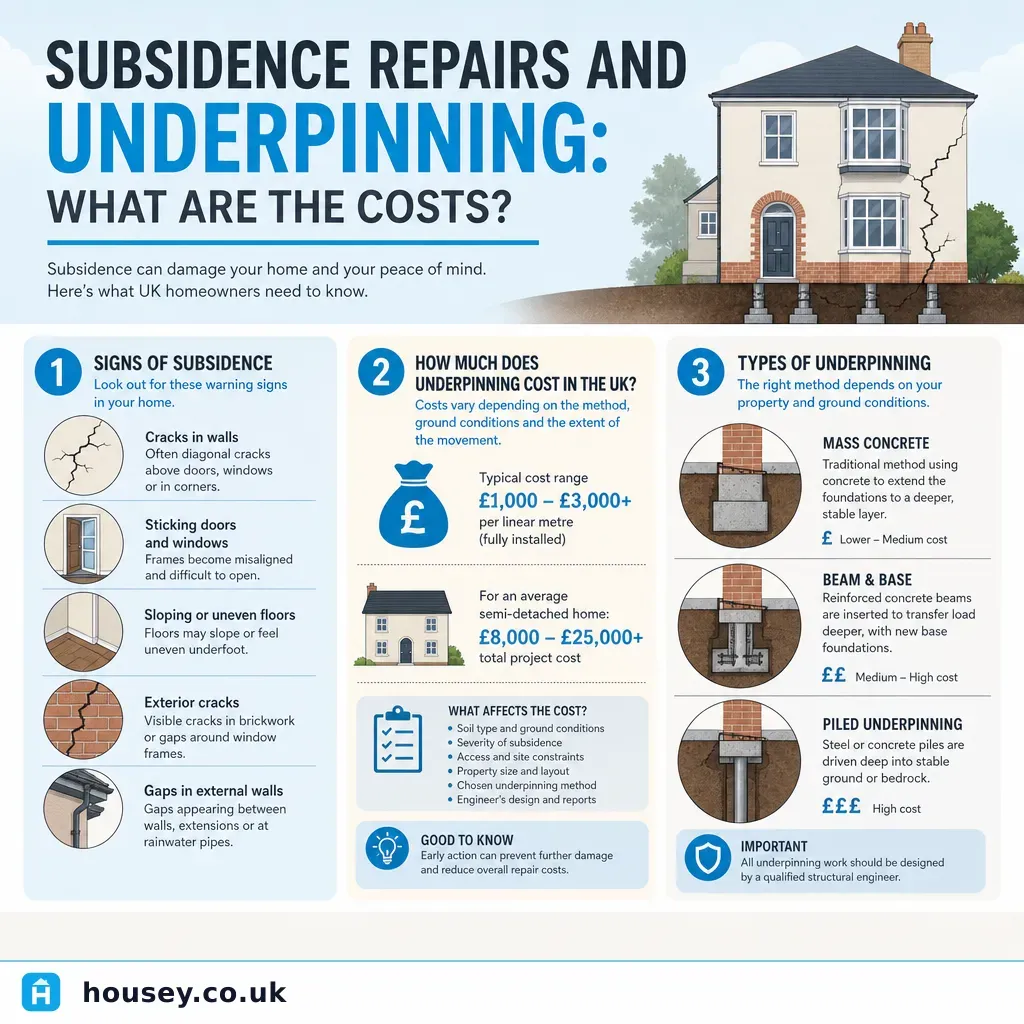
Subsidence Repairs and Underpinning: What Are the Costs?
Underpinning costs in the UK typically range from £1,000 to £3,000 per linear metre, with whole-house projects often totalling £10,000–£50,000 depending on method, property size, and ground conditions. A structural engineer should assess suspected subsidence first — underpinning is not always the right solution, and cheaper remedies may be appropriate in some cases.
 Surveys & Inspections
The Critical Role of Land Surveys in Property Purchases
A land survey can identify boundary discrepancies, missing access rights, encroachments, and topographical issues that a RICS home survey or conveyancing search will not cover. For properties with irregular plots, disputed boundaries, or development potential, commissioning a boundary or topographical survey before exchange of contracts can prevent costly legal disputes after completion.