Knowledge Base
Property advice that actually helps
Researched, UK-specific guides for every stage of homeownership — from buying and surveys to retrofit, planning and major works.
 Surveys & Inspections
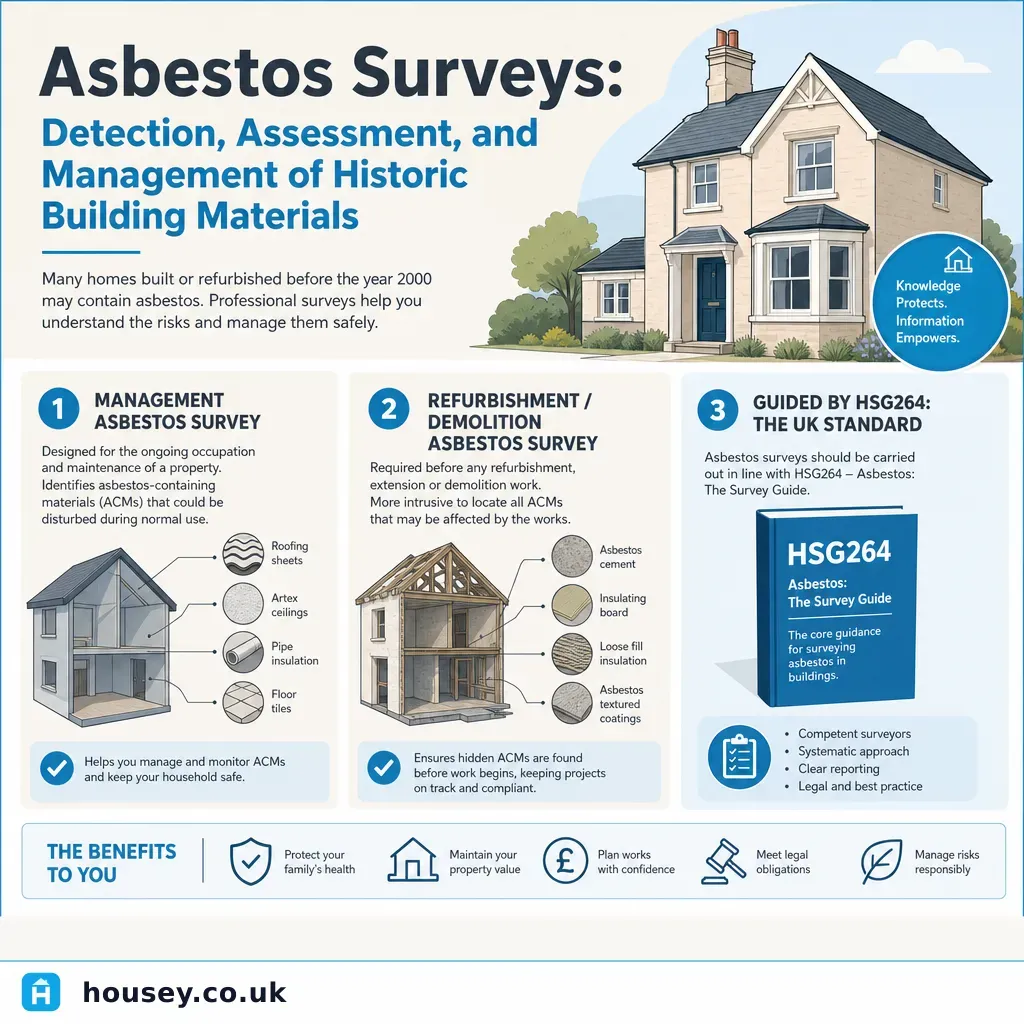
Asbestos Surveys: Detection, Assessment, and Management of Historic Building Materials
There are two main survey types in the UK: a Management Survey for buildings in normal occupation, and a Refurbishment and Demolition Survey required before any building work on a pre-2000 property. Both follow HSG264 guidance and should be carried out by a UKAS-accredited body. The results produce an Asbestos Register and, for non-domestic premises, an Asbestos Management Plan.
 Surveys & Inspections
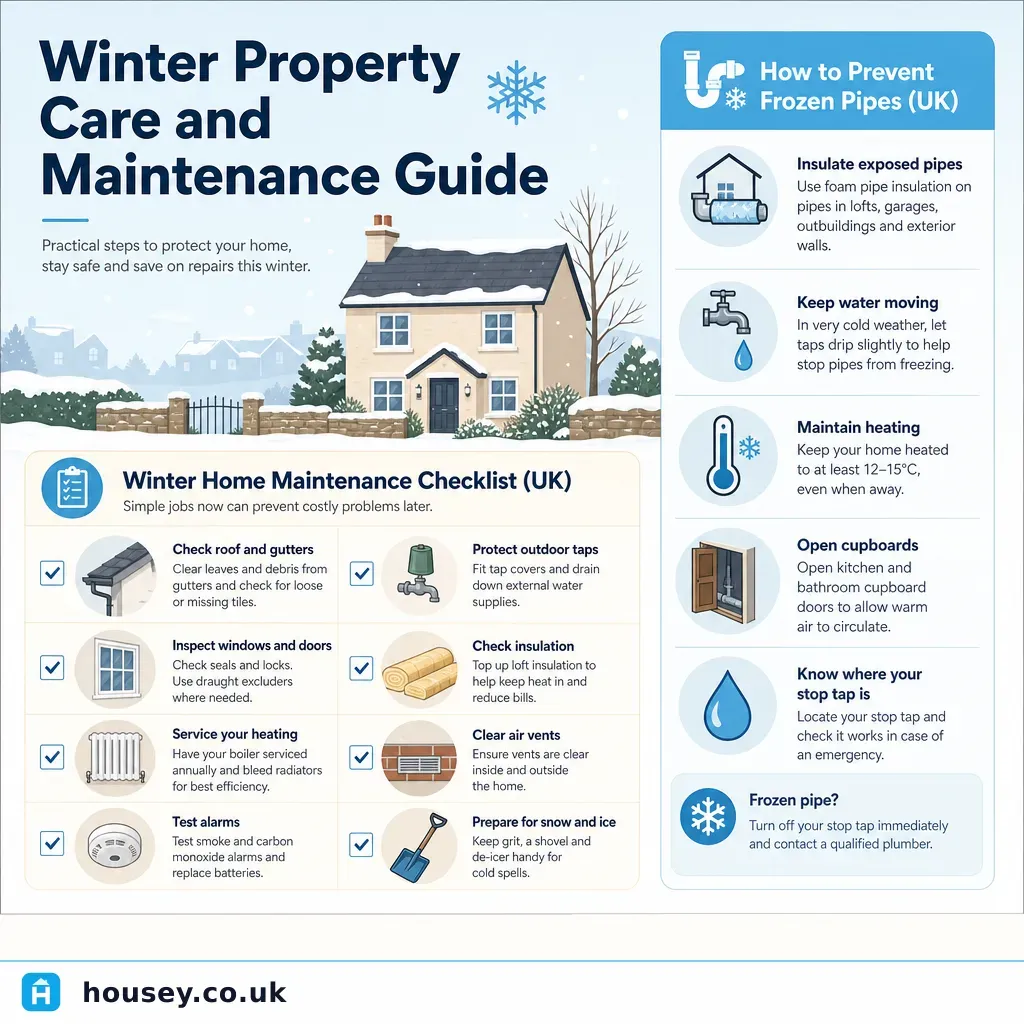
Winter Property Care and Maintenance Guide
Winter property maintenance in the UK means checking your roof, gutters, and drainage before the first frosts; insulating exposed pipework; booking a Gas Safe registered engineer for your annual boiler service; and clearing leaves from downpipes and outlets. Catching small defects in October reduces the risk of costly emergency repairs during cold spells.
 Surveys & Inspections
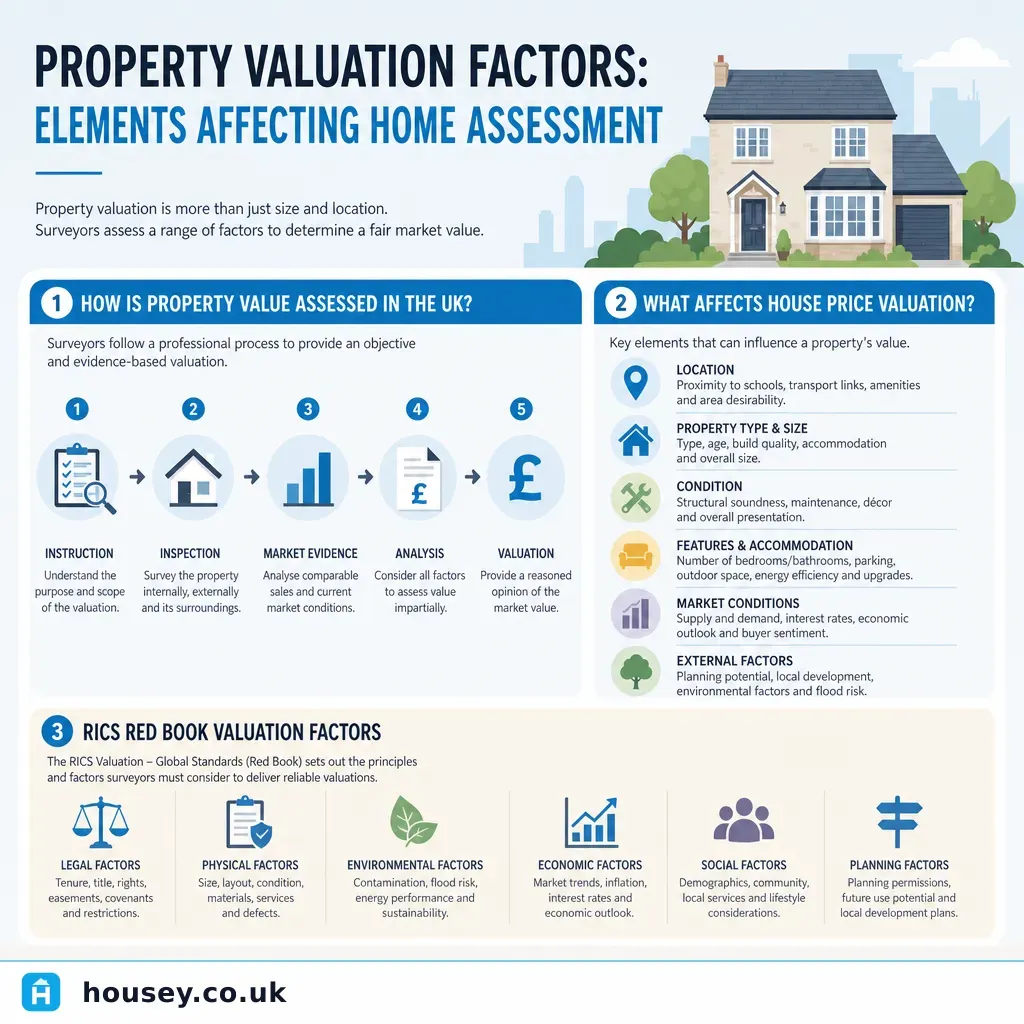
Property Valuation Factors: Elements Affecting Home Assessment
UK property valuations are primarily driven by location and comparable sales evidence, followed by floor area, condition, EPC rating, and legal factors such as lease length. For mortgage purposes a brief valuation confirms the property is adequate security; a full RICS Red Book valuation is required for probate, matrimonial, and shared ownership matters. Preparing documents in advance helps avoid delays or retentions.
 Surveys & Inspections
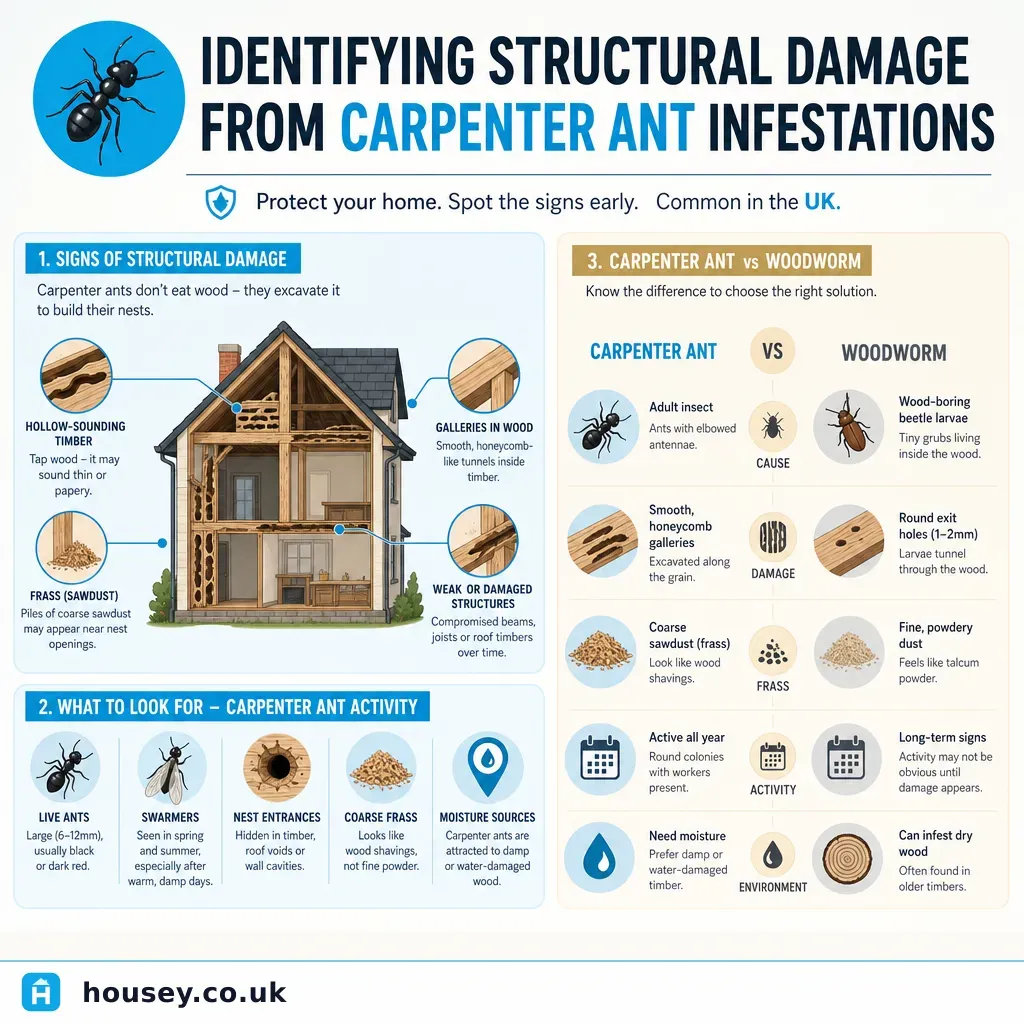
Identifying Structural Damage from Carpenter Ant Infestations
Carpenter ants excavate galleries in damp or decayed timber, leaving coarse frass and smooth, clean channels distinct from woodworm's fine bore dust and round exit holes. Their presence almost always signals a pre-existing moisture problem that must be resolved to prevent reinfestation. A damp and timber survey will assess both causes; a structural surveyor should inspect any affected load-bearing timbers.
 Surveys & Inspections
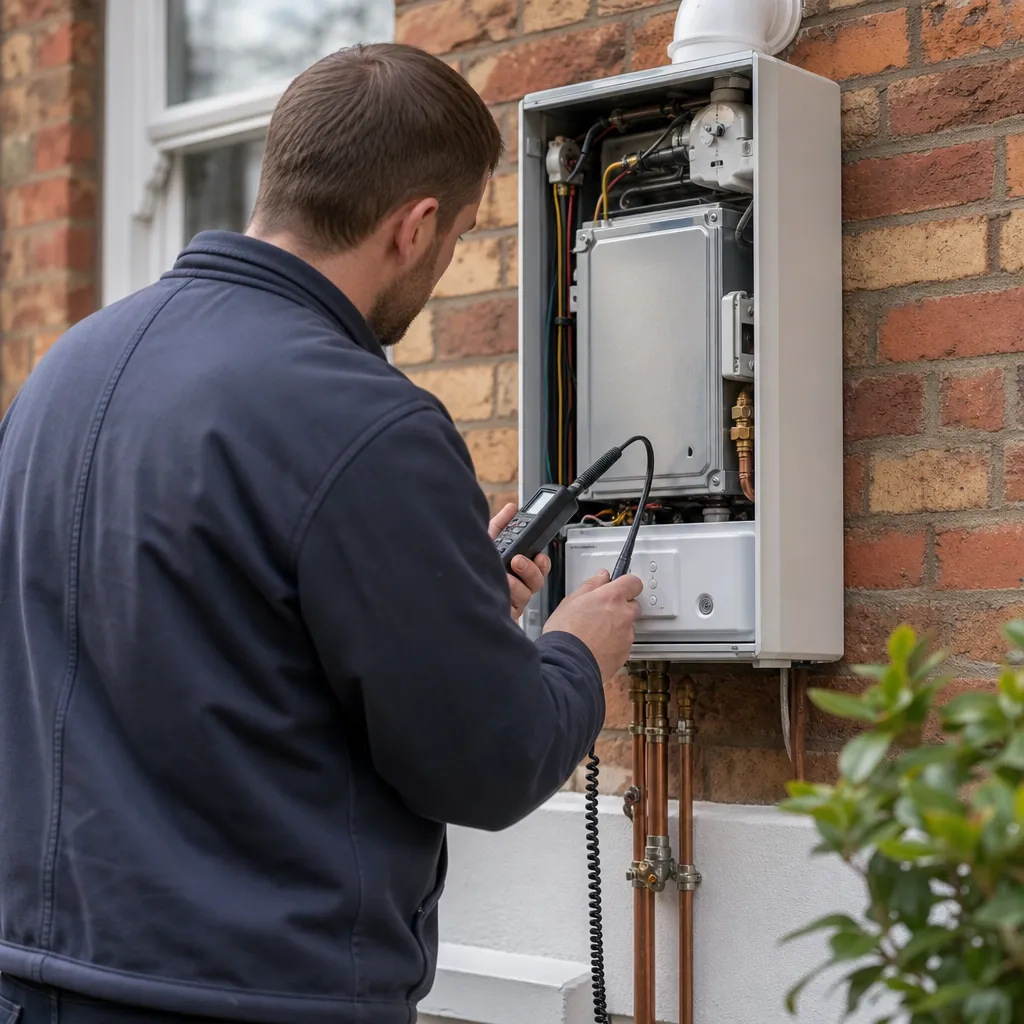
Gas Leak Emergency: Identifying, Reporting, and Safety Response
If you smell gas in your home, leave immediately without touching electrical switches, call the National Gas Emergency Service on 0800 111 999, and do not re-enter until given the all-clear. Speed matters — ventilate where it is safe to do so, but your priority is to evacuate and call for professional help.
 Surveys & Inspections
Gable Roofs: Design, Characteristics, and Installation Considerations
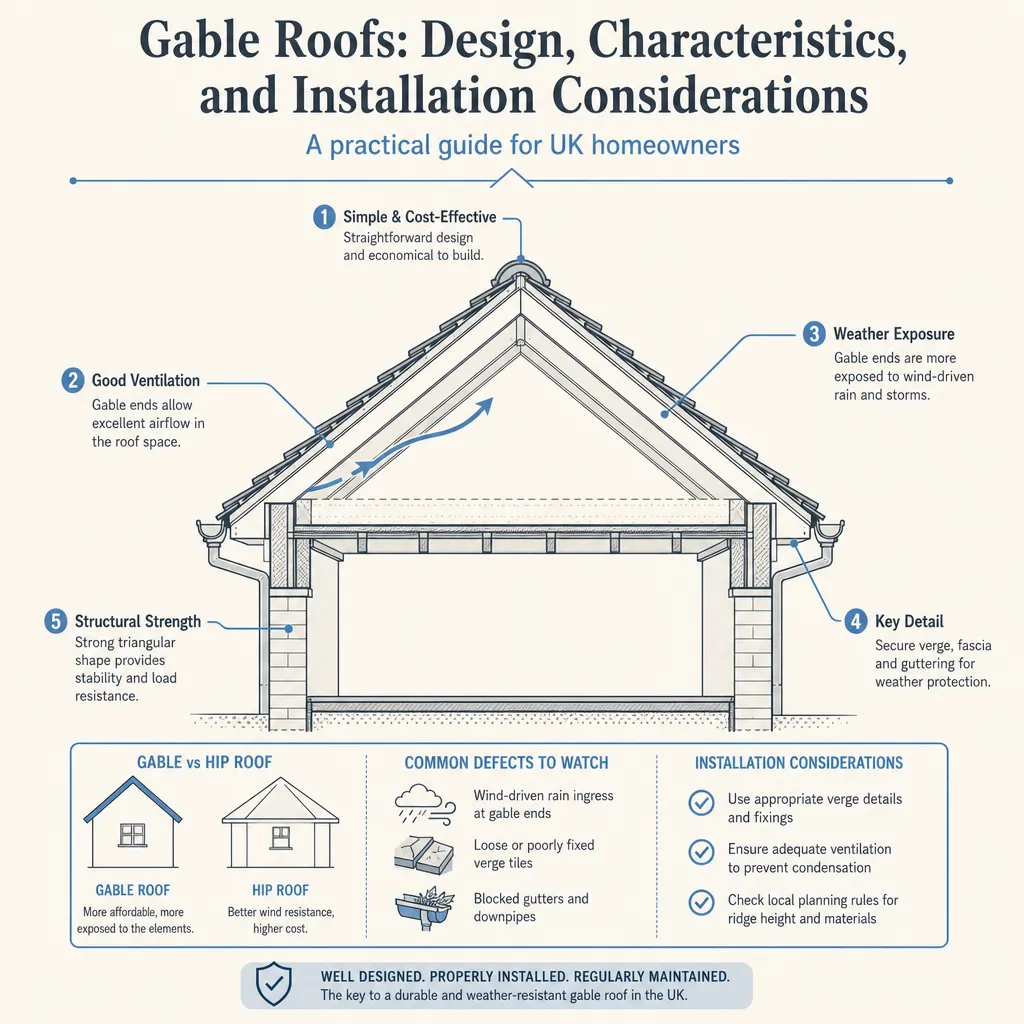
A gable roof has two sloping sides that meet at a central ridge, forming triangular gable ends. It is one of the most common roof forms in UK residential property, particularly on Victorian terraces, 1930s semis, and new-build houses. Gable roofs are relatively straightforward to build, but the exposed gable end walls require careful detailing to prevent water ingress and wind damage.
 Surveys & Inspections
Treatment and Prevention of Damp Problems in Homes
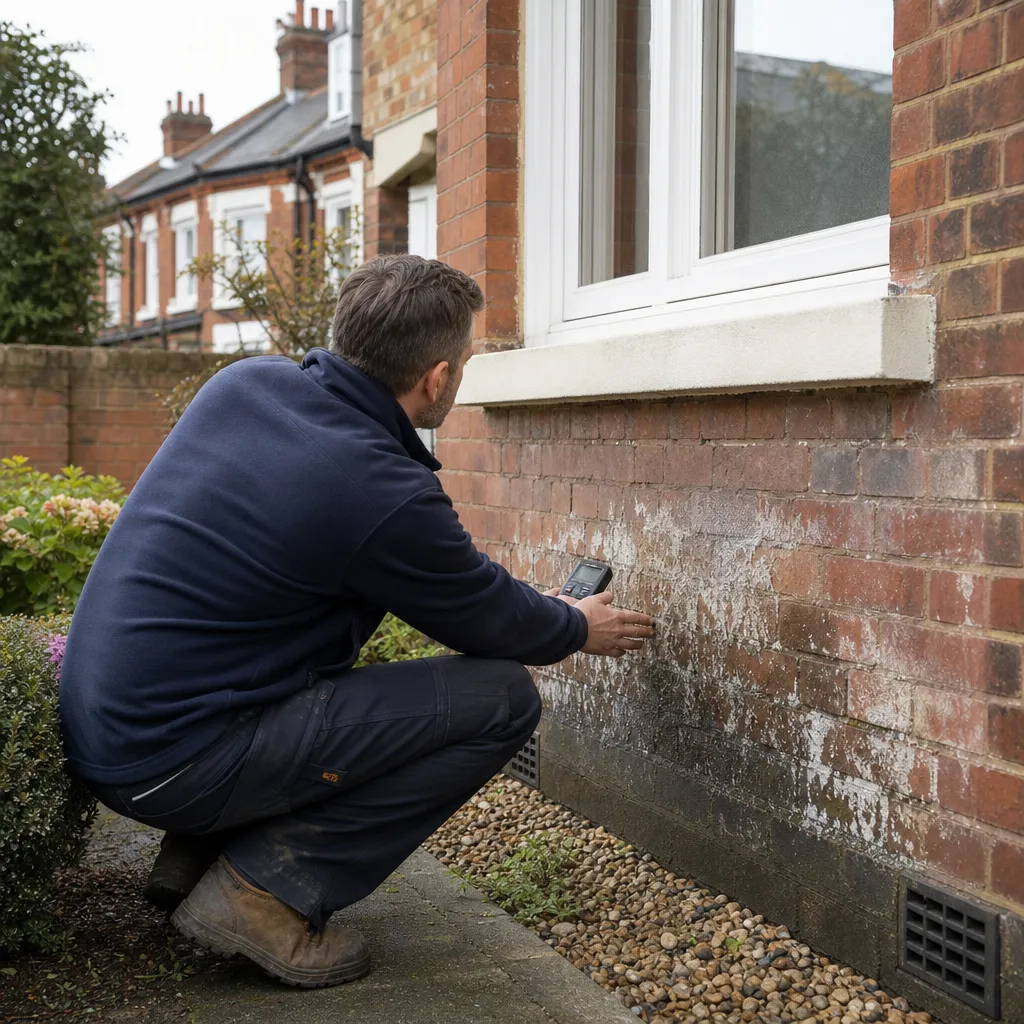
Damp in UK homes usually falls into three categories: rising damp (moisture drawn up through walls), penetrating damp (water entering through building defects), and condensation — the most common cause, particularly in post-war housing. Correctly identifying the type before treatment is essential; misdiagnosis leads to costly and ineffective remediation. A qualified surveyor should assess persistent or extensive damp before any work begins.
 Surveys & Inspections
Sewer Gas Odours in Homes: Causes, Health Risks, and Solutions
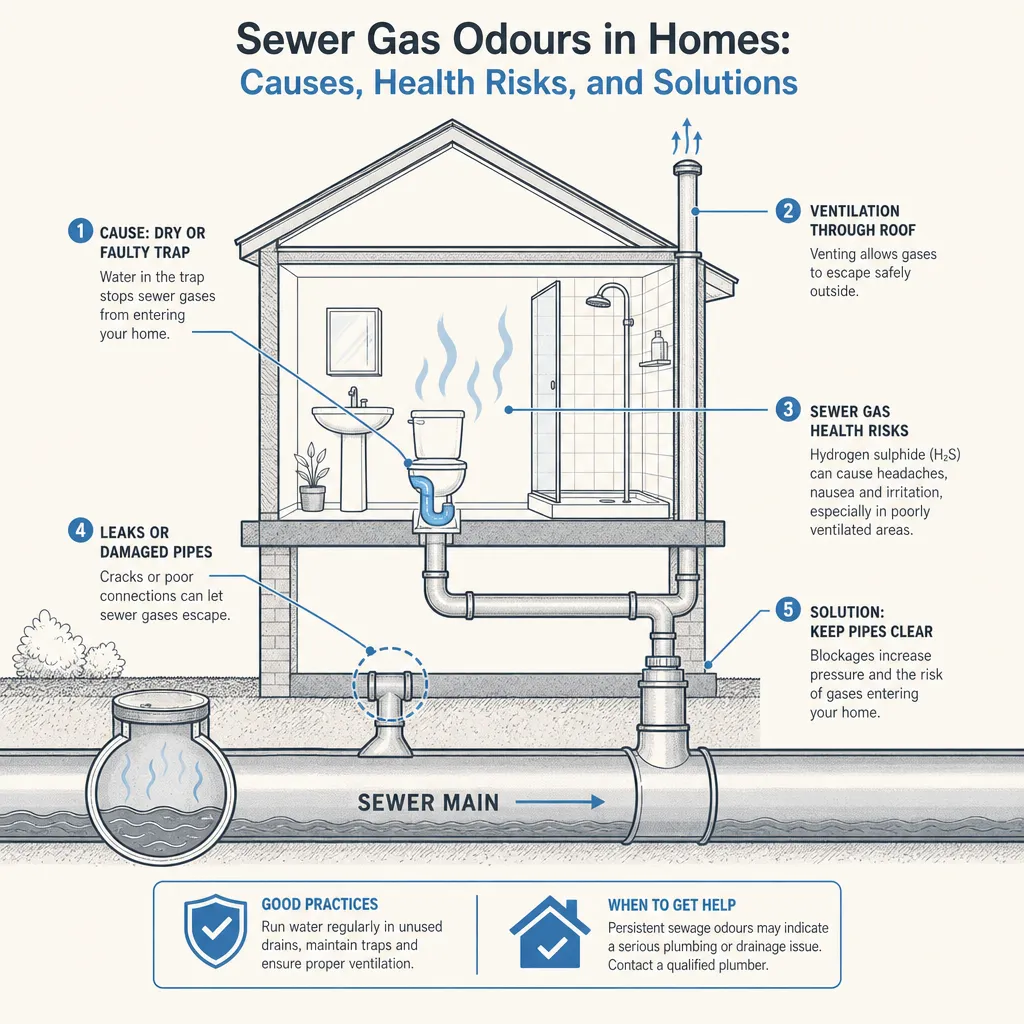
Sewer gas odours in homes are most often caused by dried drain traps, cracked underground pipes, or a blocked soil vent pipe. Refilling evaporated traps resolves many cases. If the smell persists or spreads to multiple rooms, a CCTV drain survey is needed to identify the drainage defect. Hydrogen sulphide and methane in sewer gas present health and fire risks at elevated concentrations.
 Surveys & Inspections
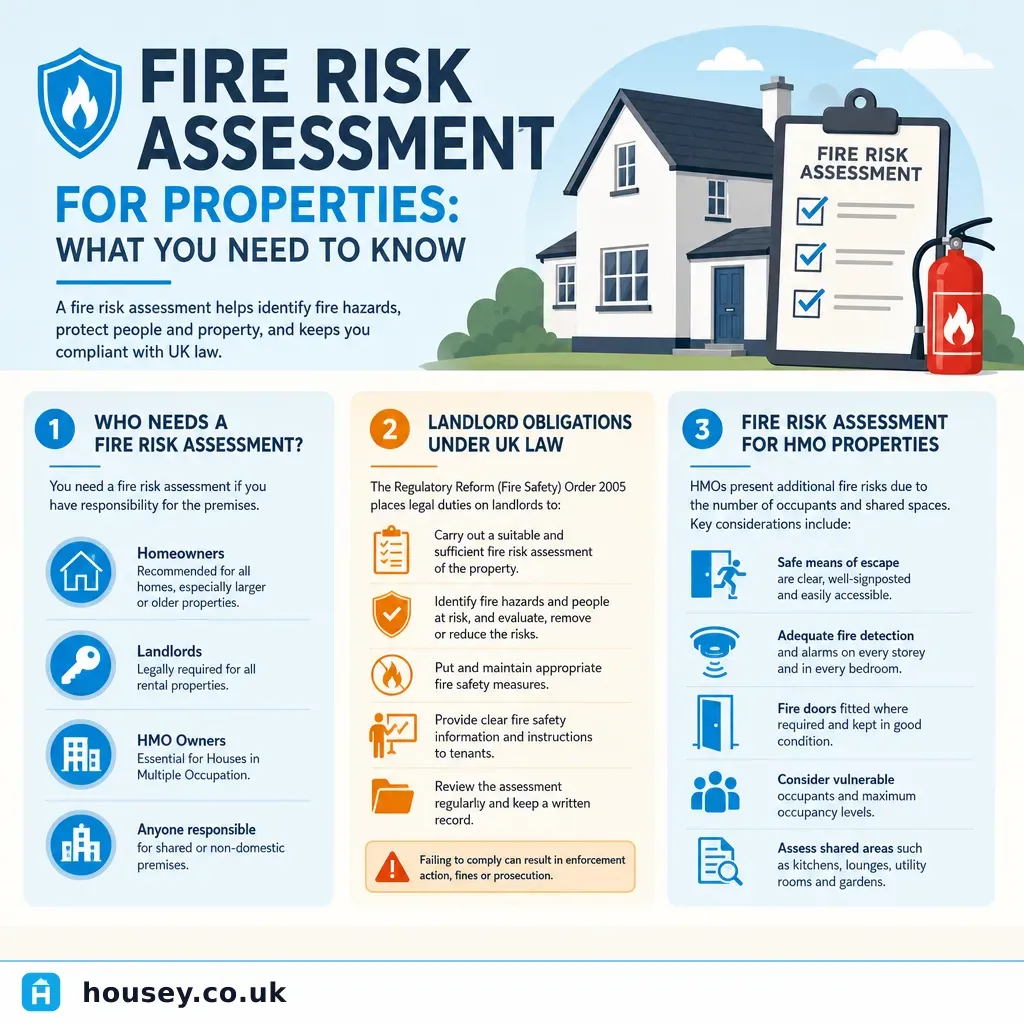
Fire Risk Assessment for Properties: What You Need to Know
Most non-domestic properties in England and Wales require a fire risk assessment under the Regulatory Reform (Fire Safety) Order 2005. Landlords of licensed HMOs and managers of residential blocks must also assess common areas. A competent, certified assessor should carry out the review, document findings, and recommend actions. Assessments must be reviewed after any significant change to the building.
 Surveys & Inspections
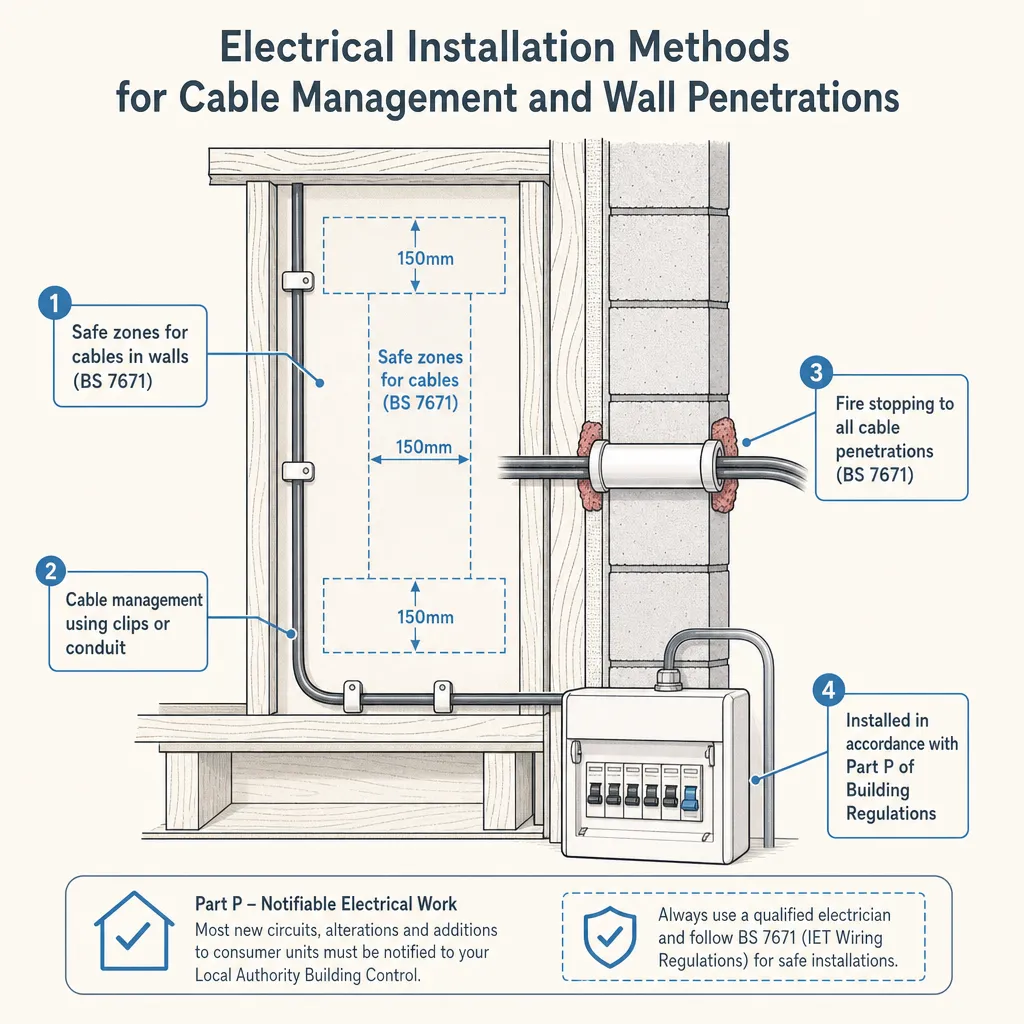
Electrical installation methods for cable management and wall penetrations
Cables concealed in walls must follow safe-zone routes or be protected by earthed metallic conduit under BS 7671 Regulation 522.6.6. Penetrations through fire-compartment boundaries require intumescent fire-stopping under Approved Document B. All notifiable electrical work — including new circuits, consumer unit replacements, and work in bathrooms and kitchens — must be carried out by a Part P registered electrician or notified to Building Control.
 Surveys & Inspections
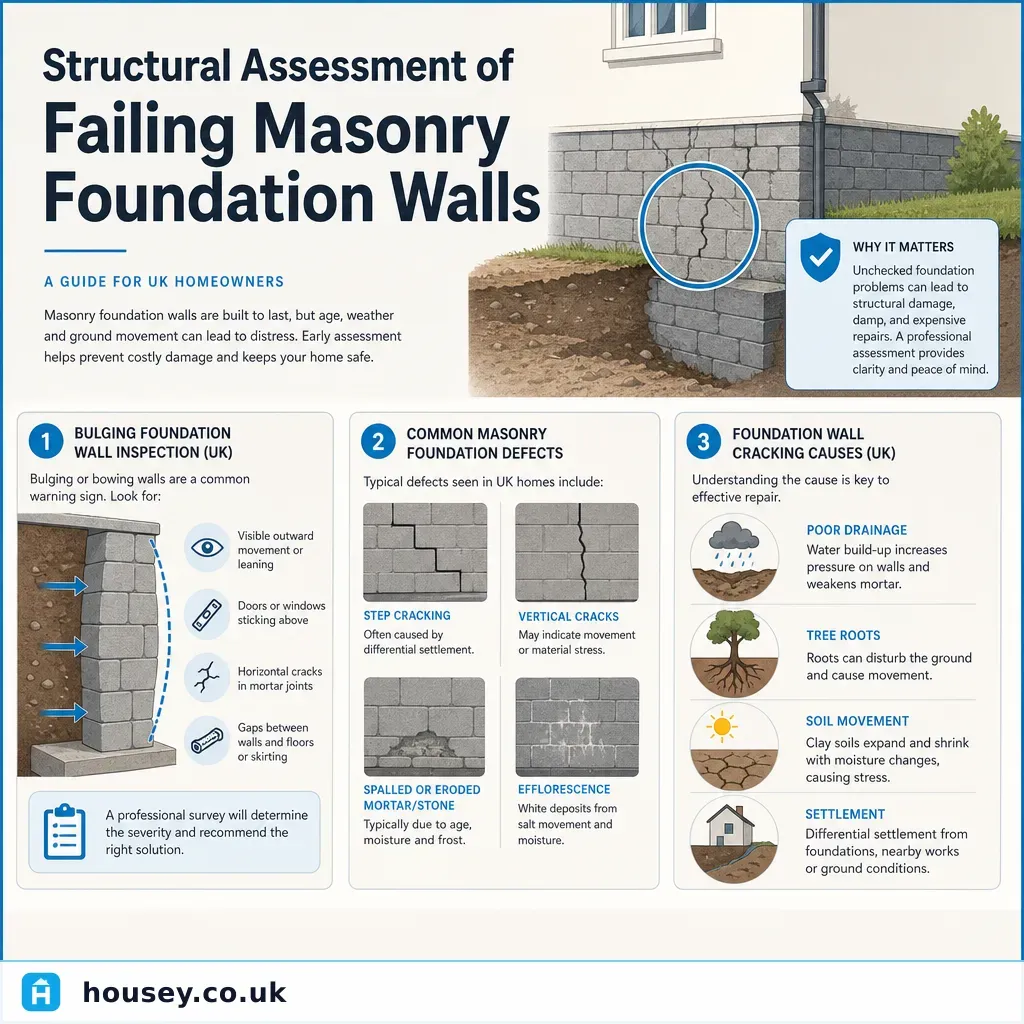
Structural Assessment of Failing Masonry Foundation Walls
Failing masonry foundation walls — showing bulging, progressive cracking, or outward movement — require assessment by a chartered structural engineer or RICS Level 3 surveyor. Causes include mortar decay, lateral earth pressure, wall-tie corrosion, and sub-floor moisture. Assessment type depends on severity: a RICS Level 3 survey is the appropriate starting point; targeted structural engineering input follows where defects are confirmed or complex.
 Surveys & Inspections
Essential Factors for Property Buyers to Consider Before Exchange
Before exchanging contracts on a UK property, buyers should commission an appropriate RICS survey, review the property's legal title and search results, check the planning history, assess structural condition, and confirm the EPC rating. Skipping these steps can leave you liable for expensive defects or legal complications after completion, when withdrawing from the purchase without financial loss is no longer possible.