Knowledge Base
Property advice that actually helps
Researched, UK-specific guides for every stage of homeownership — from buying and surveys to retrofit, planning and major works.
 Surveys & Inspections
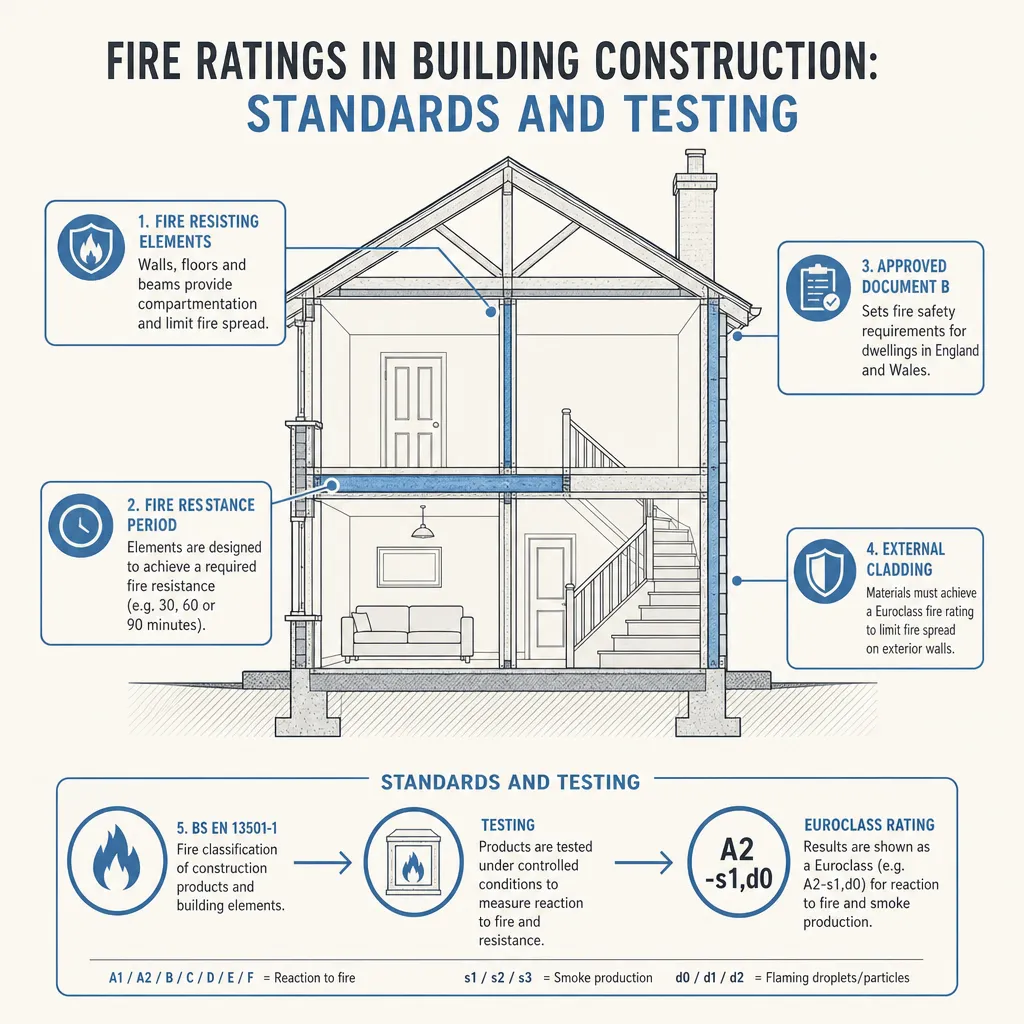
Fire Ratings in Building Construction: Standards and Testing
In UK construction, fire ratings describe how long a structural element or building assembly maintains load-bearing capacity, integrity, and insulation when exposed to a standard fire test — typically 30, 60, 90, or 120 minutes. Requirements are set by Approved Document B and enforced by building control. Reaction to fire (Euroclass ratings) separately classifies how materials ignite and spread flame.
 Surveys & Inspections
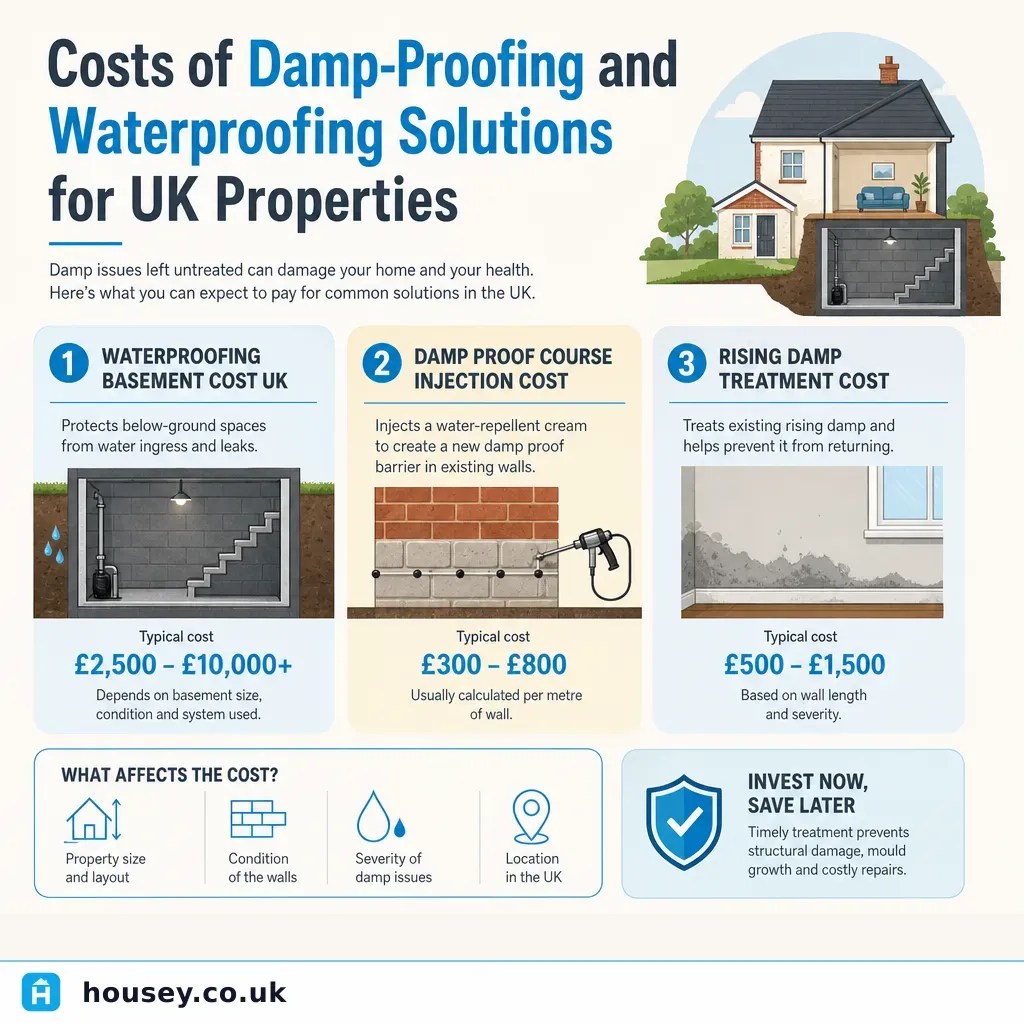
Costs of Damp-Proofing and Waterproofing Solutions for UK Properties
Damp-proofing costs vary by treatment: chemical DPC injection typically costs £300–£800 for a standard terraced house, while internal basement tanking runs £50–£150 per m² and cavity drain membrane systems £30–£80 per m². Always commission an independent survey before treatment — the wrong diagnosis leads to the wrong fix.
 Surveys & Inspections
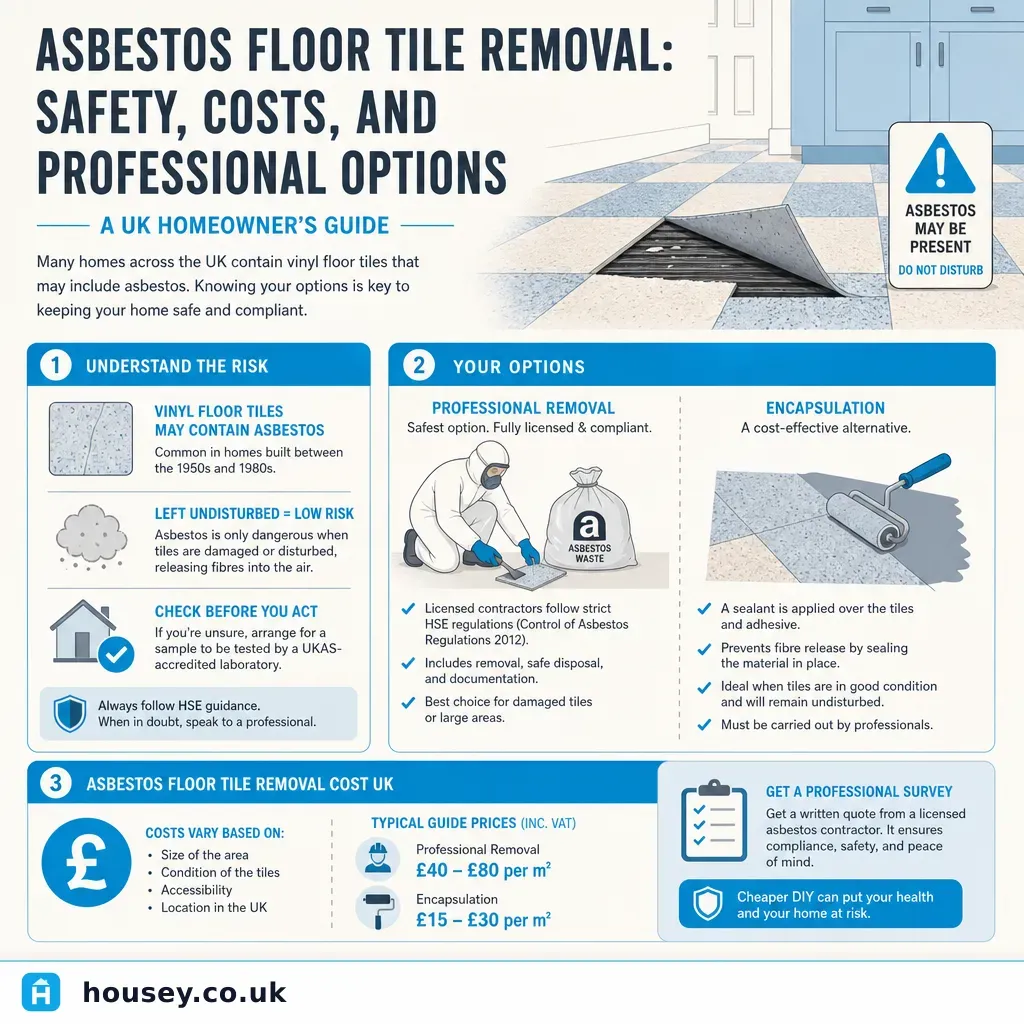
Asbestos Floor Tile Removal: Safety, Costs, and Professional Options
Asbestos floor tiles — common in UK homes built between the 1950s and late 1980s — must not be disturbed without a professional assessment. A refurbishment asbestos survey should confirm whether tiles and adhesive contain asbestos before any removal work. Licensed or trained contractors carry out removal under the Control of Asbestos Regulations 2012; indicative removal costs range from £800 to £3,000 or more.
 Surveys & Inspections
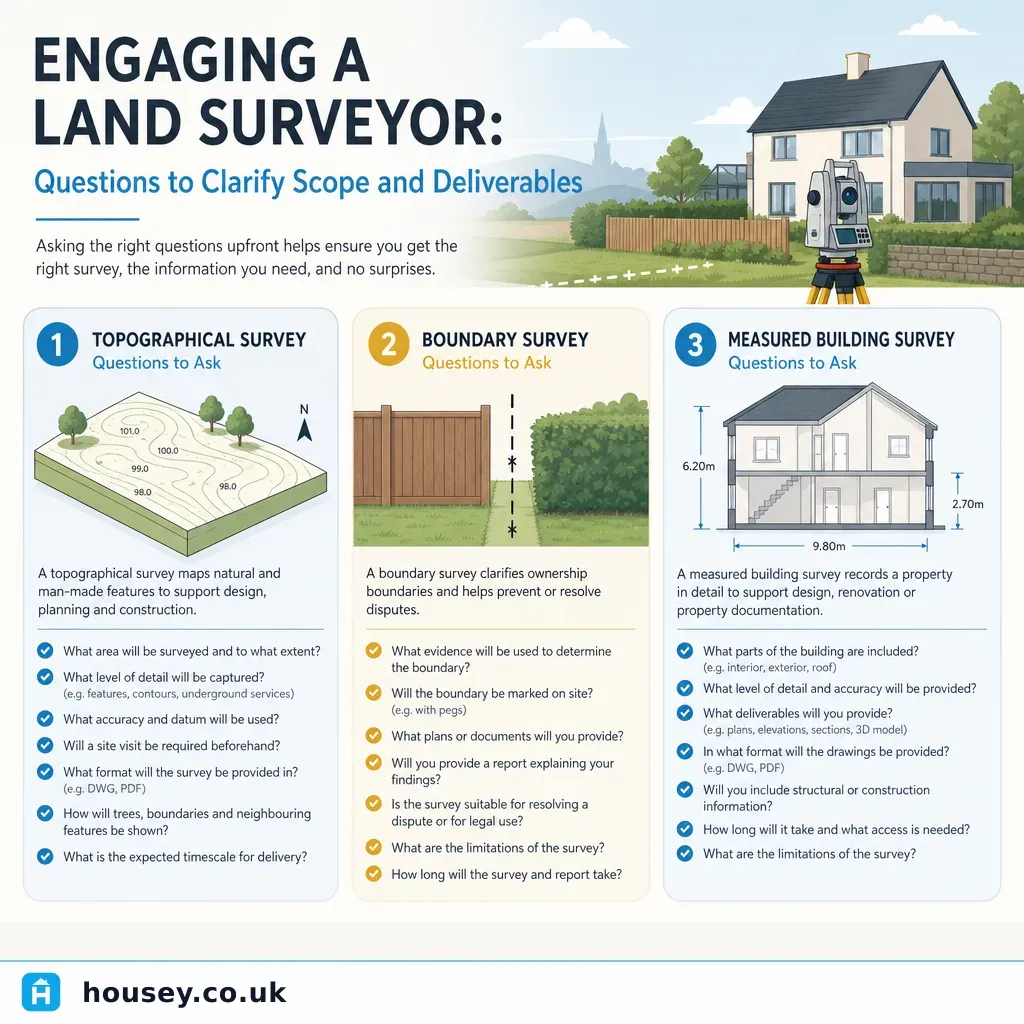
Engaging a Land Surveyor: Questions to Clarify Scope and Deliverables
When engaging a land surveyor, clarify exactly which type of survey you need — topographical, boundary, or measured building — before agreeing a fee. Confirm the accuracy standard, coordinate system, and file formats you will receive, and ensure the surveyor holds relevant professional membership such as RICS or CICES. A clear written scope of works before fieldwork begins prevents disputes over deliverables.
 Surveys & Inspections
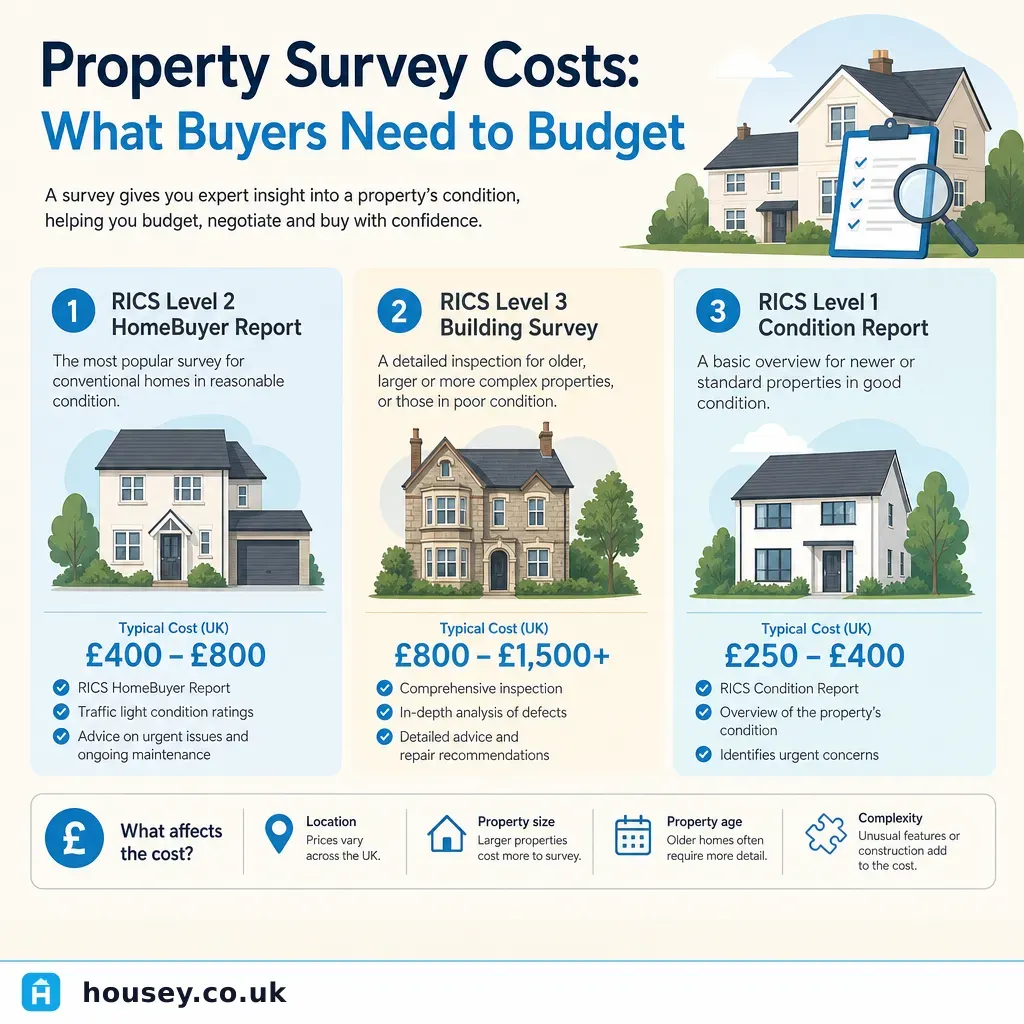
Property Survey Costs: What Buyers Need to Budget
A RICS Level 1 survey typically costs £300–£500, a Level 2 Home Survey £400–£900, and a Level 3 Building Survey £600–£1,500 or more. Costs depend on property size, age, and location. Always obtain at least three quotes and confirm what the fee covers before instructing a surveyor.
 Surveys & Inspections
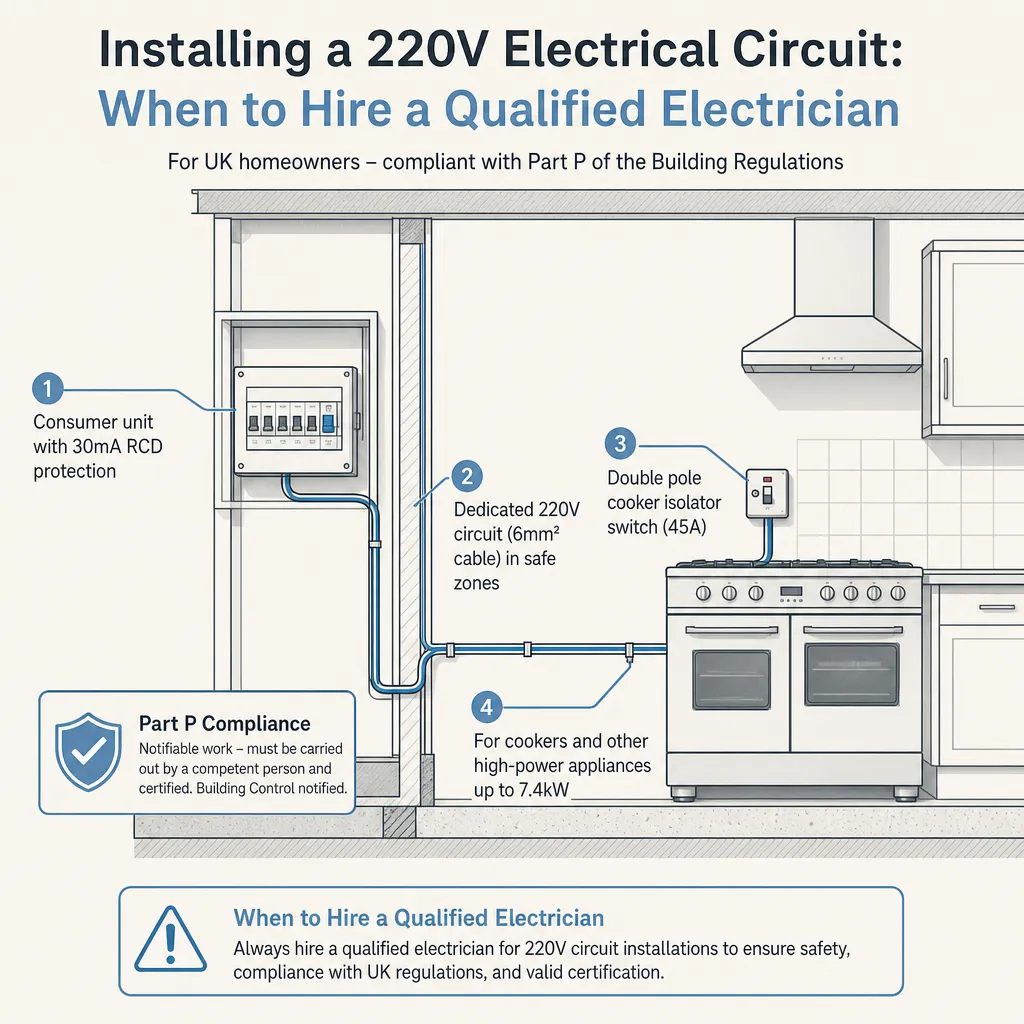
Installing a 220V Electrical Circuit: When to Hire a Qualified Electrician
In the UK, domestic mains supply is 230V — not 220V — and any dedicated high-current circuit for a cooker, shower, or EV charger is notifiable work under Part P of the Building Regulations. All new circuits must be installed or certified by a registered competent person (NICEIC, NAPIT, or ELECSA). DIY installation without certification is non-compliant and may invalidate home insurance.
 Surveys & Inspections
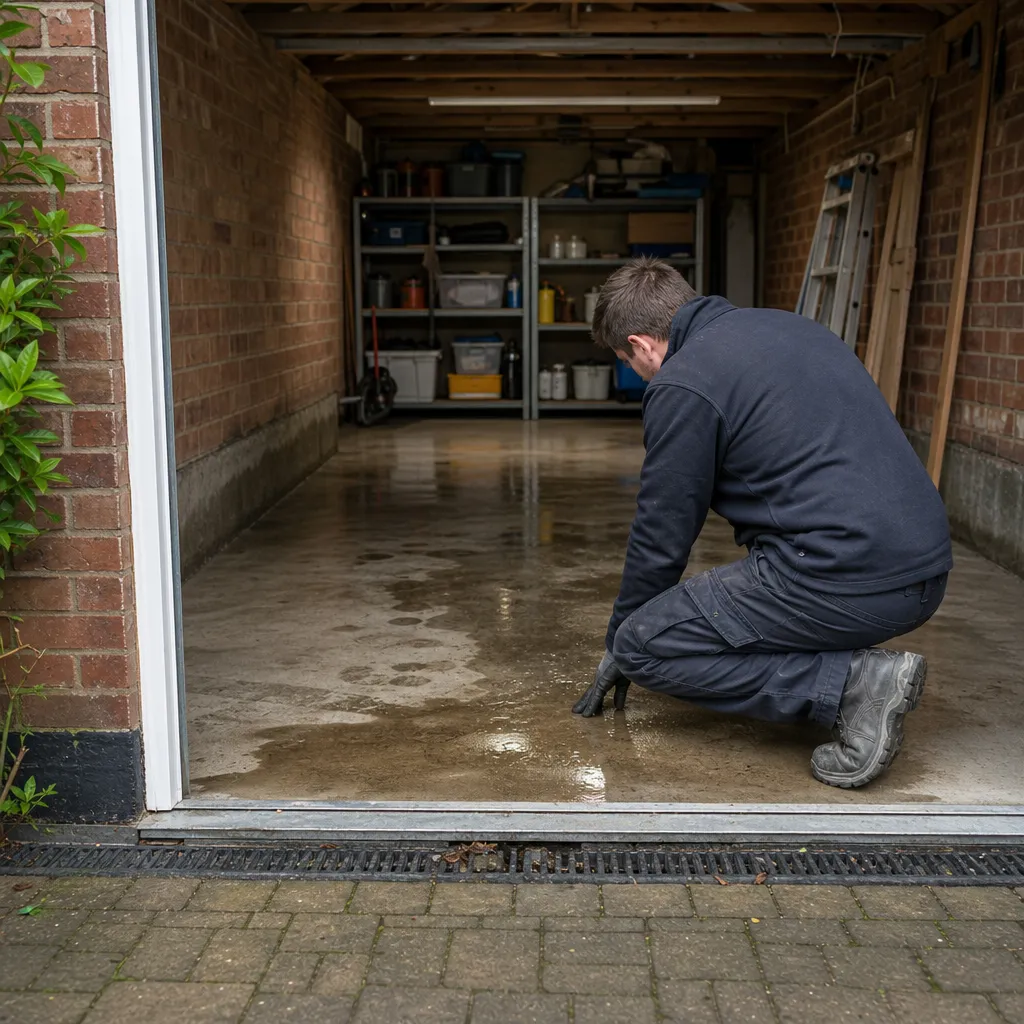
Fixing a Wet Garage Floor: Moisture Problems and Solutions
A wet garage floor in the UK is most commonly caused by condensation, rising damp through an unprotected concrete slab, or lateral groundwater ingress. The polythene sheet test distinguishes condensation from rising damp: tape a square to the floor for 48 hours — moisture beneath the sheet means rising damp; moisture on top means condensation. Each cause requires a different treatment.
 Surveys & Inspections
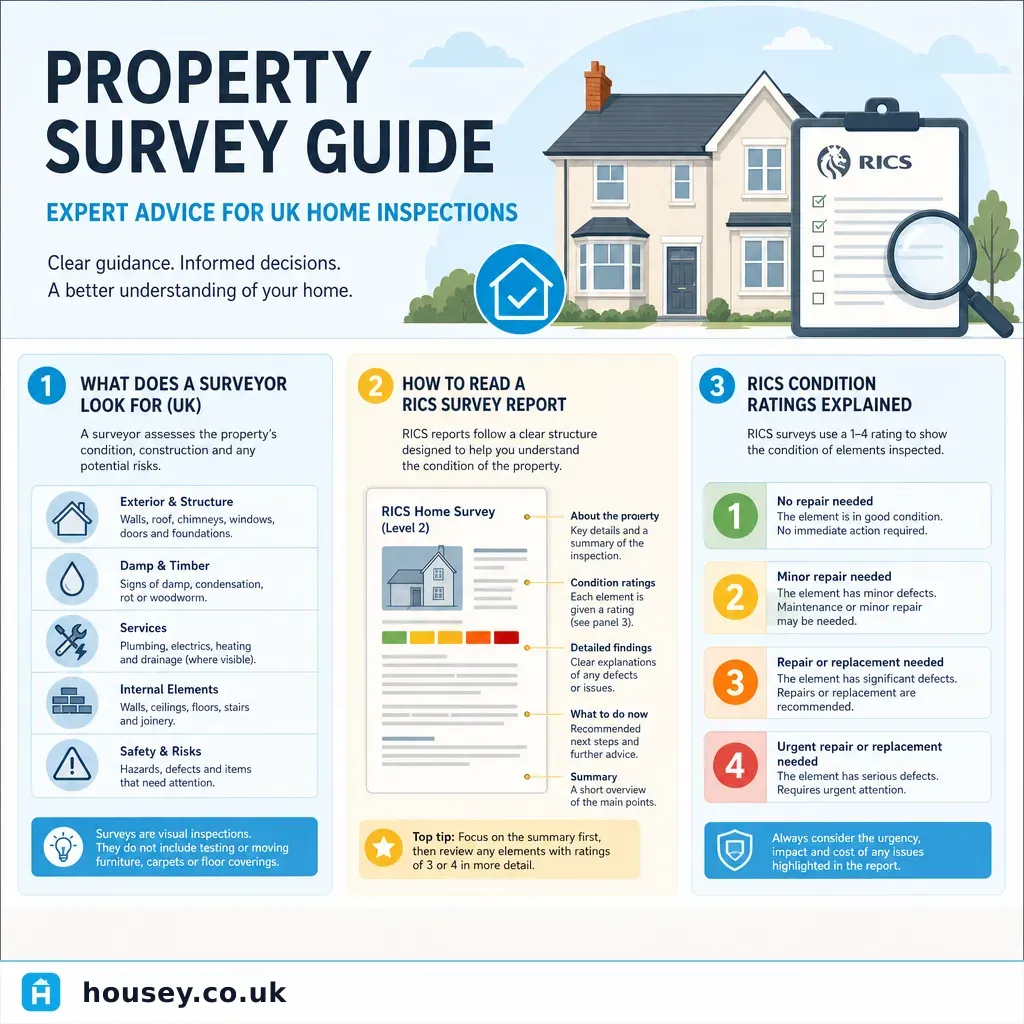
Property Survey Guide: Expert Advice for UK Home Inspections
Getting the most from a property survey means preparing the property and key documents before the inspection, understanding what a surveyor can and cannot access, and knowing how to respond when the report flags defects. Commission your survey before exchange — once contracts are exchanged you are legally committed to the purchase and negotiation becomes significantly harder.
 Surveys & Inspections
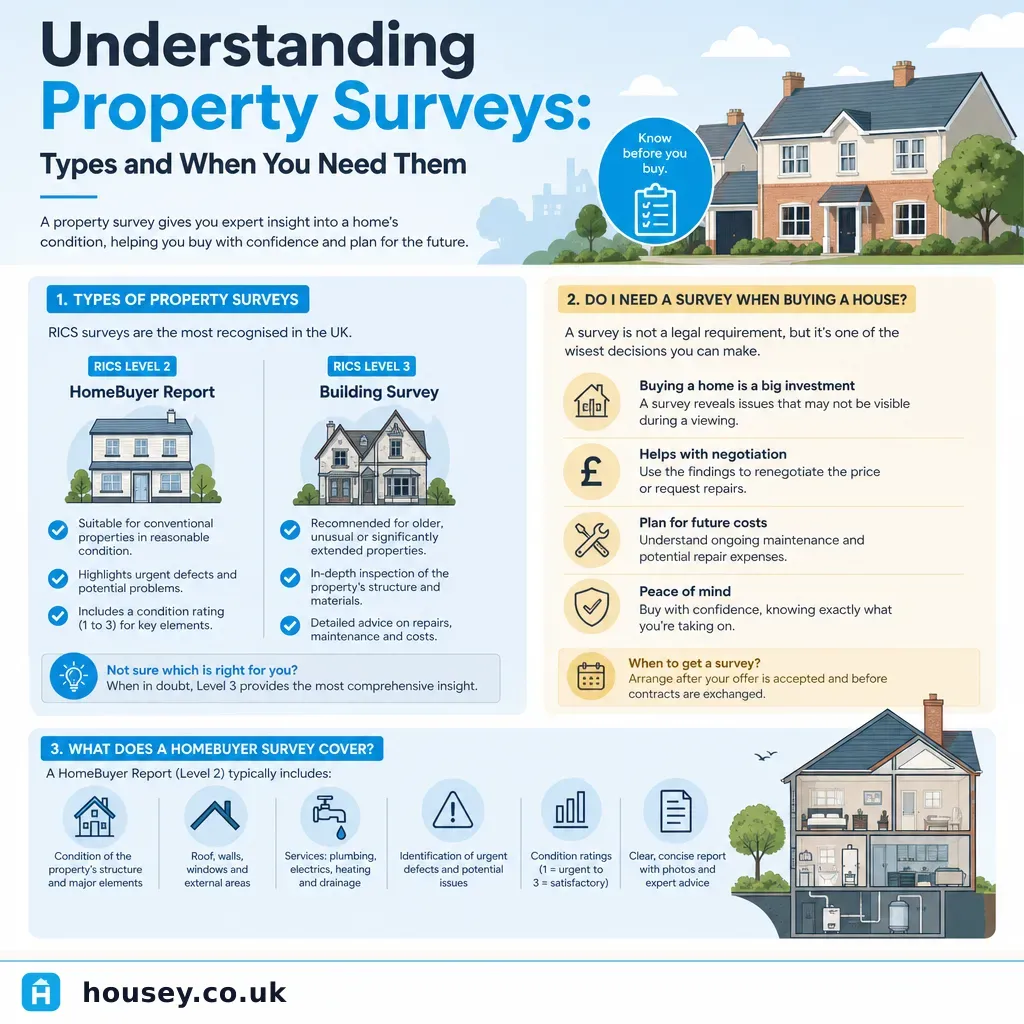
Understanding Property Surveys: Types and When You Need Them
The three main RICS survey types are the Level 1 Condition Report (for standard properties in good condition), the Level 2 Home Survey (conventional homes in reasonable condition), and the Level 3 Building Survey (older, unusual, or defective properties). The right choice depends on the property's age, construction type, condition, and how much detail you need before exchange.
 Surveys & Inspections
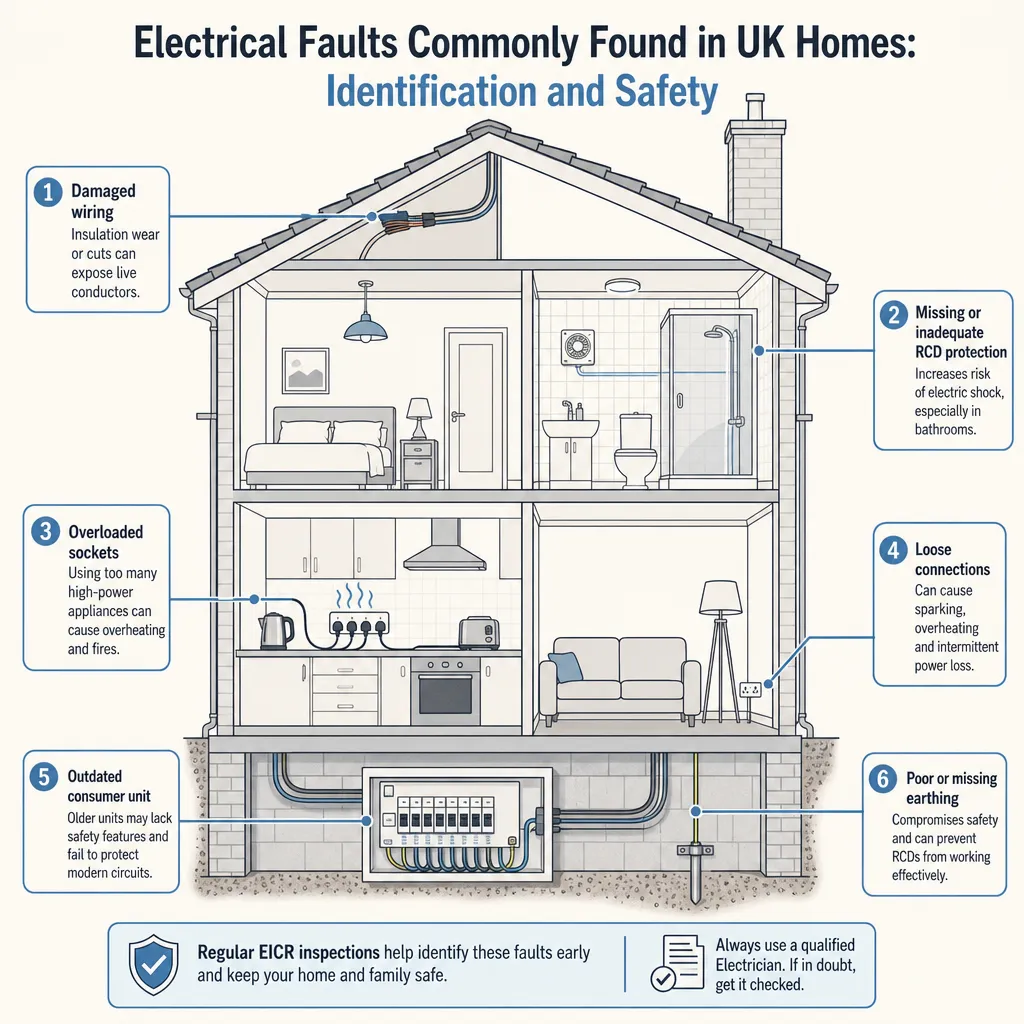
Electrical Faults Commonly Found in UK Homes: Identification and Safety
Common electrical faults in UK homes include deteriorating wiring, overloaded circuits, faulty consumer units without RCD protection, loose socket connections, and unapproved DIY alterations. An Electrical Installation Condition Report (EICR) carried out by a registered electrician is the most reliable way to identify and prioritise these faults safely before they cause injury or fire.
 Surveys & Inspections
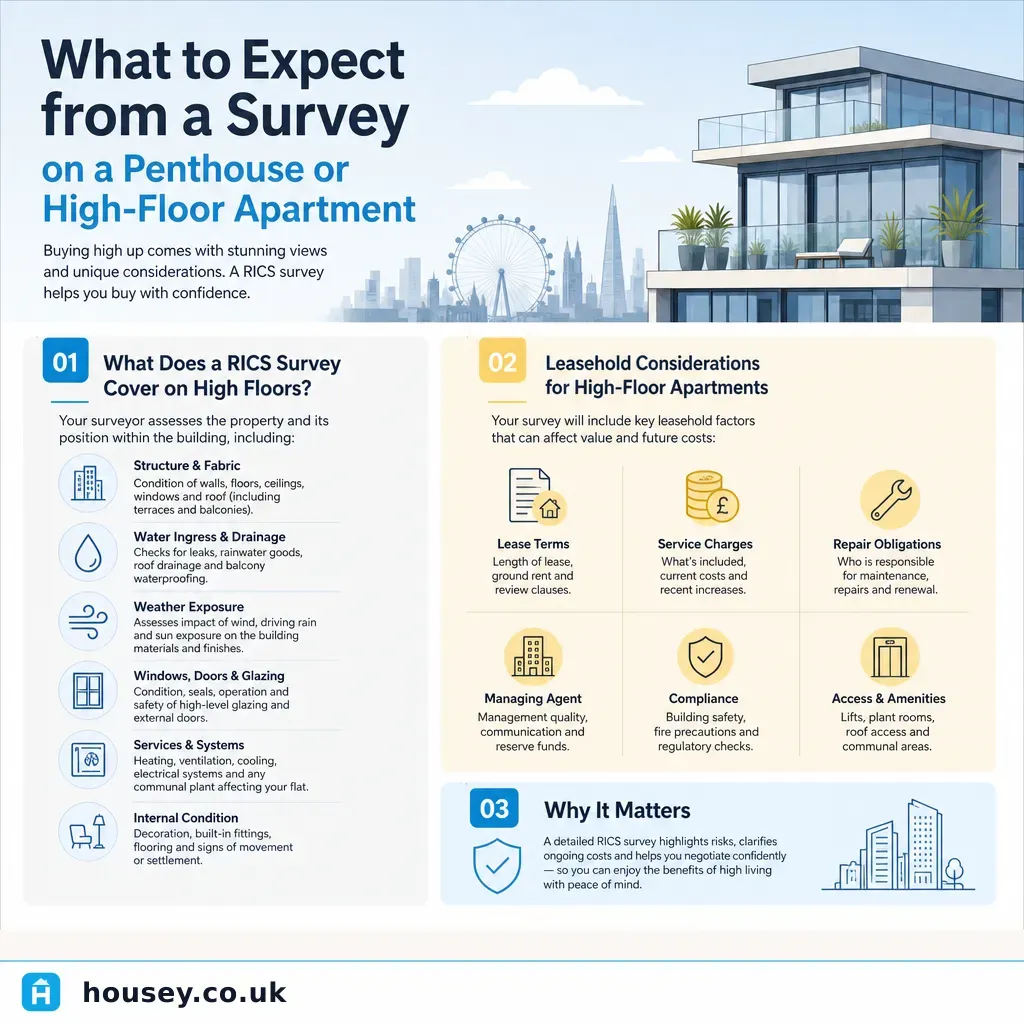
What to Expect from a Survey on a Penthouse or High-Floor Apartment
A RICS survey on a penthouse or high-floor apartment covers the demised flat only — not common parts or the wider building. Surveyors pay particular attention to the roof and waterproofing above, roof terrace condition, external wall integrity, and signs of water ingress or condensation. Access limitations at height are noted in the report and may prompt a follow-up inspection.
 Surveys & Inspections
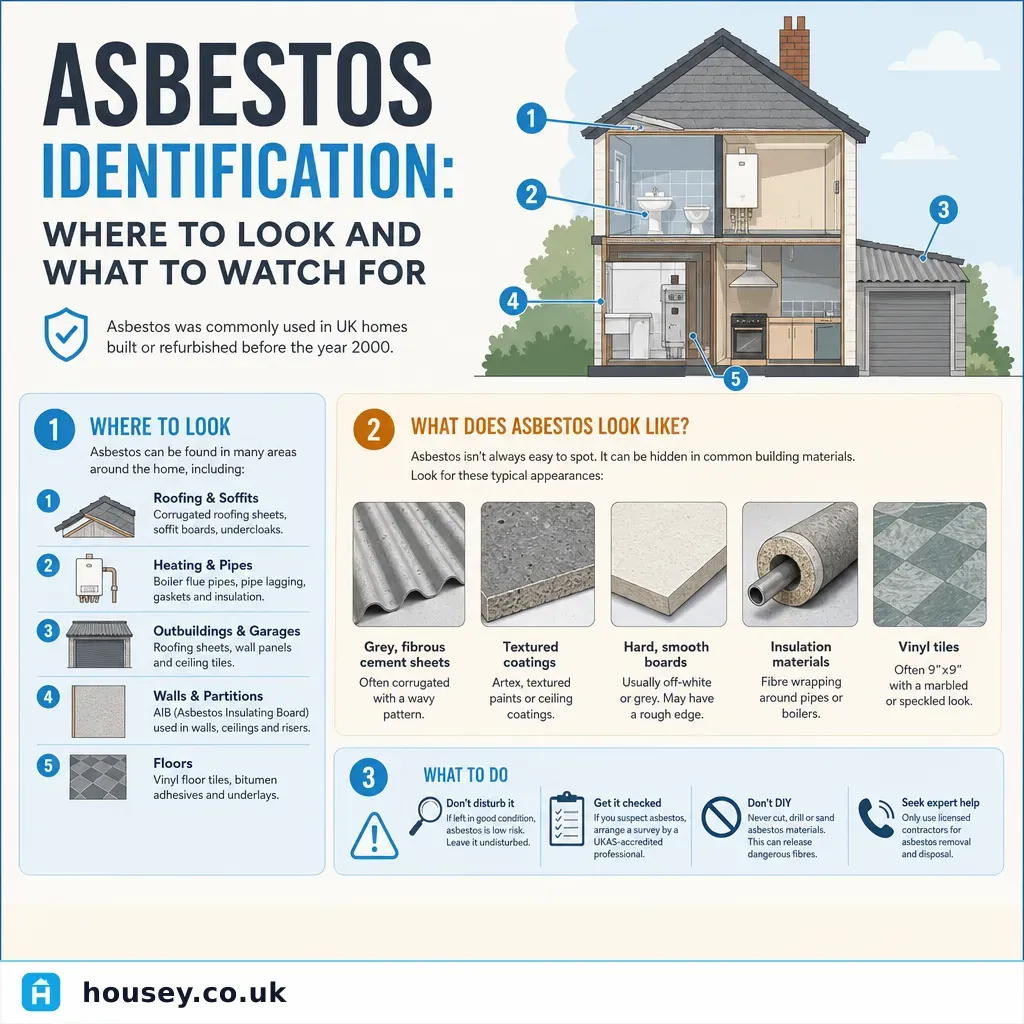
Asbestos Identification: Where to Look and What to Watch For
Asbestos can be present in dozens of locations in UK homes built before 2000, from textured ceiling coatings and floor tiles to pipe lagging and roof panels. You cannot identify asbestos-containing materials by sight alone. If you suspect any material may contain asbestos, do not disturb it—arrange a professional asbestos survey for a definitive result.