Knowledge Base
Property advice that actually helps
Researched, UK-specific guides for every stage of homeownership — from buying and surveys to retrofit, planning and major works.
 Surveys & Inspections
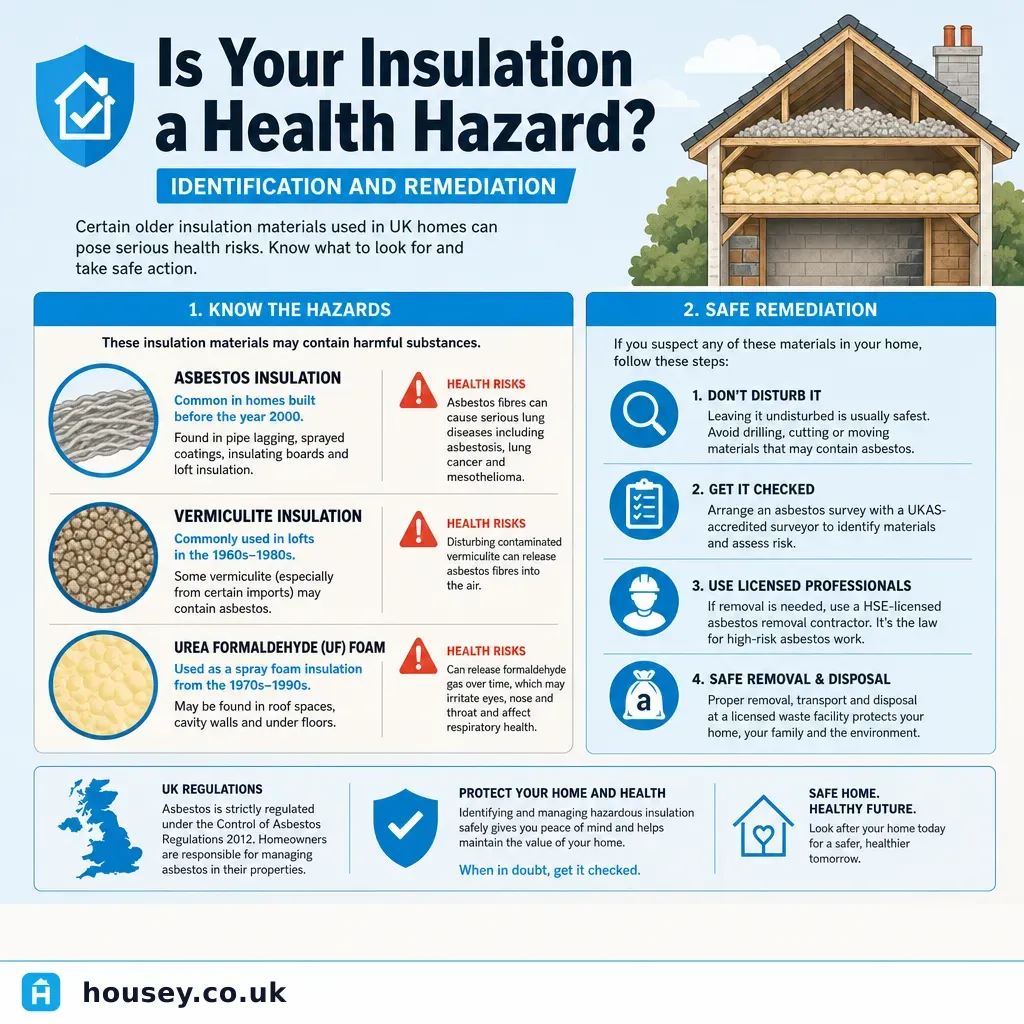
Is Your Insulation a Health Hazard? Identification and Remediation
Some insulation materials in pre-2000 UK homes may pose genuine health risks. Asbestos-containing insulation, urea formaldehyde foam, and pre-1990 vermiculite loft insulation are the main concerns. Do not disturb any suspected material without a professional assessment. An accredited asbestos survey is the recommended first step before planned works in any property built before 2000.
 Surveys & Inspections
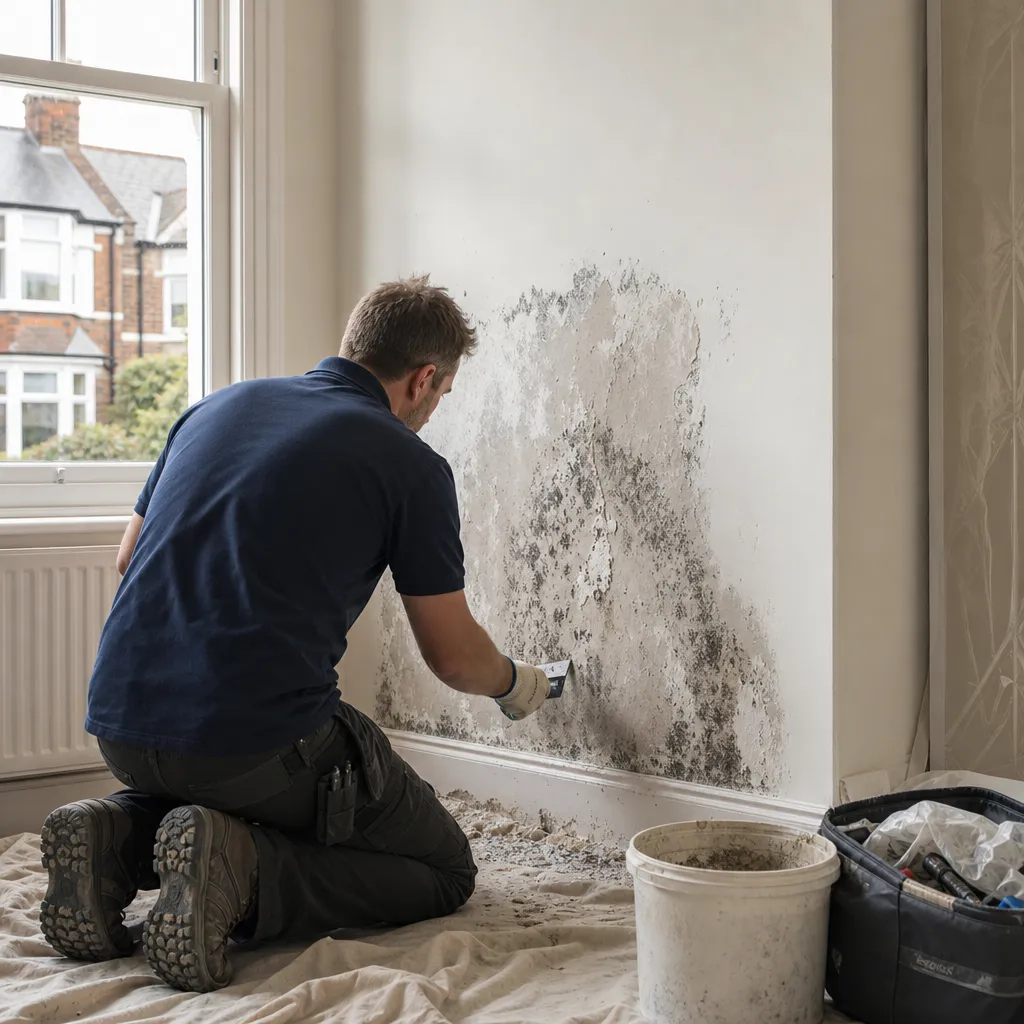
Treating Mould Contamination in Interior Walls
Mould on interior walls is caused by excess moisture — from condensation, penetrating damp, rising damp, or a plumbing leak. Treat the surface with a fungicidal wash only after identifying and fixing the moisture source. Small patches can be managed with careful DIY; patches over 1 m², or mould that recurs despite treatment, warrant professional investigation.
 Surveys & Inspections
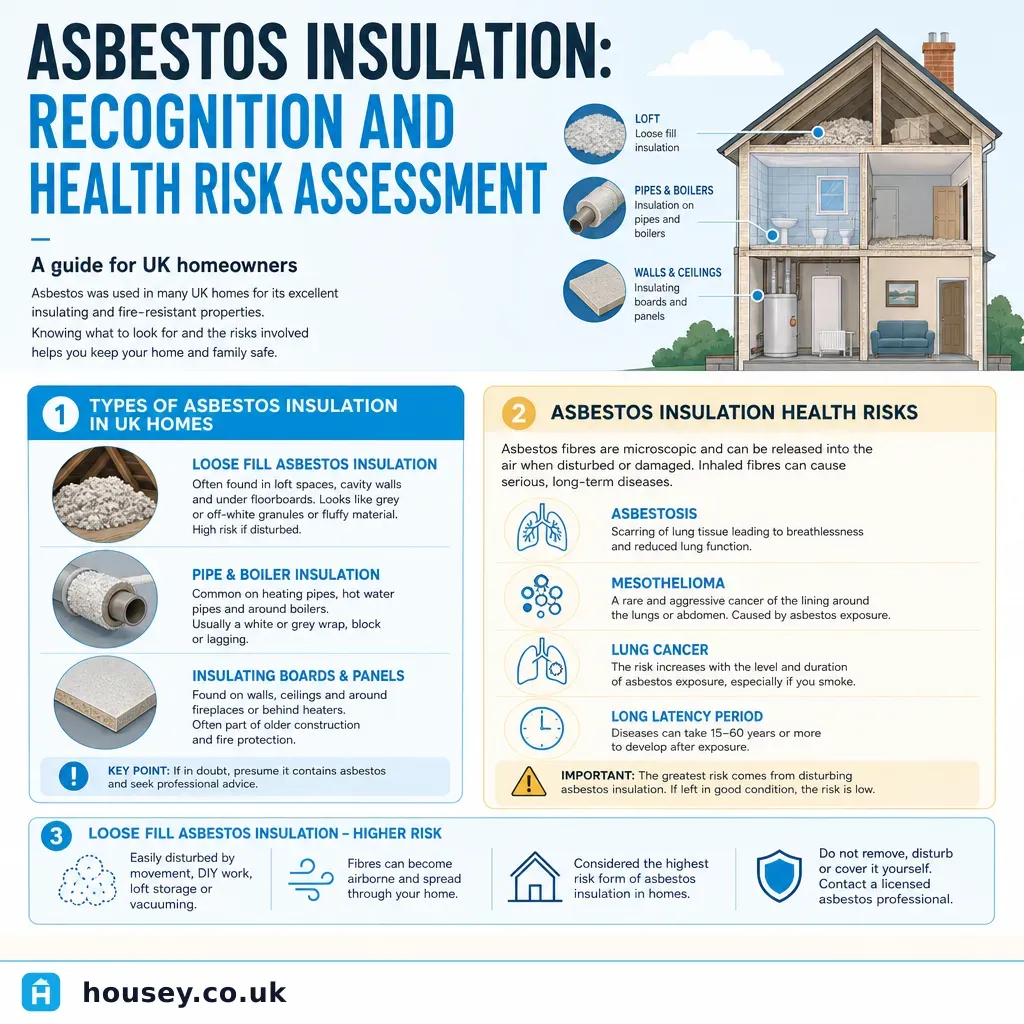
Asbestos Insulation: Recognition and Health Risk Assessment
Asbestos insulation in UK homes often appears as loose-fill loft insulation, pipe lagging, or sprayed coatings. Properties built before 2000 are most at risk. Visual inspection alone cannot confirm asbestos—only laboratory analysis of a sample collected by a qualified professional provides a definitive answer. If in doubt, do not disturb the material and arrange a professional survey.
 Surveys & Inspections
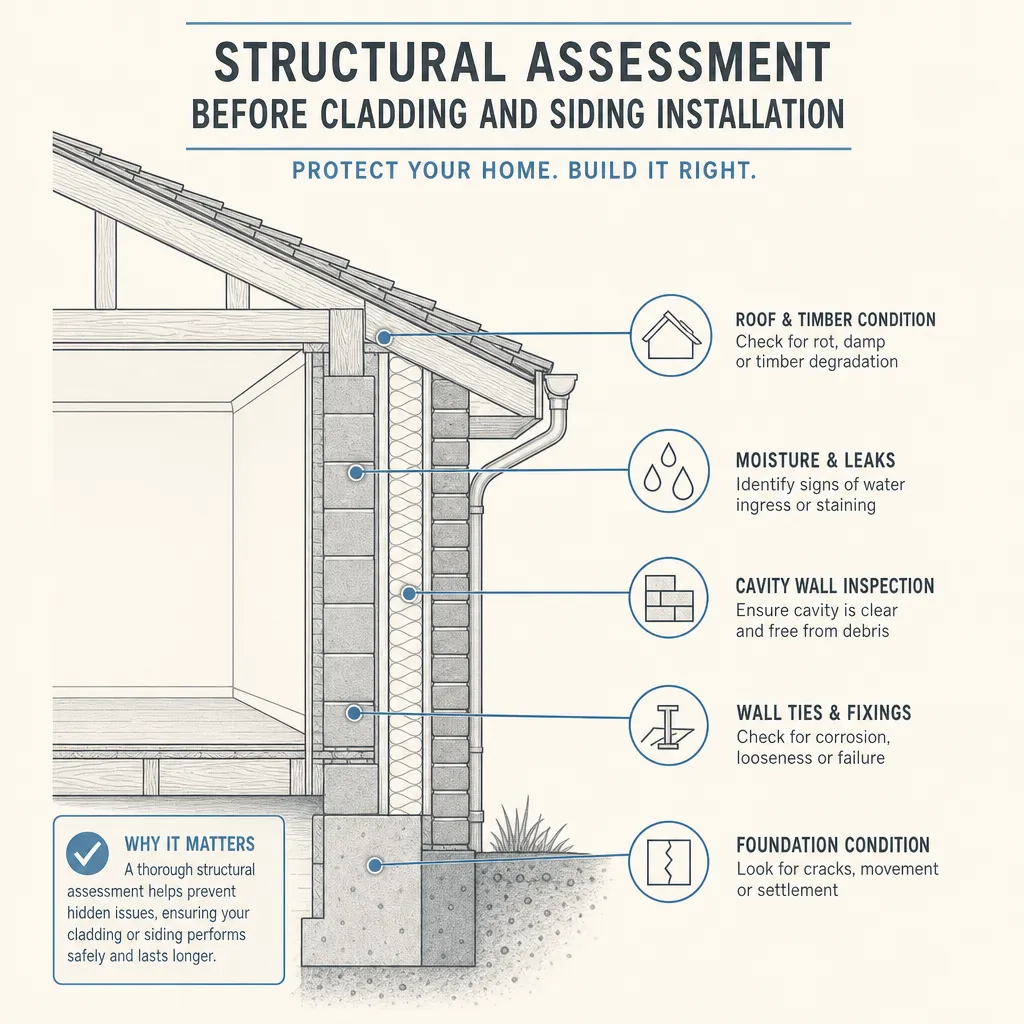
Structural Assessment Before Cladding and Siding Installation
Before installing external cladding or siding, a structural or specific defect assessment is needed to identify hidden timber decay, damp penetration, cavity wall defects, and any load-bearing implications. Proceeding without one risks sealing in moisture or undetected defects, which become significantly more costly to address once new cladding is fixed in place.
 Surveys & Inspections
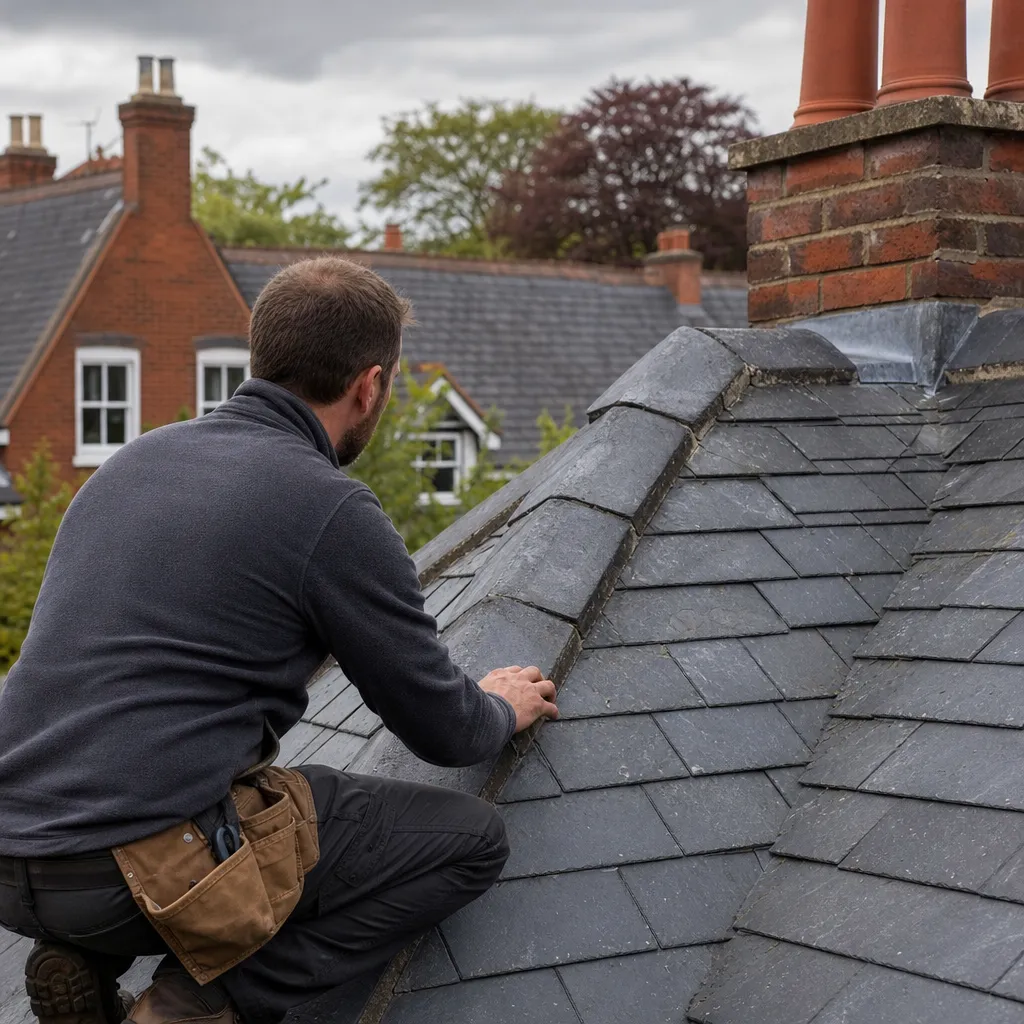
Maintaining slate roofs: essential care and upkeep guidance
A well-maintained natural slate roof can last 80–150 years, but it relies on regular inspections, prompt replacement of slipped or cracked slates, clear gutters, and sound lead flashings. Most maintenance involves visual checks from ground level twice a year, with a professional inspection recommended every five years or after severe weather. Never access the roof yourself — instruct a qualified roofer.
 Surveys & Inspections
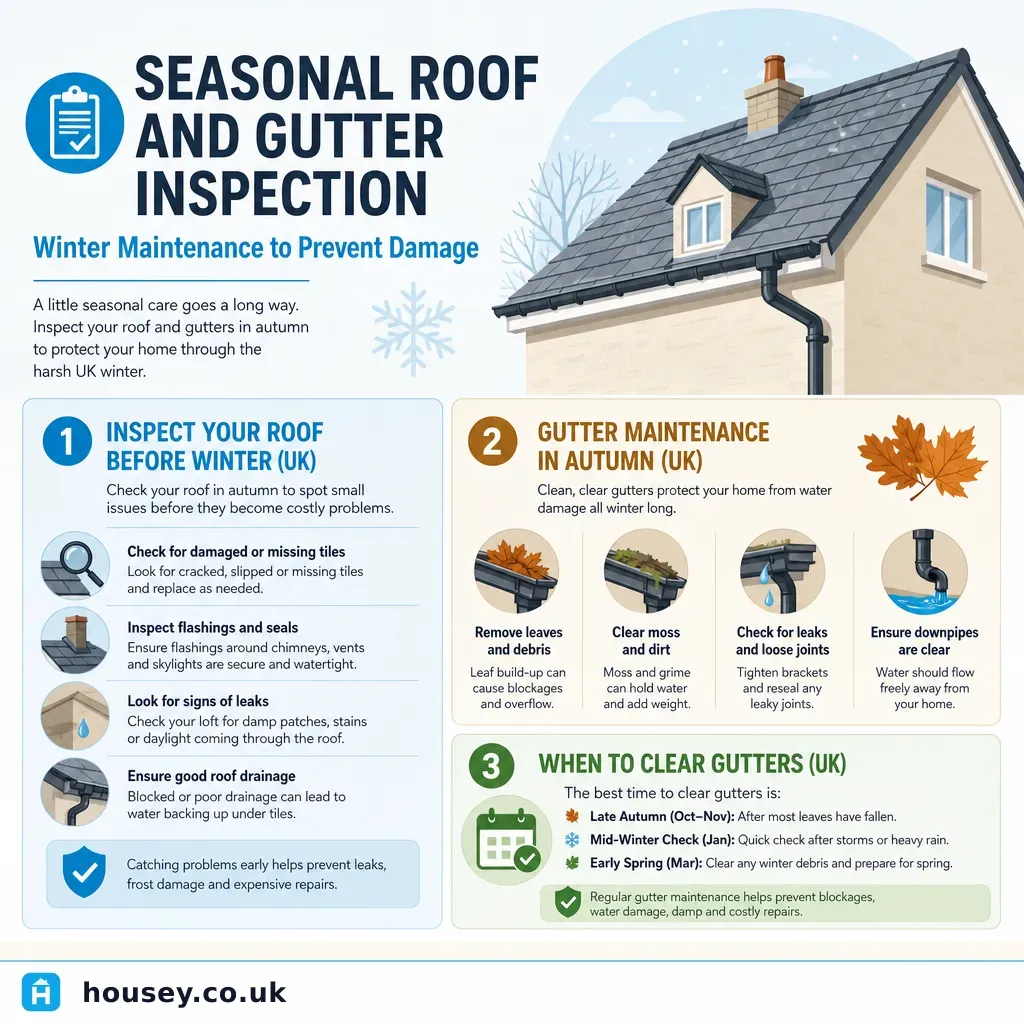
Seasonal Roof and Gutter Inspection: Winter Maintenance to Prevent Damage
UK roofs and gutters need inspection before and after winter to catch loose tiles, blocked gutters, and failed flashings before they cause water ingress. A visual check from ground level in autumn — followed by a professional roof survey if defects are visible — can prevent costly repairs to ceilings, roof timbers, and external walls.
 Surveys & Inspections
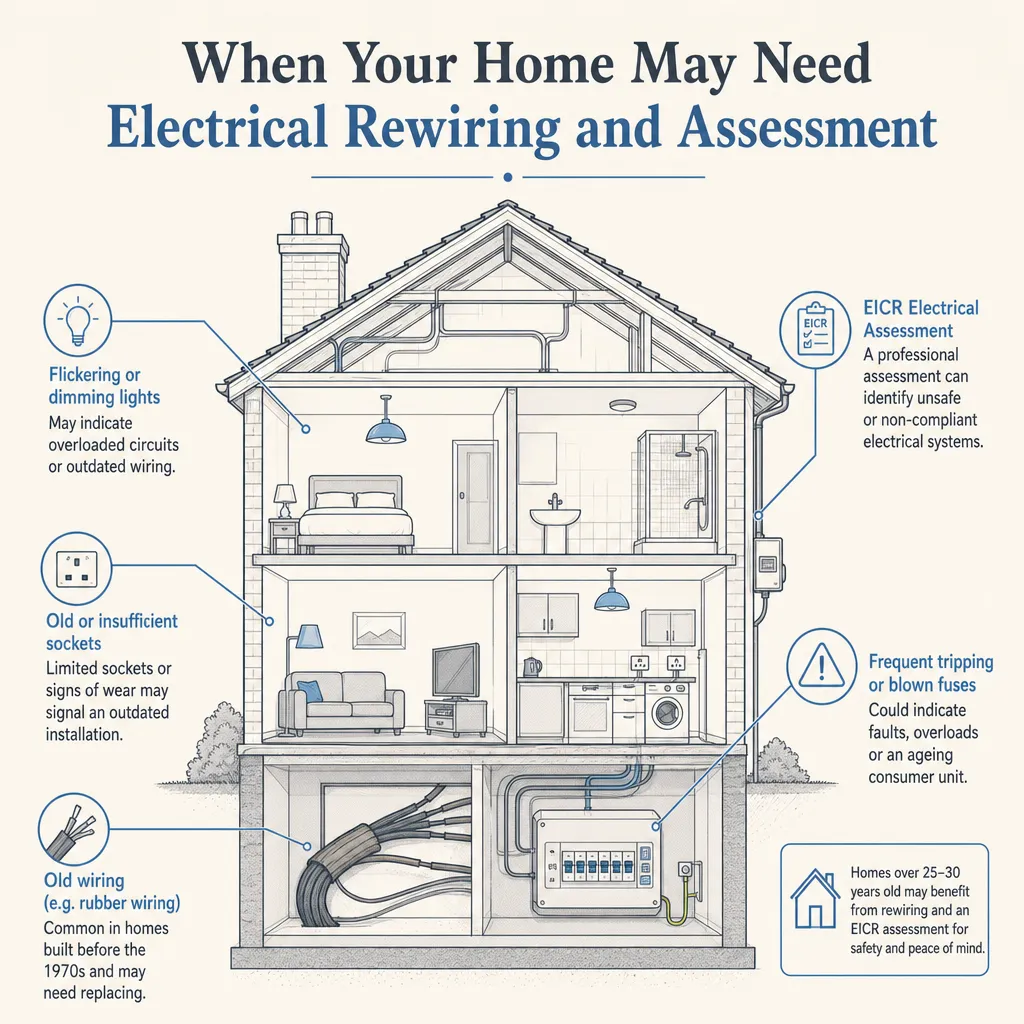
When Your Home May Need Electrical Rewiring and Assessment
A UK home may need rewiring if it has rubber-insulated or lead-sheathed cables, a cast-iron fuseboard, round-pin sockets, or single-core aluminium wiring. Most homes over 25 years old without a documented inspection should have an Electrical Installation Condition Report (EICR) carried out by a NICEIC or NAPIT-registered electrician to determine whether rewiring is required.
 Surveys & Inspections
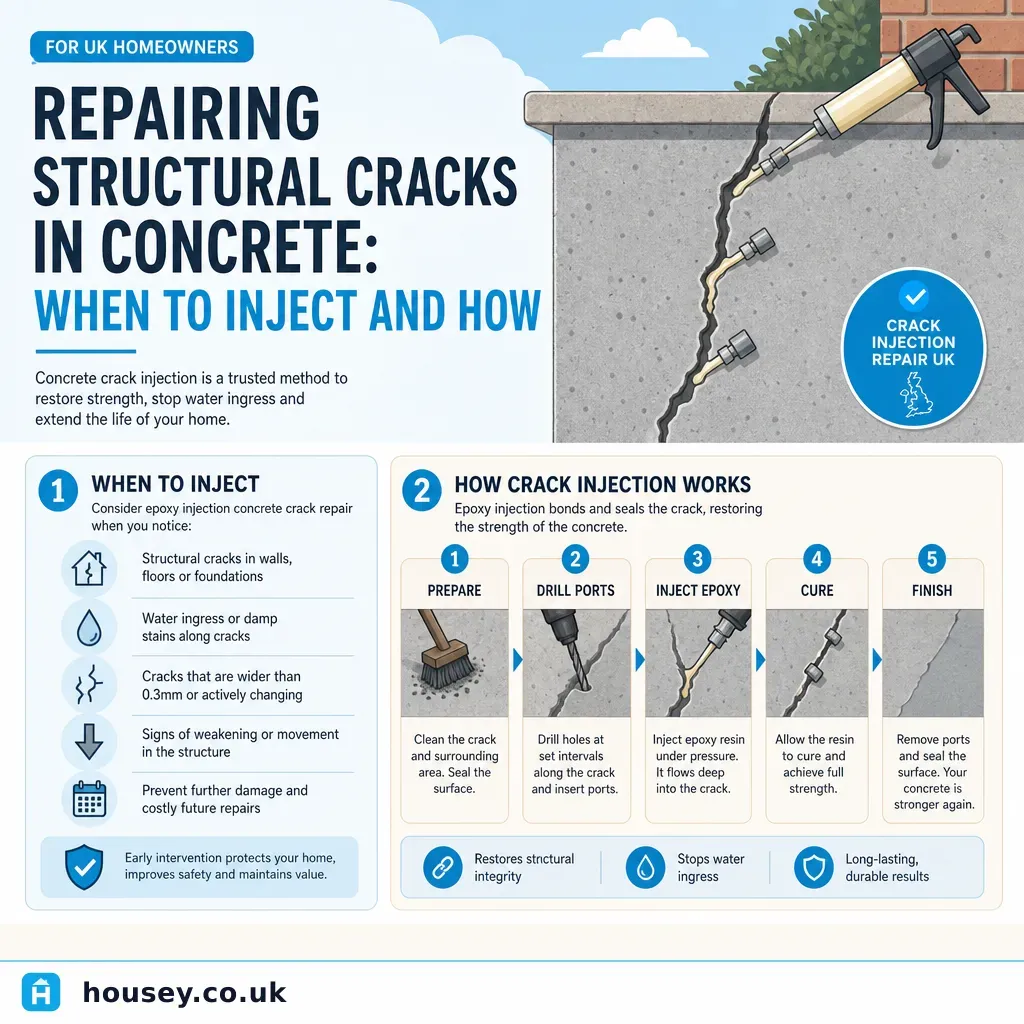
Repairing Structural Cracks in Concrete: When to Inject and How
Concrete crack injection is only appropriate after confirming the crack is inactive. Epoxy resin injection restores structural strength in dry, stable cracks; polyurethane injection seals damp cracks against water ingress but does not restore capacity. Any crack wider than 0.5 mm in a load-bearing element should be assessed by a chartered structural engineer before repair begins.
 Surveys & Inspections
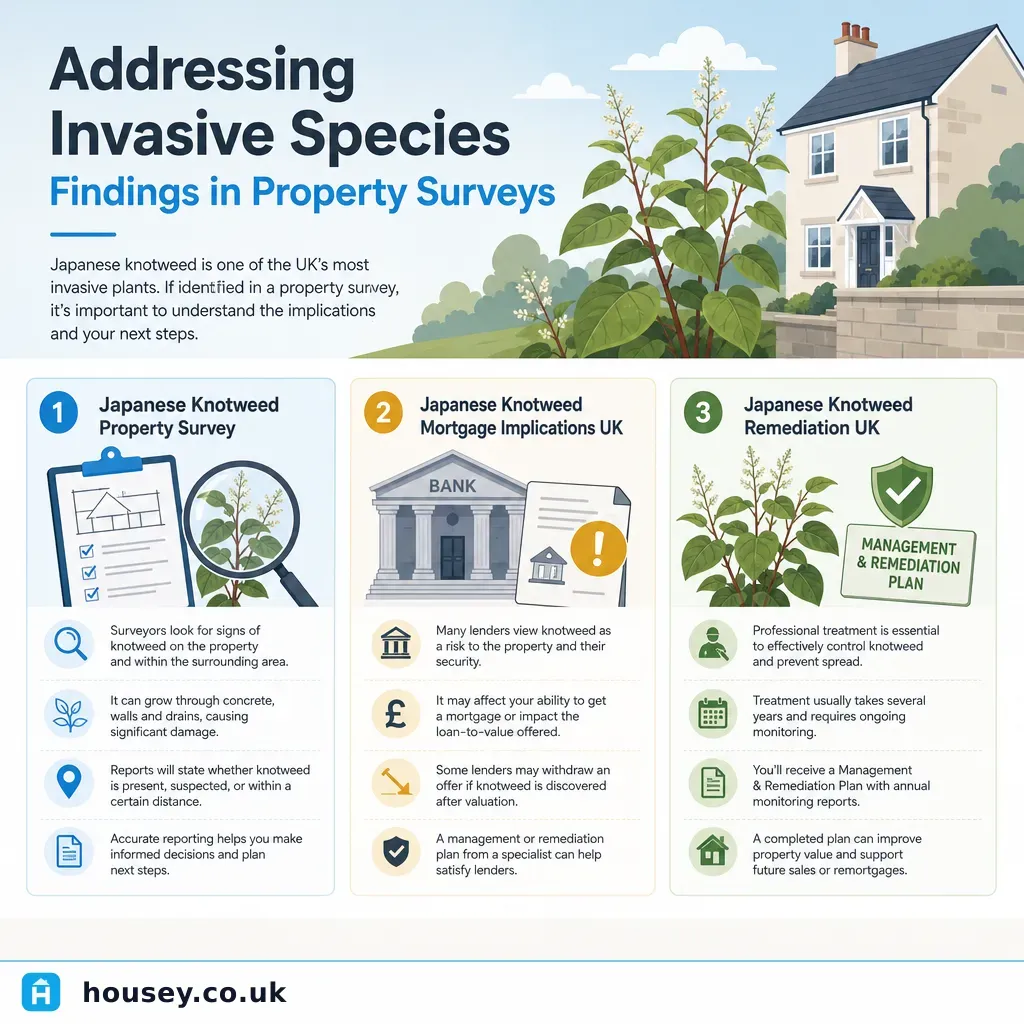
Addressing Invasive Species Findings in Property Surveys
If a property survey flags an invasive species such as Japanese knotweed, you should commission a specialist ecological or knotweed survey to confirm the extent and obtain a management plan. Knotweed within 7 metres of a structure can affect mortgage lending and must be disclosed on the TA6 property information form. Specialist treatment typically takes three to five years.
 Surveys & Inspections
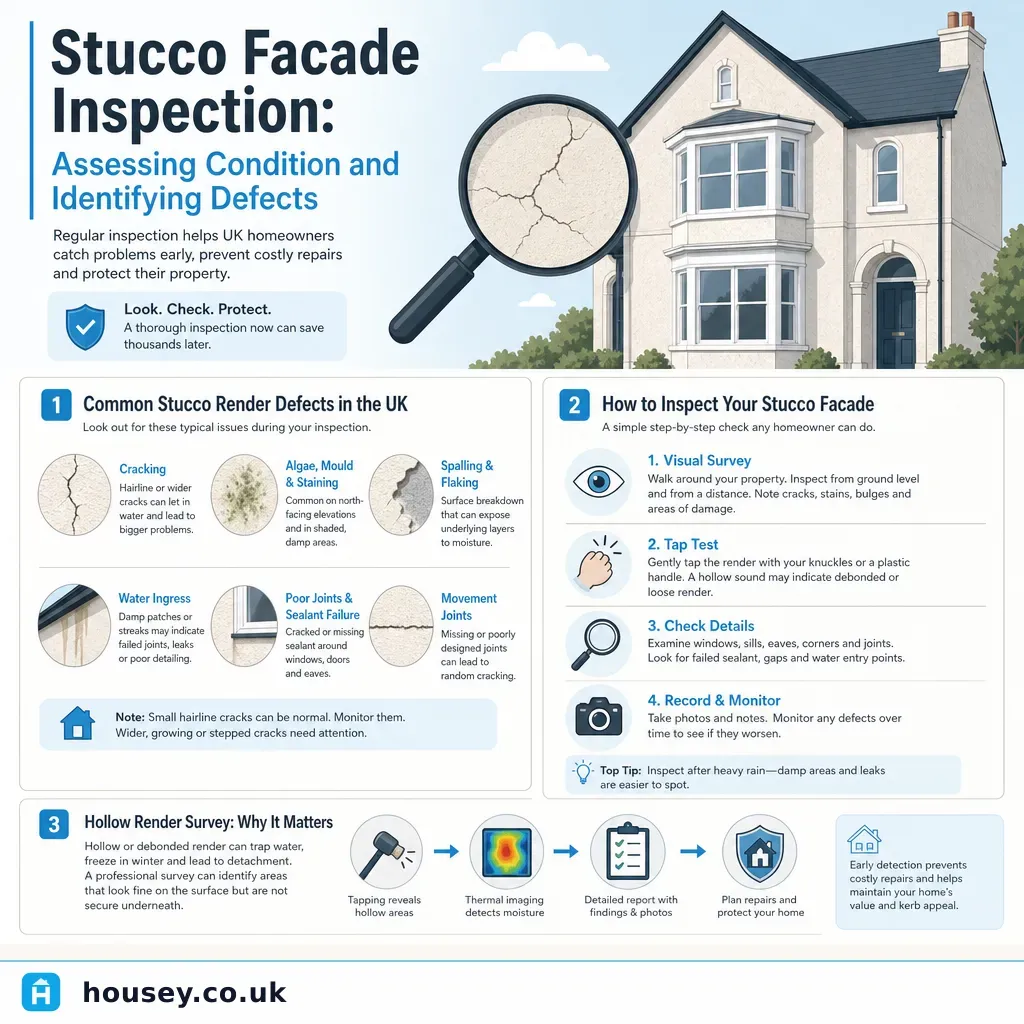
Stucco Facade Inspection: Assessing Condition and Identifying Defects
A stucco facade inspection involves visual assessment, tap testing for hollow areas, crack mapping, and checking moisture levels. The main defects to identify are debonding render, stepped or diagonal cracks indicating movement, carbonation, and failed paint coatings allowing damp ingress. For detailed diagnosis, a RICS-accredited specific defect survey is usually needed.
 Surveys & Inspections
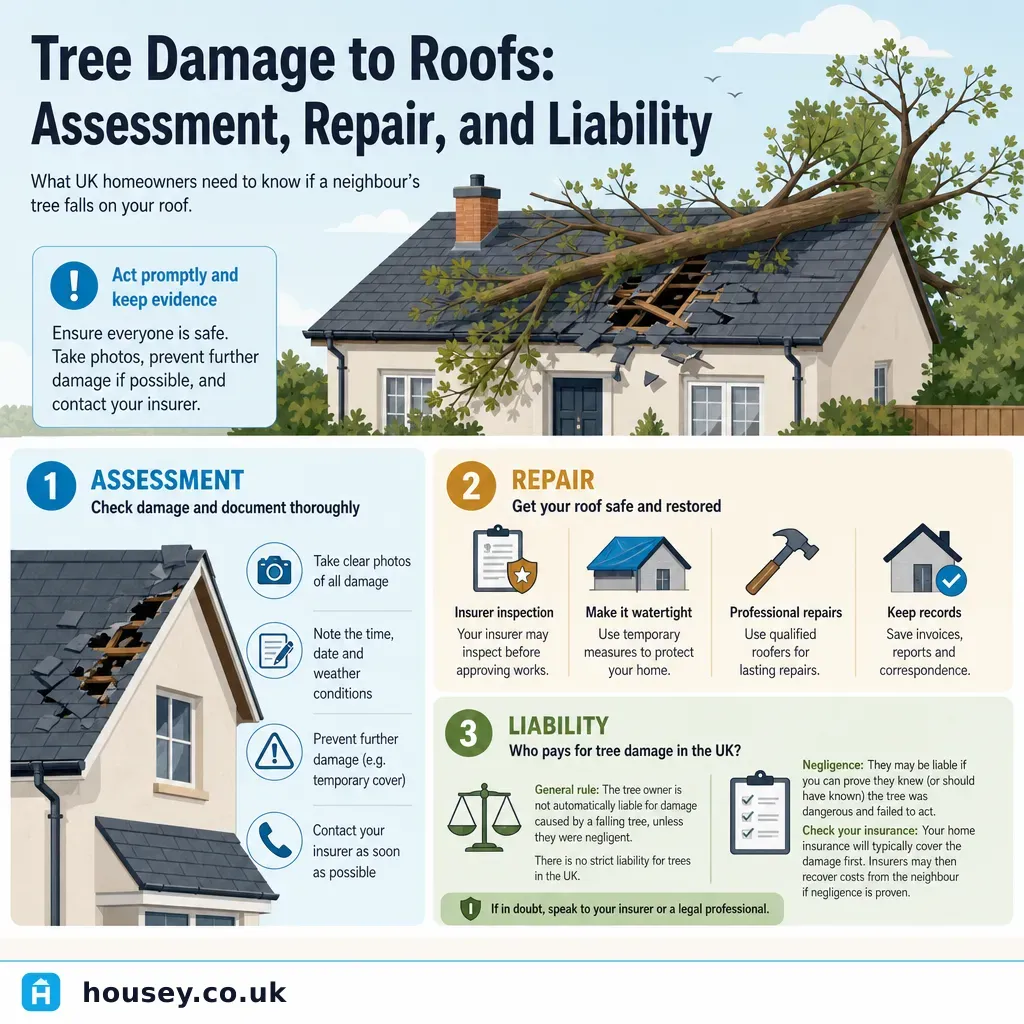
Tree Damage to Roofs: Assessment, Repair, and Liability
When a tree damages a roof in the UK, your own buildings insurance is usually the first port of call regardless of tree ownership. Neighbour liability only applies where they had prior notice of a defect and failed to act. Structural damage should be assessed by a structural engineer or RICS Level 3 surveyor before permanent repairs begin. Trees with Tree Preservation Orders still require council consent even after causing damage.
 Surveys & Inspections
CCTV Drain Survey Pricing and What to Expect
A CCTV drain survey typically costs £150–£400 for a standard residential property in the UK, depending on drain length and property size. A camera is fed through the drain via a manhole to identify blockages, cracks, root ingress, or displaced joints. The surveyor produces a video report with WRc condition codes and repair recommendations.