Knowledge Base
Property advice that actually helps
Researched, UK-specific guides for every stage of homeownership — from buying and surveys to retrofit, planning and major works.
 Improvement & Build
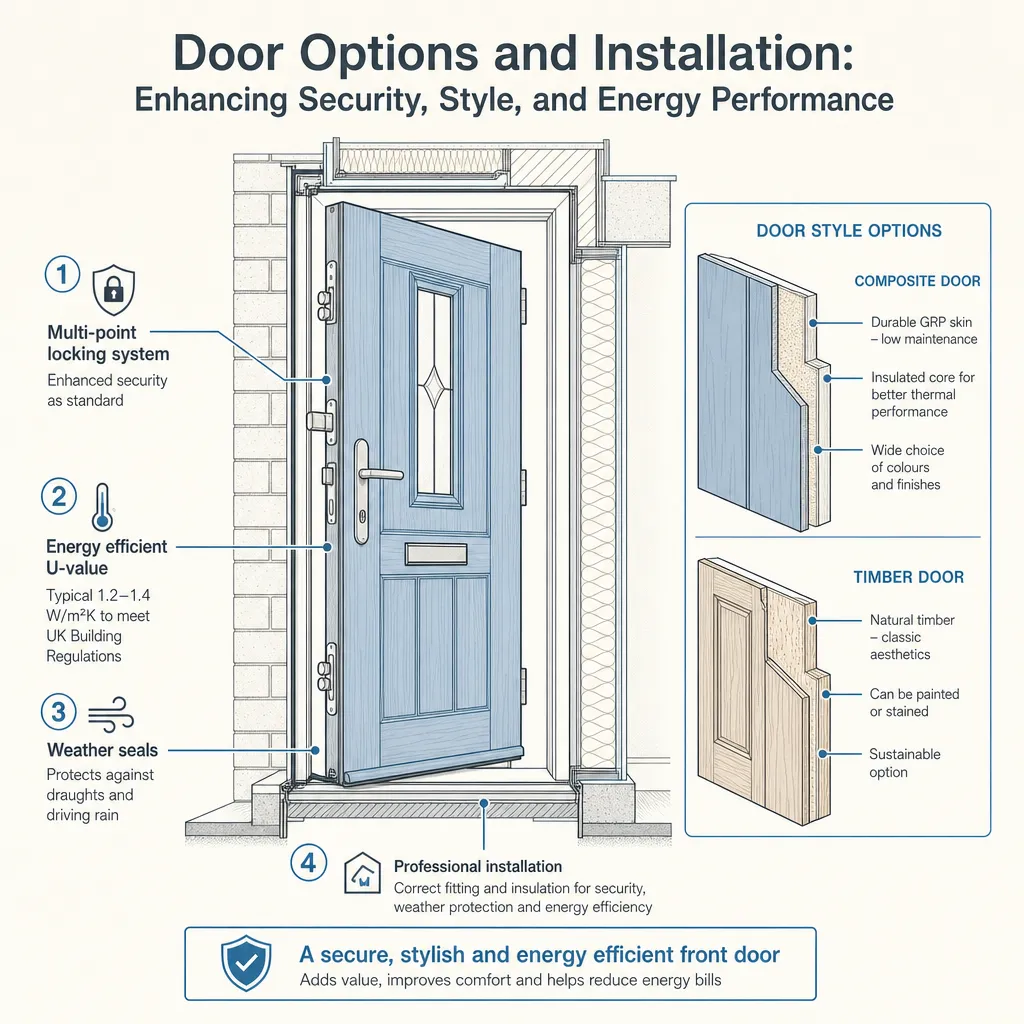
Door Options and Installation: Enhancing Security, Style, and Energy Performance
Choosing a new external door involves balancing security ratings, thermal performance, and style. Composite doors suit most UK homes, offering PAS 24 security and U-values around 0.8–1.2 W/m²K with low maintenance. Timber suits period and listed properties. All external replacements must meet Building Regulations Part L and ideally be fitted by a FENSA or CERTASS registered installer.
 Improvement & Build
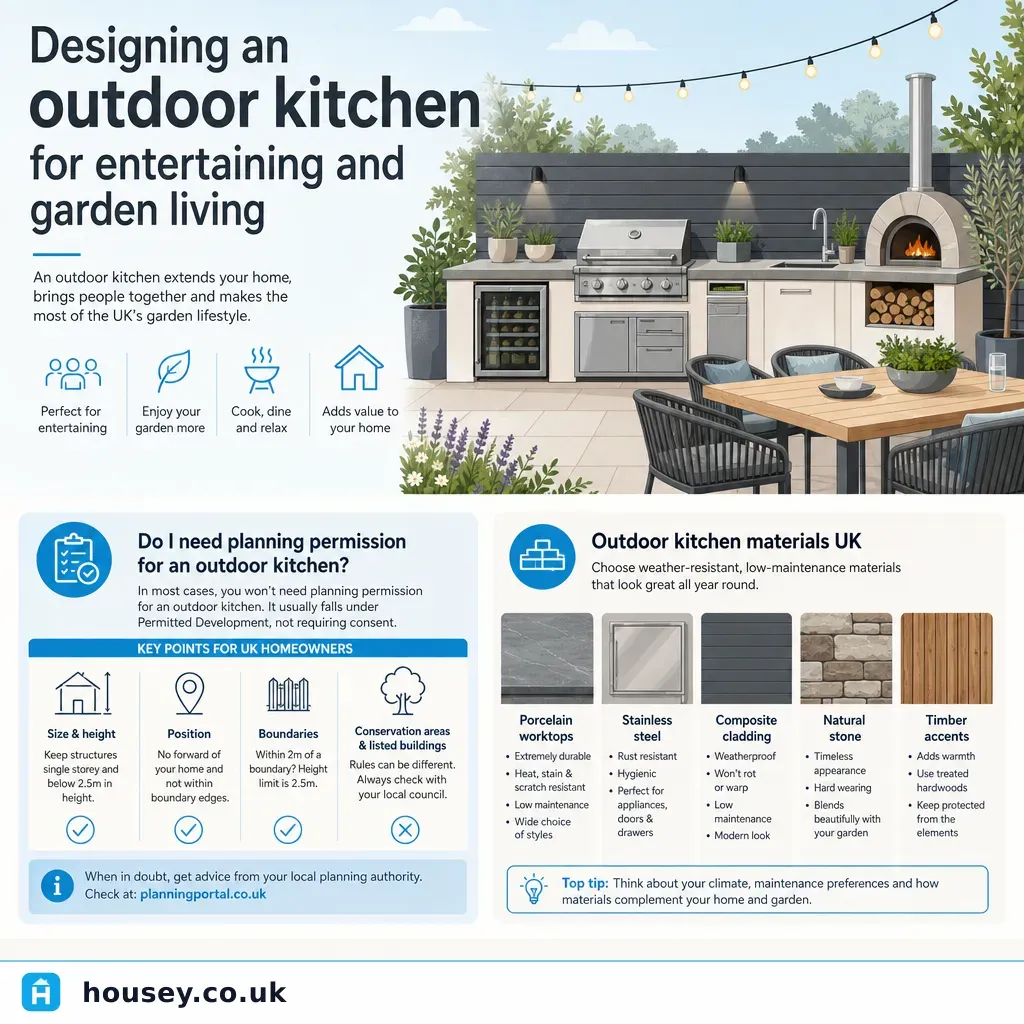
Designing an outdoor kitchen for entertaining and garden living
An outdoor kitchen in a UK garden needs a stable, level base — typically a concrete slab or quality paving — with weather-rated materials such as stainless steel grade 316 or frost-rated porcelain. Gas connections require a Gas Safe registered engineer. A permanent roofed structure may need planning permission. Budget roughly £5,000–£30,000 depending on specification and coverage.
 Planning & Pre-Build
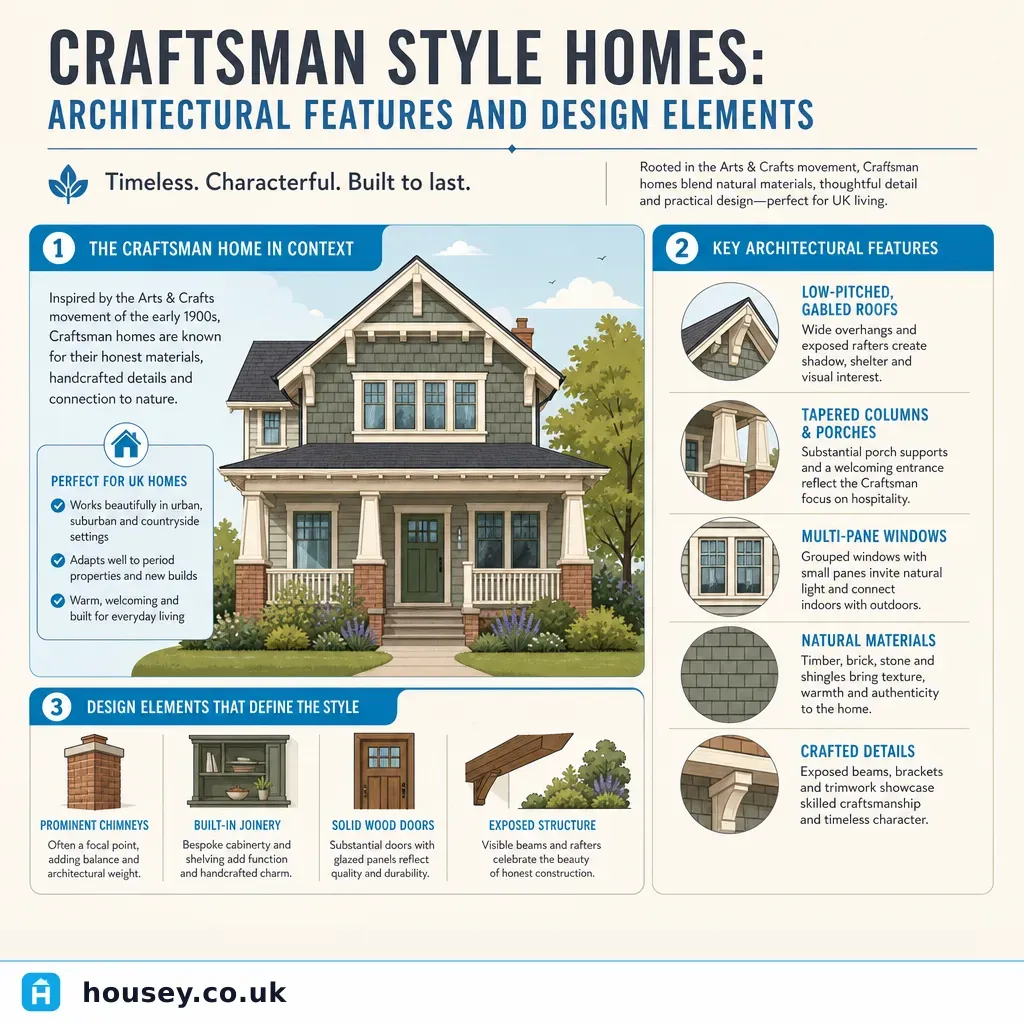
Craftsman Style Homes: Architectural Features and Design Elements
Craftsman style homes are defined by natural materials, low-pitched gabled roofs with wide eaves, covered porches, exposed timber details, and grouped casement windows. In the UK, the style is closely linked to the Arts and Crafts movement of the 1880s–1930s. Planning permission is needed for new builds in this style; extensions may qualify as permitted development, subject to local restrictions and any heritage designations.
 Surveys & Inspections
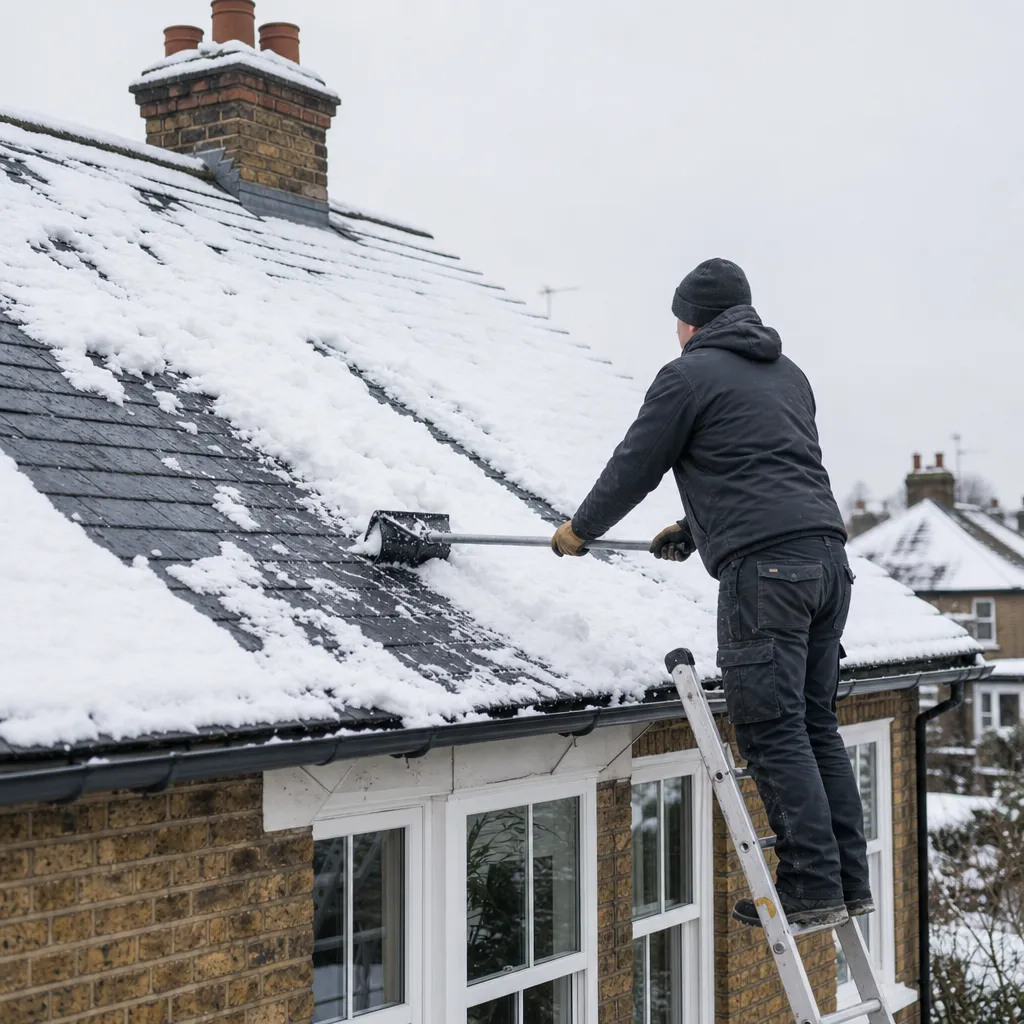
Roof Snow Removal: Safety and Structural Considerations
In the UK, most pitched roofs in good condition can tolerate typical snowfall without intervention. However, flat roofs, older properties, and any roof with pre-existing defects face greater risk. Deep or drifted snow can exceed safe load limits. Never attempt to remove snow from a roof yourself — call a qualified roofing contractor or structural engineer if you have any structural concerns.
 Improvement & Build
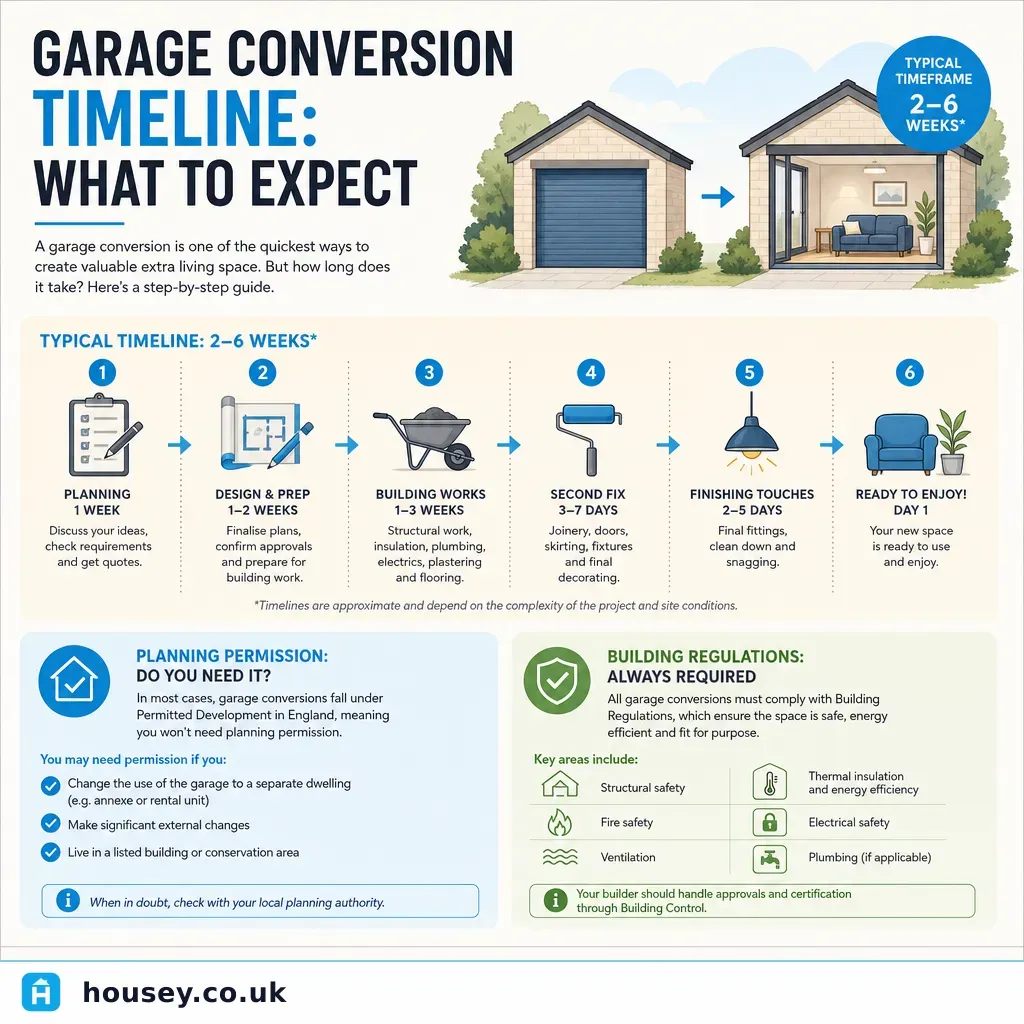
Garage Conversion Timeline: What to Expect
A straightforward attached garage conversion in England usually takes 4–8 weeks of construction, plus pre-start time for building control approval (5 working days for Full Plans). Planning permission is rarely needed for like-for-like conversions, but building regulations approval covering insulation, fire safety, and electrics is almost always required.
 Improvement & Build
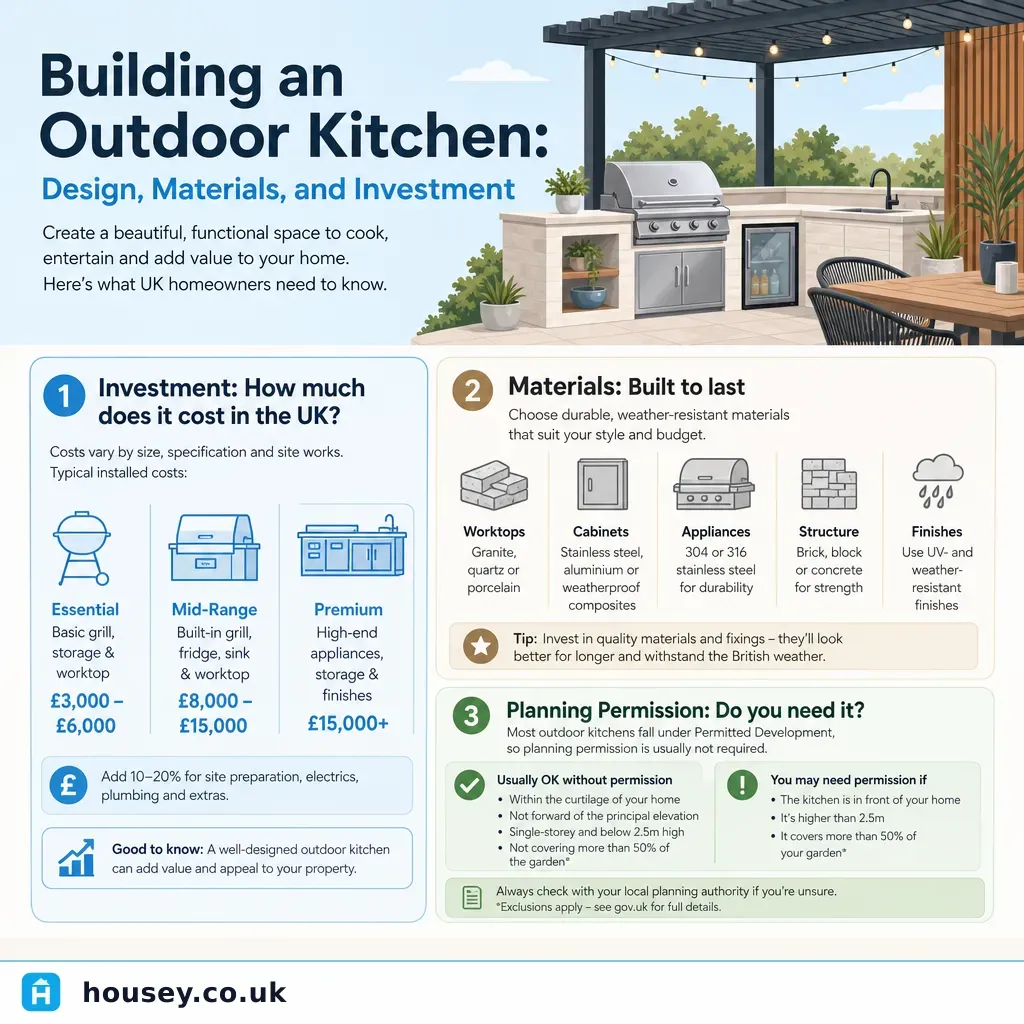
Building an Outdoor Kitchen: Design, Materials, and Investment
Building an outdoor kitchen in the UK costs roughly £3,000–£25,000 depending on size and materials. Most projects fall within permitted development rights. Gas connections must be installed by a Gas Safe registered engineer and outdoor electrics must comply with Part P. Marine-grade stainless steel and frost-resistant porcelain are the most durable material choices.
 Energy & Retrofit
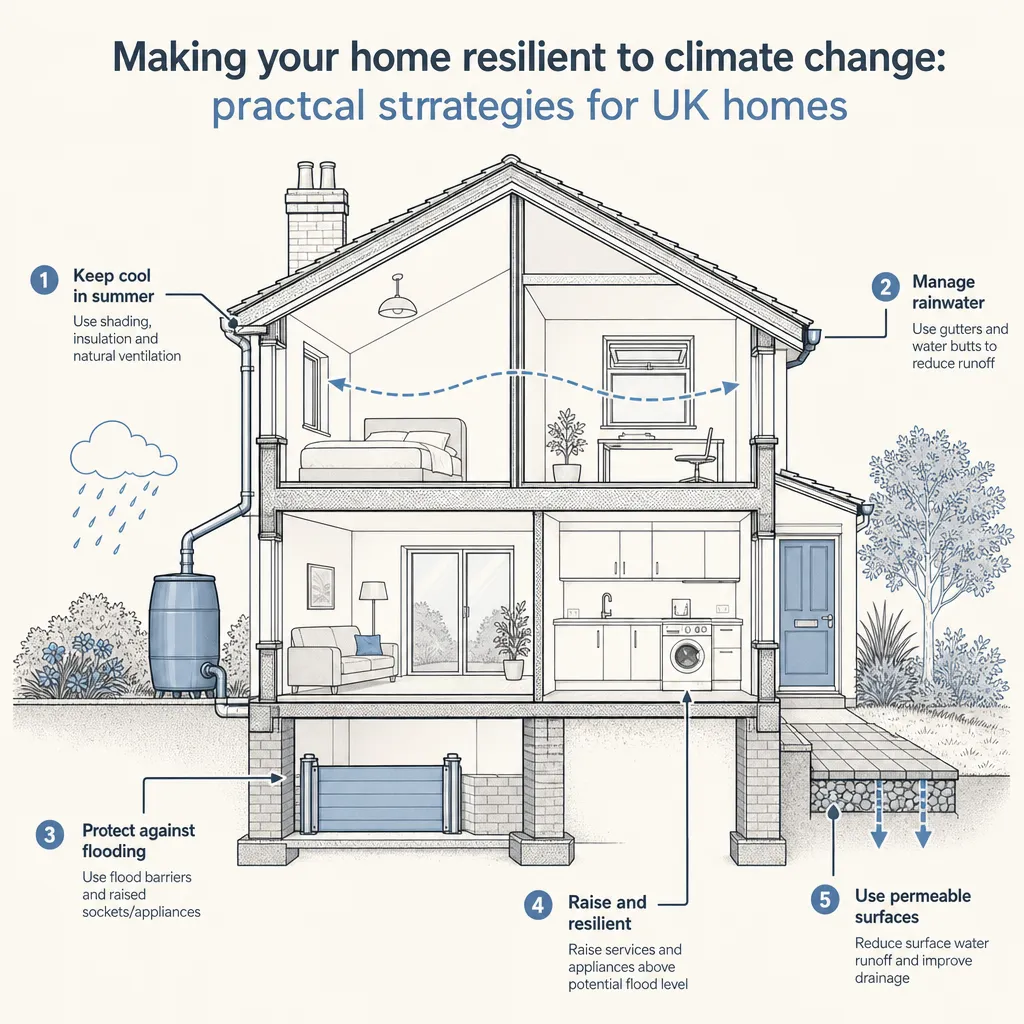
Making your home resilient to climate change: practical strategies
UK homeowners can improve climate resilience by addressing flood risk, overheating, and energy efficiency together. Key steps include a PAS 2035-compliant retrofit assessment, improving insulation and ventilation, fitting flood barriers where needed, and using shading to cut summer overheating. Prioritise measures by your property's main climate risk rather than trying to tackle everything at once.
 Improvement & Build
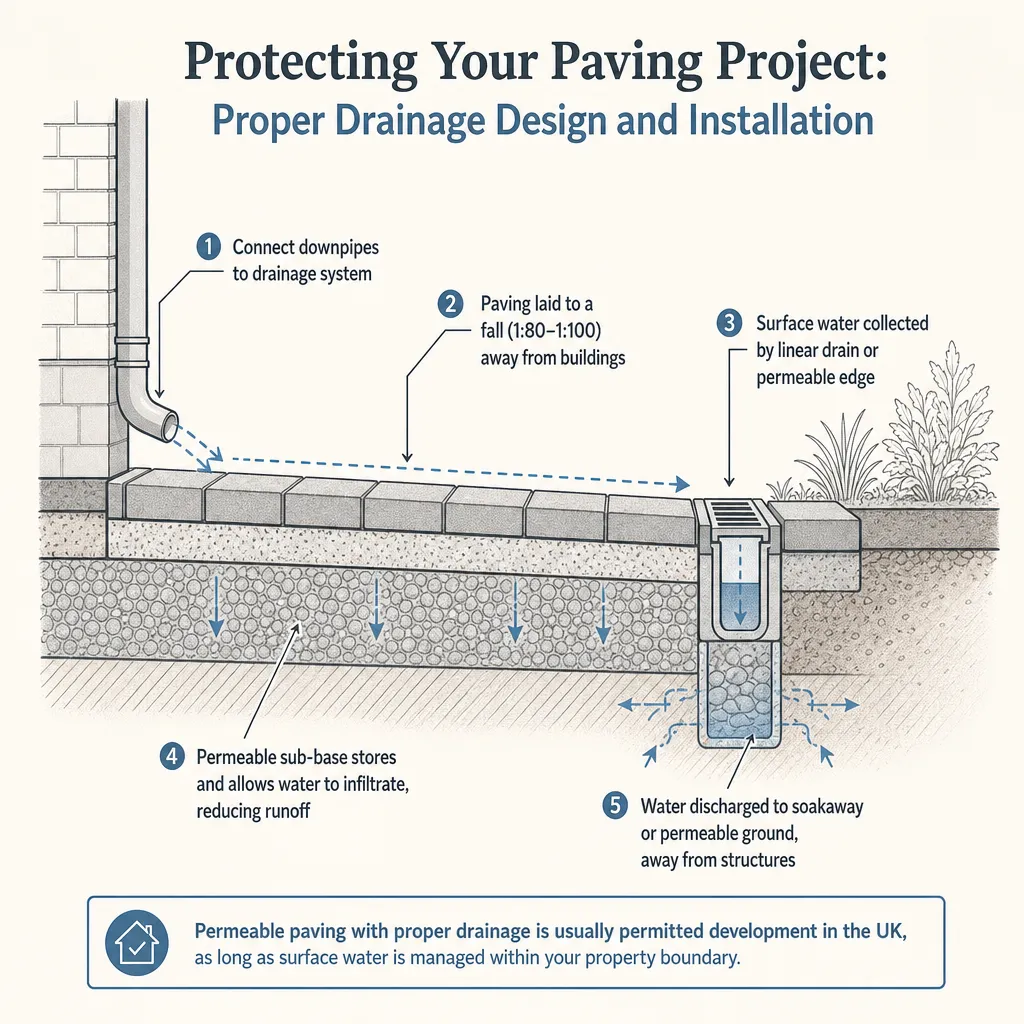
Protecting Your Paving Project: Proper Drainage Design and Installation
Good paving drainage starts with a minimum fall of 1:60 to 1:80 away from buildings, a correctly specified sub-base, and a clear outlet for surface water. In England, driveways over 5 m² must use permeable surfacing or drain to a soakaway rather than the highway. Planning drainage before excavation avoids costly retrofitting later.
 Improvement & Build
Expanding Doorways: Planning, Costs, and Building Requirements
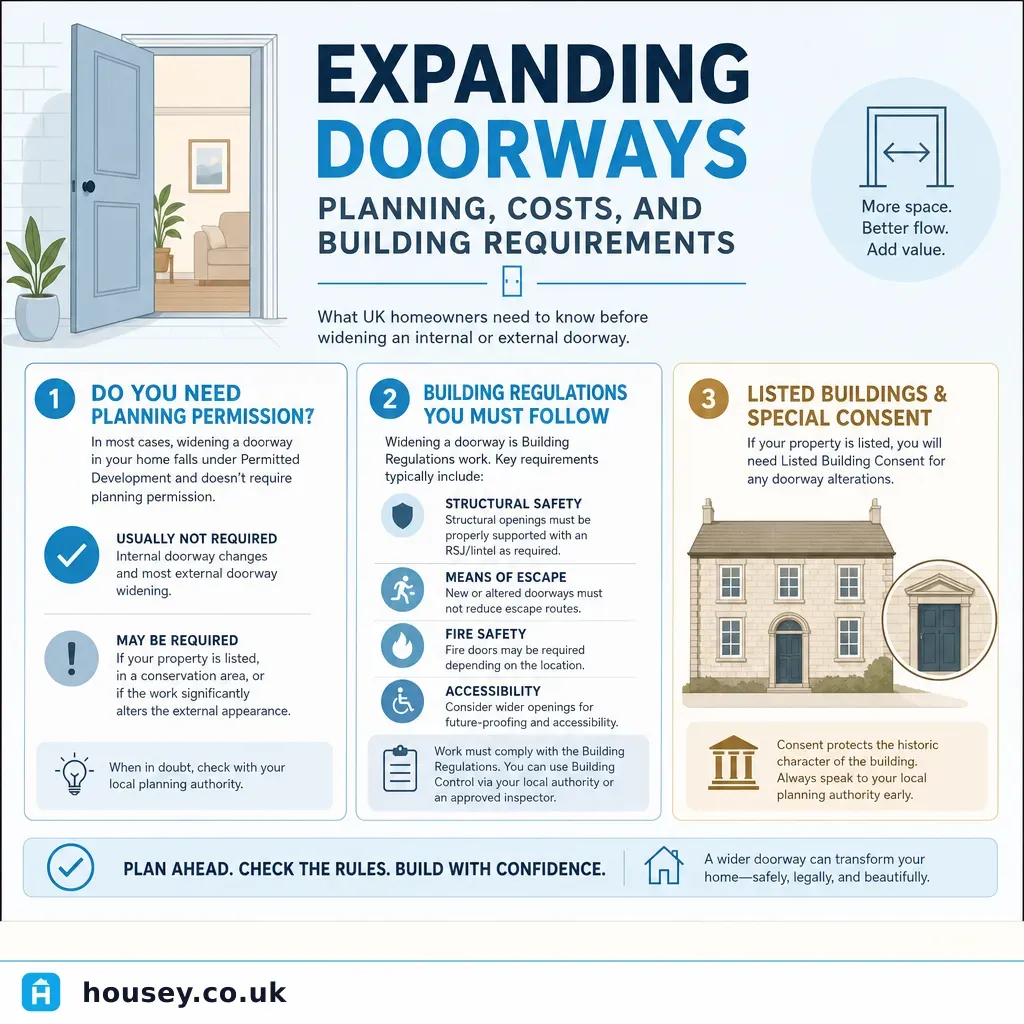
Expanding a doorway in a load-bearing wall requires Building Regulations Part A approval and a structural engineer's lintel design. Planning permission is rarely needed for internal doorway work, but listed building consent is required if the property is listed. Budget for structural engineer fees, building control application costs, and builder quotes before instructing anyone.
 Improvement & Build
Home Improvement Projects That Add Value to Your Property
Loft conversions, rear extensions, and kitchen refurbishments typically offer the strongest return on investment for UK homeowners. Loft conversions can add around 15–20% to property value; single-storey rear extensions 5–12%. The best choice depends on what your property lacks compared with local comparables, your planning constraints, and the price ceiling for your street.
 Improvement & Build
Cost of converting a window to a door
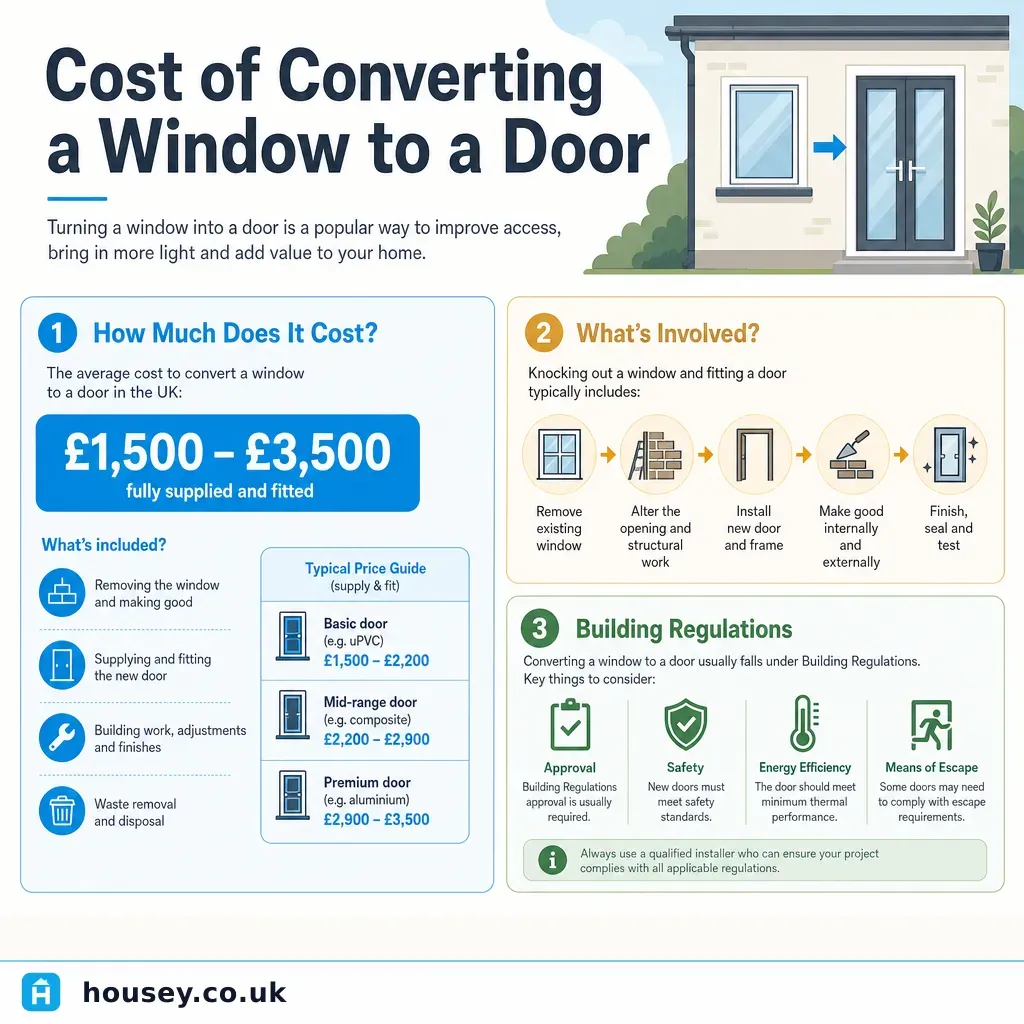
Converting a window to a door in the UK typically costs £1,500–£5,000 or more, depending on wall construction (cavity, solid, or timber frame), the type of door fitted, and whether a new or enlarged lintel is required. The work requires building regulations approval and, in some cases, a structural engineer's sign-off before starting.
 Improvement & Build
Building a Garden Shed: Design Plans and Materials Guide
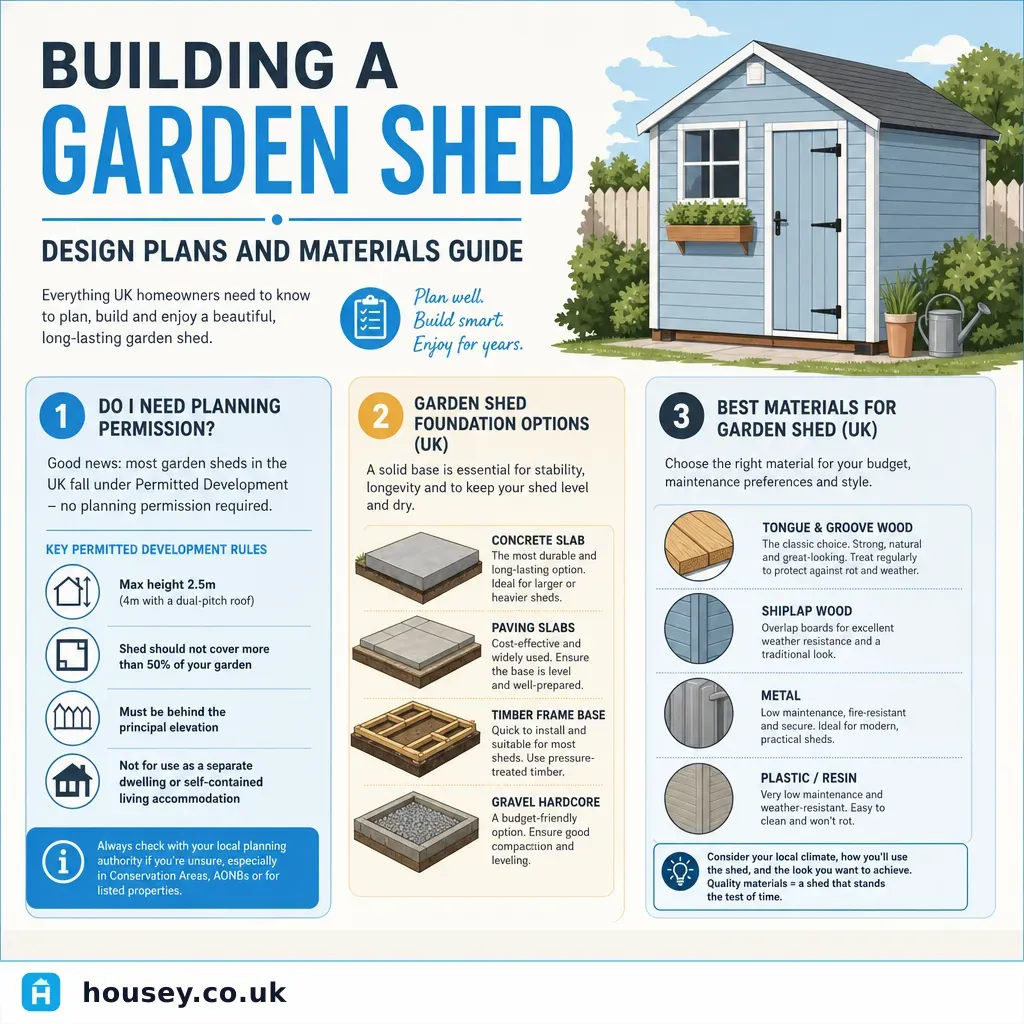
Most garden sheds in England are Permitted Development, provided they sit behind the principal elevation, have eaves no higher than 2.5 m, and do not cover more than 50% of the garden curtilage. Pressure-treated softwood on a concrete base is the standard UK build approach. Rules differ in Scotland, Wales, and Northern Ireland — always confirm with your local planning authority before starting.