Knowledge Base
Property advice that actually helps
Researched, UK-specific guides for every stage of homeownership — from buying and surveys to retrofit, planning and major works.
 Surveys & Inspections
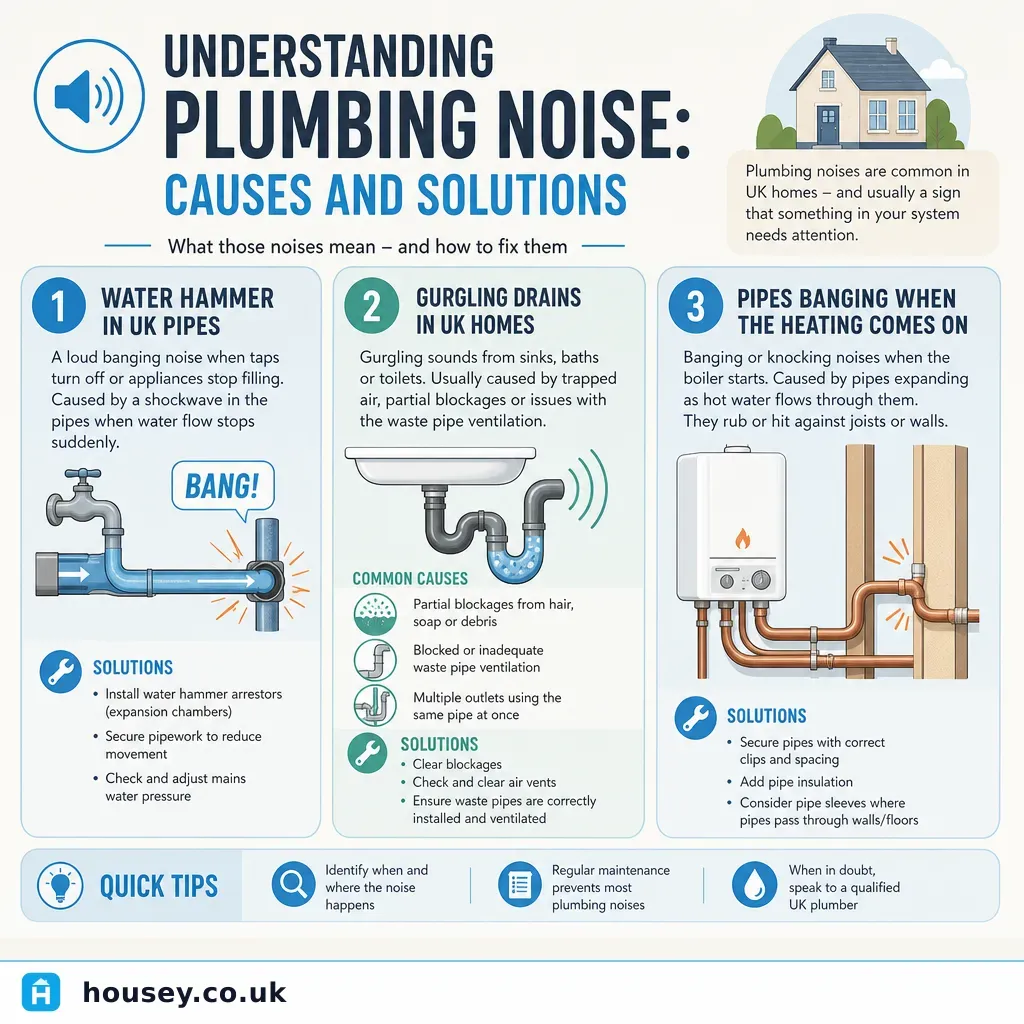
Understanding Plumbing Noise: Causes and Solutions
Most plumbing noises have a specific cause: banging usually means water hammer from high pressure or unsupported pipes; gurgling from drains points to a blockage or dry trap; ticking during heating is typically thermal expansion. Identifying the noise type helps determine whether a simple DIY fix will do or a qualified plumber or drain surveyor is needed.
 Buying & Moving
Moving Day Logistics: A Guide to a Successful Home Relocation
On moving day, wait for your solicitor to confirm completion before collecting keys — there is no fixed handover time and most UK completions happen between 11am and 2pm. Take meter readings at both properties, photograph every room, keep documents and valuables with you, and change the locks at your new property before the end of the day.
 Energy & Retrofit
Heat Pump Servicing and Maintenance: Regular Care and Costs
Heat pumps should be serviced by a qualified engineer once a year; most manufacturers require this to keep the warranty valid. Typical UK costs are £100–£200 per service. Homeowners can safely carry out monthly checks such as clearing debris and cleaning filters, but refrigerant handling and electrical work must only be done by an F-Gas registered engineer.
 Improvement & Build
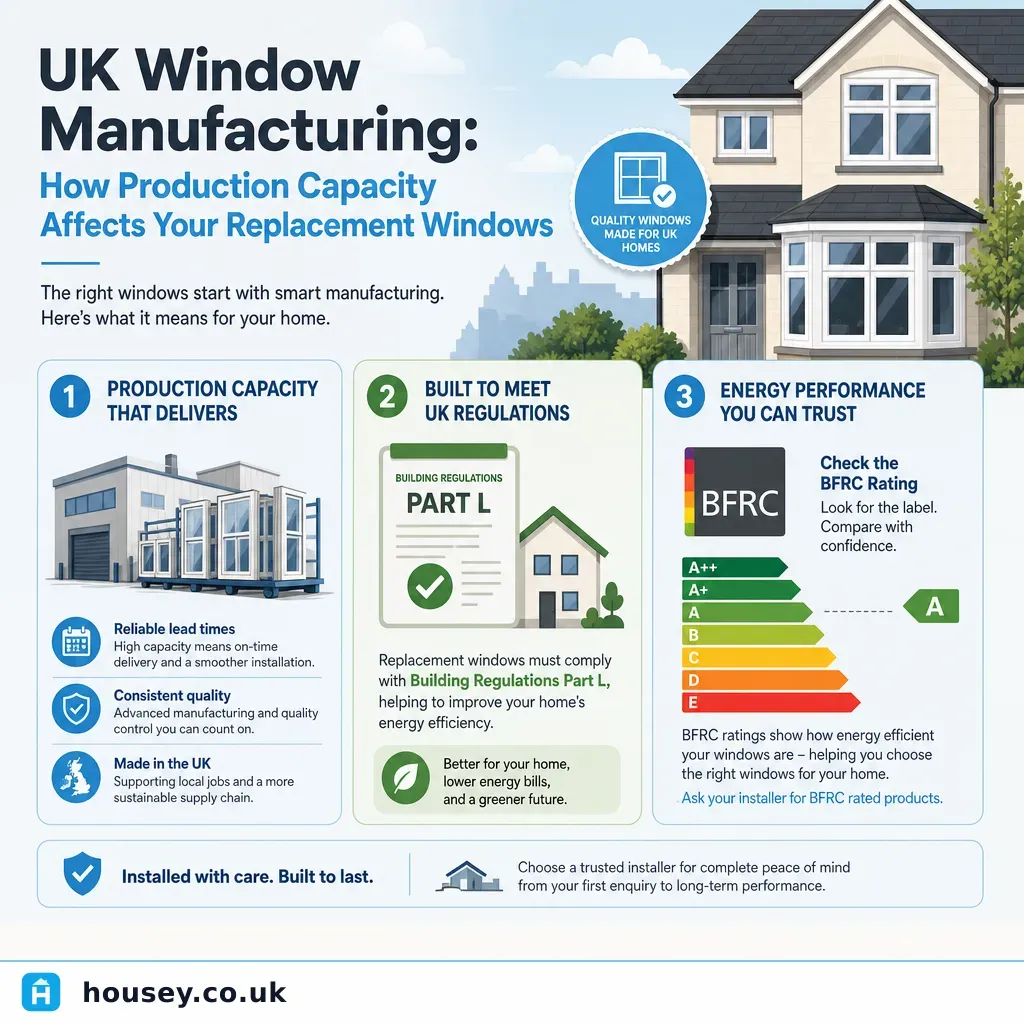
UK Window Manufacturing: How Production Capacity Affects Your Replacement Windows
UK replacement windows must meet Building Regulations Part L with a whole-window U-value of 1.4 W/m²K or better. FENSA-registered installers self-certify compliance without a separate building control application. Standard PVCu windows typically take two to four weeks; bespoke or heritage units often run eight to sixteen weeks. Always confirm U-values and FENSA certification in writing before ordering.
 Improvement & Build
Patio Door Types and Styles for Home Extensions
For most UK home extensions, sliding doors suit openings up to 3.6 m wide; bifolds work best for wider openings where full-width garden access is the priority. French doors remain the most cost-effective and planning-friendly choice for period properties. All external doors must comply with Building Regulations Parts L, N, and Q covering thermal performance, safety glazing, and security.
 Surveys & Inspections
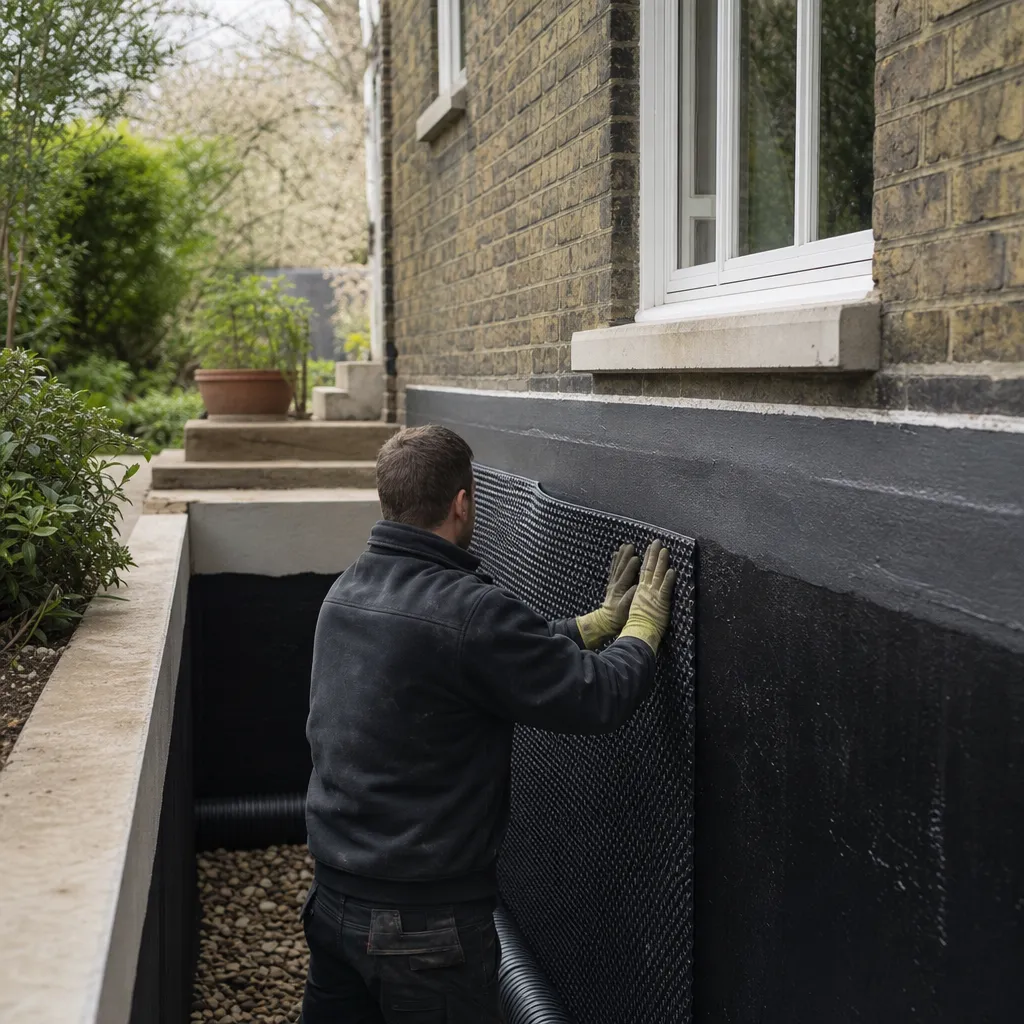
Basement Waterproofing Solutions for Damp Prevention
Basement waterproofing in the UK is governed by BS 8102:2022, which defines three system types: Type A (barrier coatings), Type B (structurally integral concrete), and Type C (cavity drain membrane with sump pump). Most retrofit projects in older UK properties use a Type C system. The correct choice depends on water pressure, construction type, and intended use, and should always be specified by a qualified waterproofing surveyor.
 Improvement & Build
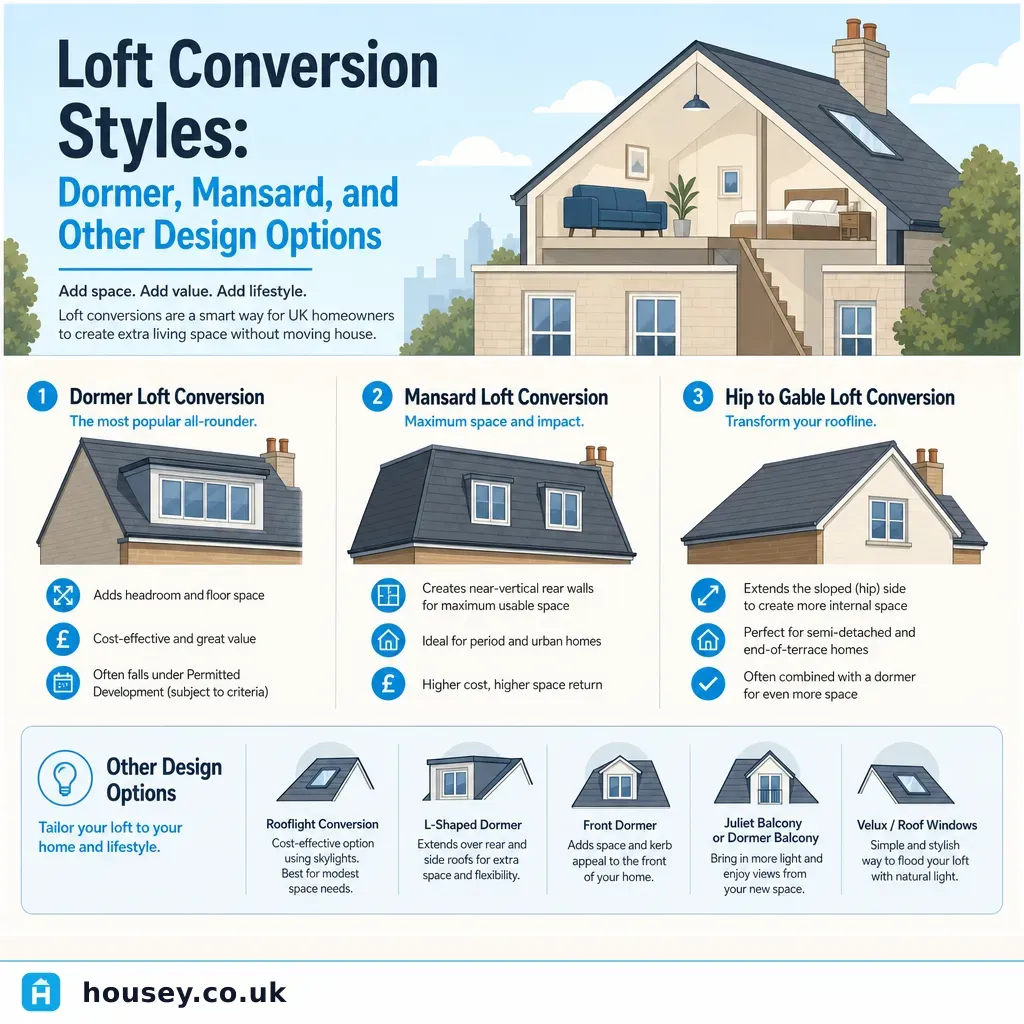
Loft Conversion Styles: Dormer, Mansard, and Other Design Options
The main loft conversion types in the UK are rooflight, dormer, hip-to-gable, and mansard. Rooflights are simplest and often permitted development; dormers add the most headroom and floor area; hip-to-gable suits detached or semi-detached homes; mansard conversions offer maximum space but usually require planning permission. Choice depends on your roof shape, budget, and local planning constraints.
 Surveys & Inspections
Managing Property and Contents After Damp Treatment
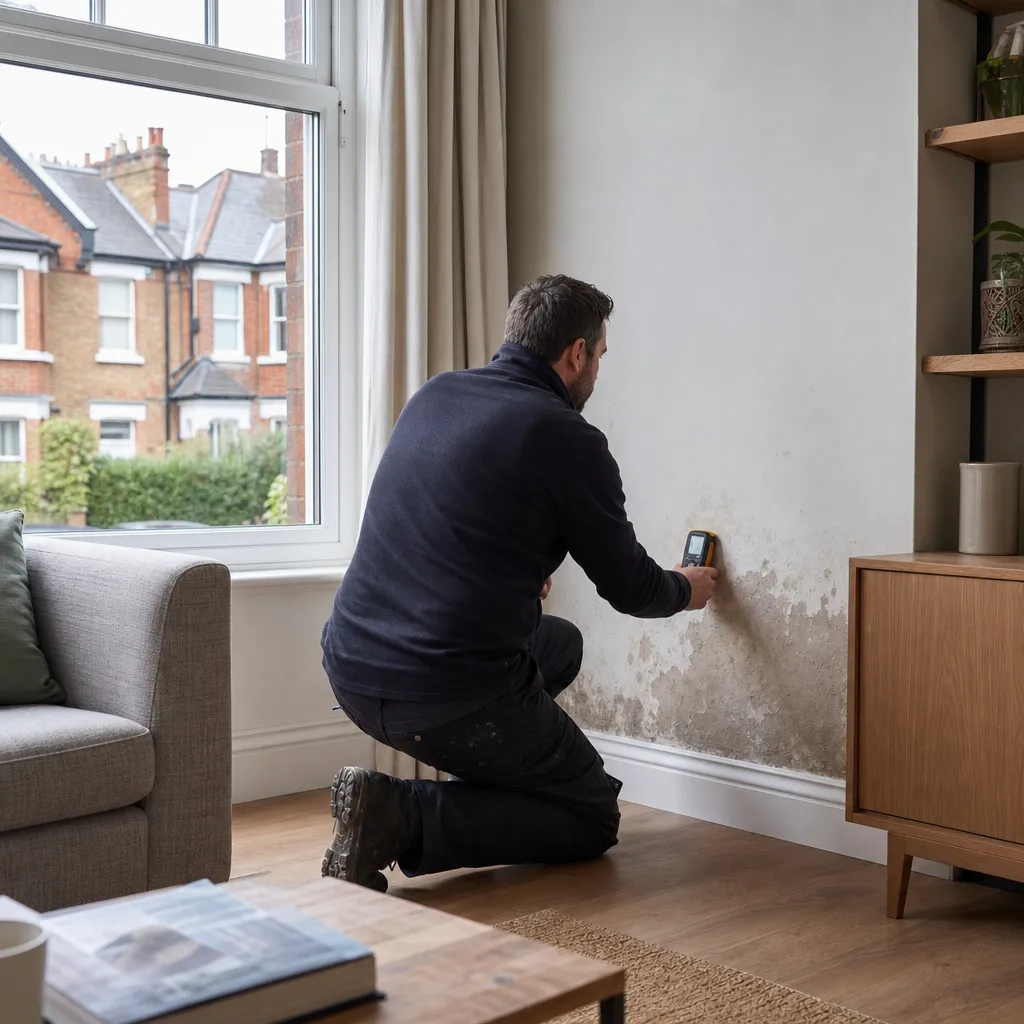
After damp treatment in a UK home, allow walls to dry fully before re-plastering or decorating — this typically takes six months to two years depending on construction and damp severity. Keep the property well ventilated, remove damaged contents promptly, and retain your guarantee documentation from the treating company for future property sales.
 Buying & Moving
Choosing a House Removal Company: What to Look For
Choose a UK removal company that belongs to the British Association of Removers (BAR) or the Removals Industry Ombudsman Scheme (RIOS), carries goods-in-transit and public liability insurance, and provides a written quote after properly surveying your home. Get at least three comparable quotes, check credentials through the BAR member directory and Companies House, and always confirm cancellation terms in writing before you book.
 Improvement & Build
Repairing Failed Window Seals and Condensation Issues
Condensation between double-glazed panes means the hermetic seal on the insulated glass unit has failed. In most cases the glass unit can be replaced without changing the window frame — faster and cheaper than full replacement. Condensation on the inner surface of the glass usually points to a ventilation problem rather than a window fault. Check extract ventilation in kitchens and bathrooms first.
 Improvement & Build
Open Plan Living Space Conversion Costs
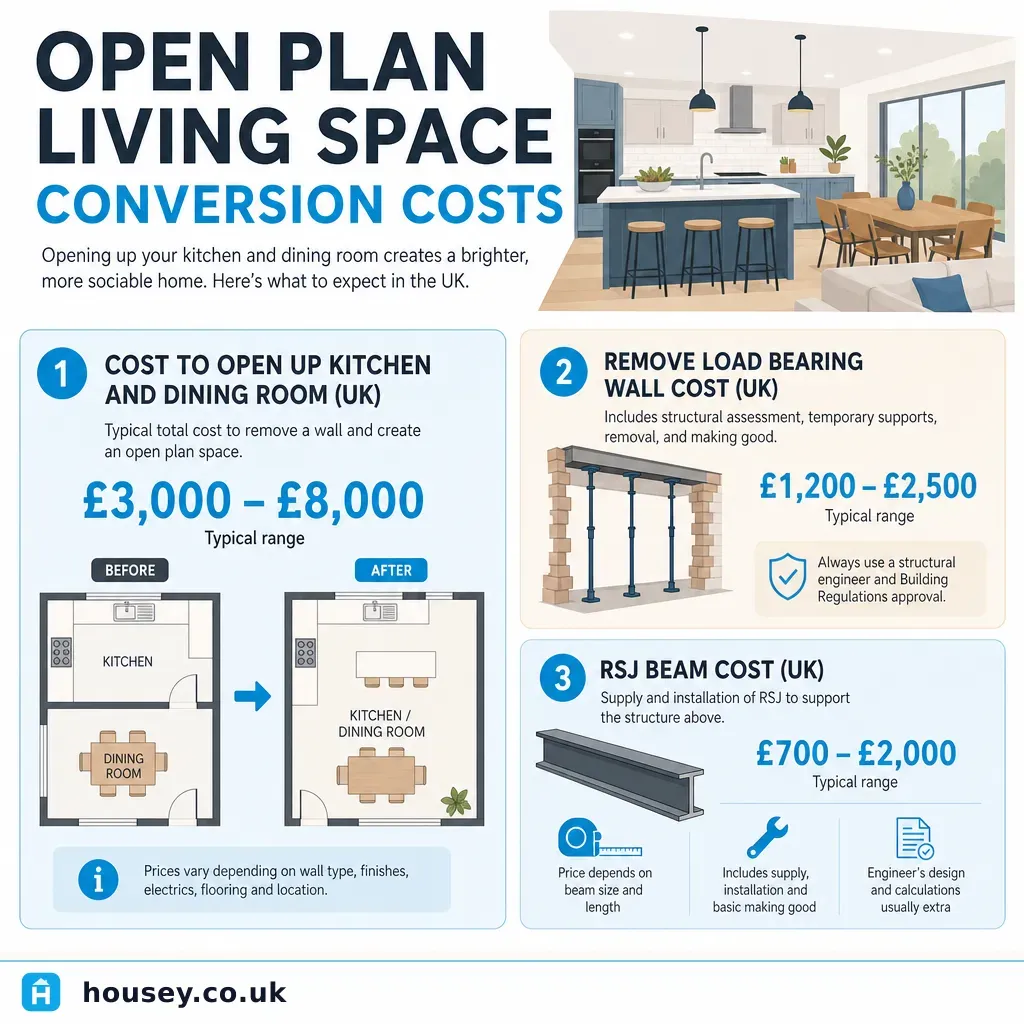
Opening up a living space in the UK typically costs £3,000–£15,000+ depending on whether walls are load-bearing, the beam specification required, and the extent of remodelling. Load-bearing wall removal always requires a structural engineer's calculation and Building Regulations approval. Non-load-bearing partition removal is simpler but should still be assessed by a qualified builder before work starts.
 Energy & Retrofit
Two-Stage Heating Technology: Can It Reduce Your Energy Bills?
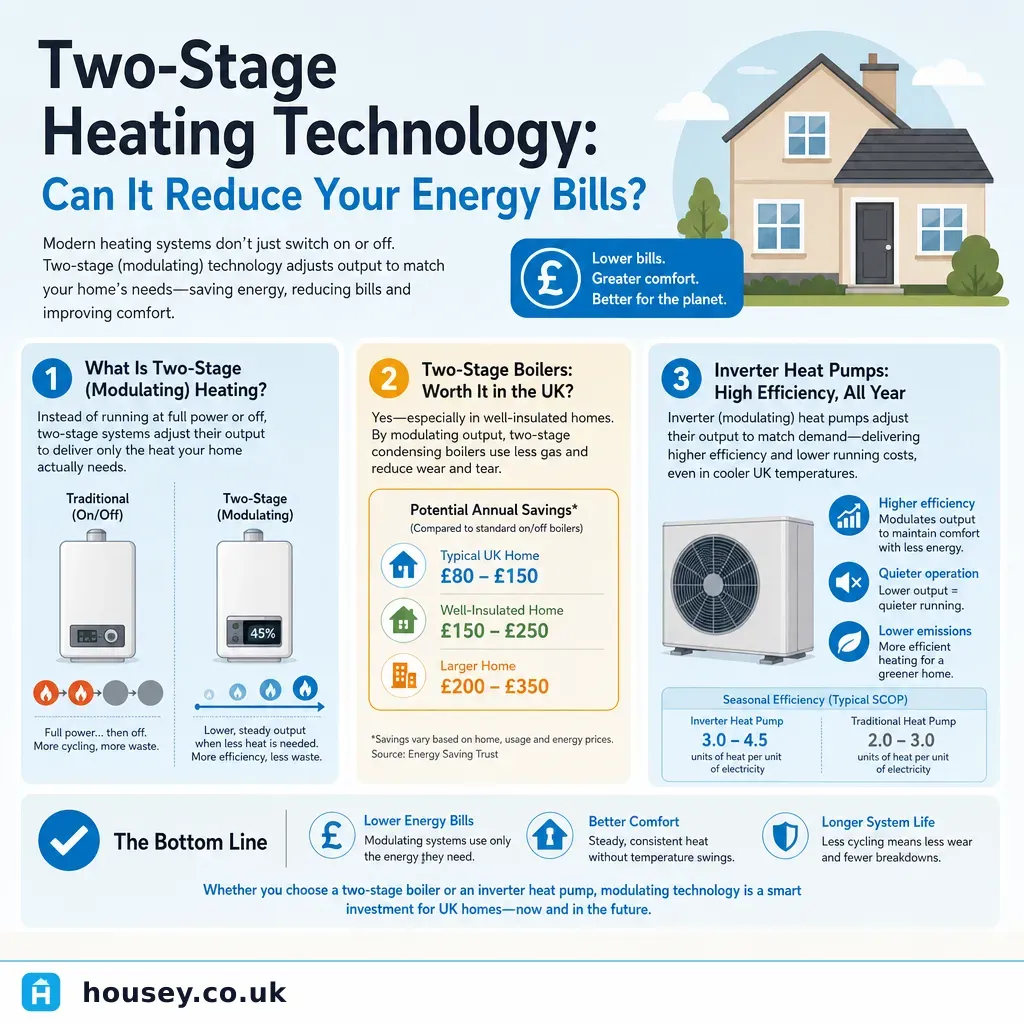
In UK homes, two-stage or modulating heating technology refers to modulating condensing gas boilers and inverter-driven heat pumps, not the forced-air furnaces common in North America. Both work by varying output to match actual demand rather than cycling on and off at full power, reducing energy waste. Actual savings depend on your home's insulation level, existing system, and controls configuration.