Knowledge Base
Property advice that actually helps
Researched, UK-specific guides for every stage of homeownership — from buying and surveys to retrofit, planning and major works.
 Buying & Moving
Safe House Moving Practices: Health and Safety Protocols for Your Relocation
A safe UK house move means hiring a removal firm with public liability insurance, using proper equipment for heavy items, and keeping medications, documents, and valuables in your own vehicle. Check your home contents insurance covers items in transit, wear appropriate footwear, keep pathways clear on moving day, and report any damage to the removal firm in writing within 24 hours.
 Buying & Moving
House Clearance Pricing and Service Options
House clearance costs in the UK range from around £150 for a one-bedroom flat to £1,500 or more for a four-bedroom house, depending on volume, location, and how much can be donated or recycled. Licensed waste carriers must be used. Always get at least three quotes and ask for a signed waste transfer note.
 Planning & Pre-Build
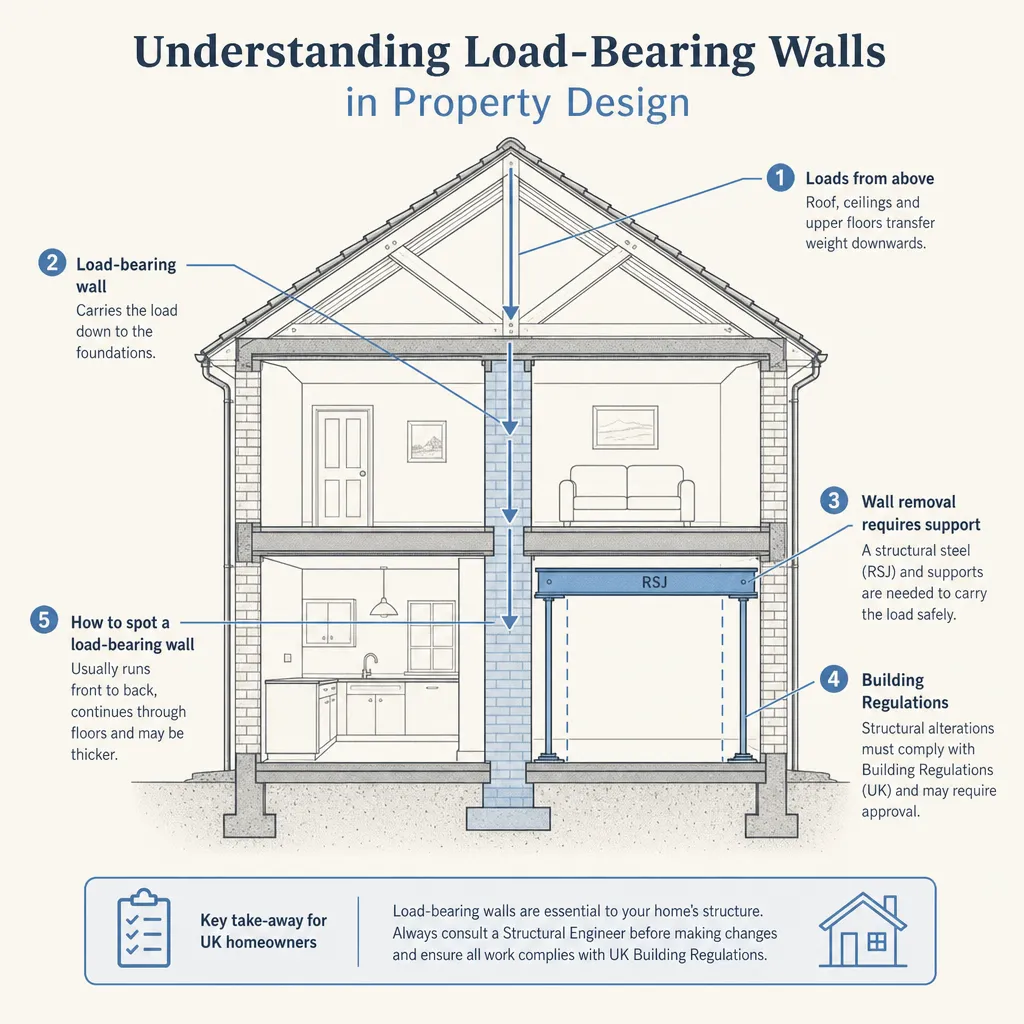
Understanding Load-Bearing Walls in Property Design
A load-bearing wall carries the weight of floors, roofs, or other walls above it down to the foundations. Removing or altering one without a structural engineer's assessment and Building Regulations Part A approval is unsafe and unlawful in the UK. Visual checks alone cannot reliably identify a structural wall.
 Improvement & Build
Maximising Value Through Strategic Home Improvement Projects
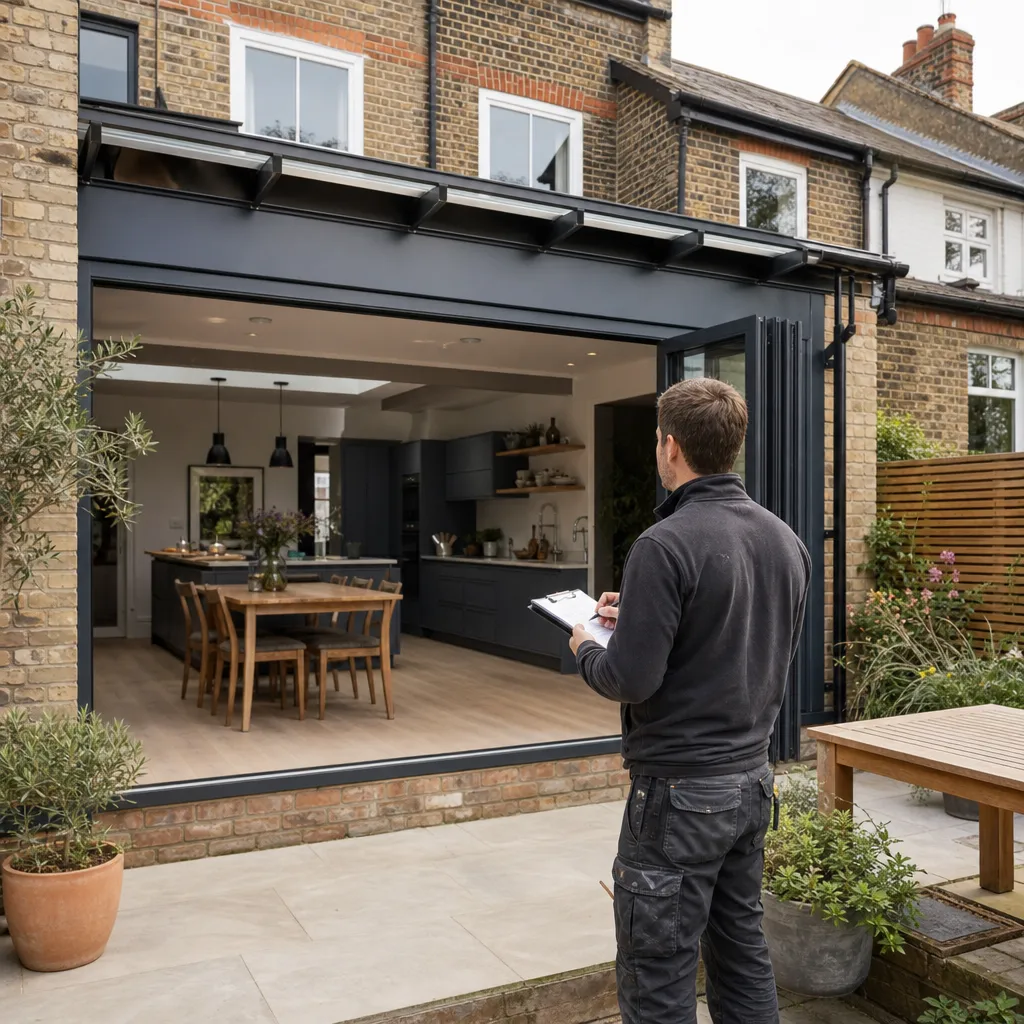
In the UK, loft conversions and kitchen extensions tend to deliver the strongest return on investment, with loft conversions potentially adding around 20% to property value according to Nationwide data. Value uplift depends on local market conditions, quality of workmanship, and whether the correct permissions and building regulations sign-off are in place. A pre-improvement valuation from a RICS-regulated surveyor can help prioritise spending.
 Energy & Retrofit
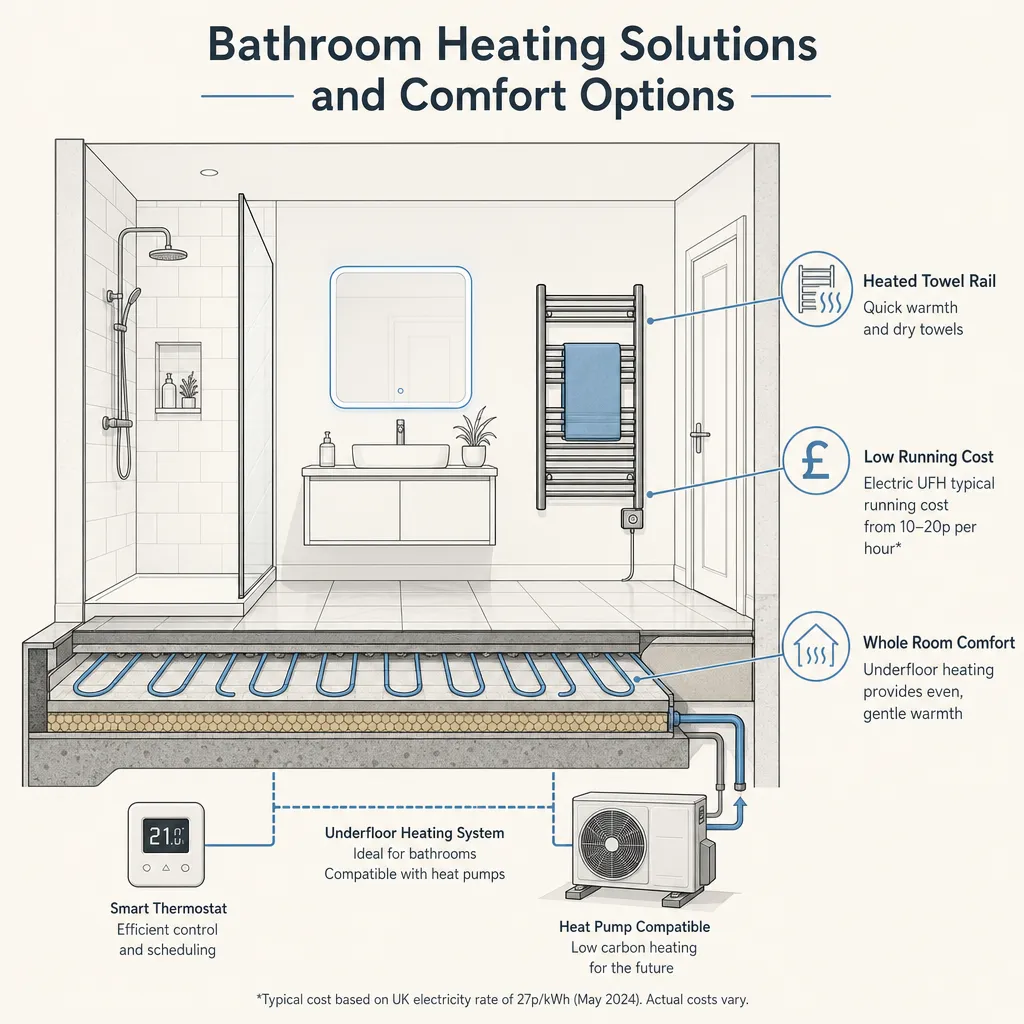
Bathroom Heating Solutions and Comfort Options
UK bathrooms can be heated using electric towel rails, wet radiators on the central heating circuit, electric or wet underfloor heating, or infrared panels. The right option depends on your existing heating system, bathroom size, and floor construction. Electric options are easiest to retro-fit; wet underfloor heating suits heat pump homes best.
 Improvement & Build
Who to Contact for Broken Door Handle Repair
For a broken door handle, a general handyperson can handle most internal timber door repairs, while a joiner or locksmith is better suited to external doors, particularly if the lock mechanism is affected. For UPVC or composite front doors, contact a specialist window and door installer, as the multi-point locking mechanism often requires specific tools and parts to replace correctly.
 Buying & Moving
Navigating Simultaneous Purchase and Sale of Property
When buying and selling simultaneously in England and Wales, both sets of contracts are exchanged on the same day — this is called simultaneous exchange. Most sellers manage this through a property chain, which carries a real collapse risk. Early solicitor instruction and proactive chain coordination are the most effective ways to reduce delays and protect your position.
 Buying & Moving
Property Viewing Checklist: What to Look for When Inspecting a Home
A property viewing is your first chance to assess condition before committing to survey and legal costs. Work through exterior structure, roof, windows, and drainage, then check inside for damp, cracks, heating, and electrics. For leasehold properties, ask about lease length, service charges, and planned major works at the viewing stage.
 Energy & Retrofit
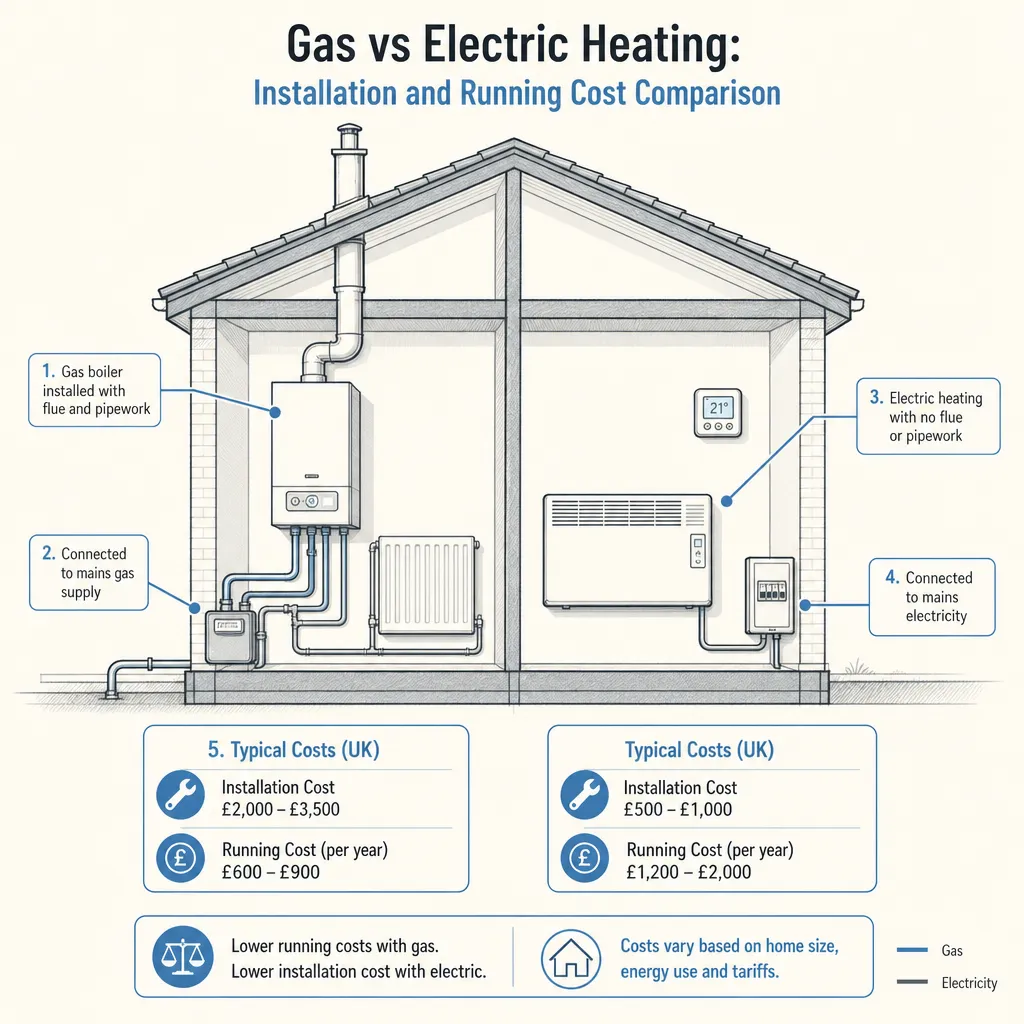
Gas vs Electric Heating: Installation and Running Cost Comparison
Gas central heating usually has lower running costs per kWh than direct electric heating in the UK, though heat pumps can change that equation. Installation costs, your property's insulation level, existing infrastructure, and long-term energy goals all affect which system makes financial sense for your home.
 Improvement & Build
Transforming Outdoor Spaces: Roof Terraces and Elevated Garden Design
Roof terraces in the UK almost always need planning permission and a structural engineer's load capacity assessment before design work begins. Lightweight growing media, wind-tolerant planting, and properly designed drainage are the three key considerations. A garden designer or landscaper can lead the fit-out once structural and planning requirements are confirmed.
 Planning & Pre-Build
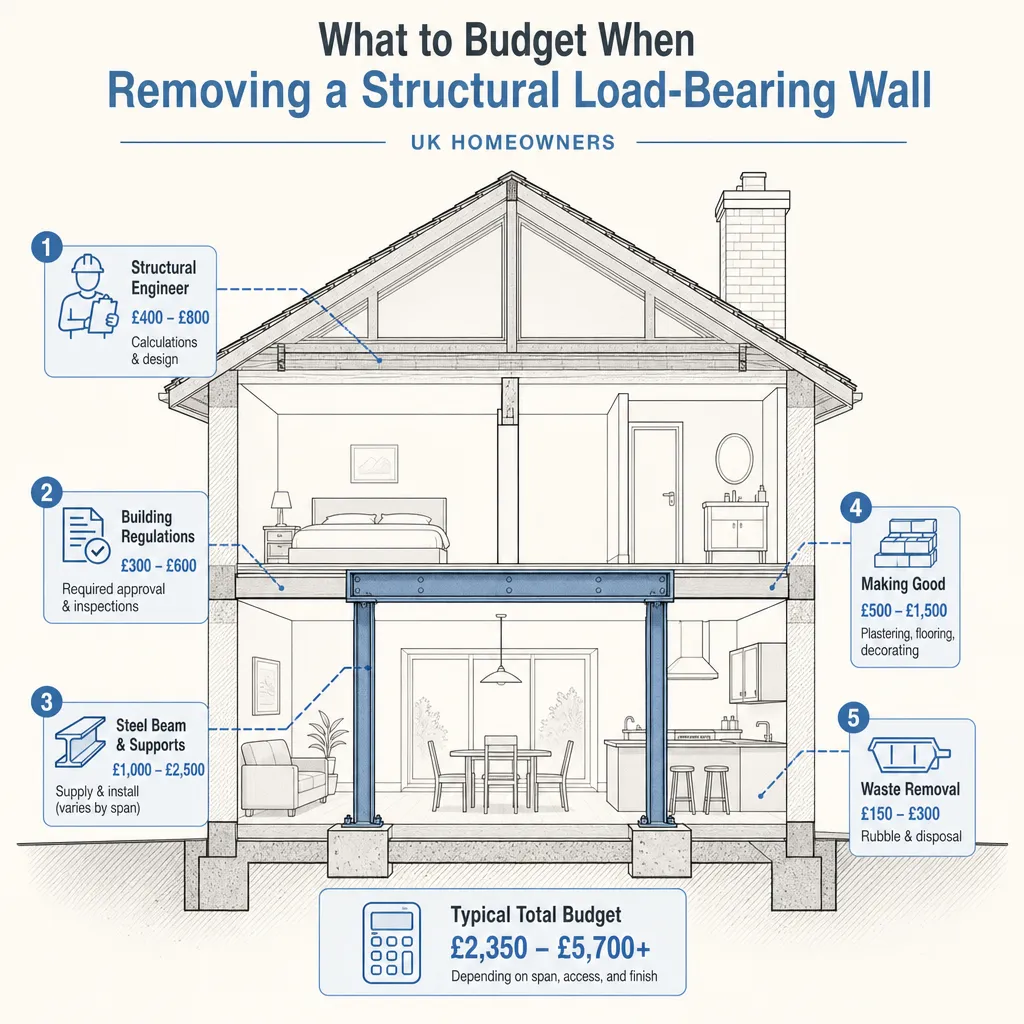
What to Budget When Removing a Structural Load-Bearing Wall
Removing a load-bearing wall in a typical UK home costs £2,500–£8,000 or more in total, covering a structural engineer's calculations, Building Regulations approval, the steel beam, builder's labour, and replastering. Every project requires a structural engineer's specification and building control sign-off before work begins. Costs vary considerably by beam span, location, and what finishing work is included.
 Energy & Retrofit
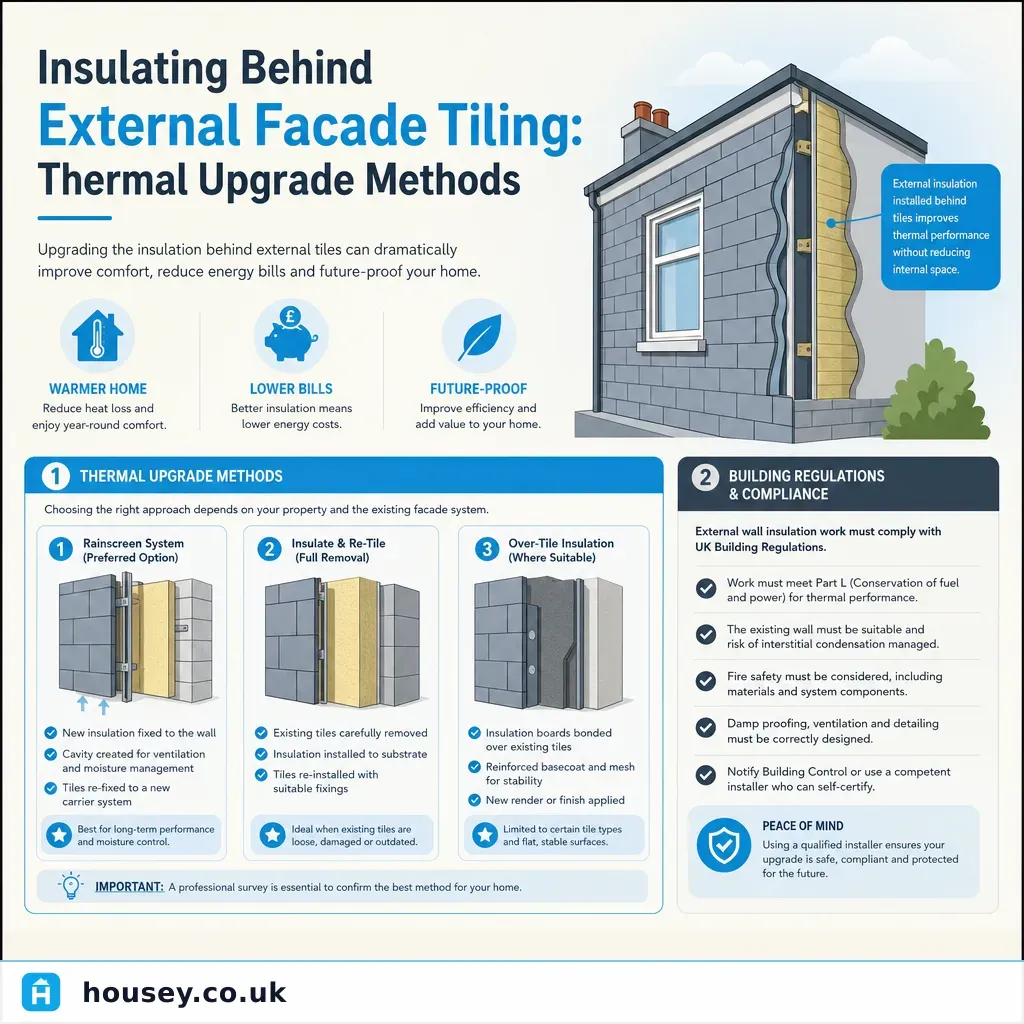
Insulating Behind External Facade Tiling: Thermal Upgrade Methods
Insulating behind external facade tiling is technically complex — the insulation layer must be compatible with tile fixings, manage moisture correctly, and comply with Building Regulations Part L. For most UK properties, the two practical routes are removing and reinstating the tiled facade with insulation behind, or applying insulation internally. Each has significant implications for vapour control and planning permission.