Knowledge Base
Property advice that actually helps
Researched, UK-specific guides for every stage of homeownership — from buying and surveys to retrofit, planning and major works.
 Buying & Moving
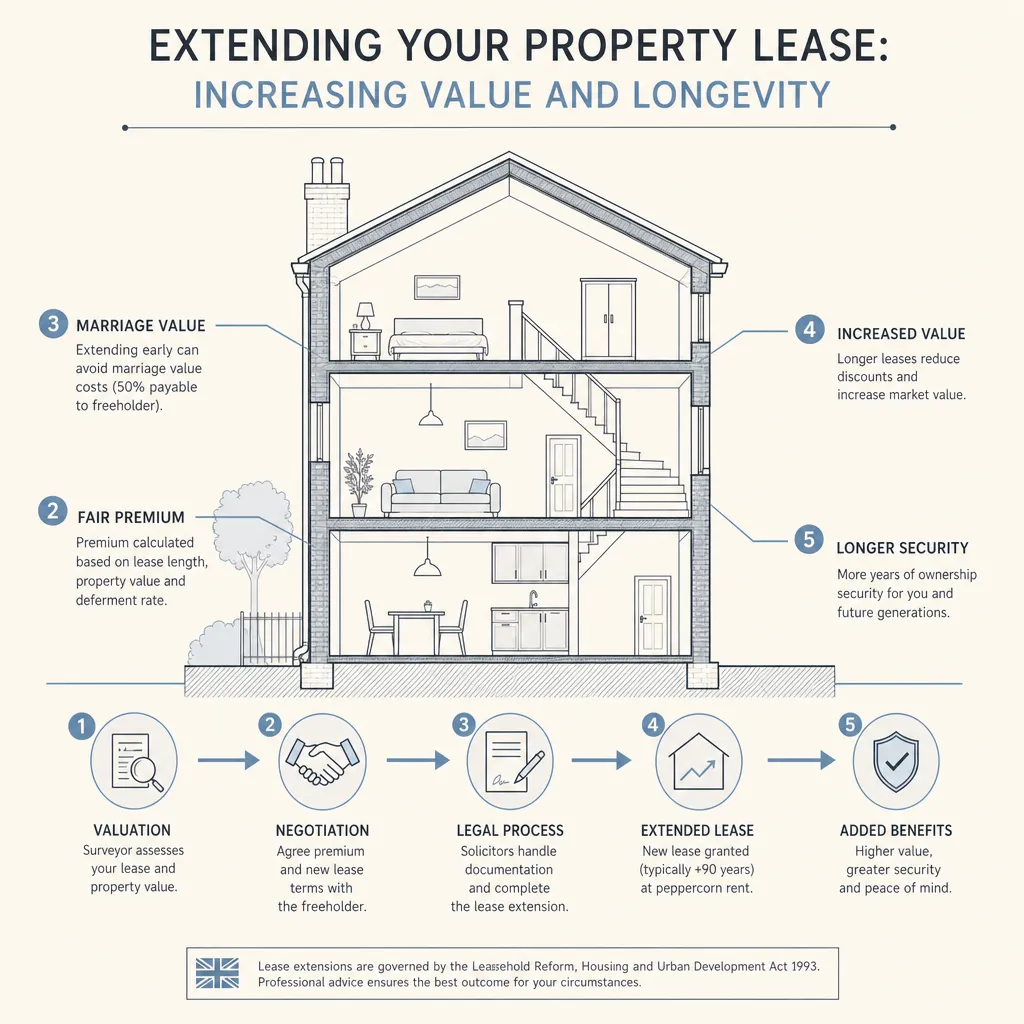
Extending Your Property Lease: Increasing Value and Longevity
Qualifying leaseholders in England and Wales can extend their lease by 90 years at a peppercorn ground rent under the Leasehold Reform, Housing and Urban Development Act 1993. You must have owned the flat for at least two years. Acting before the lease falls below 80 years avoids the more costly marriage value calculation, which can significantly increase the premium payable to the freeholder.
 Surveys & Inspections
Asbestos Testing: Finding a Qualified Surveyor
Finding a qualified asbestos surveyor means choosing a company accredited by UKAS to ISO/IEC 17020, with analysts holding BOHS P402 or equivalent qualifications. There are two main survey types: a Management Survey for buildings in normal use, and a Refurbishment and Demolition Survey required before any structural or intrusive work begins. Never disturb suspect materials before a survey is completed.
 Buying & Moving
Property Comparables: Using Market Data to Assess Home Value
Property comparables — known as 'comps' — are recently sold properties similar in size, type, tenure, and condition to the one being valued. Estate agents and RICS-registered valuers use them to estimate market value. Reviewing three to six local comparables from HM Land Registry data gives buyers and sellers structured evidence for negotiating price.
 Buying & Moving
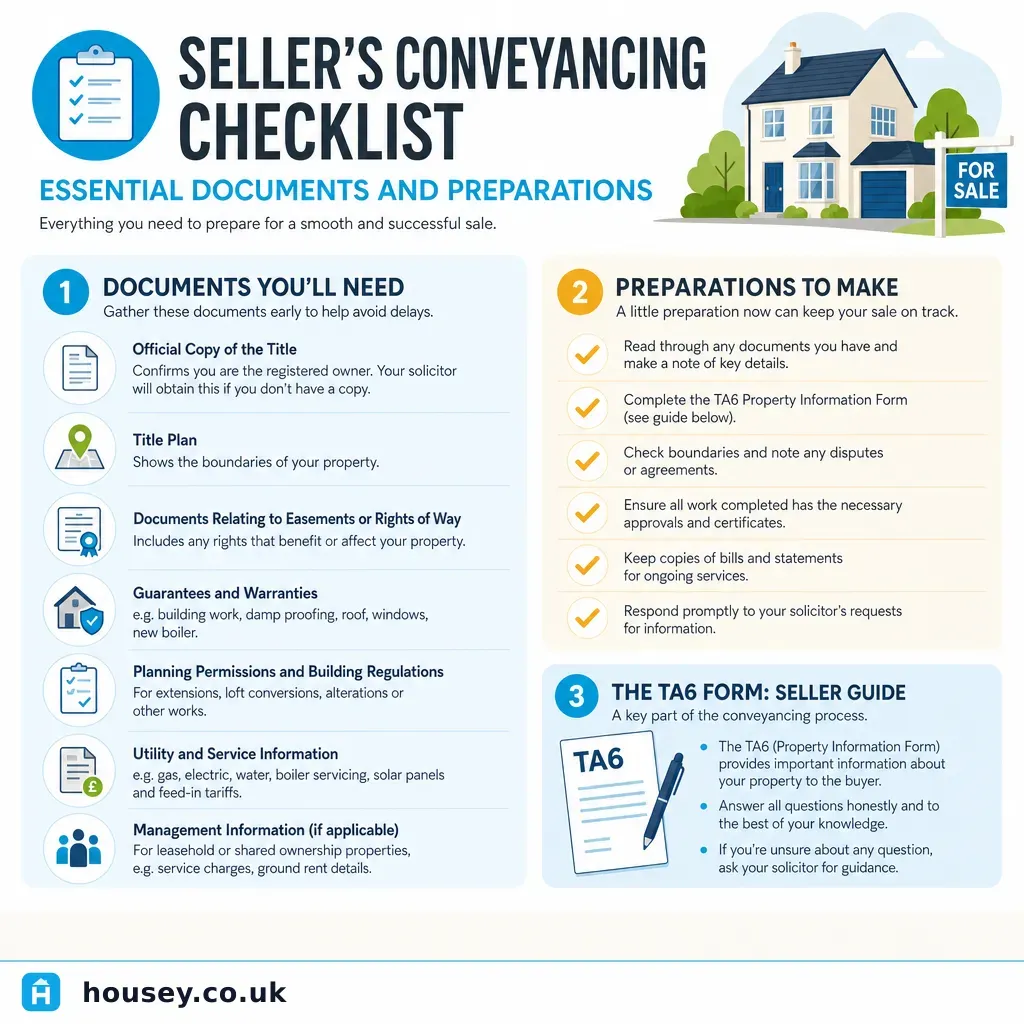
Seller's Conveyancing Checklist: Essential Documents and Preparations
Sellers need to gather title documents, completed Law Society forms (TA6 and TA10), building regulations certificates, planning permissions, and — for leasehold properties — a management information pack before or shortly after accepting an offer. Preparing these documents early, and identifying any missing certificates or title issues before exchange, is one of the most effective ways to reduce delays and prevent a buyer withdrawing.
 Energy & Retrofit
Smart Glass Windows: How Dynamic Glazing Works and Its Benefits
Smart glass changes its optical properties through one of four physical mechanisms: electrochromic glass tints gradually when a small voltage is applied and holds that state without continuous power; PDLC glass aligns liquid crystals to become transparent when mains voltage is applied; SPD glass aligns particles under voltage; and thermochromic glass responds passively to heat. Each technology suits different applications in UK homes.
 Surveys & Inspections
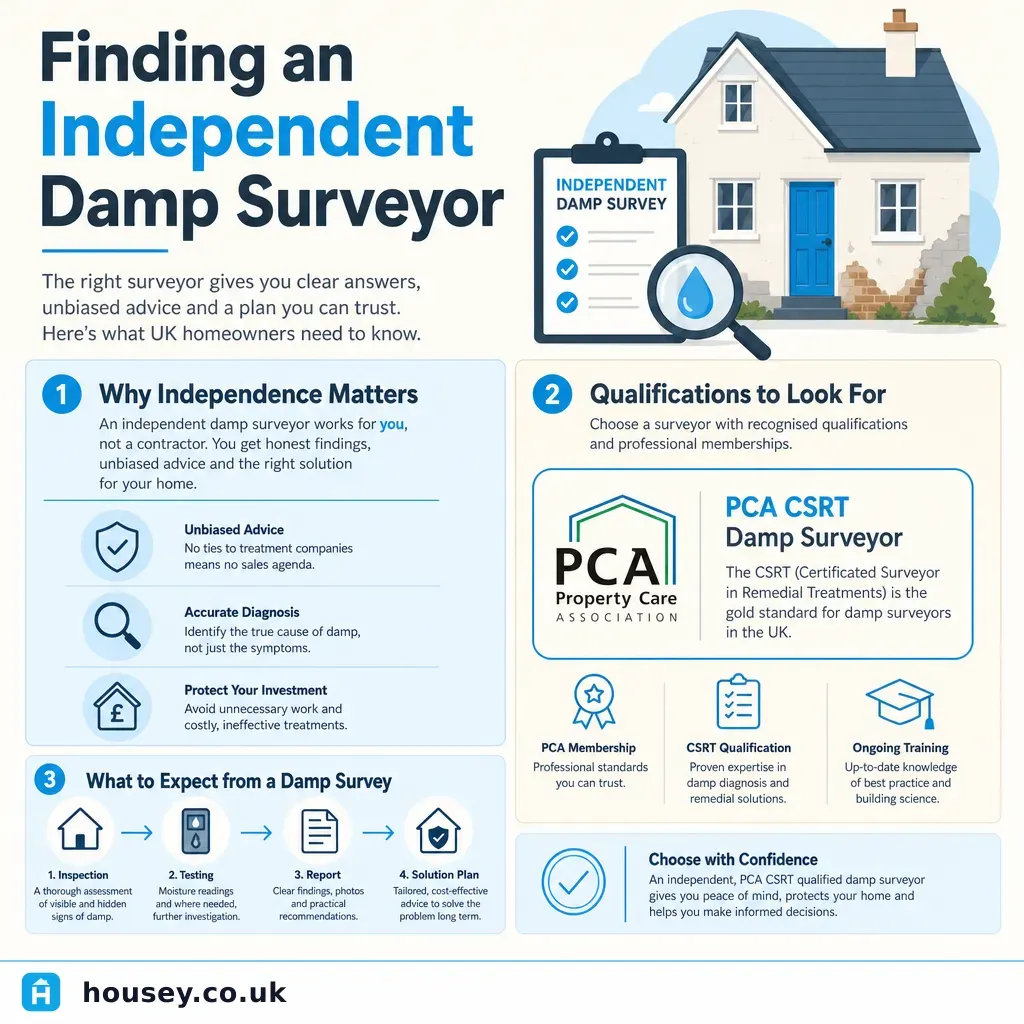
Finding an Independent Damp Surveyor
An independent damp surveyor has no financial tie to remediation contractors, so their diagnosis is less likely to reflect a sales interest. Look for PCA CSRT or RICS membership, insist on a written report that identifies the cause and specifies a remedy, and get at least two independent opinions before committing to any treatment work.
 Improvement & Build
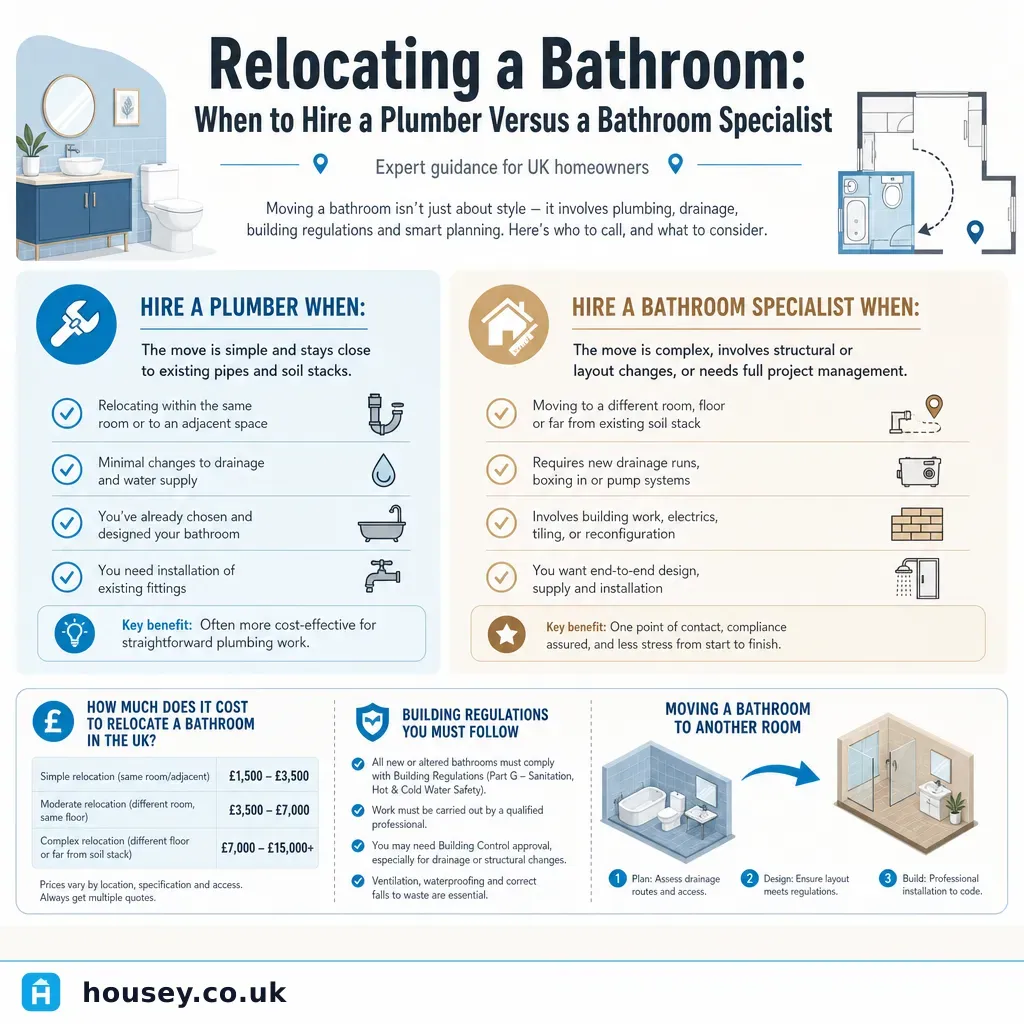
Relocating a Bathroom: When to Hire a Plumber Versus a Bathroom Specialist
Relocating a bathroom usually requires both a qualified plumber for pipework and drainage and other specialist trades for electrics, tiling, and finishes. A plumber manages the technical pipe re-routing; a bathroom specialist or design-and-build firm coordinates all trades from layout to completion. The right choice depends on the project scale, how far the bathroom is moving, and whether structural or building control work is involved.
 Planning & Pre-Build
Removing Chimney Breasts: Structural Considerations and Building Regulations
Removing a chimney breast in England and Wales almost always requires building regulations approval because it is structural work. A structural engineer must design the steel beam needed to carry the chimney load above. Building control must inspect the work at key stages. On terraced or semi-detached homes, the Party Wall etc. Act 1996 may also apply and notices must be served.
 Improvement & Build
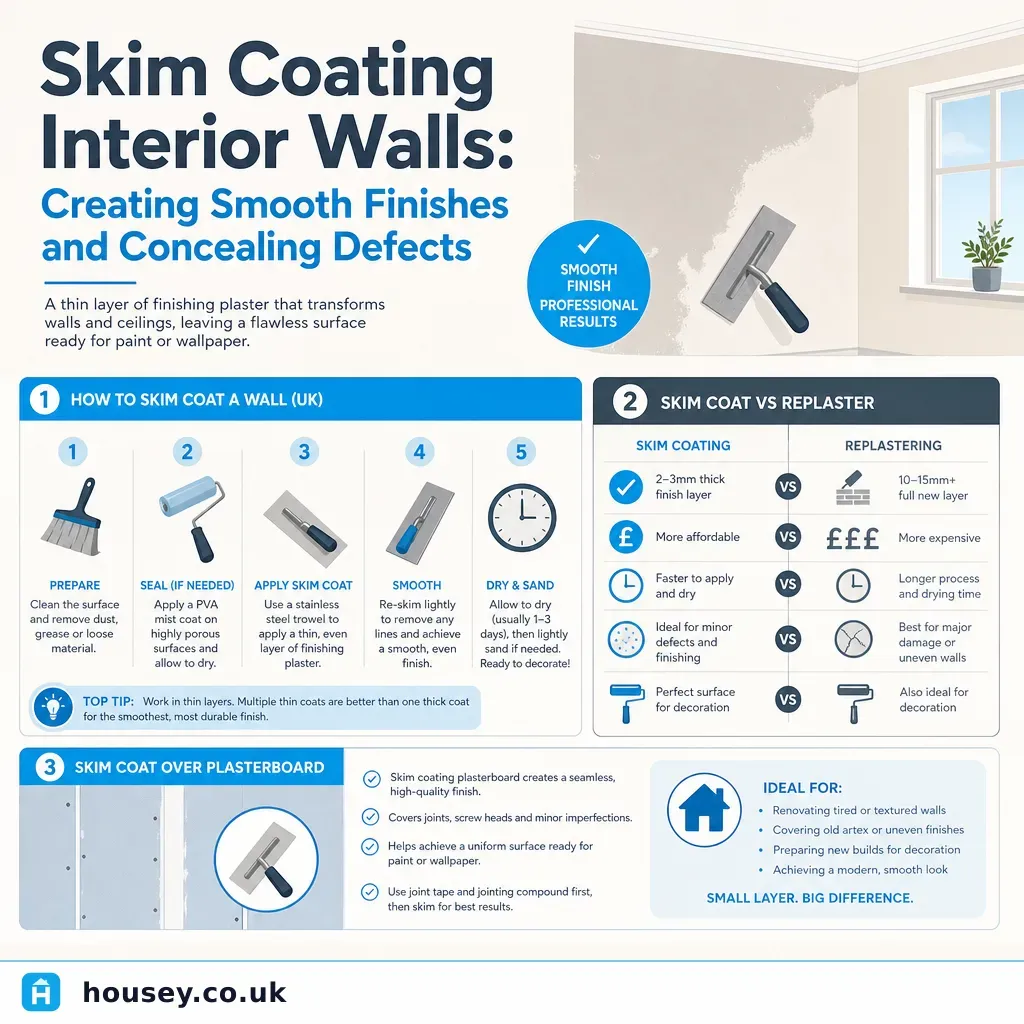
Skim Coating Interior Walls: Creating Smooth Finishes and Concealing Defects
Skim coating applies a 2–3 mm layer of finish plaster over prepared plasterboard or existing plaster, creating a smooth, paint-ready surface. It is needed after new boarding, cable chasing, or where existing plaster is cracked or rough. Correct substrate preparation — PVA priming on new board, mechanical keying on impervious surfaces — is critical for lasting adhesion.
 Improvement & Build
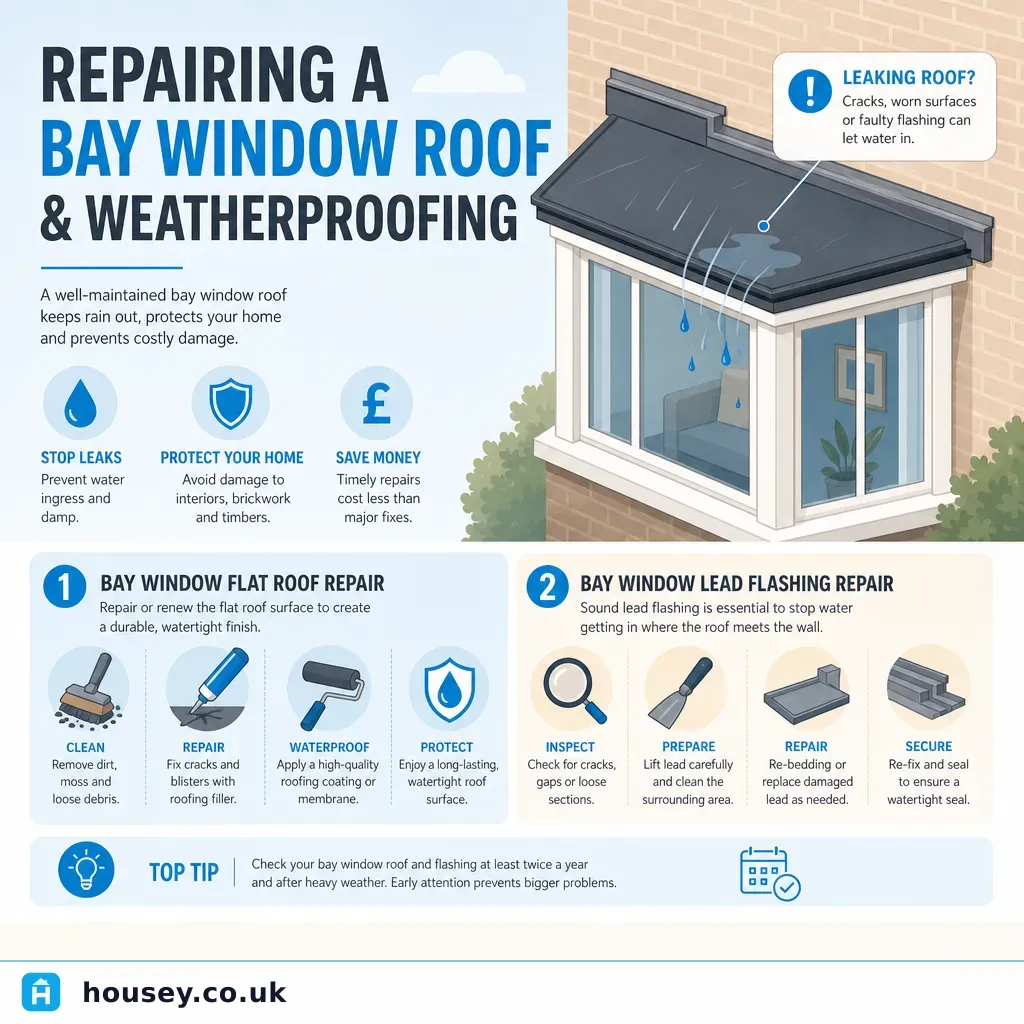
Repairing a Bay Window Roof and Weatherproofing
A bay window roof typically uses felt, lead, or EPDM rubber as its waterproof covering. Leaks usually stem from failed felt, cracked lead flashing, or blocked gutters. Minor maintenance may be DIY-friendly, but work at height and full re-roofing should be carried out by a qualified roofer. Repair costs range from around £150 to over £1,000 depending on the scope of work.
 Improvement & Build
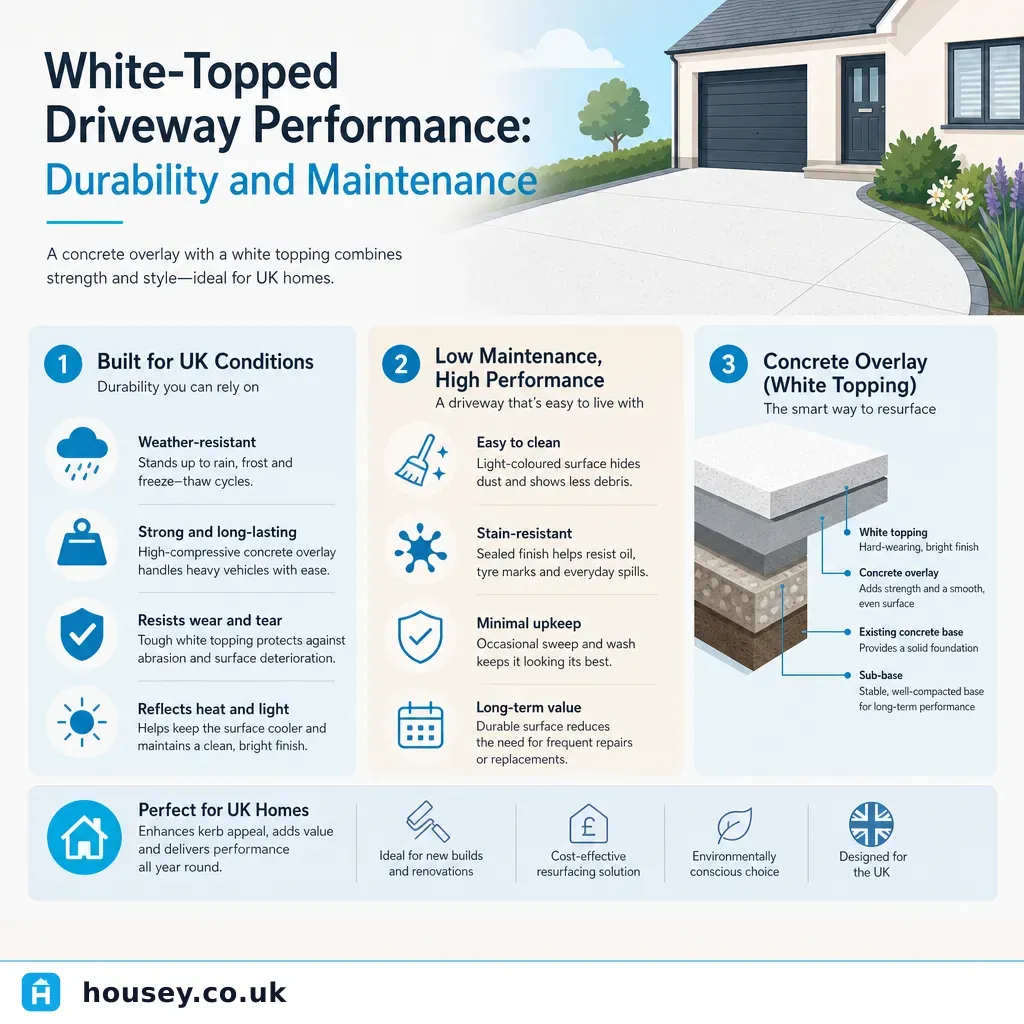
White-Topped Driveway Performance: Durability and Maintenance
A white-topped driveway uses a concrete layer placed over an existing asphalt sub-base, combining the load-spreading of asphalt with the durability of concrete. When correctly installed with adequate thickness and control joints, a white-topping can last 25–40 years with routine maintenance, though the existing asphalt must be structurally sound before the overlay is applied.
 Energy & Retrofit
Mini Split Air Conditioning: Installation Costs and Performance
A mini-split (ductless) air conditioning unit costs roughly £1,500–£4,000 installed for a single room in the UK. Most modern units also provide heating via heat pump mode. F-Gas regulations require a certified engineer to handle refrigerant — this is a legal requirement. Outdoor unit installation on most houses falls under permitted development rights, but restrictions apply to flats, listed buildings, and conservation areas.