Knowledge Base
Property advice that actually helps
Researched, UK-specific guides for every stage of homeownership — from buying and surveys to retrofit, planning and major works.
 Improvement & Build
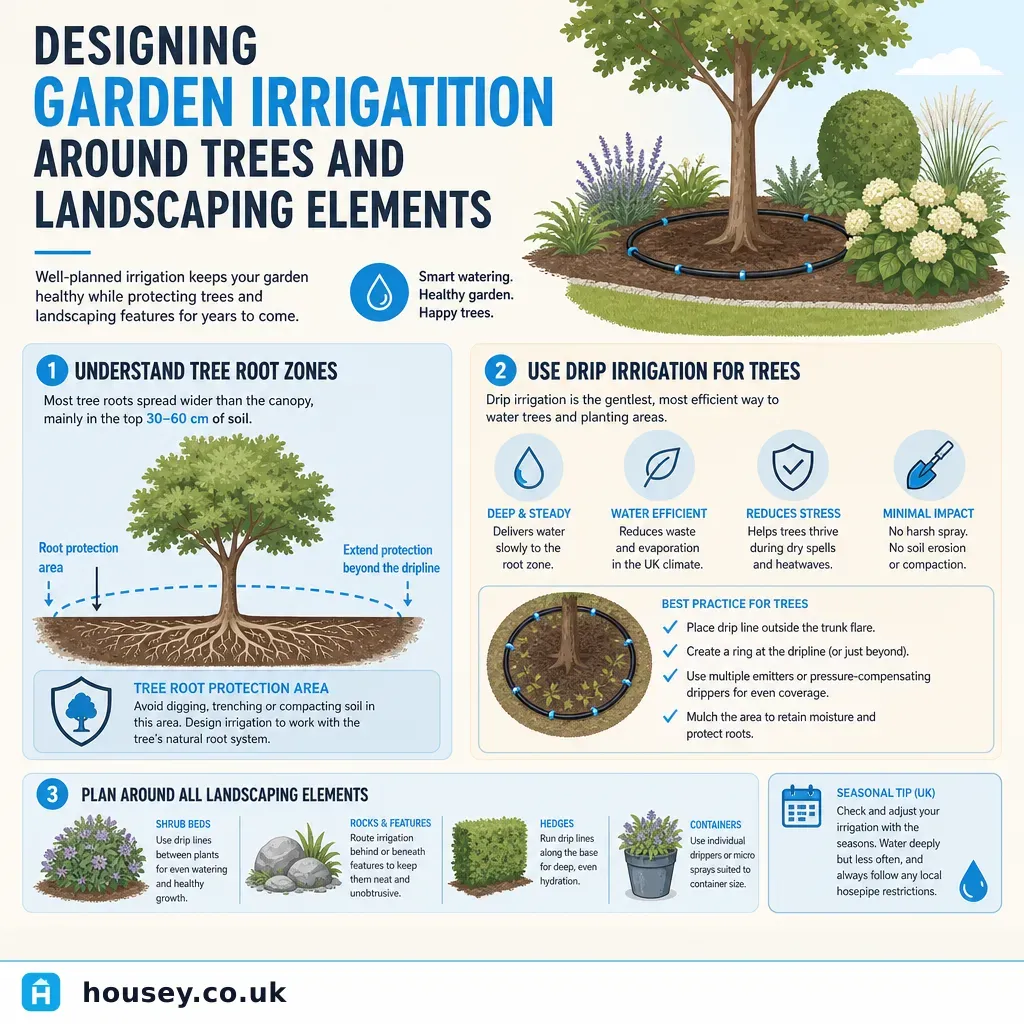
Designing Garden Irrigation Around Trees and Landscaping Elements
Design irrigation around trees by respecting the root protection area defined under BS 5837:2012, using drip or leaky pipe delivery rather than spray heads, and putting the tree zone on its own circuit. Route supply pipes with sleeves under hard surfaces, include a mains backflow prevention device required under the Water Supply (Water Fittings) Regulations 1999, and programme watering for early morning to reduce evaporation and disease risk.
 Improvement & Build
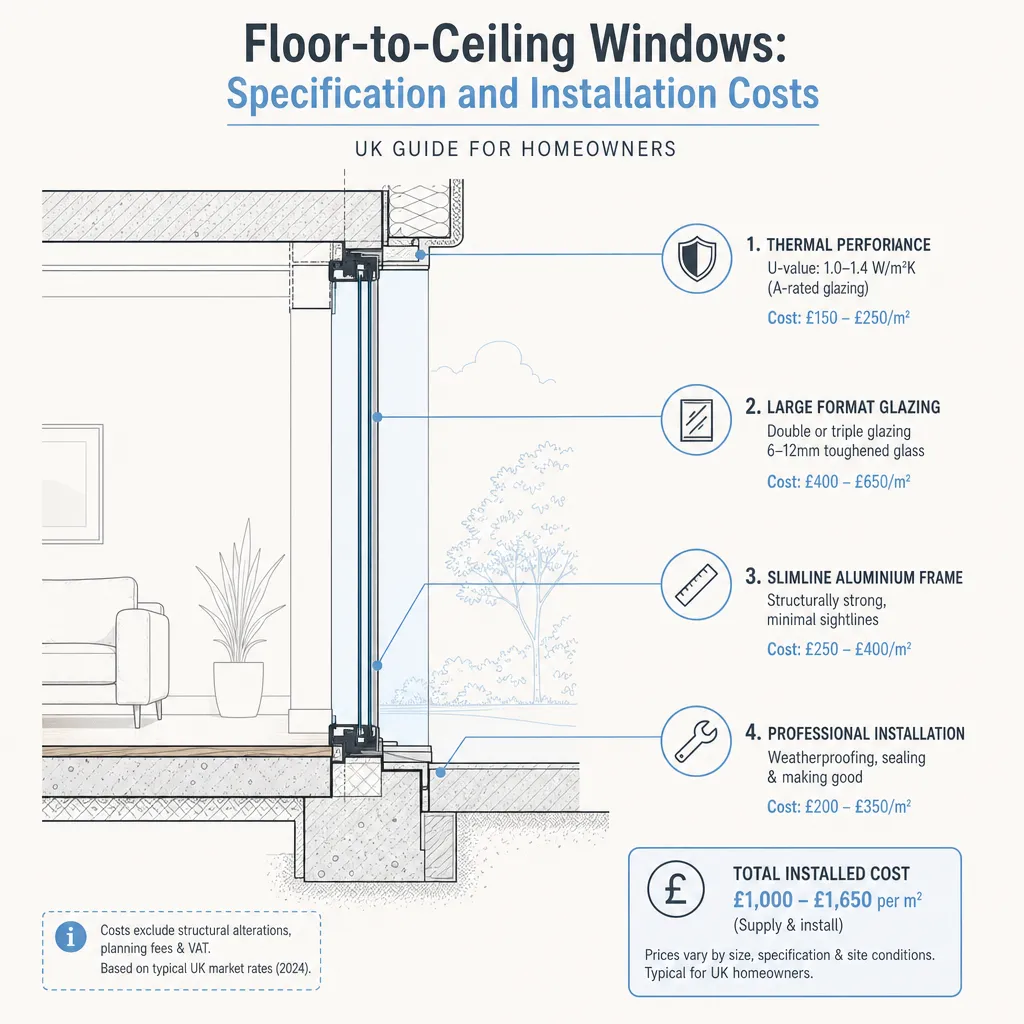
Floor-to-Ceiling Windows: Specification and Installation Costs
Floor-to-ceiling windows in the UK typically cost £1,800–£6,500 per unit installed, depending on glazing type, frame material, and whether structural alterations are needed. Aluminium frames are the most common choice for large-format glazing. A structural engineer is usually required to design the supporting lintel for new or enlarged openings, and Building Regulations Part L sets minimum thermal performance standards.
 Improvement & Build
Property Services in the North West: Finding the Right Specialist
The North West spans some of England's most varied housing stock, from Liverpool's listed Georgian townhouses to Lake District stone farmhouses and Manchester's Victorian terraces. The right specialist depends on your property — an RICS surveyor for pre-purchase inspections, an ARB-registered architect for listed-building works, or a TrustMark retrofit coordinator for ECO4-funded improvements.
 Improvement & Build
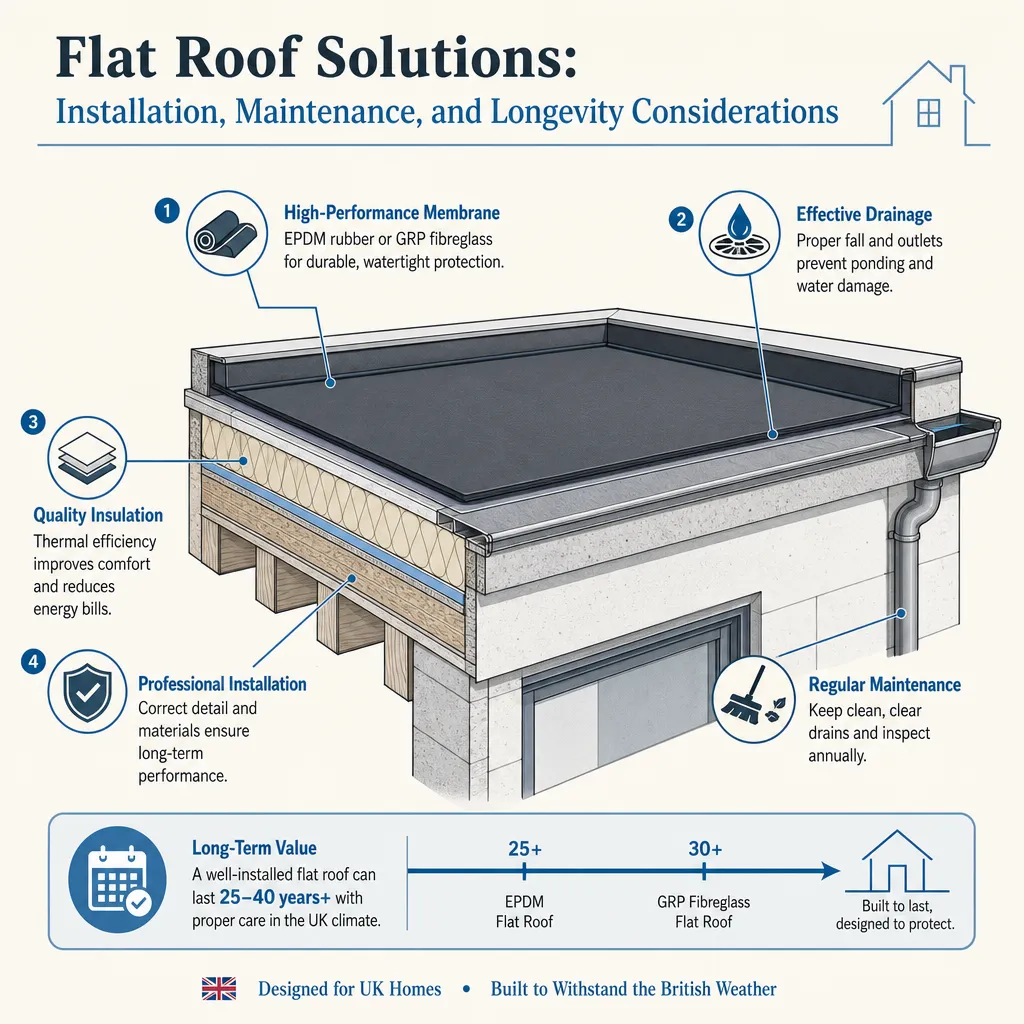
Flat Roof Solutions: Installation, Maintenance, and Longevity Considerations
Flat roofs use several waterproofing systems — EPDM rubber, GRP fibreglass, liquid-applied coatings, modified bitumen felt, lead, and zinc — each with different lifespans and installation requirements. Modern systems typically carry 20–30 year manufacturer guarantees. Building Regulations Part L requires all new flat roofs in England to achieve a U-value of 0.18 W/m²K. Proper falls of at least 1:80 and routine maintenance are essential to reaching expected lifespan.
 Buying & Moving
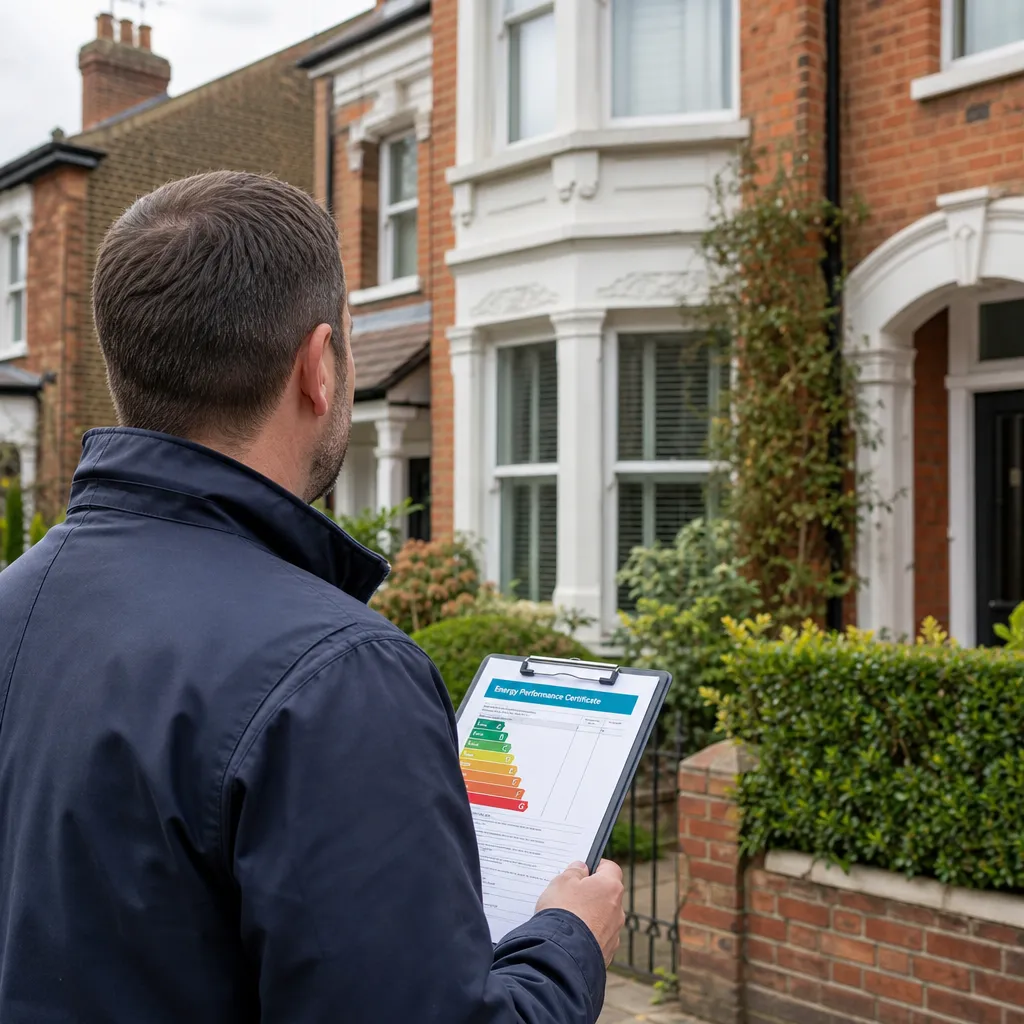
What Do EPC Ratings Tell You? Understanding Energy Performance Certificates When Buying Property
An Energy Performance Certificate (EPC) rates a property from A (most efficient) to G (least efficient) using a score out of 100, based on estimated energy costs, insulation, heating systems, and carbon emissions. It helps buyers understand likely running costs, compare properties, and identify improvement potential before committing to a purchase.
 Buying & Moving
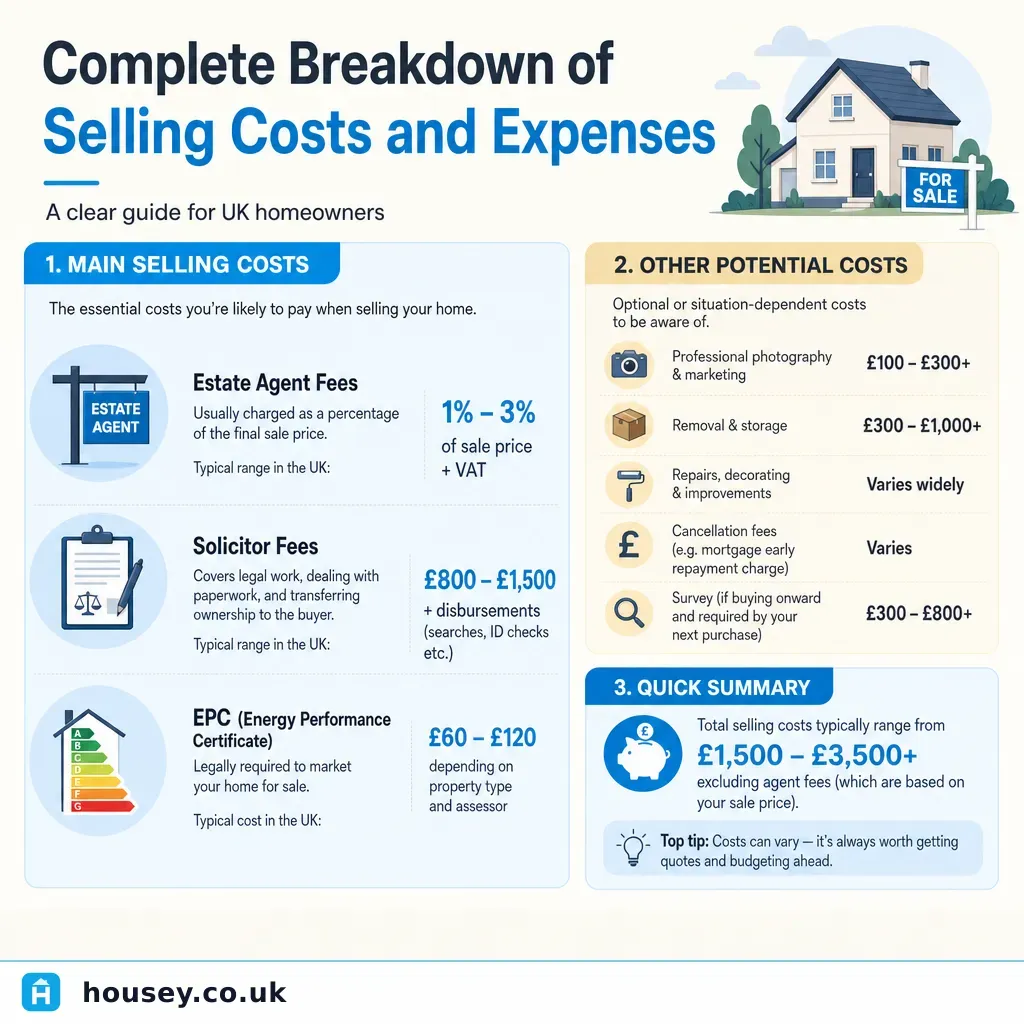
Complete Breakdown of Selling Costs and Expenses
Selling a house in England typically costs 3–5% of the sale price in total fees. Expect to pay 1–3% plus VAT in estate agency fees, £800–£1,800 for a solicitor, and around £60–£120 for an EPC if one is needed. Removal costs and Capital Gains Tax may apply on top, depending on your circumstances.
 Energy & Retrofit
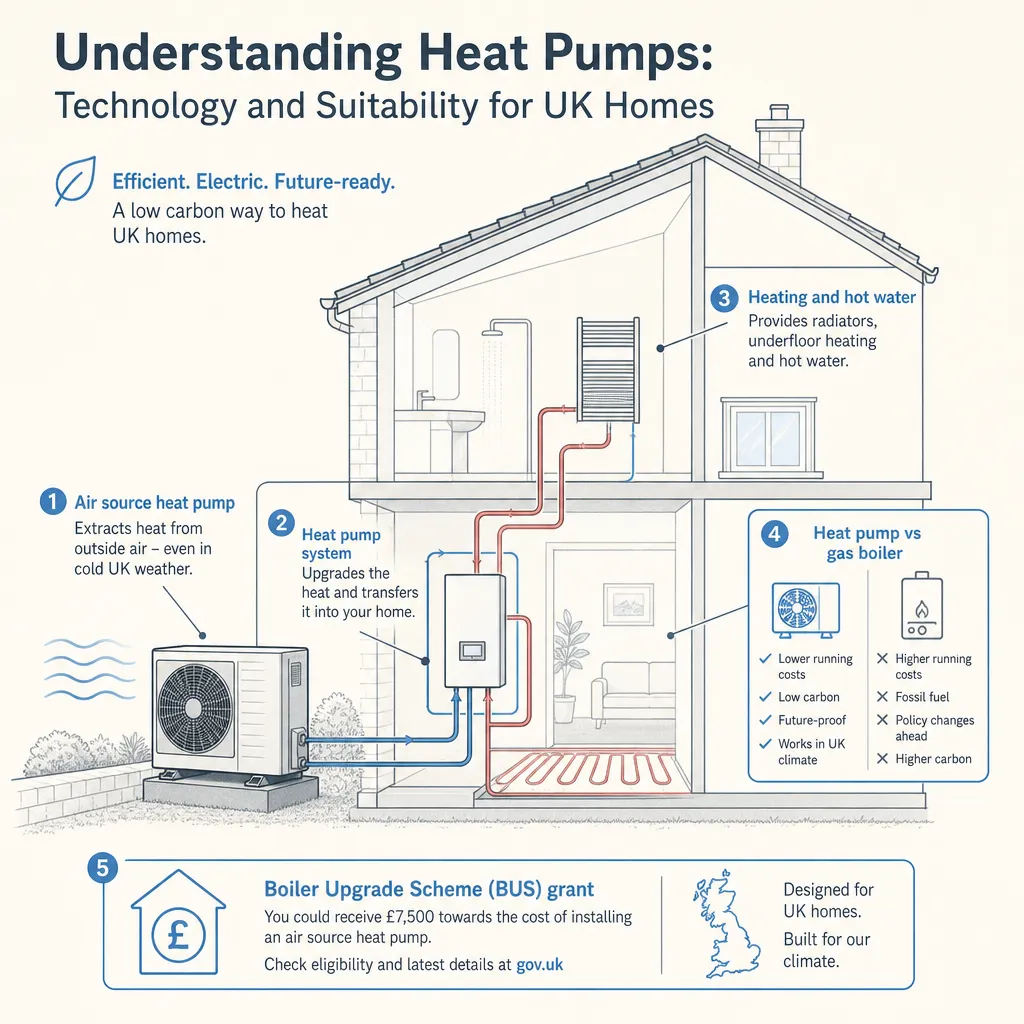
Understanding Heat Pumps: Technology and Suitability for UK Homes
Heat pumps extract heat from the air or ground and transfer it indoors, typically achieving efficiencies of 250–400% compared to a conventional boiler's near 100%. Most UK homes benefit from a heat loss assessment and fabric improvements before installation. The Boiler Upgrade Scheme currently offers a £7,500 grant for eligible air and ground source heat pump installations.
 Improvement & Build
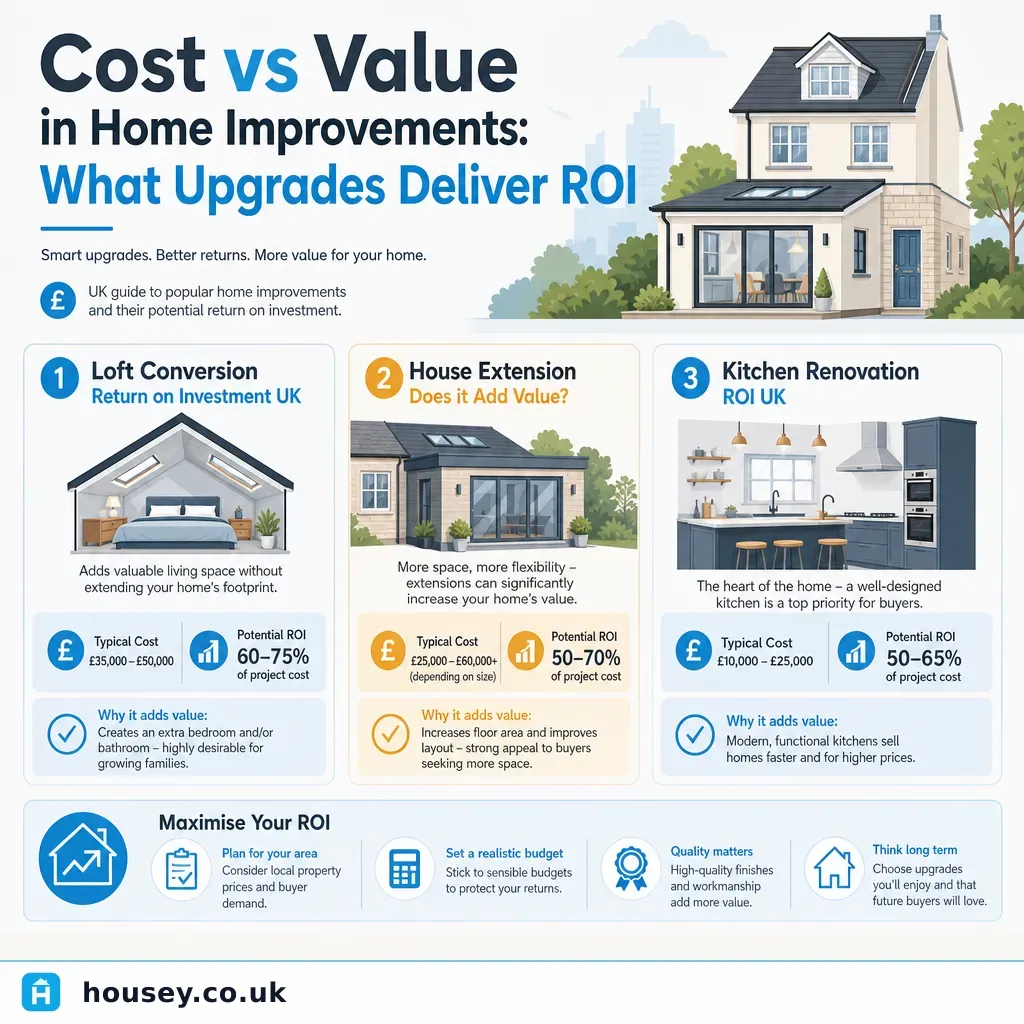
Cost vs Value in Home Improvements: What Upgrades Deliver ROI
Not all home improvements deliver the same return when you sell. In the UK, space-adding projects — loft conversions and extensions — typically offer the strongest uplift, while cosmetic updates rarely recover their full cost. The returns depend on your location, local property values, how well the work is executed, and whether buyers in your area value that particular feature.
 Improvement & Build
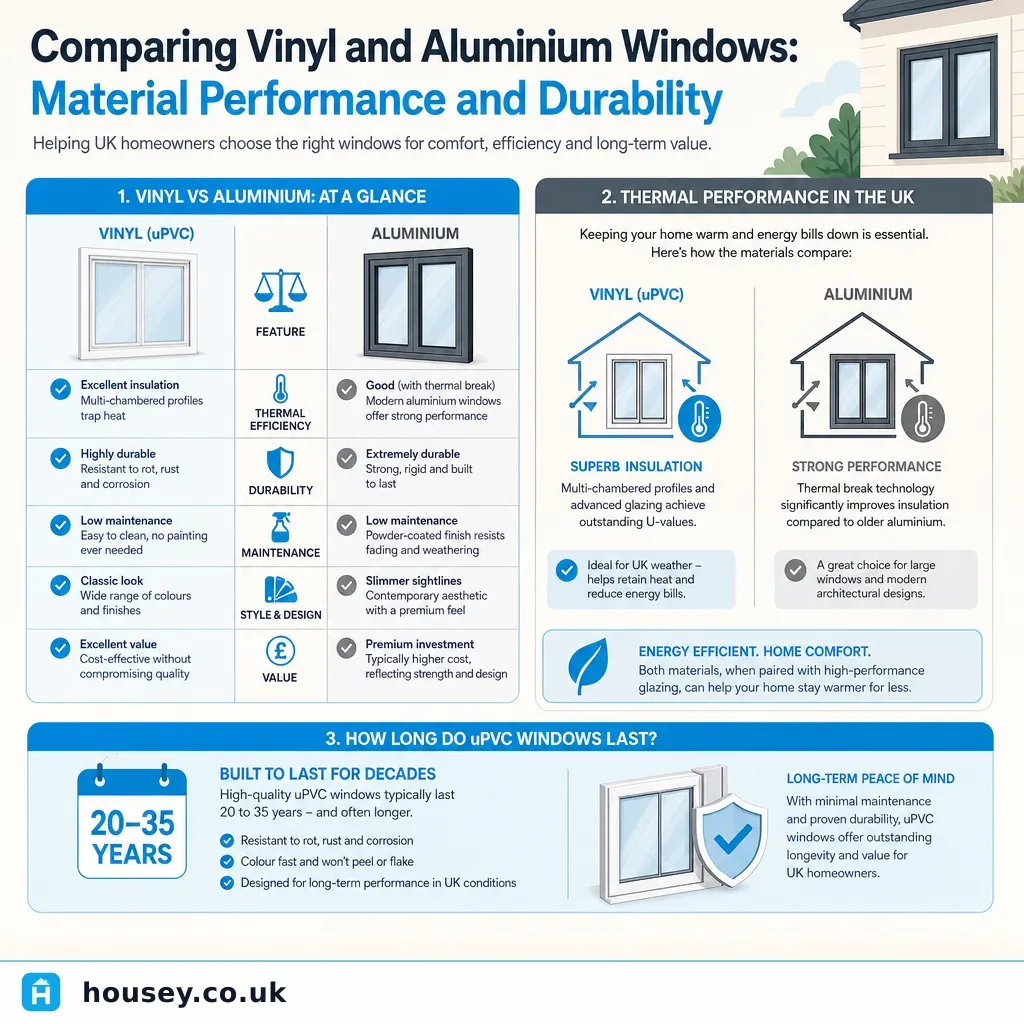
Comparing Vinyl and Aluminium Windows: Material Performance and Durability
uPVC (vinyl) and aluminium windows both meet UK Building Regulations Part L when properly specified. uPVC is lower cost with a 20–35 year lifespan; aluminium lasts 45 years or more and allows slimmer profiles suitable for conservation areas. Thermal performance depends mainly on the glazing unit — compare whole-window U-values rather than frame material claims when choosing.
 Improvement & Build
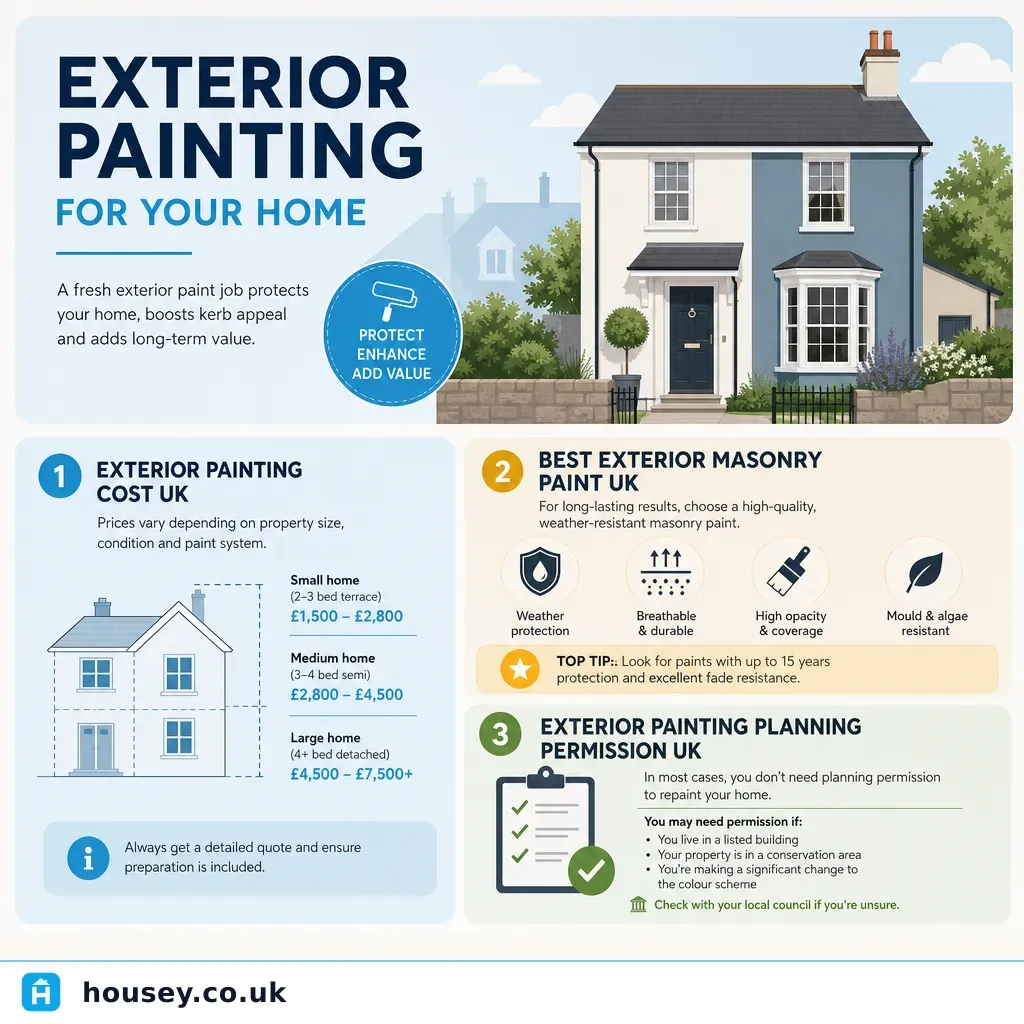
Exterior Painting for Your Home
Exterior painting protects your home from the UK's wet climate and can significantly boost kerb appeal. The key decisions are choosing a breathable, weatherproof masonry paint suited to your wall type, ensuring thorough surface preparation, and — for work above 2 metres — using a qualified tradesperson with appropriate access equipment. Most exterior paint jobs last 10–15 years with good preparation.
 Buying & Moving
Property Conveyancer Licensing: Professional Qualifications and Regulation
In England and Wales, conveyancing can only be carried out by authorised persons. Licensed conveyancers are regulated by the Council for Licensed Conveyancers (CLC), solicitor-conveyancers by the Solicitors Regulation Authority (SRA), and Chartered Legal Executives by CILEx Regulation. All must hold professional indemnity insurance and be listed on a public register before you instruct them.
 Improvement & Build
Buying guide: composite doors for homeowners
A composite door is a multi-layer product with a glass reinforced plastic outer skin, solid foam core, and multipoint locking as standard. Before buying, confirm the door's U-value meets Building Regulations Part L (1.4 W/m²K or better), check for PAS 24 security certification, and use a FENSA or CERTASS-registered installer to self-certify compliance.