Knowledge Base
Property advice that actually helps
Researched, UK-specific guides for every stage of homeownership — from buying and surveys to retrofit, planning and major works.
 Improvement & Build
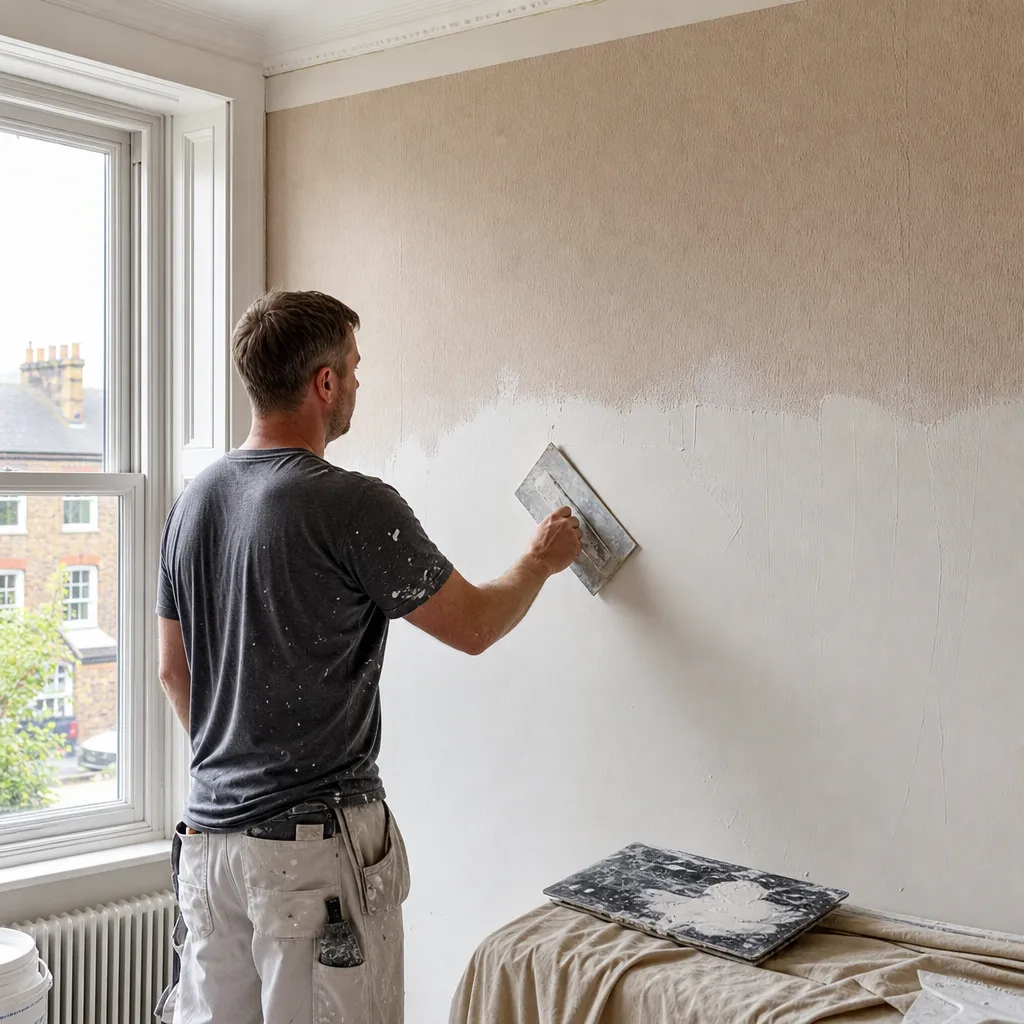
Skimming Over Wallpaper Lining: Surface Preparation and Results
You can skim plaster over wallpaper lining paper, provided the paper is fully adhered, the correct weight (usually 1,200g) is used, and the surface is primed with diluted PVA before applying a 2–3mm skim coat. Preparation quality determines the final finish — poorly fixed paper or skipped priming typically causes lifting, bubbling, or cracking.
 Improvement & Build
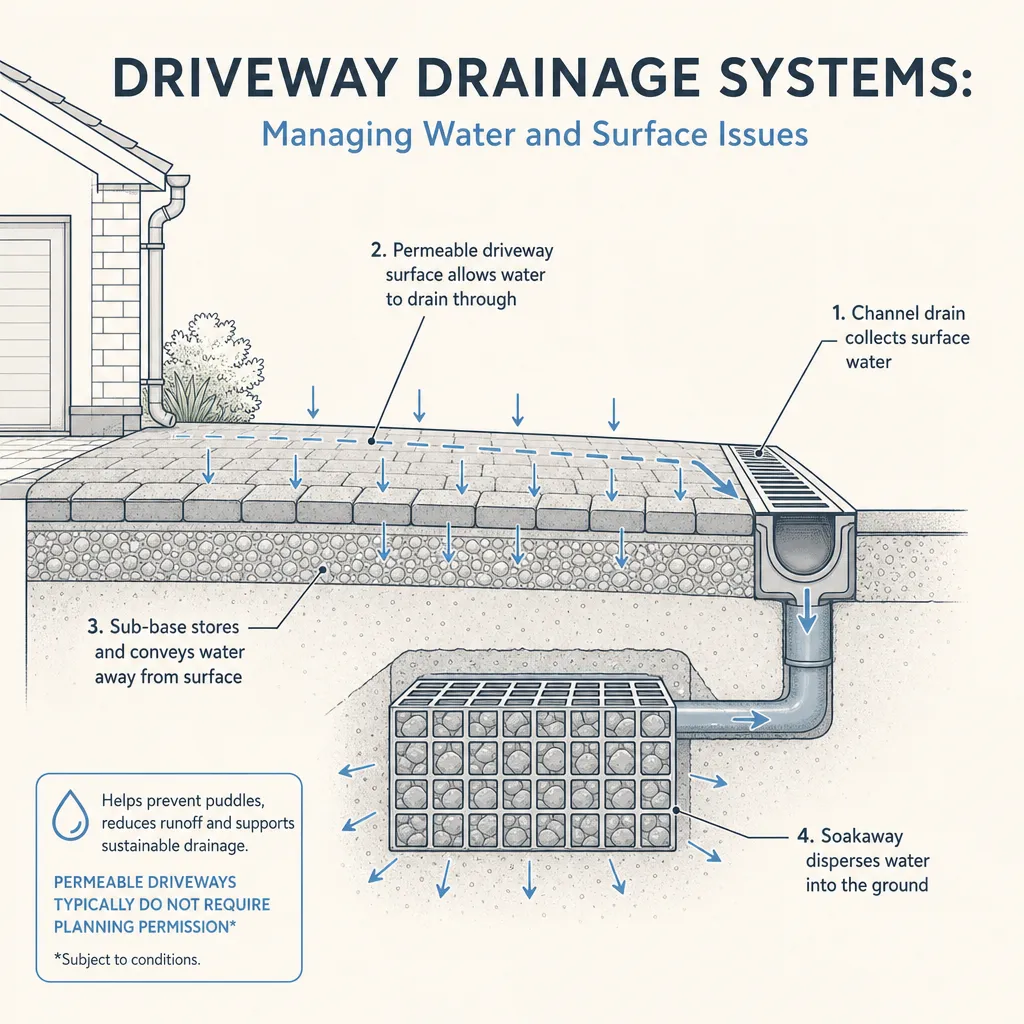
Driveway Drainage Systems: Managing Water and Surface Issues
The right driveway drainage system depends on your surface type, soil permeability, and local flood risk. Permeable surfaces are simplest for planning compliance; channel drains to a soakaway suit most impermeable driveways. In England, impermeable surfaces over 5m² at the front of a house require planning permission unless surface water is managed sustainably.
 Improvement & Build
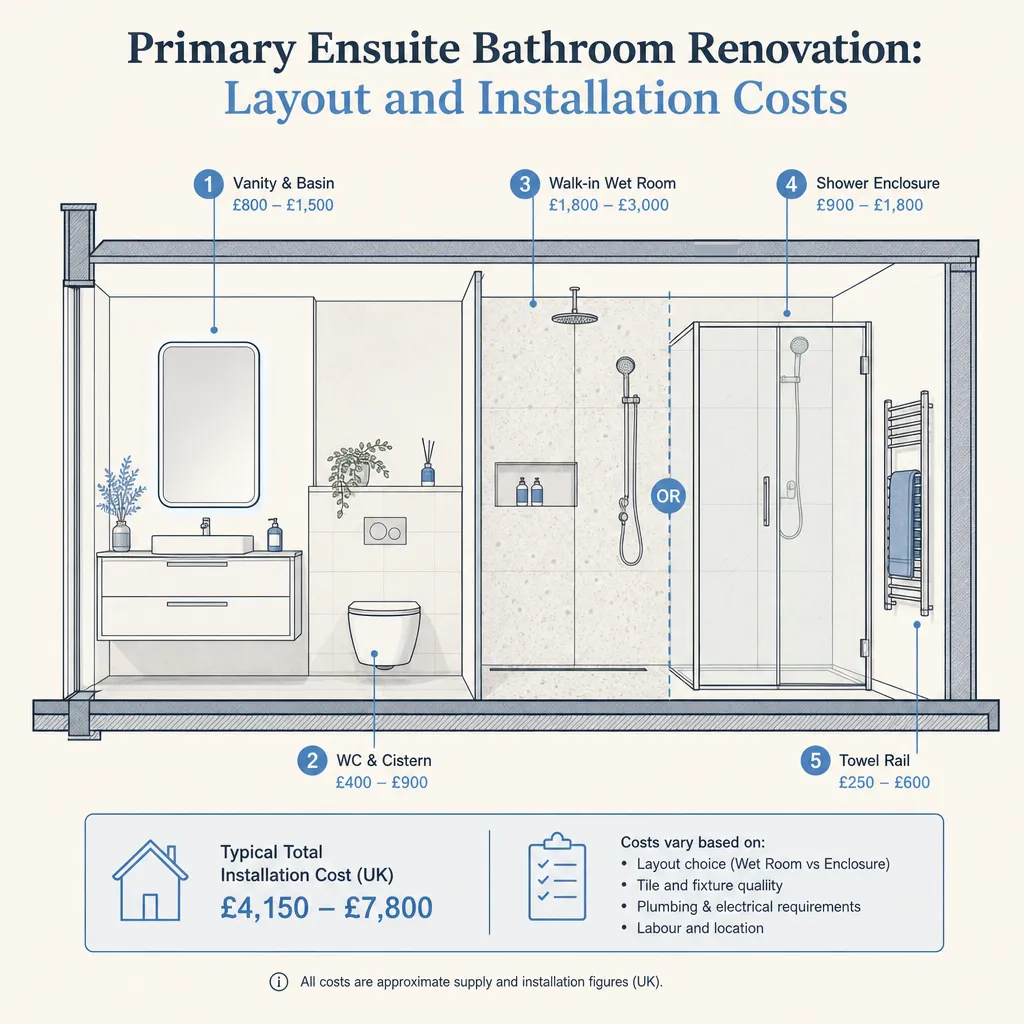
Primary Ensuite Bathroom Renovation: Layout and Installation Costs
A primary ensuite renovation in the UK typically costs between £3,000 and £12,000, depending on size, layout, and specification. Work usually covers toilet, basin, shower, tiling, extraction, plumbing, and electrics. New circuits must comply with Part P, drainage connections with Part H, and ventilation with Approved Document F. Costs in London and the South East are often higher.
 Energy & Retrofit
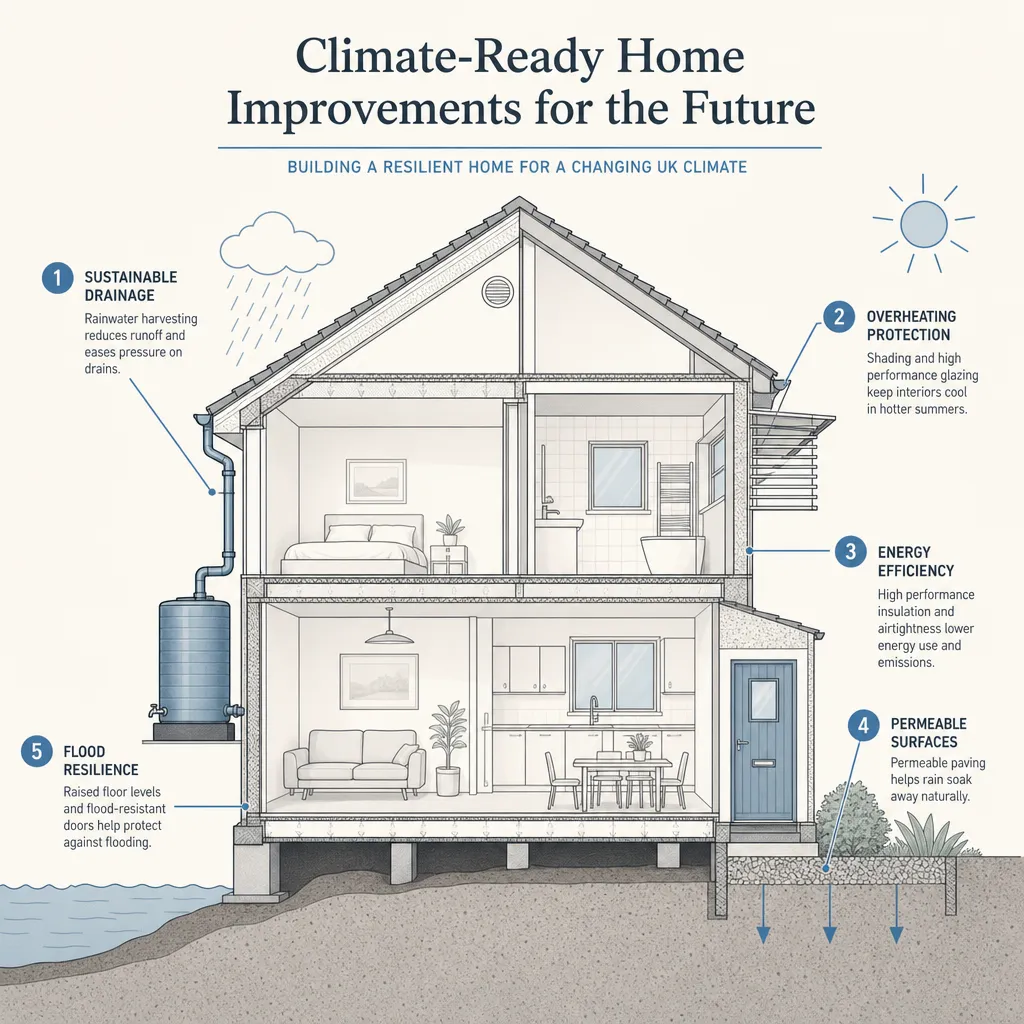
Climate-Ready Home Improvements for the Future
Climate-ready home improvements tackle four main risks for UK properties: overheating, increased rainfall and flooding, storm damage, and energy cost volatility. Priority measures include external shading, improved insulation, permeable paving, flood barriers, heat pumps, and solar PV. The right combination depends on your property type, location, and existing condition.
 Improvement & Build
Fixing Leaking Back Doors and Water Ingress
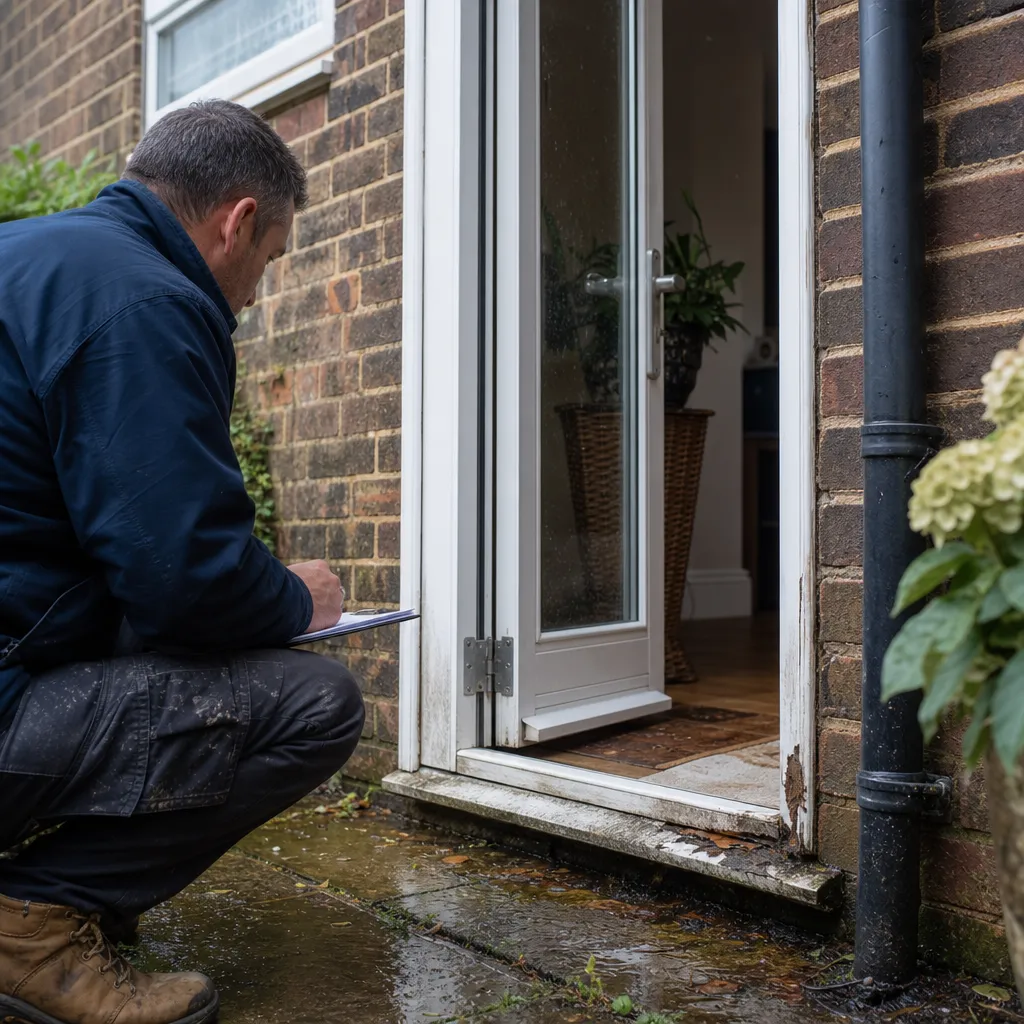
Most leaking back doors in UK homes fail at one of three points: the threshold or door sill joint, the frame-to-masonry mastic seal, or the door weatherstrip. Diagnose the entry point first by checking each zone separately. Resealing the external frame joint is the most common fix; poor drainage outside the door must also be addressed or the problem will return.
 Buying & Moving
Understanding Leasehold Property: Rights and Responsibilities
Leasehold means you own a time-limited interest in a property while the freeholder owns the land and building. As a leaseholder you pay service charges, comply with lease covenants, and have statutory rights to extend your lease or buy the freehold. Lease length, ground rent terms, and service charge history are the three most important things to check before buying a leasehold flat.
 Planning & Pre-Build
Wall Cavities: Design Principles vs. Construction Reality
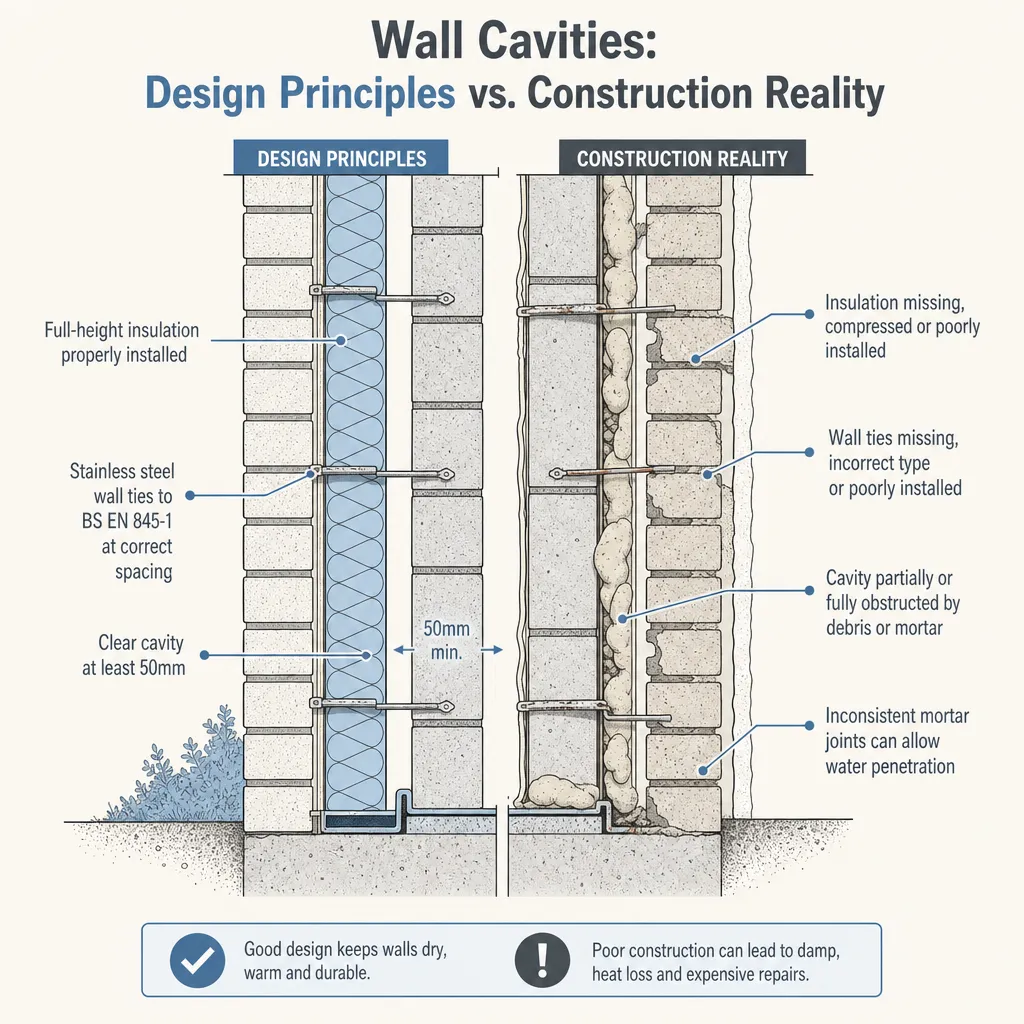
A UK cavity wall is designed to resist weather, control heat loss, and structurally link two masonry leaves. In practice, mortar droppings bridging ties, gaps in insulation at junctions, and missing vertical damp-proof courses at window reveals are the most common construction defects — each capable of undermining both the thermal and moisture performance of an otherwise compliant design.
 Planning & Pre-Build
Home Improvements Not Requiring Planning Permission
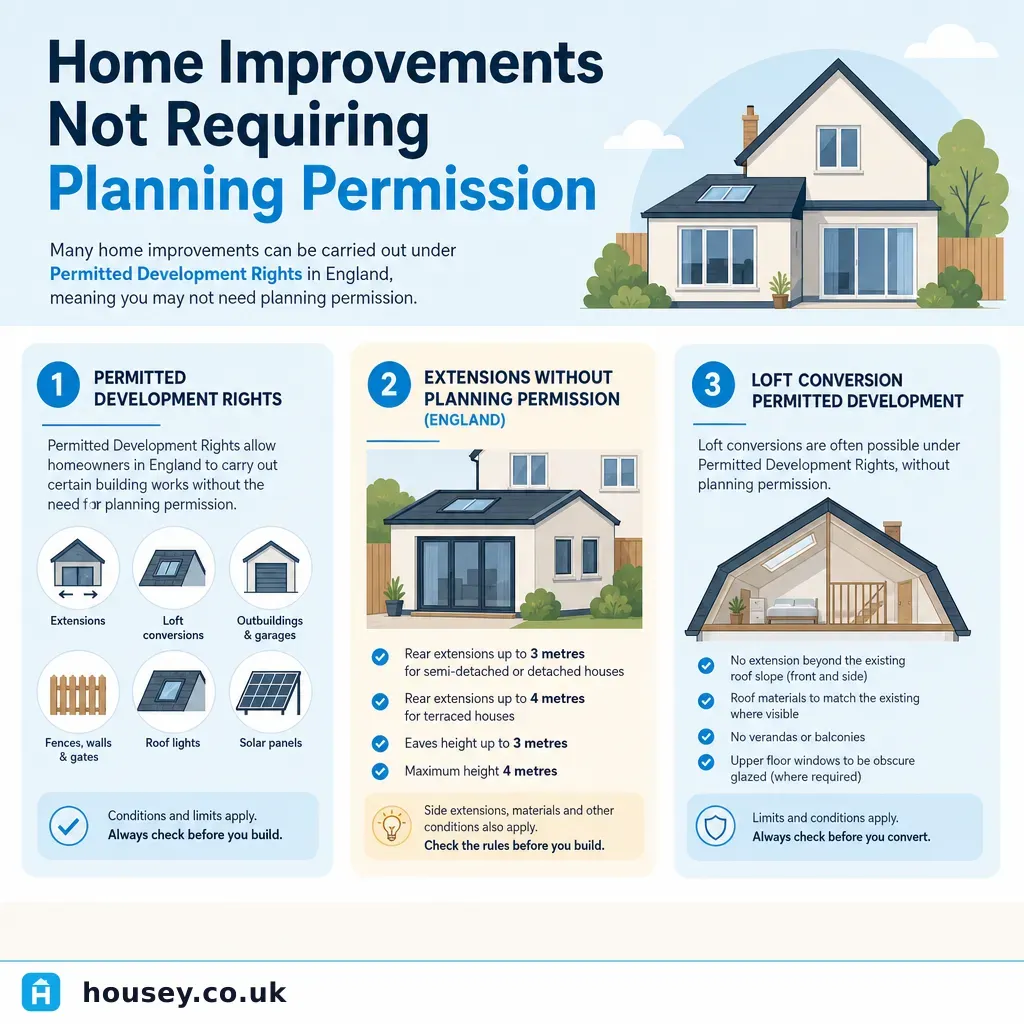
Many common home improvements in England fall under Permitted Development Rights and do not require a planning application. These include single-storey rear extensions up to 4 metres on detached houses, loft conversions within set volume limits, and most garden outbuildings. Rights are restricted for listed buildings, flats, and conservation area properties — and a Lawful Development Certificate is strongly advisable before committing to significant works.
 Improvement & Build
Evaluating And Planning Renovations For Properties Requiring Modernisation
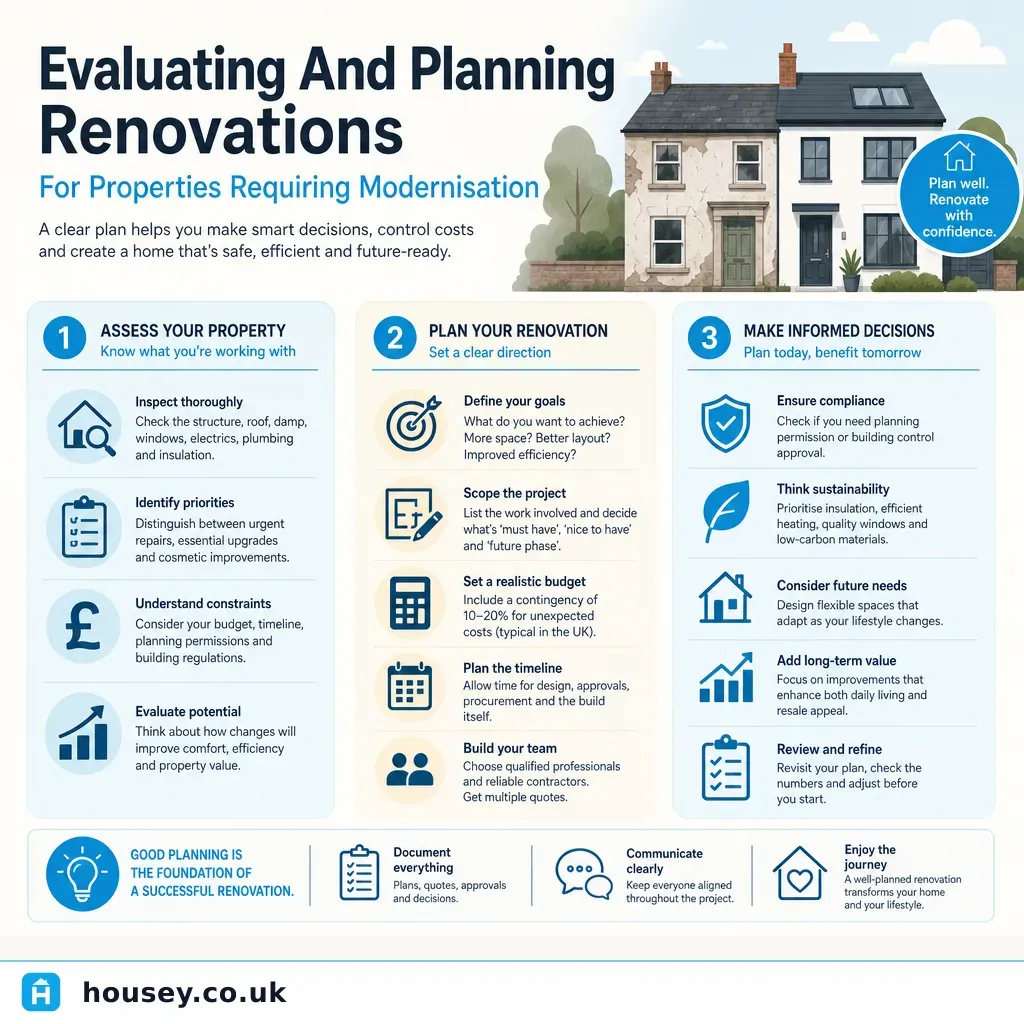
Start by commissioning a condition survey — RICS Level 3 for pre-1919 properties — to identify structural defects, damp, and services issues before finalising a budget. Categorise works into safety-critical, regulatory compliance, and cosmetic priorities. Obtain at least three itemised quotes, allow a 15–20% contingency, and confirm which works require building regulations approval before engaging contractors.
 Planning & Pre-Build
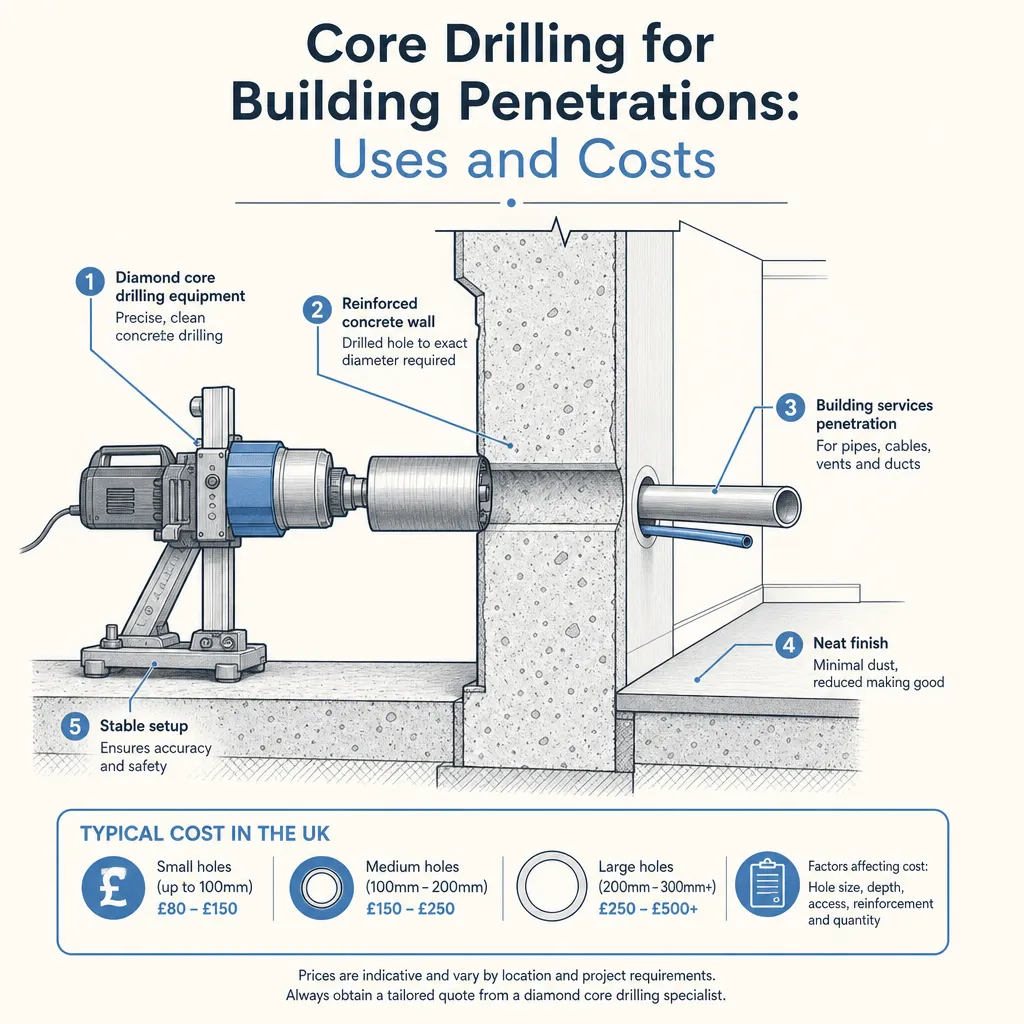
Core Drilling for Building Penetrations: Uses and Costs
Core drilling uses diamond-tipped equipment to cut clean holes through concrete, masonry, or block for pipes, ducts, cables, and building services. In UK homes, indicative costs start at around £100–£200 per hole for standard domestic work, rising with diameter, depth, material hardness, and access.
 Improvement & Build
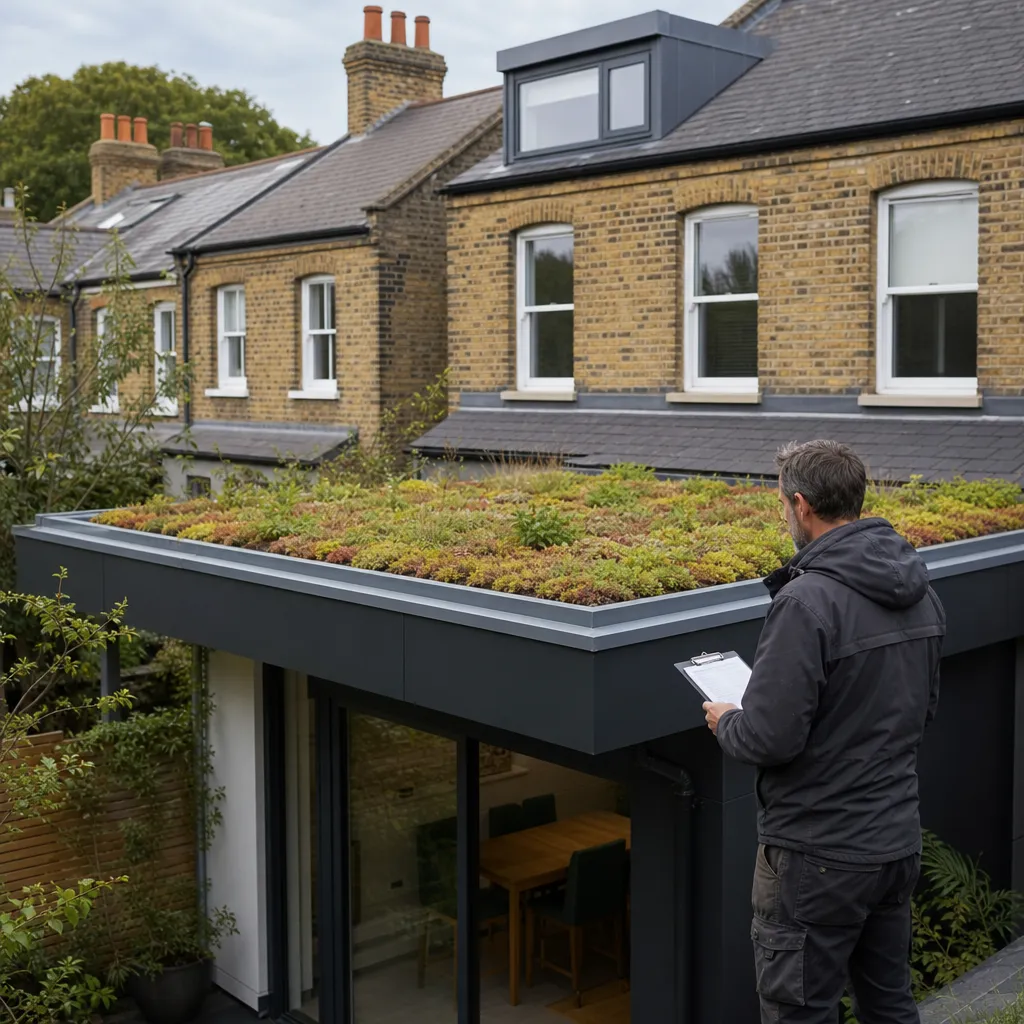
Exterior Colour Schemes for Green Roofs: Design Coordination
Warm greys, earth tones, natural timber, and dark charcoals tend to work best with green or living roofs, complementing the seasonal shift from vivid green in summer to bronze and straw in autumn and winter. Avoid bright whites or strongly saturated colours unless used as limited accents. Choose a neutral palette that coordinates across the full seasonal range of your sedum or wildflower planting.
 Improvement & Build
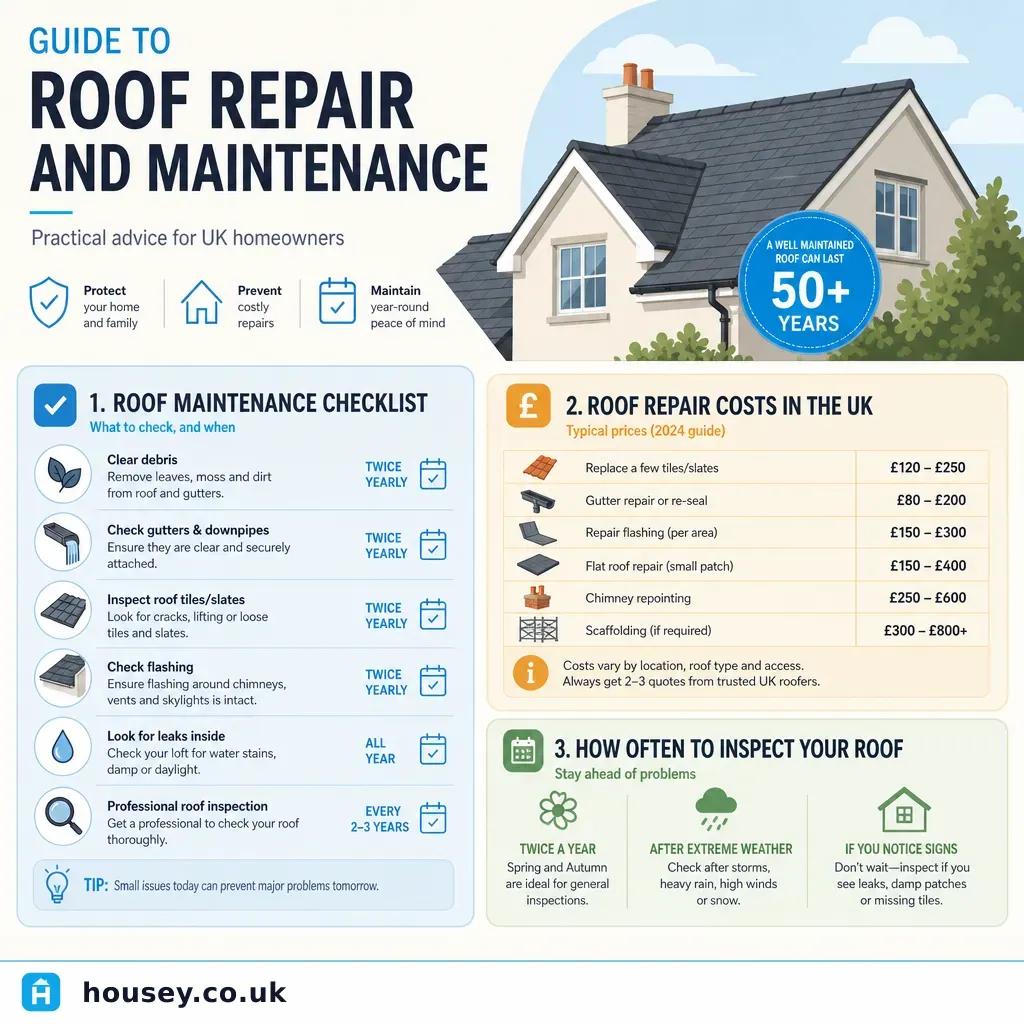
Guide to Roof Repair and Maintenance
Regular roof inspections every 3–5 years, prompt repair of damaged tiles and failed flashings, and annual gutter clearance are the core of effective UK roof maintenance. Replacing fewer than 10% of tiles is a minor repair; when the sarking felt has failed or large areas are deteriorating, a full re-roof is usually more cost-effective than repeated patching.