The Advantages of Moving House During the Winter Months
By Housey · Last reviewed 19th of May 2026

The Advantages of Moving House During the Winter Months
The UK removals market follows a clear seasonal rhythm: demand peaks between May and September, driven by school-leavers, families, and the spring property surge, then falls sharply from November through February. If you have any flexibility over your completion date, the quieter months can translate into lower costs, better booking availability, and a more relaxed moving experience — provided you plan around the weather and shorter daylight hours.
Key points
- Removal firms typically charge 20–30% less per job in winter than during the May–September peak (Indicative UK costs, last reviewed 2026-05-19; quotes vary by firm, distance, and volume).
- January is historically one of the quietest months for UK removal companies, offering the widest choice of dates and crew availability.
- The UK property market sees fewer competing buyers between November and January, which can strengthen a buyer's negotiating position at offer stage.
- December completions require careful co-ordination around Christmas and New Year bank holidays — confirm all parties, including your lender, are available.
- Daylight in England and Wales drops to around 7–8 hours in December, making early starts and pre-packed loads essential on moving day.
Why winter removals typically cost less
The demand cycle for UK removal firms closely follows school term dates and the property completion calendar. June, July, and August are consistently the most expensive months: families want to move before the new school year, and the spring property market peaks in late spring, pushing completions into summer.
From November onwards, that pressure eases. Removal companies have capacity to fill, which usually means lower day rates, more negotiating room on extras such as packing materials and storage, and crews that aren't stretched by a run of consecutive peak-season jobs. Mid-week January or February dates often offer the best combination of availability and value in the calendar year.
Practical note: Always obtain at least three written quotes and check that the firm is a member of the British Association of Removers (BAR) or a comparable trade body. Membership signals commitment to industry standards and a formal complaints procedure.
What the winter property market looks like for buyers
Fewer properties are listed between November and January, but the buyers who are active in the market tend to be serious rather than speculative. Sellers who accepted offers in autumn often have genuine motivation to complete before year-end, and chains are generally shorter because fewer people are moving simultaneously.
For buyers already under offer and progressing towards exchange, the winter market can mean less gazumping risk, solicitors with more bandwidth for searches and enquiries, and lenders who may process applications more efficiently outside their peak summer period. If you are still searching for a property, however, choice will be more limited — winter suits those who already have a purchase moving forward.
Winter versus summer moving: a comparison
Factor | Winter (Nov–Feb) | Summer (May–Sept) |
|---|---|---|
Removal firm cost | Usually lower — reduced demand | Higher — peak demand, limited availability |
Saturday booking lead time | Often available at short notice | Frequently booked 6–8 weeks ahead |
Usable daylight | 7–8 hours (December) | 15–16 hours (June) |
Weather conditions | Ice, rain, and mud more likely | Warmer and drier, but not guaranteed |
Competing buyers in market | Fewer | More — higher gazumping risk |
Conveyancing capacity | Solicitors often have more capacity | Can slow during summer holidays |
School disruption | Moves can align with term time | Easier to avoid mid-year disruption |
Practical challenges to plan around
Winter moving is entirely achievable with the right preparation. These are the challenges that catch people out:
Shortened daylight. A December moving day in the Midlands or north of England may give you fewer than seven hours of usable daylight. Plan to have the van loaded at your old property by mid-morning so you arrive and begin unloading at the new address well before dark.
Ice, rain, and access. Wet driveways, muddy garden paths, and icy doorsteps create slip and damage risks for both furniture and moving crews. Lay protective floor coverings at both addresses and check that pathways are clear and gritted if frost is forecast.
Heating the new property. Arriving at an empty house in January to find the boiler isn't working is a common winter-move problem. Before completion, ask the sellers to confirm the heating system is operational. Register gas and electricity in your name before moving day so you can turn the heating on as soon as you arrive.
Christmas and bank holiday closures. Solicitors, estate agents, mortgage lenders, and removal firms all close or operate on reduced hours around Christmas and New Year. If your completion is scheduled for late December, confirm in writing that every party in the chain — including your conveyancer and lender — can meet the agreed date.
Winter moving checklist
In the two to four weeks before a winter move:
When to get professional help
Most winter moves go smoothly with good planning. Consider specialist help in these situations:
- You are moving a piano, antique furniture, fine art, or other high-value items that a standard crew may not be equipped or insured to handle.
- You are moving internationally and need customs paperwork, climate-controlled transport, or bespoke crating.
- You need to store belongings between completion dates — a managed storage facility protects items from cold and damp far better than an unheated van or garage.
- If severe weather makes moving day genuinely unsafe, your removal firm should have a clear rescheduling policy — insist on written terms before you book.
How Housey can help
Housey connects you with vetted house removals companies that can quote for your winter move, including mid-week and off-peak dates. If you need a short-term solution while waiting for access to your new property, find accredited storage providers through Housey. For moves outside the UK, compare quotes from experienced international removals firms that understand winter logistics and seasonal customs processing.
Frequently asked questions
Is it cheaper to move house in winter?
Generally yes. Removal firms typically charge less between November and February than during the May–September peak, when school-year moves and spring-completion properties drive demand. January and February are usually the most competitively priced months. Always collect three quotes — prices vary by firm, distance, and load volume.
What is the cheapest month to move house in the UK?
January is often the quietest month for removal firms in the UK, and pricing typically reflects reduced demand. February can also offer strong value. That said, moving costs depend on your specific route, volume, and the firm you choose, so compare quotes rather than assuming a particular month will always be cheapest.
What are the biggest risks of moving house in winter?
The main practical risks are reduced daylight hours, ice and wet weather on moving day, and the possibility of solicitors, agents, or lenders being unavailable around Christmas and New Year bank holidays. Planning early starts, protective coverings, confirmed utility transfers, and a bad-weather contingency with your removal firm addresses the majority of these.
Should I move house in December?
December moves can work well if you complete in the first two weeks of the month, avoiding the Christmas closure period. Moves planned for the final week of December carry real risk of delays if any party in your chain is unavailable. Discuss timing carefully with your solicitor before agreeing a completion date.
Sources and further reading
- British Association of Removers — find a member — British Association of Removers
- Citizens Advice — moving home guide — Citizens Advice
- GOV.UK — Stamp Duty Land Tax — HM Revenue & Customs
Useful next reads
 Buying & Moving
Managing Delays with Removal Companies: Rights and Resolution
If a removal company is late, your rights depend on your contract and whether the company is BAR-registered.
 Buying & Moving
How to Plan a House Move: A Practical Guide to Residential Relocations
A UK house move goes more smoothly with planning that starts 6–8 weeks before moving day.
 Buying & Moving
Managing Property Relocation in Major Urban Centres
Urban house moves require planning beyond a standard removal, particularly around vehicle emission zone compliance, parking bay suspensions, and lift access in purpose-built flats.
 Buying & Moving
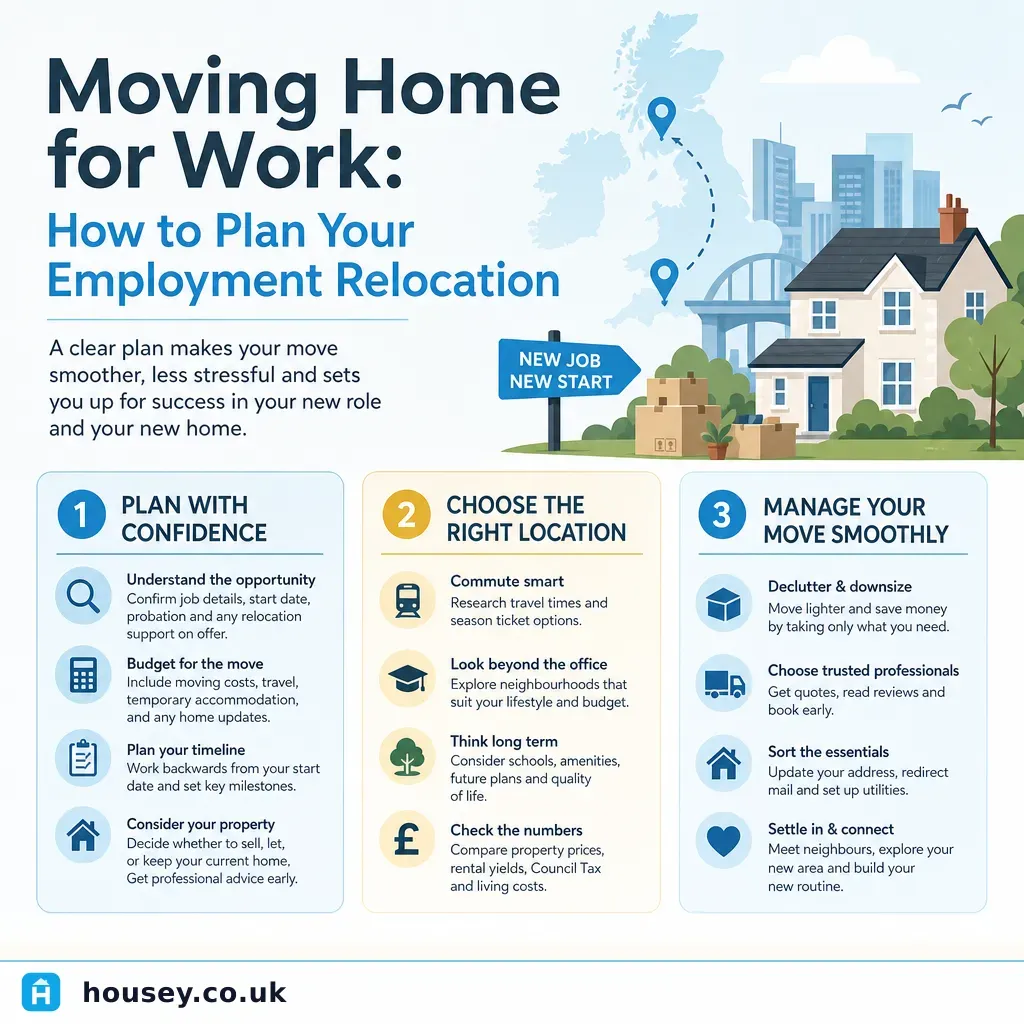
Moving Home for Work: How to Plan Your Employment Relocation
Moving home for a new job requires coordinating property timelines, removal logistics, and employer reimbursement simultaneously.
 Buying & Moving
Moving House Before Christmas: Preparation and Timing Considerations
Completing a house move before Christmas is achievable if your offer was accepted by September and your chain is short, but it requires early action.