Managing Property Relocation in Major Urban Centres
By Housey · Last reviewed 30th of May 2026
Managing Property Relocation in Major Urban Centres
Moving house within or into a major UK city introduces logistical challenges that simply do not arise in suburban or rural relocations. London, Manchester, Edinburgh, and other cities each present a distinct combination of clean-air zone requirements, parking enforcement regimes, and building access constraints — particularly in purpose-built residential blocks — that can catch homeowners and their removals companies off guard. The period between exchange and completion is the right time to research these requirements, well before moving day makes improvisation expensive.
Key points
- London's Ultra Low Emission Zone (ULEZ) covers the whole of Greater London; most removal vans must meet Euro 6 diesel or Euro 4 petrol standards, or pay a daily surcharge of £12.50.
- Temporary parking suspensions for removal vehicles must usually be booked through your local council two to three weeks in advance; fees in London boroughs typically range from £50–£150 per bay per day.
- The London Congestion Charge is currently £15 per day for vehicles entering the charging zone and is frequently not included in removals quotes — always confirm with your company.
- Many purpose-built flats in UK cities require prior booking of the service or goods lift for moves; failure to do so can delay the entire operation and may result in charges from the managing agent.
- Scottish cities including Glasgow, Edinburgh, Aberdeen, and Dundee operate Low Emission Zones that apply to larger commercial vehicles including some vans — check your company's compliance before booking.
What makes urban moves more complex?
City property relocations involve multiple layers of co-ordination that compound the usual moving-day pressures. The table below compares key challenges across different UK urban environments.
Challenge | London | Manchester / Birmingham | Edinburgh / Glasgow | Smaller UK cities |
|---|---|---|---|---|
ULEZ or LEZ compliance | ULEZ active across Greater London | CVAZ / BCZN — varies by area | LEZ active; check vehicle class and daily charges | Generally less restrictive |
Parking suspension permits | Required in most boroughs; apply 2–3 weeks ahead | Required; process varies by council | Required for some streets | Required in restricted zones |
Congestion or road charges | Congestion Charge applies in central zone | Varies by scheme | LEZ penalty charges possible | Rarely applicable |
Service lift booking (flats) | Very common in purpose-built blocks | Common in city-centre developments | Common in tenement conversions | Less common outside major cities |
Access constraints | Narrow streets, controlled zones, no-stopping orders | Similar considerations | Old Town access restrictions | Fewer widespread constraints |
Parking suspensions: how to arrange them
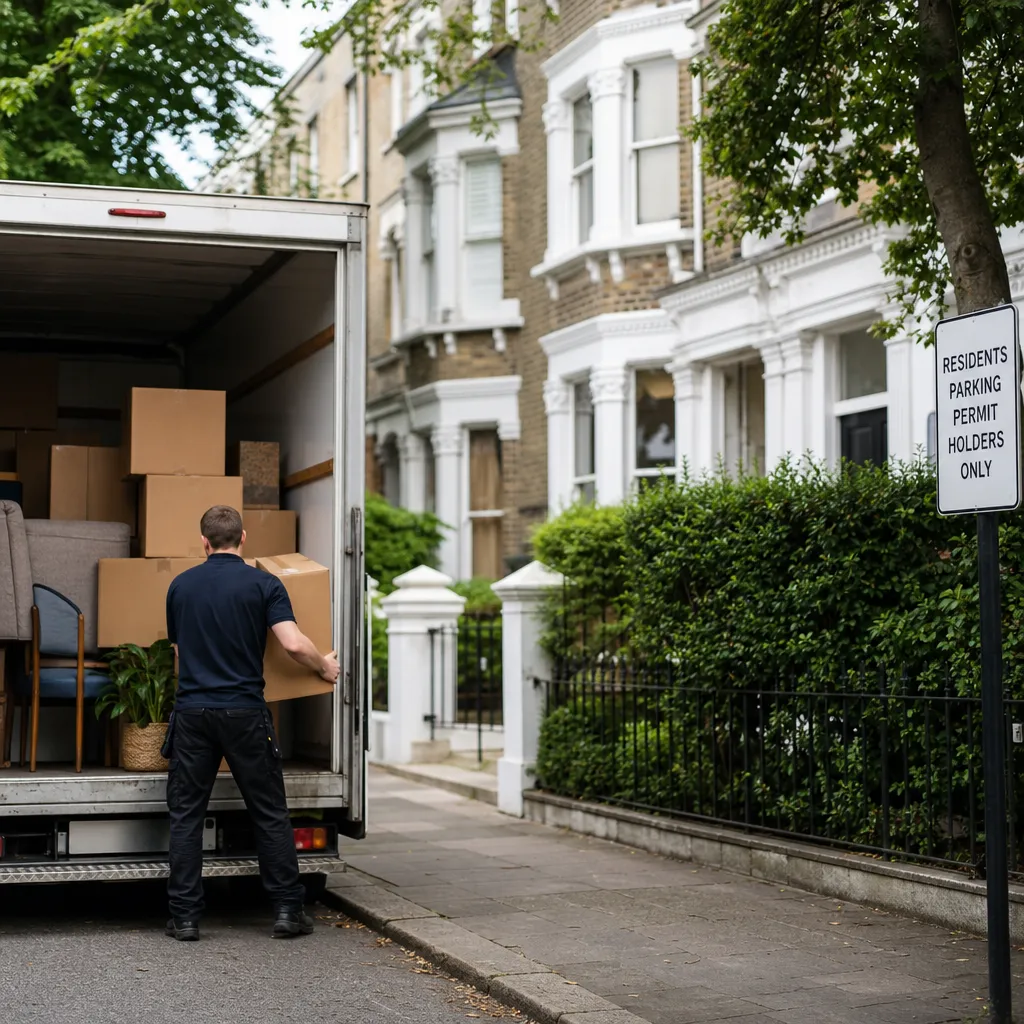
One of the most overlooked parts of an urban move is securing the legal right to park a large removals vehicle near the property. Without a suspension, movers may need to park some distance away, which significantly increases both the time and the cost of the move.
- Identify the local authority responsible for parking enforcement on the street — in London this is the borough council.
- Visit the council's website and search for parking bay suspension or removals permit.
- Apply at least two to three weeks before moving day — some London boroughs require four weeks' notice.
- Specify the correct dates, times, and vehicle length (typically 7.5 m or 12 m for a removals van).
- Display any permit notices in the reserved space as directed by the council.
- If moving into a new-build or recently converted flat, check with the managing agent whether any private forecourt access rules apply separately.
Your removals company should be familiar with this process and may arrange suspensions on your behalf — confirm in writing who is responsible before you sign a contract.
Low Emission Zones: what to check
Several UK cities now operate clean-air zones that apply to commercial vehicles above a certain age or emission class.
London ULEZ covers the whole of Greater London. Most vans must meet Euro 6 diesel or Euro 4 petrol standards. Non-compliant vehicles pay £12.50 per day. Check compliance using the TfL ULEZ vehicle checker.
London Congestion Charge is £15 per day for vehicles in the charging zone, broadly central London, between 7am and 6pm on weekdays and 12pm to 6pm at weekends and bank holidays.
Scottish LEZs are active in Glasgow, Edinburgh, Aberdeen, and Dundee and apply to larger commercial vehicles. Refer to Transport Scotland's LEZ guidance for the relevant vehicle class rules and penalty structures.
English Clean Air Zones operate in Birmingham, Bath, Bradford, and other cities with varying charge bands by vehicle class. Use the GOV.UK Clean Air Zone finder to check your company's vehicle.
Always ask your removals company to confirm their vehicle's emission standard in writing before you book.
Moving into or out of a purpose-built flat
Urban flat moves carry specific constraints that routinely catch first-time flat-movers by surprise.
Checklist for flat moves:
Timing your urban move
Traffic congestion, parking enforcement, and lift availability all vary considerably by time of day and day of the week.
- Avoid Fridays where possible. UK removal volumes peak on Fridays, the most common completion day, which means more traffic, higher demand for parking suspensions, and less flexibility if the move overruns.
- Start as early as possible. Most urban loading windows are restricted; an 8am start gives substantially more contingency than a 10am start.
- Allow extra time. A four-hour suburban move can take six to seven hours in central London even with a compliant vehicle and confirmed parking.
- Consider a mid-week completion. Solicitors can complete on any weekday; a Tuesday or Wednesday completion often reduces pressure and may lower removals company pricing.
When to get professional help
Urban moves benefit most from a removals company with specific experience in your city and ideally your postcode. Red flags that a company may lack urban experience include: not asking about parking suspensions, being unable to confirm their vehicle's LEZ compliance, or failing to raise service lift booking for flat moves during the quoting conversation.
Tell any prospective company the exact street and postcode, whether the property is a managed flat, the building type (period conversion, purpose-built block, new-build tower), and details of any large or specialist items.
How Housey can help
Housey connects you with house removals specialists who operate in London, Manchester, Edinburgh, and other UK cities, and who understand the specific permit, access, and emission-compliance requirements of urban moves. Describe your move and receive quotes from providers who know the area.
Frequently asked questions
Do I need to arrange a parking suspension myself, or will the removals company do it?
Either is possible — some companies include it as part of their service, others leave it to the homeowner. Confirm this in writing before you book, as failure to arrange a suspension can result in a parking fine or mean the van cannot park close enough to the property to work efficiently.
Does the Congestion Charge apply to removal vans?
Yes, unless the vehicle qualifies for an exemption. Most large removals vehicles are not exempt from the London Congestion Charge, currently £15 per day. Ask your removals company whether this cost is included in their quote before you confirm the booking.
How far in advance should I book a removals company for a London move?
For central London or complex flat moves, aim to book six to eight weeks ahead, particularly if your target date is a Friday. Popular companies fill quickly during peak periods such as summer and end of month, when completion volumes are highest.
What insurance should my removals company carry for a flat move in a managed block?
Most managing agents require a minimum public liability insurance of £2 million; some require £5 million. Ask your removals company to provide their certificate before you confirm the booking, and pass it to your managing agent or concierge as required.
Sources and further reading
- Ultra Low Emission Zone — Transport for London
- London Congestion Charge — Transport for London
- Low Emission Zones in Scotland — Transport Scotland
- Clean Air Zones — GOV.UK
- British Association of Removers — BAR
Useful next reads
 Buying & Moving
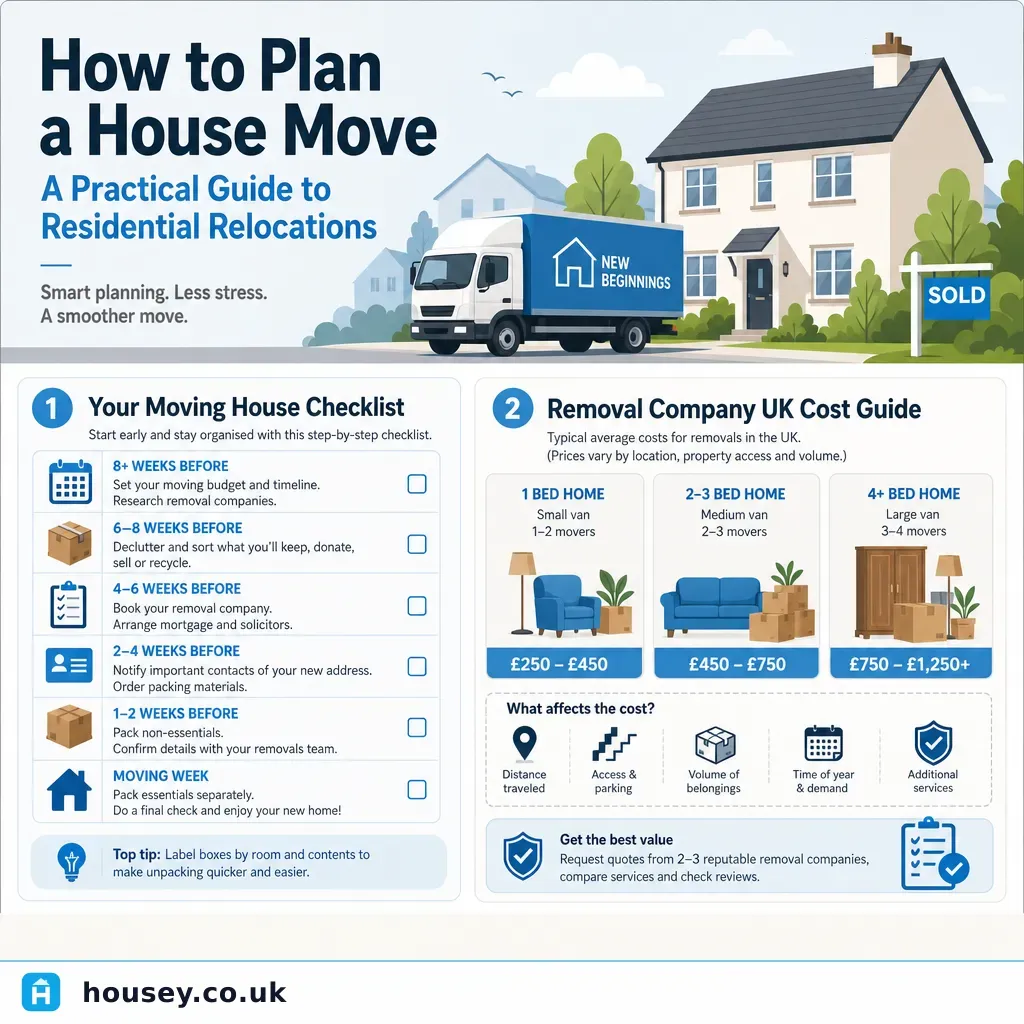
How to Plan a House Move: A Practical Guide to Residential Relocations
A UK house move goes more smoothly with planning that starts 6–8 weeks before moving day.
 Buying & Moving
Managing Residential Moves During Major Urban Events
Moving house during a major urban event — a marathon, carnival, street festival, or large sporting occasion — requires advance planning around road closures, parking suspensions, and access restrictions.
 Buying & Moving
Planning Residential Moves Around Holiday Periods
Moving house around a UK bank holiday means CHAPS bank transfers cannot operate on the holiday itself, so completion must fall on a working day.
 Buying & Moving
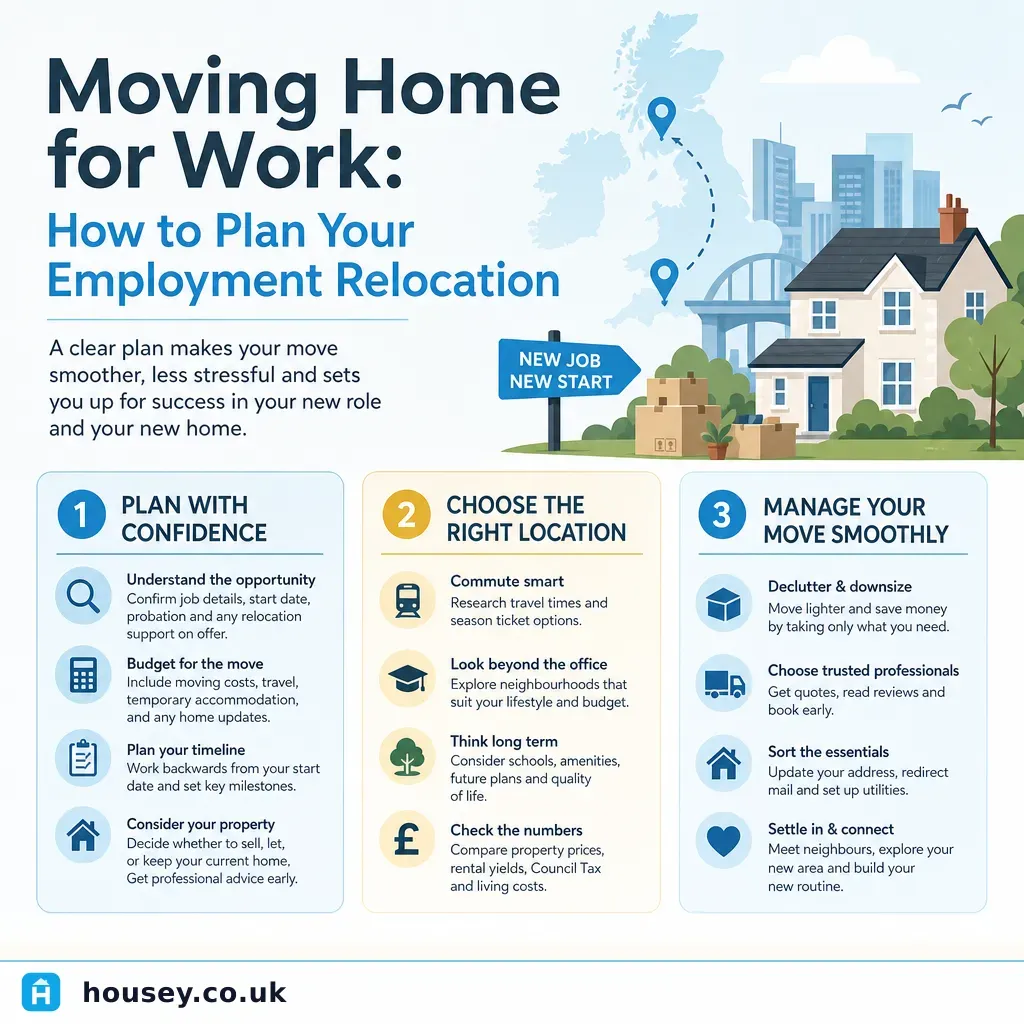
Moving Home for Work: How to Plan Your Employment Relocation
Moving home for a new job requires coordinating property timelines, removal logistics, and employer reimbursement simultaneously.
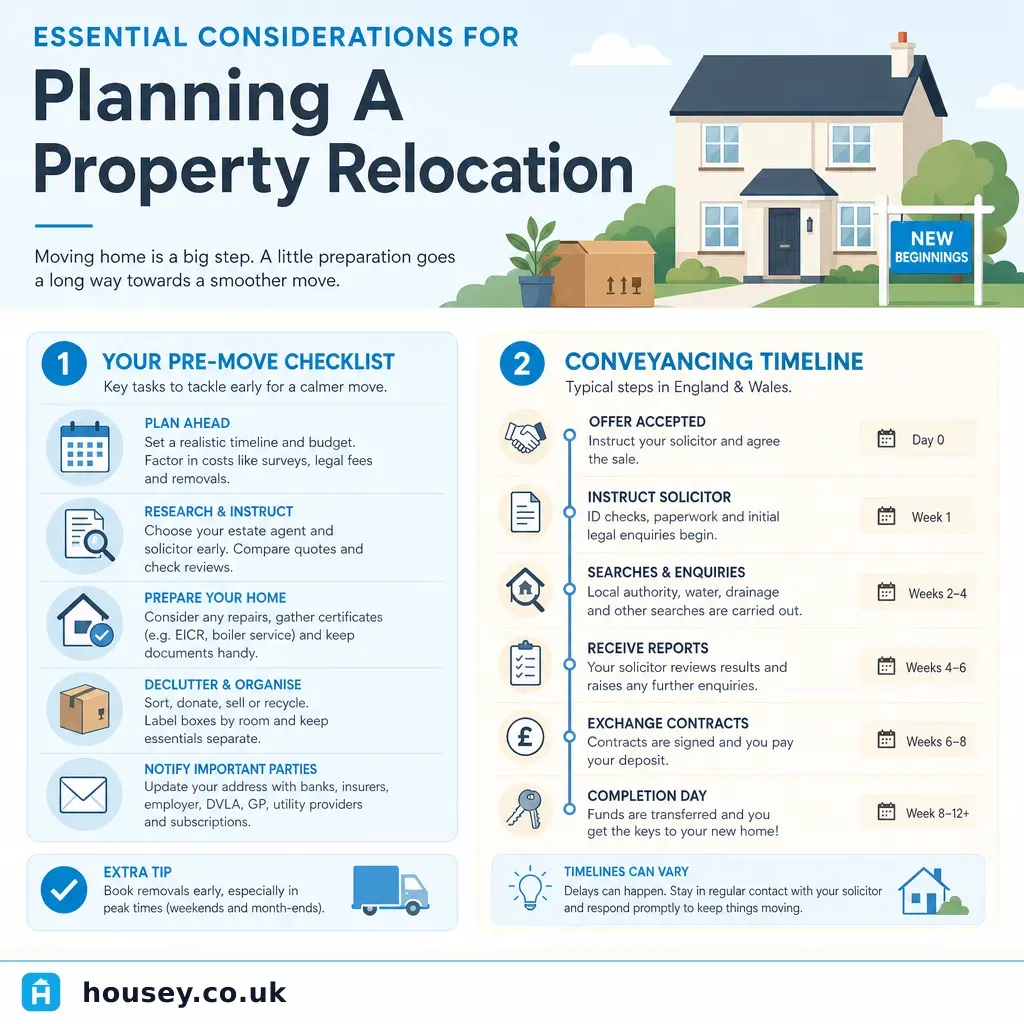 Buying & Moving
Essential Considerations For Planning A Property Relocation
Planning a UK property relocation means coordinating legal, financial, and practical steps across several months.