Knowledge Base
Property advice that actually helps
Researched, UK-specific guides for every stage of homeownership — from buying and surveys to retrofit, planning and major works.
Original Housey research
Data Reports
Local league tables with a homeowner consequence — planning, energy, moving costs and more, built from official UK data.
- Data Report
The hardest places in England to renovate your home (2026)
Ranked on Article 4 directions, conservation areas, approval rates and decision speed, Mole Valley comes out as the hardest place in England to renovate or extend — while homeowners in Fareham can more or less just get on with it. Where does your council sit?
Data: planning.data.gov.uk (current) + MHCLG year ending March 2026
- Data Report
Which English councils approve the most planning applications (2026)
Whether the council blesses your dream extension depends less on your drawings than on your postcode. Across 296 English councils, 87.6% of planning decisions were granted in the year to March 2026 — but your odds swing from 64% in Barking and Dagenham to a near-formality 98% in Fareham.
Data: Year ending March 2026
- Data Report
The English councils missing the 8-week planning deadline (2026)
Somewhere in England right now, a kitchen extension is sailing through planning inside 8 weeks — and somewhere else, an identical one is gathering dust. Across 296 English planning authorities, 91.5% of non-major decisions landed within the 8-week deadline (or an agreed extension) in the year to March 2026; in Cumberland, the slowest of all, just 66.6% did.
Data: 12 months to end of March 2026
- Data Report
Where a house extension still pays for itself (2026)
In Kensington and Chelsea, £50,000 of builder's dust turns into 5.4× its cost in added value; in Hartlepool, the very same extension adds less than it costs to build. A typical £50,000 rear extension clearly pays for itself in 175 of 295 English areas — is yours one of them?
Data: UK HPI average price, 01/04/2026
Where are you in your journey?
Buying & Moving
Browse all → Buying & Moving
Managing Delays with Removal Companies: Rights and Resolution
If a removal company is late, your rights depend on your contract and whether the company is BAR-registered. Under the Consumer Rights Act 2015, services must be completed within a reasonable time. If you suffer provable financial losses — hotel costs, storage fees — you can claim these. BAR members must offer Alternative Dispute Resolution if a complaint cannot be resolved directly.
 Buying & Moving
Understanding Leasehold Property: Rights and Responsibilities
Leasehold means you own a time-limited interest in a property while the freeholder owns the land and building. As a leaseholder you pay service charges, comply with lease covenants, and have statutory rights to extend your lease or buy the freehold. Lease length, ground rent terms, and service charge history are the three most important things to check before buying a leasehold flat.
 Buying & Moving
The Complete Property Buying Guide: From Search to Purchase
Buying a property in England and Wales typically takes 3–6 months from accepted offer to completion. The key stages are: get a mortgage agreement in principle, have your offer accepted, instruct a conveyancer, commission a RICS survey, exchange contracts (which makes the sale legally binding), then complete. Each stage has specific documents and checks that protect your legal and financial position as a buyer.
 Buying & Moving
Leasehold Property Purchase: Complexity and Key Considerations
Buying a leasehold property means purchasing the right to occupy for a fixed term rather than owning the land outright. The lease length, ground rent, service charges, and management arrangements all affect value and mortgageability. A conveyancer must review the full lease and management pack before exchange; problems discovered after completion — a short lease, escalating ground rent, or a poorly managed building — are expensive to resolve.
 Buying & Moving
First-Time Buyer Essentials Checklist
Buying your first home involves obtaining a mortgage in principle, making an offer, instructing a solicitor, arranging a survey, and exchanging contracts before completion. Preparation matters: gather proof of income, deposit evidence, and ID documents early. In England, first-time buyers currently pay no Stamp Duty Land Tax on the first £425,000 of a purchase price on properties up to £625,000.
 Buying & Moving
Conveyancing Services in London: Regional Considerations and Costs
Conveyancing in London typically takes 10 to 20 weeks and costs more than the national average, partly because most London properties are leasehold flats requiring additional checks on lease length, service charges, building safety, and managing agents. Higher property values also mean greater Stamp Duty Land Tax and Land Registry fees. A solicitor experienced in London leasehold transactions can help reduce delays.
Energy & Retrofit
Browse all →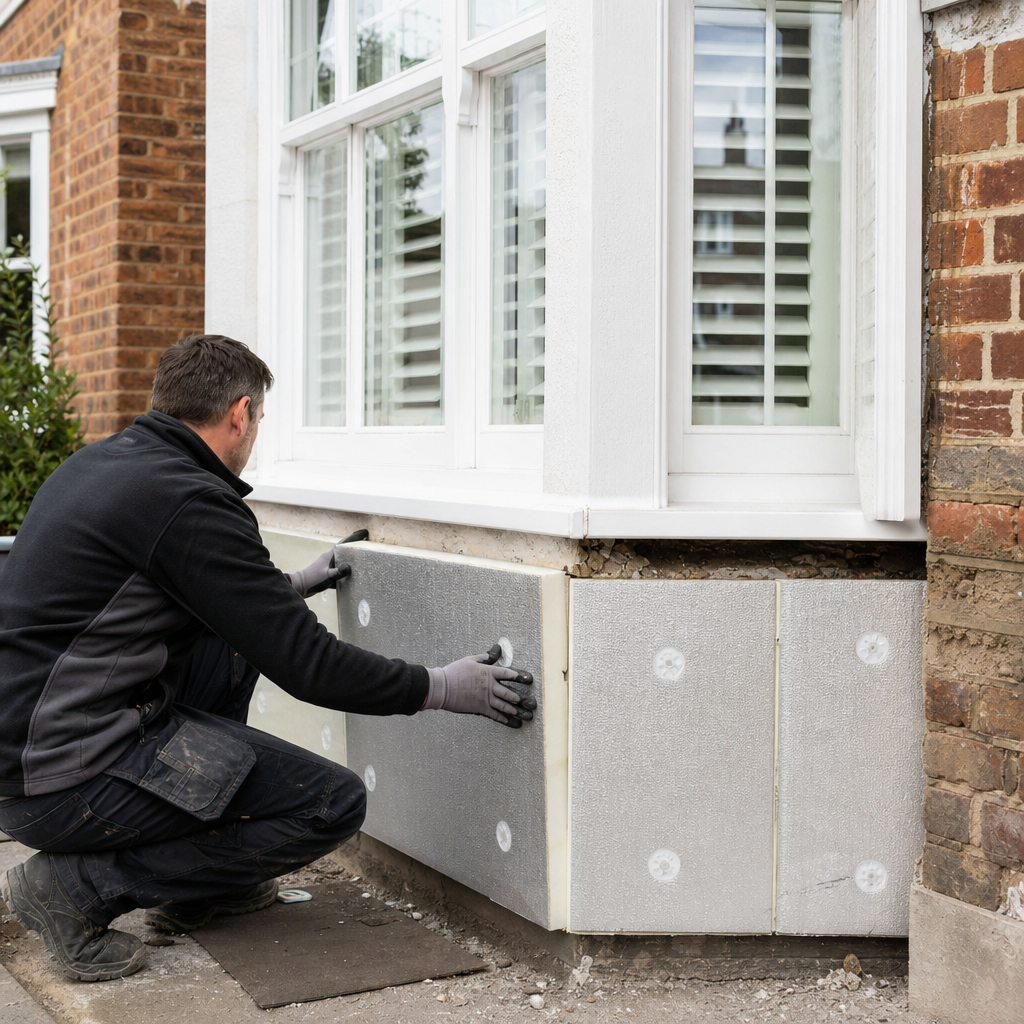 Energy & Retrofit
Insulating Solid Masonry Walls Under Bay Windows: Technical Guidance
Insulating solid masonry walls under bay windows requires specialist detailing at angled wall faces, window reveals, and the bay floor and ceiling junctions. Internal wall insulation reduces floor area by up to 100 mm per treated face; external insulation needs careful junction flashing. A hygrothermal assessment is essential, and PAS 2035 applies to all funded retrofit work.
 Energy & Retrofit
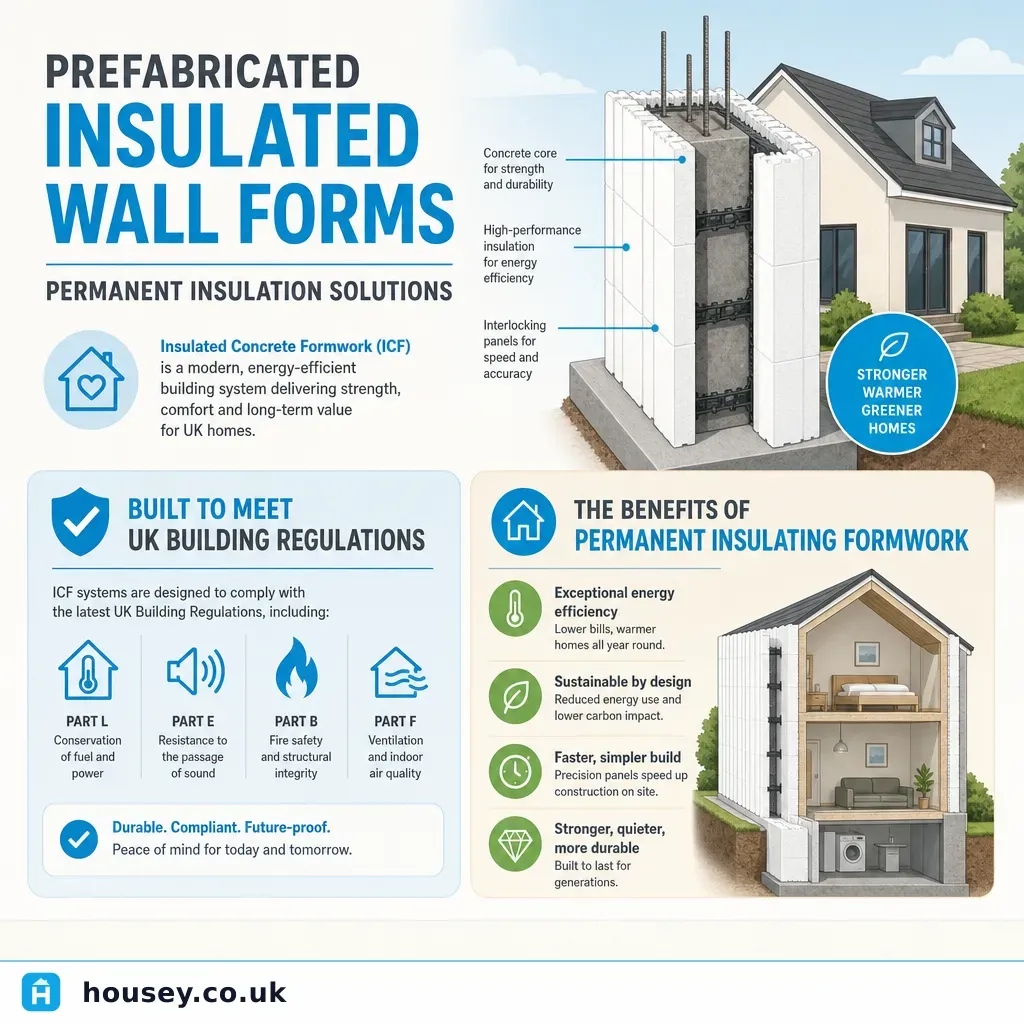
Prefabricated Insulated Wall Forms: Permanent Insulation Solutions
Prefabricated insulated wall forms — including ICF and SIPs systems — deliver high thermal performance by combining permanent insulation with structural concrete or timber in a single wall assembly. For new build they routinely achieve Part L compliant U-values. For retrofit applications to solid-wall properties, a hygrothermal moisture risk assessment is essential before any system is installed.
 Energy & Retrofit
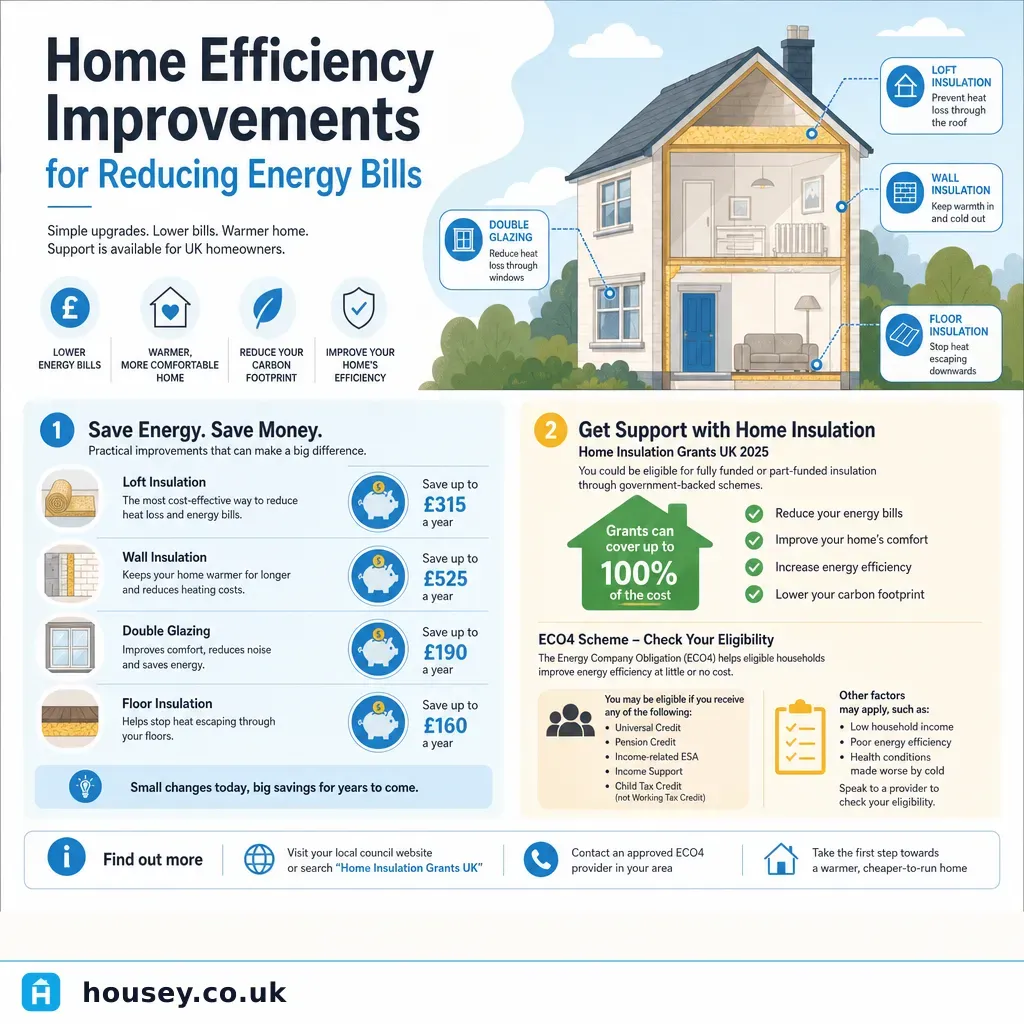
Home Efficiency Improvements for Reducing Energy Bills
The most cost-effective UK home efficiency improvements are usually loft insulation, cavity wall insulation, draught-proofing, and upgrading heating controls. Government schemes including ECO4 and the Great British Insulation Scheme may cover costs for eligible households. Start with a whole-house assessment to prioritise measures in the right order — fabric improvements generally come before heating system upgrades.
 Energy & Retrofit
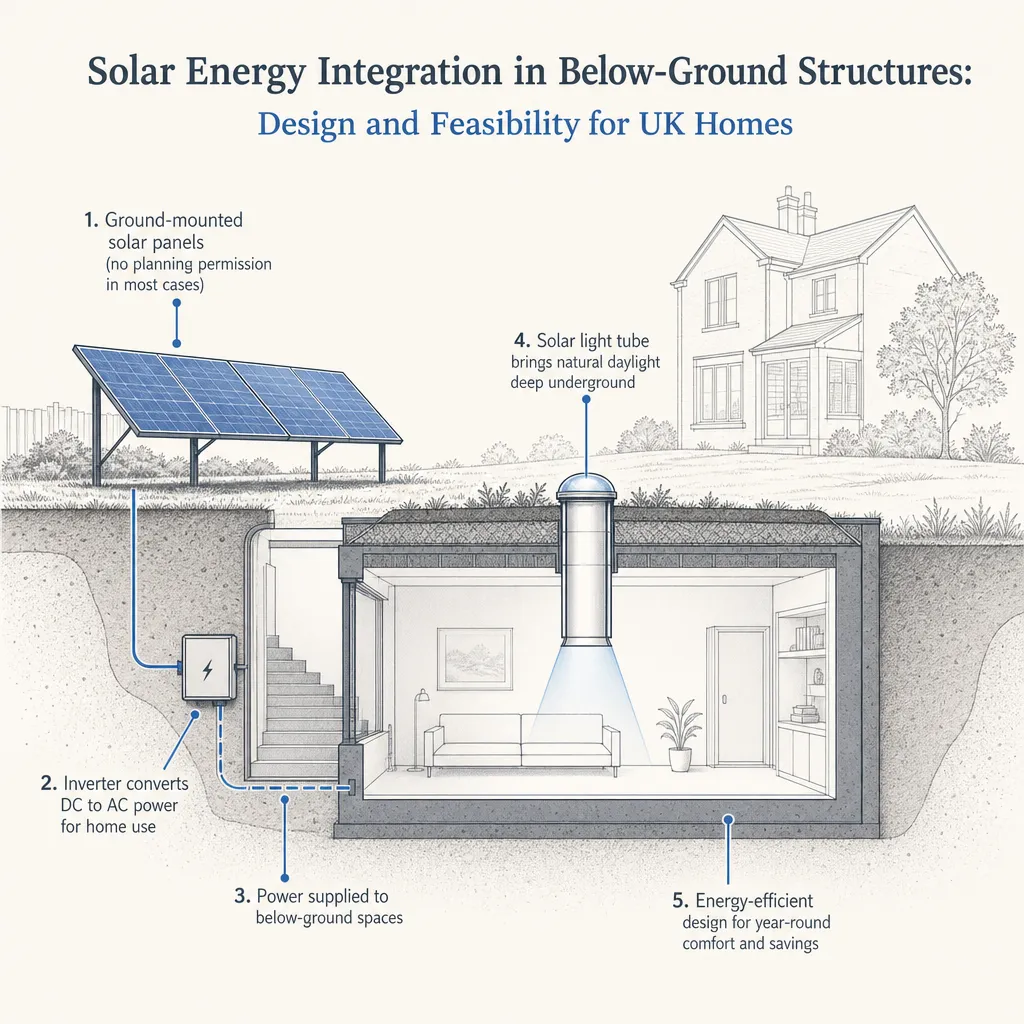
Solar Energy Integration in Below-Ground Structures: Design and Feasibility
Below-ground structures cannot host solar panels on their own roofs but can use surface-mounted panels connected via cable runs, solar light tubes for daylighting, and battery storage. Feasibility depends on available surface area, orientation, and shading. A solar survey should assess the whole site before any installation, and MCS certification is required to qualify for the Smart Export Guarantee.
 Energy & Retrofit
Climate-Ready Home Improvements for the Future
Climate-ready home improvements tackle four main risks for UK properties: overheating, increased rainfall and flooding, storm damage, and energy cost volatility. Priority measures include external shading, improved insulation, permeable paving, flood barriers, heat pumps, and solar PV. The right combination depends on your property type, location, and existing condition.
 Energy & Retrofit
Smart Glass Windows: Technology, Applications and Investment Costs
Smart glass windows switch between transparent, tinted, or opaque states using electrical signals or heat. Four main types are used in UK homes — electrochromic, PDLC, SPD, and thermochromic — each with different costs and applications. Costs range from around £300 to over £1,500 per square metre for supply and installation. No UK government grant funding is currently available for smart glazing.
General property advice
Browse all → General property advice
What to do when your boiler stops working
When your boiler stops working, check the pressure gauge (should read 1–1.5 bar cold), press the reset button, and note any fault code on the display. Also verify thermostat and timer settings, and check whether a frozen condensate pipe is causing lockout. If these steps fail to restore heating, call a Gas Safe registered engineer — all gas repair work is legally restricted to Gas Safe registered professionals.
 General property advice
Property Market Trends: Activity Growth and Price Movements
UK property market activity is measured through completed sale registrations (HM Land Registry), lender mortgage data, and transaction volumes from HMRC. Prices and transactions together give a more accurate picture than either alone. Regional variation is significant — national averages can mask dramatically different local conditions across England, Wales, Scotland, and Northern Ireland.
 General property advice
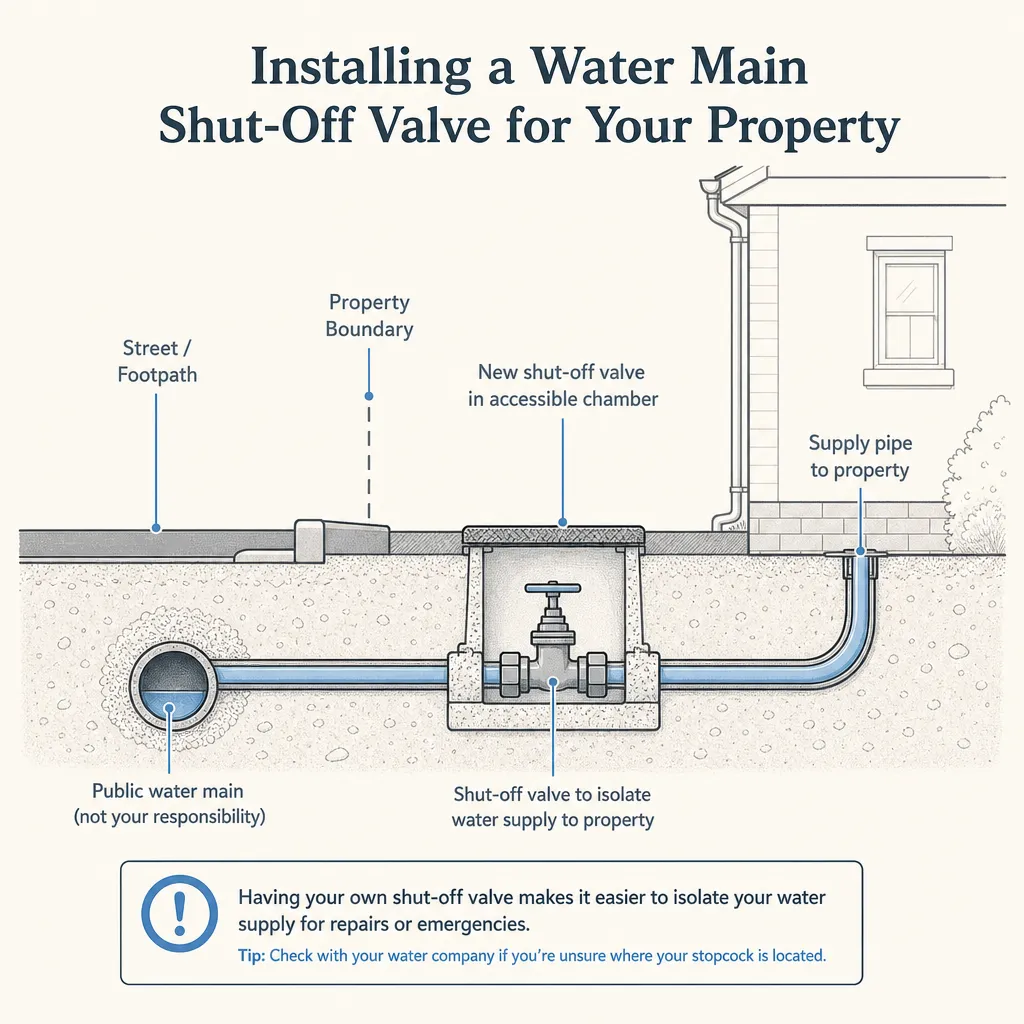
Installing a water main shut-off valve for your property
A water main shut-off valve — commonly called a stopcock — controls all water entering your home from the mains. The internal stopcock is most commonly found under the kitchen sink or where the supply pipe enters the building. Replacing or installing one usually requires a WaterSafe-approved plumber and must comply with the Water Supply (Water Fittings) Regulations 1999.
 General property advice
Monthly House Price Index: August Market Report and Analysis
The UK House Price Index is published monthly using completed Land Registry transaction data, meaning August figures typically reflect sales agreed months earlier. Several indices exist — ONS, Halifax, and Nationwide — each using different methodologies. August usually shows lower transaction volumes, and prices and activity often pick up again in September and October as the autumn market begins.
 General property advice
Scottish Property Market: Activity and Regional Trends
Scotland's property market operates under distinct legal rules: sellers must provide a Home Report before marketing, transactions become legally binding at conclusion of missives rather than exchange of contracts, and Land and Buildings Transaction Tax replaces Stamp Duty. Regional markets differ sharply — Edinburgh and Glasgow are significantly more competitive than Aberdeen or rural areas.
 General property advice
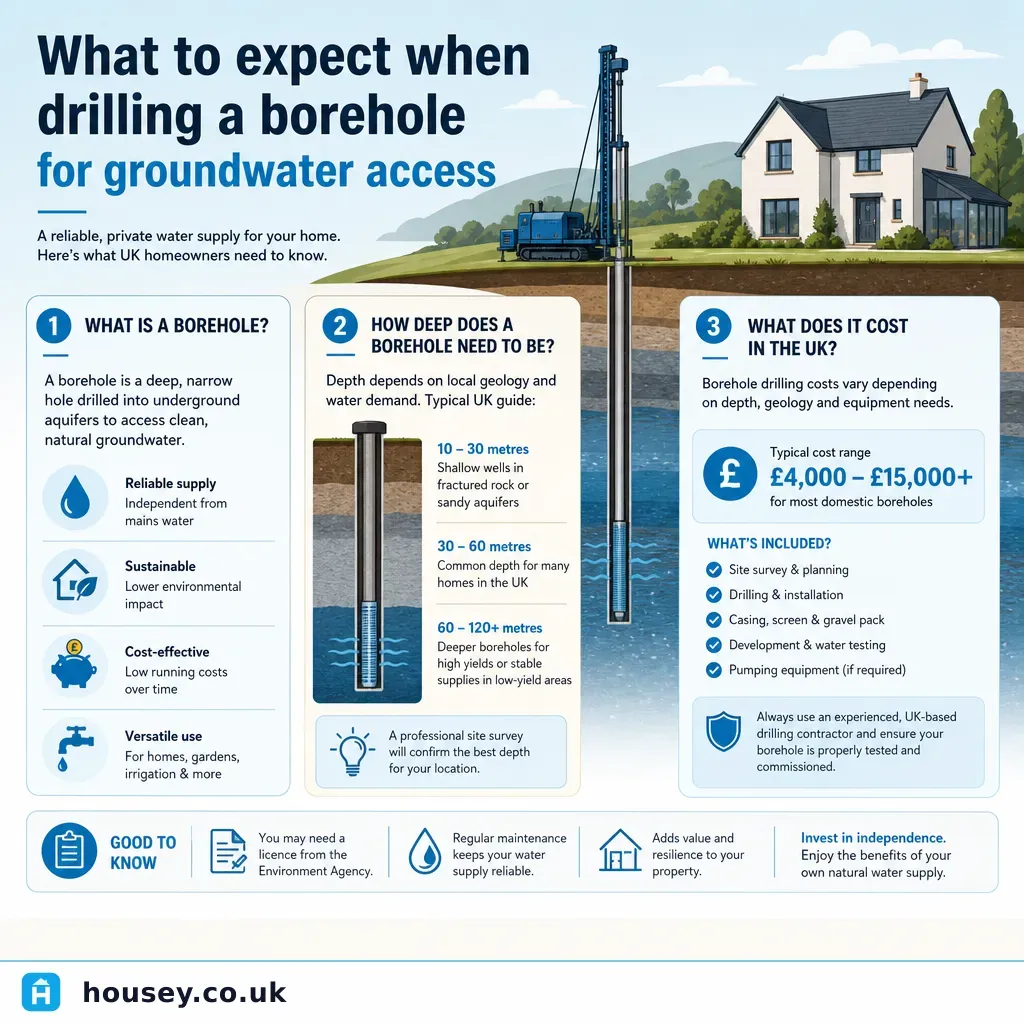
What to expect when drilling a borehole for groundwater access
Drilling a borehole for groundwater access typically involves a hydrogeological assessment, a driller installing steel casing to the required depth (often 30–150 m), water quality testing under the Private Water Supplies Regulations 2016, and in many cases an Environment Agency abstraction licence if you draw more than 20 m³ per day.
Improvement & Build
Browse all →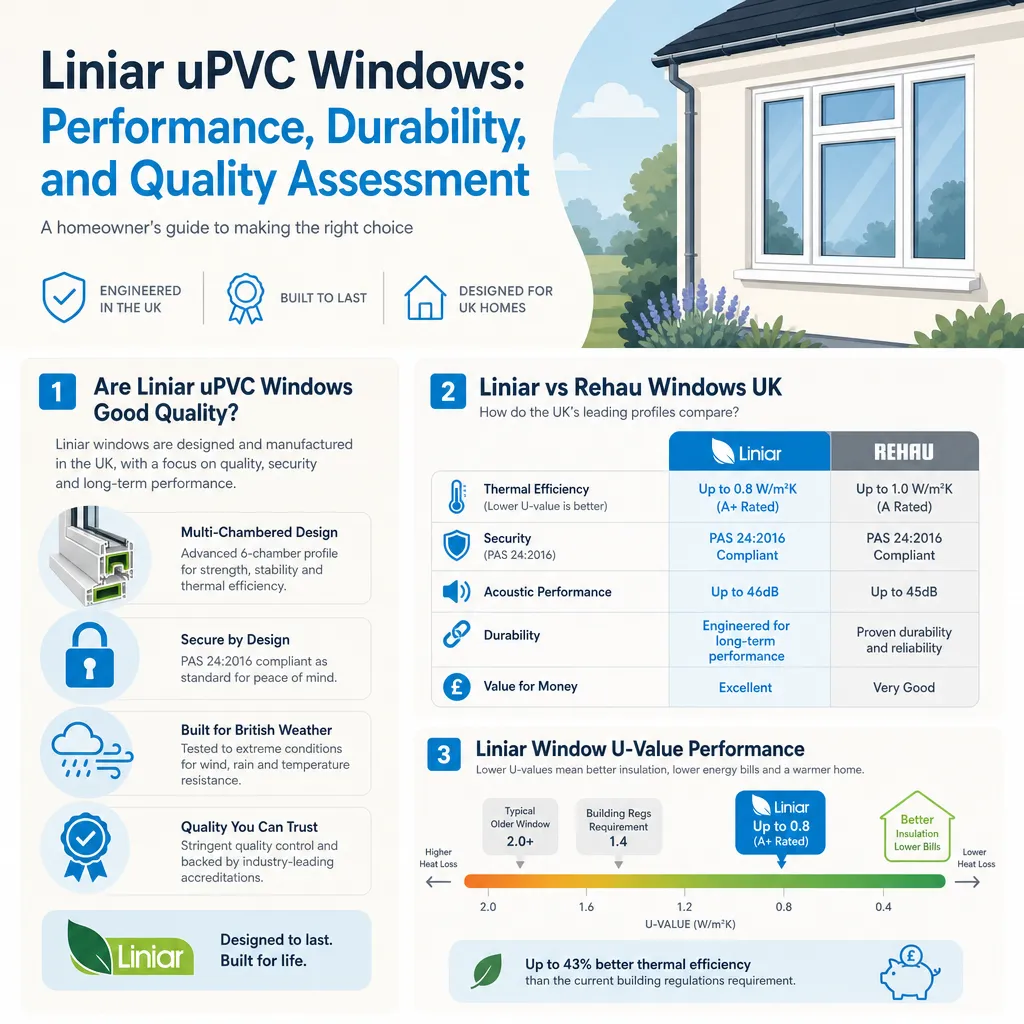 Improvement & Build
Liniar uPVC Windows: Performance, Durability, and Quality Assessment
Liniar uPVC window profiles are manufactured in the UK using multi-chambered, foamed frames. Correctly specified with argon-filled low-e double glazing, they can achieve whole-window U-values of around 1.2–1.4 W/m²K, meeting Building Regulations Part L. Performance and longevity are broadly good but depend heavily on installer quality and the glazing specification rather than the frame profile alone.
 Improvement & Build
Garden Tap Installation with Hot and Cold Water: Plumbing Options
Adding a cold garden tap is a common DIY project, but routing hot water outdoors requires a plumber to connect to your domestic hot water system and comply with the Water Supply (Water Fittings) Regulations 1999. A double check valve is legally required on any garden tap to prevent backflow, and all external pipework must be frost-insulated. Costs range from around £150 for cold-only to £350–£650 for a hot and cold installation.
 Improvement & Build
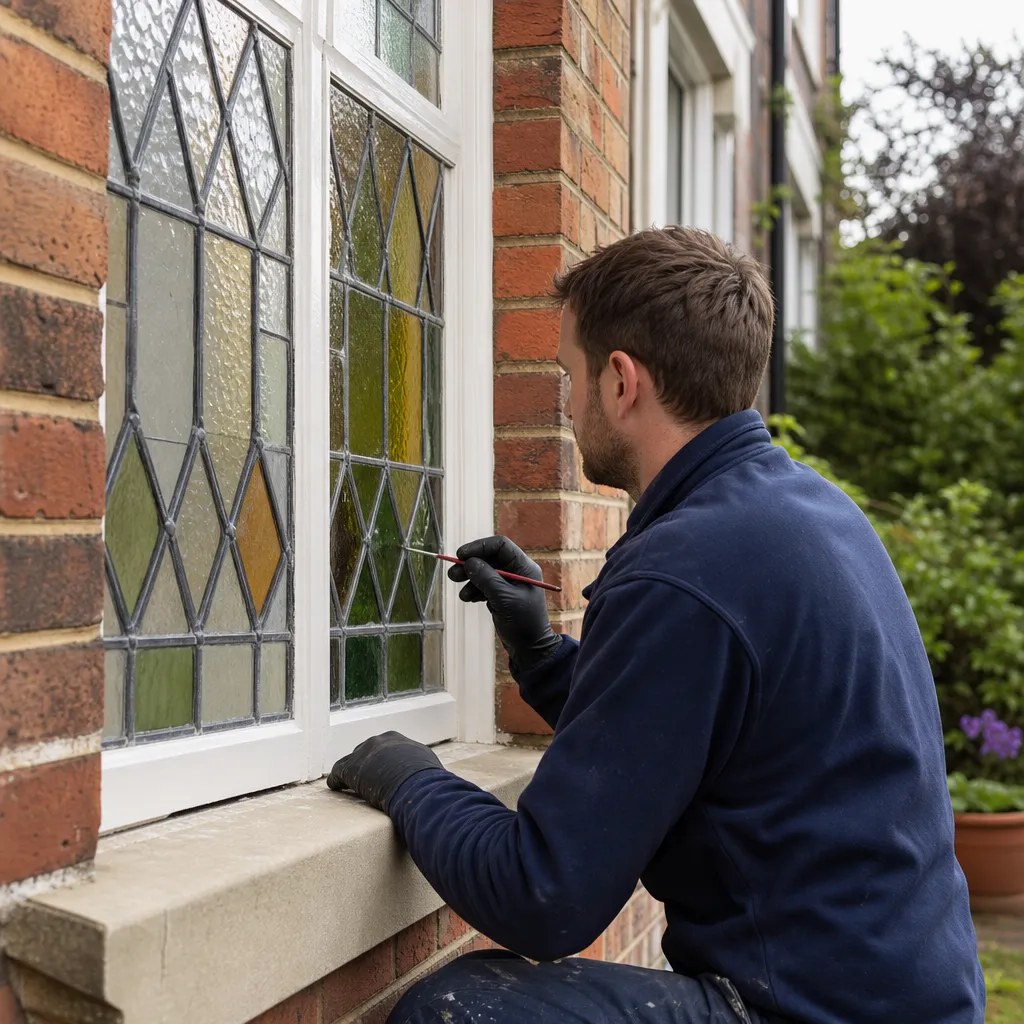
Sealing and Maintaining Historic Leaded Glass Windows: Preservation and Performance
Leaded glass windows are maintained using traditional linseed oil cement — not silicone or modern sealants, which prevent natural movement in the lead came. Annual inspection for bowing, cracked putty, and loose glass prevents progressive deterioration. Secondary glazing fitted inside the window reveal is the heritage-approved approach for improving thermal performance without altering the original panels.
 Improvement & Build
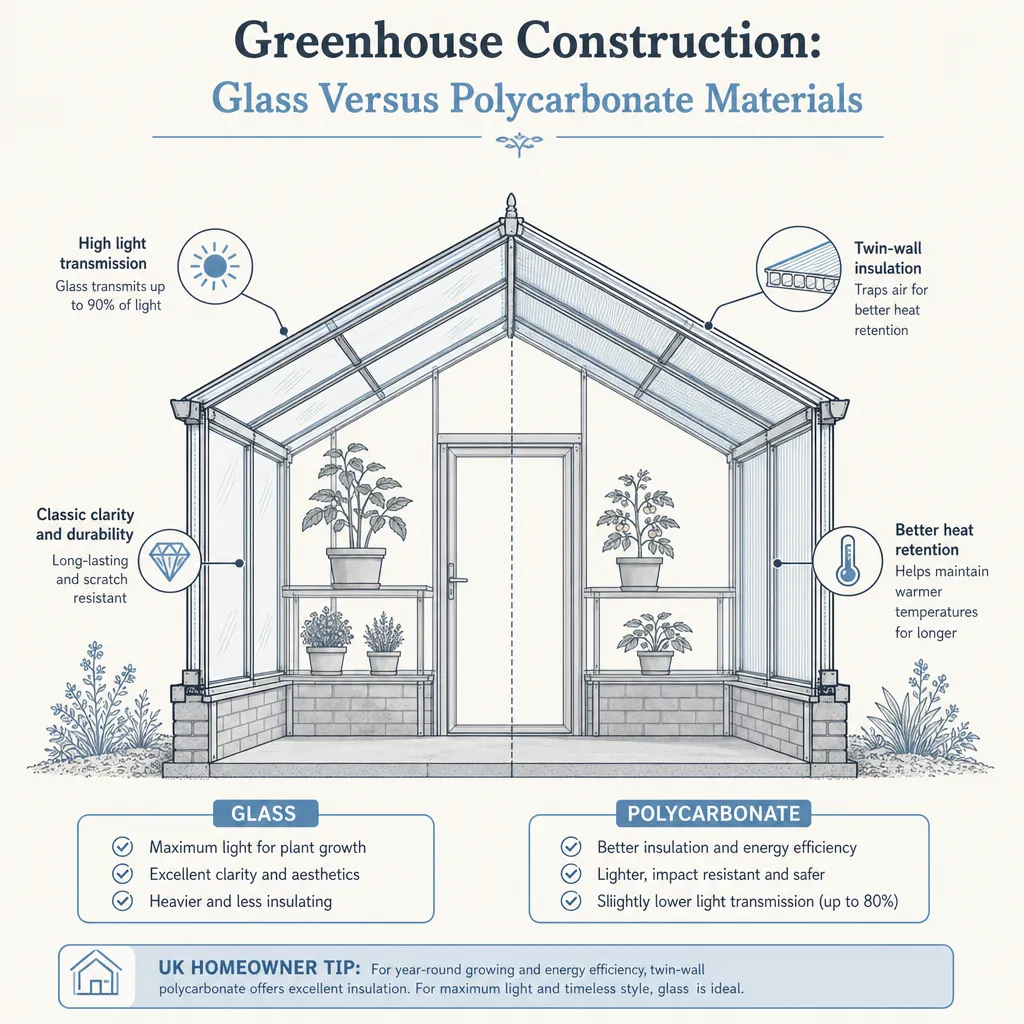
Greenhouse Construction: Glass Versus Polycarbonate Materials
Glass transmits around 90% of available light and lasts indefinitely if unbroken, but insulates poorly and shatters into sharp fragments. Twin-wall polycarbonate is more impact-resistant and better insulated, but discolours over time. For UK gardeners prioritising maximum light and long-term durability, toughened glass is usually the better choice; polycarbonate suits exposed sites or those wanting better heat retention for year-round growing.
 Improvement & Build
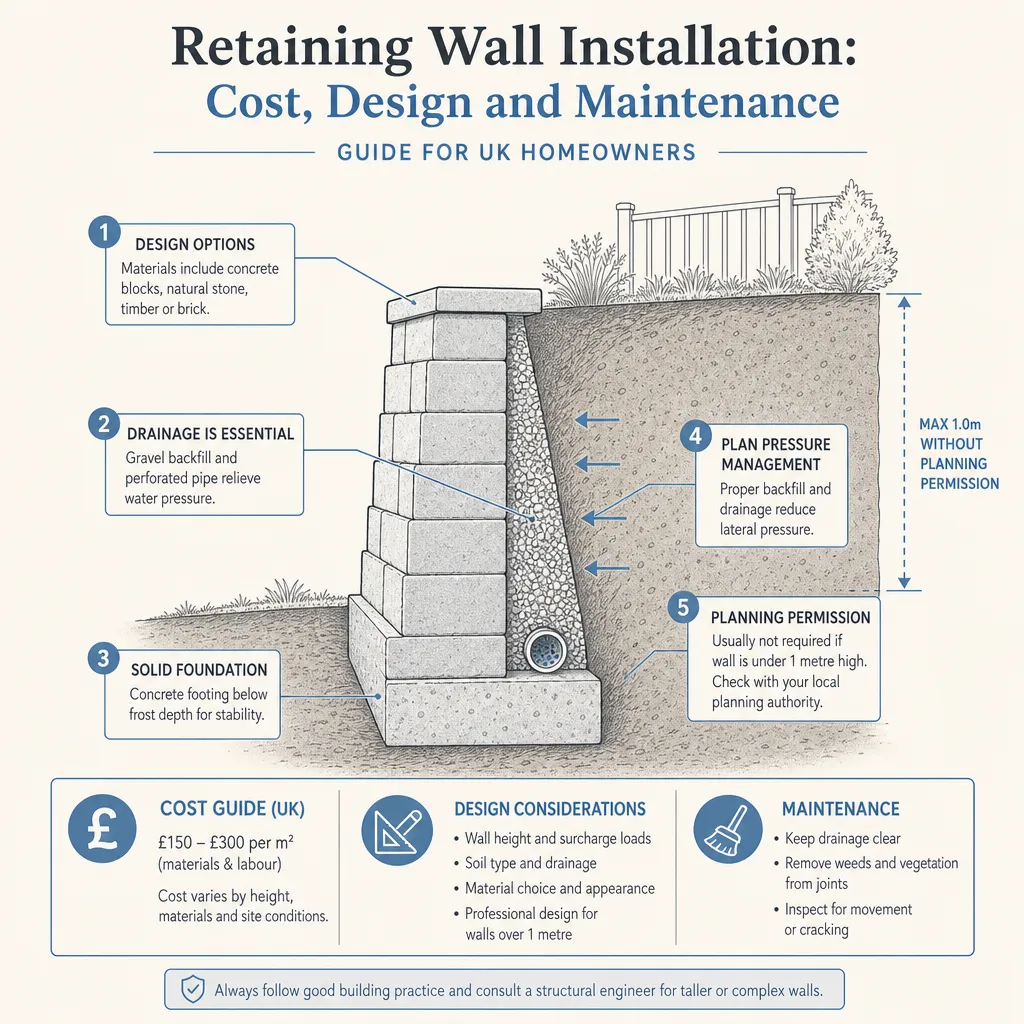
Retaining Wall Installation: Cost, Design and Maintenance
A retaining wall holds back soil on a sloped or banked site. Most residential walls under 1 metre high can be built by a competent groundworker without building control approval, though anything taller or load-bearing should involve a structural engineer. Material choices, drainage design, and ground conditions all affect cost and longevity.
 Improvement & Build
Skimming Over Wallpaper Lining: Surface Preparation and Results
You can skim plaster over wallpaper lining paper, provided the paper is fully adhered, the correct weight (usually 1,200g) is used, and the surface is primed with diluted PVA before applying a 2–3mm skim coat. Preparation quality determines the final finish — poorly fixed paper or skipped priming typically causes lifting, bubbling, or cracking.
Planning & Pre-Build
Browse all →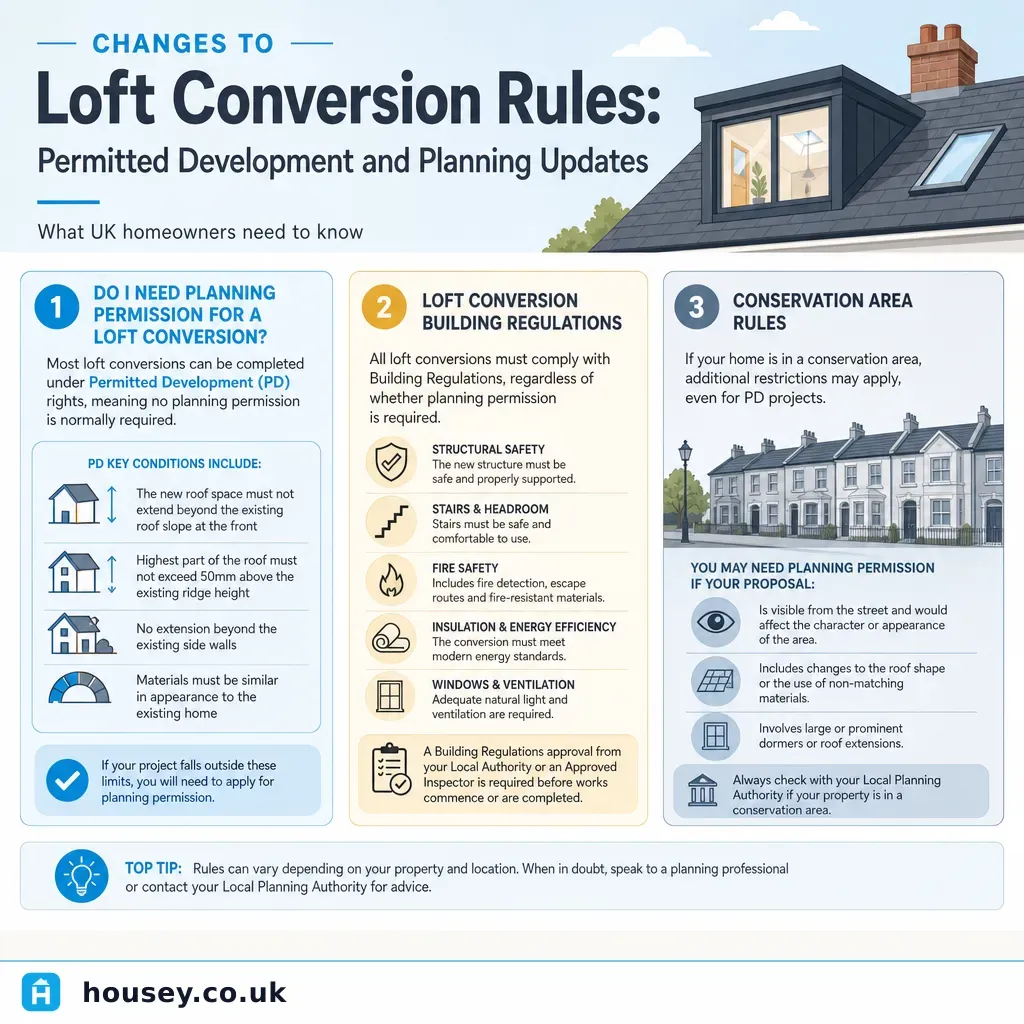 Planning & Pre-Build
Changes to Loft Conversion Rules: Permitted Development and Planning Updates
In England, most loft conversions on standard houses qualify as Permitted Development under Class B of the GPDO 2015, allowing up to 40 cubic metres (terraced) or 50 cubic metres (detached or semi-detached) without a planning application — if conditions are met. Listed buildings, Conservation Areas, and flats are excluded. Building regulations approval is always required regardless of planning status.
 Planning & Pre-Build
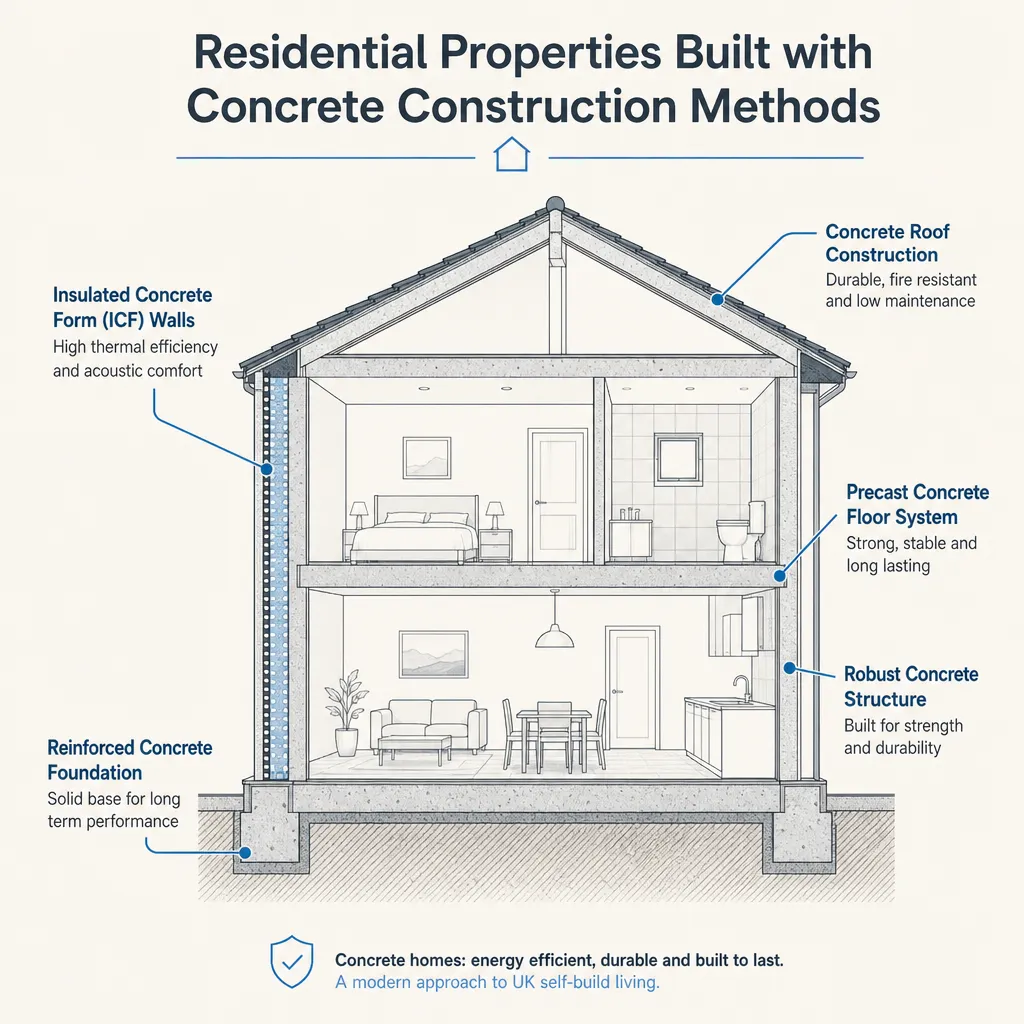
Residential Properties Built with Concrete Construction Methods
UK homes are built using several concrete methods: in-situ cast concrete, precast panel systems, insulating concrete formwork (ICF), and older non-traditional types such as Wimpey No-Fines and Laing Easiform. The right method depends on design intent, site conditions, planning constraints, and budget. Mortgage availability and survey requirements vary significantly between modern ICF builds and post-war non-traditional concrete types.
 Planning & Pre-Build
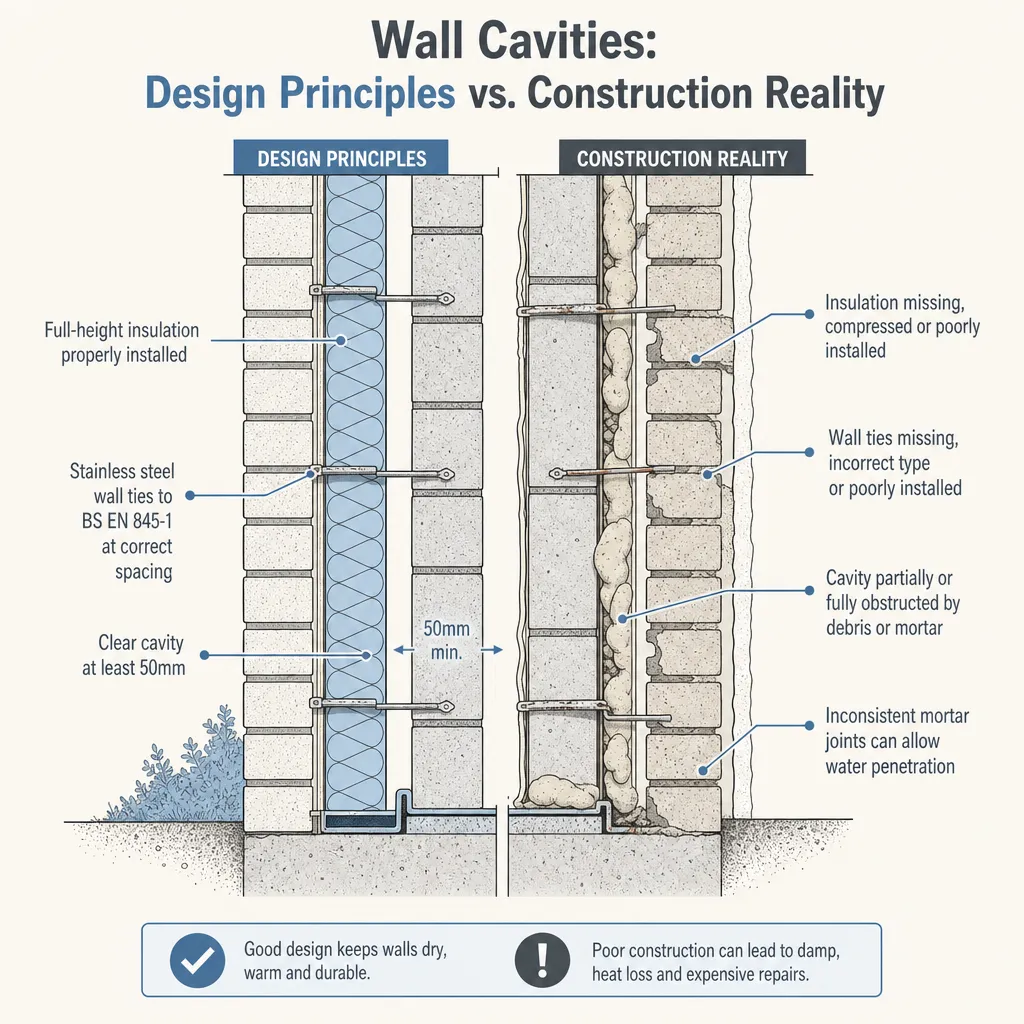
Wall Cavities: Design Principles vs. Construction Reality
A UK cavity wall is designed to resist weather, control heat loss, and structurally link two masonry leaves. In practice, mortar droppings bridging ties, gaps in insulation at junctions, and missing vertical damp-proof courses at window reveals are the most common construction defects — each capable of undermining both the thermal and moisture performance of an otherwise compliant design.
 Planning & Pre-Build
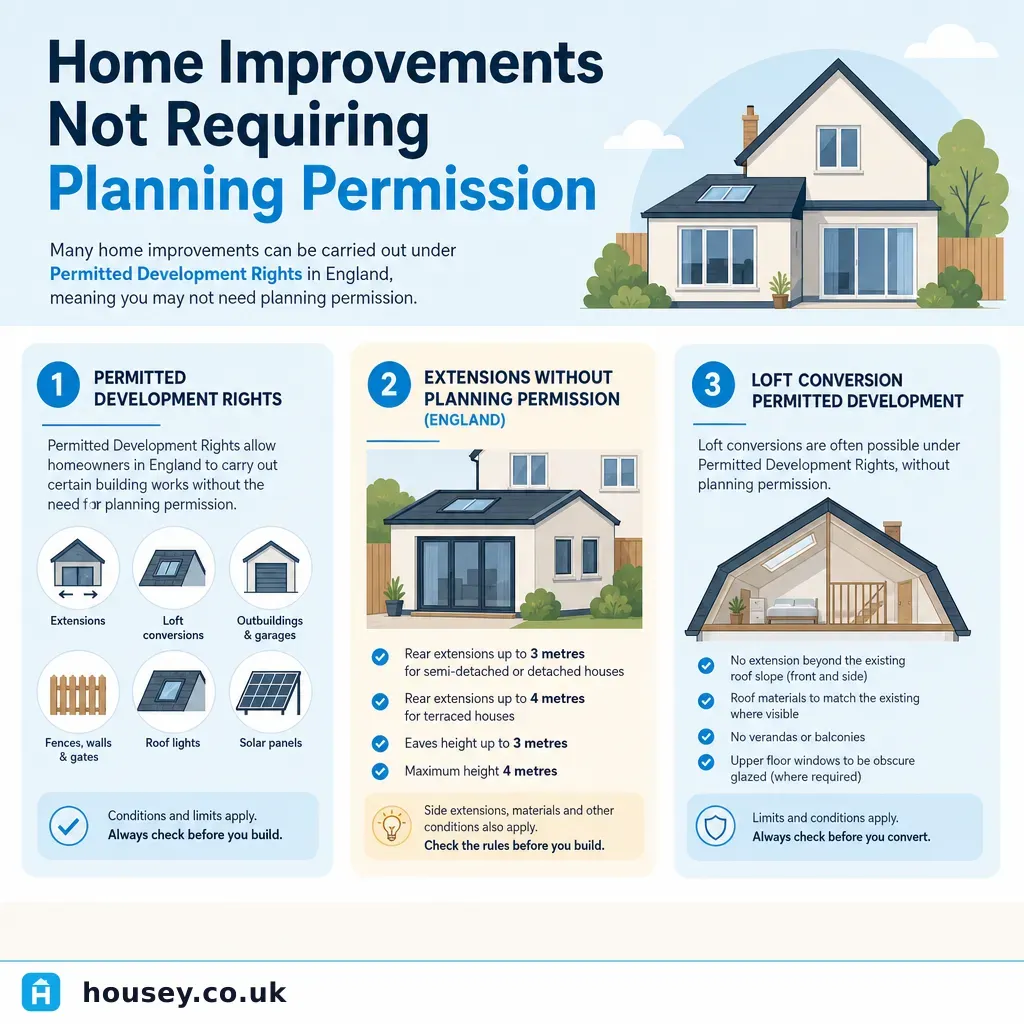
Home Improvements Not Requiring Planning Permission
Many common home improvements in England fall under Permitted Development Rights and do not require a planning application. These include single-storey rear extensions up to 4 metres on detached houses, loft conversions within set volume limits, and most garden outbuildings. Rights are restricted for listed buildings, flats, and conservation area properties — and a Lawful Development Certificate is strongly advisable before committing to significant works.
 Planning & Pre-Build
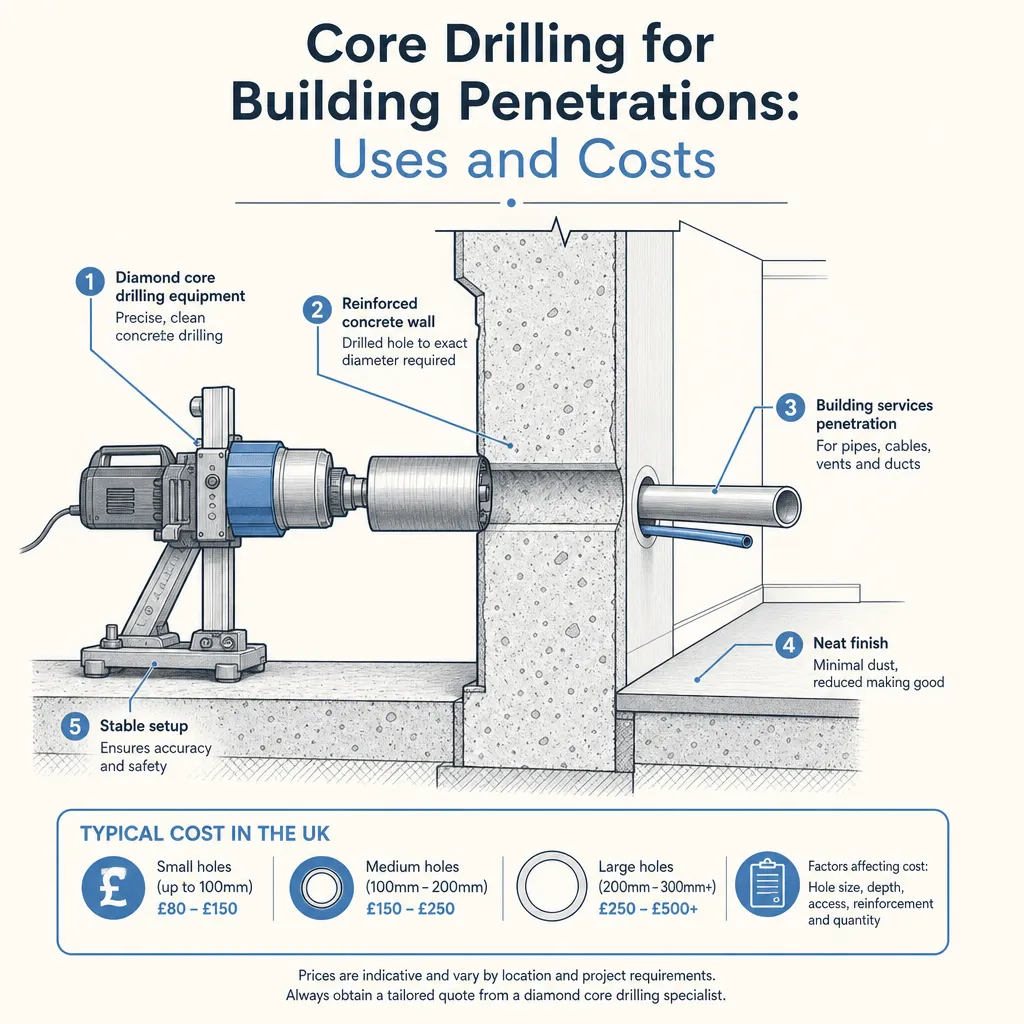
Core Drilling for Building Penetrations: Uses and Costs
Core drilling uses diamond-tipped equipment to cut clean holes through concrete, masonry, or block for pipes, ducts, cables, and building services. In UK homes, indicative costs start at around £100–£200 per hole for standard domestic work, rising with diameter, depth, material hardness, and access.
 Planning & Pre-Build
Designing and Building Your Dream Home: Architecture and Custom Construction
Building a custom home in the UK involves a RIBA eight-stage design process, full planning permission — permitted development does not apply to new dwellings — and a team that typically includes an architect, architectural technologist, structural engineer, and project manager. Professional fees usually add 8–15% to the build cost, and the total programme typically spans three to five years.
Surveys & Inspections
Browse all → Surveys & Inspections
Why Property Boundaries Matter: Surveying and Dispute Prevention
Property boundaries in England and Wales are recorded as general boundaries by HM Land Registry — not precise measurements. A Chartered Land Surveyor can map your physical boundary against the title plan, which matters most when planning extensions, erecting fences, or resolving neighbour disputes. Early professional surveying is almost always cheaper than legal proceedings.
 Surveys & Inspections
Safe Property Viewing Practices: Protecting Yourself During Inspections
When viewing a property in the UK, always tell someone where you are going and share the full address before you leave. Attend agent-accompanied viewings where possible, especially for first visits. Use second viewings to check structure, damp, and services more carefully. Take notes and photos as you go, and never feel pressured to make on-the-spot decisions.
 Surveys & Inspections
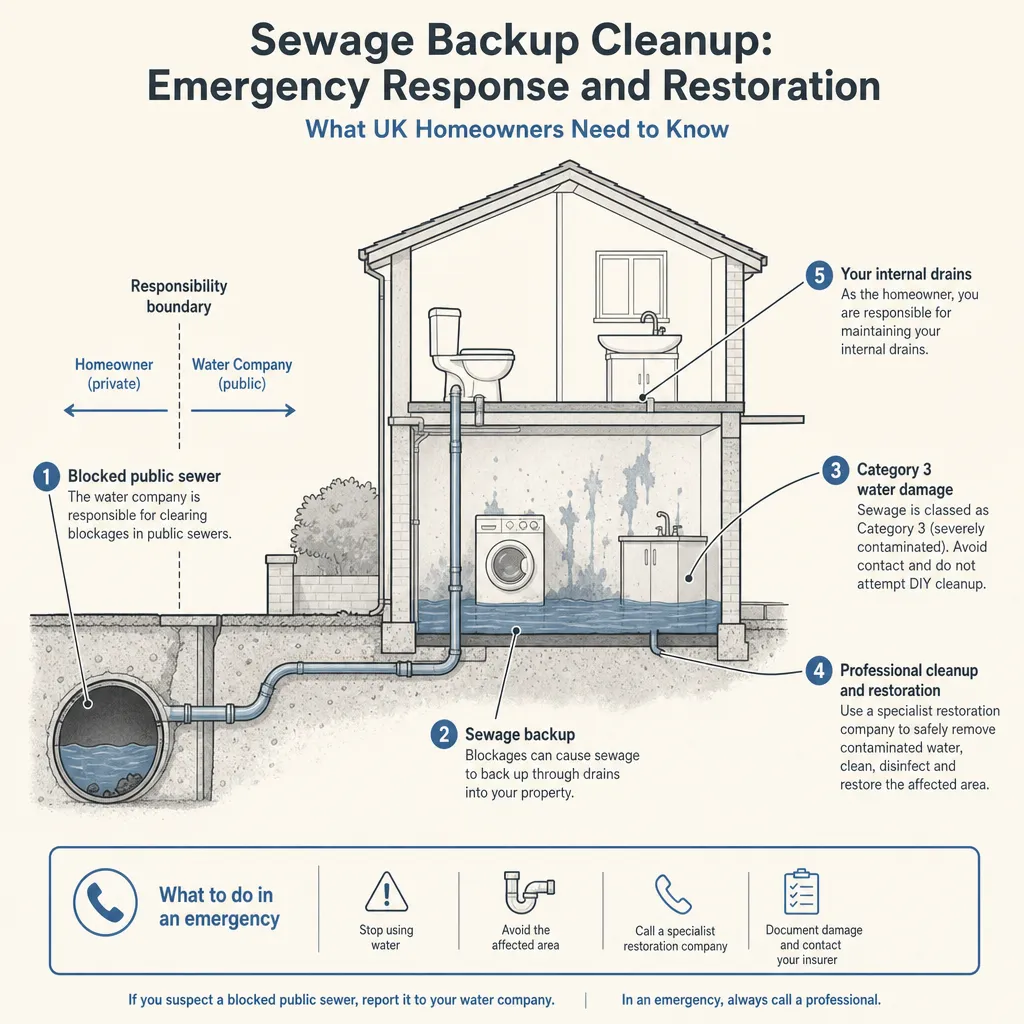
Sewage Backup Cleanup: Emergency Response and Restoration
A sewage backup should be treated as a Category 3 contamination event. Do not attempt DIY cleanup; contact a specialist drainage contractor immediately. Establish whether the blocked drain is private or falls under your water company's responsibility. A CCTV drain survey will identify the underlying cause and help prevent recurrence.
 Surveys & Inspections
Identifying Asbestos Insulation: What You Need to Know for Your Property
Asbestos insulation was widely used in UK properties built before 2000, commonly found in pipe lagging, ceiling tiles, loose-fill loft insulation, and around boilers. You cannot confirm asbestos by sight alone — only laboratory testing of a sample proves its presence. Never disturb suspect material; arrange a survey with a UKAS-accredited asbestos surveyor before any renovation work.
 Surveys & Inspections
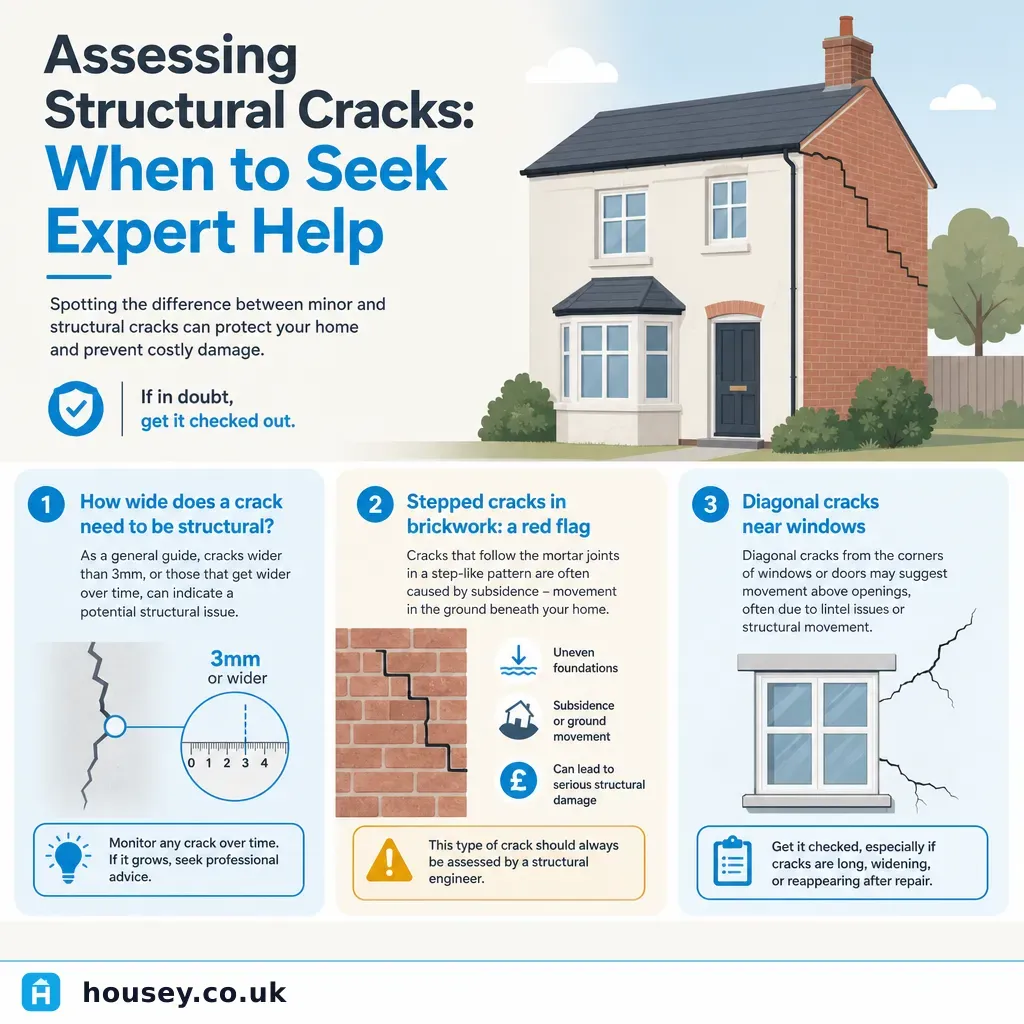
Assessing Structural Cracks: When to Seek Expert Help
Structural cracks range from harmless shrinkage hairlines to signs of subsidence or foundation movement. In UK homes, cracks wider than 5 mm, stepped cracks through brickwork mortar joints, diagonal cracks near openings, or any crack that is actively widening should be assessed by a chartered surveyor or structural engineer. Stable cracks under 5 mm can usually be monitored first.
 Surveys & Inspections
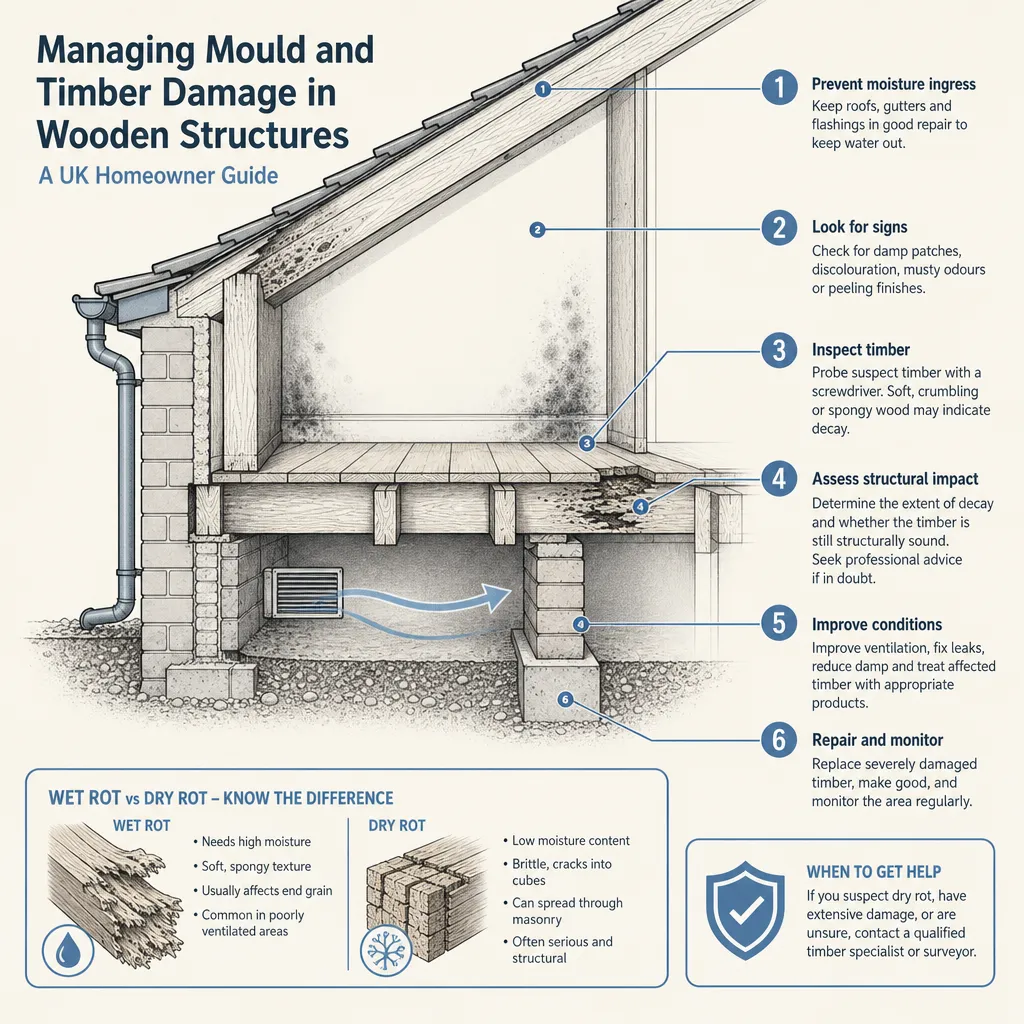
Managing Mould and Timber Damage in Wooden Structures
Mould and timber decay in wooden structures are usually symptoms of excess moisture rather than standalone problems. Wet rot affects localised damp timber; dry rot spreads aggressively through masonry and can compromise structural integrity. Both require a professional assessment to identify the moisture source before any treatment — addressing moisture first is the only lasting fix.