Knowledge Base
Property advice that actually helps
Researched, UK-specific guides for every stage of homeownership — from buying and surveys to retrofit, planning and major works.
 Buying & Moving
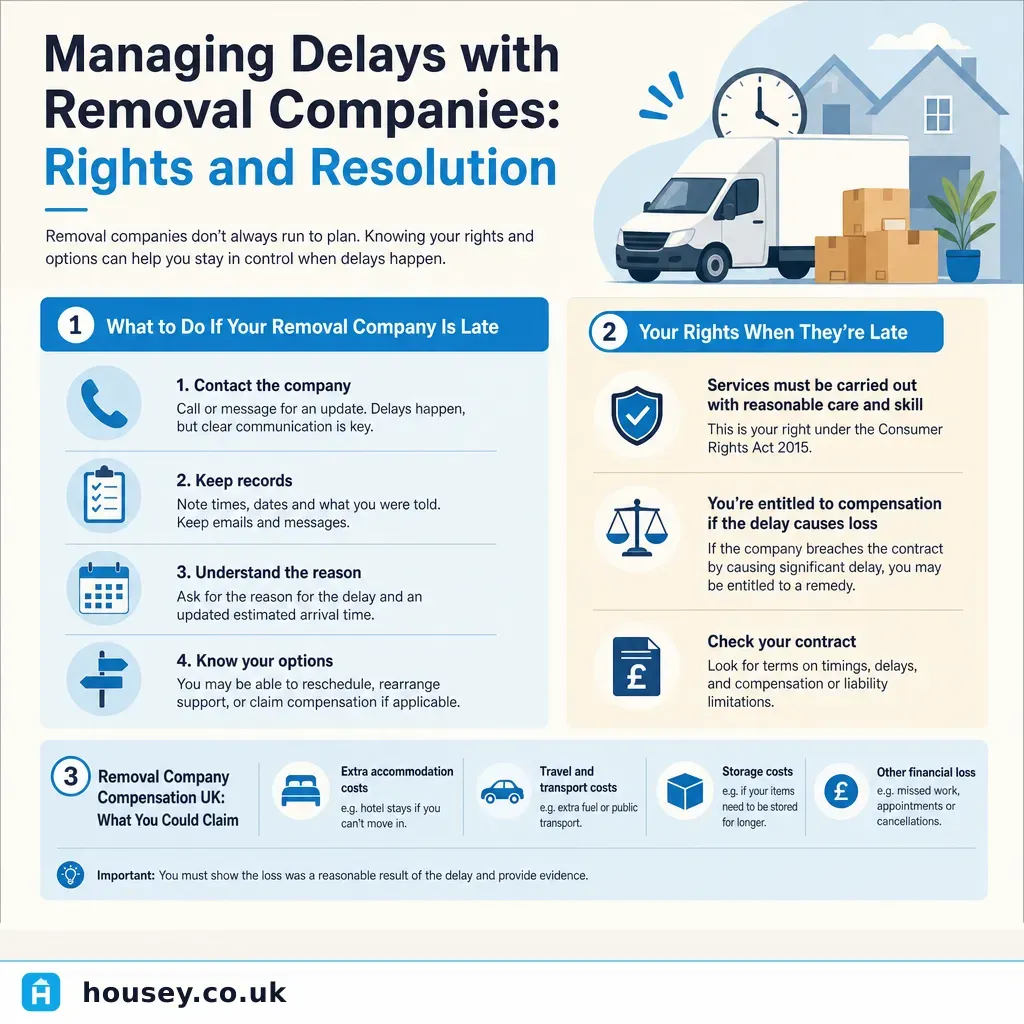
Managing Delays with Removal Companies: Rights and Resolution
If a removal company is late, your rights depend on your contract and whether the company is BAR-registered. Under the Consumer Rights Act 2015, services must be completed within a reasonable time. If you suffer provable financial losses — hotel costs, storage fees — you can claim these. BAR members must offer Alternative Dispute Resolution if a complaint cannot be resolved directly.
 Buying & Moving
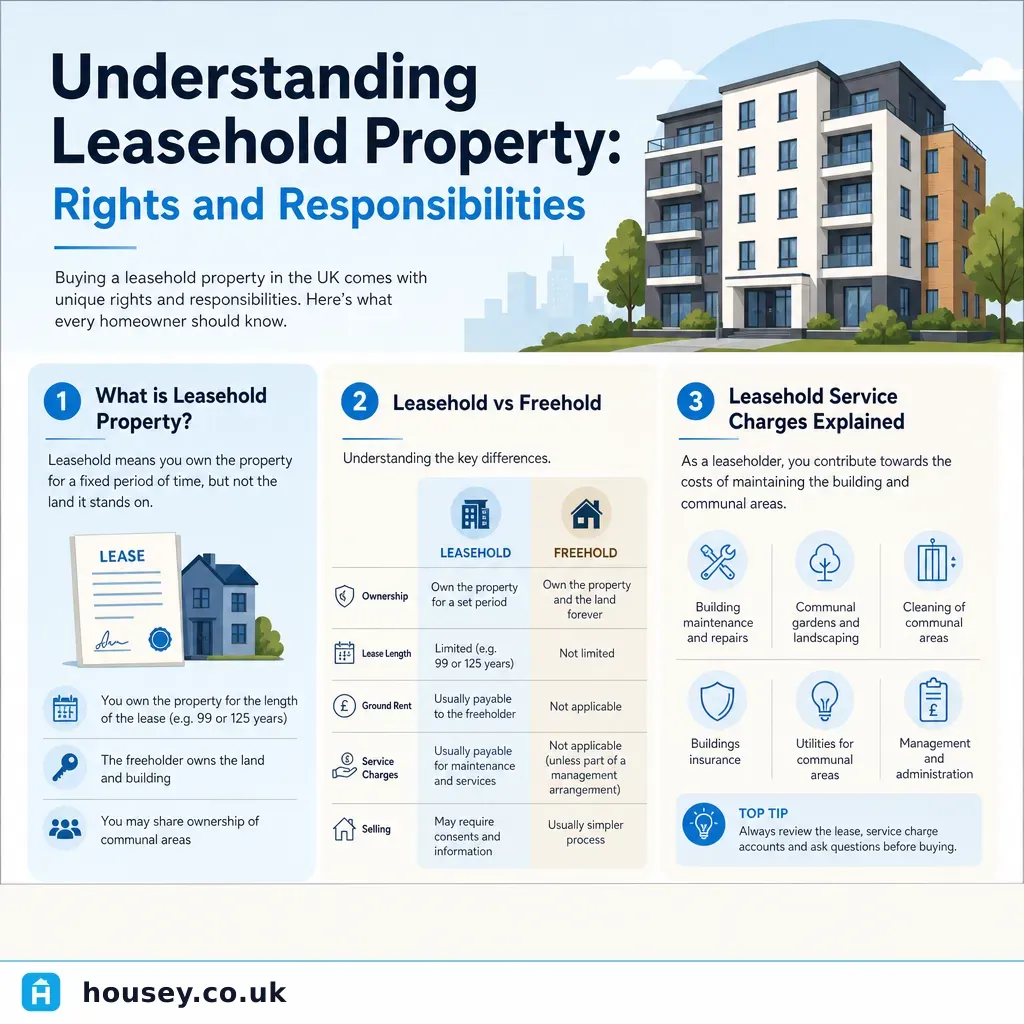
Understanding Leasehold Property: Rights and Responsibilities
Leasehold means you own a time-limited interest in a property while the freeholder owns the land and building. As a leaseholder you pay service charges, comply with lease covenants, and have statutory rights to extend your lease or buy the freehold. Lease length, ground rent terms, and service charge history are the three most important things to check before buying a leasehold flat.
 Buying & Moving
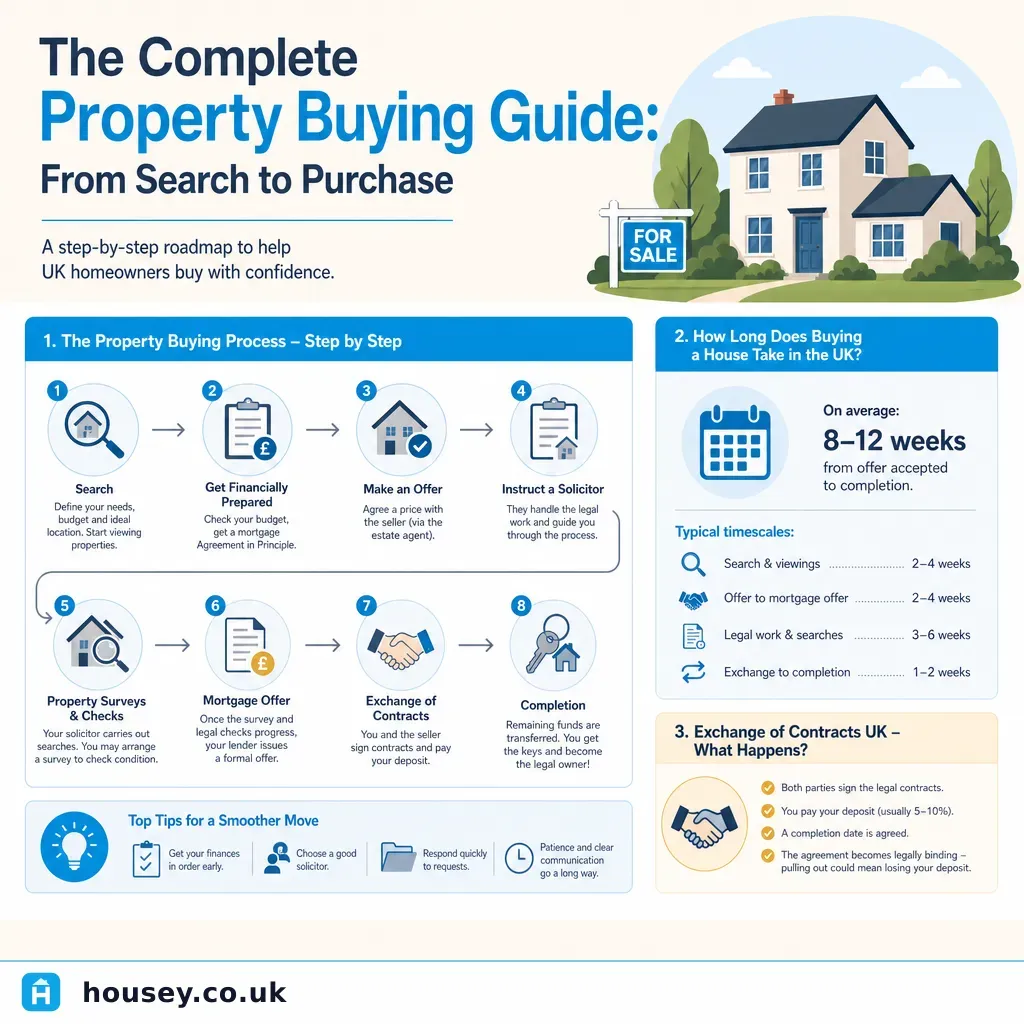
The Complete Property Buying Guide: From Search to Purchase
Buying a property in England and Wales typically takes 3–6 months from accepted offer to completion. The key stages are: get a mortgage agreement in principle, have your offer accepted, instruct a conveyancer, commission a RICS survey, exchange contracts (which makes the sale legally binding), then complete. Each stage has specific documents and checks that protect your legal and financial position as a buyer.
 Buying & Moving
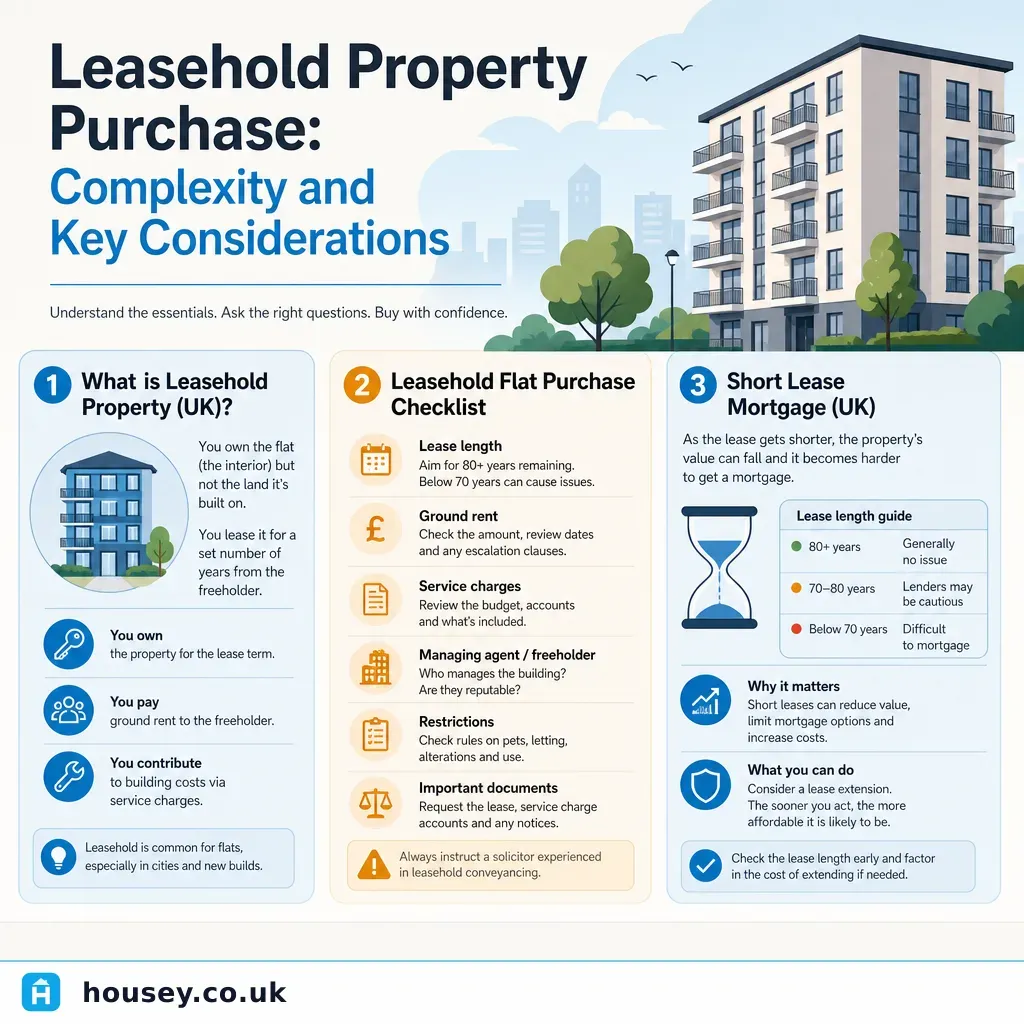
Leasehold Property Purchase: Complexity and Key Considerations
Buying a leasehold property means purchasing the right to occupy for a fixed term rather than owning the land outright. The lease length, ground rent, service charges, and management arrangements all affect value and mortgageability. A conveyancer must review the full lease and management pack before exchange; problems discovered after completion — a short lease, escalating ground rent, or a poorly managed building — are expensive to resolve.
 Buying & Moving
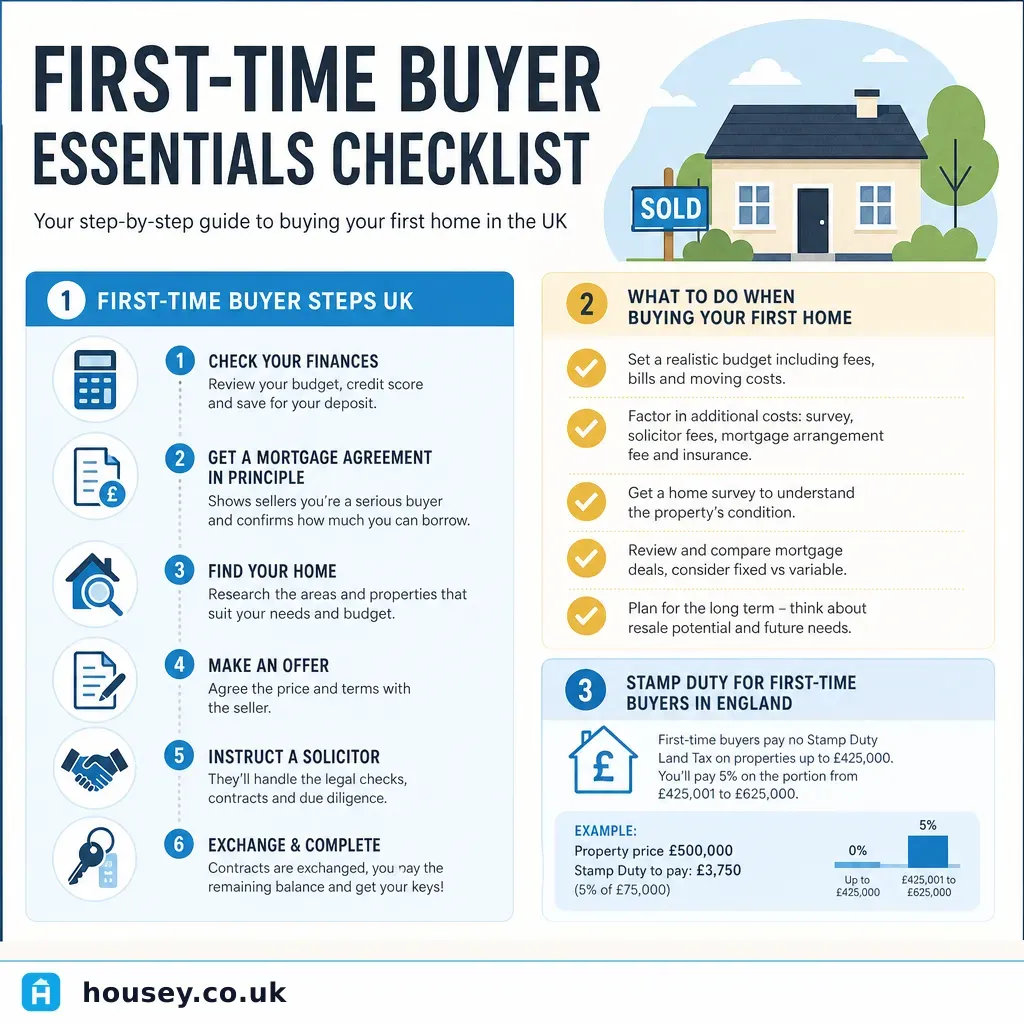
First-Time Buyer Essentials Checklist
Buying your first home involves obtaining a mortgage in principle, making an offer, instructing a solicitor, arranging a survey, and exchanging contracts before completion. Preparation matters: gather proof of income, deposit evidence, and ID documents early. In England, first-time buyers currently pay no Stamp Duty Land Tax on the first £425,000 of a purchase price on properties up to £625,000.
 Buying & Moving
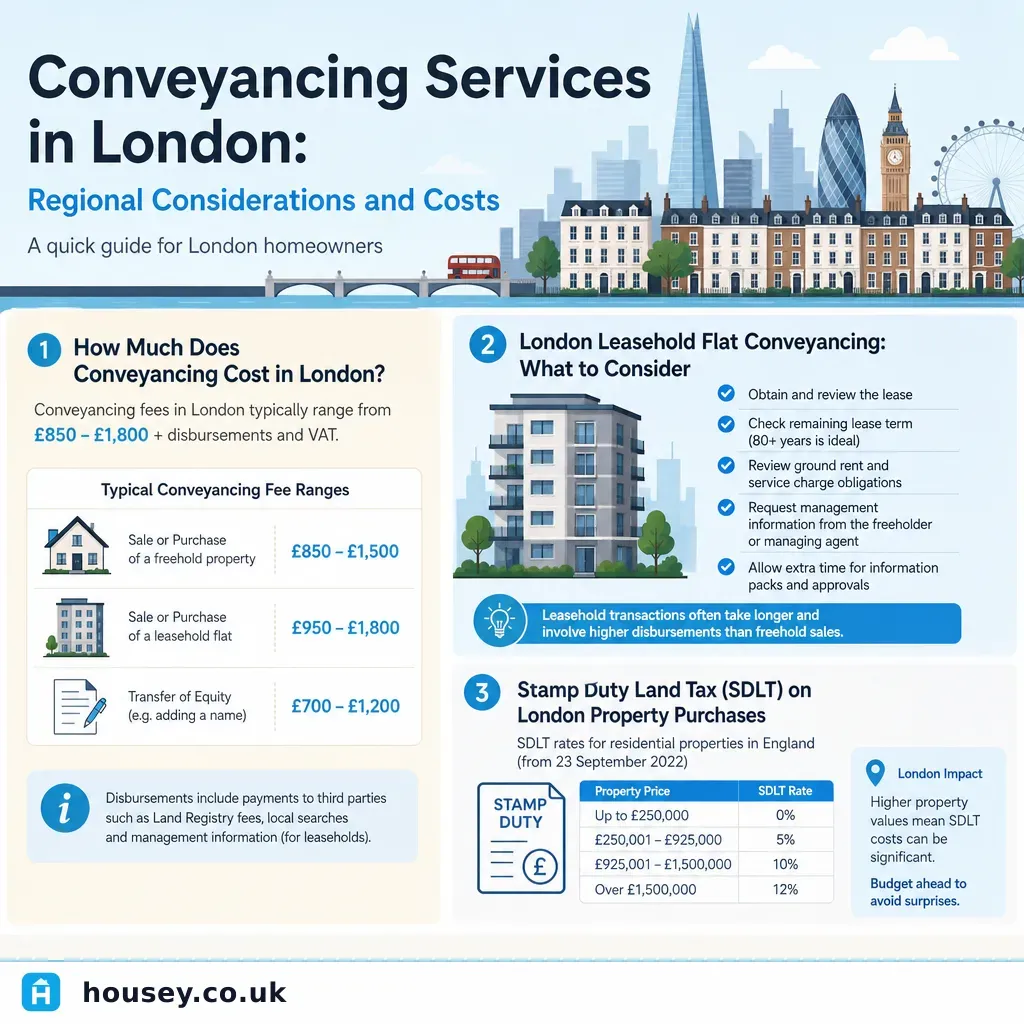
Conveyancing Services in London: Regional Considerations and Costs
Conveyancing in London typically takes 10 to 20 weeks and costs more than the national average, partly because most London properties are leasehold flats requiring additional checks on lease length, service charges, building safety, and managing agents. Higher property values also mean greater Stamp Duty Land Tax and Land Registry fees. A solicitor experienced in London leasehold transactions can help reduce delays.
 Buying & Moving
Property Enhancement Strategies for a Successful Sale
Enhancing a UK property before listing typically involves improving kerb appeal, decluttering and neutralising décor, addressing minor maintenance issues, and investing in professional photography. These steps attract more viewings and support a stronger asking price, without the risk of overcapitalising on costly renovations that buyers may not value or that are unlikely to recoup their full cost in the achieved sale price.
 Buying & Moving
Pricing Strategy: Why Overvaluing Your Home Can Harm Your Sale
Overvaluing your home typically leads to fewer viewings, longer time on market, and eventual price reductions that can stigmatise the listing. UK buyers and their mortgage lenders use comparable evidence to gauge value; an inflated asking price rarely holds up to scrutiny. A professionally prepared valuation helps you set a credible, market-aligned price from the start.
 Buying & Moving
How to Get Your Property Professionally Valued
To get a professional property valuation in the UK, instruct a RICS Registered Valuer for any formal purpose — mortgage, probate, Help to Buy, or legal proceedings. Estate agents offer free market appraisals for pricing guidance, but these are not regulated and are not accepted by lenders or HMRC. Always match the type of valuation to your specific purpose.
 Buying & Moving
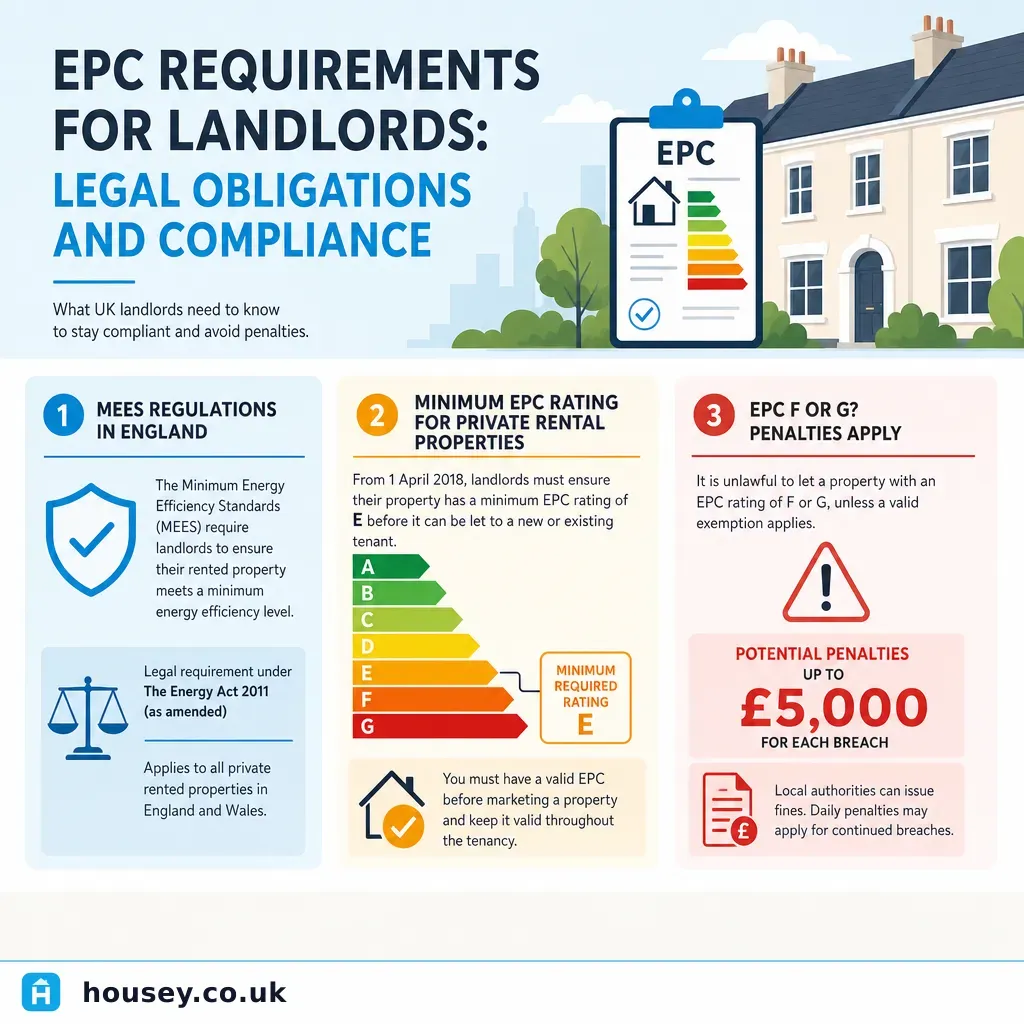
EPC Requirements for Landlords: Legal Obligations and Compliance
Landlords in England and Wales must ensure privately rented properties achieve a minimum EPC rating of E before letting. Properties rated F or G cannot be legally let without a valid exemption registered on the PRS Exemptions Register. EPCs must be provided to prospective tenants before they sign, and penalties for non-compliance can reach £4,000 per property. Scotland introduced a minimum EPC D for new tenancies from April 2025.
 Buying & Moving
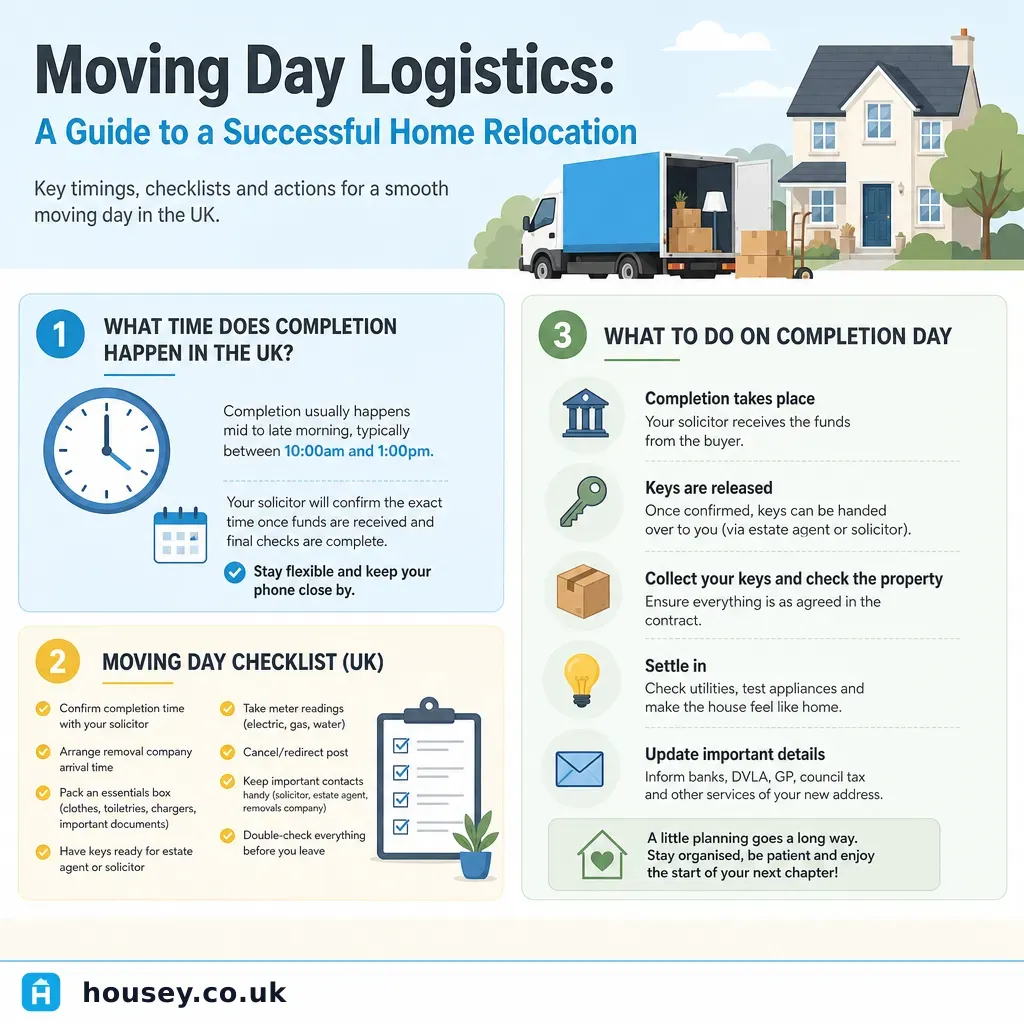
Moving Day Logistics: A Guide to a Successful Home Relocation
On moving day, wait for your solicitor to confirm completion before collecting keys — there is no fixed handover time and most UK completions happen between 11am and 2pm. Take meter readings at both properties, photograph every room, keep documents and valuables with you, and change the locks at your new property before the end of the day.
 Buying & Moving
Choosing a House Removal Company: What to Look For
Choose a UK removal company that belongs to the British Association of Removers (BAR) or the Removals Industry Ombudsman Scheme (RIOS), carries goods-in-transit and public liability insurance, and provides a written quote after properly surveying your home. Get at least three comparable quotes, check credentials through the BAR member directory and Companies House, and always confirm cancellation terms in writing before you book.