Home Warranties and Insurance Protection for UK Property Sellers
By Housey · Last reviewed 19th of May 2026

Home Warranties and Insurance Protection for UK Property Sellers
The process of selling a home in England, Wales, or Scotland throws up a range of insurance and warranty questions that many sellers encounter for the first time. Common triggers include a solicitor flagging a documentation gap, a buyer's surveyor raising concerns about historic works, or a buyer's lender requesting evidence of structural guarantees. Understanding which protections exist, how they transfer, and when professional advice is essential can prevent a sale from stalling or collapsing.
Key points
- Legal indemnity insurance covers specific, known legal defects or documentation gaps — such as missing planning permission, absent building regulations completion certificates, or no FENSA certificate for replacement windows — and is typically a one-off premium with no annual renewal.
- Structural warranties such as the NHBC Buildmark 10-year warranty on new builds are generally transferable to a buyer automatically on completion, but sellers should locate original documentation before marketing the property.
- Between exchange of contracts and completion, both buyer and seller are advised to maintain buildings insurance on the property; RICS recommends both parties insure during this period as an additional safeguard.
- The Law Society's TA6 Property Information Form requires sellers to disclose known material facts about the property; failure to do so, or active misrepresentation, can result in a claim under the Misrepresentation Act 1967 after completion.
- The term 'home warranty' as used in the United States — an annual maintenance and appliance contract — has no direct equivalent for UK resale homes; the closest UK instruments are legal indemnity policies and insurance-backed structural guarantees.
Understanding the UK 'home warranty' landscape
The term 'home warranty' means different things on either side of the Atlantic. In the US, it is typically an annual service contract covering appliances and systems. In the UK, sellers and buyers deal primarily with four distinct instruments:
- Legal indemnity insurance — single-premium policies covering specific legal risks in the title or planning history.
- Structural warranties — long-term, insurance-backed guarantees most common on new-build properties.
- Buildings insurance — the standard policy covering the fabric of the building against damage.
- Home buyer's protection insurance — purchased by buyers (sometimes funded by sellers as an incentive) to cover abortive legal and survey costs if a sale collapses before exchange.
Each serves a distinct purpose, and sellers may encounter any or all of them during a single transaction.
Legal indemnity insurance: the most common seller tool
Legal indemnity insurance is the most frequently used protection mechanism in UK residential sales. It provides an insurance-backed indemnity against a specific risk that would otherwise make a title unmarketable or cause a transaction to stall.
Common scenarios where sellers take out legal indemnity policies include:
- Missing building regulations completion certificate — works carried out without sign-off, or records lost by the local authority.
- Missing planning permission — a conversion, extension, or outbuilding built without consent, where enforcement action is now time-barred under the Town and Country Planning Act 1990 (generally four years for operational development, ten years for change of use).
- No FENSA certificate — windows replaced by a previous owner without a competent person scheme certificate.
- Breach of restrictive covenant — an alteration that may technically breach a covenant in the title deeds.
- Missing party wall agreement — works carried out near a shared boundary without notice under the Party Wall etc. Act 1996.
Legal indemnity premiums are typically modest — often £150–£600 as a one-off payment depending on the risk type and property value — and the policy runs with the land, protecting future owners too. However, instructing solicitors should always be consulted before a policy is purchased, as certain actions (such as making a retrospective planning application) can invalidate the insurance.
Structural warranties and new-build guarantees
For new-build properties or recent major building works, an insurance-backed structural warranty is the most significant protection a seller can pass to a buyer. The most widely recognised is the NHBC Buildmark warranty, which covers:
- Years 1–2: Builder's defects liability — the developer is responsible for putting right defects in workmanship and materials.
- Years 3–10: NHBC structural insurance — the insurer covers the cost of remedying major structural defects if the builder cannot or will not act.
Other warranty providers include Premier Guarantee, LABC Warranty, and Build-Zone. All are transferable on sale — the buyer inherits the remaining cover. Sellers should:
- Locate the original warranty certificate and policy booklet before going on the market.
- Confirm the policy is still in force and no claims have been made that would affect transferability.
- Disclose the warranty documents to the buyer's solicitor as part of the conveyancing bundle.
If original documents are lost, the warranty provider can usually issue a replacement — contact them early in the sale process.
Buildings insurance: the exchange-to-completion gap
Once contracts are exchanged, the buyer has a legal interest in the property. In England and Wales, the risk of damage typically passes to the buyer at exchange under Standard Condition 5 of the Standard Conditions of Sale. However, RICS guidance and most mortgage lenders strongly recommend that both parties maintain buildings insurance between exchange and completion.
Sellers should:
- Confirm that their existing buildings insurance runs through to the completion date and is not cancelled early.
- Inform their insurer that the property is under offer and check that coverage terms remain unchanged.
- Avoid leaving the property unoccupied for extended periods between exchange and completion without notifying the insurer — unoccupancy clauses may limit cover after a specified period, often 30 days.
Which protection applies to which situation
Situation | Recommended protection | Who typically pays | Transferable to buyer? |
|---|---|---|---|
Missing building regs completion certificate | Legal indemnity insurance | Usually seller | Yes — runs with the land |
Missing planning permission (time-barred) | Legal indemnity insurance | Usually seller | Yes |
No FENSA certificate for windows | Legal indemnity insurance | Usually seller | Yes |
New-build under 10 years old | NHBC or equivalent structural warranty | Builder (included in sale) | Yes — automatic on completion |
Damage risk between exchange and completion | Buildings insurance (both parties) | Both parties advised | N/A — ongoing policy |
Sale falls through before exchange | Home buyer's protection insurance | Buyer (sometimes seller-funded) | N/A |
Which protection do you need? A decision guide
- Selling a property with an extension or conversion without building regs sign-off → Legal indemnity insurance is the standard solution; instruct your solicitor before approaching the council.
- Selling a new build or a home under 10 years old → Locate and transfer the structural warranty; confirm it is current and request a duplicate if documents are missing.
- Completion is more than two weeks after exchange → Confirm buildings insurance is in place and notify your insurer of the pending sale.
- Your buyer is asking for a 'home warranty' → Clarify what they mean; they likely want evidence of a structural guarantee, legal indemnity coverage, or both — your solicitor can advise on what documentation satisfies the request.
- A historic breach of covenant or a restrictive covenant issue has been identified → Instruct your solicitor before taking any action; applying to the council or contacting neighbours may invalidate indemnity cover.
Important limitations
This article provides general information about common protection mechanisms available to UK property sellers. Insurance and warranty terms vary between providers and individual transactions. Legal rights and obligations under the Misrepresentation Act 1967, the Town and Country Planning Act 1990, and the Party Wall etc. Act 1996 depend on specific facts, property history, and local authority records. Always instruct a qualified solicitor or licensed conveyancer before making decisions about indemnity insurance, warranty transfer, or seller disclosure obligations.
What to ask a qualified professional
Before instructing a legal indemnity policy or transferring a structural warranty, ask your solicitor or conveyancer:
- Does this policy cover the specific risk identified in the buyer's search results or survey report?
- Will applying to the council or insurer before taking out a policy invalidate the indemnity?
- Is the premium a one-off cost, and does it cover future owners as well as the current buyer?
- For structural warranties: has the original warrantor confirmed the policy is in force, and is there a transfer fee?
- Does the buyer's mortgage lender require a specific form of indemnity or warranty documentation?
- What disclosure obligations do I have on the TA6 form in relation to this issue?
When to get professional help
Instruct a solicitor or licensed conveyancer promptly if:
- A survey or search has flagged a legal or structural issue that the buyer is requiring you to resolve before exchange.
- You are uncertain whether works carried out at the property had planning permission or building regs sign-off.
- The buyer's lender has raised a retention or condition related to a defect or missing document.
- You cannot locate the structural warranty for a property under 10 years old.
How Housey can help
An accurate reinstatement cost is a foundational step before arranging or renewing buildings insurance. Housey connects sellers with qualified professionals offering an insurance valuation for your property and a valuation survey — helping ensure cover is appropriate and documentation is in order well before exchange.
Frequently asked questions
Is a home warranty compulsory when selling a house in the UK?
No. There is no legal requirement for a seller to provide a home warranty in the UK. However, for properties under 10 years old, a structural warranty such as the NHBC Buildmark may already be in place and should be transferred. For other properties, legal indemnity insurance may be required by a buyer's solicitor or lender to cover specific documentation gaps.
What is legal indemnity insurance and who pays for it?
Legal indemnity insurance is a single-premium policy that covers a specific legal risk, such as missing planning permission or an absent building regulations completion certificate. In most cases the seller pays the premium as part of resolving the issue, though this is negotiable. The policy runs with the land and protects future owners as well as the current buyer.
Does an NHBC warranty transfer automatically when I sell?
NHBC Buildmark warranties transfer to the new owner automatically on completion and do not require a separate transfer application for most policies. However, the seller should confirm the warranty is in force and provide original documentation to the buyer's solicitor. If documents are lost, contact NHBC directly to request a replacement before marketing the property.
Do I need buildings insurance between exchange and completion?
In England and Wales, the legal risk of damage typically passes to the buyer at exchange of contracts, but RICS guidance recommends both parties maintain buildings insurance during this period. Sellers should keep their buildings insurance in place until completion and inform their insurer that the property has been sold subject to contract.
Sources and further reading
- NHBC Buildmark Warranty: What It Covers — NHBC
- Buying or Selling Your Home: Transferring Ownership (Conveyancing) — GOV.UK
- Misrepresentation Act 1967 — legislation.gov.uk
- TA6 Property Information Form Guidance — The Law Society
- Town and Country Planning Act 1990 — legislation.gov.uk
Useful next reads
 Buying & Moving
Choosing the Right Removal Company for Your House Move
To choose the right removal company, get three quotes from British Association of Removers (BAR) members or similarly accredited firms.
 Buying & Moving
Removal Company Services: Full Packing and Unpacking Options
UK removal companies offer self-pack, partial packing, and full packing and unpacking services.
 Buying & Moving
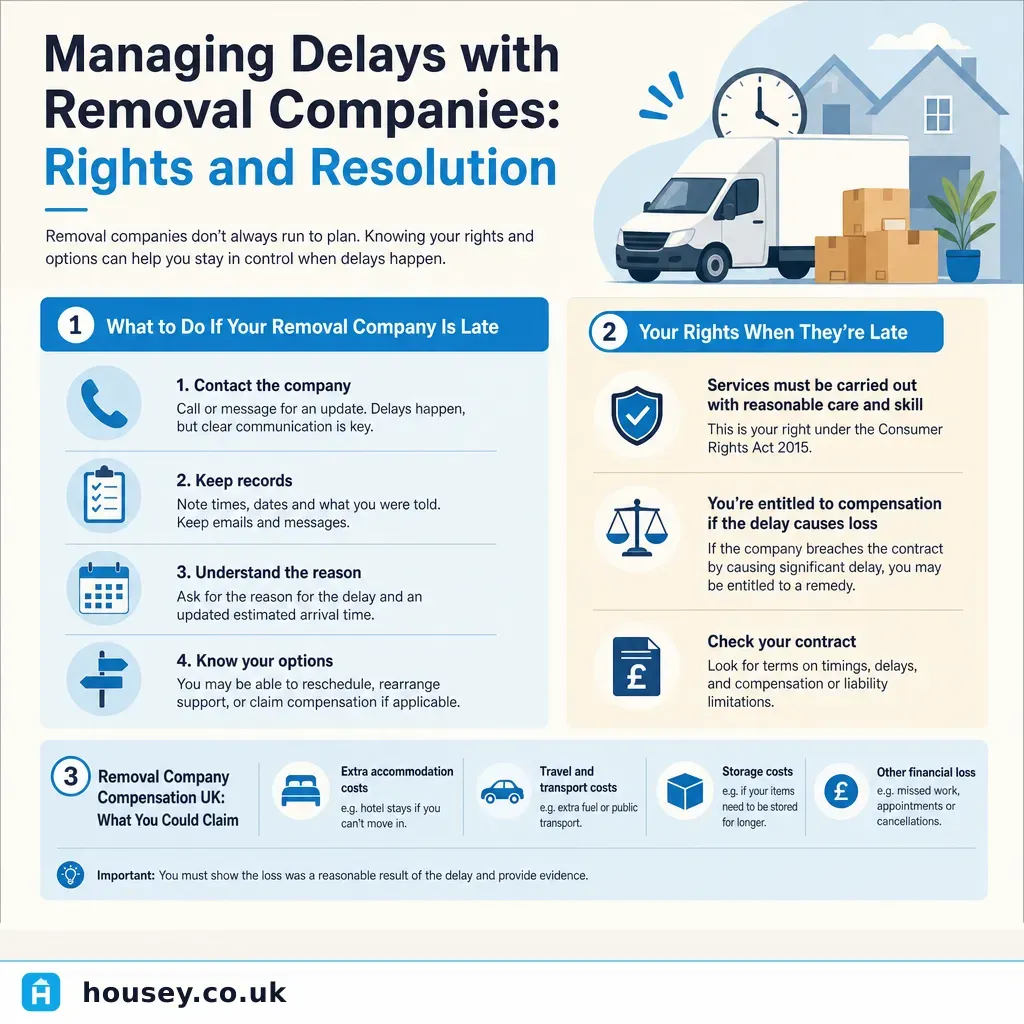
Managing Delays with Removal Companies: Rights and Resolution
If a removal company is late, your rights depend on your contract and whether the company is BAR-registered.
 Buying & Moving
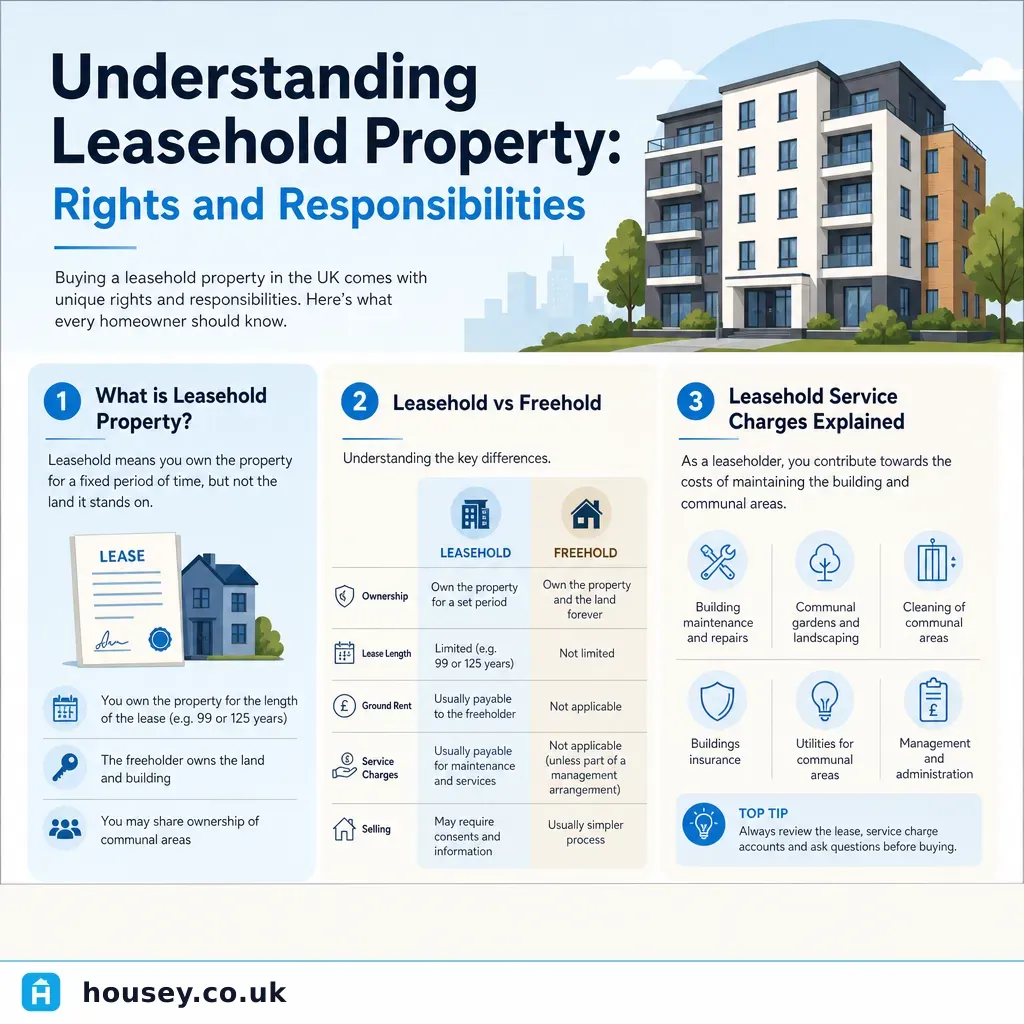
Understanding Leasehold Property: Rights and Responsibilities
Leasehold means you own a time-limited interest in a property while the freeholder owns the land and building.
 Buying & Moving
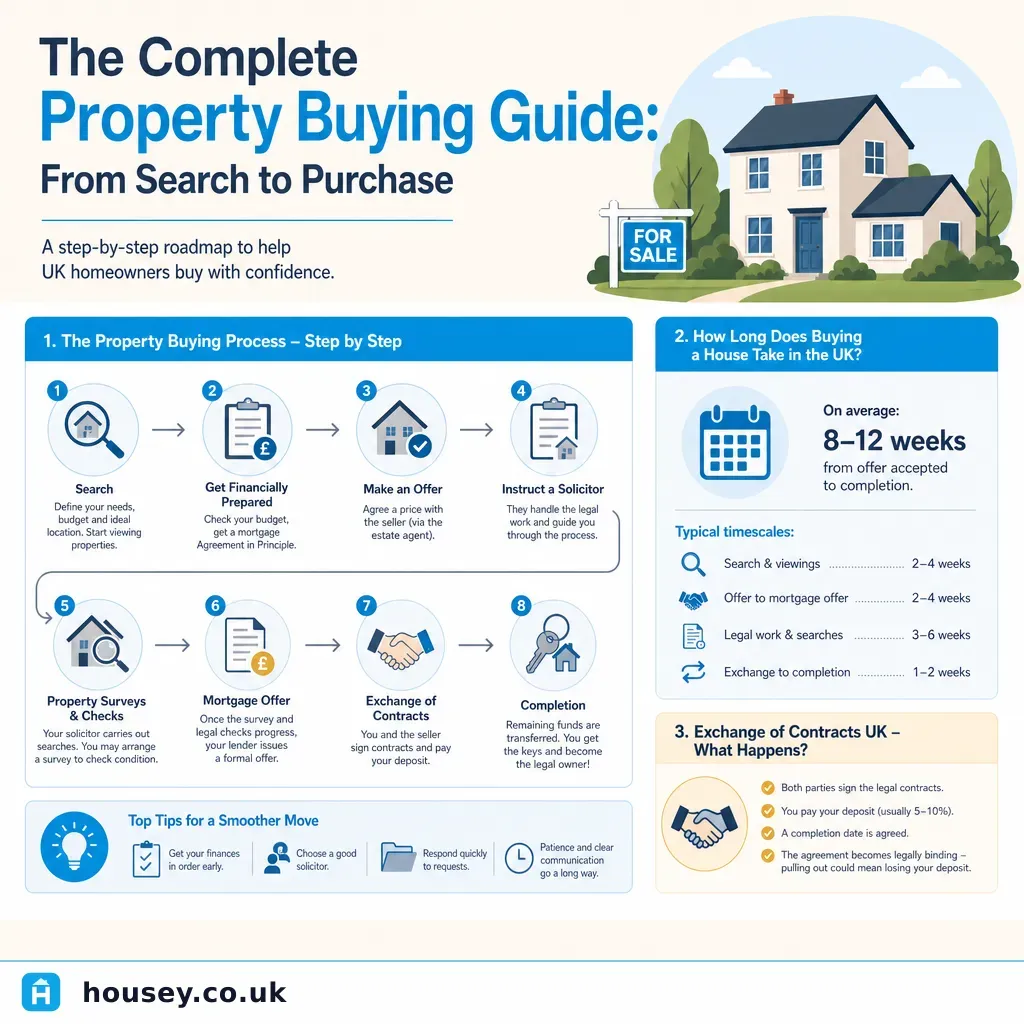
The Complete Property Buying Guide: From Search to Purchase
Buying a property in England and Wales typically takes 3–6 months from accepted offer to completion.