How much does window sill replacement cost
By Housey · Last reviewed 19th of May 2026
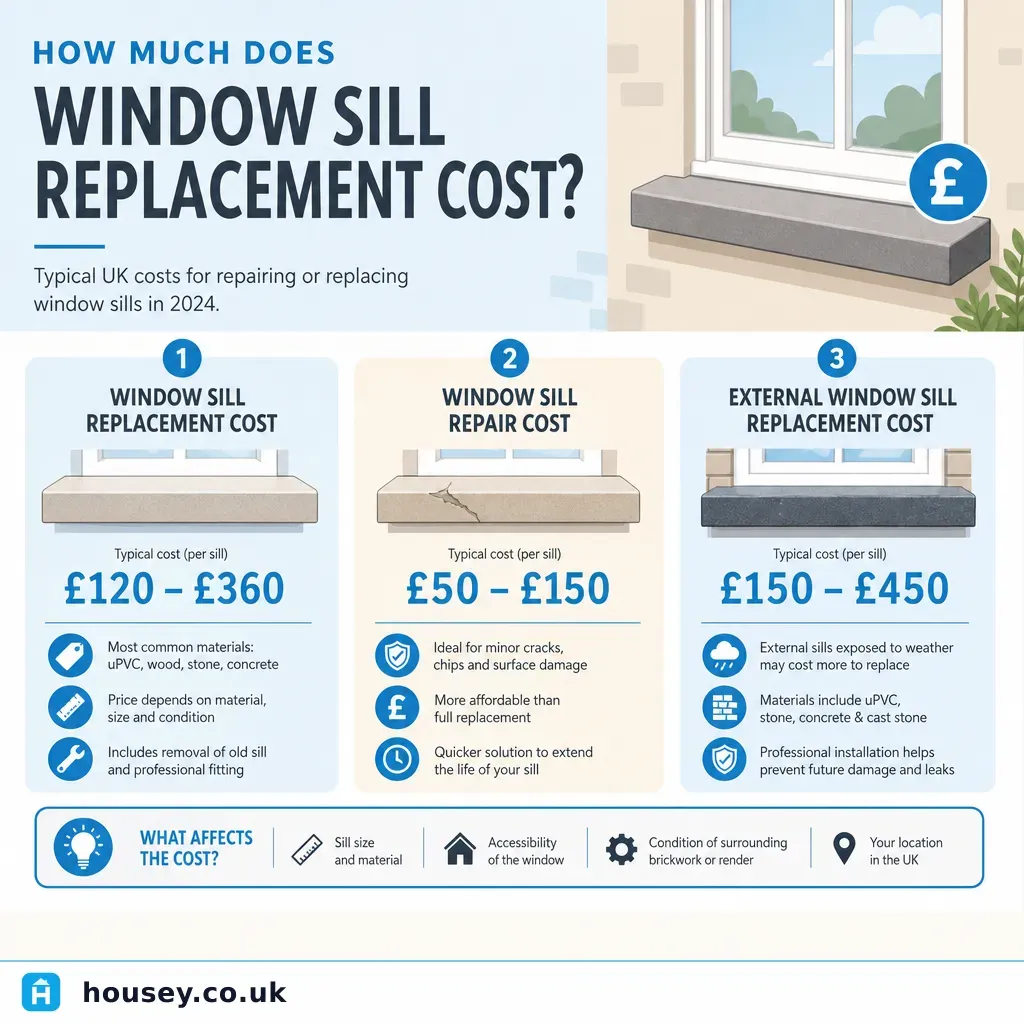
How much does window sill replacement cost
Window sills are more than a cosmetic detail — they protect the junction between frame, wall, and glazing from rainwater ingress, and a failing sill can allow damp to work into a wall cavity or spread rot into surrounding timber. Replacement is a job that typically arises when routine maintenance has been deferred too long, after failed paintwork lets water sit on the sill, or following a survey that flags water damage. The material chosen and the location of the sill — internal or external — shape the cost considerably.
Key points
- External window sill replacement in the UK typically costs £150–£500 per sill for supply and labour, depending on material and access (indicative UK costs, last reviewed 2026-05-19).
- The four main replacement materials are uPVC, softwood timber, hardwood timber, and natural or cast stone — each with different lifespans and maintenance demands.
- Replacing a like-for-like sill on a standard casement window is generally classed as a repair and does not require building regulations approval.
- Conservation areas and listed buildings may require matching materials and could need listed building consent or conservation area consent before work proceeds.
- Rot or damp behind the sill can add significantly to costs if sub-sill framing or masonry needs treatment before the new sill is bedded in.
What affects the cost of window sill replacement?
Several factors drive the final price beyond the base material cost.
Material choice
- uPVC: Low maintenance, widely available, suits modern or uPVC-framed windows. Supply-and-fit typically £100–£250 per sill.
- Softwood timber: Traditional for Victorian and Edwardian properties; requires regular painting. Supply-and-fit typically £120–£300 per sill.
- Hardwood timber (oak, iroko): More durable than softwood; suited to period properties. Supply-and-fit typically £200–£450 per sill.
- Natural stone or cast stone: Common on older properties; higher material cost and heavier to handle. Supply-and-fit typically £250–£500+ per sill.
Indicative UK costs, last reviewed 2026-05-19. Prices vary by region and contractor; always obtain at least two quotes.
Access and scaffolding
Ground-floor sills are straightforward. First-floor sills and above may need hop-up scaffolding or a tower, adding £100–£300 or more to the job if permanent access is not available.
Extent of underlying damage
A crumbling mortar bed, wet sub-sill timbers, or spalled masonry behind the sill must be addressed before fitting the replacement. Remedial work adds time and cost — ask your contractor to carry out a full assessment before quoting.
Number of sills
Tradespeople often charge less per sill when replacing several in one visit, so it is worth batching the work if multiple sills are failing.
Internal vs external window sills
External sills are exposed to the elements and degrade faster. Internal sills are decorative, usually made from painted MDF, softwood, or stone, and rarely show structural failure — their replacement is simpler and cheaper (often £80–£200 per sill supply-and-fit, indicative UK costs, last reviewed 2026-05-19).
The two are often quoted separately. Make sure any quote clearly specifies which type it covers.
Material comparison
Material | Typical lifespan | Maintenance | Best for | Not ideal for |
|---|---|---|---|---|
uPVC | 20–30 years | Wipe-clean | Modern windows, low-maintenance homes | Period or listed properties |
Softwood timber | 15–25 years (with paint) | Annual painting | Victorian/Edwardian terraces | Exposed north-facing elevations |
Hardwood timber | 30–50 years | Occasional oil or paint | Period properties, bespoke joinery | Tight budgets |
Natural stone | 50+ years | Minimal | Period and listed buildings | Modern lightweight frames |
Cast stone | 30–50 years | Minimal | Period-style new builds | Very exposed coastal sites |
Do you need planning permission or building regulations approval?
Replacing a window sill on a like-for-like basis is generally classed as a repair and falls outside building regulations. However:
- Conservation areas: Check with your local planning authority (LPA) before replacing natural stone sills with a different material. Permitted development rights for changes to the external appearance of a dwelling may be restricted.
- Listed buildings: Listed building consent is likely required for changes to window sills — use of uPVC or non-matching stone could be refused. Always consult your LPA's conservation officer before proceeding.
- Leasehold flats: Check your lease. External fabric work often requires freeholder consent, and the freeholder or management company may dictate approved materials.
Homeowner checklist: preparing for a window sill replacement quote
When to get professional help
Sill replacement is generally a straightforward job, but seek professional assessment if:
- There is visible damp or staining inside the wall below the window — this may indicate long-standing failure affecting the wall cavity or internal plasterwork.
- The lintel above the window appears cracked or displaced — this is a structural matter separate from the sill and requires a chartered surveyor or structural engineer to assess.
- The property is listed or in a conservation area and you are unsure what consent is required.
- Rot extends beyond the sill itself into the window frame or the surrounding sub-sill framing.
How Housey can help
Housey connects you with vetted window and door installers who can assess your sills, advise on the best material for your property type, and supply a like-for-like or upgraded replacement. You can compare quotes from local specialists and read verified reviews before committing.
Frequently asked questions
How do I know if my window sill needs replacing rather than repairing?
Signs that replacement is more cost-effective than repair include visible cracks running through the sill, soft or spongy timber indicating rot, large areas of spalling on stone or concrete, or a sill that has dropped away from the wall. Small cracks and superficial paint failure can often be repaired with flexible sealant and fresh paint if caught early enough.
Can I replace just the external window sill without replacing the window frame?
Yes, in most cases the external sill is a separate component from the frame and can be replaced independently. Your contractor will need to check how the sill is fixed — some older properties have sills integral to the masonry, which requires more careful removal and making good of the surrounding brickwork or stonework.
Does window sill replacement require building regulations approval?
Like-for-like repair replacement does not normally require building regulations approval. If the work involves altering the structural opening, changing drainage arrangements, or is on a listed building, consult your local authority building control (LABC) or an approved inspector before starting. Always check with your local planning authority if the property is in a conservation area.
How long does window sill replacement take?
A single sill typically takes two to four hours for an experienced tradesperson, including removal, preparation of the mortar bed, and fitting. A full-house replacement of all external sills can usually be completed in one or two days, depending on the number of windows, material choice, and access requirements.
Sources and further reading
- Planning Portal: repairs and maintenance — Planning Portal
- Windows in traditional buildings — Historic England
- Draught-proofing windows and doors — Energy Saving Trust
Useful next reads
 Improvement & Build
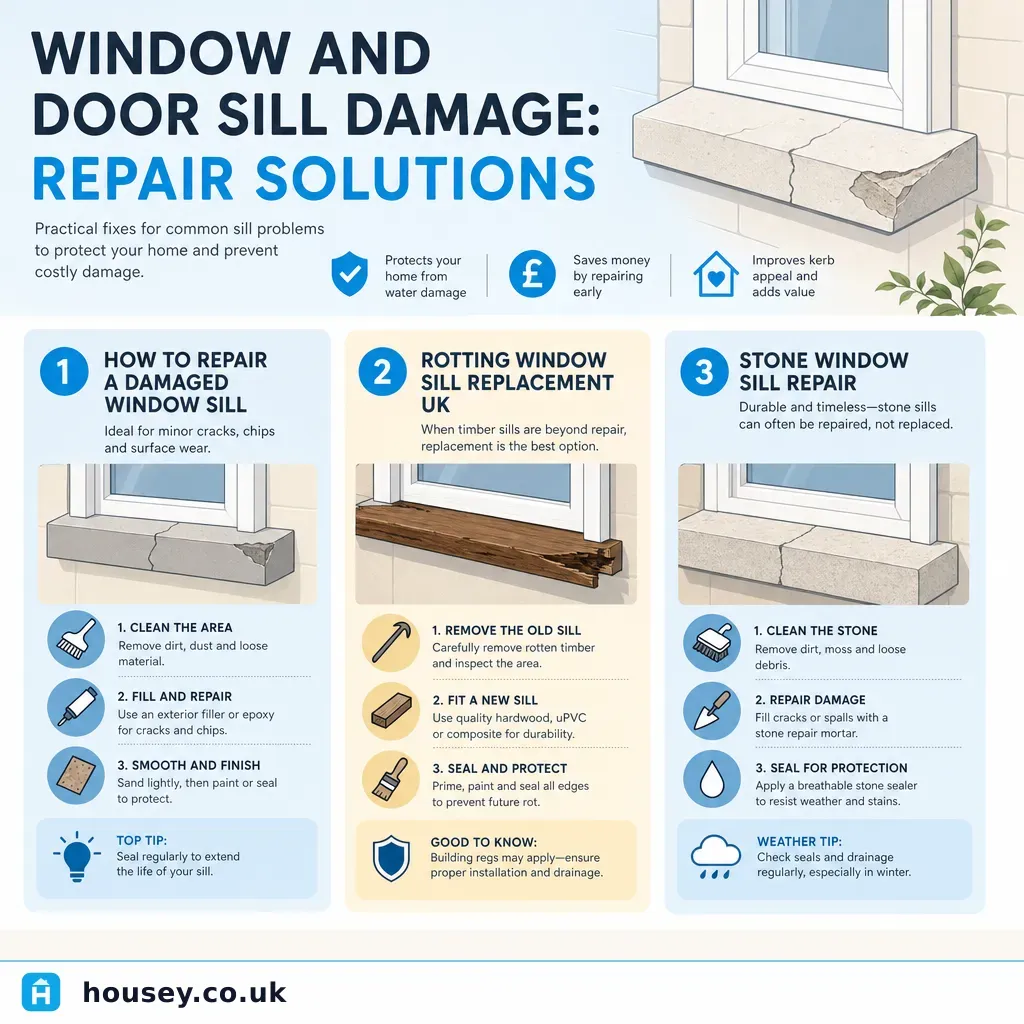
Window and Door Sill Damage: Repair Solutions
Window and door sill damage ranges from surface cracking and peeling paint to structural rot, spalling stone, or broken concrete.
 Improvement & Build
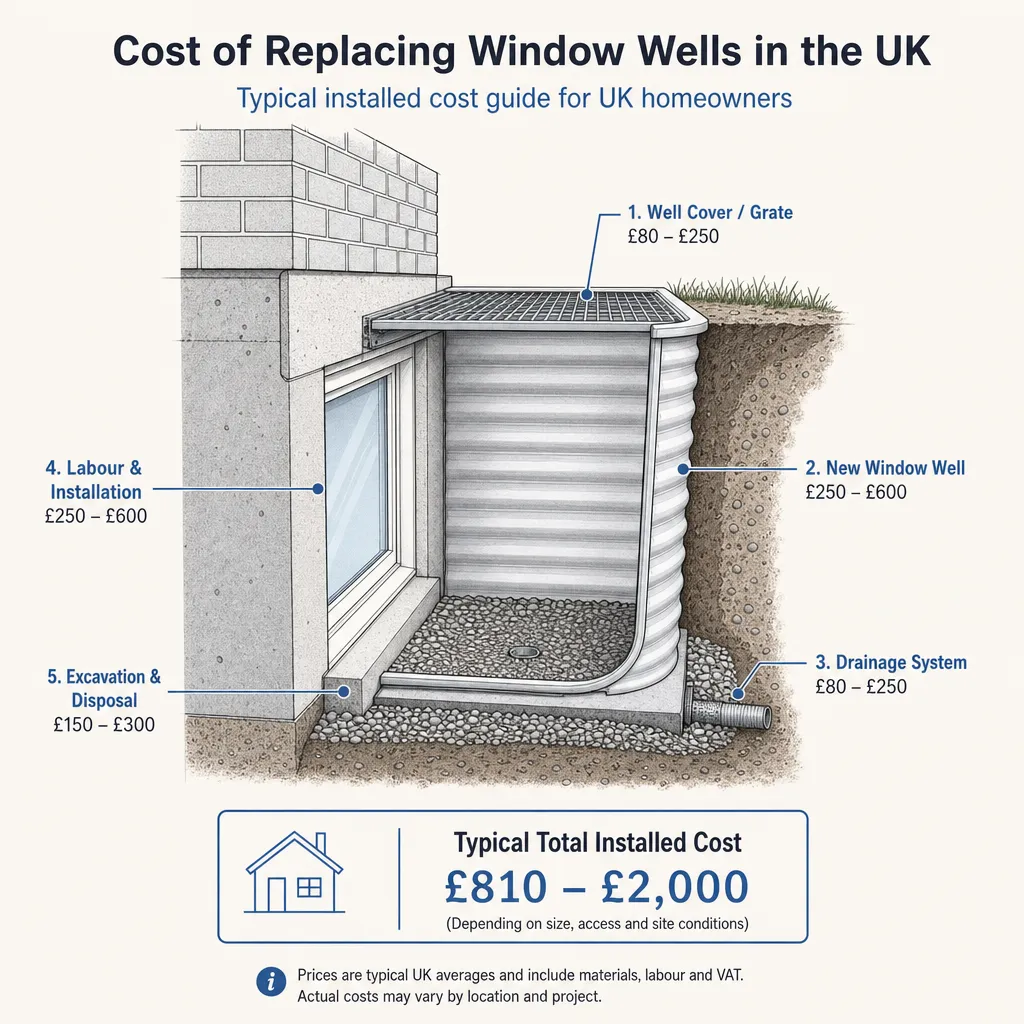
Cost of replacing window wells in the UK
Replacing a window well in the UK typically costs £210–£850 for a standard polypropylene liner installation including drainage, or £700–£2,600 for brick-and-block construction, depending on size, access, and ground conditions.
 Improvement & Build
How much does window glass replacement cost
Replacing a standard double-glazed sealed unit typically costs £80–£300 in the UK, depending on glass size, type, and access.
 Improvement & Build
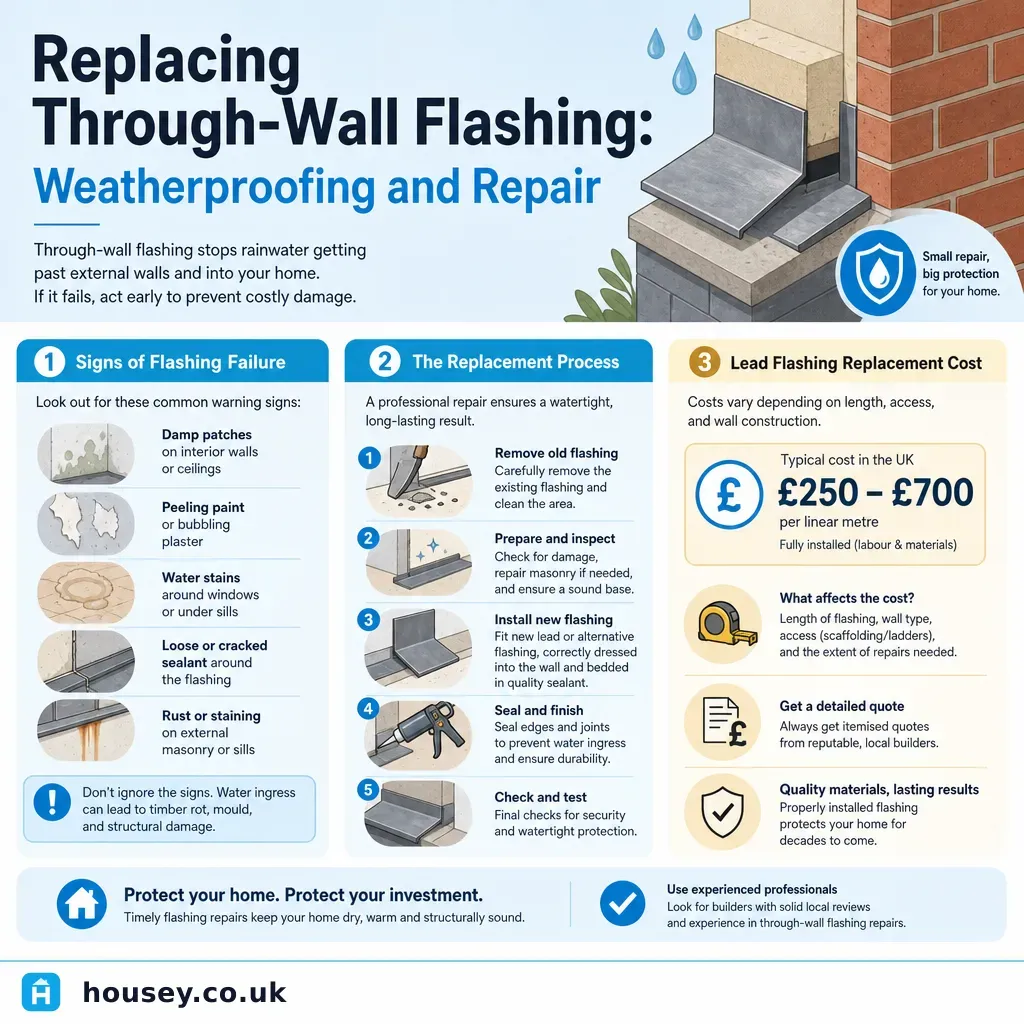
Replacing Through-Wall Flashing: Weatherproofing and Repair
Through-wall flashing is a damp-proof membrane embedded in masonry at roof-to-wall junctions, chimney bases, and above windows or doors.
 Improvement & Build
Fixing Leaking Back Doors and Water Ingress
Most leaking back doors in UK homes fail at one of three points: the threshold or door sill joint, the frame-to-masonry mastic seal, or the door weatherstrip.