Knowledge Base
Property advice that actually helps
Researched, UK-specific guides for every stage of homeownership — from buying and surveys to retrofit, planning and major works.
 Improvement & Build
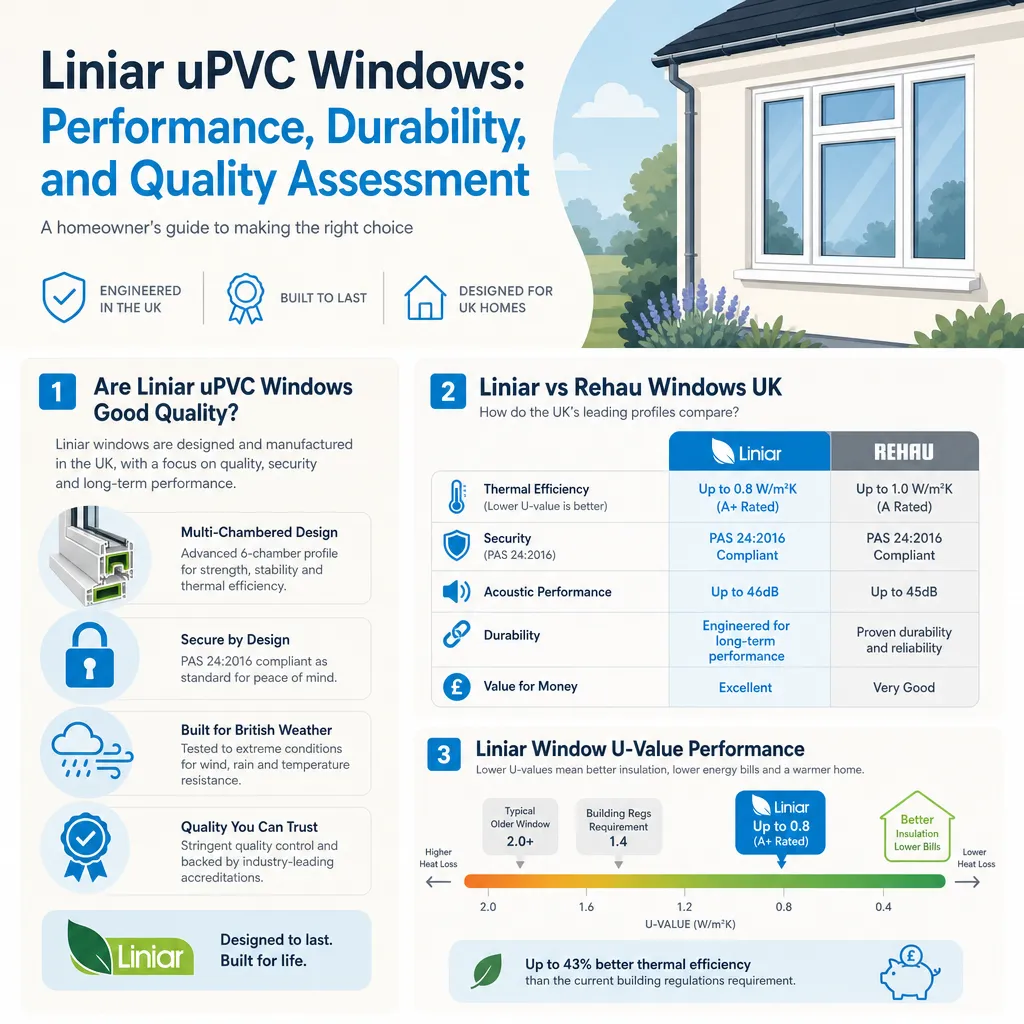
Liniar uPVC Windows: Performance, Durability, and Quality Assessment
Liniar uPVC window profiles are manufactured in the UK using multi-chambered, foamed frames. Correctly specified with argon-filled low-e double glazing, they can achieve whole-window U-values of around 1.2–1.4 W/m²K, meeting Building Regulations Part L. Performance and longevity are broadly good but depend heavily on installer quality and the glazing specification rather than the frame profile alone.
 Improvement & Build
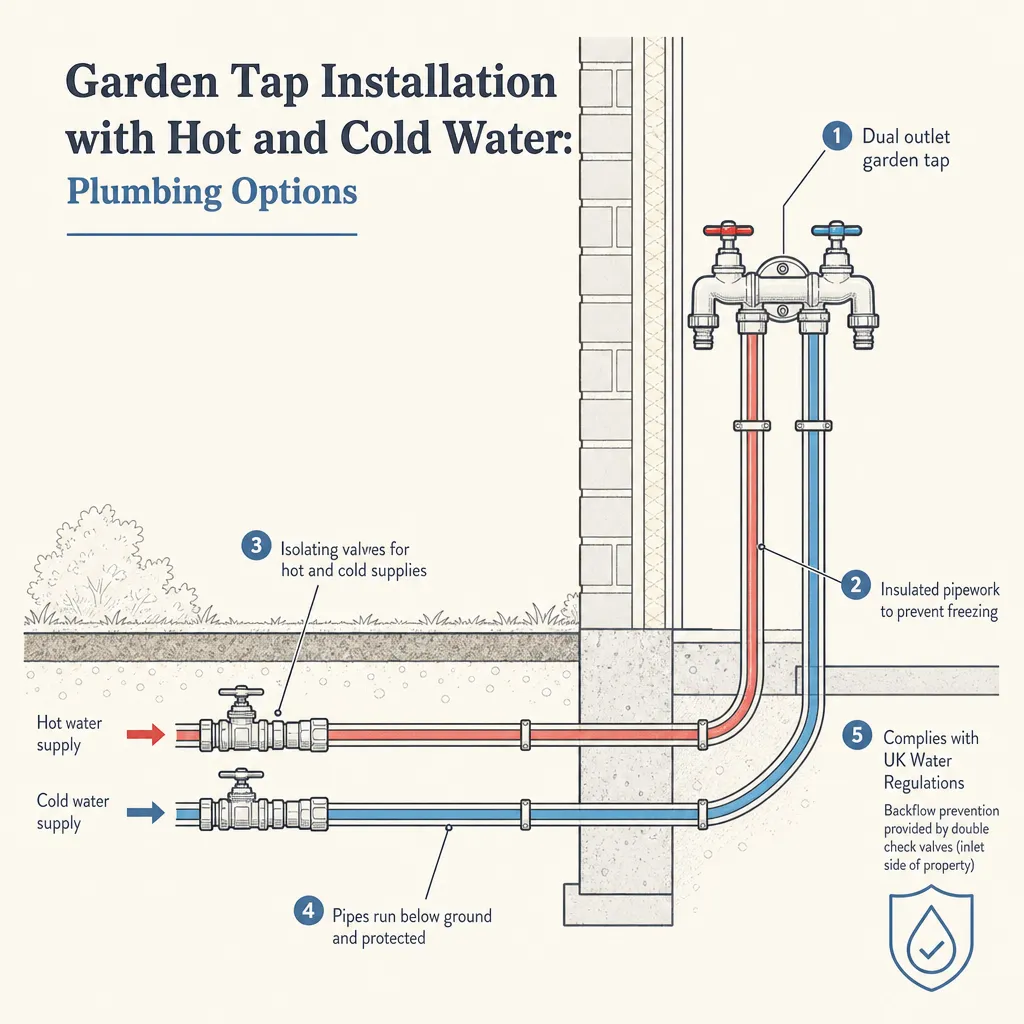
Garden Tap Installation with Hot and Cold Water: Plumbing Options
Adding a cold garden tap is a common DIY project, but routing hot water outdoors requires a plumber to connect to your domestic hot water system and comply with the Water Supply (Water Fittings) Regulations 1999. A double check valve is legally required on any garden tap to prevent backflow, and all external pipework must be frost-insulated. Costs range from around £150 for cold-only to £350–£650 for a hot and cold installation.
 Improvement & Build
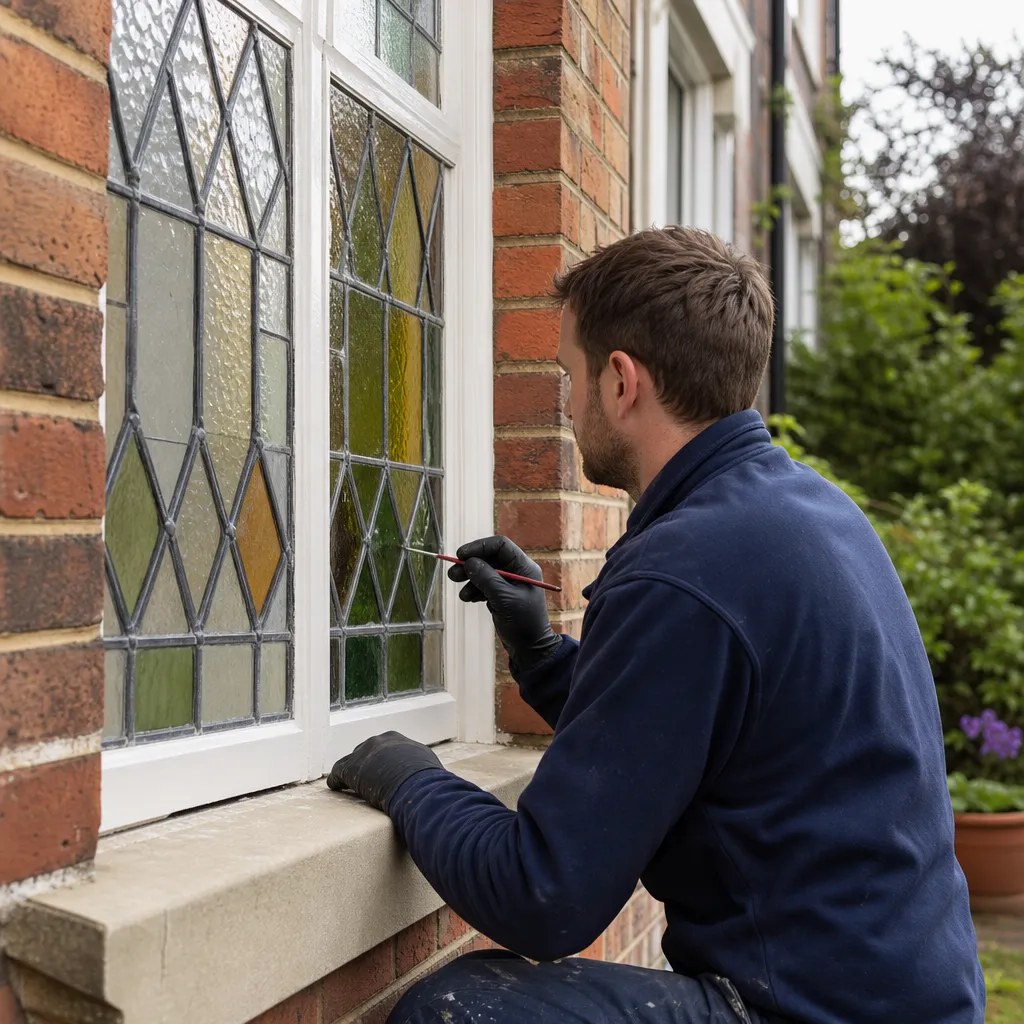
Sealing and Maintaining Historic Leaded Glass Windows: Preservation and Performance
Leaded glass windows are maintained using traditional linseed oil cement — not silicone or modern sealants, which prevent natural movement in the lead came. Annual inspection for bowing, cracked putty, and loose glass prevents progressive deterioration. Secondary glazing fitted inside the window reveal is the heritage-approved approach for improving thermal performance without altering the original panels.
 Improvement & Build
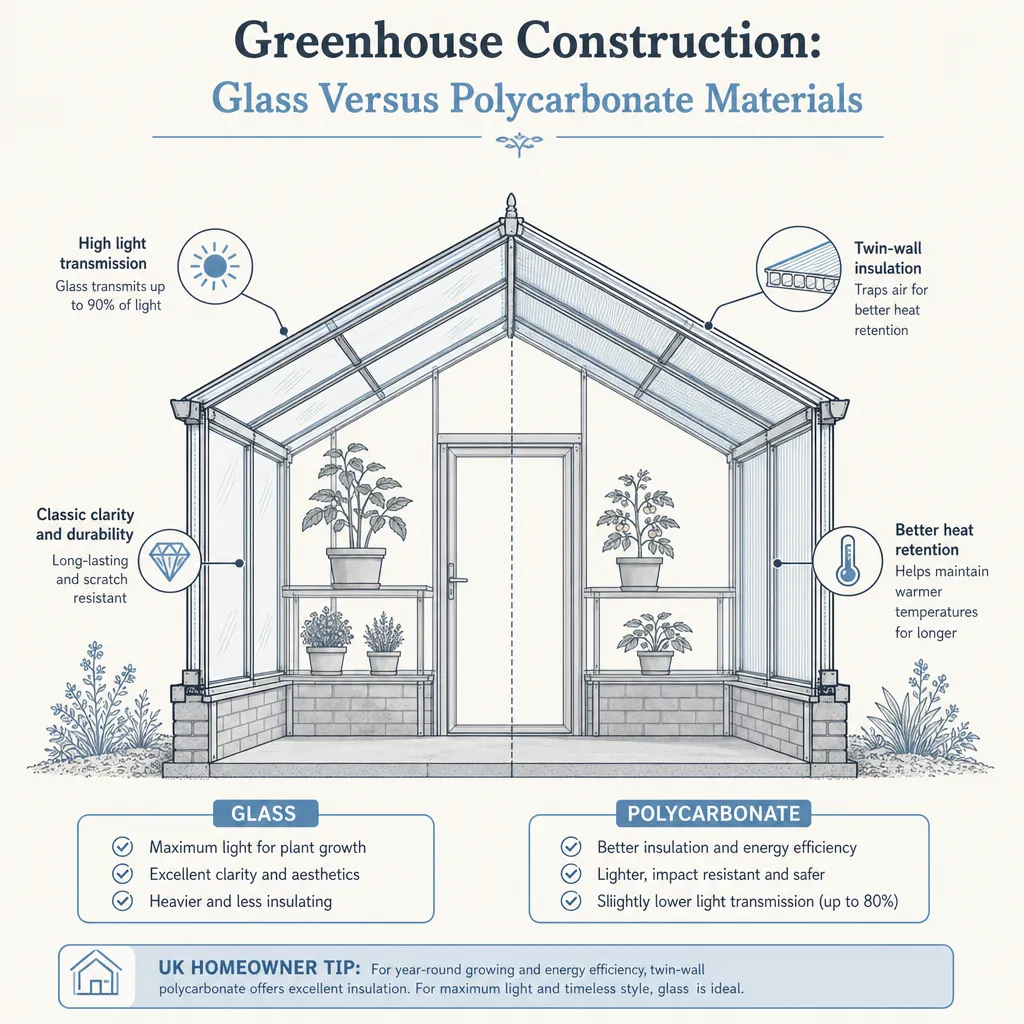
Greenhouse Construction: Glass Versus Polycarbonate Materials
Glass transmits around 90% of available light and lasts indefinitely if unbroken, but insulates poorly and shatters into sharp fragments. Twin-wall polycarbonate is more impact-resistant and better insulated, but discolours over time. For UK gardeners prioritising maximum light and long-term durability, toughened glass is usually the better choice; polycarbonate suits exposed sites or those wanting better heat retention for year-round growing.
 Improvement & Build
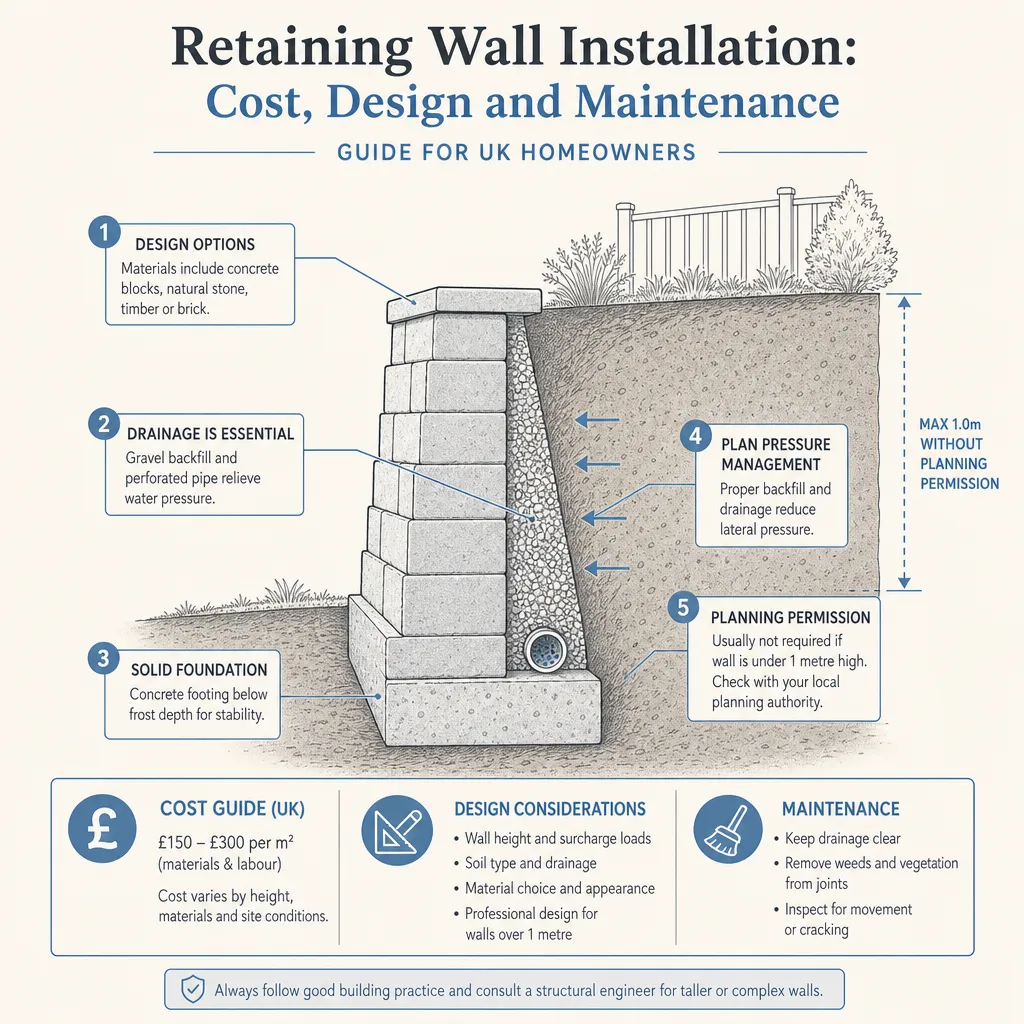
Retaining Wall Installation: Cost, Design and Maintenance
A retaining wall holds back soil on a sloped or banked site. Most residential walls under 1 metre high can be built by a competent groundworker without building control approval, though anything taller or load-bearing should involve a structural engineer. Material choices, drainage design, and ground conditions all affect cost and longevity.
 Improvement & Build
Skimming Over Wallpaper Lining: Surface Preparation and Results
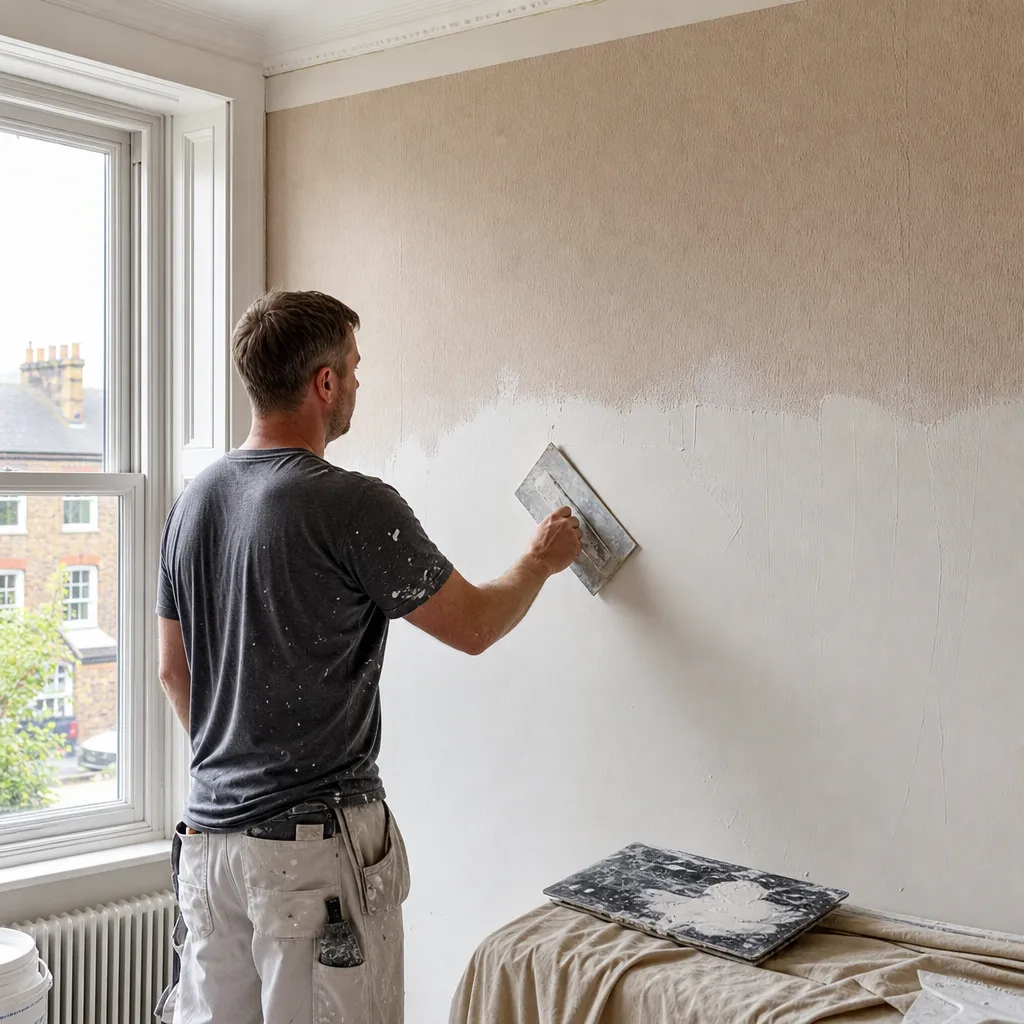
You can skim plaster over wallpaper lining paper, provided the paper is fully adhered, the correct weight (usually 1,200g) is used, and the surface is primed with diluted PVA before applying a 2–3mm skim coat. Preparation quality determines the final finish — poorly fixed paper or skipped priming typically causes lifting, bubbling, or cracking.
 Improvement & Build
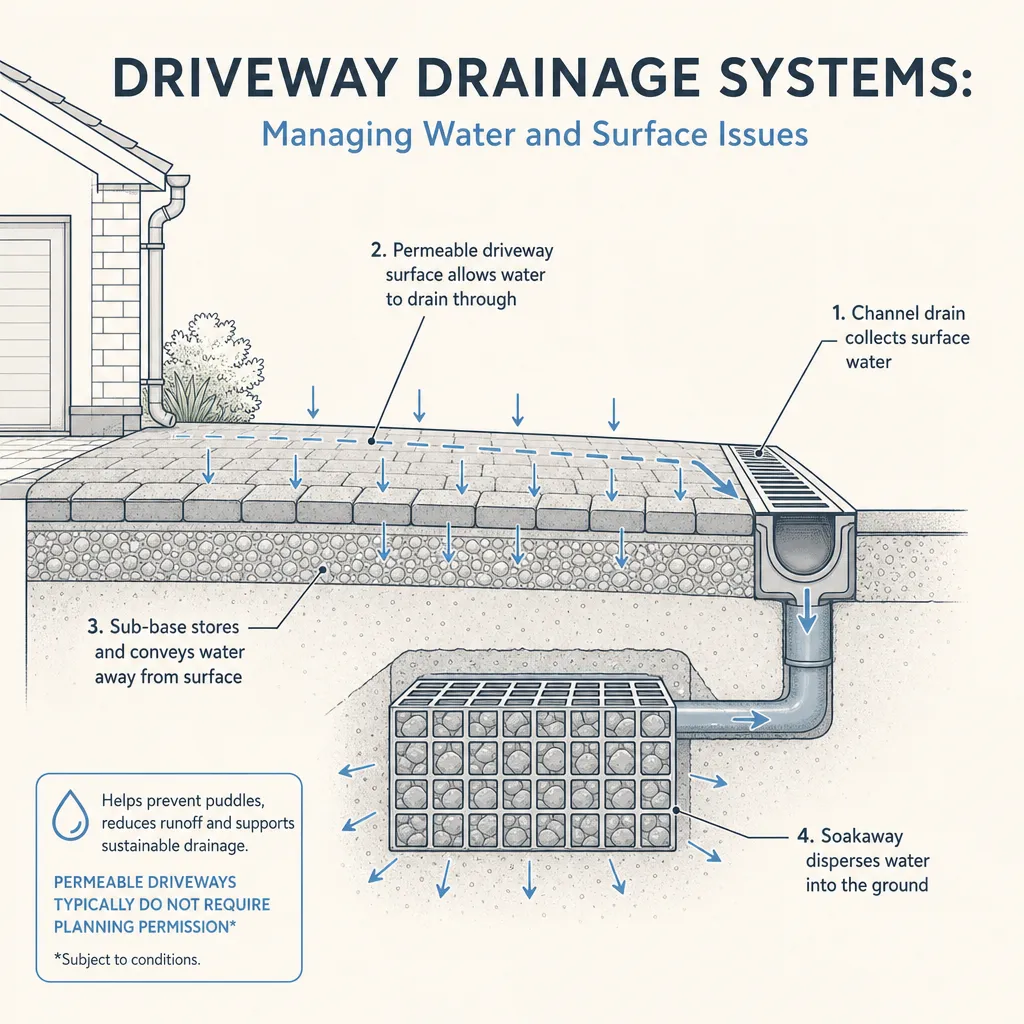
Driveway Drainage Systems: Managing Water and Surface Issues
The right driveway drainage system depends on your surface type, soil permeability, and local flood risk. Permeable surfaces are simplest for planning compliance; channel drains to a soakaway suit most impermeable driveways. In England, impermeable surfaces over 5m² at the front of a house require planning permission unless surface water is managed sustainably.
 Improvement & Build
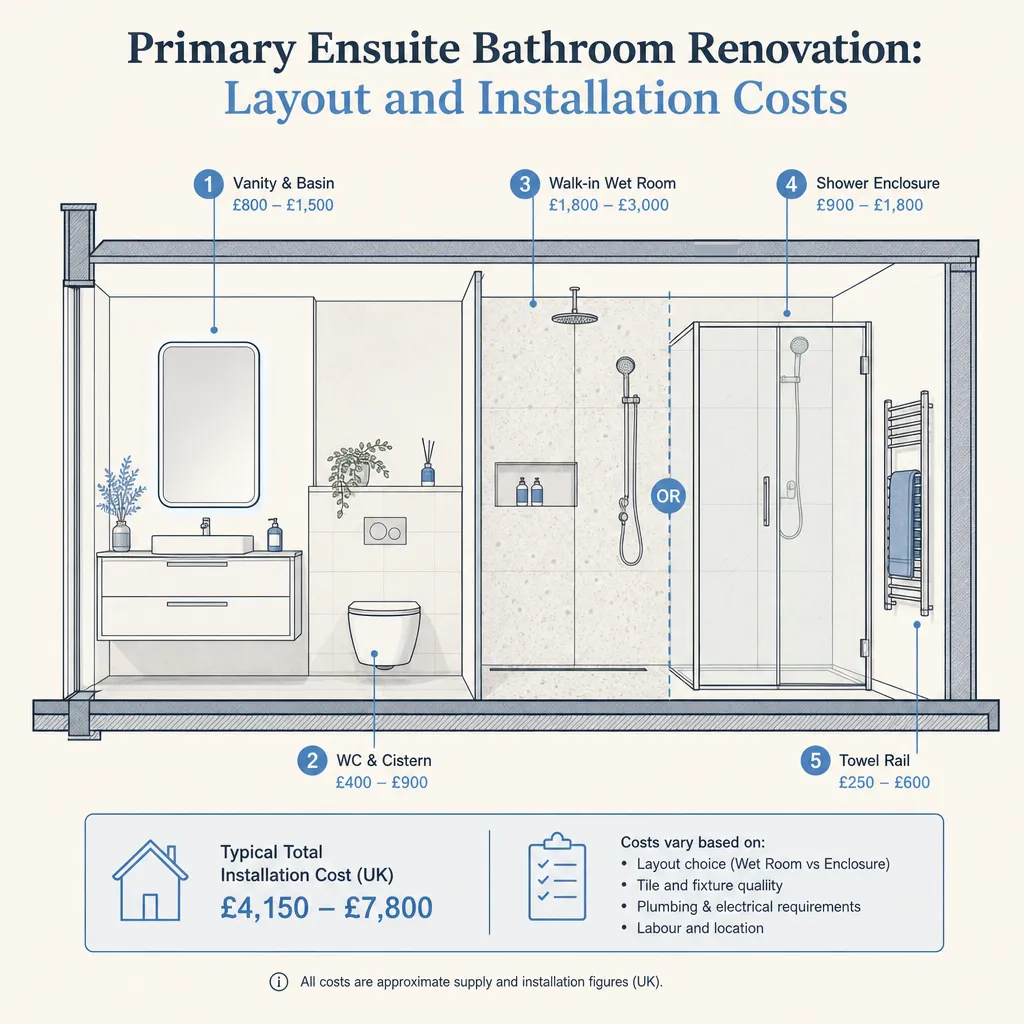
Primary Ensuite Bathroom Renovation: Layout and Installation Costs
A primary ensuite renovation in the UK typically costs between £3,000 and £12,000, depending on size, layout, and specification. Work usually covers toilet, basin, shower, tiling, extraction, plumbing, and electrics. New circuits must comply with Part P, drainage connections with Part H, and ventilation with Approved Document F. Costs in London and the South East are often higher.
 Improvement & Build
Fixing Leaking Back Doors and Water Ingress
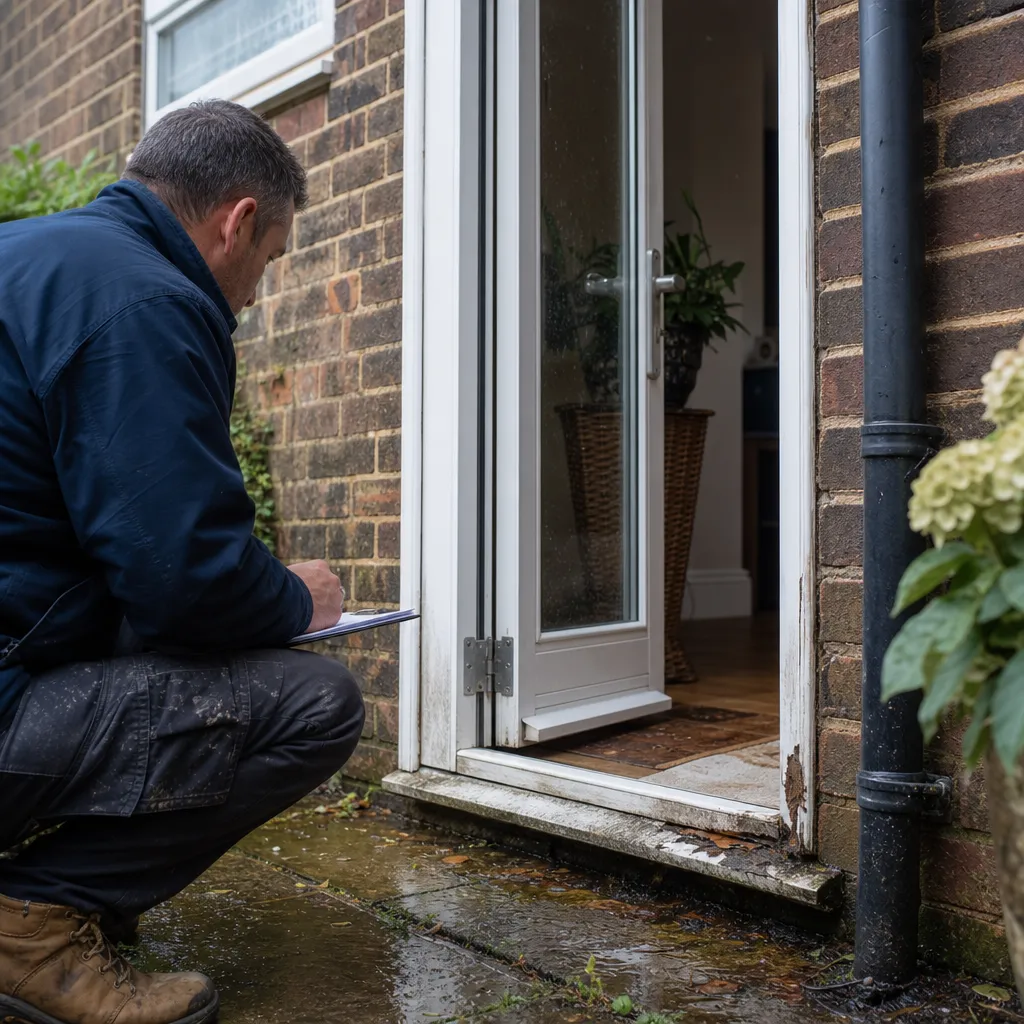
Most leaking back doors in UK homes fail at one of three points: the threshold or door sill joint, the frame-to-masonry mastic seal, or the door weatherstrip. Diagnose the entry point first by checking each zone separately. Resealing the external frame joint is the most common fix; poor drainage outside the door must also be addressed or the problem will return.
 Improvement & Build
Evaluating And Planning Renovations For Properties Requiring Modernisation
Start by commissioning a condition survey — RICS Level 3 for pre-1919 properties — to identify structural defects, damp, and services issues before finalising a budget. Categorise works into safety-critical, regulatory compliance, and cosmetic priorities. Obtain at least three itemised quotes, allow a 15–20% contingency, and confirm which works require building regulations approval before engaging contractors.
 Improvement & Build
Exterior Colour Schemes for Green Roofs: Design Coordination
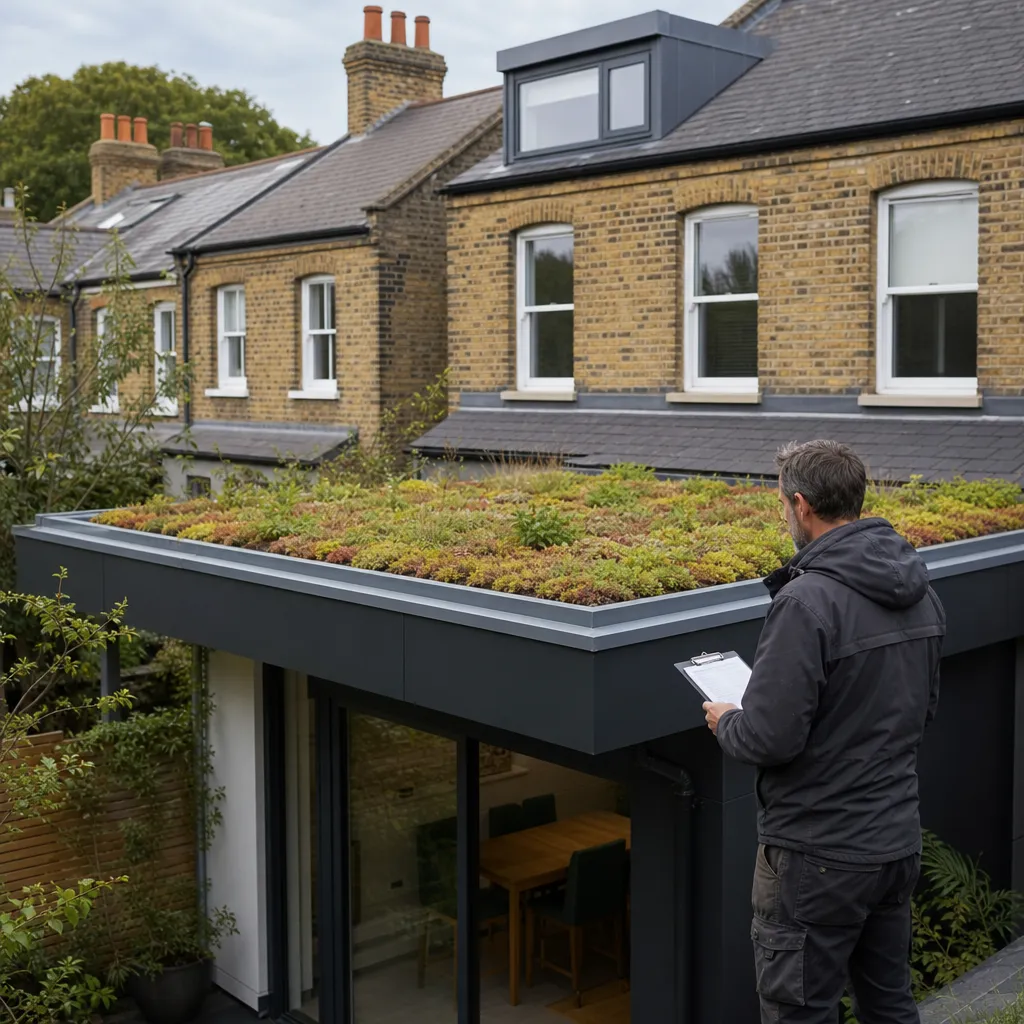
Warm greys, earth tones, natural timber, and dark charcoals tend to work best with green or living roofs, complementing the seasonal shift from vivid green in summer to bronze and straw in autumn and winter. Avoid bright whites or strongly saturated colours unless used as limited accents. Choose a neutral palette that coordinates across the full seasonal range of your sedum or wildflower planting.
 Improvement & Build
Guide to Roof Repair and Maintenance
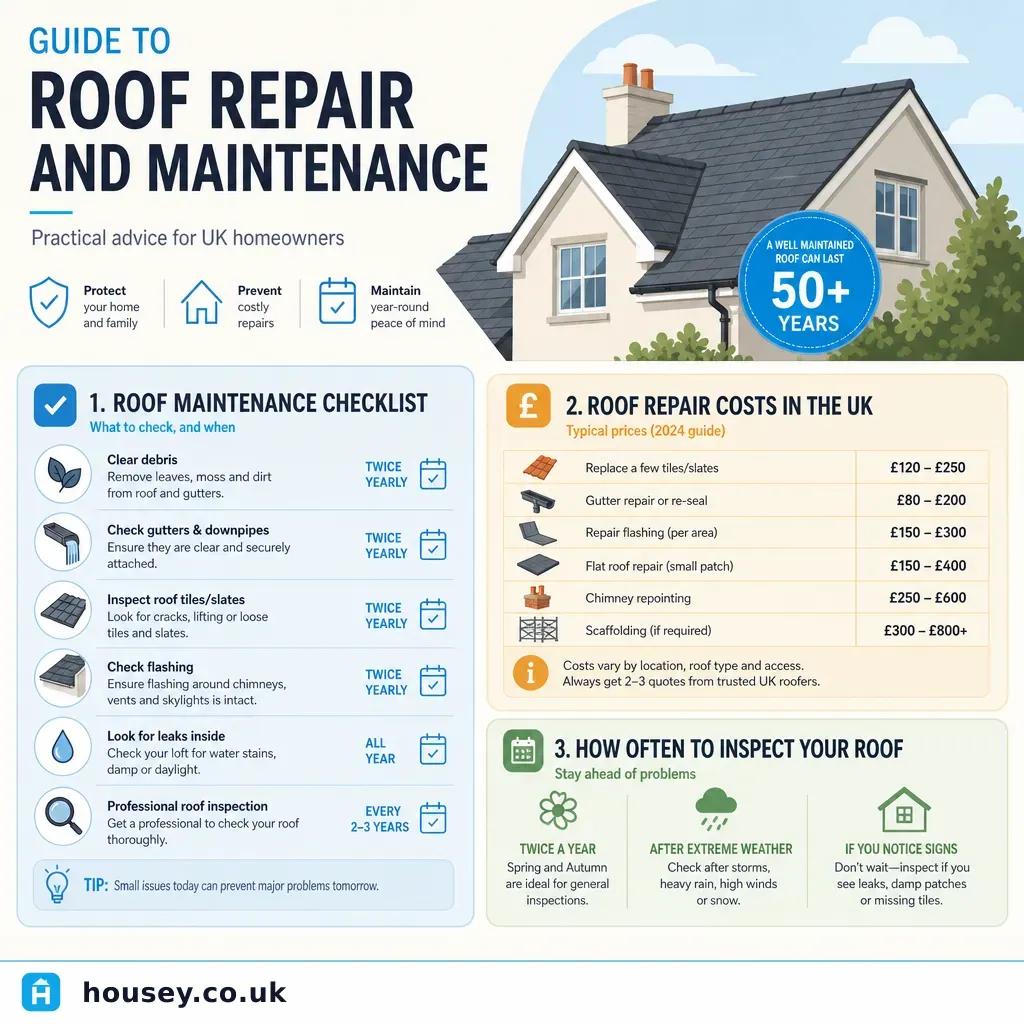
Regular roof inspections every 3–5 years, prompt repair of damaged tiles and failed flashings, and annual gutter clearance are the core of effective UK roof maintenance. Replacing fewer than 10% of tiles is a minor repair; when the sarking felt has failed or large areas are deteriorating, a full re-roof is usually more cost-effective than repeated patching.