Fixing Leaking Back Doors and Water Ingress
By Housey · Last reviewed 11th of May 2026
Fixing Leaking Back Doors and Water Ingress
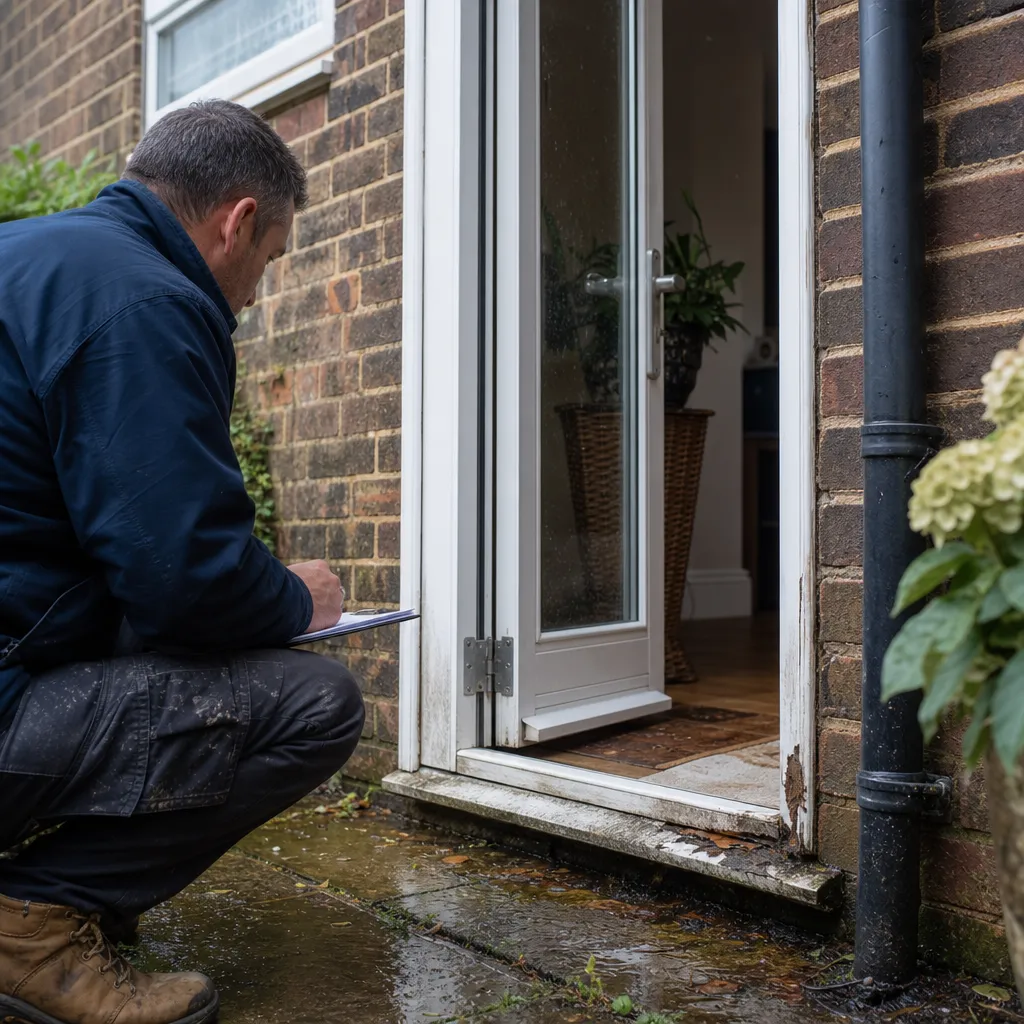
Back doors are among the most common points of water ingress in UK homes, particularly in Victorian terraces, 1930s semis, and older properties where original timber frames have shrunk, twisted, or lost their weatherproof seal. Whether you are dealing with a puddle after heavy rain or a slow damp patch creeping across the floor, the cause is almost always one of a handful of identifiable failure points — and most can be remedied without a full door replacement.
Key points
- The three most common entry points for water are the threshold or sill joint, the frame-to-masonry junction, and a degraded door seal or weatherstrip.
- External mastic sealant around door frames typically lasts 10–15 years before it cracks, shrinks, and loses adhesion to the substrate.
- Approved Document C (Site preparation and resistance to contaminants and moisture) sets the minimum standard for moisture resistance at external wall openings in England and Wales.
- A damaged or absent threshold weather bar can allow several litres of water per hour into a property during driven rain.
- Standing water pooling within 300 mm of the door threshold will cause repeated ingress even after frame resealing — drainage must be addressed alongside any door repair.
Where is the water actually entering?
Before spending money on new seals or repointing, trace the water to its actual source. Water at a doorway can travel sideways or downwards from an entry point several centimetres away from where it appears on the floor.
Common entry routes:
- Threshold gap — The joint between the door sill and the floor or step has opened. Common in timber-framed doors on older properties.
- Frame-to-masonry joint — External mastic (silicone or polyurethane sealant) has cracked, shrunk, or been painted over, breaking the seal.
- Door weatherstrip or draught excluder — The compression seal on the door edge or the brush strip at the bottom has flattened or torn.
- Door alignment — The door has dropped or twisted (common in timber doors), leaving a gap at one corner even when the seal itself is intact.
- Above-door lintel — Water tracking down the wall or from a lintel cold bridge enters the top of the frame and runs down inside.
- External drainage — The path, patio, or drain nearby is directing rainwater toward the door rather than away from it.
A practical test: on a dry day, run a hose on the outside of the door from top to bottom in sections and observe from inside to pinpoint the exact entry point.
Which repair do you need?
Decision tree — choosing the right fix
- Water enters at the bottom of the door leaf → check and replace the threshold weather bar or door bottom seal.
- Water appears at the sides or top of the door frame → inspect external mastic; raking out and resealing the frame joint is usually sufficient.
- Water tracks along the frame-to-wall junction → clean and re-bed with low-modulus silicone sealant rated for external use; ensure the joint is fully dry before application.
- Door visibly droops or rubs on one side → rehang the door (adjust or replace hinges, pack the frame if settled); resealing alone will not hold if the door leaf is misaligned.
- Water pools on the step or patio outside → address drainage before any frame repair or the problem will recur.
- Water enters through the glazing unit edge → the sealed unit may have failed; contact a window and door installer for assessment and replacement.
- Multiple failure points or a visibly rotten frame → full door and frame replacement is likely more cost-effective than repeated repairs.
Resealing the door frame
This is the most common repair and is accessible to a confident DIYer on a dry, mild day.
What you will need:
- A sealant remover tool or sharp knife to rake out old material
- Appropriate external-grade sealant (neutral-cure silicone or polyurethane for masonry-to-uPVC or masonry-to-timber joints)
- Masking tape
- Dry conditions (no rain forecast for at least 48 hours; above 5°C)
Process:
- Rake out all old sealant; wipe the joint clean and allow to dry completely.
- Apply masking tape either side of the joint for a clean finish.
- Gun in new sealant, pressing firmly into the full joint depth.
- Tool to a smooth concave profile and remove tape before the sealant cures.
- Leave for the manufacturer's stated cure time before allowing water contact.
What not to assume: Painting over cracked sealant does not restore the waterproof barrier. Water will find even a hairline gap under paint, and the problem will reappear at the first heavy rain.
Threshold and weather bar replacement
A missing or worn threshold weather bar is one of the most frequently overlooked causes of water ingress under external doors.
Threshold type | Common failure | Repair |
|---|---|---|
Aluminium weather bar (bolt-through) | Gasket perishes or bar corrodes | Replace gasket or full bar — fixings are usually accessible from inside |
Upsweep sill with compression seal | Seal flattens over time | Strip old seal; apply new self-adhesive compression strip |
Timber sill | Wood rots or shrinks away from masonry | Sand and reseal small gaps; replace sill if structurally degraded |
uPVC sill with built-in drainage channel | Drainage weep holes blocked | Clear debris from weep holes; reseal if the weep housing has cracked |
Threshold weather bars and replacement seals are available from trade suppliers; match the profile carefully to your existing door system. For uPVC or composite doors, the manufacturer or a window and door installer can supply the correct part and confirm compatibility.
Drainage around the door
Poor external drainage is the root cause of persistent water ingress in many UK back gardens, particularly on properties with paved yards, raised patios, or blocked gullies.
Red flags that drainage is the primary problem:
- Water remains on the step or path for more than 30 minutes after rain stops.
- A French drain, gully, or channel drain near the door is blocked or absent.
- The patio or path slopes toward the door rather than away from it.
- Soil or planted beds are built up higher than the door threshold — a common issue in raised rear gardens on Victorian and Edwardian terraced properties.
Addressing the gradient of an existing path is often straightforward; installing a channel drain across the threshold requires groundwork but is highly effective in persistent cases. A drainage contractor can assess whether regrading or a new linear drain is the most practical and lasting solution.
When to get professional help
Most sealant and weatherstrip repairs are accessible without specialist input. Call a professional if:
- The door frame is visibly rotten, cracked, or has moved away from the surrounding masonry.
- Water ingress is causing damp patches on internal walls or floors beyond the immediate threshold area.
- The glazed unit has a milky or misted appearance — a failed sealed unit should be replaced by a competent installer.
- The door sits in a listed building or conservation area where any replacement must be consistent with the property's existing character.
- Despite multiple sealant repairs, water ingress returns — this may point to a structural cause such as lintel failure or settlement requiring a builder or structural engineer.
- The external drainage problem requires excavation near the foundations.
How Housey can help
If resealing has not resolved the problem, or the door frame needs full replacement, Housey can connect you with local, vetted window and door installers who can survey the opening, advise on repair versus replacement, and supply FENSA-registered installation where required. For persistent drainage problems around the back door, our drainage contractors can assess the external layout and recommend a lasting solution.
Frequently asked questions
Why does my back door leak only in heavy or driven rain but not light rain?
Driven rain creates lateral pressure that pushes water through gaps too small to admit slow-running water. The frame-to-masonry joint and door edge seals are the most likely culprits. Check the external mastic on the windward side first, as this face takes the greatest weather exposure and typically fails before sheltered sides.
Can I use any silicone sealant from a DIY store to reseal my door frame?
Use an external-grade, low-modulus silicone or polyurethane sealant suitable for the joint materials — for example, uPVC to masonry or timber to masonry. Sanitary silicone, the kind sold for bathrooms, is not designed for outdoor use and deteriorates quickly when exposed to UV light and outdoor temperature cycling.
Does repairing a leaking door require building regulations approval?
Straightforward maintenance and like-for-like seal replacement does not require building regulations approval. Replacing the whole door and frame in an external opening is notifiable work — the installer should provide a FENSA or CERTASS certificate, or the work must go through local authority building control.
My timber back door has always been fine — why is it suddenly leaking?
Timber moves with moisture and temperature cycling over time. Frames gradually pull away from masonry as the building settles or as the timber expands and contracts through wet and dry seasons. This is especially common in properties over 50 years old where original frame fixings have corroded or the frame has twisted with age.
Sources and further reading
- Approved Document C — Site preparation and resistance to contaminants and moisture — GOV.UK
- FENSA — competent person scheme for windows and doors — FENSA Ltd
- Draught-proofing guidance — Energy Saving Trust
Useful next reads
 Improvement & Build
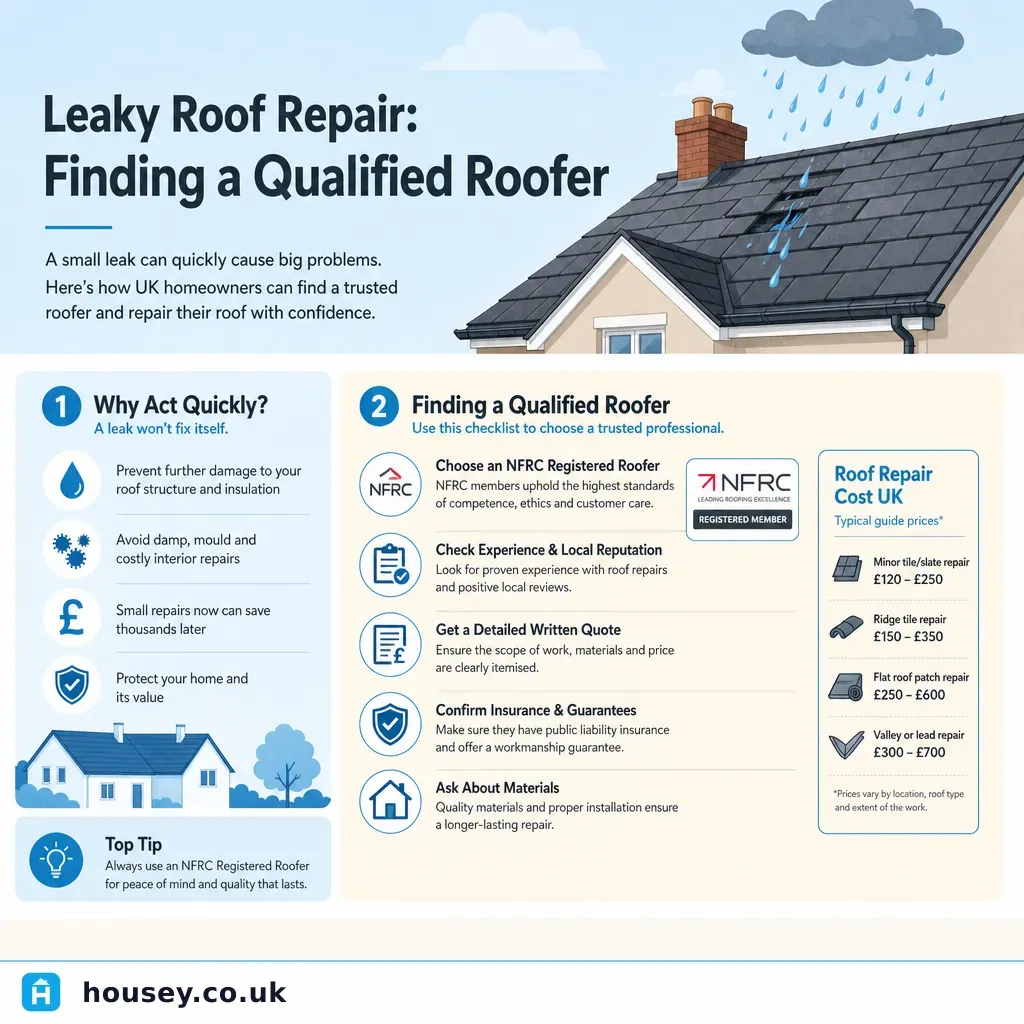
Leaky Roof Repair: Finding a Qualified Roofer
To find a qualified roofer for a leaking roof, check the NFRC member directory or search TrustMark-registered contractors.
 Improvement & Build
Door Repair and Replacement Services
For most UK homes, door repair is cost-effective when the frame is sound and the fault is mechanical.
 Improvement & Build
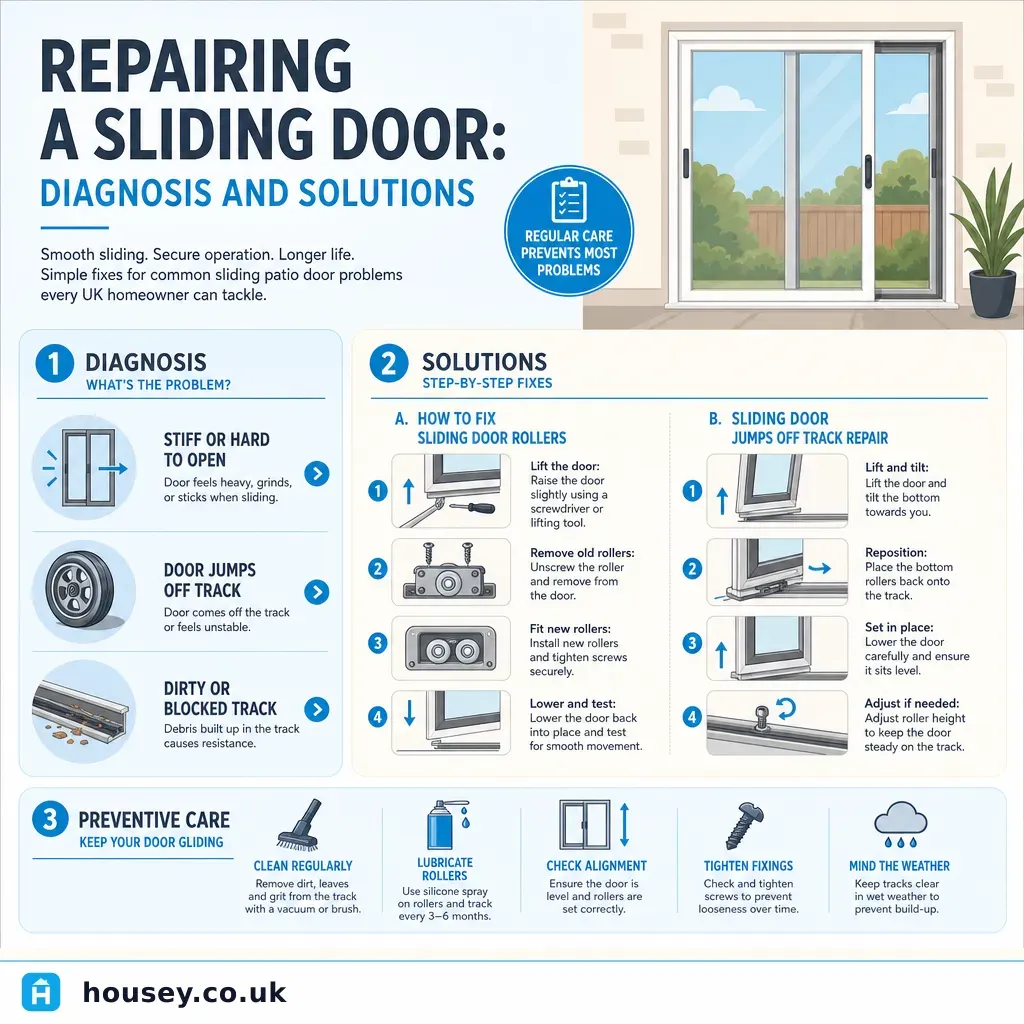
Repairing a Sliding Door: Diagnosis and Solutions
Most sliding door problems — stiffness, jumping off track, or draughts — are caused by dirty tracks, worn rollers, or misaligned guides.
 Improvement & Build
Who Provides House Demolition Services
House demolition in the UK is carried out by specialist demolition contractors, often members of the National Federation of Demolition Contractors (NFDC).
 Improvement & Build
Tree Branch Removal and Tree Surgeon Services
Tree surgery — from deadwooding and crown reduction to branch removal and felling — must be carried out by qualified, insured contractors in the UK.