Preparing Your Home for Sale: Interior and Exterior Improvements
By Housey · Last reviewed 1st of June 2026
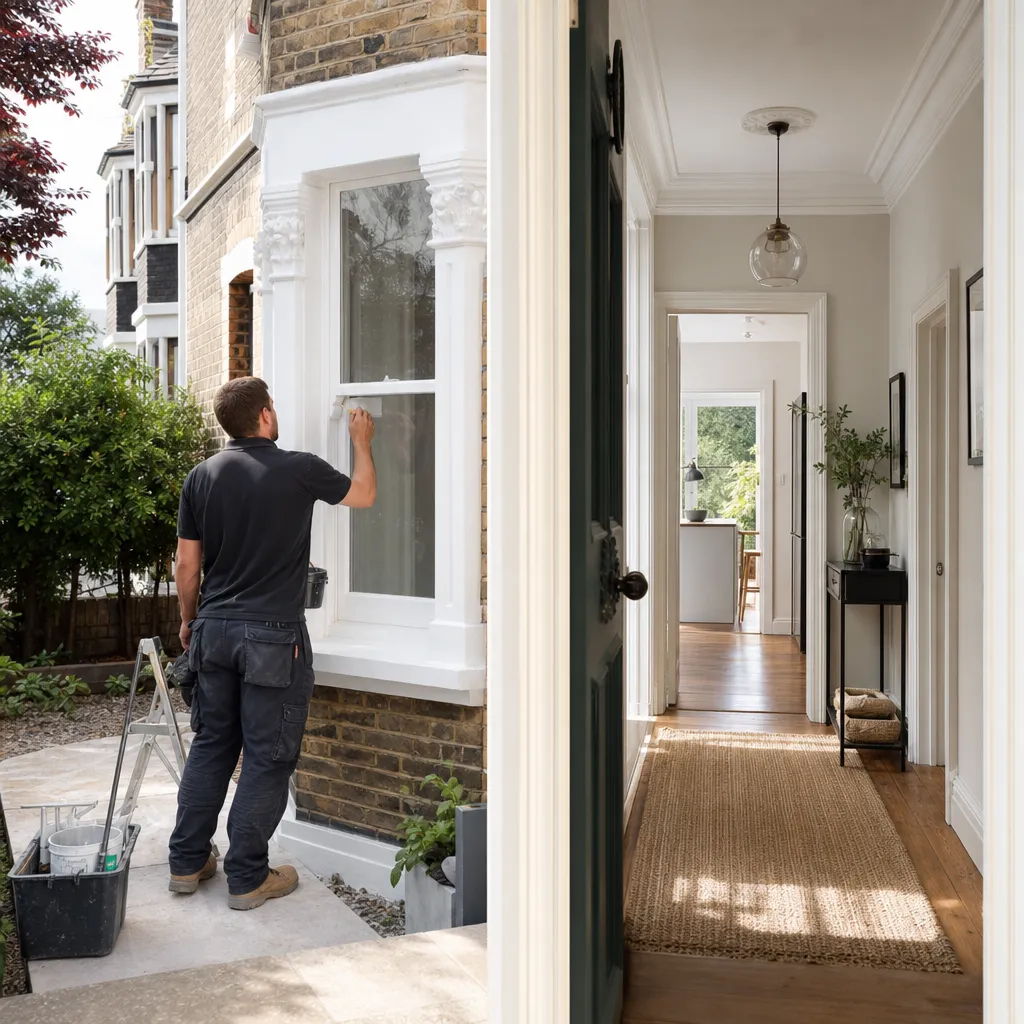
Preparing Your Home for Sale: Interior and Exterior Improvements
Putting a property on the market in the UK is rarely a simple matter of calling an estate agent and waiting. The condition and presentation of a home directly influences how quickly it sells and the final price agreed. Whether you own a 1930s semi in the Midlands or a leasehold flat in a city centre, the weeks invested in preparation before listing are typically among the most valuable of the entire sale process.
Key points
- A valid Energy Performance Certificate (EPC) is a legal requirement before marketing a property for sale in England, Wales, and Northern Ireland; failing to provide one can attract a £200 penalty per dwelling under the Energy Performance of Buildings (England and Wales) Regulations 2012. In Scotland, sellers must commission a Home Report instead.
- Neutral decoration — off-white, warm grey, or soft greige — appeals to the broadest buyer pool; bold or highly personalised colour choices can narrow your market.
- Minor repairs (cracked plaster, dripping taps, stiff sash windows, broken door handles) signal maintenance history to buyers and to the surveyors who inspect on their behalf.
- Decluttering and deep cleaning consistently rank as the highest-return pre-sale tasks in estate agent guidance — and cost primarily time rather than money.
- Original features in period homes — Victorian floorboards, working sash windows, original fireplaces — are genuine selling points; preserve and restore them rather than cover or remove them where possible.
What to tackle — and what to leave
Not every improvement you could make before selling is worth doing. The key question is whether the cost is likely to be recovered in the sale price or speed of sale, or whether a buyer will simply factor it into their offer anyway.
Task | Worth doing before sale? | Reason |
|---|---|---|
Deep clean throughout | Yes — always | Costs little; first impressions carry significant weight |
Declutter and depersonalise | Yes — always | Allows buyers to visualise themselves in the space |
Neutral redecoration | Usually yes | Broadens appeal at relatively low cost |
Minor repairs (taps, handles, cracked plaster) | Yes | Signals good maintenance to buyers and surveyors |
Garden tidying and kerb appeal | Yes | Photography and kerb-side drive-bys start here |
Professional photography | Yes | Directly affects portal click-through rates |
Full kitchen replacement | Rarely | High cost; rarely recovered in full at point of sale |
Loft conversion or extension | Rarely | Planning, build time, and cost typically exceed the gain at sale |
Full bathroom suite replacement | Case-by-case | A cosmetic refresh is usually sufficient |
New boiler | Case-by-case | Worthwhile only if existing boiler is condemned or clearly at end of life |
Kerb appeal: exterior improvements
In the UK, many buyers drive past a property before booking a viewing, and a neglected exterior can discourage them from taking that step. A peeling front door, an overgrown garden, or a cracked path creates a negative first impression that interior presentation alone may not overcome.
High-impact exterior tasks:
- Front door: A freshly painted door in a considered colour — navy, forest green, black, or a mid-tone heritage shade — is one of the best-value single improvements available. Clean or replace door furniture and check the condition of the letterbox and knocker.
- Garden and path: Mow lawns, clear moss from paths, trim overgrown hedges, and move wheelie bins out of view for photography. A layer of fresh bark mulch in borders takes little time and reads as well maintained.
- Render and brickwork: Small areas of spalling render or failing pointing can be repaired by a competent tradesperson relatively cheaply. Widespread render failure or structural cracks should be assessed by a surveyor before sale — cosmetically covering structural movement creates disclosure problems.
- Windows: UPVC frames respond well to specialist cleaning products. Wooden windows should be repainted if the paint is flaking. Ensure all windows open and close smoothly; stiff windows suggest settlement to buyers.
- Roof and gutters: Visible missing or slipped tiles and blocked gutters will be noted by buyers and flagged in homebuyer surveys. Clearing gutters and addressing a small number of roof tiles is a proportionate pre-listing investment.
Interior improvements
Decoration
Fresh paint in a neutral colour scheme is usually the most cost-effective interior preparation. A consistent palette throughout — rather than different colours in every room — makes spaces feel more cohesive and photographs well. Avoid bold accent walls or highly personalised finishes that buyers will need to factor into their refurbishment budget.
Rooms where repainting has the most impact:
- Hallway and staircase — the first interior impression
- Living room
- Main bedroom
- Kitchen, if walls are marked or strongly coloured
Kitchens and bathrooms
Full replacement is rarely justified before a sale, but targeted cosmetic improvements can significantly lift buyer perception:
- Kitchen: Replace door handles and knobs, re-grout tile splashbacks, deep clean the oven and extractor, and replace a damaged worktop section rather than the full run.
- Bathroom: Re-grout tiles, replace a mouldy sealant bead, fit a new toilet seat, repair dripping taps, and remove limescale from shower screens and fixtures. A clean, functional bathroom reads well regardless of its age.
Flooring
Worn or heavily marked carpets in key rooms may be worth replacing with a neutral mid-range option before listing. Original hardwood or Victorian-era floorboards should be sanded and finished — they are a genuine asset in period properties. Avoid cheap laminate in older homes, where it often detracts from the character buyers are seeking.
Lighting
Replace all blown bulbs before photography and viewings. In darker rooms, a higher-lumen bulb makes a meaningful difference to how the space photographs. Dated or damaged pendant fittings can be replaced inexpensively and make a room feel more considered.
Legal and compliance requirements
Energy Performance Certificate (EPC)
You must have a valid EPC before marketing a property for sale in England, Wales, and Northern Ireland. EPCs are valid for 10 years from the date of issue. Check the EPC Register to confirm whether your certificate is current. An EPC is produced by an accredited domestic energy assessor and typically costs £60–£120 (indicative UK cost, last reviewed 2026-06-01; quotes vary by region and property size). In Scotland, sellers must commission a Home Report — which includes an EPC, single survey, and property questionnaire — before marketing.
Documents to locate before marketing
- Planning permissions and building regulations completion certificates for any alterations, extensions, or conversions.
- FENSA certificates for replacement windows (or check the FENSA database if originals cannot be found).
- Certificates of compliance for electrical work notified to building control since 2005.
- Gas safety certificates or boiler service records.
- Any guarantees or warranties for specialist works, including damp-proofing, roofing, or structural treatments.
A worked example: preparing a 1970s semi-detached for sale
Property: Three-bedroom semi-detached, 1970s construction, owner-occupied for 18 years. EPC rating D. A historic damp patch in the corner of the living room was investigated six years ago; no active leak was found at that time.
Preparation steps taken:
- Checked the EPC Register — certificate had expired. New EPC commissioned from an accredited domestic energy assessor.
- Redecorated hallway, living room, and landing in a neutral warm-grey emulsion.
- Replaced kitchen cabinet door handles; re-grouted tile splashback; deep cleaned oven and extractor.
- Re-grouted bathroom tiles; replaced toilet seat; removed limescale from shower screen.
- Repainted front door in a mid-tone heritage blue; replaced the chrome door knocker.
- Cleared and weeded the front garden; pressure-washed path; cut back an overgrown pyracantha hedge.
- Booked professional photography after all works were complete.
- Disclosed the historic damp patch — along with the previous investigation report — to the estate agent for inclusion in sales particulars.
Estimated total outlay (indicative, last reviewed 2026-06-01): Roughly £900–£1,500 covering EPC, materials, and professional photography. The majority of labour was owner-supplied.
Pre-sale preparation checklist
Legal and compliance
Exterior
Interior
Photography and listing
When to get professional help
Most pre-sale improvements can be handled by the homeowner or a general handyperson. Professional input is worth seeking in the following situations:
- Structural cracks or movement: Do not attempt to cosmetically repair structural cracks without a surveyor's assessment first. Non-disclosure of known structural defects creates serious legal and financial risk.
- Damp: Identify the cause before treating the symptom. A surveyor or specialist can determine whether it is condensation, rising damp, or penetrating damp — each has a different remedy and different implications for a buyer's survey.
- Electrical or heating concerns: If your consumer unit, wiring, or boiler is clearly at end of life, a buyer's surveyor is likely to flag it. Obtain a remediation quote so you can decide whether to rectify before sale or adjust pricing accordingly.
- Planning compliance: If any works were carried out without the necessary permissions, consult your conveyancing solicitor before marketing. Retrospective applications or indemnity insurance may be appropriate options.
How Housey can help
Once your preparation is complete, professional property photography and floorplans will ensure your improvements are presented at their best — quality listing images directly influence how many buyers request a viewing. If you have not had the property independently assessed recently, a valuation survey provides an evidence-based benchmark for your asking price. An EPC from an accredited assessor satisfies the legal marketing requirement and may also highlight improvements that would lift your rating before the property is listed.
Frequently asked questions
Do I need to carry out major renovations before selling?
Generally, no. Major renovations rarely recover their full cost at the point of sale and add time and disruption to the pre-sale period. Focus on presentation — cleaning, decluttering, neutral decoration, minor repairs, and kerb appeal. Most buyers prefer to make significant improvements themselves rather than pay a premium for yours.
Does a new kitchen or bathroom add value before a sale?
Only if the existing room is in genuinely poor condition. A cosmetic refresh — new handles, re-grouting, and a deep clean — typically delivers comparable buyer perception at a fraction of replacement cost. Budget for full replacement only if existing fixtures are failing or would be a strong deterrent to buyers in your price bracket.
How much does preparing a house for sale cost in the UK?
Costs vary by property condition. A thorough clean, minor repairs, and neutral redecoration in a three-bedroom house might cost £500–£2,000 in materials and labour (indicative UK cost, last reviewed 2026-06-01; quotes vary by region and contractor). Professional photography and an EPC, if needed, add a further £150–£300 depending on location.
What is an EPC and do I need one to sell my home?
An Energy Performance Certificate (EPC) rates a property's energy efficiency from A (most efficient) to G. You are legally required to have a valid EPC before marketing a property for sale in England, Wales, and Northern Ireland — the certificate lasts 10 years. Check the EPC Register to confirm your property's certificate is current before instructing an estate agent.
Should I be present during viewings?
Estate agents generally advise sellers to leave the property during viewings. Buyers tend to spend longer, look more freely, and ask more candid questions of the agent when the owner is absent. Preparing the home well and giving the agent a key makes this arrangement straightforward.
Sources and further reading
- Energy Performance Certificates: guidance — GOV.UK
- Energy Performance of Buildings (England and Wales) Regulations 2012 — legislation.gov.uk
- Selling your home — GOV.UK
- FENSA database: check window replacement certificates — FENSA
- RICS Home Survey Standard — RICS
- EPC Register — Ministry of Housing, Communities and Local Government
Useful next reads
 Buying & Moving
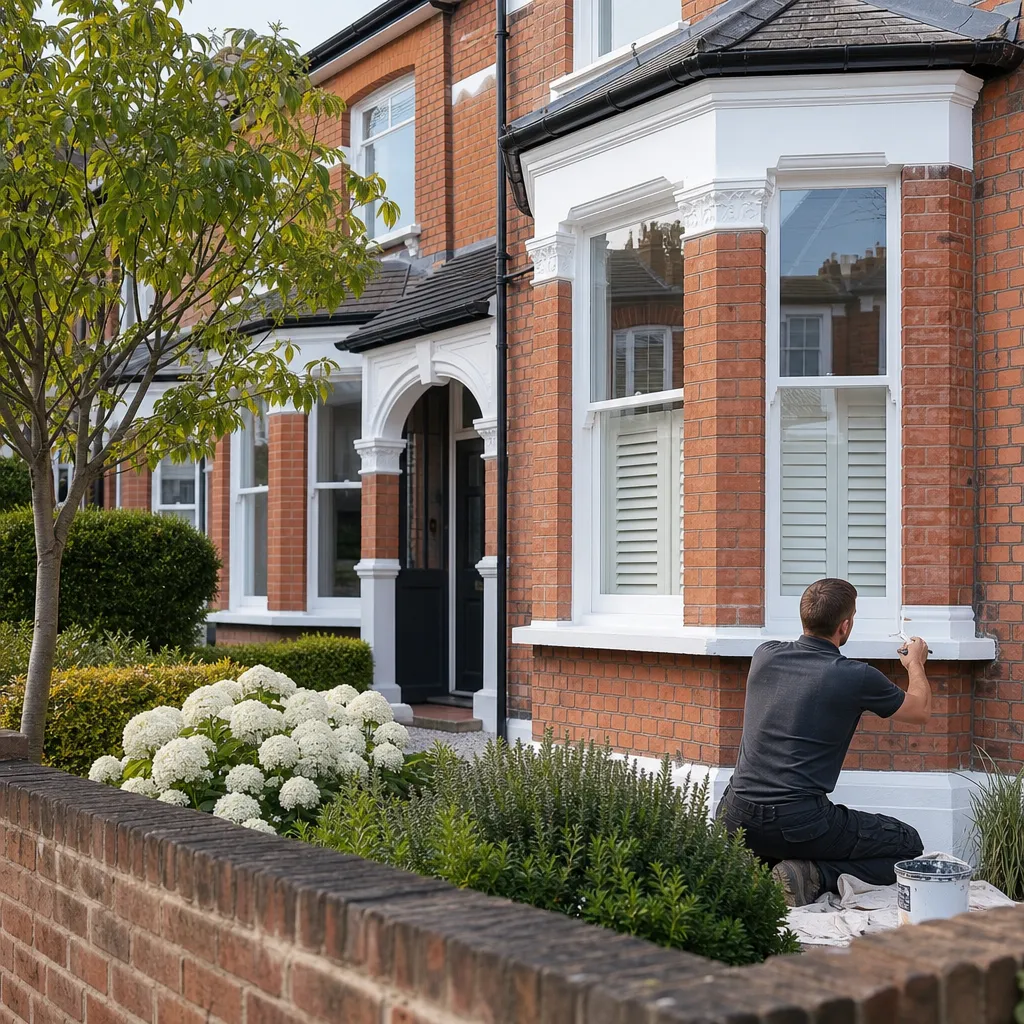
Property Enhancement Strategies for a Successful Sale
Enhancing a UK property before listing typically involves improving kerb appeal, decluttering and neutralising décor, addressing minor maintenance issues, and investing in professional photography.
 Buying & Moving
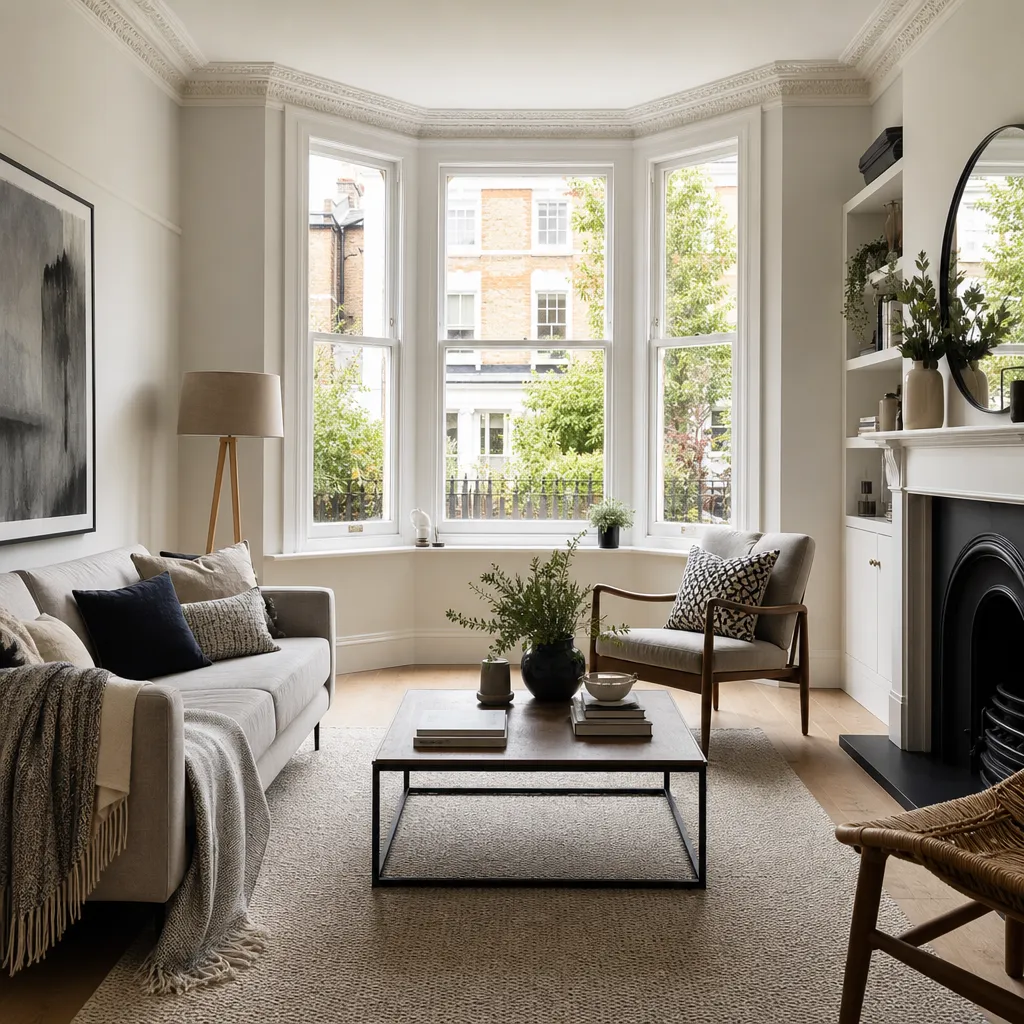
Achieving Show-Home Presentation and Professional Styling
Show-home presentation involves decluttering, deep cleaning, neutral redecoration, and optimising lighting before photography and viewings.
 Buying & Moving
Preparing Your Property for Sale: Pre-Sale Enhancement Guide
Getting a property ready to sell usually means fixing visible defects, refreshing décor to neutral tones, improving kerb appeal, gathering documentation, and commissioning professional photography.
 Buying & Moving
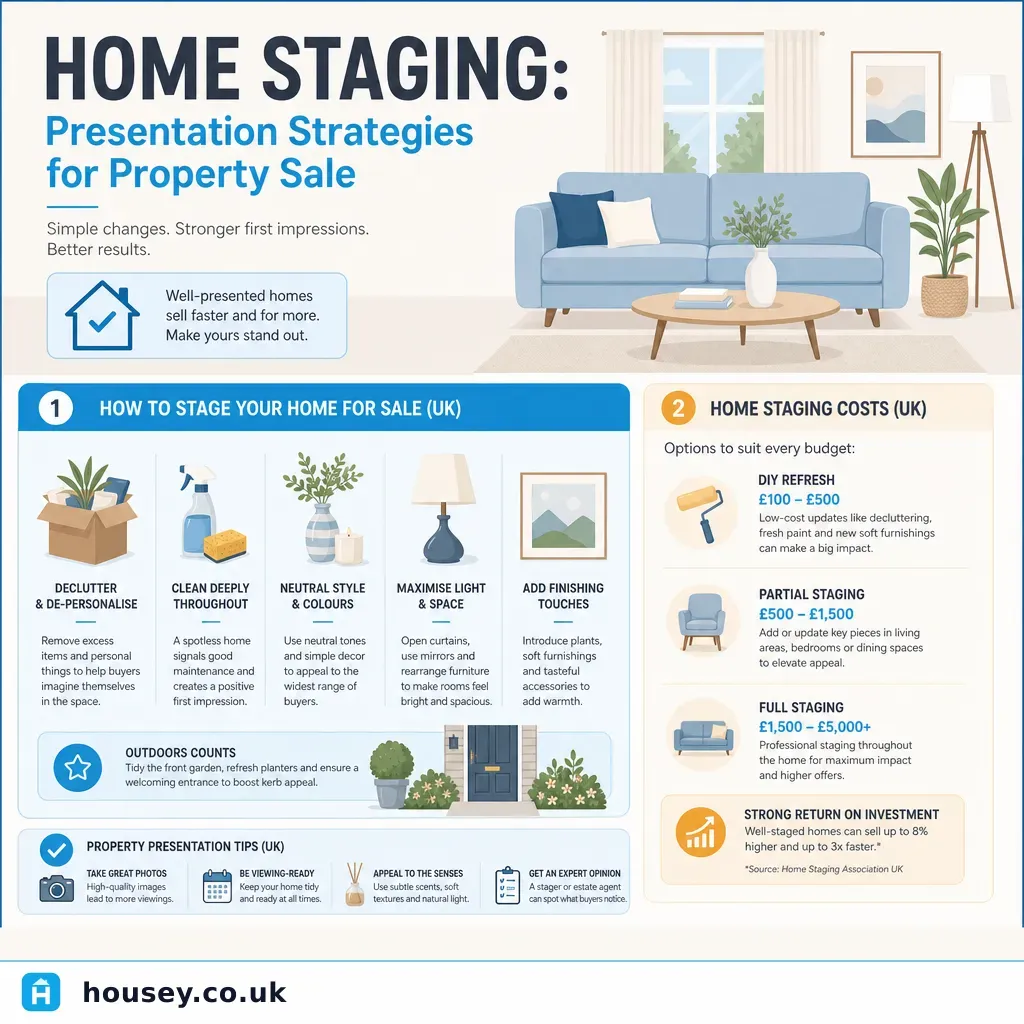
Home Staging: Presentation Strategies for Property Sale
Home staging for a property sale means decluttering, depersonalising, and presenting rooms to appeal to the broadest range of buyers.
 Buying & Moving
Professional approaches to photographing properties for sale
Professional property photography uses wide-angle lenses, HDR exposure blending, and careful staging to present rooms accurately and attractively.