Professional approaches to photographing properties for sale
By Housey · Last reviewed 30th of May 2026
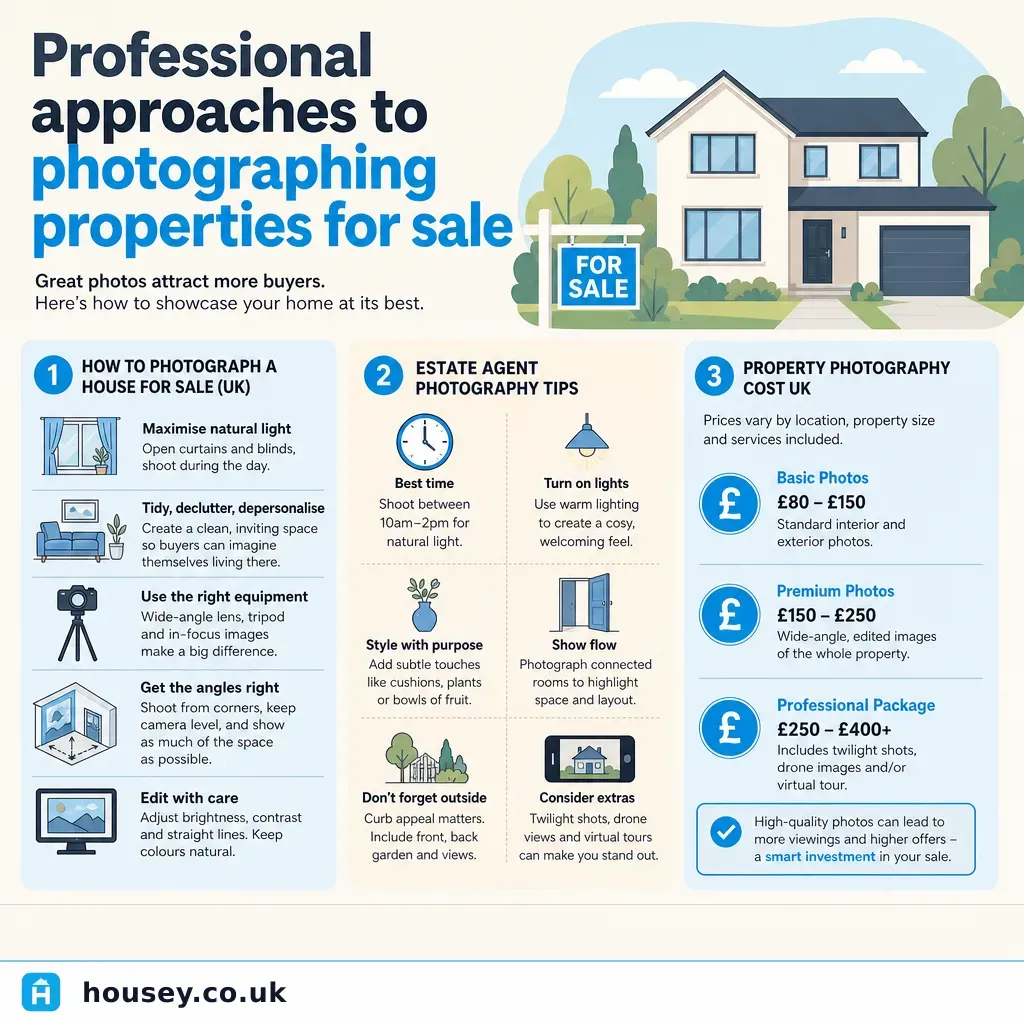
Professional approaches to photographing properties for sale
How a property is presented in photographs shapes a buyer's first impression long before they visit in person. In a UK market where most buyers begin their search on Rightmove or Zoopla, listing images are typically the first — and sometimes only — thing a prospective buyer sees before deciding whether to enquire. Poor photography can cause a well-presented home to be dismissed before the details are even read.
Key points
- Rightmove research indicates that listings with floorplans receive significantly more enquiries than those without; most major UK estate agents now require a floorplan as standard.
- Wide-angle lenses (typically 16–24mm full-frame equivalent) are standard in property photography because they represent rooms proportionally without the excessive distortion of a fish-eye lens.
- HDR exposure blending — combining multiple exposures in editing — is the primary technique for showing a correctly exposed interior and the view through windows at the same time.
- Dusk or twilight exterior shots, taken 20–40 minutes after sunset, consistently perform well on listing portals and are widely offered as a premium add-on by professional photographers.
- Virtual staging — digitally furnishing empty rooms — costs approximately £30–80 per image (indicative UK costs, last reviewed 2026-05-30) and can significantly improve buyer engagement in vacant properties.
DIY versus professional property photography
Many sellers consider photographing their own property, particularly for lower-value sales or where the estate agent's included photography appears adequate. The differences in approach and output are more significant than most sellers expect.
Factor | DIY (smartphone or compact camera) | Professional photographer |
|---|---|---|
Camera and lens | Limited wide-angle; fixed sensor size | Full-frame DSLR or mirrorless; dedicated wide-angle lens and tripod |
Lighting technique | Ambient only; mixed colour temperatures cause colour casts | Flash balanced with ambient; HDR blending for window exposure |
Post-processing | Basic filters; limited dynamic range correction | Professional HDR blending, sky replacement, colour grading |
Typical cost | £0 (seller's time only) | £100–£350 for a 3-bed property (indicative UK costs, last reviewed 2026-05-30) |
Floorplan | Not usually included | Often included as a package; standalone plans approx. £50–£100 |
Image delivery | Immediate | Edited images within 24–48 hours |
Risk of poor output | High without experience; dark or distorted images are common | Low; reputable photographers will reshoot unsatisfactory images |
For properties above £250,000 in most UK markets, professional photography is the standard expectation. In competitive urban markets — London, Bristol, Manchester, Edinburgh — professional photography is effectively the baseline at almost any price point.
How to prepare your property for a photography session
The quality of a shoot depends heavily on how well the seller prepares the property. A professional photographer can only work with what is in front of them — no amount of post-processing compensates for visible clutter or poor lighting.
Property preparation checklist
Outside:
Inside — general:
Inside — room by room:
What professional photographers do differently
HDR exposure blending. Interior shots are routinely compromised by bright windows. A professional photographer brackets exposures — shooting at three to five different exposure values — and blends them in post-processing so that both the interior and the view through windows are correctly exposed. This is the single most significant quality difference between professional and DIY property images.
White balance and mixed lighting control. Rooms lit by a combination of tungsten, LED, and daylight produce orange or blue colour casts that are immediately visible in photographs. A professional corrects these using gels on flash units and colour grading in editing, producing a neutral, consistent look across all images.
Lens selection and camera position. The standard approach is to shoot from a corner of the room at approximately chest height, using a wide-angle lens to represent the room in correct perspective. This presents the room accurately without the barrel distortion associated with extreme fish-eye lenses.
Exterior timing. Most professional photographers will schedule the session based on the aspect of the front elevation. A south-facing front benefits from morning or late-afternoon direct sun; a north-facing front often photographs better in diffused light or at dusk, when interior lighting creates an inviting warm glow.
Aerial and drone photography
Drone photography is increasingly used for larger properties, rural homes, and development plots where the extent of land or the setting is part of the value proposition. In the UK, commercial drone operators must hold a Civil Aviation Authority (CAA) General Visual Line of Sight Certificate (GVC) to fly commercially. Always confirm that your photographer holds this qualification and adequate public liability insurance before booking.
Aerial photography adds most value for:
- Properties with substantial gardens, land, or outbuildings where the extent is not clear from ground-level shots.
- Rural properties where the setting and immediate context are key selling points.
- Development plots or sites where communicating the extent of the land is commercially important.
For most standard UK residential properties, aerial photography is a worthwhile premium rather than a necessity.
When to get professional help
Consider commissioning a professional property photographer if:
- The property is valued above £200,000 in a competitive local market.
- The estate agent's included photography appears poorly lit, dark, or taken without adequate preparation.
- The property has been on the market for more than two weeks without viewing requests — refreshed professional photography can measurably improve listing performance.
- The property is empty and virtual or physical staging is needed to make images relatable to buyers.
- You are marketing the property independently without an estate agent.
Red flags in photography that deter buyers:
- Dark interiors with overexposed or blown-out windows and no visible view through.
- Visible barrel distortion from an unsuitable wide-angle setting on a smartphone.
- Reflections of the photographer in mirrors, windows, or glossy surfaces.
- Untidy backgrounds, visible bins, or parked cars blocking the front elevation.
- Flat, grey exterior shots with no staging and an overcast white sky.
How Housey can help
Housey connects sellers with professional property photographers and floorplan providers who work across the UK. Submit a single request to compare quotes from up to four vetted photographers, with options for floorplans, twilight photography, drone aerial shots, and virtual staging.
Frequently asked questions
How much does professional property photography cost in the UK?
Indicative UK costs, last reviewed 2026-05-30: a standard package for a 2–3 bedroom property typically costs £100–£250 for up to 20 edited images. Adding a floorplan costs approximately £50–£100 extra. Drone aerial photography adds around £100–£200 as a standalone or add-on. Prices vary by location, with London and the South East typically at the higher end of these ranges.
Should I use the estate agent's photographer or hire my own?
Many agents include photography in their fee, but quality varies significantly. If an agent's photography appears poorly lit or rushed, ask whether you can supply your own images from an independently commissioned photographer. Some agents charge an additional fee if you provide your own images — clarify this before signing the marketing agreement to avoid unexpected costs.
How long does a professional property photography session take?
A typical session for a 3–4 bedroom property takes 60–90 minutes on site. Pre-session preparation by the seller — decluttering, cleaning, making beds, and ensuring all bulbs are working — typically takes 2–4 hours and has a significant impact on the quality of the final images. Edited photographs are normally delivered within 24–48 hours.
Does drone photography require special permission in the UK?
Commercial drone operators in the UK must hold a Civil Aviation Authority GVC qualification to fly commercially. Flights within 50 metres of uninvolved people or in restricted airspace require additional authorisation. Before booking, confirm your photographer holds the GVC qualification and adequate public liability insurance, and ask whether the specific site presents any operational or airspace restrictions.
Sources and further reading
- Rightmove — seller guides and listing advice — Rightmove
- Civil Aviation Authority — drone registration and operating rules — Civil Aviation Authority
- The Property Ombudsman — code of practice for residential estate agents — The Property Ombudsman
Useful next reads
 Buying & Moving
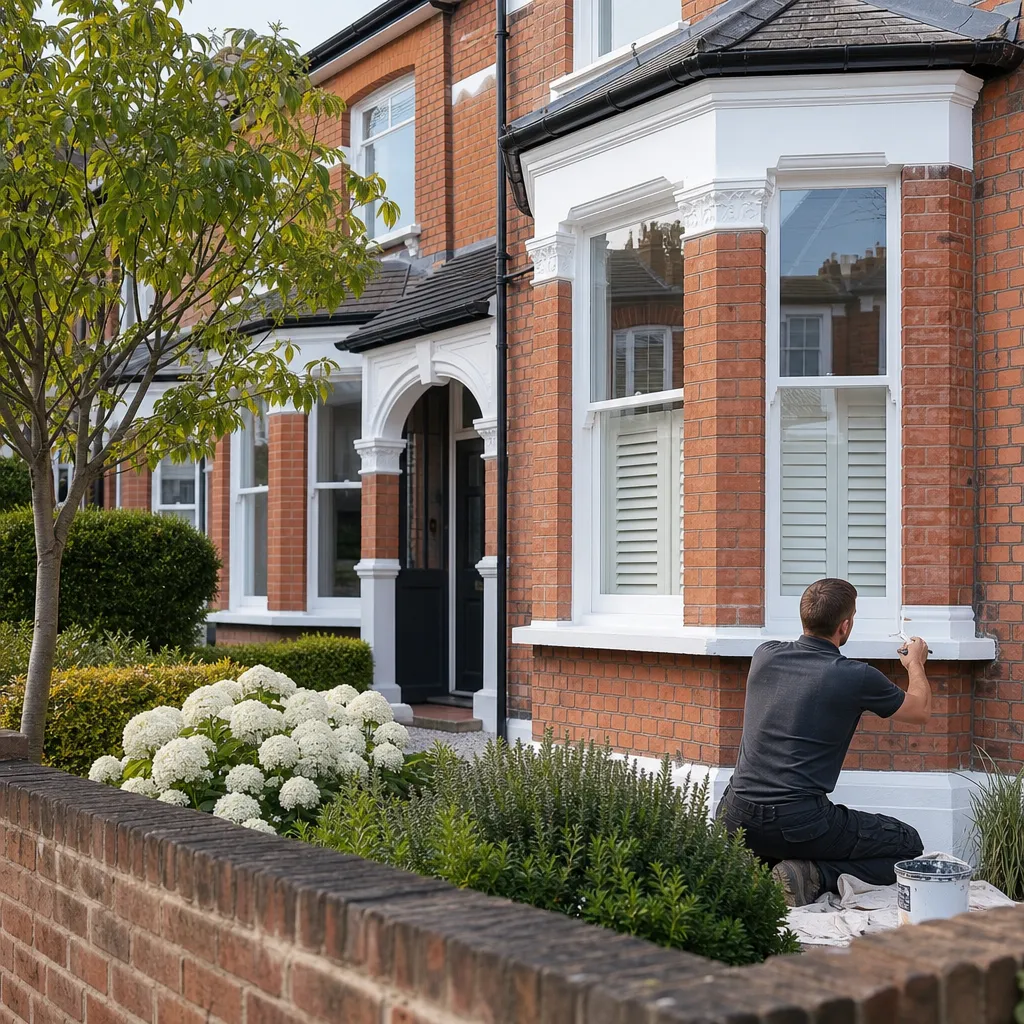
Property Enhancement Strategies for a Successful Sale
Enhancing a UK property before listing typically involves improving kerb appeal, decluttering and neutralising décor, addressing minor maintenance issues, and investing in professional photography.
 Buying & Moving
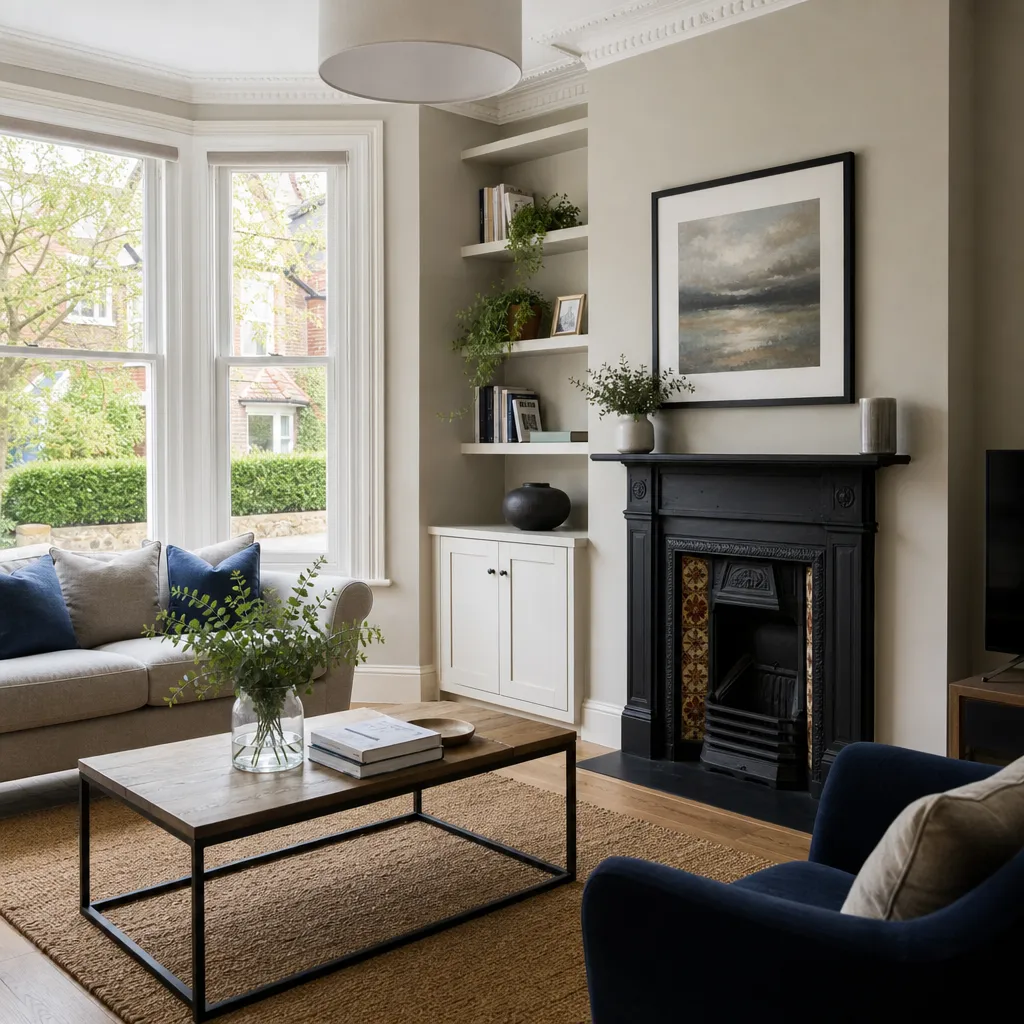
Using Art and Decor to Enhance Property Appeal When Selling
Thoughtfully chosen art and décor can make rooms feel larger, lighter, and more aspirational to buyers.
 Buying & Moving
Effective Property Marketing Strategies for Sellers
UK home sellers achieve more viewings and stronger offers by combining professional photography, an accurate floor plan, and a compelling portal listing.
 Buying & Moving
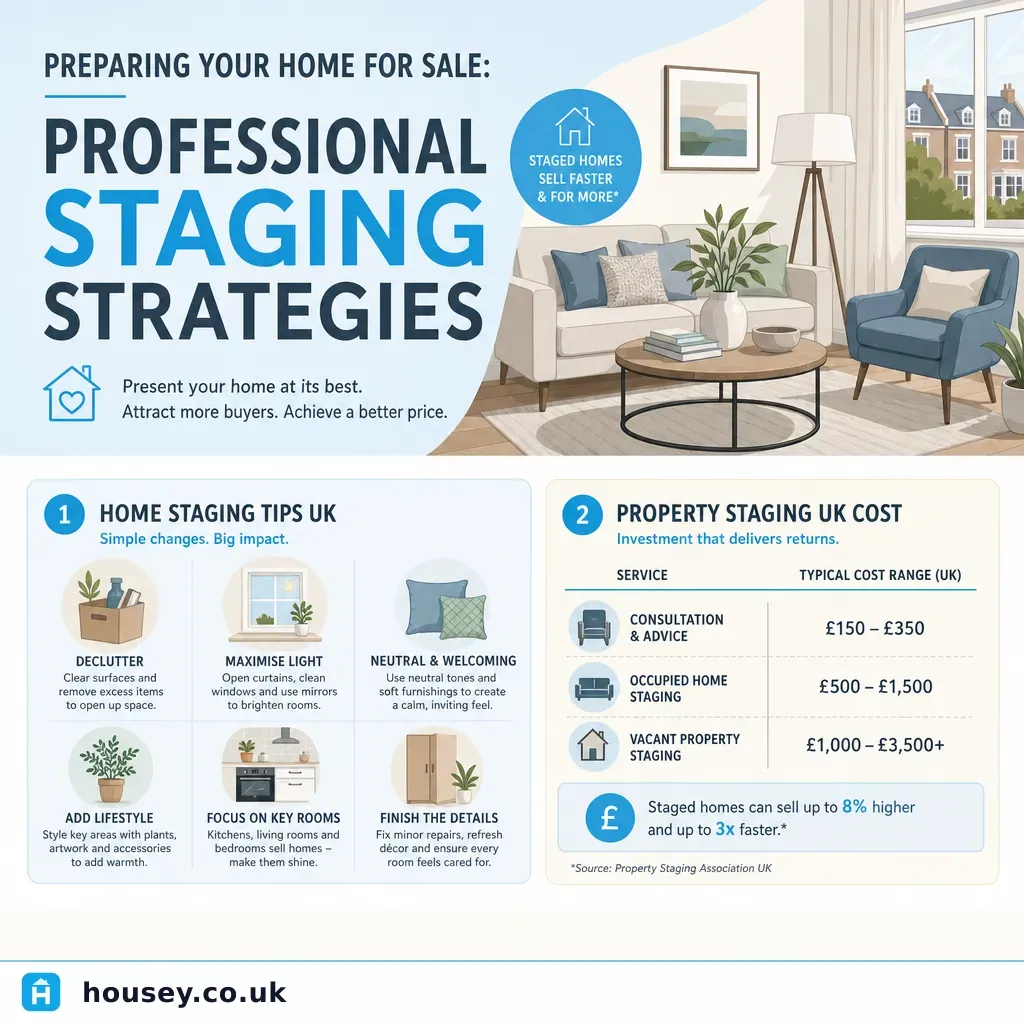
Preparing Your Home for Sale: Professional Staging Strategies
Effective home staging focuses on decluttering, depersonalising, and presenting each room to show its proportions and light at their best.
 Buying & Moving
Proven Strategies for Selling Your Property Quickly and Effectively
To sell your UK home quickly, price it accurately from the outset, invest in professional photography and a measured floorplan, prepare your conveyancing documents before accepting an offer, and ensure the property presents well for viewings.