Proper Lawn Maintenance Techniques for Healthy UK Gardens
By Housey · Last reviewed 30th of May 2026
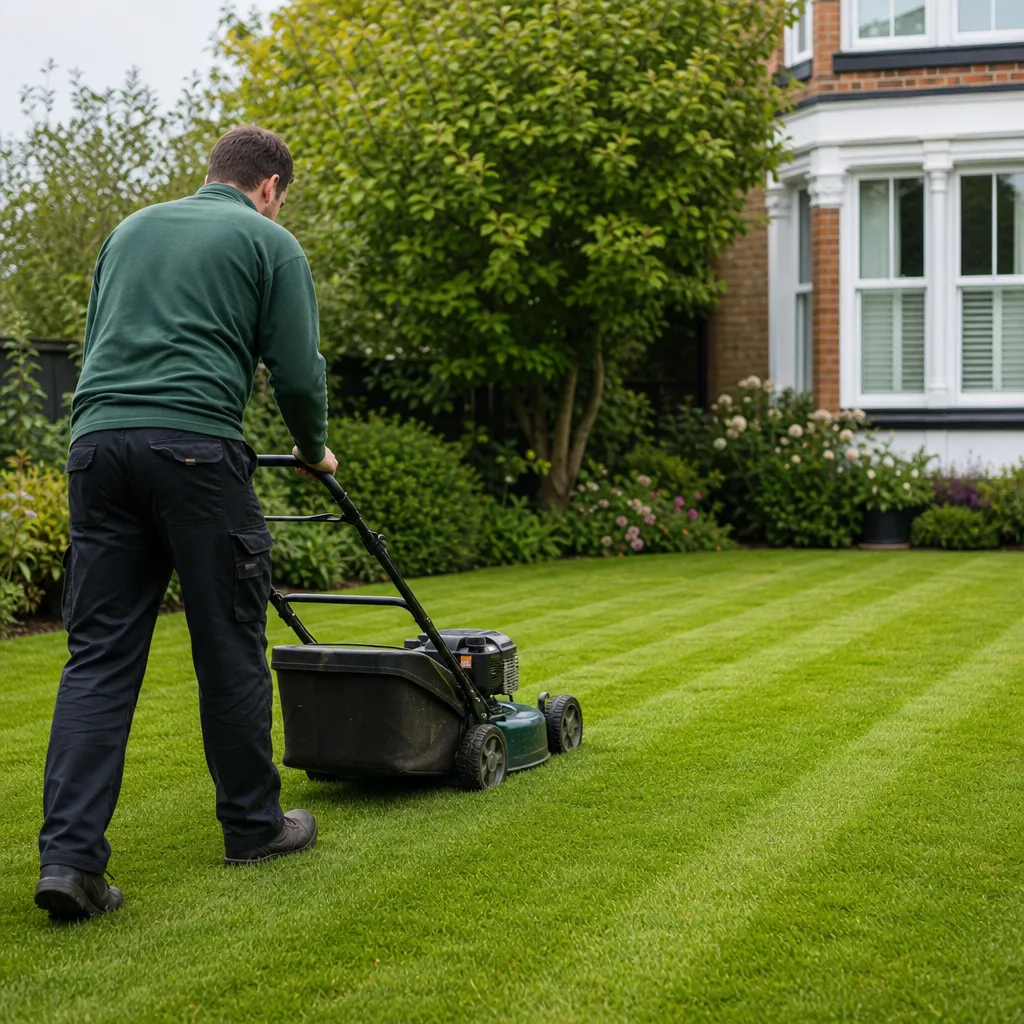
Proper Lawn Maintenance Techniques for Healthy UK Gardens
Most lawn problems homeowners encounter — persistent moss, yellowing patches, compacted bare areas, and poor growth after summer — trace back to a handful of technique errors rather than poor grass quality. Whether you have a Victorian terrace garden dominated by shade and clay, a new-build plot sown on builders' sand, or a 1930s semi with a standard mixed-ryegrass sward, the underlying principles are the same: cut at the right height, feed at the right time of year, and address soil conditions rather than surface symptoms.
Key points
- The Royal Horticultural Society recommends mowing domestic lawns at 25–50 mm; fine decorative fescue lawns can be cut as low as 5–12 mm but require more frequent maintenance to avoid stress.
- The one-third rule states that no more than one-third of the grass blade should be removed in a single mowing session, regardless of how long the lawn has been left to grow.
- Spring lawn fertilisers should be higher in nitrogen (N) to promote leaf and shoot growth; autumn feeds should contain lower nitrogen and higher potassium (K) to harden grass before winter dormancy.
- Scarification — mechanical removal of thatch using a spring-tine rake or powered scarifier — is best carried out in September or early October when grass is still actively growing and can recover before the first frosts.
- Hollow-tine aeration (removing plugs of soil) is more effective than solid-tine spiking for heavily compacted ground, and is recommended at least annually in autumn to improve drainage and root-zone gas exchange.
Seasonal lawn care calendar
UK lawns follow a growth pattern governed by soil temperature rather than calendar date. Grass typically begins active growth when the soil reaches around 7–8 °C — usually from March in most of England and Wales — and slows significantly when temperatures drop below 5 °C, typically from November through February.
Spring (March–May)
- Begin mowing once growth resumes, starting at a higher cut and reducing gradually over several sessions to your target height.
- Apply a spring or summer lawn fertiliser with a higher nitrogen ratio once the grass is actively growing — usually April in most regions.
- Overseed bare or thin patches when soil temperature is reliably above 8 °C for adequate germination.
- Address broad-leaved weeds (dandelion, plantain, clover) with a selective lawn herbicide if present in significant numbers.
Summer (June–August)
- Mow at your target height weekly during peak growing season.
- Raise the cutting height slightly during dry spells — longer grass shades the soil surface and is more drought-tolerant.
- Water new turf or recently overseeded areas consistently; established UK lawns generally do not need watering except in prolonged drought.
- Avoid scarification and heavy aeration during summer stress.
Autumn (September–November)
- Scarify to remove thatch accumulation — ideally in September while soil temperature remains above 8 °C.
- Aerate compacted areas with a hollow-tine or solid-tine aerator immediately after scarification.
- Overseed thin or bare areas while temperatures remain sufficient for germination.
- Apply an autumn lawn feed (low nitrogen, higher potassium) to harden growth before winter.
- Reduce mowing frequency as growth slows and raise the cutting height slightly.
Winter (December–February)
- Avoid mowing on frozen or waterlogged ground — this compacts soil and tears grass roots.
- Keep foot traffic to a minimum to prevent compaction and encourage disease.
- Clear fallen leaves promptly; a heavy layer blocks light and encourages fusarium patch and other fungal diseases.
Mowing technique by lawn type
Lawn type | Recommended cutting height | Growing season frequency | Key risk if cut too short |
|---|---|---|---|
Fine decorative fescue lawn | 5–12 mm | 2–3 times per week | Scalping; drought stress; weed ingress |
Standard domestic lawn (ryegrass and fescue blend) | 25–40 mm | Weekly | Stress and thatch build-up if mowing is irregular |
Hard-wearing family or utility lawn | 35–50 mm | Weekly | Good tolerance; lower risk |
Newly seeded or young lawn (first season) | 50–75 mm initially, reduce gradually | Every 1–2 weeks once established | Root damage; poor establishment if cut too early |
Neglected or overgrown lawn | Reduce by one-third per session over multiple cuts | Every few days until target height is reached | Yellowing and scalp damage if cut back too hard in one session |
Aeration and scarification: what homeowners often get wrong
Aeration is widely recommended but frequently misunderstood. The purpose is not simply to create holes — it is to relieve soil compaction and improve the exchange of air, water, and nutrients between the surface and the root zone. Hollow-tine aeration, which removes plugs of soil rather than simply spiking, is significantly more effective for heavily compacted ground. The removed cores can be broken down by brushing a sandy top-dressing material over them.
Scarification removes the layer of dead grass, moss, and organic matter (thatch) that accumulates at the base of the sward. A thin thatch layer of up to about 10 mm is normal and beneficial; a thicker layer prevents water and nutrients reaching the roots. Scarifying at the wrong time — in midsummer heat or during a frost — can cause more damage than the thatch itself.
Homeowner lawn care checklist
When to get professional help
Most routine lawn maintenance is manageable without professional input. Consider engaging a professional landscaper or garden maintenance specialist if:
- The lawn requires major renovation — significant regrading, drainage installation, or complete returfing of a large area.
- Persistent problems such as waterlogging, severe moss invasion, lawn disease, or chafer grub damage are not resolving with standard treatment.
- The garden has a formal design where consistent cutting lines and edging standards are central to the overall scheme.
- The plot is large enough that the time commitment of regular maintenance is not practical for the household.
How Housey can help
Housey connects UK homeowners with experienced landscapers and garden designers who can advise on lawn renovation, seasonal maintenance programmes, and longer-term planting schemes. Compare quotes from local professionals and find someone whose expertise matches your garden's size, soil type, and goals.
Frequently asked questions
When should I stop mowing my lawn in the UK?
Grass growth typically slows when soil temperatures drop below 5 °C, usually from November into February in most of the UK. Most domestic lawns do not need mowing during this period. In milder parts of southern England and along the coast, occasional light cuts may still be appropriate on dry days through December.
How do I get rid of moss in my lawn?
Start by identifying the cause — moss thrives in damp, shaded, acidic, or compacted ground. Treat with a proprietary lawn moss killer such as ferrous sulphate, wait until the moss blackens (typically 10–14 days), then scarify it out. Address the underlying cause by improving drainage, raising soil pH with lime if needed, or increasing light where practicable.
Is it better to lay turf or overseed a patchy lawn?
Turf gives an instant result and establishes faster, but costs significantly more. Indicative UK costs, last reviewed 2026-05-30: turf supply and laying typically £4–£12 per square metre, versus a few pence per square metre for seed. Overseeding suits thin or patchy existing lawns; turf is the better option when the lawn is beyond renovation or a short establishment timeline is essential.
How often should I apply fertiliser to my lawn?
Most domestic lawns benefit from two to three fertiliser applications per year: a spring application high in nitrogen, an optional midsummer top-up, and an autumn application with lower nitrogen and higher potassium. Avoid feeding in winter when grass is dormant. Always water in granular fertilisers if rain is not expected within 48 hours to avoid scorching the grass.
Sources and further reading
- Lawn care: mowing, feeding, and maintenance — Royal Horticultural Society (RHS)
- Lawn aeration and scarification — Royal Horticultural Society (RHS)
- Fertilisers: choosing and applying — Royal Horticultural Society (RHS)
- Lawn weeds and moss — Royal Horticultural Society (RHS)
Useful next reads
 Improvement & Build
Garden Maintenance Services: What to Budget
Garden maintenance in the UK typically costs £25–£50 per hour for a general gardener, or £1,200–£3,500 per year for a regular maintenance contract covering a medium suburban garden.
 Improvement & Build
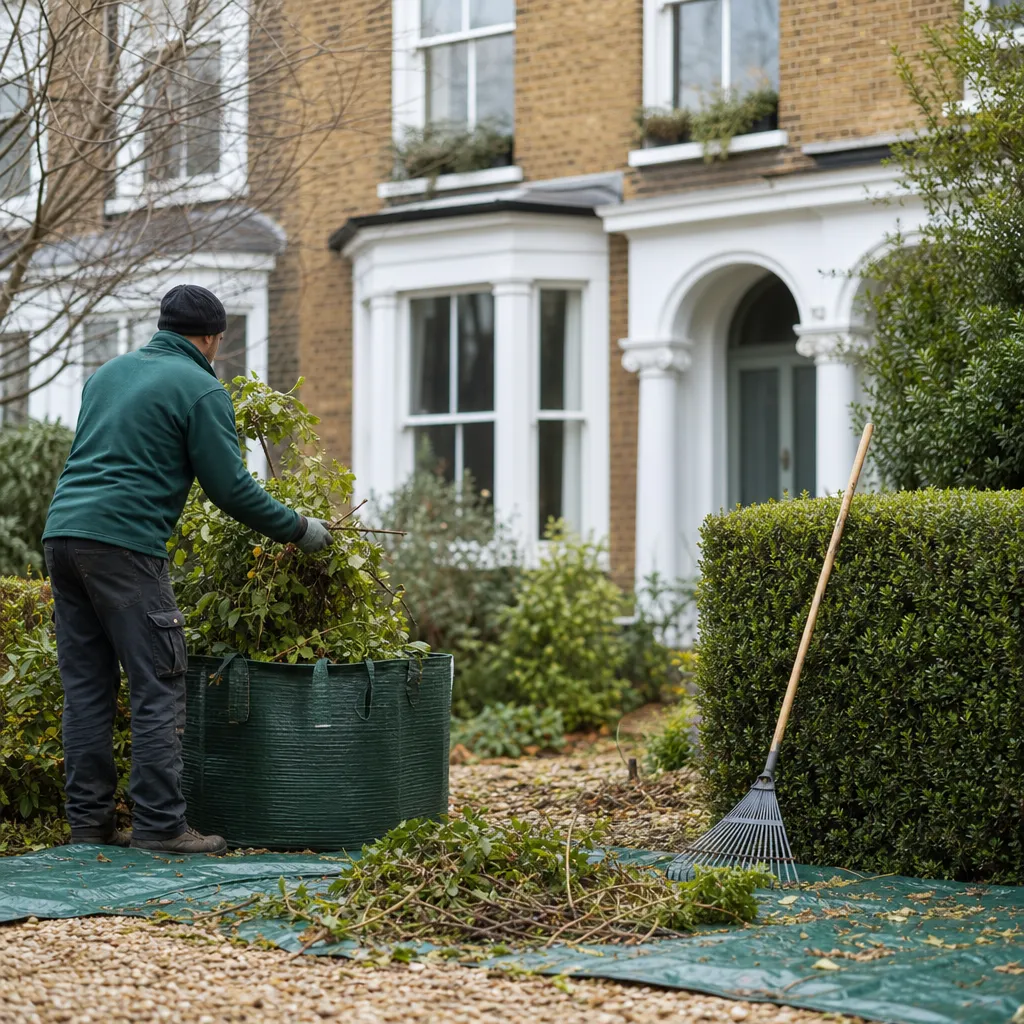
When to Call In Professional Garden Maintenance for Seasonal Cleanup
Professional garden maintenance is worth considering when seasonal work exceeds DIY capacity — typically autumn leaf removal, lawn scarification, hedge trimming at height, or post-winter clearance on large plots.
 Improvement & Build
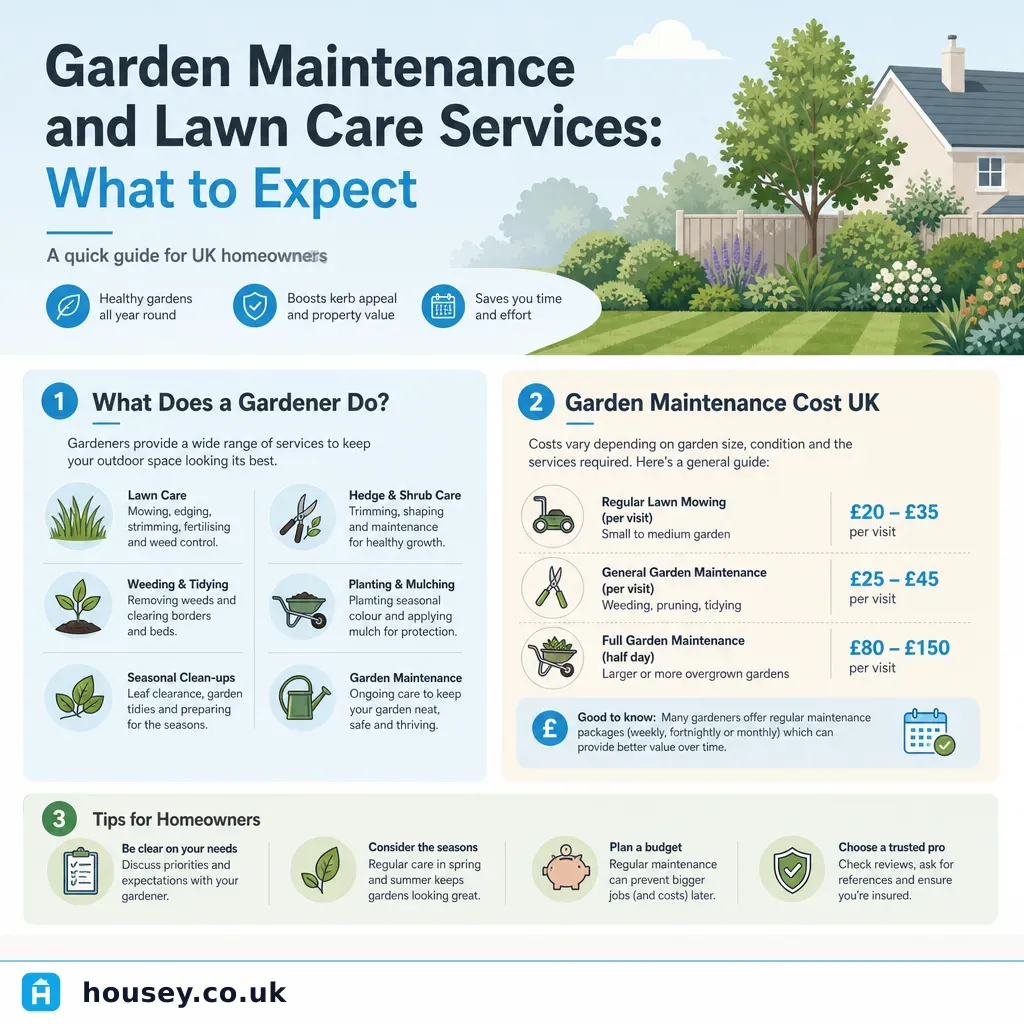
Garden Maintenance and Lawn Care Services: What to Expect
Professional garden maintenance services in the UK typically cover lawn mowing, weeding, pruning, and seasonal tasks such as scarification and hedge trimming.
 Improvement & Build
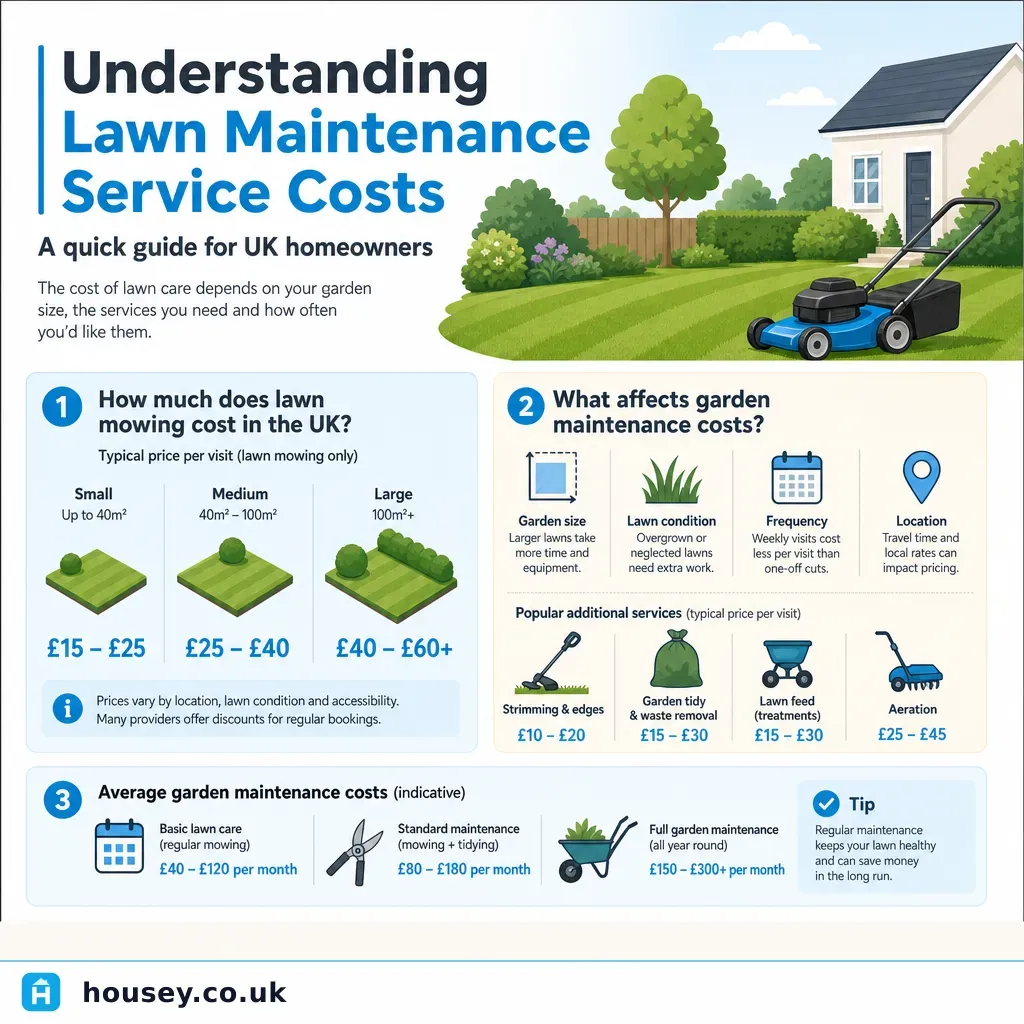
Understanding Lawn Maintenance Service Costs
Lawn maintenance services in the UK typically cost £20–£60 per visit for regular mowing of a standard garden, rising to £150 or more for larger plots or combined treatments.
 Improvement & Build
Lawn Aeration and Lawn Care Service Costs
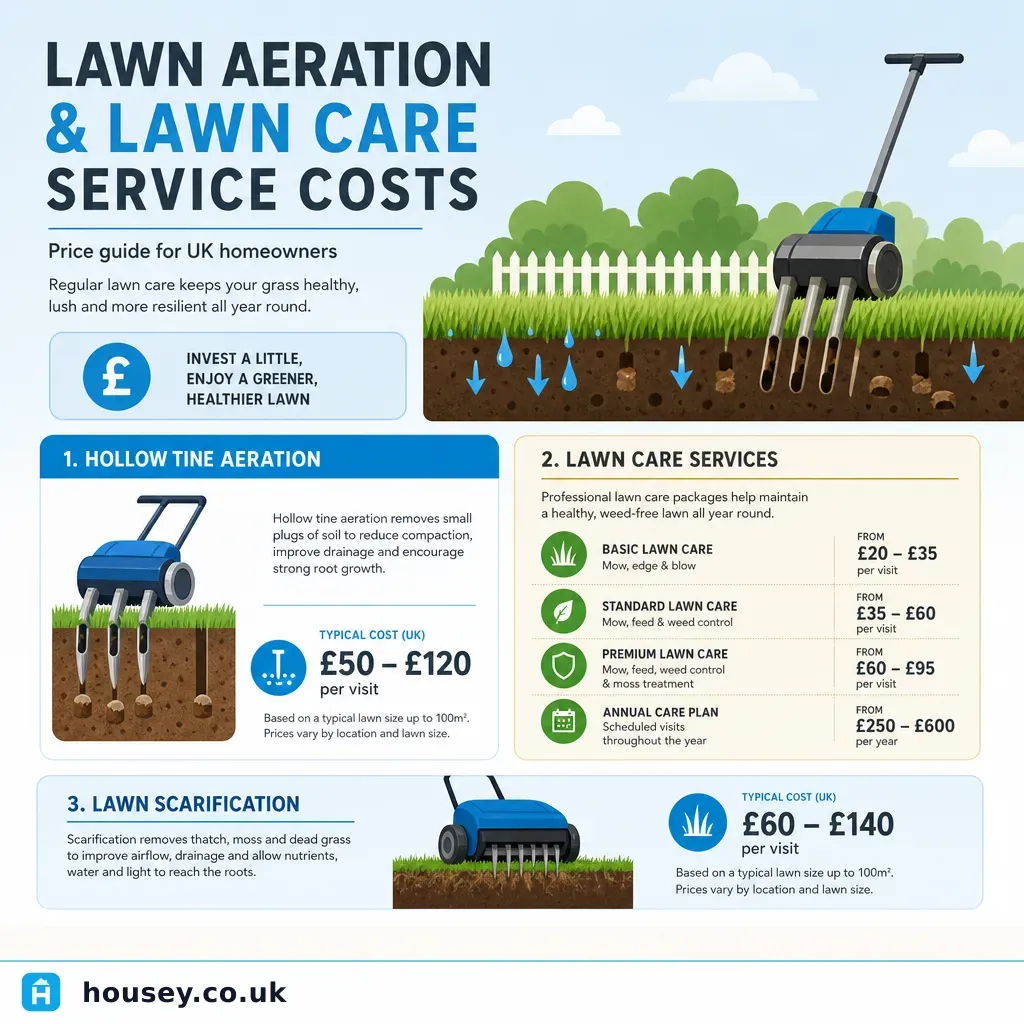
Hollow-tine lawn aeration in the UK typically costs £60–£200 for an average garden, depending on lawn size, soil condition, and region.