Lawn Aeration and Lawn Care Service Costs
By Housey · Last reviewed 7th of May 2026
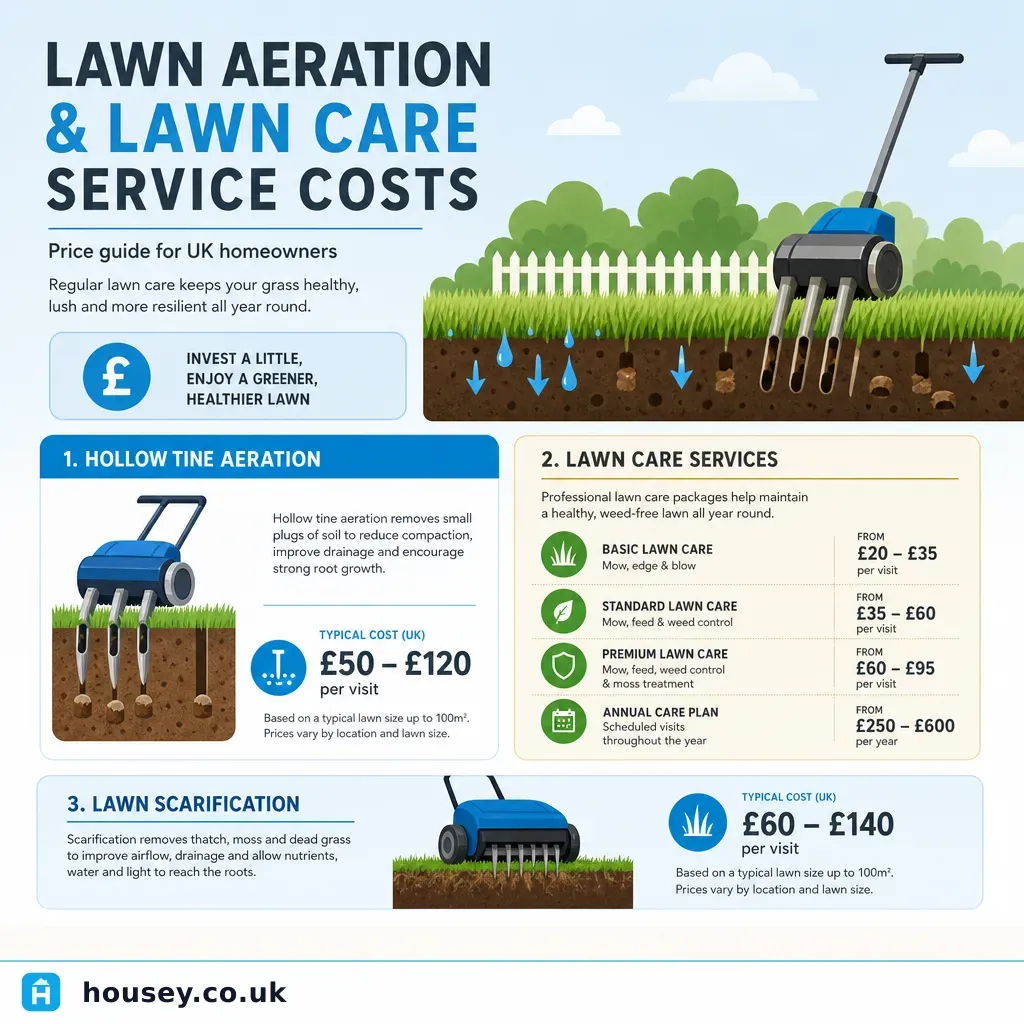
Lawn Aeration and Lawn Care Service Costs
A healthy lawn depends on more than regular mowing and watering. Compacted soil and thatch build-up progressively cut off oxygen, water, and nutrients from grass roots — a particular problem on the clay-heavy soils common across central and southern England. Most UK homeowners start thinking about aeration when a lawn begins to look thin, drains slowly after rain, or develops persistent bare patches despite regular maintenance. Knowing what professional aeration and lawn care services cost helps you plan the work and compare quotes with confidence.
Key points
- Hollow-tine aeration — the most effective method for compacted UK lawns — typically costs £60–£200 for an average garden of up to 100 m², with larger lawns usually priced at £0.70–£1.20 per m².
- Autumn (September–October) is the best time to book professional hollow-tine aeration in the UK; most providers fill appointment slots 4–6 weeks ahead during peak season.
- Three main aeration methods exist: hollow-tine (removes soil cores, most thorough), solid-tine (pierces without removal, lighter treatment), and slitting or spiking (shallow surface cuts).
- Full autumn renovation packages combining aeration, scarification, overseeding, and fertiliser treatment typically cost £250–£450 for a medium-sized UK garden.
- Topdressing with sand or a topsoil blend after hollow-tine aeration improves long-term drainage and is usually priced as an add-on of £60–£150.
What is lawn aeration and why does it matter?
Aeration relieves soil compaction by creating channels that allow air, water, and nutrients to reach grass roots more freely. UK gardens on clay soils are especially prone to compaction from foot traffic, mowing equipment, and the wet-dry cycle of British weather.
The three main professional aeration methods differ in depth, disruption, and results:
Method | How it works | Best for | Typical frequency |
|---|---|---|---|
Hollow-tine | Removes plugs of soil and thatch (10–15 cm depth) | Severely compacted or waterlogged lawns | Once a year, usually autumn |
Solid-tine | Pierces soil without removing material | Lightly compacted lawns and routine maintenance | Once or twice a year |
Slitting/spiking | Makes shallow cuts or holes in the surface | Sandy soils, fine lawn maintenance, spot treatment | As needed |
Hollow-tine aeration is the most widely offered professional treatment and produces the most noticeable improvement in compacted UK lawns. Solid-tine is quicker and cheaper but penetrates less effectively in heavy clay.
How much does lawn aeration cost in the UK?
Standalone aeration prices
- Up to 50 m² (small garden): £50–£90
- 50–100 m² (average suburban garden): £80–£160
- 100–200 m²: £140–£250
- Over 200 m²: Usually priced per square metre, typically £0.70–£1.20/m²
Indicative UK costs, last reviewed 2026-05-07. Quotes vary by region, soil type, access constraints, and provider. Always obtain at least two itemised quotes before committing.
Combined lawn care packages
Many UK lawn care companies offer seasonal renovation packages bundling several treatments:
Package component | What it does | Typical additional cost |
|---|---|---|
Scarification | Removes thatch and moss using rotating blades or wire tines | Often included, or £50–£120 extra |
Overseeding | Fills bare patches with new grass seed after aeration | £40–£100 extra |
Topdressing | Fills aeration holes with sand or topsoil blend | £60–£150 extra |
Fertiliser application | Feeds roots post-aeration for faster recovery | £30–£80 extra |
Weed and moss control | Pre- or post-treatment spray | £25–£60 extra |
A full autumn renovation package for a typical UK garden — hollow-tine aeration, scarification, overseeding, and fertiliser — usually costs £250–£450 from a professional lawn care company.
Professional service vs DIY: a comparison
Option | Upfront cost | Effectiveness | Best suited to |
|---|---|---|---|
Professional hollow-tine service | £60–£200+ per visit | High — correct equipment, depth, and timing | Most homeowners; one-off or annual treatment |
Hired hollow-tine aerator | £60–£120/day hire | Good if used correctly | Larger lawns (300 m²+); confident DIYers |
Manual garden fork | £0 (existing tool) | Low — inconsistent depth and spacing | Very small areas only; not effective for significant compaction |
Rotary spike shoes | £20–£40 to buy | Low — shallow penetration only | Not recommended as a primary treatment |
For most UK homeowners, a professional service is more cost-effective than hiring equipment unless the lawn exceeds around 300 m² or treatments are needed several times per year.
Seasonal timing: when to book lawn aeration
The UK's temperate climate means grass grows actively from March through October. Timing aeration correctly affects both recovery speed and results.
Autumn (September–October) is the preferred season for hollow-tine aeration and scarification. Cooler temperatures reduce stress on disturbed grass, autumn moisture supports recovery, and roots can continue establishing into early winter. Professional lawn care companies have their heaviest booking schedules in autumn — book 4–6 weeks ahead to secure a date.
Spring (March–April) suits solid-tine aeration or a lighter maintenance treatment. Avoid heavy hollow-tine aeration in spring if the lawn is already thin — additional disruption can slow recovery during a critical growth period.
Summer is generally not recommended for hollow-tine work unless the lawn is well irrigated. Spot spiking around heavily used areas — near gates or play equipment — is acceptable if the rest of the lawn is in reasonable condition.
What to ask before accepting a quote
- What aeration method do you use — hollow-tine or solid-tine?
- What diameter and depth do the tines work to?
- Is scarification, overseeding, or topdressing included in the price, or priced separately?
- How do you price larger or irregularly shaped lawns?
- Are there access constraints — narrow gates, slopes, or obstacles — that would affect the approach or the cost?
- Is disposal of soil cores included in the quoted price?
- What qualifications or accreditations do you hold (BASIS, Lantra, or equivalent)?
- What aftercare advice will you provide on watering schedule, mowing height, and fertilising after treatment?
Red flags to watch for
- A very low quote that does not specify hollow-tine — solid-tine spiking is considerably less effective for compacted lawns and should be priced differently.
- No site visit or initial assessment before quoting — a reliable professional will want to check soil condition, drainage, thatch depth, and grass species before committing to a price.
- Claims that a single treatment will fully restore a severely neglected or diseased lawn — full recovery typically takes one complete growing season.
- Pressure to commit to an annual maintenance package before completing a first single-treatment visit.
- No clear breakdown of what is included — a professional quote should itemise aeration, scarification, overseeding, and topdressing as separate line items.
Homeowner checklist before the service
When to get professional help
Aeration is a routine maintenance task, but some lawn conditions indicate an underlying problem that aeration alone will not resolve:
- Persistent waterlogging despite repeated aeration — may indicate a deeper drainage problem requiring investigation by a drainage contractor
- Patches that consistently die back — possible soil contamination, compacted subsoil, underground debris, or buried services worth investigating before further work
- Moss returning within weeks of treatment — usually indicates a soil pH imbalance, persistent shade, or severe compaction requiring a soil analysis before further treatment
- A steeply sloping lawn — professional assessment helps avoid erosion risk during scarification and aeration on inclines
How Housey can help
If you want to compare quotes from lawn care professionals in your area, Housey makes it straightforward to request and compare prices from local landscapers who offer hollow-tine aeration, scarification, overseeding, and seasonal lawn treatment packages.
Frequently asked questions
How often should a UK lawn be aerated?
Most UK lawns benefit from hollow-tine aeration once a year, typically in autumn. Lawns on clay soil, those with heavy foot traffic, or those that drain poorly may benefit from a lighter second treatment in spring. Fine ornamental lawns are sometimes aerated more frequently using narrower tines to minimise surface disruption between treatments.
Will my lawn look worse straight after aeration?
Temporarily yes. After hollow-tine aeration the lawn will be covered in small soil cores and look rough for one to two weeks. These cores break down naturally or can be raked in. The lawn typically looks noticeably healthier within four to six weeks, particularly after overseeding and fertilising take effect.
Do I need to overseed after lawn aeration?
Not always. If the lawn is reasonably dense and the main issue is compaction, aeration alone is often sufficient. Overseeding is recommended when there are bare or thin patches, after scarification removes significant thatch, or when you want to introduce a more hard-wearing or drought-tolerant grass variety across the lawn.
Can lawn aeration be done in wet conditions?
Hollow-tine aeration works best when soil is moist but not waterlogged. Very wet conditions can clog hollow tines and further compact the soil surface. Most professional lawn care companies will reschedule if conditions are unsuitable on the day — confirm their rescheduling policy when booking to avoid delays.
Is lawn aeration the same as scarification?
No. Aeration addresses soil compaction by creating channels for air, water, and nutrients to reach grass roots. Scarification removes thatch — dead grass, moss, and organic matter — from the soil surface using rotating blades or wire tines. The two treatments complement each other and are often carried out together in autumn, with scarification done first.
Sources and further reading
- Lawn aeration — Royal Horticultural Society
- Lawn maintenance — Royal Horticultural Society
- Soil compaction — Royal Horticultural Society
Useful next reads
 Improvement & Build
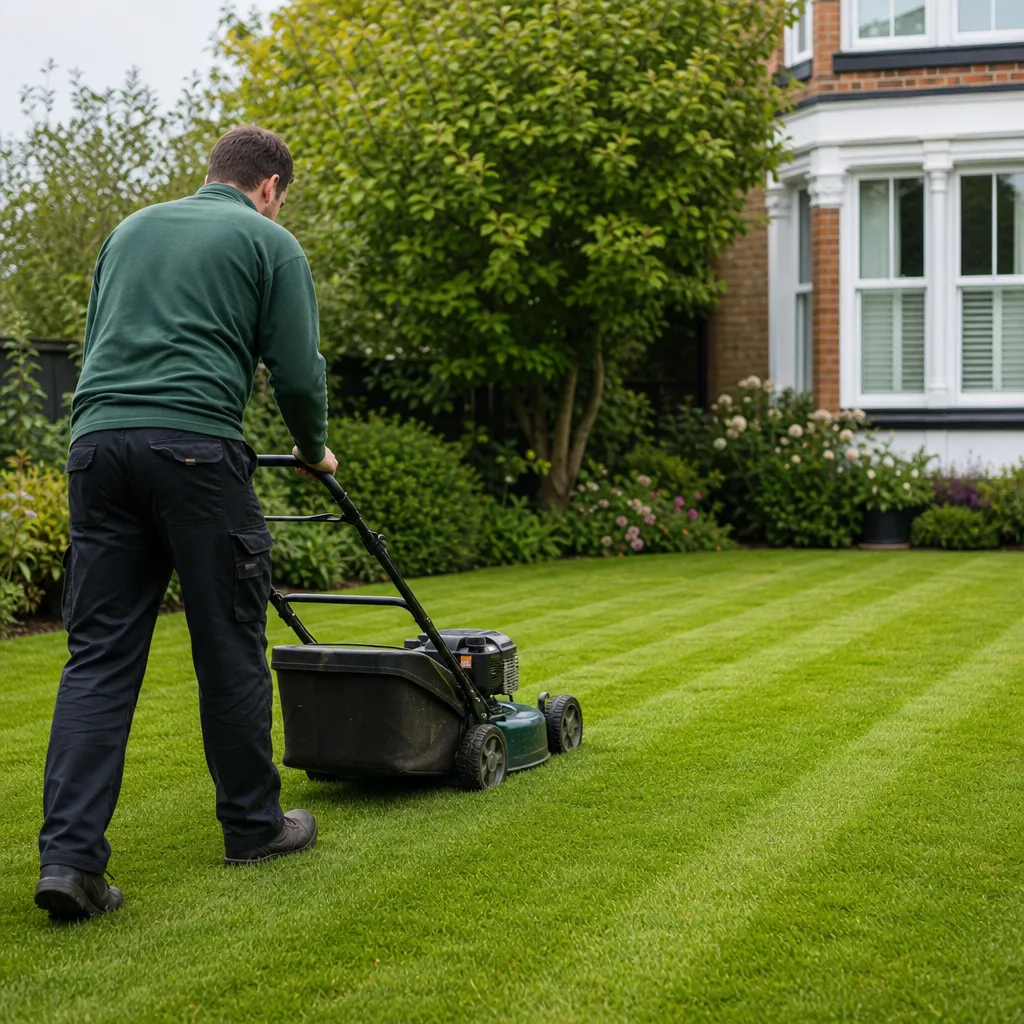
Proper Lawn Maintenance Techniques for Healthy UK Gardens
A healthy UK lawn needs mowing at 25–50 mm, never removing more than one-third of the blade length per cut.
 Improvement & Build
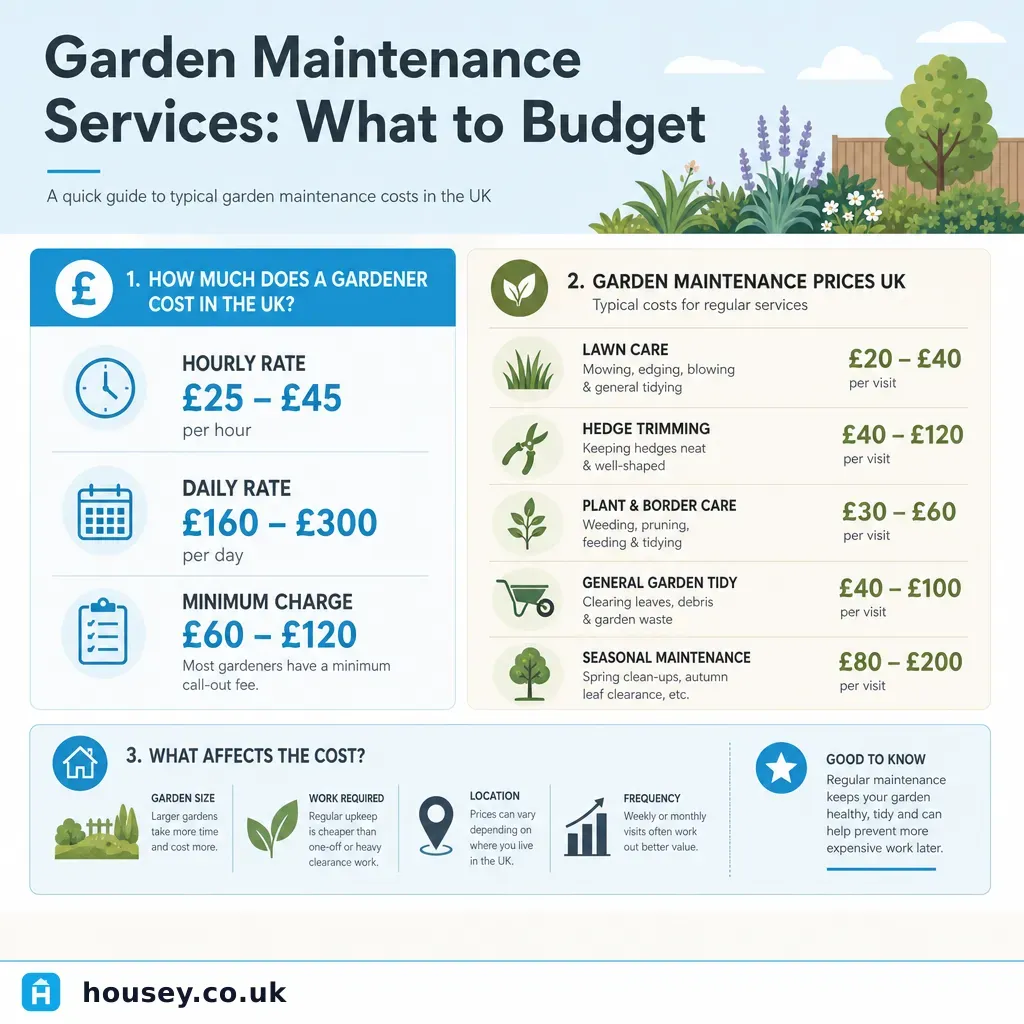
Garden Maintenance Services: What to Budget
Garden maintenance in the UK typically costs £25–£50 per hour for a general gardener, or £1,200–£3,500 per year for a regular maintenance contract covering a medium suburban garden.
 Improvement & Build
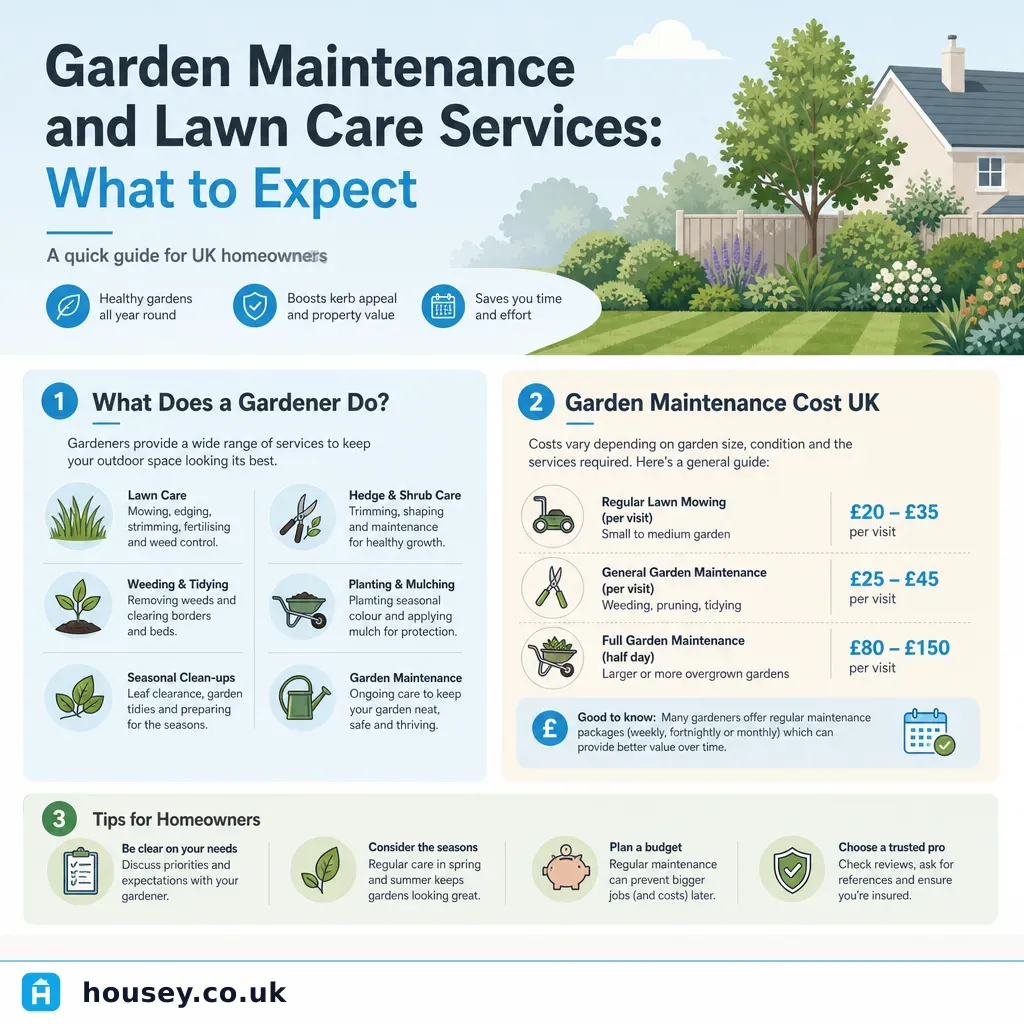
Garden Maintenance and Lawn Care Services: What to Expect
Professional garden maintenance services in the UK typically cover lawn mowing, weeding, pruning, and seasonal tasks such as scarification and hedge trimming.
 Improvement & Build
When to Call In Professional Garden Maintenance for Seasonal Cleanup
Professional garden maintenance is worth considering when seasonal work exceeds DIY capacity — typically autumn leaf removal, lawn scarification, hedge trimming at height, or post-winter clearance on large plots.
 Improvement & Build
Professional Weed Control: Service Options and Cost Factors
Professional weed control in the UK typically involves herbicide treatment, manual removal, or a combination of both.