When to Call In Professional Garden Maintenance for Seasonal Cleanup
By Housey · Last reviewed 11th of May 2026
When to Call In Professional Garden Maintenance for Seasonal Cleanup
Gardens across the UK follow a predictable annual rhythm — spring growth, summer management, autumn clearance, and winter dormancy — but each transition brings tasks that can quickly outpace what is manageable with a Sunday afternoon and a rake. Whether you have inherited a mature plot, extended your garden recently, or simply find that work has accumulated since last year, understanding when seasonal garden maintenance warrants professional help can save time, protect your plants, and keep your outdoor space legally compliant and safe throughout the year.
Key points
- Lawn scarification — the removal of thatch using a scarifying rake or machine — is most effective in early autumn (September to October) when grass is still actively growing and can recover before winter.
- The Arboricultural Association advises that trees with branches overhanging roofs, fences, or highways should be inspected and managed by a qualified arborist; unqualified pruning can create structural weakness and disease entry points.
- Garden waste disposal is subject to the Environmental Protection Act 1990 — burning garden waste in urban areas may breach local bylaws or cause a statutory nuisance complaint from neighbours.
- Formal hedges (yew, box, beech) generally need cutting between August and February to comply with the Wildlife and Countryside Act 1981, which protects nesting birds during the breeding season (broadly March to August).
- LANTRA Awards and the Royal Horticultural Society (RHS) both offer recognised qualifications for grounds maintenance professionals — checking credentials helps distinguish trained landscapers from general labourers.
What seasonal garden tasks typically require professional help?
Seasonal garden maintenance spans a wide range of tasks, and most homeowners handle the basics — mowing, weeding, and deadheading — perfectly well without professional assistance. The question is where routine upkeep ends and specialist work begins.
Tasks that commonly benefit from professional involvement include:
- Lawn scarification and aeration: Heavy thatch and compacted soil require powered equipment and correct timing. Done incorrectly, scarification can leave a lawn looking significantly worse for months.
- Hedge and topiary cutting at height: Working above 2 metres on a ladder with cutting equipment is a significant safety risk. Most professional landscapers carry public liability insurance; DIY work at height may not be covered by standard home insurance.
- Tree surgery and crown reduction: Tree work on mature specimens requires an ISA or LANTRA-certified arborist. Poorly executed pruning can create disease entry points and structural failure over time.
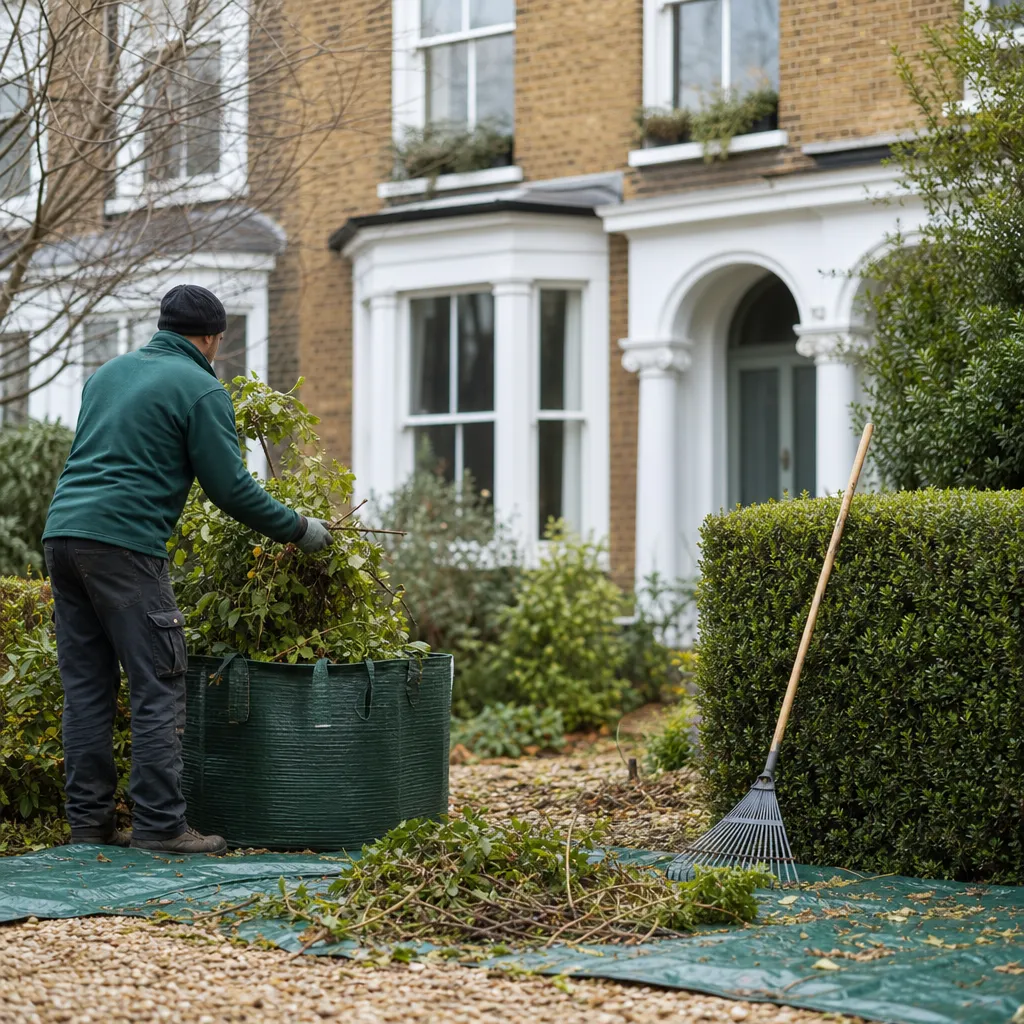
- Leaf removal from large plots: A moderate autumn leaf fall across a half-acre garden can amount to several tonnes of organic matter. Professional crews with vacuums, blowers, and waste-removal vehicles can clear this safely and legally.
- Pond clearance and plant division: Marginal plants and water lilies typically need dividing every three to four years. Pond management also requires safe disposal of silt and organic material.
- Post-storm clearance: Fallen branches, uprooted shrubs, and debris after high winds may involve structural risk assessment before removal can safely begin.
Which season needs professional attention most?
All four seasons bring specific tasks, but autumn is typically the most labour-intensive period for UK gardens, and the point at which professional help delivers the greatest value.
Season | Priority tasks | When professional help is most useful |
|---|---|---|
Spring | Border clearance, mulching, lawn renovation | Large borders, turf laying, tree surgery after winter storm damage |
Summer | Hedge cutting, mowing, irrigation management | Formal hedge management, large-scale mowing contracts |
Autumn | Leaf removal, lawn scarification, bulb planting | Large plots, leaf clearance to prevent moss build-up and soil compaction |
Winter | Pruning of dormant deciduous shrubs, path maintenance | Tree work (safer when leaves are off), hard-landscaping repairs |
Decision tree: should you hire a professional?
- Call a professional if your garden is more than a quarter of an acre and the clearance work exceeds what you can manage safely in a weekend.
- Call a professional if any task involves working above 2 metres, operating chainsaws, or removing trees or large limbs.
- Call a professional if you have a pond, formal parterre, listed-building garden, or another specialist feature requiring specific horticultural knowledge.
- Do it yourself if the work involves standard mowing, weeding, and basic pruning below 2 metres, and you have the time and appropriate tools.
- Check with your local council before burning garden waste — open burning rules vary by area and season.
- Consult an arborist if any tree is subject to a Tree Preservation Order (TPO) or sits within a Conservation Area, as removal or significant pruning requires prior council consent under the Town and Country Planning Act 1990.
How to find and vet a seasonal maintenance contractor
The UK has no single mandatory licence for general garden maintenance, but credentials from recognised bodies offer meaningful assurance:
- LANTRA Awards: nationally recognised horticultural and landscaping qualifications.
- RHS qualifications (Levels 2 and 3): indicate formal horticultural training.
- Arboricultural Association (AA) Approved Contractor scheme: for tree work — search the AA directory for certified practitioners in your area.
- British Association of Landscape Industries (BALI): covers landscaping and hard and soft landscape design.
Before accepting a quote, ask:
- Is the work covered by public liability insurance (at least £2 million)?
- Who will physically carry out the work — direct employees or subcontractors?
- How will green waste be disposed of, and can you produce evidence of a waste carrier licence?
- What specific equipment will be used for powered tasks such as scarification and hedge cutting?
- Will a written schedule of works and a post-completion report be provided?
Homeowner seasonal garden checklist
Use this before booking a seasonal maintenance visit:
Red flags to watch for
Certain indicators suggest a garden maintenance contractor may not be suitable:
- No written quote — verbal-only agreements make disputes very difficult to resolve.
- Inability to produce evidence of public liability insurance on request.
- Proposing to burn green waste in a residential area without checking local bylaws.
- Quoting for tree removal near a property without asking about TPO status.
- No visible qualifications or trade body membership for specialist tasks such as tree surgery or powered hedge trimming at height.
When to get professional help
If your garden contains mature trees, borders that have not been managed for more than a season, a pond, formal topiary, or any feature within falling distance of the house, professional seasonal maintenance is worth prioritising — not just for quality of result, but for safety and legal compliance.
Seek professional help without delay if:
- A tree or large branch has fallen or is visibly leaning following a storm.
- You notice cracks in a tree trunk or significant deadwood in the canopy.
- A hedge or shrub has grown to a height where ladder work would be required to cut it.
How Housey can help
Housey connects UK homeowners with vetted landscapers who offer seasonal maintenance, leaf clearance, lawn renovation, and grounds management services. If your garden needs redesigning before the maintenance work begins, you can also find experienced garden designers through the platform.
Frequently asked questions
How often should I have professional garden maintenance?
Most UK gardens benefit from at least two professional visits per year — typically a spring clearance and an autumn tidy — with additional mowing or hedge-cutting contracts in between for larger plots. Formal or complex gardens with topiary, water features, or extensive borders may need monthly contractor visits throughout the growing season.
Does seasonal garden maintenance require planning permission?
Routine maintenance does not require planning permission. However, removing or significantly pruning trees covered by a Tree Preservation Order or located in a Conservation Area requires prior consent from your local planning authority. Always check with your council before instructing a contractor to carry out any tree work.
How much does professional seasonal garden maintenance cost?
Costs vary significantly by plot size, task complexity, and location. A half-day session from a sole-trader landscaper for a standard suburban garden might range from £150 to £350, while a full-day crew for larger clearance work could be £400 to £800 or more. Indicative UK costs, last reviewed 2026-05-11 — always obtain at least three written quotes.
Can I compost all garden waste at home?
Most garden waste can be home-composted or collected via council brown-bin services. However, diseased plant material — including box blight-affected hedging and ash dieback material — should not be home-composted, as this risks spreading pathogens. Check with your local authority for guidance on safe disposal of diseased plant material.
Sources and further reading
- Wildlife and Countryside Act 1981 — legislation.gov.uk
- Tree Preservation Orders and trees in conservation areas — GOV.UK
- Arboricultural Association: Find an Arborist — Arboricultural Association
- LANTRA Awards horticultural qualifications — LANTRA
- Environmental Protection Act 1990 — legislation.gov.uk
- British Association of Landscape Industries member directory — BALI
Useful next reads
 Improvement & Build
Proper Lawn Maintenance Techniques for Healthy UK Gardens
A healthy UK lawn needs mowing at 25–50 mm, never removing more than one-third of the blade length per cut.
 Improvement & Build
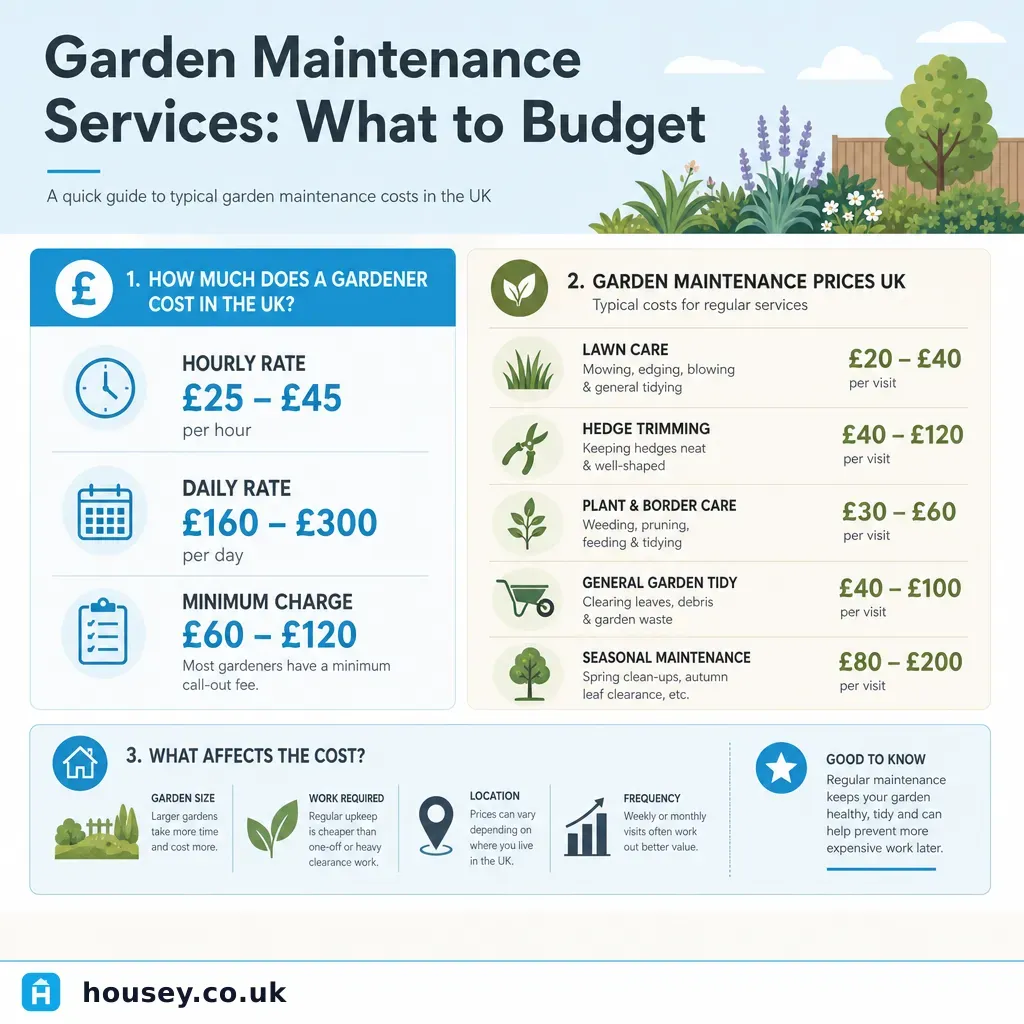
Garden Maintenance Services: What to Budget
Garden maintenance in the UK typically costs £25–£50 per hour for a general gardener, or £1,200–£3,500 per year for a regular maintenance contract covering a medium suburban garden.
 Improvement & Build
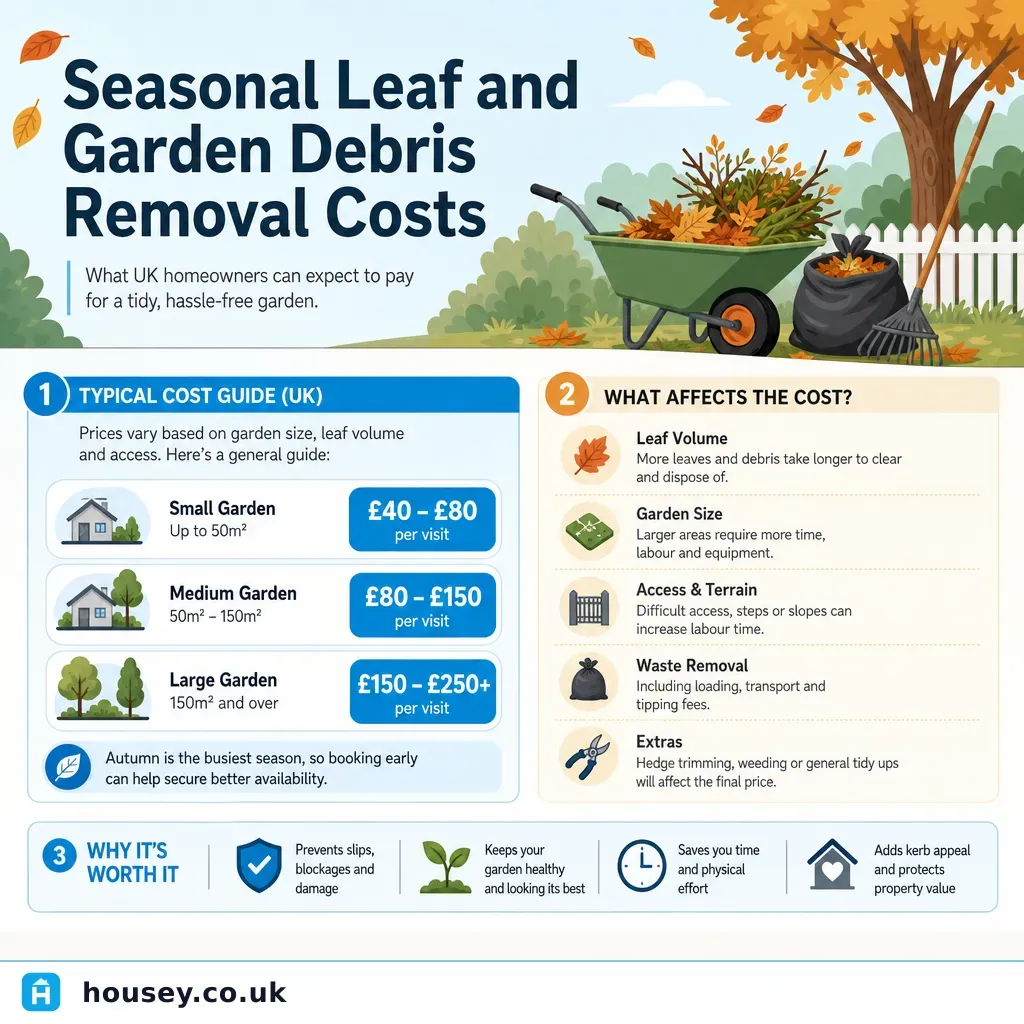
Seasonal Leaf and Garden Debris Removal Costs
Professional leaf clearance for a small to medium UK garden typically costs £60 to £150 for a single autumn visit, rising to £350 or more for large gardens with mature trees.
 Improvement & Build
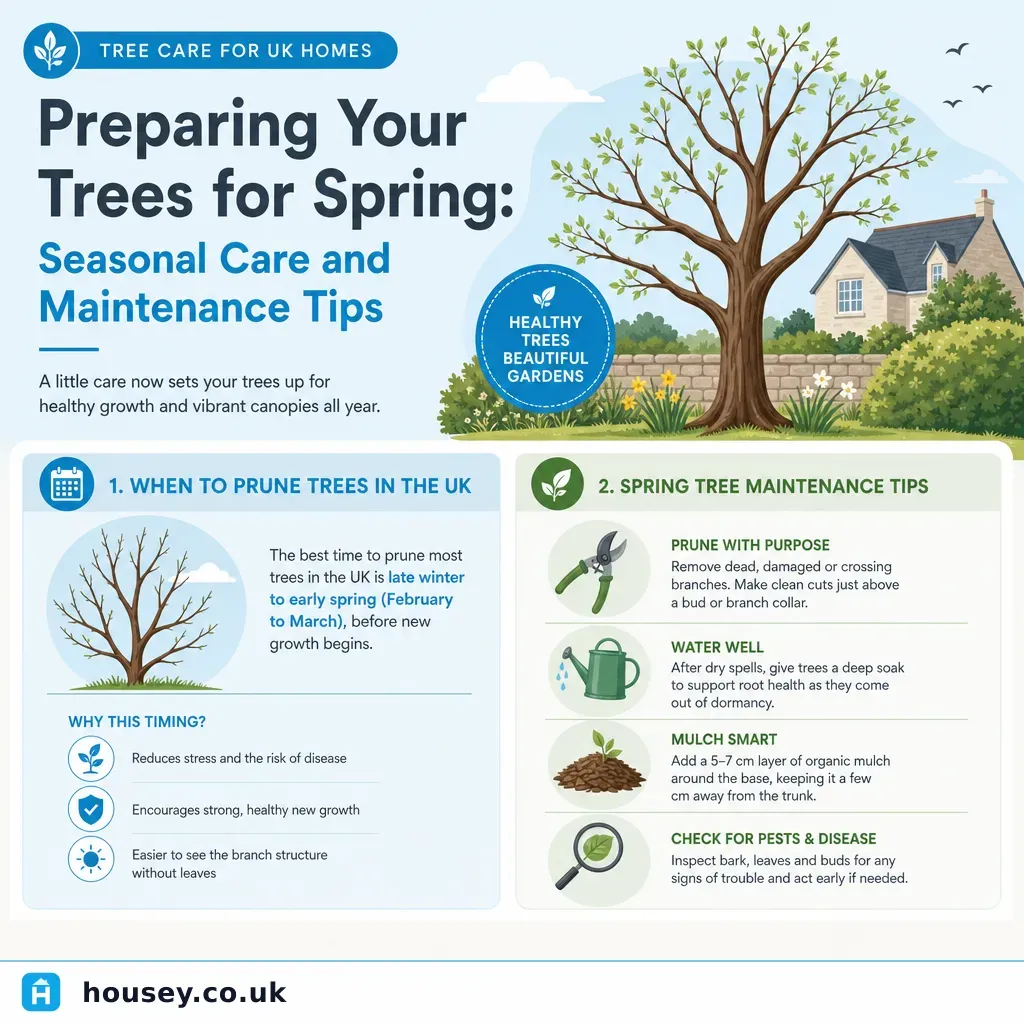
Preparing Your Trees for Spring: Seasonal Care and Maintenance Tips
Spring is the best time to assess trees after winter dormancy.
 Improvement & Build
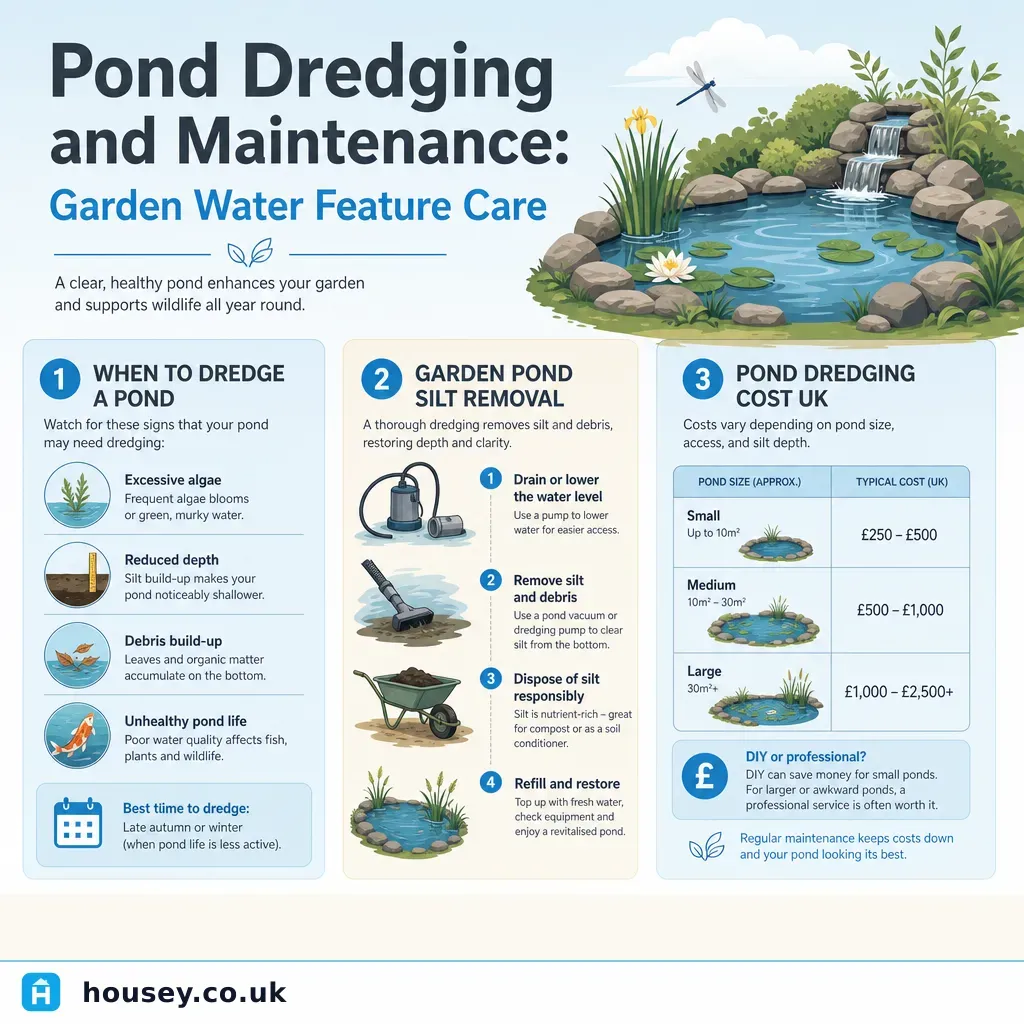
Pond Dredging and Maintenance: Garden Water Feature Care
Pond dredging involves removing accumulated silt, sediment, and decaying vegetation to restore water depth and quality.