Rural Relocation Guide: Moving From Urban to Countryside Living
By Housey · Last reviewed 18th of May 2026
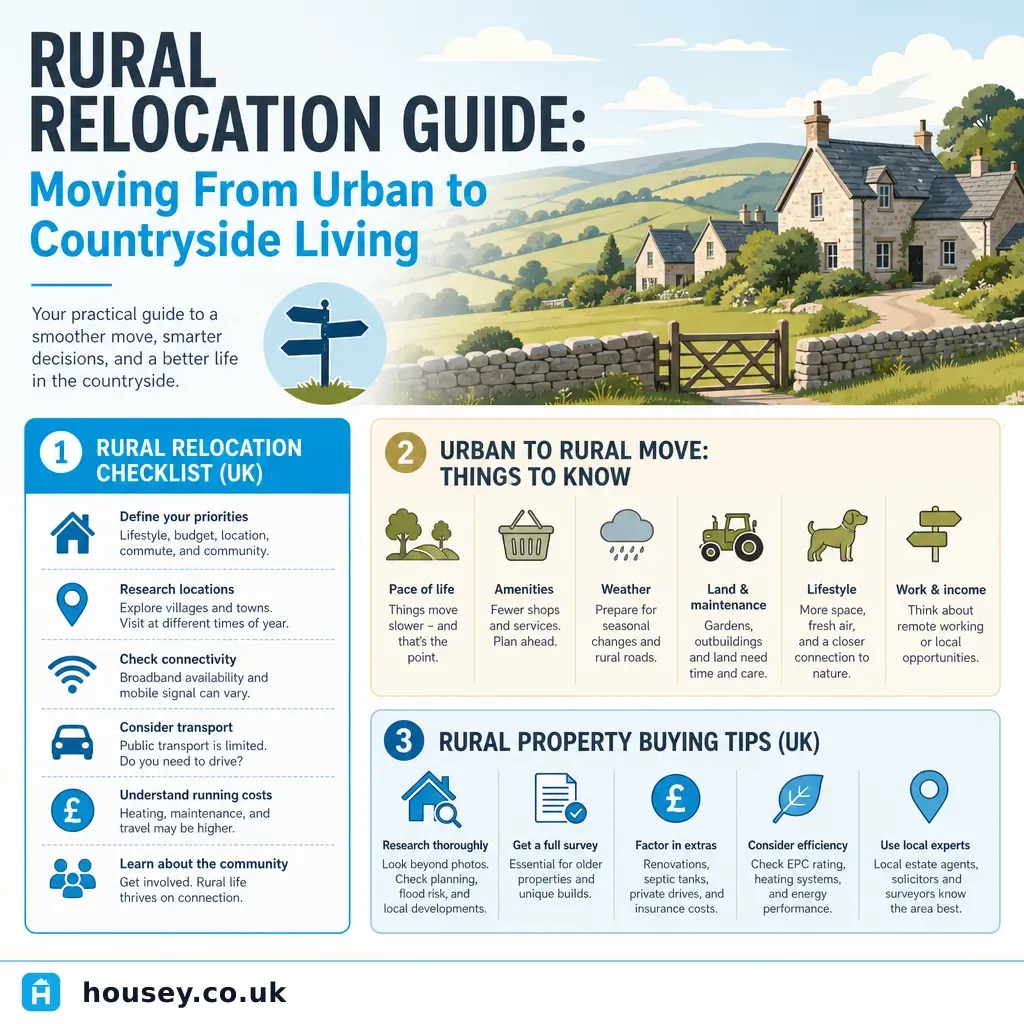
Rural Relocation Guide: Moving From Urban to Countryside Living
Swapping a city postcode for a rural address is one of the most logistically complex moves a UK homeowner can make, and the challenges are rarely advertised in property listings. Rural properties across England and Wales are often served by oil or LPG heating rather than mains gas, private drainage rather than sewers, and slower broadband connections than buyers accustomed to urban fibre infrastructure typically expect. Discovering these differences after exchange rather than before can be both costly and disruptive.
Key points
- Rural properties on private drainage (septic tank or cesspit) must comply with the Environment Agency's General Binding Rules for small sewage discharges — non-compliant systems can require expensive replacement before or shortly after a sale.
- Many rural areas are not connected to the mains gas network; oil-fired central heating is common, requires OFTEC-registered engineers for servicing, and is delivered by tanker at prices that vary considerably by location.
- Check broadband speed at the specific property address (not just the postcode) using the Ofcom coverage checker — rural notspots with speeds below 10 Mbps still exist despite national rollout programmes.
- Flood risk is disproportionately concentrated in rural areas; the Environment Agency's Flood Map for Planning is a free tool that should be checked before committing to any rural property.
- Planning permission rules in National Parks, Areas of Outstanding Natural Beauty (AONBs), and Green Belt land are significantly more restrictive than in non-designated areas, and Article 4 Directions can remove permitted development rights entirely.
What changes when you move to the countryside
Urban home-ownership comes with a set of infrastructure assumptions that break down in rural settings. Here is a comparison of the key differences:
Feature | Urban or suburban | Rural |
|---|---|---|
Heating fuel | Mains gas (most common) | Oil, LPG, wood, heat pump, or electricity |
Drainage | Mains sewer | Septic tank, cesspit, or sewage treatment plant |
Broadband | Usually fibre optic (FTTP or FTTC) | May be ADSL only or fixed wireless |
Mobile signal | Generally reliable 4G or 5G | Patchy — check Ofcom's coverage checker |
Transport | Bus, train, cycling infrastructure | Car-dependent; longer average journey distances |
Healthcare access | Multiple GPs within easy reach | May need to travel 10–20 miles for routine appointments |
School catchments | Often walkable; many choices | Wider catchment areas; school buses may operate |
Planning rules | Standard permitted development | May be restricted in AONBs, National Parks, Green Belt |
Emergency services | Response times typically under 10 minutes | Can be 15–30 minutes or more in remote areas |
Checking infrastructure before you commit
Drainage
If the property uses a septic tank or cesspit, establish its age, capacity, and compliance status. Under the General Binding Rules for small sewage discharges, properties must meet Environment Agency standards. A non-compliant system can represent a significant cost — a new septic tank or treatment plant can cost £5,000–£15,000 or more depending on system type and ground conditions.
Indicative UK costs, last reviewed 2026-05-18. Quotes vary by system type, ground conditions, and location.
Heating
Oil central heating is the most common rural alternative to mains gas. Check:
- When the boiler was last serviced and whether an OFTEC certificate is available.
- The size, age, and condition of the oil storage tank — plastic tanks degrade and metal tanks can corrode.
- The cost of oil delivery to the address — rural fuel prices often exceed pump prices in nearby towns.
The Boiler Upgrade Scheme currently offers grants of up to £7,500 towards an air source heat pump for eligible properties. Check GOV.UK for current eligibility and scheme terms, as these can change.
Broadband and mobile
Check both fixed broadband and mobile independently:
- Use the Ofcom broadband checker with the full property address (not just the postcode).
- Check all four major networks on the Ofcom mobile coverage checker.
- Ask the current owners what speed they actually receive in practice, not the line's theoretical maximum.
Gigabit broadband vouchers of up to £4,500 may be available for properties without full-fibre coverage through the UK Gigabit Infrastructure scheme. Satellite broadband may also be viable in areas where fixed-line speeds are consistently too slow for working from home.
Planning considerations in rural areas
Rural England and Wales has several layers of planning designation that affect what you can build, alter, or use a property for:
- Green Belt: Highly restrictive. Extensions, new outbuildings, and conversions face a high bar of justification under national planning policy.
- National Parks and AONBs: Standard permitted development rights may apply in principle, but local planning authorities often impose Article 4 Directions restricting works that would otherwise be permitted.
- Listed buildings: Listed building consent is required for any works affecting the character of the building, inside or out, regardless of location.
- Agricultural buildings: Conversion to residential use may be possible under Class Q permitted development in certain circumstances, but prior approval is required and conditions apply.
- Agricultural ties: Some rural properties are subject to occupancy conditions restricting who can live there. Check the title register and local authority records before purchase.
Always check with the local planning authority (LPA) before buying if you plan significant works. Planning enforcement action can require removal of unauthorised structures at your own cost.
Rural relocation checklist
Use this checklist when evaluating a rural property purchase:
Which professional do you need?
Situation | Professional to instruct |
|---|---|
Structural or condition concerns about an older rural property | RICS-registered surveyor (Level 3 Building Survey) |
Drainage compliance questions | Specialist drainage surveyor |
Planning permission or permitted development queries | Planning consultant or RIBA-chartered architect |
Agricultural tie or title restriction queries | Specialist rural property solicitor |
Oil heating system assessment or servicing | OFTEC-registered engineer |
Heat pump sizing or installation | MCS-certified heat pump installer |
Flood risk or land drainage disputes | Chartered surveyor with rural specialism or Environment Agency |
When to get professional help
A rural property purchase almost always warrants a more thorough survey than an equivalent urban home. Older rural buildings — stone cottages, farmhouses, converted barns — often have non-standard construction, solid walls, and drainage that a desktop valuation will not fully assess.
Consider instructing a thorough property survey, such as a RICS Level 3 Building Survey, when:
- The property is more than 50 years old.
- It uses non-standard construction (stone, cob, timber frame, or barn conversion).
- You can see any evidence of damp, structural movement, or significant alteration.
- It has outbuildings, agricultural land, or drainage systems to assess.
How Housey can help
Housey connects you with trusted professionals for every stage of a rural property purchase. From house removals specialists familiar with rural access challenges and long-distance moves, to solicitors experienced in conveyancing for rural properties including those with agricultural ties or unusual tenure, and surveyors who can carry out thorough property surveys on non-standard rural homes — compare quotes from vetted local professionals through the Housey services directory.
Frequently asked questions
Is rural living more expensive than city living?
Running costs can be significantly higher in rural areas, particularly if the property uses oil heating (roughly £1,500–£3,000 or more annually depending on size and usage), requires frequent long car journeys, or has a long driveway to maintain. Property purchase prices may be lower than comparable urban homes, but the ongoing cost structure is different. The balance depends heavily on location, property size, and lifestyle.
Indicative UK costs, last reviewed 2026-05-18. Oil prices and personal usage vary widely.
What should I know about rural broadband before buying?
Check the actual achievable speed at the property address using the Ofcom broadband checker — do not rely on postcode-level estimates, which can include properties on much faster lines in the same postcode. Ask the current owners what speed they consistently receive. If fixed-line speeds are too slow for working from home, fixed wireless broadband or satellite services may be practical alternatives.
Can I extend or alter a rural property after buying?
In many rural areas, standard permitted development rights allow single-storey rear extensions and certain outbuildings without a full planning application. However, properties in National Parks, AONBs, conservation areas, and those subject to Article 4 Directions may need planning permission for works that would otherwise be permitted elsewhere. Always check with the local planning authority before starting any works.
Do I need specialist insurance for a rural property?
Standard home insurance policies may not cover features common in rural properties, such as oil storage tanks, private boreholes, septic tanks, agricultural outbuildings, or thatched roofs. Seek specialist rural or country home insurance from providers who understand these features, and declare all relevant details at application to avoid invalidating your cover.
Sources and further reading
- Environment Agency: Flood Map for Planning — Environment Agency
- GOV.UK: Boiler Upgrade Scheme guidance — GOV.UK
- Ofcom: broadband and mobile coverage checker — Ofcom
- GOV.UK: General Binding Rules for small sewage discharge — Environment Agency
- OFTEC: registered oil heating engineers — OFTEC
- GOV.UK: UK Gigabit Infrastructure scheme (BDUK) — GOV.UK
Useful next reads
 Buying & Moving
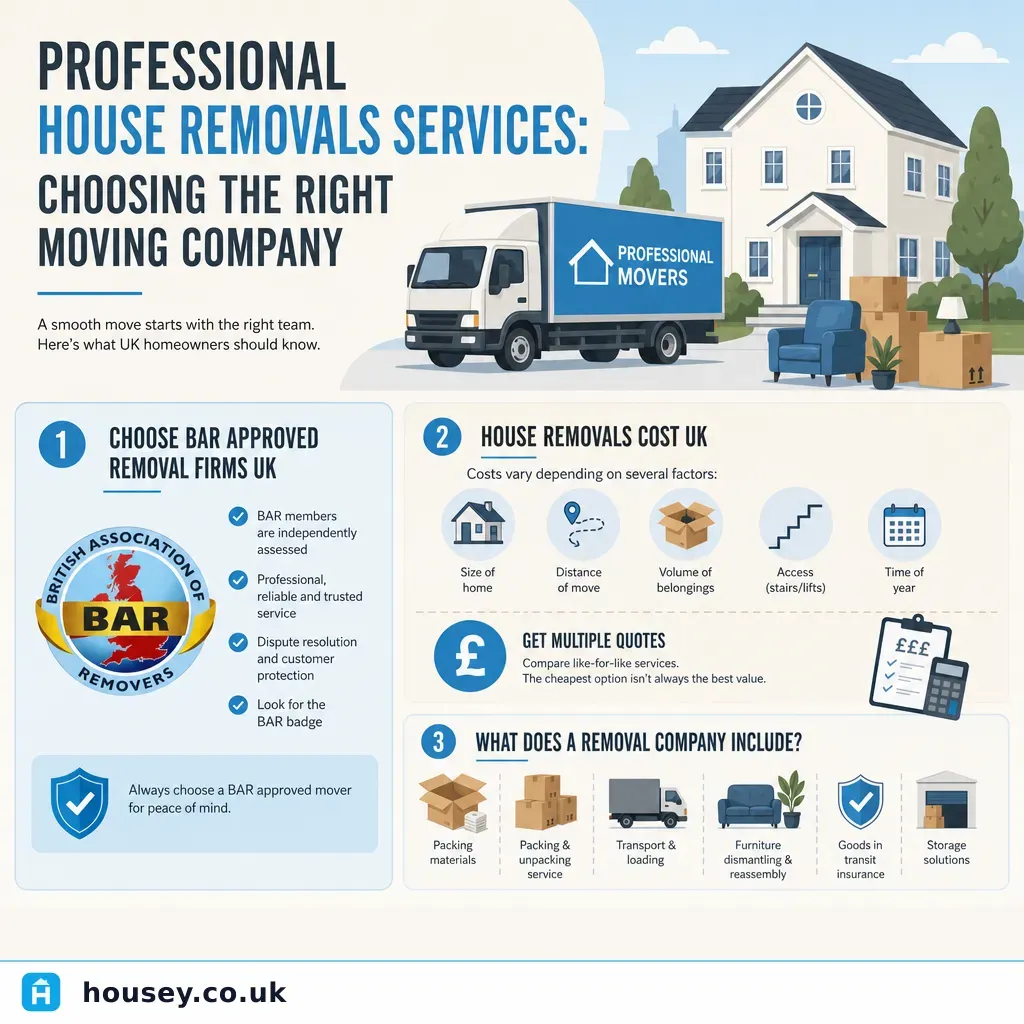
Professional House Removals Services: Choosing the Right Moving Company
A professional house removals company handles loading, transport, and unloading; full-service firms with BAR membership also offer deposit protection and independent dispute resolution.
 Buying & Moving
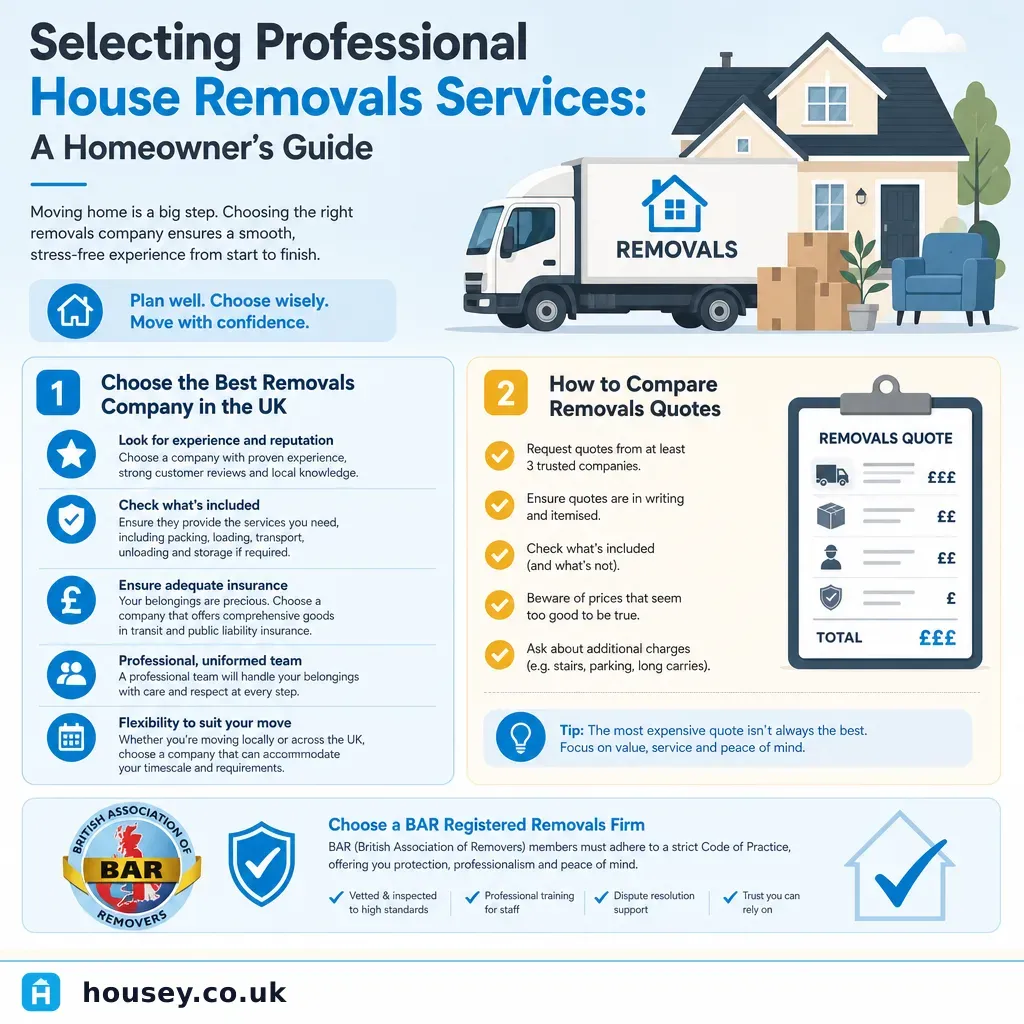
Selecting Professional House Removals Services: A Homeowner's Guide
Choose a removals firm registered with the British Association of Removers (BAR), which carries out a pre-move survey before quoting and provides a written binding quotation with goods-in-transit insurance.
 Buying & Moving
Guide to Upsizing Your Home: Moving to a Larger Property
Upsizing involves selling your current home and buying a larger one, often within a property chain.
 Buying & Moving
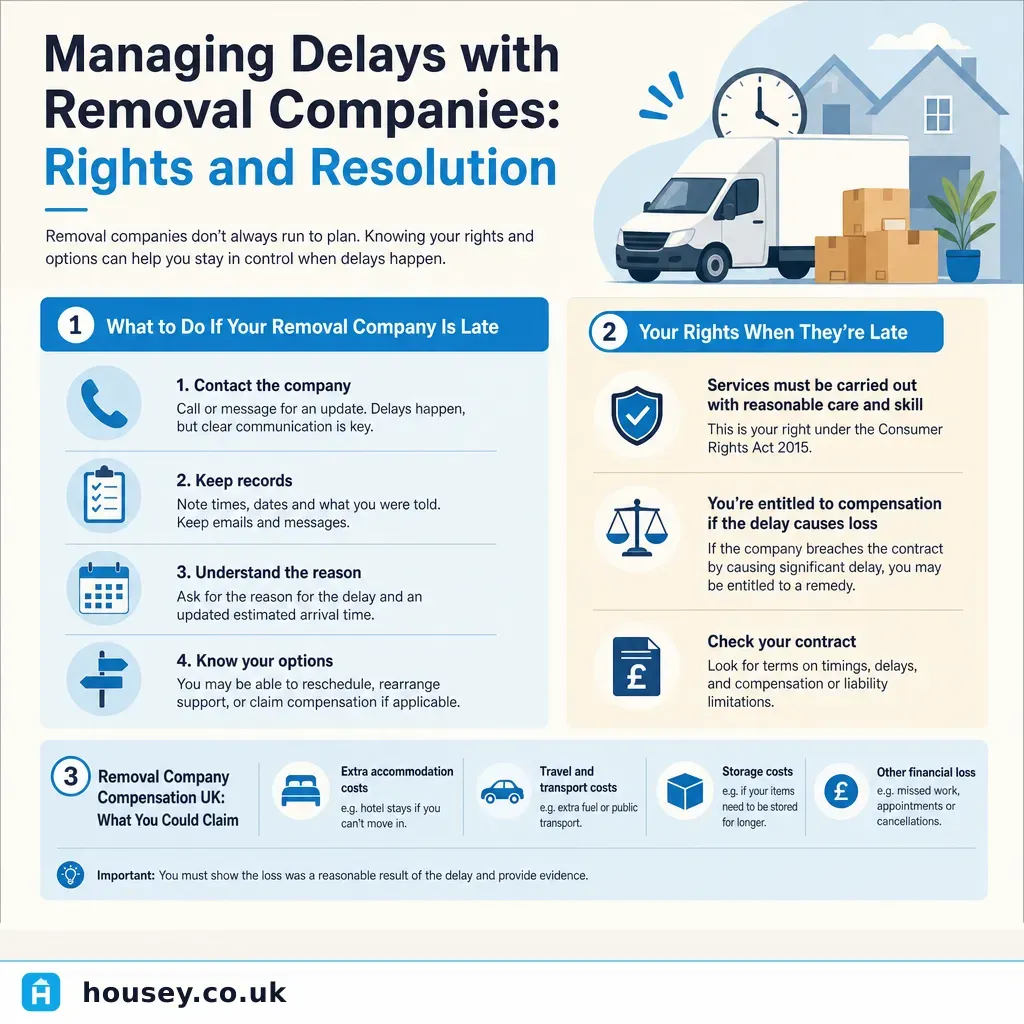
Managing Delays with Removal Companies: Rights and Resolution
If a removal company is late, your rights depend on your contract and whether the company is BAR-registered.
 Buying & Moving
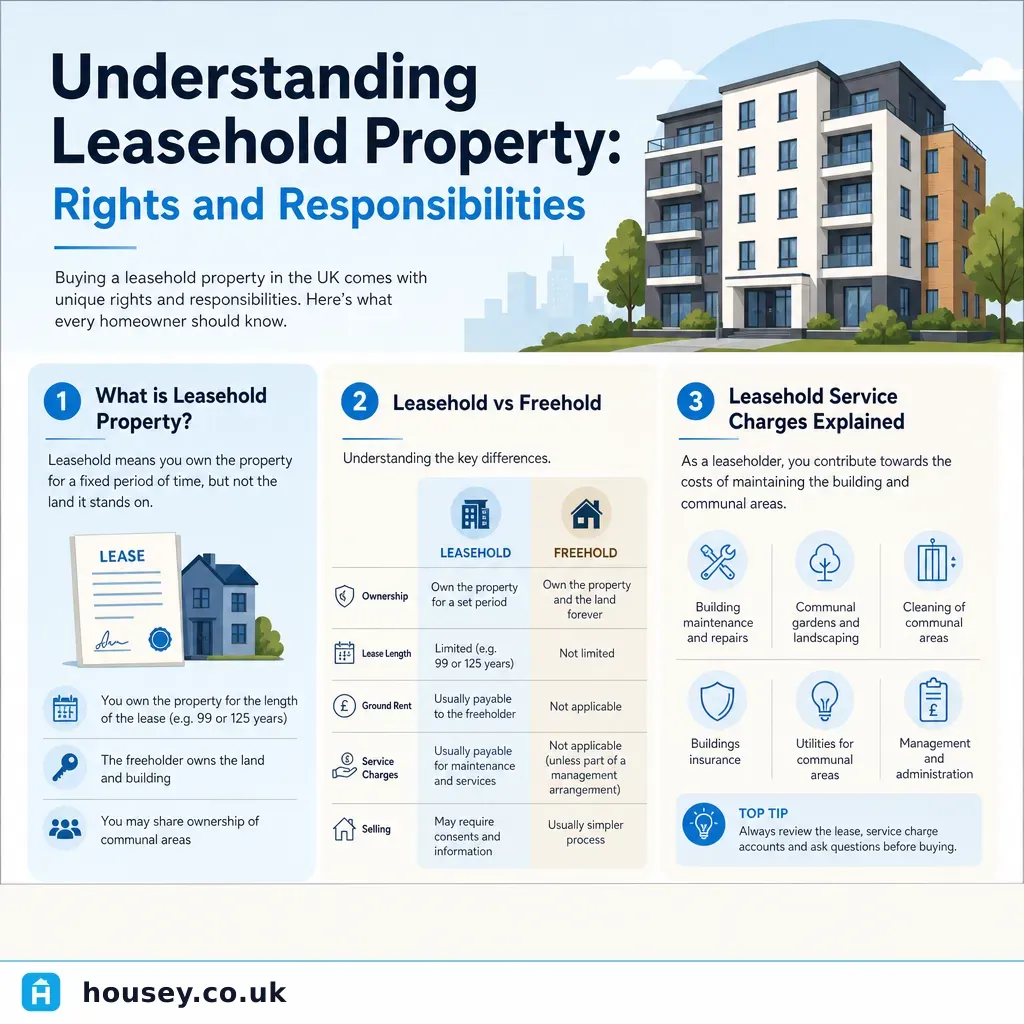
Understanding Leasehold Property: Rights and Responsibilities
Leasehold means you own a time-limited interest in a property while the freeholder owns the land and building.