Guide to Upsizing Your Home: Moving to a Larger Property
By Housey · Last reviewed 8th of May 2026
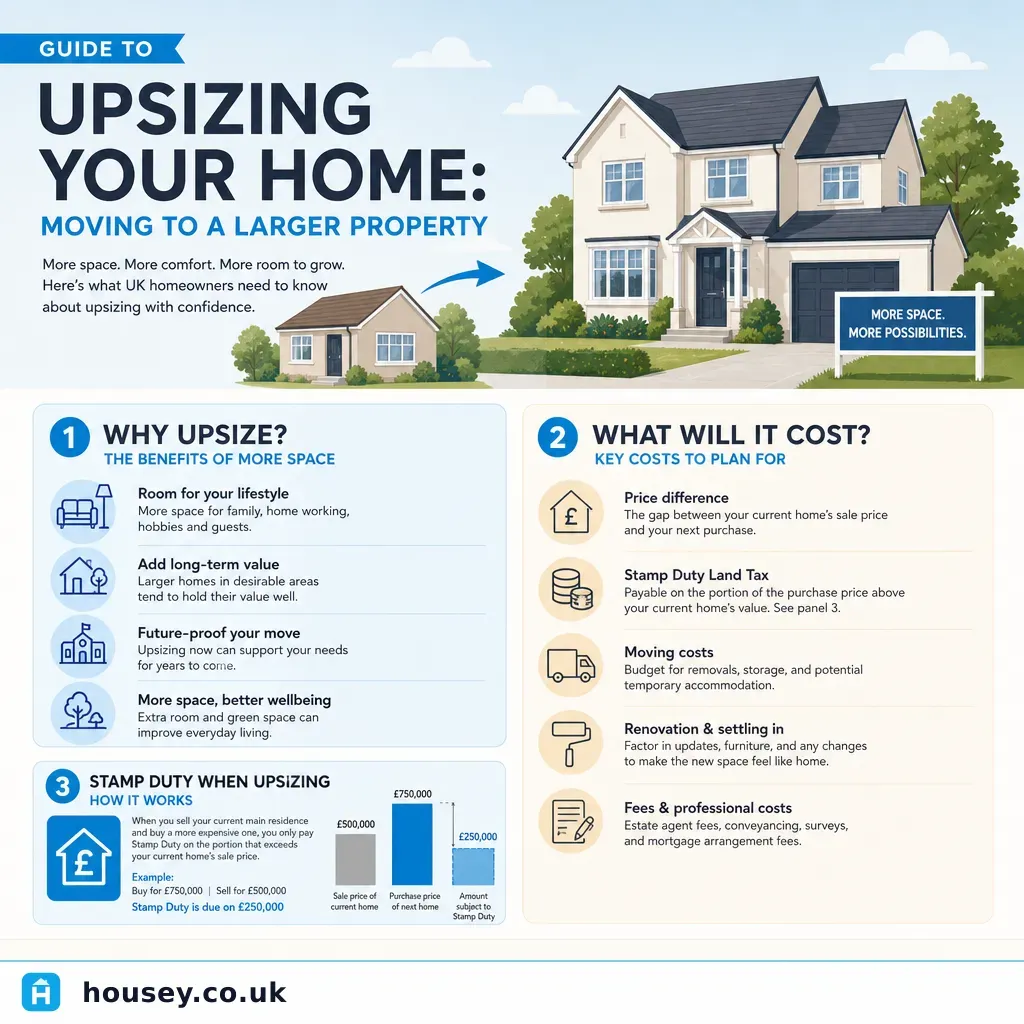
Guide to Upsizing Your Home: Moving to a Larger Property
Upsizing typically happens at a turning point — a growing family, a change in working patterns, or simply outgrowing a space that once felt right. In England and Wales, upsizing usually means managing a sale and a purchase simultaneously, often within a chain, which brings financial, legal, and logistical pressures that a single purchase does not.
Key points
- Stamp Duty Land Tax (SDLT) in England applies to the full purchase price above relevant thresholds; if you own your existing home on completion day for the new purchase, a 3% surcharge applies — refundable from HMRC if you sell your old home within three years of the new completion.
- Most high-street lenders cap residential mortgage lending at 4–4.5× combined household income; a whole-of-market broker can identify lenders with higher income multiples for eligible borrowers.
- A RICS Level 2 or Level 3 Home Survey should be commissioned before exchange of contracts; older, larger, or substantially altered properties warrant the more detailed Level 3 building survey.
- Selling agent fees in England typically range from 1% to 3% of the sale price plus VAT; sole-agency agreements are usually cheaper than multi-agency contracts.
- A simultaneous sale and purchase in a chain commonly takes 10–16 weeks from offer accepted to completion in England and Wales, though complex chains can run considerably longer.
Is now the right time to upsize?
Before committing to a move, it is worth separating emotional readiness from financial readiness. The two do not always align.
Decision tree: should you upsize now?
- Proceed if you have at least 10% equity deposit available after repaying your current mortgage from sale proceeds, your combined income comfortably supports the new mortgage, and you have three to six months of living costs in reserve.
- Consider waiting if your current property has been on the market for more than 12 weeks without a serious offer, you are within the first two years of a fixed-rate mortgage deal (early repayment charges may apply), or the price gap between what you can sell for and what you want to buy is wider than you can comfortably bridge.
- Ask a mortgage broker if you are uncertain whether you qualify for the amount you need, or if you have variable income — for example if you are self-employed, a contractor, or commission-based.
- Check with your solicitor if your current property is leasehold with fewer than 80 years remaining on the lease, as this affects saleability and could complicate or delay your chain.
Understanding the costs of upsizing
Upsizing involves considerably more than the headline purchase price. Below is a summary of the main items to budget for before making an offer.
Cost item | Indicative range | Notes |
|---|---|---|
SDLT (England, replacing main residence) | £0–£13,750+ | Depends on purchase price; use GOV.UK SDLT calculator |
SDLT 3% surcharge (owning both homes at completion) | 3% of full purchase price | Refundable if old home sold within 3 years of completion |
Selling agent fee | 1%–3% + VAT | Based on sale price; negotiate before signing instruction |
Mortgage arrangement fee | £0–£2,000 | Some fee-free deals carry a higher interest rate |
Conveyancing (sale + purchase combined) | £1,500–£4,000+ | Varies by property value and transaction complexity |
RICS Home Survey (Level 2 or Level 3) | £500–£1,500+ | Level 3 recommended for older or larger properties |
Removal costs | £800–£3,500+ | Depends on volume, distance, and service level |
Post redirect, utility transfers, and storage | £100–£500+ | Often underestimated in the overall moving budget |
Indicative UK costs, last reviewed 2026-05-08. Obtain written quotes for all services; costs vary significantly by location and property type.
How upsizing affects your mortgage
Your existing mortgage is typically repaid from the sale proceeds of your current home at completion. You then apply for a new mortgage on the larger property. There are several practical considerations.
Porting your mortgage: Many mortgage products are portable, meaning you can transfer the existing deal to the new property and top up the balance with additional borrowing — potentially at a different rate. Check your lender's portability terms before committing, and factor in any product end-date deadline.
Remortgaging or switching lender: If your current rate is nearing its end, or a more competitive deal is available elsewhere, a whole-of-market broker can compare options across lenders not available directly to the public.
Bridging finance: If you find the property you want before your current home is sold, short-term bridging finance can in principle bridge the gap — but it is expensive (monthly rates typically 0.5%–1.5%) and only appropriate when you have high confidence in a swift sale. Take independent financial advice before using bridging finance.
Selling your current home: what affects the price
The price you achieve on your current property directly determines what you can afford to spend on the next one.
Professional professional property photography and floorplans consistently improve online listing performance on portals such as Rightmove and Zoopla. For properties where room layouts or outdoor space are a selling point, high-quality images and an accurate scaled floorplan help buyers picture the space before requesting a viewing.
A pre-sale valuation survey helps you price accurately and avoids the common trap of overpricing, which leads to reductions and extended time on the market — both of which can unsettle prospective buyers and weaken your negotiating position.
Worked example: upsizing from a 1990s semi to a Victorian terrace
This is an illustrative scenario only, not based on a real transaction.
Situation: A couple in Sheffield currently own a 1990s three-bedroom semi valued at £230,000, with an outstanding mortgage of £110,000. They have found a four-bedroom Victorian terrace for £340,000.
Financial position:
- Estimated net sale proceeds: approximately £118,000 (after agent fees of around £2,000 and legal costs of around £1,200)
- Funds available for deposit: approximately £105,000 after SDLT and other purchase costs — around 31% of the £340,000 purchase price
- Mortgage required: approximately £235,000
- At 4.5× income, the couple need combined household income of at least £52,200
Survey choice: The Victorian terrace is pre-1919, solid-walled, and has a rear extension. A RICS Level 3 Home Survey is appropriate given the property's age, construction type, and visible alterations.
Chain outlook: Their buyer is a first-time buyer with no chain below, and the vendor of the Victorian terrace has reserved a new-build with no chain above. This is a relatively short, clean chain — typically faster to complete than a longer one.
Upsizing readiness checklist
Work through this list before instructing an estate agent or making a formal offer on a new property.
When to get professional help
Upsizing is one of the most financially significant moves most households make. Seek professional input when:
- Your mortgage or cost calculations do not add up clearly — a mortgage broker or independent financial adviser can model scenarios across lenders and products.
- Your current property is leasehold with a short lease, has cladding or fire-safety issues, or has an unclear freehold position — instruct a solicitor specialising in residential conveyancing services before marketing your home.
- The property you want to buy has visible structural concerns, signs of damp, a large extension, or dates from before 1919 — commission a valuation survey before exchange of contracts.
- You need accurate room dimensions for furniture planning or a full property record — a measured building survey provides reliable dimensions to scale.
How Housey can help
Housey connects you with qualified local professionals across the full range of services involved in upsizing. Whether you need conveyancing services for a simultaneous sale and purchase, a valuation survey on the property you are buying, professional property photography and floorplans for your current home, or a measured building survey to confirm room dimensions, you can request quotes from vetted UK providers through Housey.
Frequently asked questions
Do I have to pay stamp duty if I am upsizing?
Yes. SDLT in England applies to the full purchase price above the relevant thresholds. If your old home has not been sold when you complete on the new one, a 3% surcharge applies to the full purchase price. You can reclaim this surcharge from HMRC if you sell your previous main residence within three years of the new completion. Scotland uses Land and Buildings Transaction Tax and Wales uses Land Transaction Tax — both have similar provisions for replacing a main residence.
Can I port my existing mortgage when upsizing?
Many mortgage products include a portability feature, allowing you to carry the existing interest rate to the new property and borrow additional funds on top. Not all lenders permit this, and the top-up borrowing is typically priced at a different rate. Check your existing lender's porting terms before accepting a new product elsewhere.
How long does upsizing take from start to finish?
From listing your current home to completing on the new one, most upsizing moves in England take four to nine months. This includes finding a buyer for your current property, finding a suitable property to buy, and completing the legal work in a chain. A short chain with motivated parties can move faster; a long or complicated chain often takes considerably longer.
Should I sell first or buy first when upsizing?
Selling first gives you certainty about your budget and removes the risk of owning two properties at the same time. Buying first avoids the need to move twice. Most upsizers prefer to be under offer on their current home before making an offer on a new property — this is also what most sellers and estate agents will expect.
What survey do I need for a larger or older property?
A RICS Level 2 Home Survey is generally appropriate for conventional properties in reasonable condition. A RICS Level 3 Home Survey is more suitable for properties built before 1919, those with significant extensions or alterations, properties showing signs of damp or structural movement, or any home that is large, unusual, or in a visibly poor state of repair.
Sources and further reading
- Stamp Duty Land Tax: overview — GOV.UK
- SDLT higher rates for residential properties — GOV.UK
- RICS home surveys consumer guide — RICS
- Buying a home: mortgages and costs — MoneyHelper (MaPS)
- Buying or selling a home — Citizens Advice
Useful next reads
 Buying & Moving
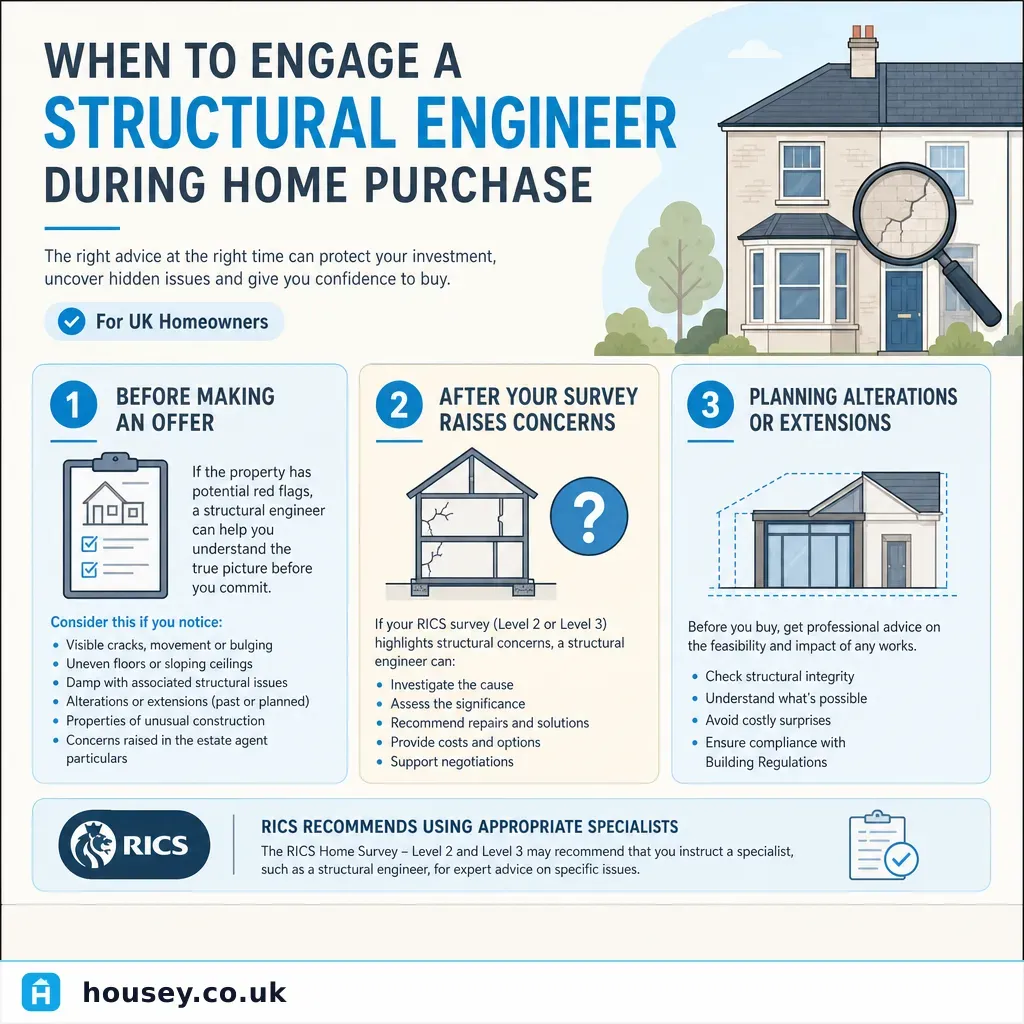
When to Engage a Structural Engineer During Home Purchase
Instruct a structural engineer before exchange if your RICS survey flags movement, cracking rated condition 3, or suspected subsidence.
 Buying & Moving
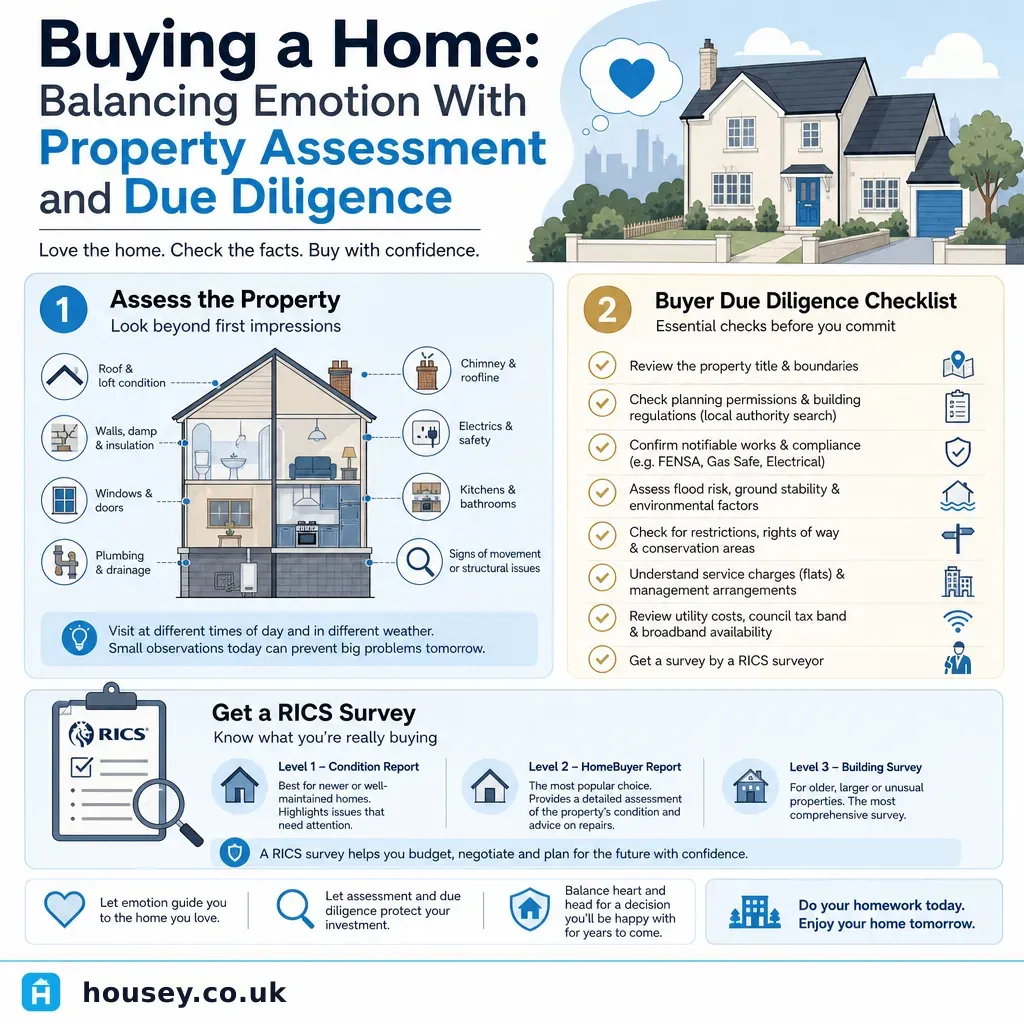
Buying a Home: Balancing Emotion With Property Assessment and Due Diligence
It's natural to feel strongly about a property, but buying decisions should be supported by a formal survey, proper searches, and independent legal advice.
 Buying & Moving
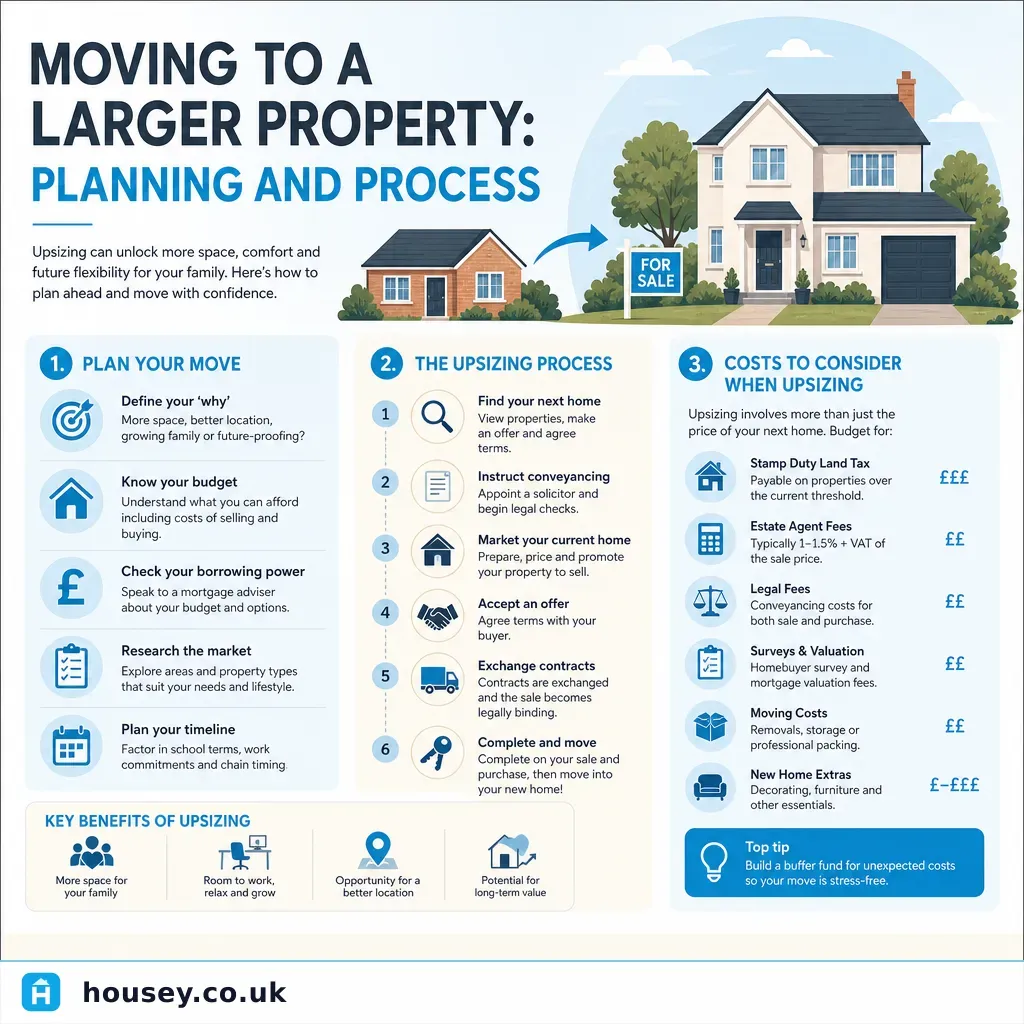
Moving to a Larger Property: Planning and Process
Moving to a larger property means coordinating two legal transactions simultaneously — selling your current home and buying a new one.
 Buying & Moving
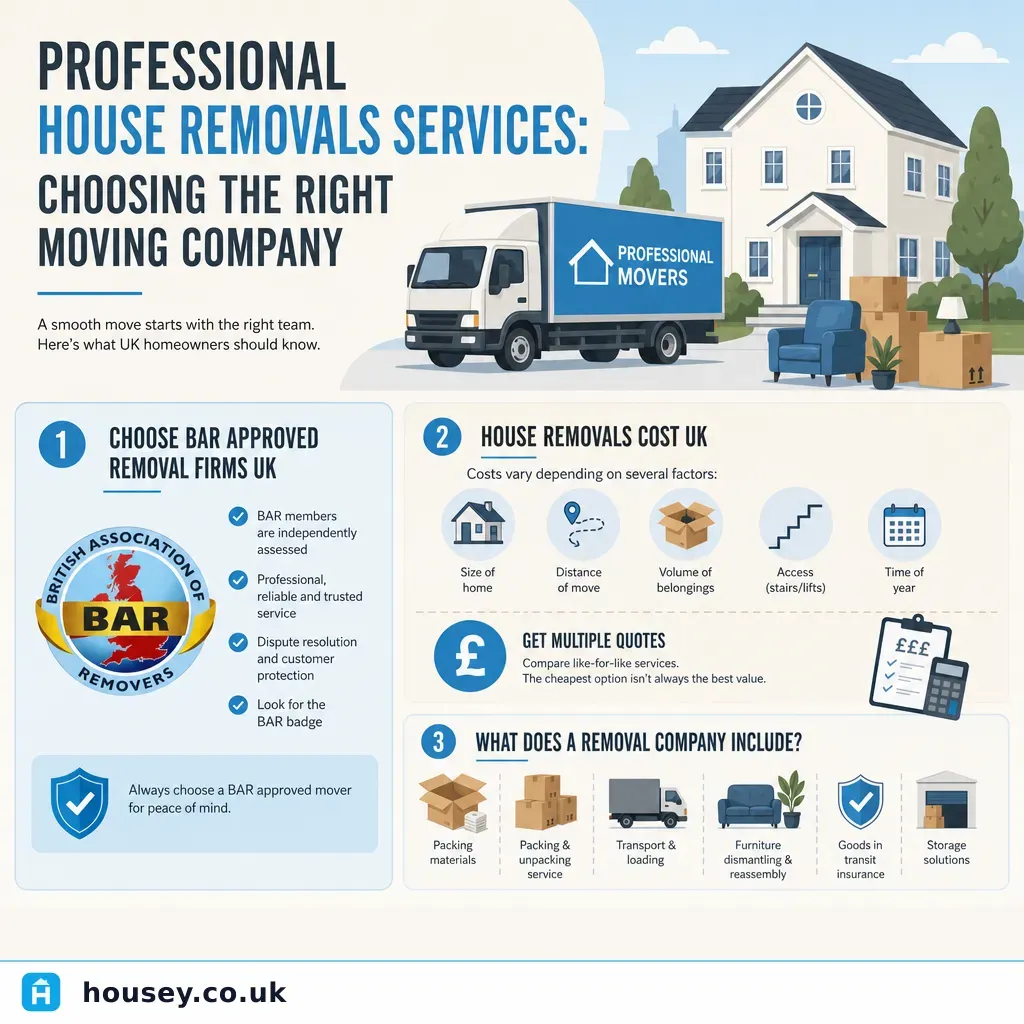
Professional House Removals Services: Choosing the Right Moving Company
A professional house removals company handles loading, transport, and unloading; full-service firms with BAR membership also offer deposit protection and independent dispute resolution.
 Buying & Moving
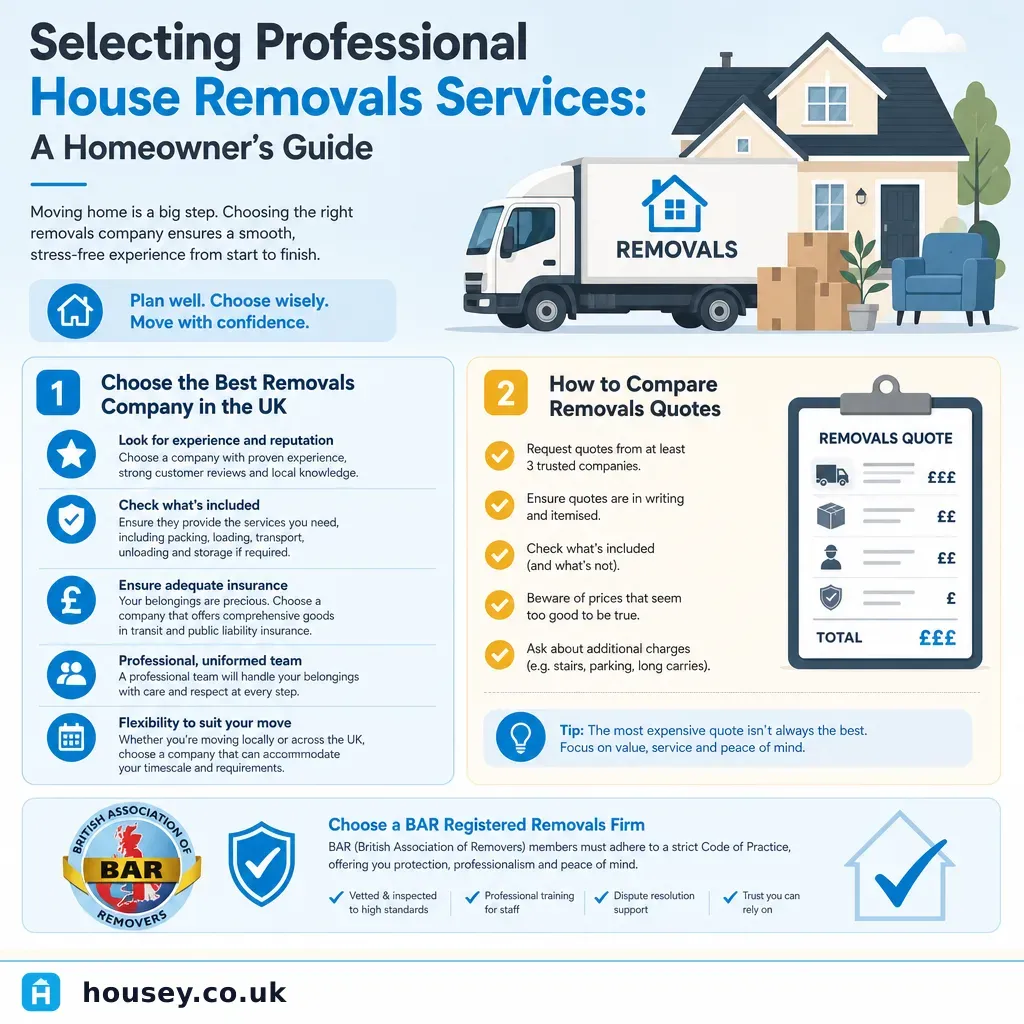
Selecting Professional House Removals Services: A Homeowner's Guide
Choose a removals firm registered with the British Association of Removers (BAR), which carries out a pre-move survey before quoting and provides a written binding quotation with goods-in-transit insurance.