Storage Solutions and Container Rental Options for House Moves
By Housey · Last reviewed 18th of May 2026
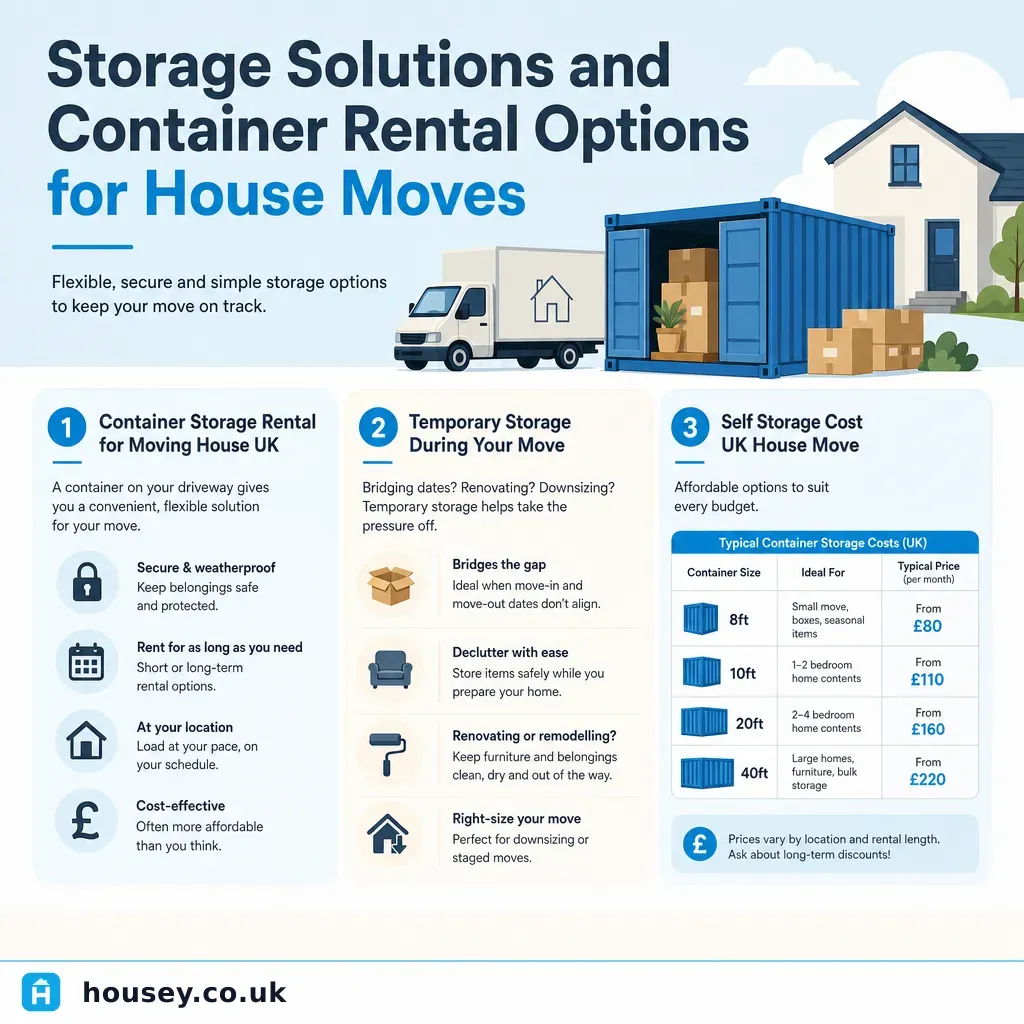
Storage Solutions and Container Rental Options for House Moves
The gap between vacating one property and gaining access to another is one of the most practically demanding moments in any UK house move. Completion date mismatches, phased renovation works, or downsizing before deciding what to keep can all create a need for temporary storage. Choosing the wrong type — or underestimating the volume of your belongings — adds avoidable cost and stress to an already complex process.
Key points
- Self-storage units in the UK are typically rented on a rolling monthly contract; standard 50–100 sq ft units cost approximately £20–£80 per week depending on location (Indicative UK costs, last reviewed 2026-05-18).
- Portable storage containers (pods or mobile vaults) are delivered to your door, loaded at your own pace, and collected for depot storage; prices typically start from £150–£400 per month for a standard unit (Indicative UK costs, last reviewed 2026-05-18).
- Most removal companies offer storage-in-transit: your belongings move into secure warehouse storage and are delivered to the new address when you are ready — useful for chain-based moves with short completion date gaps.
- Contents insurance during transit and in storage is not automatically included in removal or storage quotes; always confirm cover explicitly in writing before signing any agreement.
- The average UK house move takes approximately 8–12 weeks from offer accepted to completion; storage need is hardest to forecast when a chain is involved or when renovation delays the move-in date.
Types of storage available for UK house moves
Self-storage facilities
Self-storage units are fixed facilities — lockable rooms within a managed building — that you access yourself, typically seven days a week using a PIN or fob. Sizes are quoted in square feet: a 25 sq ft unit is roughly the size of a large wardrobe and suits a one-bed flat; a 75–100 sq ft unit suits most three-bedroom houses.
Self-storage is best for homeowners who need regular or ongoing access to their belongings, such as retrieving items in stages during a renovation. Watch out for minimum notice periods to vacate (typically two to four weeks), price increases after an initial promotional period, and whether the unit is climate-controlled — important for wooden furniture, electronics, vinyl records, and paper documents.
Portable storage containers and pods
Portable containers are delivered by lorry and left at your property for you to load at your own pace over hours or days. Once packed, the unit is collected and either stored at a depot or left at your new property. Some providers allow depot access to your container; others do not.
Portable pods are particularly useful for rural moves or when you want to avoid multiple loading trips. Before booking, confirm that a standard lorry can reach your road and property — narrow lanes, low bridges, and restricted on-street parking are common obstacles in older UK residential streets.
Removal company storage-in-transit
Most UK removal companies offer storage as part of their service. Your belongings are loaded onto the removal lorry, transferred into warehouse storage, and delivered to your new address when you are ready. This avoids double-handling — you do not need to load and unload a second time.
Storage-in-transit suits straightforward chain-based moves where the completion date gap is a few days to a few weeks. Be aware that access to individual items is usually not possible once in the warehouse. Confirm what happens to the price if the storage period runs longer than originally estimated.
Furniture storage warehouses
For high-value or climate-sensitive items — antiques, artwork, grand pianos, or leather furniture — specialist furniture storage warehouses offer individually wrapped, climate-controlled storage with condition reports on entry and exit. Access is by appointment and costs are higher, but the level of care and insurance is proportionately greater.
Storage type comparison
Storage type | Typical minimum term | Access to items | DIY loading | Best for | Watch out for |
|---|---|---|---|---|---|
Self-storage unit | Rolling weekly or monthly | Yes — 7 days a week | Yes | Long renovations, regular access needed | Notice period to vacate; price increases |
Portable container or pod | Monthly | Limited — usually at depot | Yes | Rural moves, flexible loading pace | Road and drive access requirements |
Removal company storage-in-transit | Days to weeks | Usually not available | No | Short chain gaps, full-service moves | Cannot retrieve individual items |
Furniture storage warehouse | Monthly | By appointment | No | Antiques, art, climate-sensitive items | Higher cost; appointment needed for access |
Indicative UK costs, last reviewed 2026-05-18.
How much storage space do you need?
Underestimating volume is one of the most common storage mistakes. As a rough guide:
- Studio or one-bed flat: 25–50 sq ft (or a small pod).
- Two-bed house: 50–75 sq ft.
- Three-bed house: 75–100 sq ft.
- Four-bed house: 100–150 sq ft, or two pods.
If you have a full loft, a garage, garden furniture, or large appliances to store, increase your estimate by 25–50%. When in doubt, book slightly more space — running out mid-move is far more disruptive than paying for a larger unit.
Homeowner checklist: planning storage for your move
What to ask before booking storage
- What is the minimum rental period, and what notice do I need to give to vacate?
- Is contents insurance included in the price, and to what value? What excess applies?
- Is the facility or unit climate-controlled?
- Can I access my belongings at any time, or only by appointment?
- Are there categories of item you will not accept in storage?
- What security measures are in place — CCTV, individual unit alarms, on-site staff?
- If my storage period needs to extend, how much notice do I need to give, and at what additional cost?
- Does the collection lorry have a tail lift, or do I need to arrange loading equipment separately?
When to get professional help
Storage for a house move is primarily a logistics question rather than a technical one. However, consider a specialist or full-service provider if:
- You are storing antiques, high-value art, or fragile items — specialist furniture storage offers climate control and condition reporting appropriate to their value.
- Your move involves an extended renovation period of six months or more — dedicated furniture storage warehouses may offer more competitive rates for longer terms than standard self-storage.
- You are moving as part of a probate or estate administration — a specialist removal and clearance company can handle inventory, storage, and staged clearance as a single managed service.
How Housey can help
Housey connects UK homeowners with vetted storage providers and house removal companies who can quote for combined removal-and-storage packages. Getting quotes through Housey means comparing itemised costs side-by-side and selecting a provider whose timeline and service level match your move.
Frequently asked questions
How long can I rent a self-storage unit for?
Most UK self-storage providers operate on a rolling contract billed weekly or monthly, with no fixed end date. You can typically vacate with two to four weeks' written notice. Some providers also offer short-term weekly rates suited to brief moves. Always read the notice clause in the contract before signing — it determines how much genuine flexibility you have if your moving date shifts.
Is my home contents insurance valid while my belongings are in storage?
Standard home contents policies vary considerably. Some extend cover to items temporarily stored off-site; others do not, or apply lower limits or higher excesses. Check your policy wording explicitly — do not assume cover applies. You may need a short-term storage extension or a standalone policy. Ask your storage or removal provider what cover is included in their service, and compare limits against the value of what you are storing.
What is the difference between self-storage and removal company storage?
Self-storage is a fixed facility where you rent a unit and have regular access to your belongings throughout the rental period. Removal company storage-in-transit is a managed warehouse service where your items are held in containers or on racking, and access is typically by appointment or not available until delivery to your new address. Self-storage offers more flexibility; removal company storage avoids loading and unloading items twice.
Can I store a vehicle in a self-storage facility?
Some UK self-storage facilities offer vehicle storage bays or external compounds for cars, vans, motorcycles, and caravans. These are separate from domestic units and priced differently. Availability varies by site, so check directly with the facility. Also confirm that your vehicle insurance remains valid while the vehicle is stored away from its declared home address.
Sources and further reading
- Self Storage Association UK: industry guidance and member directory — Self Storage Association UK
- Citizens Advice: moving house guidance — Citizens Advice
- Which?: removals and storage advice — Which? Ltd
- British Association of Removers: member standards and guidance — British Association of Removers
- GOV.UK: moving house — GOV.UK
Useful next reads
 Buying & Moving
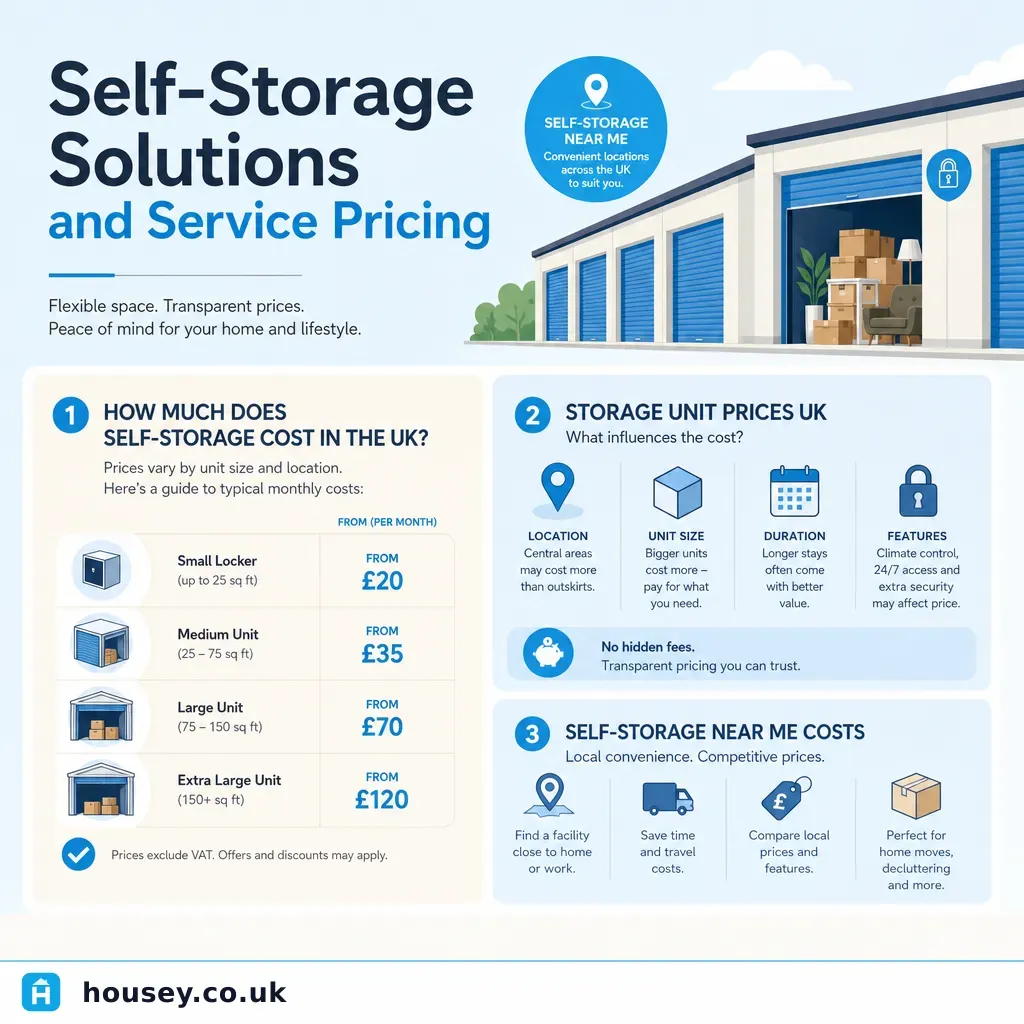
Self-Storage Solutions and Service Pricing
UK self-storage prices typically range from £8–£35 per week for small lockers to £80–£200 or more per week for large rooms in major cities.
 Buying & Moving
Choosing a House Removal Company: What to Look For
Choose a UK removal company that belongs to the British Association of Removers (BAR) or the Removals Industry Ombudsman Scheme (RIOS), carries goods-in-transit and public liability insurance, and provides a written quote after properly surveying your home.
 Buying & Moving
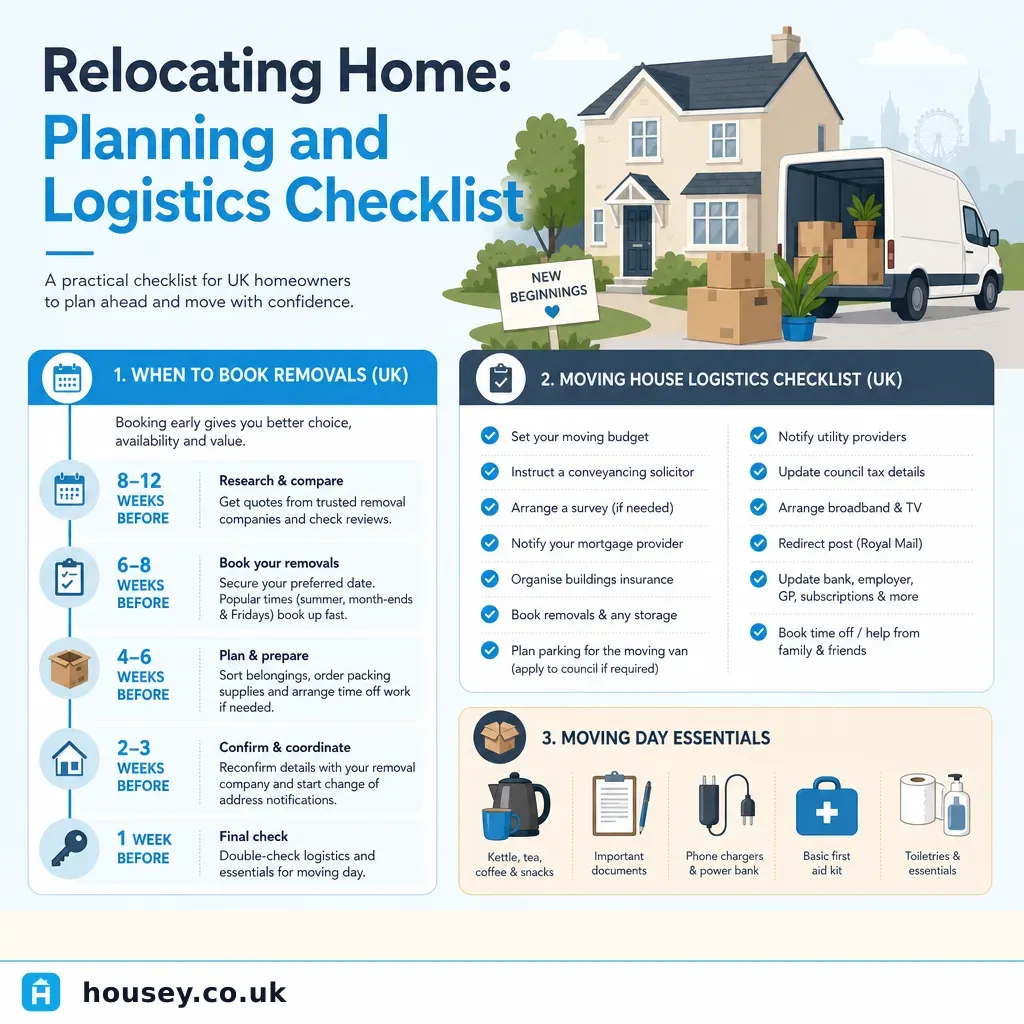
Relocating Home: Planning and Logistics Checklist
Successful home relocation in the UK typically requires 8–12 weeks of advance planning.
 Buying & Moving
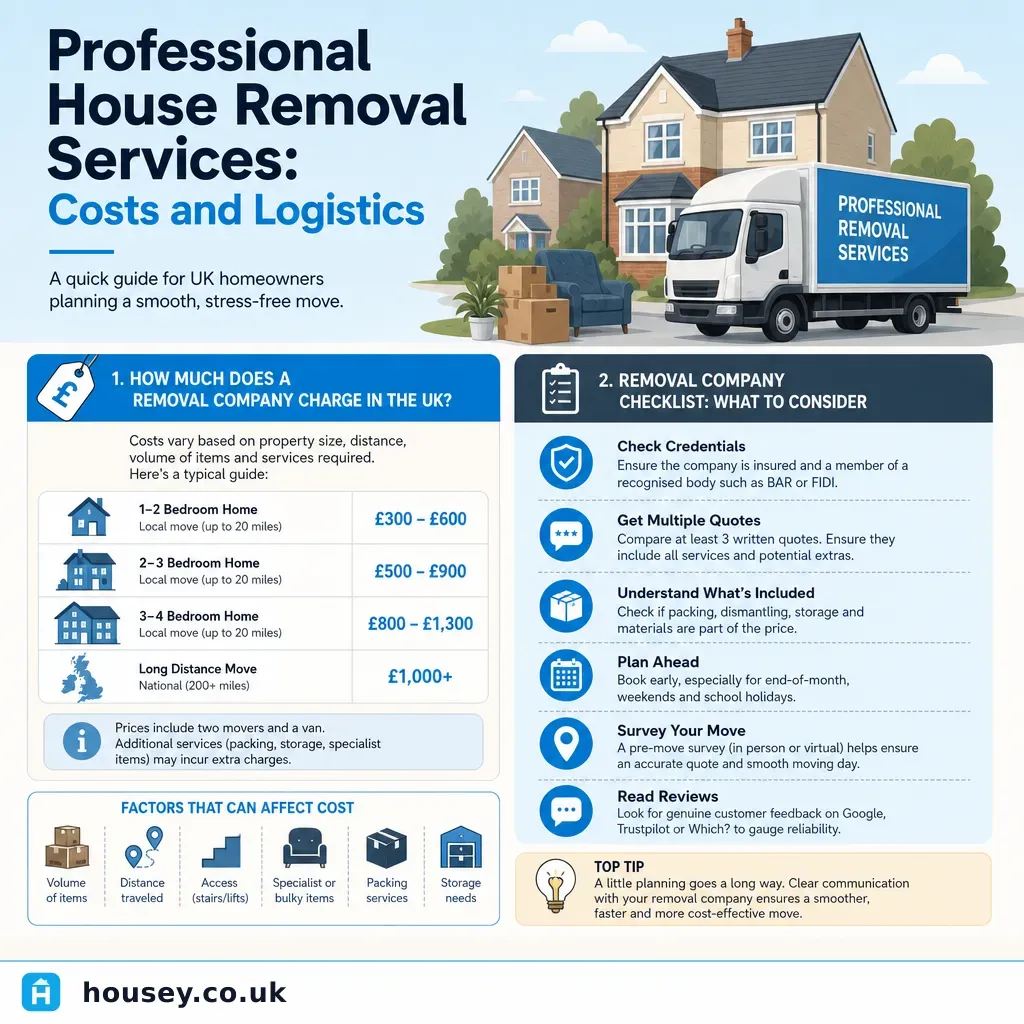
Professional House Removal Services: Costs and Logistics
Professional house removal services in the UK typically cost £800–£2,000 for a 3-bedroom local move, rising to £1,500–£4,000 for long-distance relocations.
 Buying & Moving
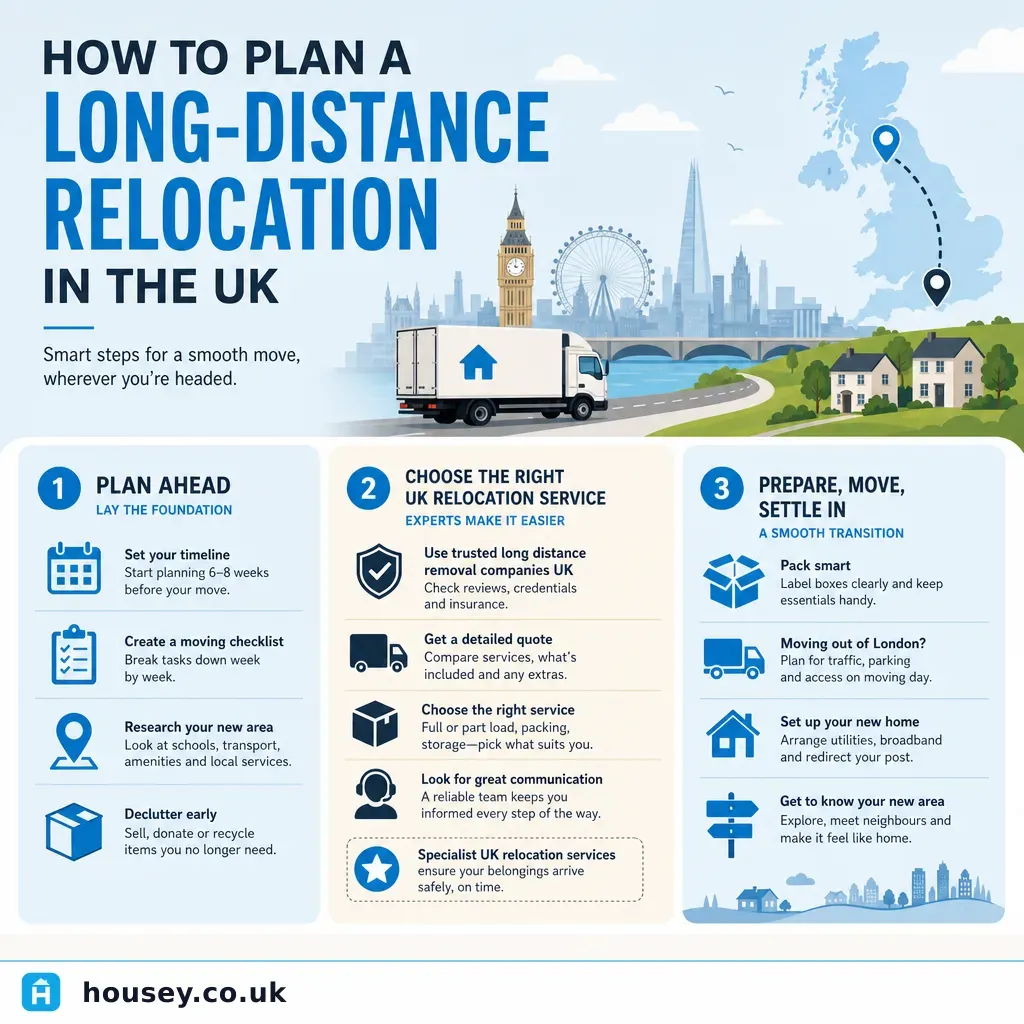
How to Plan a Long-Distance Relocation in the UK
A successful long-distance relocation in the UK involves coordinating removals, conveyancing, storage, and area research well in advance.