Understanding the Costs Involved in Your Property Transaction
By Housey · Last reviewed 18th of May 2026
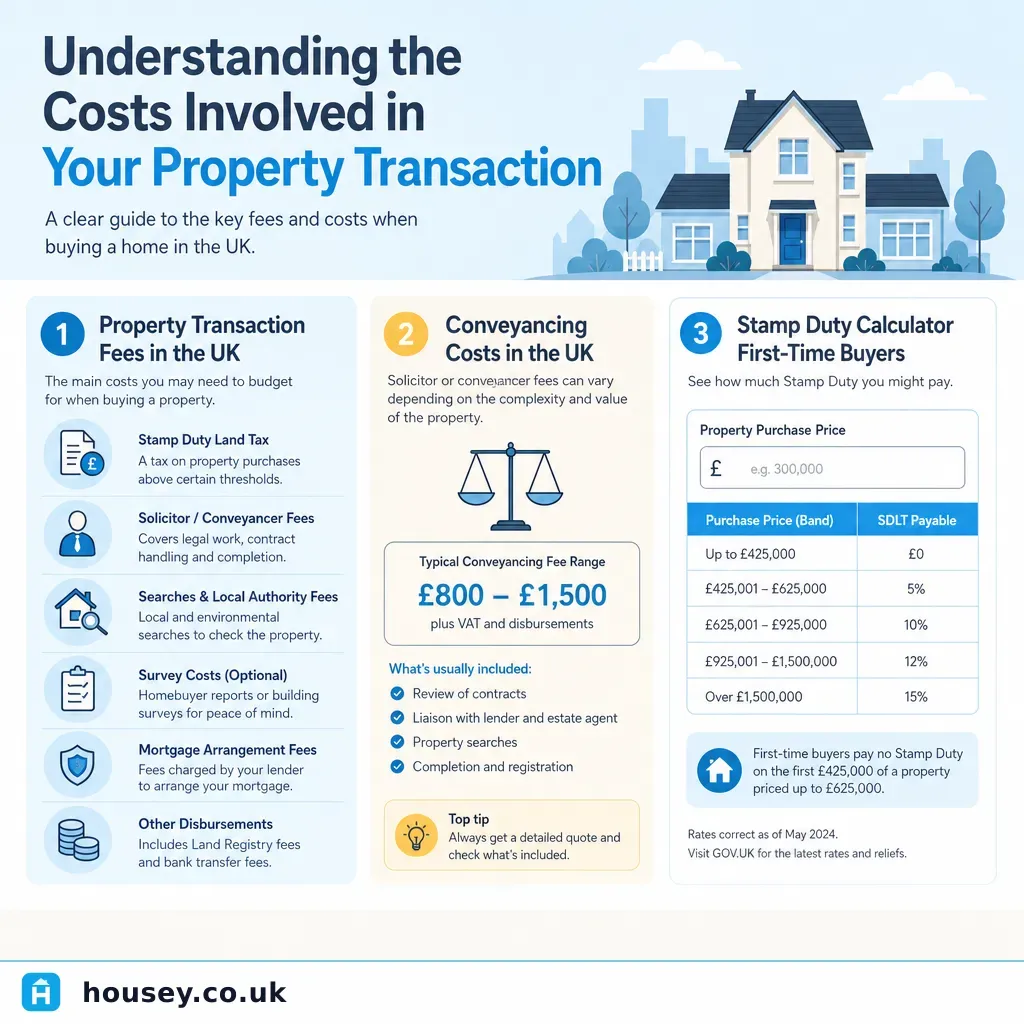
Understanding the Costs Involved in Your Property Transaction
First-time buyers and experienced movers alike are frequently caught out by the full cost of a property purchase in the UK. Beyond the headline price, a sequence of professional fees, statutory taxes, and practical expenses accumulates from the moment you make an offer — often not fully visible until exchange is imminent. Planning this budget from the outset, rather than piecemeal as invoices arrive, is one of the most effective steps any buyer can take.
Key points
- Stamp Duty Land Tax (SDLT) applies in England and Northern Ireland; first-time buyers pay no SDLT on the first £300,000 of a property costing up to £500,000, with the portion between £300,001 and £500,000 taxed at 5%.
- Conveyancing fees for a typical freehold purchase range from approximately £800 to £1,800 in professional fees alone; leasehold transactions attract additional disbursements that can add several hundred pounds.
- A RICS Level 2 Home Survey is strongly recommended for most conventional properties; a RICS Level 3 Building Survey provides greater detail for older, larger, or visibly defective homes.
- Lender arrangement and valuation fees can add £500 to £2,000 or more to mortgage-related costs before factoring in broker fees.
- Indicative removal costs for a three-bedroom house range from approximately £800 for a local move to £2,500 or more for a long-distance relocation; always obtain at least three written quotes.
The main cost categories
Stamp Duty Land Tax (SDLT)
SDLT is charged in England and Northern Ireland on properties above £125,000. The tax is banded:
Purchase price | Standard SDLT rate |
|---|---|
Up to £125,000 | 0% |
£125,001–£250,000 | 2% |
£250,001–£925,000 | 5% |
£925,001–£1.5m | 10% |
Above £1.5m | 12% |
First-time buyers pay no SDLT on the first £300,000 of a property costing up to £500,000; the portion between £300,001 and £500,000 is taxed at 5%. Properties above £500,000 do not qualify for first-time buyer relief.
Additional property buyers (second homes, buy-to-let) pay a 3% surcharge on top of standard SDLT rates.
Scotland uses Land and Buildings Transaction Tax (LBTT) and Wales uses Land Transaction Tax (LTT) — both operate separate rate schedules. Always use the HMRC SDLT calculator, or the relevant national calculator, to determine your specific liability before exchange.
SDLT rates are subject to change by HM Treasury. Rates shown are correct as of 2026-05-18.
Conveyancing and legal fees
Conveyancing is the legal process of transferring property ownership and is required for all freehold and leasehold purchases. Typical cost components for a purchase include:
- Solicitor or licensed conveyancer professional fee: £800–£1,800
- Land Registry registration fee: £20–£500 (scaled by property price)
- Local authority search: £50–£250 (varies by council)
- Water and drainage search: £30–£60
- Environmental search: £30–£50
- Electronic bank transfer (CHAPS) fee: £20–£40
- ID verification fees: £10–£30
For leasehold properties, expect additional charges: notice of transfer fees, deed of covenant fees, and certificate of compliance fees set by the freeholder or managing agent can add several hundred to over £1,000 on some transactions.
Indicative UK costs, last reviewed 2026-05-18. Quotes vary by firm, location, property type, and complexity.
Mortgage costs
If purchasing with a mortgage, budget for:
- Arrangement or product fee: £0–£2,000 (can often be added to the loan, but this increases total interest paid over the term)
- Mortgage valuation fee: £150–£500 (some lenders waive this)
- Mortgage broker fee: £0–£500 (many brokers charge no upfront fee; always confirm the basis of remuneration)
- Buildings insurance: required from exchange of contracts; annual premium varies widely by property type and insurer
Survey costs
A lender's mortgage valuation is not a survey — it protects the lender, not you. An independent survey commissioned before exchange is strongly recommended.
Survey type | Typical cost | Best for | Not ideal for |
|---|---|---|---|
RICS Level 1 Condition Report | £250–£400 | New-build or very recently built homes | Older or non-standard properties |
RICS Level 2 Home Survey | £400–£800 | Conventional homes in reasonable condition | Properties with visible defects or past alterations |
RICS Level 3 Building Survey | £600–£1,500+ | Older, larger, unusual, or visibly defective properties | Properties where Level 2 detail is sufficient |
Specific defect report (damp, structural) | £200–£600 | Where one issue needs specialist investigation | General overview of property condition |
Indicative UK costs, last reviewed 2026-05-18. Prices vary by property size, type, location, and surveying firm.
Removal and storage costs
Removal costs depend on distance, volume of contents, and services required such as packing, furniture dismantling, and storage.
Indicative costs for a three-bedroom house move:
- Local move (under 50 miles): £600–£1,200
- Medium distance (50–200 miles): £1,000–£2,000
- Long distance (200+ miles): £1,500–£3,000+
Storage between completion and moving in typically costs £50–£250 per week depending on volume and facility.
Indicative UK costs, last reviewed 2026-05-18. Always obtain at least three written quotes.
Other costs to budget for
- Estate agent fees (sellers): typically 1–3% of sale price plus VAT for sole agency; negotiated flat fees are also available
- Energy Performance Certificate (EPC): £50–£150; required for all properties sold or let
- Indemnity insurance: £20–£300+ for title, planning, or building regulation issues identified during conveyancing
- Mortgage early repayment charges: check your existing product before committing to a completion timeline
- Council tax from completion: budget for council tax on the new property from the completion date
Full cost checklist for buyers
What to ask before accepting a quote
When comparing conveyancers, surveyors, and removal companies:
- Is VAT included in the quoted fee?
- What disbursements (searches, Land Registry, bank transfer fees) are included, and what could be added later?
- What factors could change the price — complexity, leasehold elements, new-build warranty, or missing documents?
- What is your typical timescale and how do you communicate progress updates?
- What happens if the transaction falls through — which fees are refundable?
- Are you regulated by the Solicitors Regulation Authority (SRA) or the Council for Licensed Conveyancers (CLC)?
Important limitations
This guide provides general information about common property transaction costs in England and Wales. Actual costs and applicable rules vary by:
- Property tenure (freehold, leasehold, commonhold)
- UK nation (SDLT applies to England and Northern Ireland only)
- Property type, age, condition, and transaction complexity
- Individual lender, solicitor, and surveyor pricing policies
- Date of transaction (tax rates, thresholds, and fee schedules change)
This is general information, not financial or legal advice. Instruct a qualified solicitor or licensed conveyancer for your own transaction and seek independent mortgage advice regulated under the Financial Services and Markets Act 2000 before committing to any product.
What to ask a qualified professional
When instructing a conveyancer:
- Can you provide a fully itemised quote showing professional fees, all disbursements, and VAT?
- Are there leasehold complications or title issues that could affect the total cost or timeline?
- What are your SRA or CLC registration details, and are you covered by professional indemnity insurance?
When seeking mortgage advice:
- What is the total cost of credit over the full mortgage term, not just the monthly payment?
- Are there early repayment charges on this product, and how do they interact with my moving plans?
- Should I add the arrangement fee to the loan or pay it upfront?
When booking a survey:
- Which survey level is appropriate for this property's age, type, and condition?
- Will the surveyor attend the property in person, and what does the written report cover?
- If defects are found, what further specialist advice would you recommend?
When to get professional help
Property transactions involve binding legal commitments, large sums, and regulatory compliance obligations. Seek qualified advice if:
- You are uncertain about your SDLT liability — particularly if purchasing an additional property, buying as a company, or where mixed-use elements apply.
- The title report or search results identify issues such as rights of way, restrictive covenants, drainage agreements, or historical planning irregularities.
- You are buying a leasehold property and need to understand the implications of service charges, remaining lease length, and ground rent.
- A survey recommends a structural engineer's report or specialist defect investigation before you proceed.
- The property is in a flood-risk zone, on potentially contaminated land, or in a conservation area.
How Housey can help
Housey connects you with vetted professionals at every stage of your property transaction. Compare quotes from regulated conveyancers who provide transparent, itemised breakdowns of all fees before you instruct. Book an independent valuation survey to protect your position before exchange. When moving day comes, our verified house removal companies can provide competitive quotes tailored to your specific move.
Frequently asked questions
Do I pay stamp duty as a first-time buyer?
First-time buyers in England and Northern Ireland pay no SDLT on the first £300,000 of a property costing up to £500,000. The portion between £300,001 and £500,000 is taxed at 5%. Properties above £500,000 do not qualify for first-time buyer relief and standard rates apply. Scotland and Wales have separate first-time buyer relief schemes via LBTT and LTT respectively.
Can I negotiate conveyancing fees?
Yes, within reason. Conveyancers set their own professional fees and there is genuine variation in the market. Be cautious of unusually low headline quotes — check that all disbursements and VAT are included, and confirm the firm is regulated by the SRA or CLC. On a transaction involving hundreds of thousands of pounds, the cheapest option is rarely the best value.
What is the difference between a mortgage valuation and a survey?
A mortgage valuation is commissioned by the lender to confirm the property is adequate security for the loan. It protects the lender, not you, and may be a desk-based or drive-by assessment rather than a full in-person inspection. An independent RICS survey is carried out on your behalf, provides much greater detail, and can identify defects that affect your decision to proceed or the price you are willing to pay.
When do I need to pay stamp duty?
SDLT must be filed and paid within 14 days of completion. Your conveyancer typically calculates, files, and submits the SDLT return on your behalf as part of the conveyancing process, and this should be included as standard in their service. Always confirm this is included when you receive your initial quote.
Sources and further reading
- Stamp Duty Land Tax rates and thresholds — GOV.UK / HMRC
- HM Land Registry registration fees — HM Land Registry
- RICS Home Surveys — RICS
- Land and Buildings Transaction Tax — Revenue Scotland
- Land Transaction Tax guide — Welsh Revenue Authority
- Council for Licensed Conveyancers — CLC
Useful next reads
 Buying & Moving
Professional House Removal Services: Costs and Logistics
Professional house removal services in the UK typically cost £800–£2,000 for a 3-bedroom local move, rising to £1,500–£4,000 for long-distance relocations.
 Buying & Moving
Planning Your Home Removal: What to Expect from Professional Services
A professional removal company loads, transports, and unloads your household belongings between properties.
 Buying & Moving
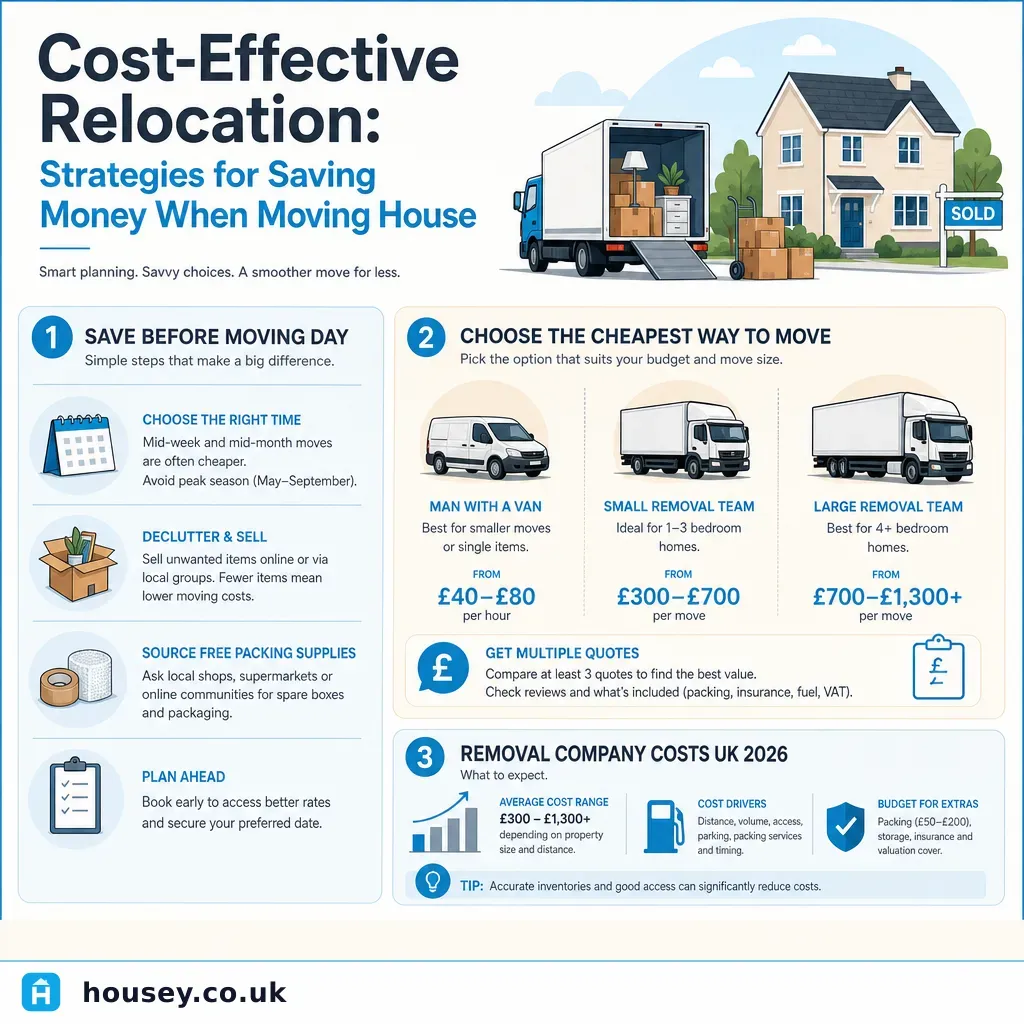
Cost-Effective Relocation: Strategies for Saving Money When Moving House
Moving house in the UK involves costs well beyond the removal van — stamp duty, conveyancing, surveys, and storage all add up.
 Buying & Moving
Stamp Duty Relief: Regional Variations and Tax Planning for Home Movers
Stamp duty in the UK depends on where the property is located.
 Buying & Moving
Avoiding Hidden Costs in Removals: What to Watch For
UK removal quotes often exclude packing materials, dismantling fees, parking surcharges, waiting time charges, and VAT from headline prices.