Preparing Your Trees for Spring: Seasonal Care and Maintenance Tips
By Housey · Last reviewed 7th of May 2026
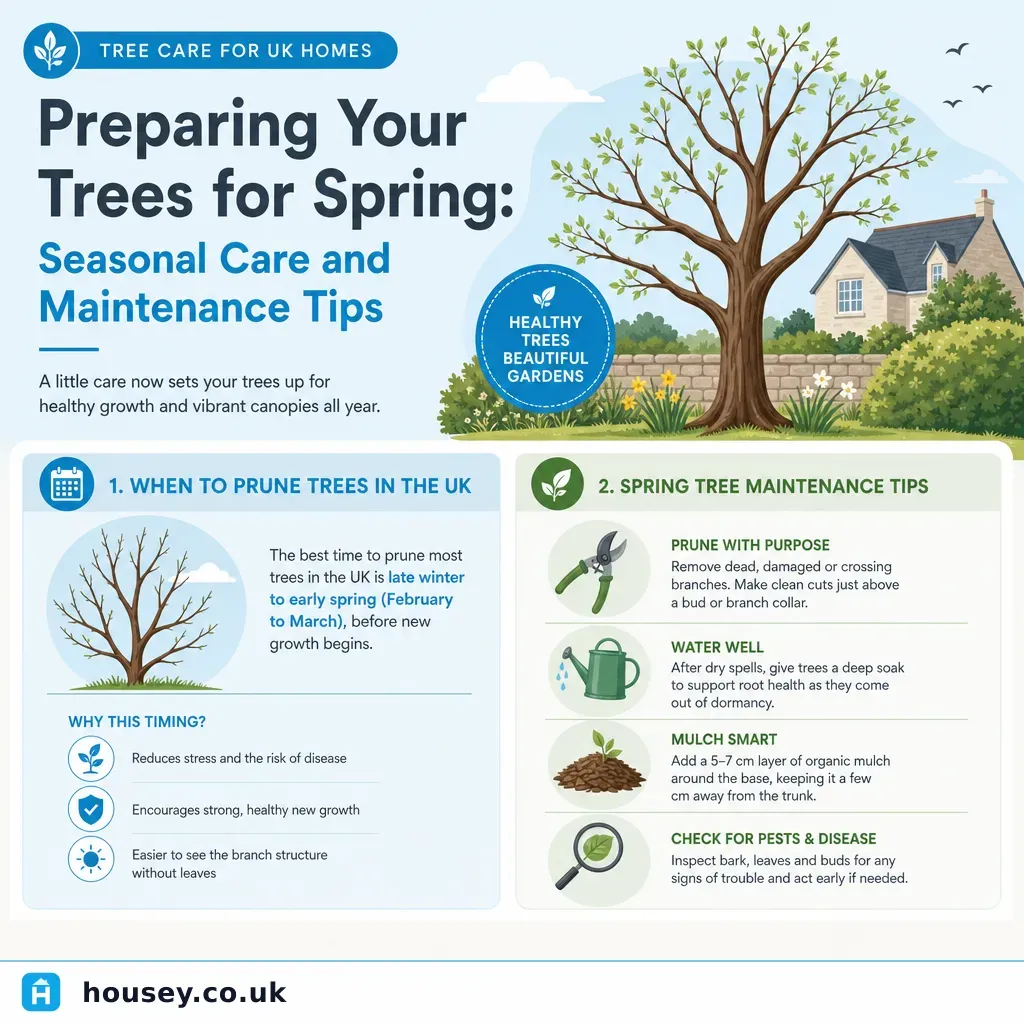
Preparing Your Trees for Spring: Seasonal Care and Maintenance Tips
Spring is one of the most active periods in a tree's annual cycle, when dormant growth resumes, structural weaknesses from winter storms become visible, and conditions are ideal for tackling certain management tasks before canopy closure. For UK homeowners with mature trees in their garden — or on their boundary — decisions made between February and April can affect a tree's health, safety, and appearance for years. Understanding what should happen when, and who should do it, helps you act at the right moment rather than react to a problem.
Key points
- The Wildlife and Countryside Act 1981 makes it a criminal offence to disturb or destroy an active bird nest: avoid pruning between March and August unless a qualified arborist has confirmed nests are absent.
- Trees subject to a Tree Preservation Order (TPO) require prior written consent from your local planning authority before any pruning, felling, or significant work — penalties include unlimited fines under the Town and Country Planning Act 1990.
- Trees in conservation areas are also protected: you must give six weeks' written notice to your local planning authority before undertaking most works.
- Working at height above 2 metres carries significant injury risk and should only be carried out by a trained arborist with appropriate personal protective equipment.
- Late winter to early spring (January to March) is generally the preferred window for structural pruning of most broadleaf trees, before sap rise and bud break.
What spring reveals about your trees
After winter leaf fall, a deciduous tree's bare canopy provides a clear picture of its structure. Spring growth then reveals how well the tree is performing: vigorous new leaf coverage, even canopy density, and the absence of dead wood are positive signs. Spring is also often when homeowners first notice problems that developed over winter — split limbs, fungal brackets at the base, or sections of canopy failing to come into leaf.
Common signs that warrant closer assessment in spring:
- Crown dieback: sections of canopy that fail to produce leaves when neighbouring branches are leafing out
- Deadwood accumulation: dry, brittle, barkless branches visible once the canopy begins to fill
- Fungal bodies or brackets: at the base or on the trunk, indicating fungal decay and possible structural instability
- Leaning or shifted root zone: heave, subsidence, or visible root damage following a wet winter
- Co-dominant stems with included bark: competing stems at tight angles that may split under load
Any of these signs suggests a professional arboricultural assessment before routine maintenance work begins.
Spring pruning: timing and what it affects
Pruning timing depends on species, the purpose of the cut, and the regulatory context.
Broadleaf trees
Most broadleaf species — oak, ash, beech, birch, lime — are best pruned from late autumn through to early spring while fully dormant or just before bud break. Pruning in this window reduces stress, limits the risk of fungal infection through fresh wounds, and avoids cutting out nascent growth.
Fruit trees
Apple and pear are generally pruned in winter or very early spring (January to March) when dormant, maximising the growth response in the coming season. Summer pruning after harvest is also practised to manage size and improve light to developing fruit.
Ornamental flowering trees
Cherry, magnolia, and other spring-flowering ornamentals should generally be pruned immediately after flowering — usually late spring or early summer. Pruning before flowering removes developing buds and reduces that season's display.
What to avoid in spring
- Pruning between March and August without a nest check: a breach of the Wildlife and Countryside Act 1981 (Section 1) is a criminal offence
- Heavy pruning of trees that are already drought-stressed or visibly diseased
- Flush cuts or stub cuts, which damage the branch collar and create entry points for decay
Decision tree: do you need a tree surgeon?
- Choose DIY maintenance if the work is below 2 metres, involves light pruning of small branches only, the tree has no TPO or conservation area restriction, and you have confirmed no nesting birds are present.
- Book a qualified tree surgeon if any branch to be removed is above 2 metres, has a diameter over approximately 50mm, or if the tree is a mature specimen with a defined crown structure.
- Seek arboricultural advice first if the tree shows signs of disease, fungal infection, significant deadwood, or structural concern — an assessment may change the scope of works.
- Check with your local planning authority if the tree is in a conservation area or you believe it may have a TPO; works without consent can result in prosecution.
- Check for nesting birds (or instruct an arborist to do so) before any pruning from March to August.
What to ask before instructing a tree surgeon
A qualified tree surgeon will be forthcoming with information, but it is worth asking directly:
- Are you a member of the Arboricultural Association or hold relevant qualifications (for example NPTC/LANTRA arboriculture units or City and Guilds 0891)?
- Do you carry public liability insurance, and what is the indemnity level?
- Is this tree subject to a TPO or conservation area protection, and will you assist with the consent application if needed?
- What will happen to arising material — chippings, logs, or green waste?
- Will you use climbing equipment, an aerial work platform, or ground-level work only?
- Can I have a written specification of the works before the job starts?
- Is VAT included in the quoted price?
Spring care beyond pruning
Mulching
Applying a 75–100mm layer of organic mulch in a ring around the base of the tree — keeping it clear of the trunk itself — in early spring helps retain moisture, moderate soil temperature, and suppress competing vegetation. This is particularly beneficial for recently planted trees.
New tree planting
The spring planting window for containerised trees runs from approximately March through to early summer as soil temperatures rise. Bare-root trees should ideally be planted between November and March while dormant. Trees planted in spring need supplementary watering through their first summer.
Checking stakes and ties
Staked trees planted in the last one to two years should be checked in spring. A tie left on too long can restrict growth and cause girdling. Stakes should generally be removed once the tree can support itself without assistance.
Red flags: when to stop and call a professional immediately
Certain conditions require urgent professional assessment rather than routine maintenance:
- A tree visibly leaning in a different direction than last season, particularly after a wet winter
- Large deadwood or hanging branches above a structure, path, or public highway
- Fungal brackets at the base or on the main stem of any mature tree
- Cracks or splits in the main stem or major scaffold branches
- Evidence of root severing from nearby construction or groundworks
- Any proposed work requiring access to a crown above 2 metres
In these situations, the potential risk of tree failure outweighs the cost of a professional assessment. An arborist can produce a risk assessment report and recommend a safe course of action.
When to get professional help
Most substantive tree work in a domestic garden should involve a qualified arborist: any work at height, any work on a tree with a TPO or in a conservation area, any tree showing signs of disease or structural defect, and any large-canopy specimen near a structure or boundary. Signs that professional help is needed immediately include overhanging deadwood above a path or play area, visible fungal brackets on the root zone or main stem, a tree that has shifted after winter storms, or any work required near overhead cables.
How Housey can help
If your trees need professional attention this spring, Housey can help you request quotes from qualified tree surgeons in your area. For broader garden preparation — including hedging, shrub management, and planting design — you can also request quotes from landscapers.
Frequently asked questions
When is the best time to prune trees in spring in the UK?
For most broadleaf trees, late winter to early spring — roughly January to March — is the optimal window while the tree is dormant or approaching bud break. This reduces stress and wound infection risk. Avoid pruning from March to August without confirming no nesting birds are present, as disturbing an active nest is a criminal offence under the Wildlife and Countryside Act 1981.
Do I need permission to prune a tree with a Tree Preservation Order?
Yes. You must apply to your local planning authority for prior written consent before pruning, felling, or carrying out significant works on a TPO tree. Carrying out works without consent can result in prosecution and an unlimited fine. Contact your council's tree officer; they can guide you through the application and advise on what works are likely to be approved.
How do I know if my tree needs professional attention in spring?
Look for sections of canopy failing to leaf out (crown dieback), visible deadwood or hanging branches, fungal brackets at the base or on the trunk, cracks in the main stem, and any leaning or root movement. Trees near structures, paths, or public highways showing these signs warrant urgent professional assessment before the growing season is fully underway.
Should I prune fruit trees differently in spring?
Apple and pear trees are generally pruned in winter or very early spring (January to March) while dormant, which encourages strong growth and good fruiting. Spring-flowering ornamentals such as cherry and magnolia should be left until after flowering — usually late spring or early summer — to avoid removing developing flower buds. Summer pruning after harvest also helps manage size in mature fruit trees.
Sources and further reading
- Wildlife and Countryside Act 1981 — legislation.gov.uk
- Tree Preservation Orders and trees in conservation areas — GOV.UK
- Arboricultural Association — Arboricultural Association
- RHS: trees and shrubs advice — Royal Horticultural Society
Useful next reads
 Improvement & Build
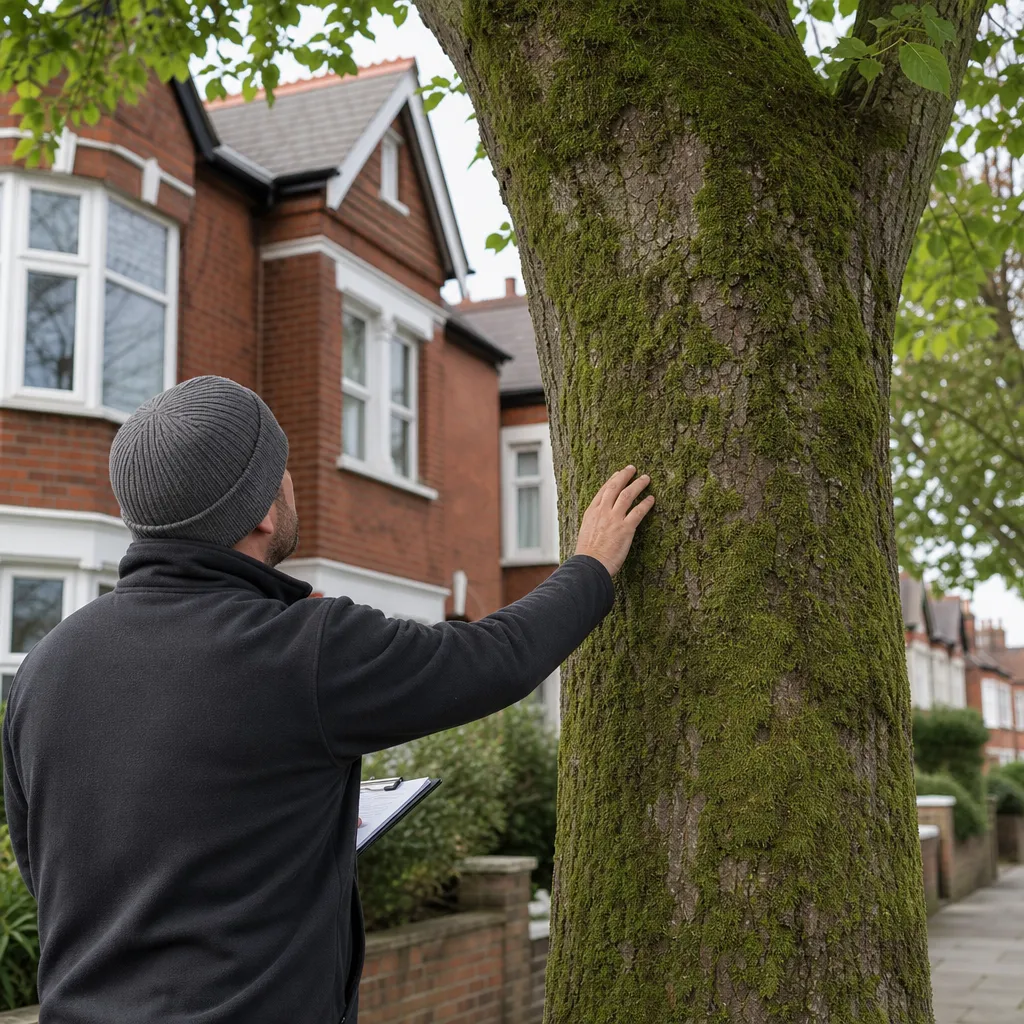
Moss on Trees: Causes, Identification, and Management
Moss growing on trees is usually harmless — it does not parasitise or feed on the tree.
 Improvement & Build
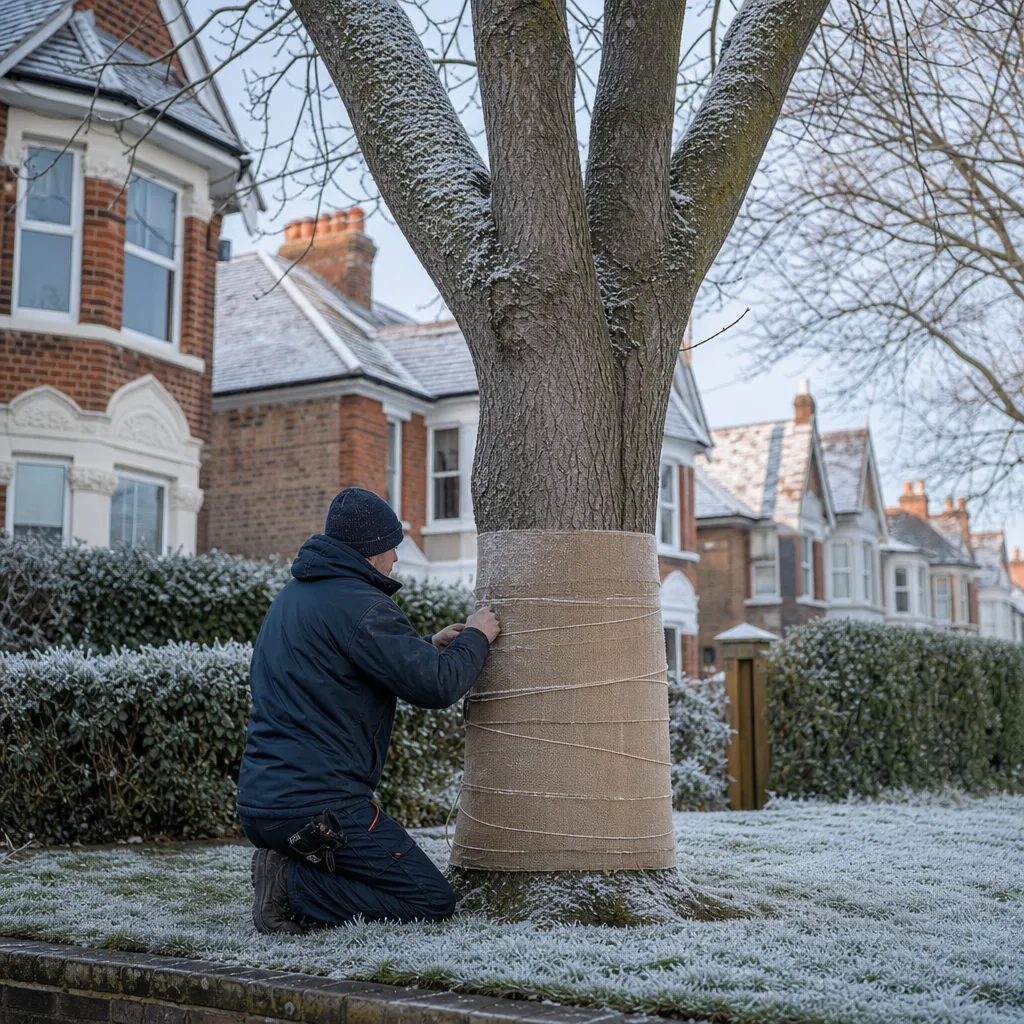
Winter Tree Protection: Safeguarding Trees from Frost and Freeze Damage
Protect trees from frost by mulching the root zone with 5–7 cm of composted bark, wrapping tender stems in horticultural fleece, and staking young trees to prevent root rock.
 Improvement & Build
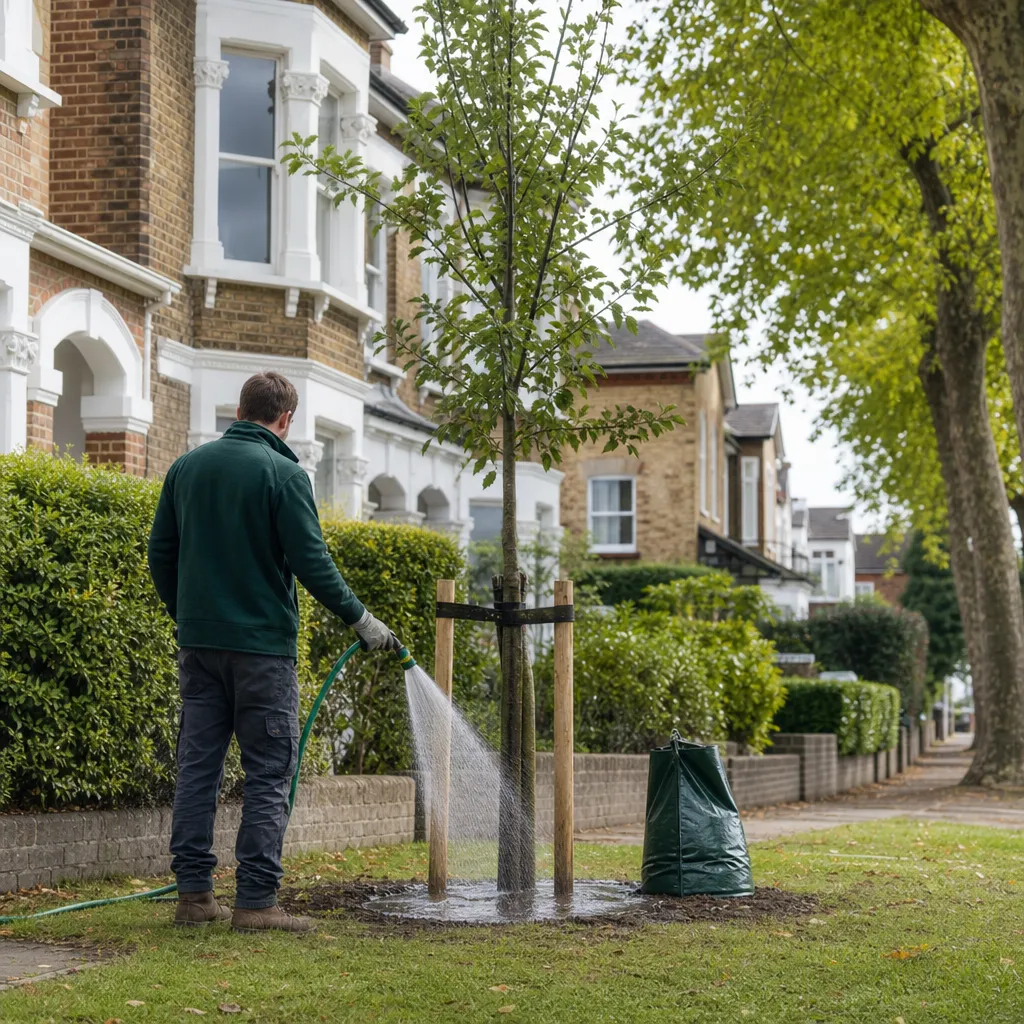
Watering Large Trees: Techniques and Frequency for Establishment
Newly planted large trees typically need 50–90 litres of water per week during the growing season for the first two to three years.
 Improvement & Build
Identifying and Addressing Dying Tree Branches: Common Causes
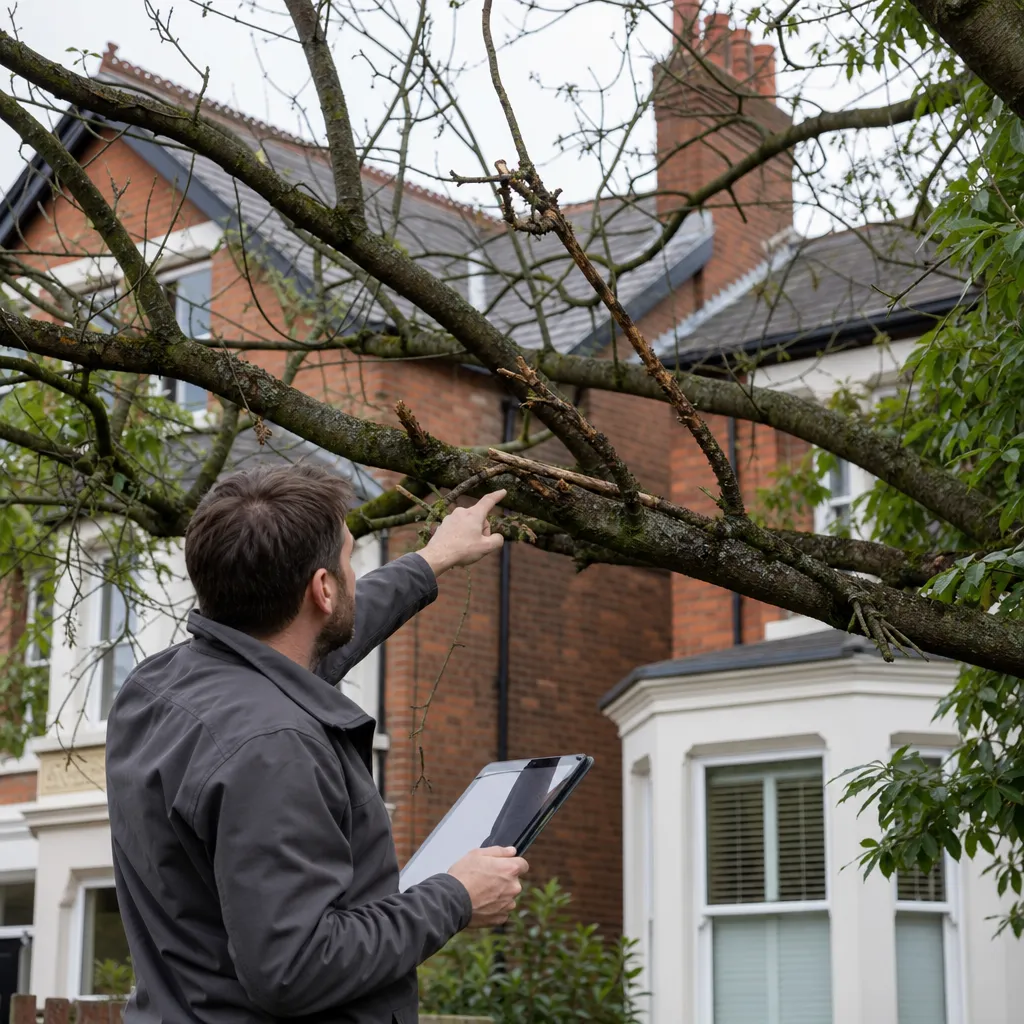
Dying branches on UK garden trees can result from fungal diseases such as ash dieback or honey fungus, pest damage, drought stress, physical injury, or root problems.
 Improvement & Build
Tree Assessment: Identifying Signs Your Property Needs Professional Tree Removal
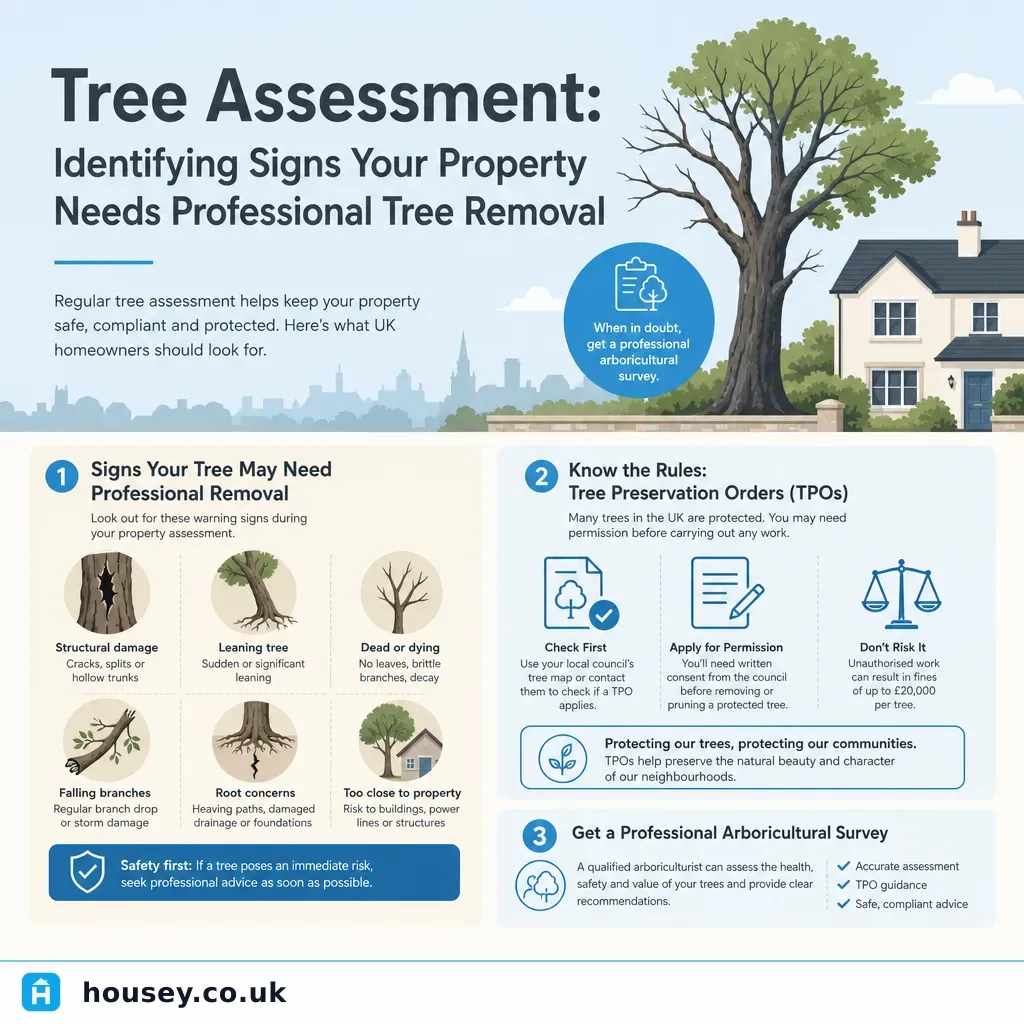
Key signs a tree may need professional removal include fungal brackets on the trunk, a sudden change in lean, dead or hanging branches, root heave, and visible cavities or decay.