Pond Dredging and Maintenance: Garden Water Feature Care
By Housey · Last reviewed 26th of May 2026
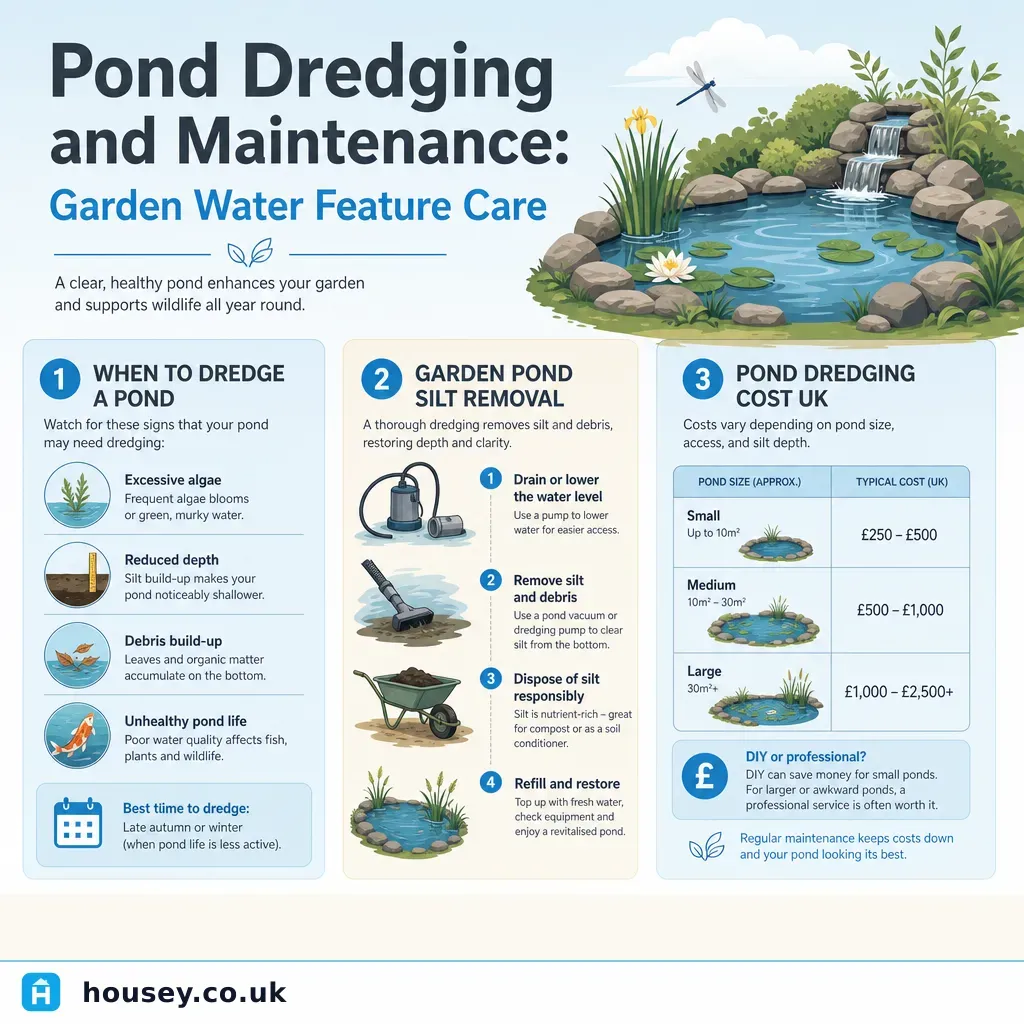
Pond Dredging and Maintenance: Garden Water Feature Care
Ponds gradually fill with silt, decaying plant matter, and leaf litter — a natural process that eventually reduces depth, depletes oxygen, and destabilises water quality. Whether you're managing a small ornamental feature in a 1930s semi-detached garden or a larger wildlife pond on a rural property, understanding when and how to dredge is essential for keeping the water healthy and visually appealing. For ponds close to a watercourse or stream, there are also legal considerations under UK water-management legislation that you'll need to check before work begins.
Key points
- Most garden ponds need dredging every 5–15 years, depending on size, plant density, and leaf fall from surrounding trees.
- The Environment Agency and Wildlife Trusts recommend late summer to early autumn (August–October) as the preferred window for pond works, when amphibians and aquatic invertebrates are least active.
- If your pond connects to a watercourse or is on a floodplain, you may need consent under the Environmental Permitting Regulations 2016 or the Land Drainage Act 1991 before removing sediment.
- Removing more than 50% of pond vegetation at once can trigger a sudden algal bloom; thin vegetation in stages across one or more seasons.
- Dredged silt is nutrient-rich; leave it piled beside the pond for 24–48 hours so invertebrates can return to the water before composting or disposing of it.
When does a pond need dredging?
A pond typically signals the need for dredging when water depth has reduced noticeably, vegetation has advanced across more than two-thirds of the surface, or the water turns persistently murky even after plant management. Silt accumulation at the base reduces the volume available for aquatic life and creates anaerobic conditions that release hydrogen sulphide — detectable as a rotten-egg smell when the sediment is disturbed.
Red flags: signs your pond needs dredging
- Visible silt depth of 15 cm or more on probing with a cane or rod
- Persistent algal blooms despite active plant management
- Strong sulphurous odour when the bottom is disturbed
- Frogs and newts absent in spring despite previous breeding activity
- Emergent plants such as reeds and rushes advancing across the surface year on year
- Water depth reduced to less than half the original designed depth
Signs that routine maintenance — not dredging — may be sufficient:
- Surface overgrowth by floating plants such as duckweed or blanket weed alone
- Slightly murky water during a hot summer spell, often manageable with oxygenating plants or barley straw extract
- A single season of reduced clarity following unusual leaf fall
DIY vs professional dredging: a comparison
Approach | Best for | Not ideal for | Typical tools | Key risk |
|---|---|---|---|---|
DIY by hand | Small ponds under 5 m², light silt volume | Large ponds, deep silt, poor access | Pond net, buckets, waders | Disturbing protected species such as great crested newts |
DIY with pond vacuum | Ponds up to ~15 m², light to moderate silt | Deep compacted silt; fragile fibreglass shells | Electric pond vacuum | Incomplete removal; missing deep sediment layers |
Professional dredging | Larger ponds, wildlife ponds, ponds near watercourses | Very small ornamental ponds where cost is not justified | Waders, pumps, mini-dredger, skip or spreader | Cost; requires equipment access to the site |
How to dredge a garden pond: process overview
Dredging does not mean completely emptying the pond. For most garden ponds, a partial dredge — removing silt and thinning vegetation while retaining some water and existing plant communities — causes less ecological disruption and is easier to manage.
- Check for protected species before starting. Great crested newts, water voles, and certain bat species associated with water are protected under the Wildlife and Countryside Act 1981. If you have recorded these species or your pond provides suitable habitat, consult Natural England or a licensed ecologist before proceeding.
- Time the work for late summer to early autumn (August–October), after amphibians have left the water and before temperatures cool significantly.
- Reduce the water level by approximately half using a pump or siphon to an accessible soakaway or watercourse.
- Remove excess vegetation in sections, leaving at least one-third of existing plant material undisturbed to retain invertebrate and plant communities.
- Dredge the silt using hand tools, a pond vacuum, or a pump with a dredging attachment. Work from one side to avoid disturbing the entire bed at once.
- Stack dredged material on the bank for 24–48 hours so aquatic invertebrates can make their way back to the pond before you move or compost the material.
- Refill gradually using a hose run slowly over a flat stone to avoid disturbing the pond bed. If topping up with tap water, allow it to dechlorinate before reintroducing fish or sensitive plants.
Legal considerations for UK pond owners
Most small ornamental garden ponds can be maintained without any permissions. However, three situations require further checks:
- Ponds connected to a watercourse: Removing silt from a pond that drains into a stream, river, or ditch may require consent under the Environmental Permitting Regulations 2016 or the Land Drainage Act 1991. Check with the Environment Agency and your local Lead Local Flood Authority.
- Ponds on designated land: Sites of Special Scientific Interest (SSSIs) or land within Environmental Land Management agreements may carry specific restrictions. Check with Natural England.
- Protected species on site: If great crested newts or water voles are present, works require a European Protected Species (EPS) licence from Natural England before starting.
Seasonal maintenance checklist
Use this alongside a full dredging cycle to keep a pond in good condition between major interventions.
Spring (March–April)
Summer (May–August)
Autumn (September–November)
Winter (December–February)
When to get professional help
A professional landscaper or pond specialist is worth engaging when:
- The pond is larger than approximately 15 m² or contains deep, compacted silt
- You have identified or suspect protected species on site
- The pond is adjacent to or connected to a watercourse
- DIY access is poor due to steep banks, mature planting, or restricted garden access
- You need silt disposed of off-site and require appropriate waste transfer documentation
- The pond liner or structural edge appears damaged and needs repair alongside dredging
An experienced landscaper with pond maintenance experience can assess condition, advise on timing, and carry out the work with minimal disruption to wildlife. A garden designer can combine dredging with replanting or a water feature redesign.
How Housey can help
Housey connects you with vetted landscapers with pond maintenance experience and garden designers who can advise on water feature restoration and redesign. Describe your pond and its current condition, and Housey will match you with local specialists who can provide itemised quotes.
Frequently asked questions
How often should I dredge my garden pond?
Most ornamental garden ponds need a full dredge every 5–15 years depending on size, surrounding trees, and how actively vegetation is managed. Wildlife ponds with limited nutrient input may need less frequent intervention. Annual maintenance — plant thinning, leaf removal, and blanket weed management — significantly extends the interval between major dredges.
Can I dredge a pond in spring or summer?
The Environment Agency and Wildlife Trusts recommend avoiding pond works between February and June to protect amphibian breeding and emergence. Late summer to early autumn (August–October) is the preferred window. Early winter works are possible for non-wildlife ponds, but should be avoided when the water is likely to freeze soon afterwards.
What should I do with the dredged silt?
Stack it on the bank for at least 24–48 hours to allow invertebrates to return to the water, then compost it or spread it thinly on garden beds — it is nutrient-rich material. Avoid spreading large volumes near watercourses. If the silt volume is substantial, a professional will arrange licensed waste removal.
Do I need permission to dredge my garden pond?
For a self-contained garden pond, no permission is normally required. If the pond connects to a stream, river, or ditch, check with the Environment Agency and your local Lead Local Flood Authority. If protected species are present, you may need a Natural England European Protected Species licence before starting work.
Sources and further reading
- RHS: wildlife pond management — Royal Horticultural Society
- Check if you need a flood risk activity environmental permit — Environment Agency / GOV.UK
- Wildlife and Countryside Act 1981 — legislation.gov.uk
- Great crested newt mitigation licence — Natural England / GOV.UK
- How to manage your pond — The Wildlife Trusts
Useful next reads
 Improvement & Build
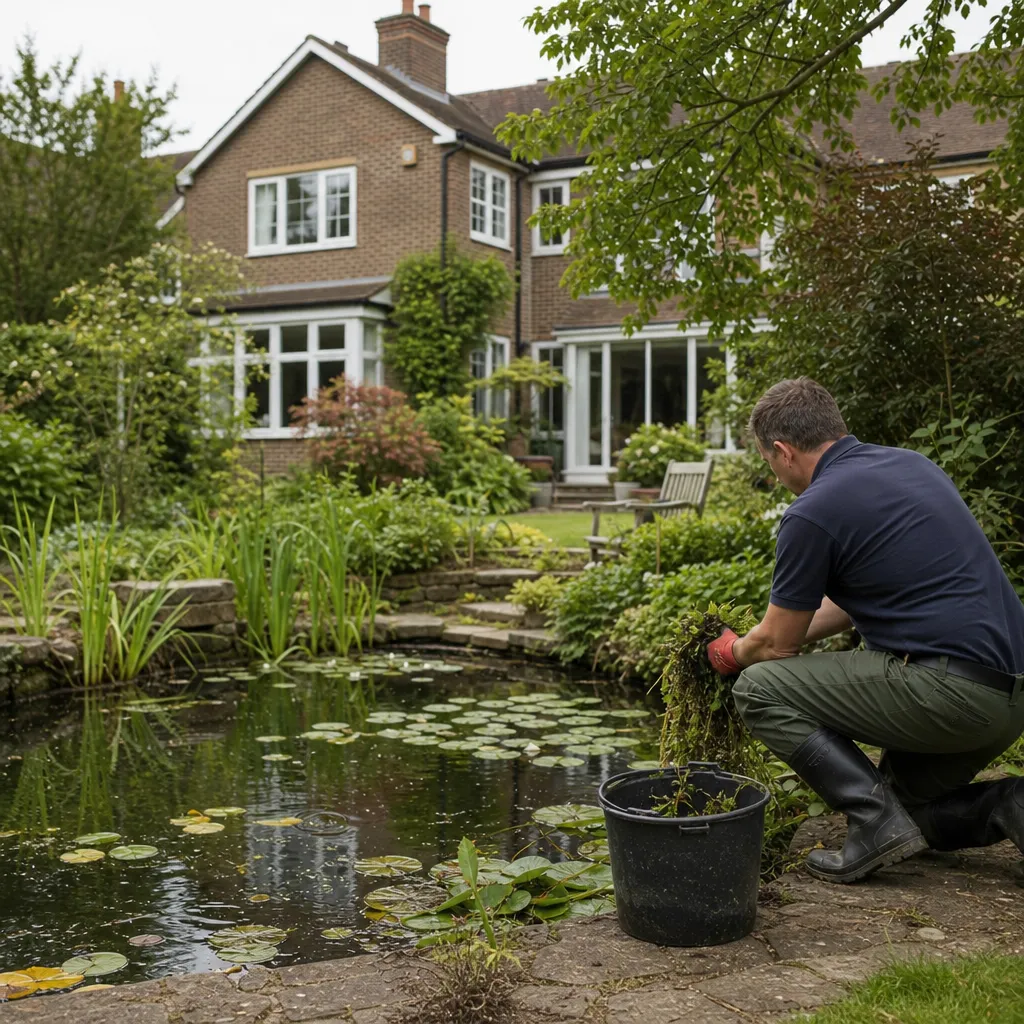
Pond Maintenance and Management: Seasonal Care and Upkeep
Garden pond maintenance follows a seasonal cycle: spring equipment checks and vegetation management, summer water quality monitoring, autumn leaf removal and netting, and winter ice management.
 Improvement & Build
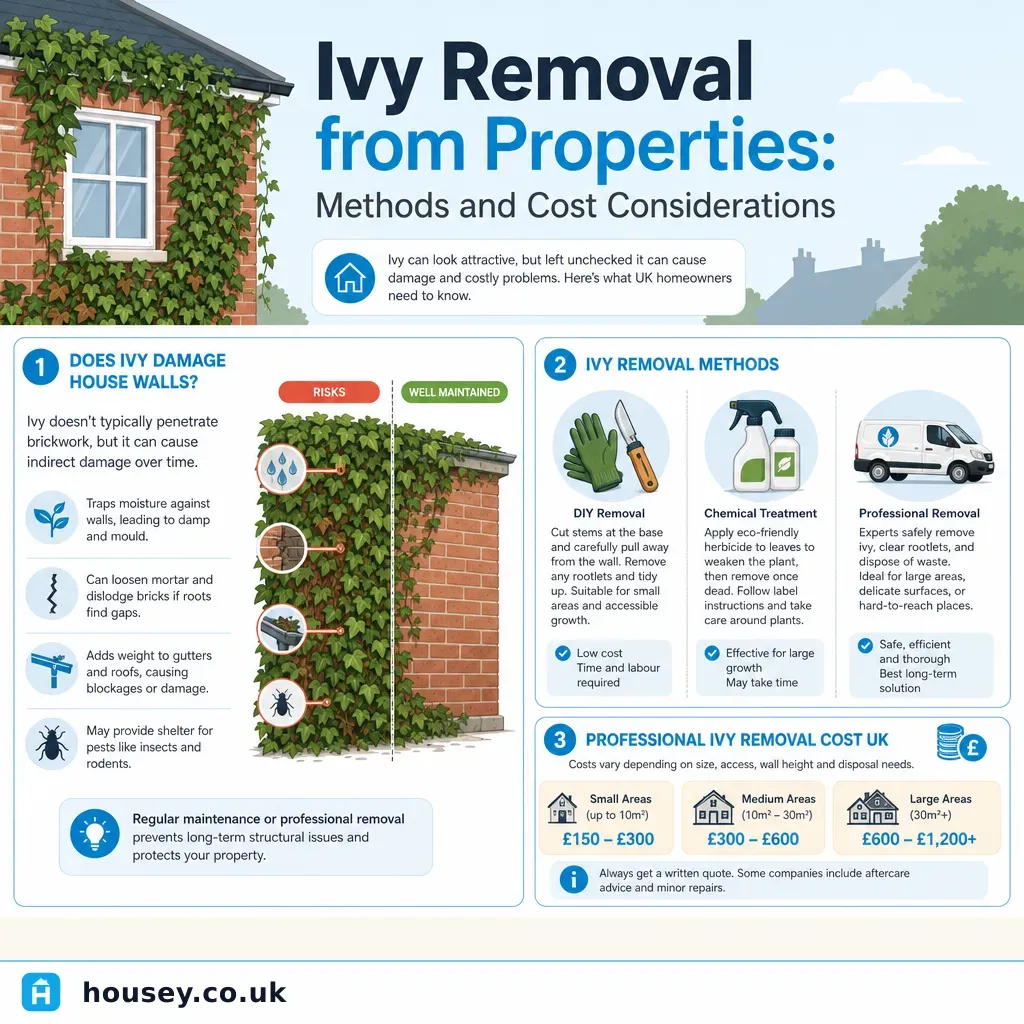
Ivy Removal from Properties: Methods and Cost Considerations
Remove ivy by cutting the main stems at the base and waiting two to four weeks before pulling the dead growth from the wall — this reduces damage to mortar.
 Improvement & Build
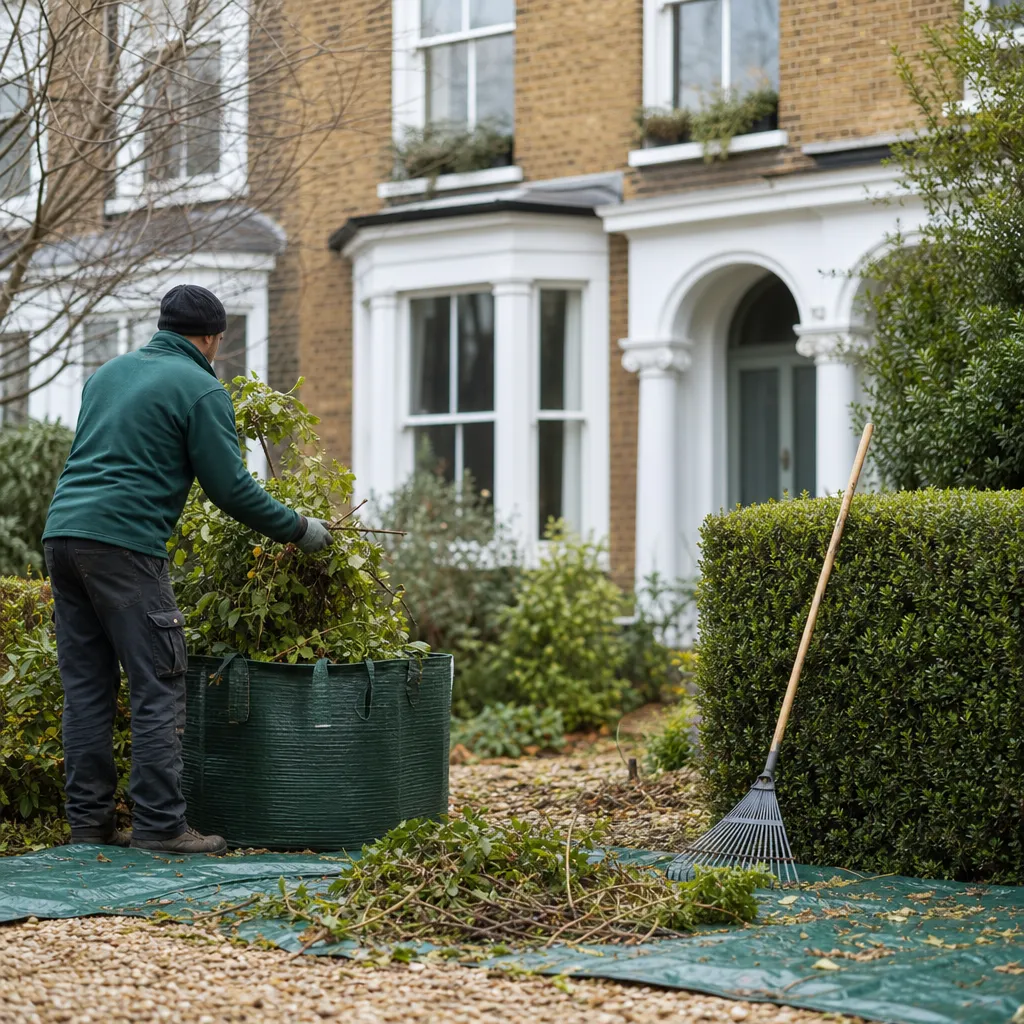
When to Call In Professional Garden Maintenance for Seasonal Cleanup
Professional garden maintenance is worth considering when seasonal work exceeds DIY capacity — typically autumn leaf removal, lawn scarification, hedge trimming at height, or post-winter clearance on large plots.
 Improvement & Build
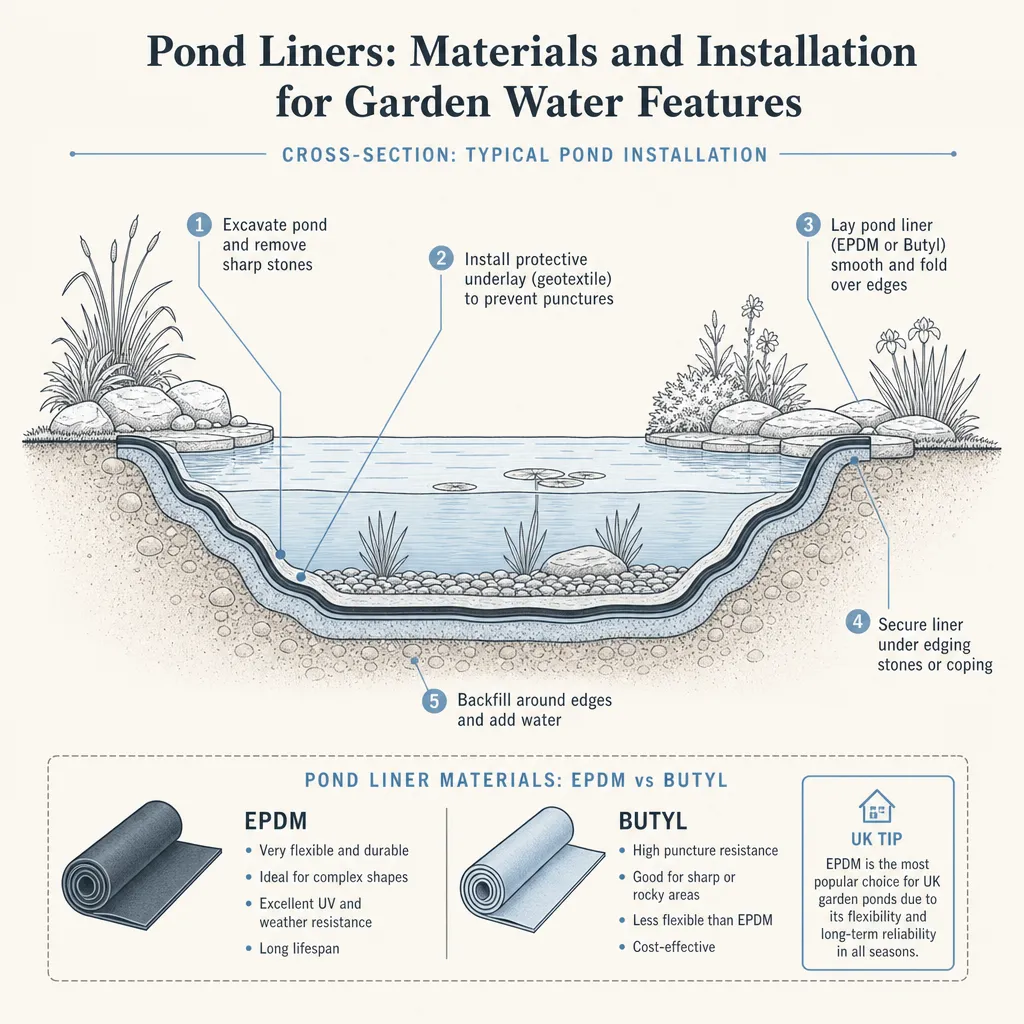
Pond Liners: Materials and Installation for Garden Water Features
Garden pond liners come in four main types: EPDM rubber, butyl rubber, PVC, and preformed fibreglass.
 Improvement & Build
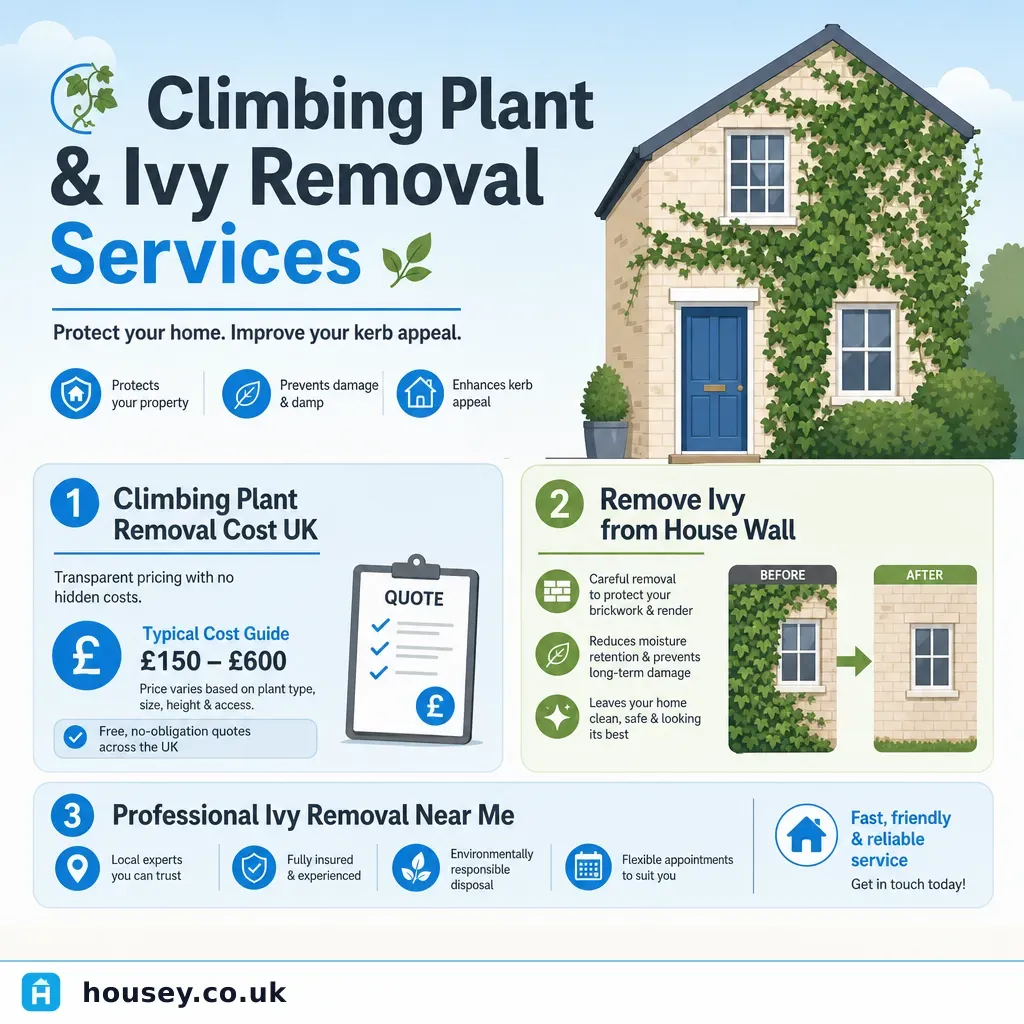
Climbing Plant and Ivy Removal Services
Professional ivy and climbing plant removal typically costs £150–£700 for a standard UK semi-detached, depending on coverage, plant type, and access requirements.