Adjusting uPVC Door Hinges: Alignment and Repair
By Housey · Last reviewed 18th of May 2026
Adjusting uPVC Door Hinges: Alignment and Repair
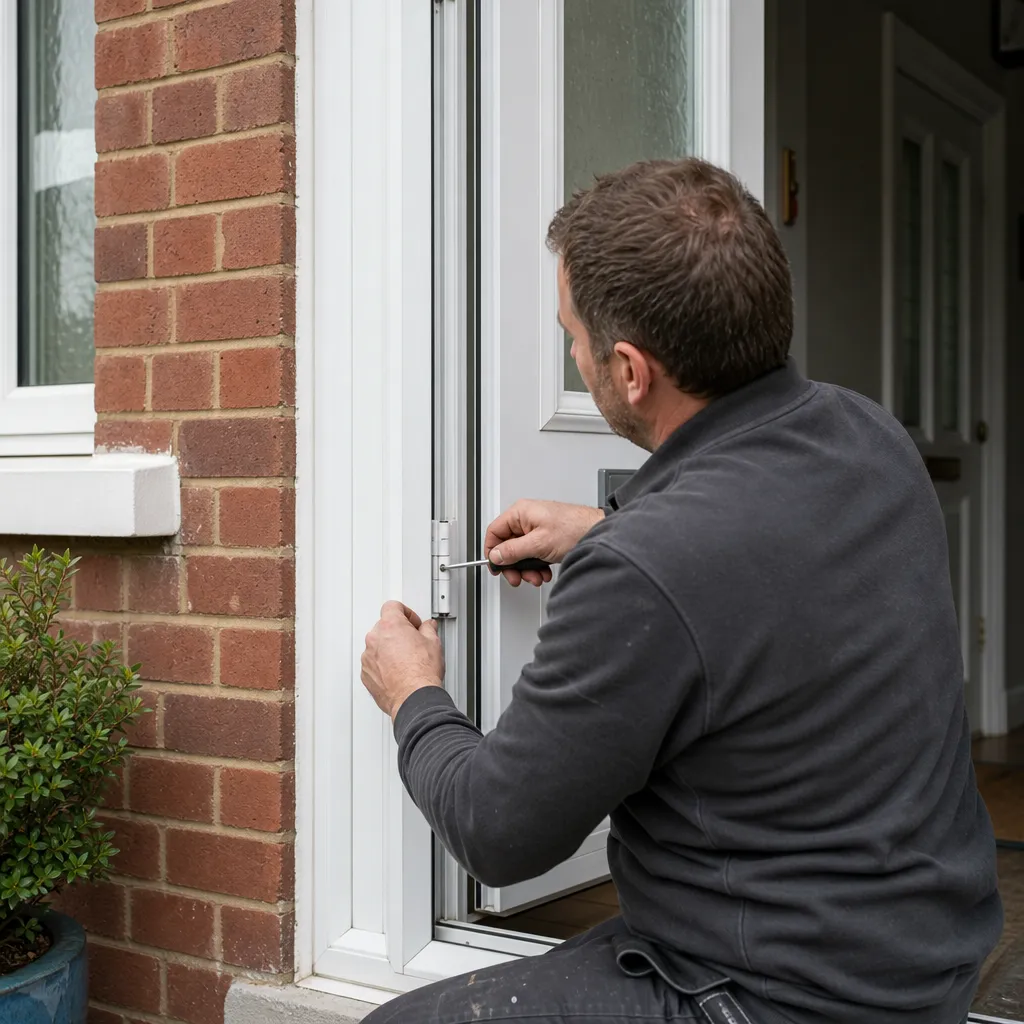
uPVC doors are fitted in millions of UK homes, but even well-installed examples develop alignment problems over time. Seasonal temperature changes cause the frame to expand and contract, daily use puts gradual stress on the hardware, and minor building settlement can shift a door out of square. When a door starts catching on the frame, letting in draughts, or refusing to latch without being lifted, the hinges are almost always the first place to look — and usually the only place adjustment is needed.
Key points
- Most uPVC doors in the UK are fitted with adjustable flag hinges that allow up to 2–3 mm of movement in three axes: lateral (side-to-side), vertical (up-down), and compression (in-out towards the frame).
- A 4 mm or 5 mm Allen key is the standard tool for hinge adjustment on most uPVC doors; some European-style hinges use a Torx bit — check the hinge before starting.
- Each screw turn typically moves the sash by 1–2 mm; adjust in increments of no more than half a turn at a time and test the door after each change.
- uPVC hinges carry a maximum load rating, typically between 80 kg and 160 kg per pair; a door that exceeds this rating will sag regardless of how the hinges are set.
- If the frame itself is distorted, rotting, or no longer square, hinge adjustment will not resolve the problem — specialist assessment is needed.
What type of hinge does your uPVC door have?
Identifying the hinge type determines both how and whether you can adjust it yourself.
Hinge type | Common on | Adjustable? | Adjustment axes | Notes |
|---|---|---|---|---|
Flag hinge | Modern uPVC doors (post-2000) | Yes — 3-axis | Lateral, vertical, compression | Most versatile; Allen key adjustment |
Rebated (butt-style) | Older uPVC, some composite doors | Usually — 2-axis | Lateral, vertical | Less range than flag hinges |
Butt hinge (non-adjustable) | Pre-1990s uPVC and timber-style replacements | No | N/A | Must be shimmed or replaced |
Shooter bolt hinge | Multi-point systems, some French doors | Sometimes | Vertical only | Often adjusted via the locking mechanism |
Flag hinges are fitted to the vast majority of uPVC doors installed under Building Regulations since 2000. If your door has these, minor alignment issues can almost always be corrected with just an Allen key — no replacement parts required.
Which adjustment do you actually need?
Before touching any screws, observe exactly how the door misbehaves. Each symptom points to a specific adjustment:
- Door drops and catches at the bottom of the frame on the latch side → increase the vertical height adjustment on the top hinge, or reduce it on the bottom hinge.
- Door binds along the top on the hinge side → reduce compression on the top hinge to push the top of the door slightly away from the frame.
- Gap on the latch side is too wide and draughts are felt → increase compression adjustment on both hinges to pull the sash closer to the frame.
- Gap is uneven — wide at the top, narrow at the bottom, or vice versa → adjust lateral position using the side-to-side adjustment screw on one or both hinges.
- Door swings open on its own → check with a spirit level whether the frame is plumb before adjusting hinges; this is often a structural rather than hinge issue.
- Hinges appear correctly set but the door still will not latch → the multi-point locking keep (the metal plate on the frame) can often be repositioned by 2–4 mm using its fixing slots.
How to adjust a uPVC door hinge step by step
What you need: a 4 mm or 5 mm Allen key (check your hinge), a flathead screwdriver, a spirit level, and ideally a helper to hold the door steady.
- Identify the adjustment screws. On a flag hinge, the side-facing screw adjusts lateral position; the top or bottom-facing screw adjusts vertical position; the inner screw (accessed with the door open at 90°) adjusts compression.
- Open the door to 90° and support it. This takes weight off the hinges and makes adjustment easier and more accurate.
- Loosen — do not remove — the relevant screw. Turn no more than half a turn anti-clockwise, move the sash to the desired position, and tighten gently.
- Test the door. Close it, engage the lock, and check for smooth operation, correct latch engagement, and the absence of draughts around the frame.
- Repeat as needed. Adjust one hinge at a time and test between each change to avoid overcorrection.
- Check the weather seals. Once alignment is correct, inspect the rubber or foam seals around the frame — displaced seals are a common source of draughts even when the door appears to close correctly.
Red flags: when adjustment is not enough
Some symptoms point to a more serious problem that hinge tweaking cannot fix:
- Cracked or deformed uPVC frame around the hinge fixing points — the frame section may need replacing rather than adjusting.
- Hinge screws that spin freely and do not grip the frame — the fixing holes are likely stripped; the hinges need re-fixing with longer screws or the frame must be repaired.
- Hinges that are visibly bent, corroded, or cracked — replace the hinge. uPVC door hinges are widely available at builders' merchants and can be matched by taking the old hinge in as a reference.
- Door that has never aligned correctly since installation — the frame may not have been plumbed or levelled correctly during fitting; contact the original installer under any applicable workmanship guarantee.
- Gaps of more than 5–6 mm between sash and frame after full adjustment — the door or frame may have changed dimensionally and a professional assessment is warranted.
- Condensation or water ingress inside the frame alongside alignment issues — possible frame seal failure requiring specialist attention.
When to get professional help
Hinge adjustment is within reach for most DIY-confident homeowners, but a professional is the right call if:
- The frame is out of square by more than hinge adjustment can correct.
- The door is a fire door or a security-rated door covered by a certification scheme — adjustments affecting certified performance should be made by a qualified installer.
- The door is under a manufacturer or installer guarantee that self-adjustment could void.
- You are unsure which hinge type you have or which axis needs adjusting for the specific problem.
How Housey can help
If adjustment does not resolve the issue, or if the frame itself needs attention, Housey can connect you with a vetted window and door installer in your area. A professional can assess the door, frame, and seals together and quote for any repair or replacement work needed.
Frequently asked questions
Why does my uPVC door drop in winter?
uPVC expands and contracts with temperature changes. In cold weather, slight frame contraction can shift the sash relative to the frame. If the door only misbehaves seasonally, a small pre-emptive adjustment in autumn may prevent winter problems. Persistent drooping regardless of season usually indicates hinge wear, an incorrect load rating, or an out-of-square frame.
How many adjustment attempts before I should replace the hinge?
If you have adjusted a hinge to its maximum travel and the problem persists, or if the adjustment screws no longer hold their position, the hinge is likely worn out. uPVC hinges typically last 10 to 20 years with normal use. Replacement hinges are widely available at builders' merchants and straightforward to swap on most standard uPVC door profiles.
Can I adjust a composite door the same way?
Many composite doors use the same flag hinge system as uPVC doors and are adjusted identically using an Allen key. Some premium composite doors use a different hinge specification, so check the manufacturer's documentation or look for adjustment access points on the hinge itself before attempting any changes.
My door sticks in the evening but is fine in the morning — why?
This is a common sign of thermal expansion. uPVC frames expand in heat, so a door that catches after a warm afternoon may fit correctly on a cool morning. Minor compression adjustment can help. If sticking occurs at all temperatures consistently, alignment rather than thermal movement is the more likely cause and hinge adjustment should resolve it.
Sources and further reading
- Building Regulations technical guidance — GOV.UK
- Glass and Glazing Federation — Glass and Glazing Federation
- FENSA: find a registered glazing installer — FENSA
Useful next reads
 Improvement & Build
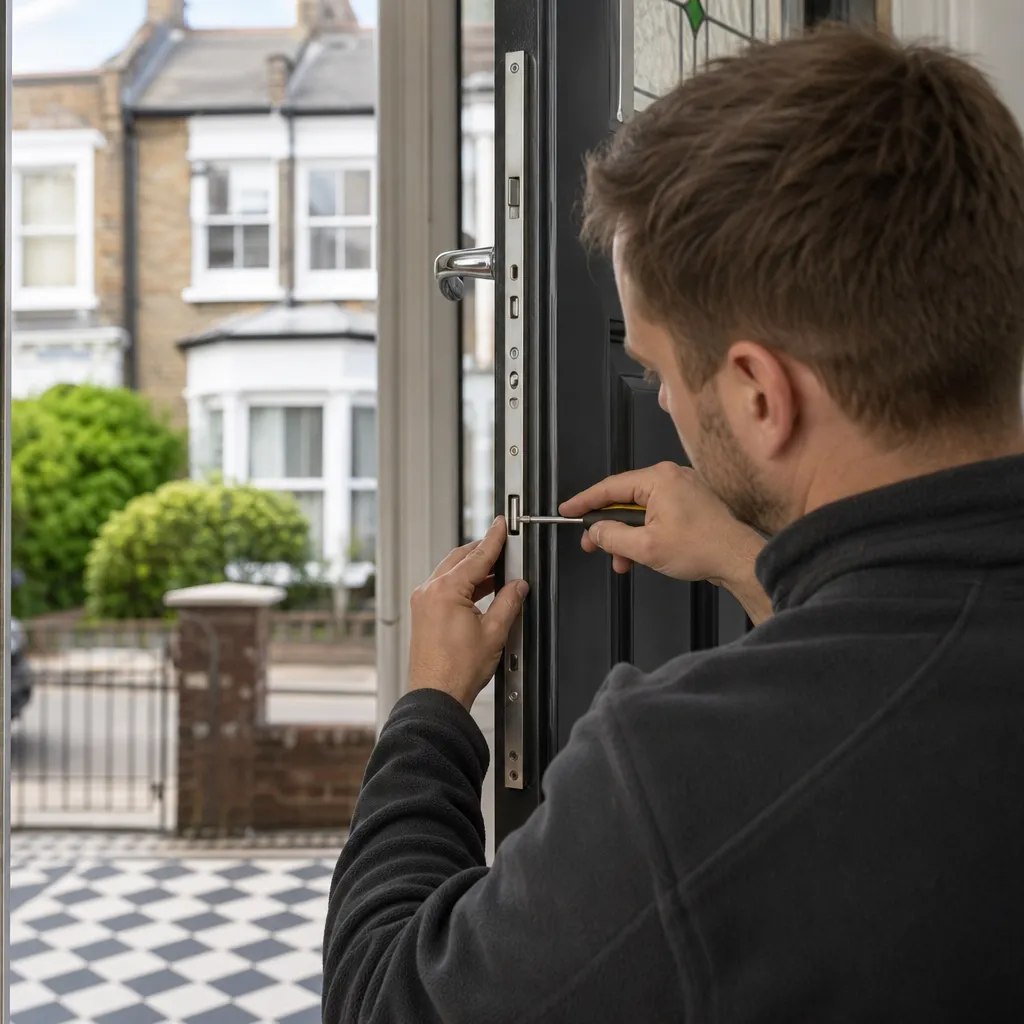
Adjusting Multipoint Door Locks: Alignment and Operation
Most multipoint lock problems — stiff handles, hooks that will not engage, rattling doors — result from minor door sag causing locking points to miss their keeps.
 Improvement & Build
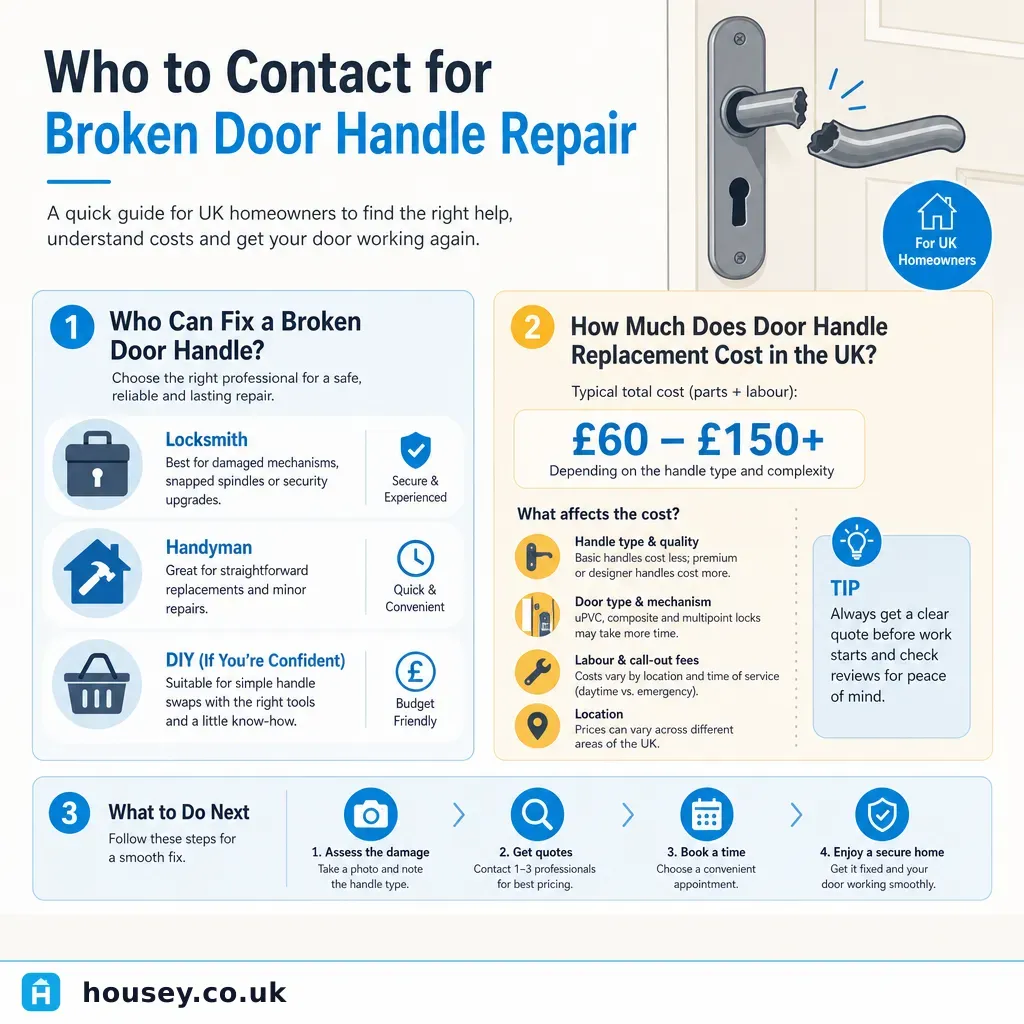
Who to Contact for Broken Door Handle Repair
For a broken door handle, a general handyperson can handle most internal timber door repairs, while a joiner or locksmith is better suited to external doors, particularly if the lock mechanism is affected.
 Improvement & Build
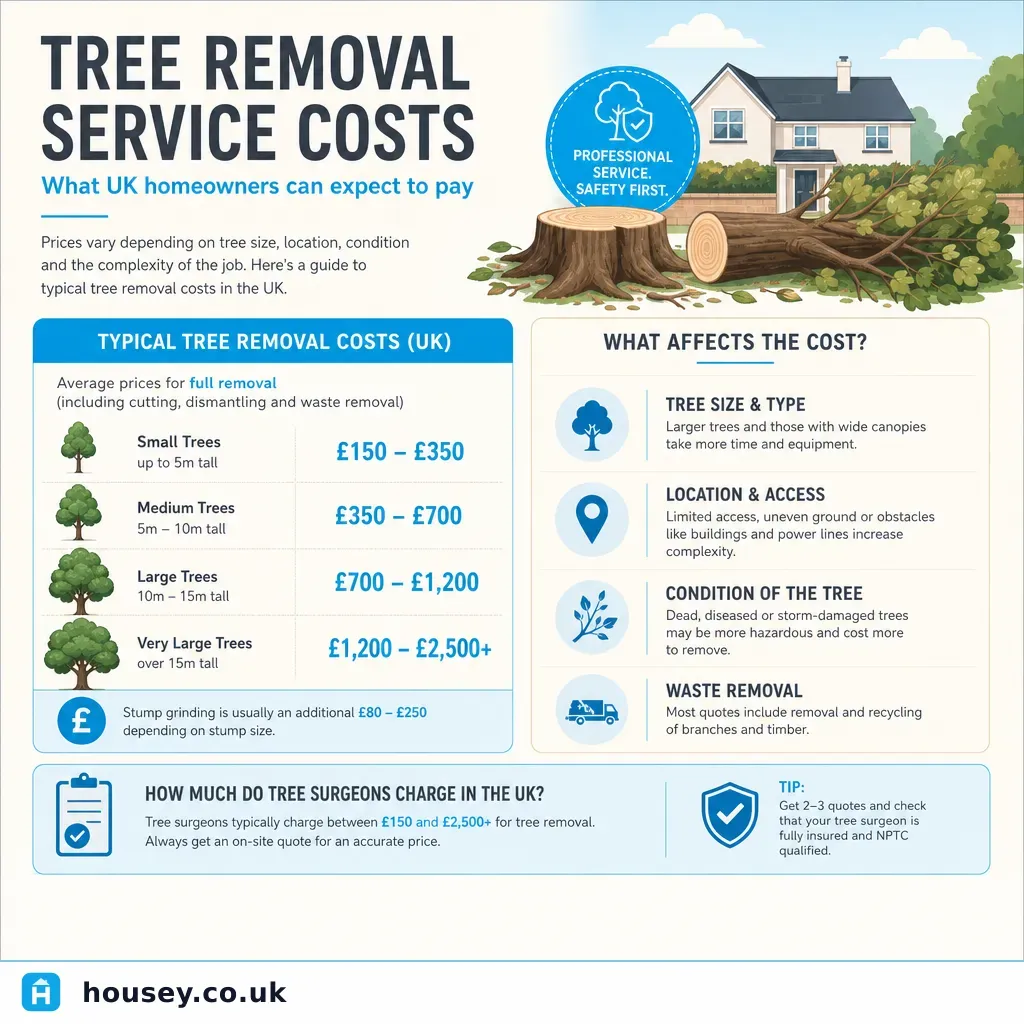
Tree Removal Service Costs
Professional tree removal costs in the UK depend on tree height, access, species, and the scope of work included.
 Improvement & Build
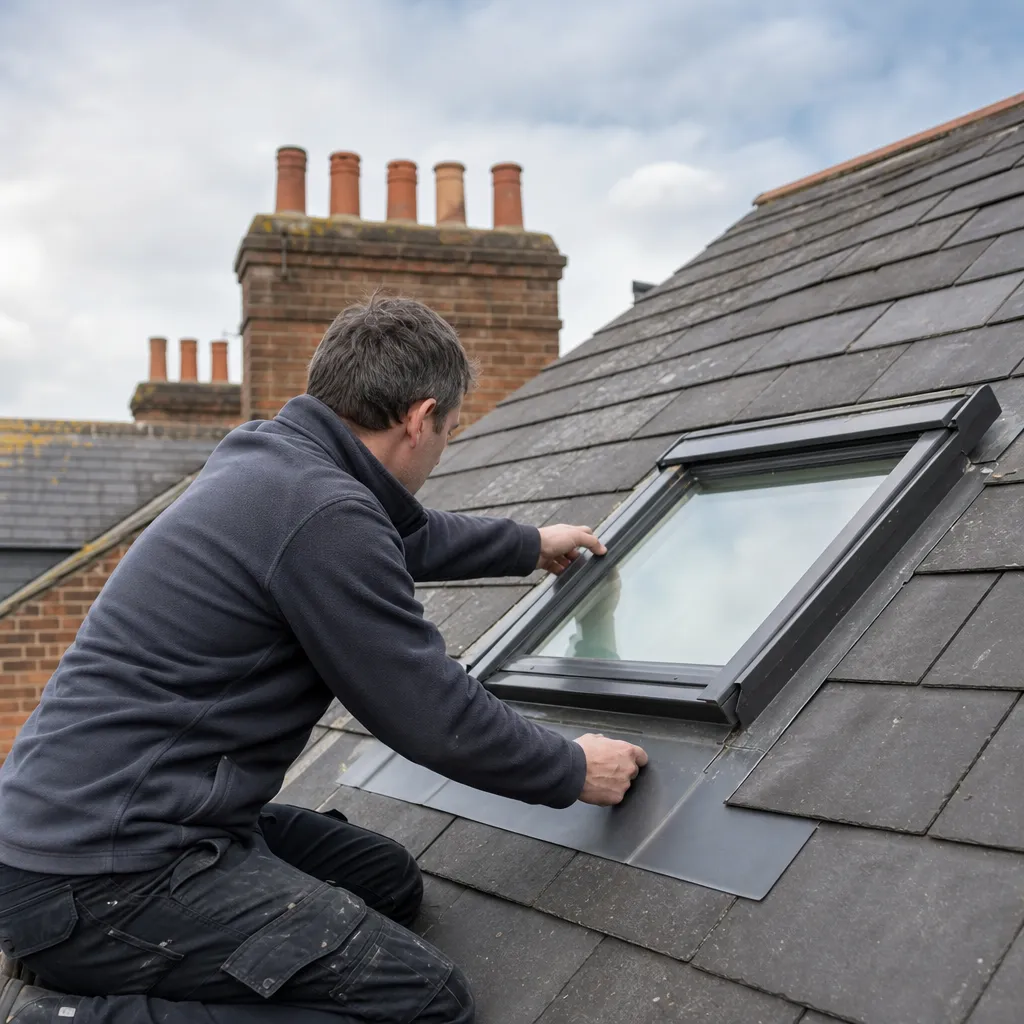
Fixing Velux Window Leaks: Causes and Repair Solutions
Velux window leaks most commonly occur at the flashing — the metal collar sealing the window to the roof — or at the weather seal around the opening sash.
 Improvement & Build
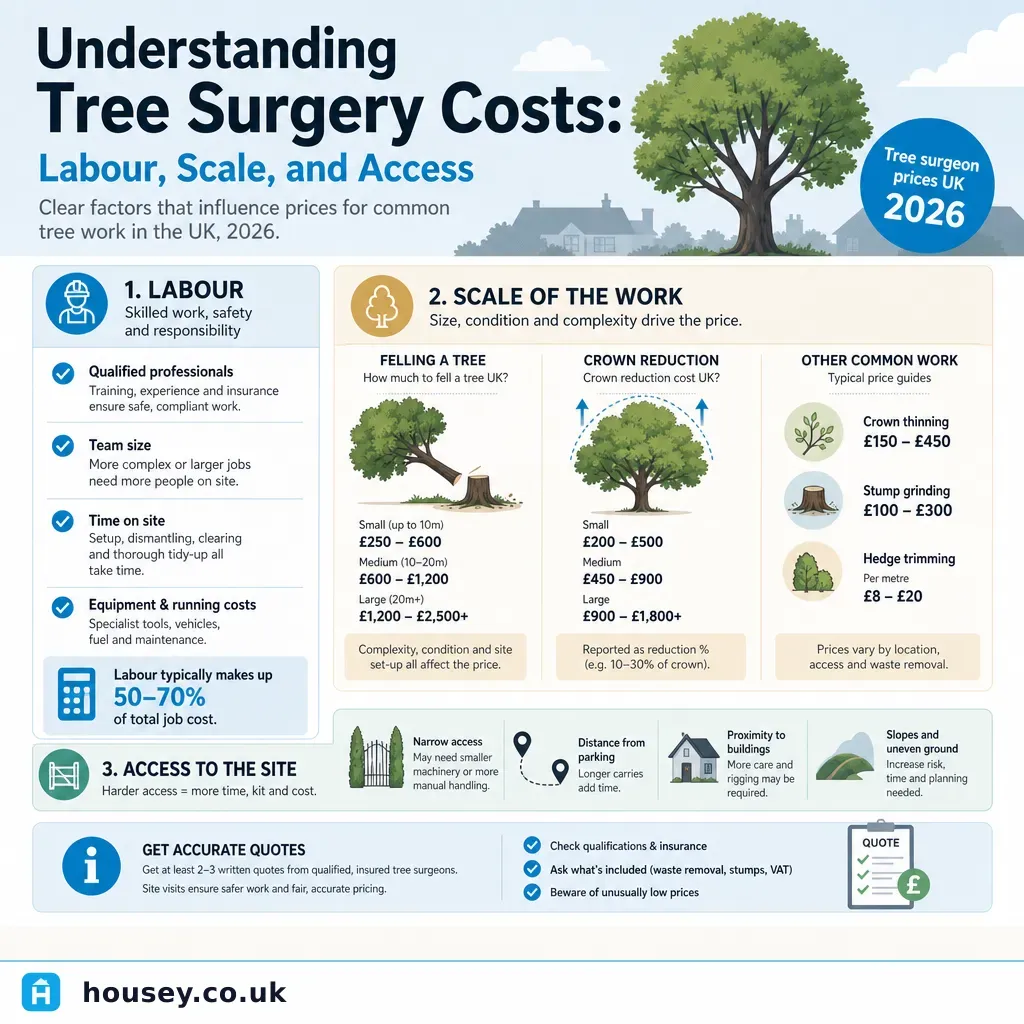
Understanding Tree Surgery Costs: Labour, Scale, and Access
Tree surgery costs in the UK depend on tree height, species, condition, and site access.