Adjusting Multipoint Door Locks: Alignment and Operation
By Housey · Last reviewed 18th of May 2026
Adjusting Multipoint Door Locks: Alignment and Operation
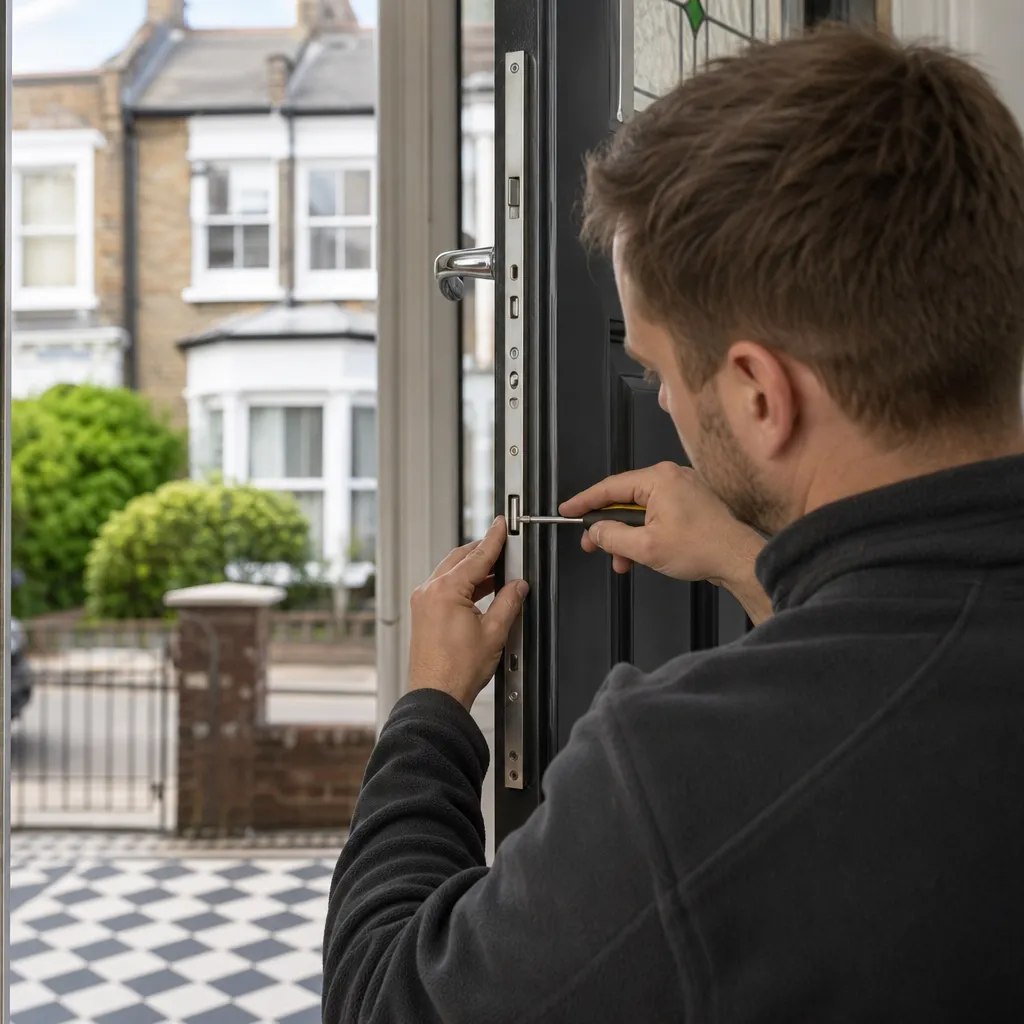
Multipoint locking systems are the standard security fitting on most uPVC and composite doors installed in the UK since the mid-1990s, and are also common on many timber entrance doors. When a multipoint lock becomes difficult to operate — the key is stiff, the handle will not fully engage, or the door requires effort to close — the cause is often a straightforward alignment issue between the door and frame. Understanding what you can safely adjust yourself, and when the problem requires a specialist, prevents a manageable maintenance job from becoming an expensive emergency callout.
Key points
- Multipoint locks engage two to six locking points simultaneously (hooks, rollers, deadbolts, and top and bottom shoot bolts) via a single key or handle operation; all points must align with their corresponding keeps in the frame for the lock to operate correctly.
- The most common cause of a stiff or non-engaging multipoint lock is door sag — typically 2–5 mm of drop at the locking edge — which causes hooks to miss their keeps by a small margin.
- uPVC door hinges installed since approximately 2000 typically have three-way adjustment (lateral, vertical, and compression) accessible with a 5 mm or 6 mm Allen key; most adjustments take under 30 minutes.
- Composite and timber door hinges may require shimming, re-hanging, or replacement to correct significant sag, rather than simple screw adjustment.
- If a lock has been forced, shows signs of damage, or the door frame has visibly moved, a locksmith or door specialist should assess the mechanism before any adjustment is attempted.
How multipoint locks work
A multipoint lock has a central gearbox that translates handle or key movement into the simultaneous vertical movement of a rod running the full height of the door. As the rod moves, it activates:
- Hooks — the main deadlock points, typically two to three
- Rollers — compression points that pull the door against the weatherseal
- Shoot bolts — top and bottom, engaging in the frame head and threshold
- Deadbolt — activated by the key independently of the handle
Every one of these points must land accurately in its corresponding keep. A misalignment of as little as 3 mm at any point can make the lock feel stiff, prevent full engagement, or stop the door closing properly.
Diagnosing the problem before adjusting
Before touching a hinge or keep, identify where the misalignment is occurring.
Decision tree — diagnosing a multipoint lock issue:
- Door difficult to close (requires shoulder pressure): The door is sitting out from the frame — likely a compression or hinge adjustment issue, or the door has warped slightly.
- Handle stiff but door closes: The hooks are catching just short of or above the keep mouths — typically a vertical alignment issue.
- Key turns but deadbolt does not engage: The deadbolt is missing its keep — possibly a horizontal alignment issue, or the gearbox is beginning to fail.
- Top or bottom of door gaps when closed: Shoot bolts are not engaging; check top and bottom keep positions.
- Lock has suddenly stopped working after a period of correct operation: Check the gap at the top and bottom of the door on the locking side — a difference between the two indicates hinge wear or frame movement.
- Lock appears damaged or the door was recently forced: Do not attempt adjustment. Contact a locksmith or door specialist.
Adjusting uPVC door hinges
Most uPVC door hinges installed since approximately 2000 have three-way adjustment built in. The adjustment screws are accessed by removing a plastic cap on the hinge face. You will need a 5 mm or 6 mm Allen key (hex key).
Lateral (side-to-side) adjustment: Moves the door toward or away from the locking frame, reducing or increasing the gap on the locking edge. Typically ±2–3 mm of travel.
Vertical (up-down) adjustment: Raises or lowers the door on the hinge to realign hooks with their keeps vertically. Typically ±2–3 mm of travel.
Compression (front-to-back) adjustment: Moves the door in or out relative to the frame, adjusting how tightly it seats against the weatherseal.
Step-by-step adjustment process:
- Open the door to approximately 90 degrees for stability.
- Locate all hinges (typically two or three) and remove hinge caps.
- Make small adjustments — no more than half a turn at a time — using the Allen key.
- Close the door to check the effect before making further adjustments.
- Adjust all hinges equally when moving the door vertically to avoid twisting.
- Once the door closes smoothly, test key and handle operation with the door fully closed.
- Refit hinge caps once correct alignment is confirmed.
Adjusting the keeps (striker plates)
If hinge adjustment alone does not resolve the issue, the keeps — the metal plates in the frame that receive the hooks — may need repositioning.
- Keeps on uPVC frames are typically held by two screws and can be moved up or down by 1–3 mm by carefully enlarging the screw slots.
- Some keeps have an adjustable faceplate that can be repositioned without drilling.
- Before adjusting a keep, mark its current position with a pencil so the original position is recoverable if the adjustment makes things worse.
- If the keep needs to move more than 3–4 mm, investigate the underlying cause — this amount of movement usually indicates significant door drop or frame movement that needs addressing before cosmetic adjustment.
Comparison: common multipoint lock problems and solutions
Symptom | Likely cause | First adjustment to try | When to call a specialist |
|---|---|---|---|
Stiff to lift handle | Hooks slightly misaligned vertically | Vertical hinge adjustment | If no improvement after hinge adjustment |
Key difficult to turn | Deadbolt keep misaligned | Lateral hinge adjustment or keep adjustment | If gearbox shows wear or key slot is damaged |
Door rattles in frame | Compression too loose or rollers not engaging | Compression hinge adjustment | If frame seals are split or missing |
Shoot bolts not engaging | Top or bottom keeps out of position | Adjust or reposition top or bottom keeps | If door has dropped more than 5 mm |
Door will not close | Significant door drop or frame movement | Hinge adjustment on all axes | If frame has moved or door is warped |
Lock worked, now failed suddenly | Possible gearbox failure | Lubricate with dry PTFE spray or graphite | If no improvement after lubrication |
Red flags: when not to adjust
The following situations indicate that self-adjustment is not appropriate and a qualified locksmith or door specialist should be consulted:
- The door was recently forced. Internal gearbox components may be bent or sheared; operating a damaged lock risks complete failure at an unsafe moment.
- The frame or threshold has visibly moved. This suggests subsidence, settlement, or structural movement that needs investigation before any door adjustments are made.
- The hinges feel loose or shift when you push the door. Worn hinge screw threads or split uPVC hinge reinforcement require hinge replacement, not adjustment.
- The lock is more than 15–20 years old and has not been serviced. Gearbox components wear over time; a specialist can assess whether the mechanism is worth repairing or should be replaced entirely.
- The door is a high-security or insurance-specified fitting. Some insurers specify BS 3621 or TS 007 3-star standards. If replacing components, ensure replacements meet the required standard before purchasing.
What to ask before hiring a specialist
If the problem is beyond a straightforward DIY adjustment, ask a locksmith or door specialist:
- What is causing the misalignment — hinge wear, door sag, or frame movement?
- Is the gearbox repairable or does it need replacing, and if so, what is the part cost?
- Does the lock currently meet BS 3621 or TS 007 standards for insurance compliance?
- Will replacement components be like-for-like, or does the door need re-hanging?
- Is there any sign of frame movement that warrants a structural assessment?
- What warranty do you offer on parts and labour?
When to get professional help
Beyond the red flags above, consider a specialist if:
- The door has composite or timber construction and hinge shimming or re-hanging is required
- The lock mechanism needs to be replaced (gearbox, latch, or shoot bolt cassettes)
- The door is under warranty and adjustment might affect warranty terms
- You are uncertain which hinge type you have, or cannot locate the adjustment screws
How Housey can help
If adjustment has not resolved the problem, or you are not confident working with the mechanism, Housey connects you with local window and door installers who can diagnose and repair multipoint lock issues, rehang doors, and replace worn or damaged hardware.
Frequently asked questions
Why has my multipoint lock suddenly become stiff after working fine for years?
The most common reason is gradual door sag. Hinges wear slightly over time, allowing the door to drop by a few millimetres, which causes hooks to bind against their keeps rather than entering cleanly. Lubricating the lock mechanism with a dry PTFE spray and making a small vertical hinge adjustment often resolves the issue without the need for specialist help.
Can I oil a multipoint lock?
Avoid oil-based lubricants in multipoint locks as they attract dust and debris, which can eventually jam the mechanism. Use a dry PTFE spray or graphite powder on the gearbox and moving parts. For uPVC hinges, a small amount of petroleum jelly on the hinge body — not on the adjustment screws — can help reduce squeaking without contaminating the lock.
How much does it cost to replace a multipoint lock gearbox?
Indicative UK costs, last reviewed 2026-05-18: a multipoint lock gearbox replacement typically costs £80–£180 for parts and labour depending on the mechanism and whether a locksmith or door installer carries out the work. Some branded door systems use proprietary gearboxes that cost more. Confirm whether the lock is within any remaining warranty before authorising a replacement.
Does my multipoint lock need to meet any standards for home insurance?
Many home insurers require door locks to meet BS 3621 (thief-resistant lock assemblies) or, for higher-security applications, TS 007 3-star standards. Multipoint locks alone may not satisfy BS 3621 unless they include a certified deadbolt. Check your policy wording and, if replacing a lock, confirm with your insurer that the replacement meets their requirements.
Sources and further reading
- BS 3621:2022 — Thief resistant lock assemblies — BSI Group
- Secured by Design — door security standards for residential dwellings — Secured by Design (Police Crime Prevention Initiatives)
- FENSA — competent persons scheme for windows and doors — FENSA
- Energy Saving Trust — draught-proofing guidance — Energy Saving Trust
Useful next reads
 Improvement & Build
Adjusting uPVC Door Hinges: Alignment and Repair
Most uPVC doors are fitted with adjustable flag hinges that allow fine-tuning in three directions: vertical, lateral, and compression.
 Improvement & Build
uPVC Door Won't Lock: Diagnosis and Repair Options
A uPVC door that won't lock most often has a misaligned frame, a seized gearbox, or a failing Euro cylinder.
 Improvement & Build
Fixing Velux Window Leaks: Causes and Repair Solutions
Velux window leaks most commonly occur at the flashing — the metal collar sealing the window to the roof — or at the weather seal around the opening sash.
 Improvement & Build
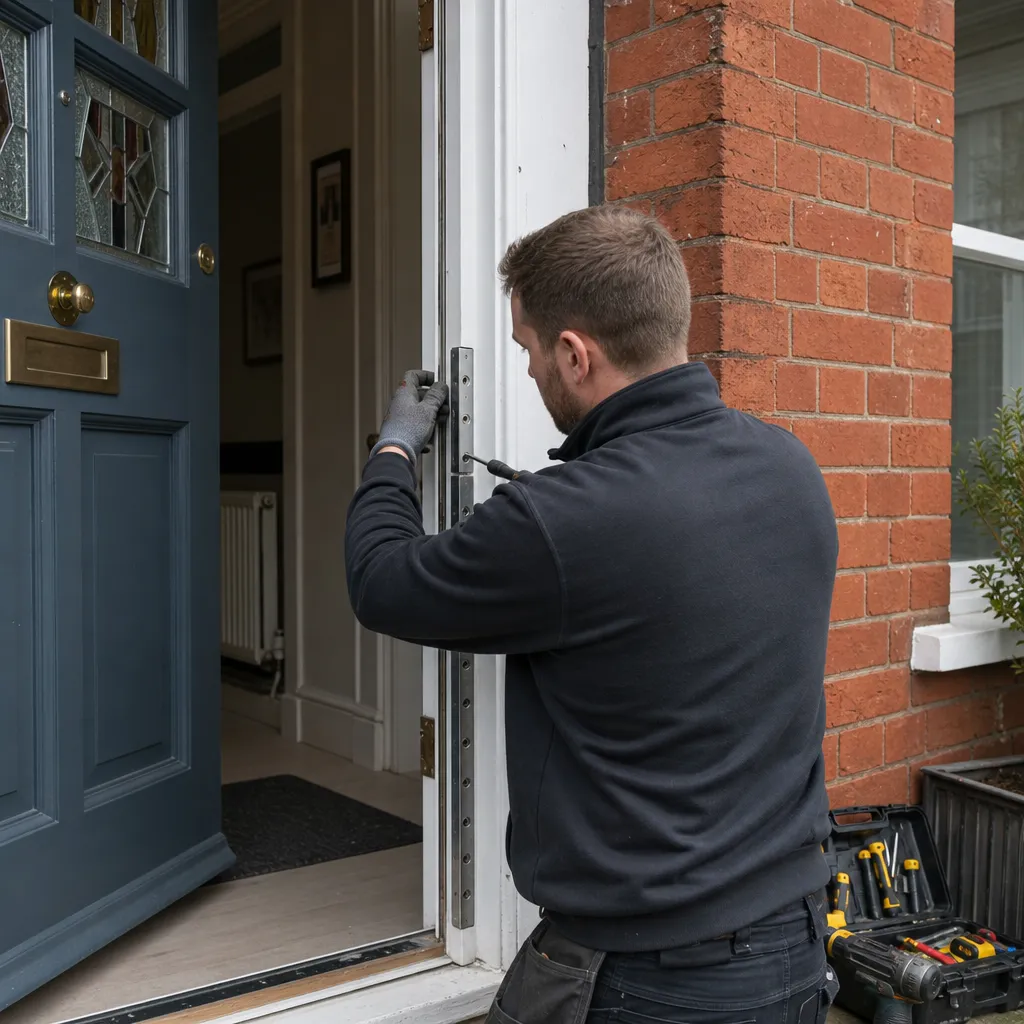
Front Door Frame Reinforcement for Security Upgrade
Most burglars enter through the door frame, not the lock.
 Improvement & Build
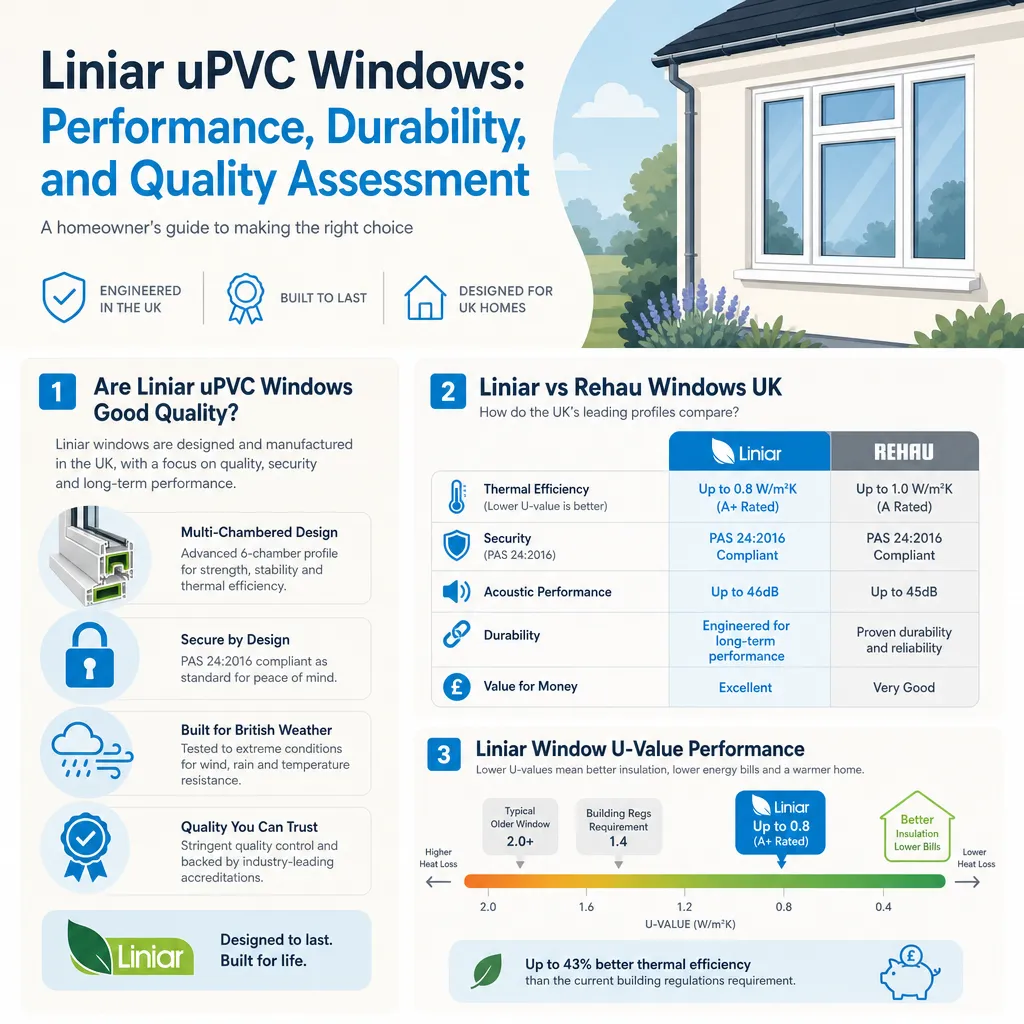
Liniar uPVC Windows: Performance, Durability, and Quality Assessment
Liniar uPVC window profiles are manufactured in the UK using multi-chambered, foamed frames.