The Advantages of Purchasing New Build Properties
By Housey · Last reviewed 19th of May 2026
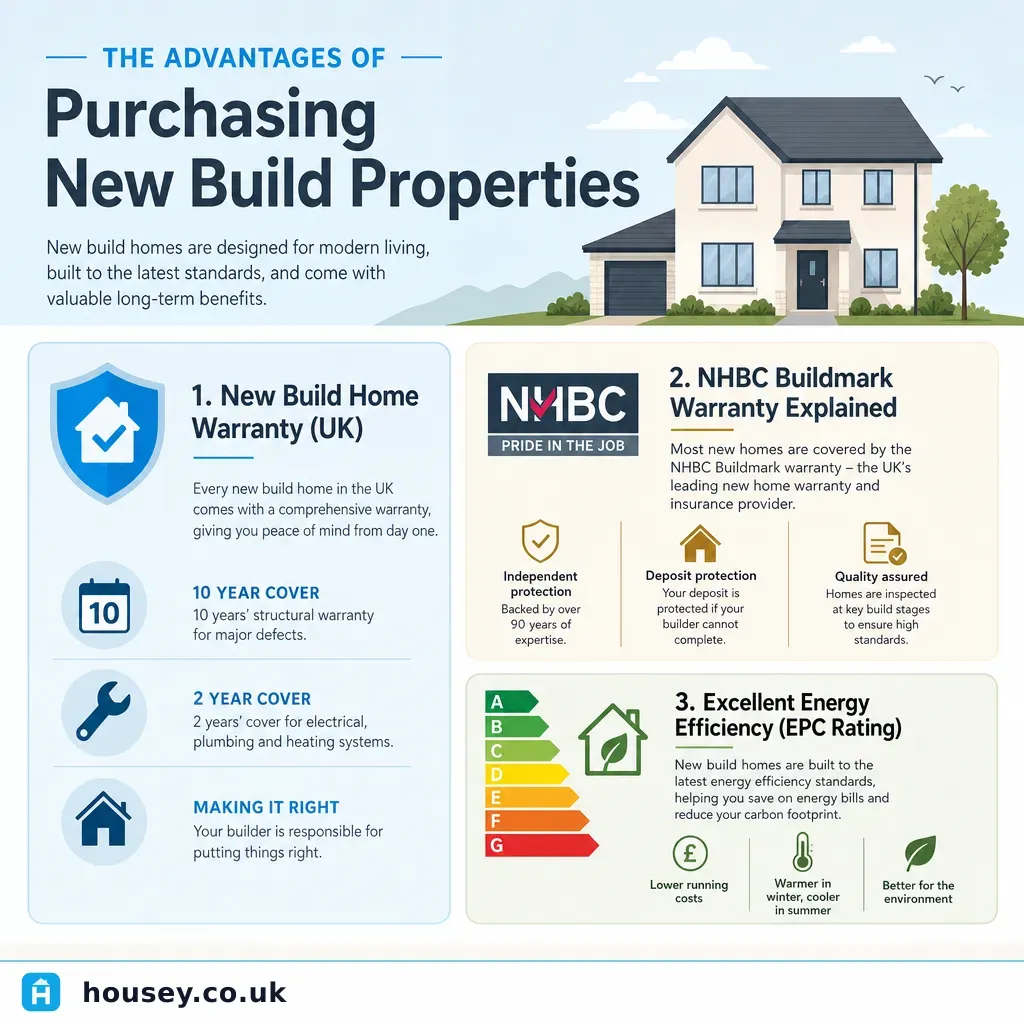
The Advantages of Purchasing New Build Properties
New builds account for roughly one in ten residential transactions in England each year, and the choice between a newly constructed home and existing stock shapes finances, legal exposure, and daily running costs for years. For first-time buyers and home movers alike, the decision often turns on incomplete information — about what warranties actually cover, how energy performance compares to older stock, and what leasehold small print may contain. The UK new build market has distinct characteristics that reward buyers who understand the detail before exchange.
Key points
- The NHBC Buildmark warranty provides 10 years of protection: the first 2 years are the developer's defect liability period; years 3–10 cover structural defects under the NHBC structural guarantee.
- New builds must comply with current Building Regulations, including Part L (conservation of fuel and power), and typically achieve EPC A or B ratings — significantly better than the UK average for existing housing stock.
- Stamp Duty Land Tax (SDLT) thresholds and rates are set by HM Revenue & Customs and are subject to change; always verify current figures on GOV.UK before exchange.
- Help to Buy equity loan schemes in England closed to new applicants in March 2023; devolved equivalents operate in Wales (Help to Buy – Wales) and Scotland (LIFT scheme) — check the relevant authority for current availability.
- A professional snagging survey carried out before legal completion gives you documented evidence to present to the developer during the 2-year defect liability period, when the obligation to remedy defects rests with the builder.
What the NHBC Buildmark warranty covers
The majority of new homes in the UK are registered with the National House Building Council (NHBC) and sold with an NHBC Buildmark warranty. It is not a structural survey and does not replace independent inspection.
The warranty operates in two phases:
- Years 1–2 (Defect period): The developer is responsible for repairing physical defects arising from failure to build to NHBC Technical Standards. You report defects to the builder; if they refuse to act, NHBC's resolution service can assist.
- Years 3–10 (Structural guarantee): NHBC covers the cost of repairing major structural defects if the developer cannot or will not do so.
Not all new builds carry NHBC Buildmark cover. Some developers use alternative warranty schemes such as Premier Guarantee or LABC New Home Warranty. Your solicitor should confirm the warranty provider and check its terms before exchange.
What Buildmark does not cover:
- General wear and tear
- Cosmetic defects reported after the first 2 years
- Damage caused by the homeowner
- Items covered by separate manufacturer guarantees (boilers, appliances)
Energy efficiency: new builds vs older stock
One of the most substantive advantages of a new build is thermal performance. Under Part L of the Building Regulations (England), new homes must meet minimum fabric energy efficiency standards — including insulation levels, airtightness, and provisions for low-carbon heating. Most newly built homes achieve EPC A or B, compared with a national average closer to EPC D for the existing UK housing stock.
Practical implications for homeowners:
- Lower energy bills, particularly for space heating
- Modern mechanical ventilation with heat recovery (MVHR) in many new builds reduces draughts without sacrificing air quality
- Heat pumps and EV charging points are increasingly standard on new developments, in line with the trajectory of the Future Homes Standard
This performance advantage is most pronounced when comparing with pre-1919 solid-wall properties, where retrofitting to equivalent standards can cost tens of thousands of pounds.
Costs and financial considerations
Purchase costs and stamp duty
New build purchase costs follow the same broad structure as any residential purchase: Stamp Duty Land Tax (SDLT) in England, legal fees, and survey or inspection costs. SDLT rates and first-time buyer relief thresholds are set by HM Revenue & Customs and are subject to change — verify current figures on GOV.UK before exchange. Scotland uses Land and Buildings Transaction Tax (LBTT) and Wales uses Land Transaction Tax (LTT), each with their own rates and thresholds.
Leasehold risk on new builds
A significant proportion of new build flats — and historically some houses — are sold as leasehold. The Leasehold Reform (Ground Rent) Act 2022 banned ground rents above a peppercorn for new residential leases in England and Wales, but service charges and estate management fees remain variable. Ask your solicitor to review all service charge schedules and any estate rent charge arrangements before exchange.
Price premium
New builds often carry a price premium over comparable second-hand properties in the same area. This can erode short-term equity, particularly in a softening local market. Instructing an independent RICS valuation — separate from your lender's mortgage valuation — before exchange provides an objective view on market value.
New build vs older property: which suits you?
Factor | New build | Older property |
|---|---|---|
Condition on move-in | Typically move-in ready | May require immediate works |
Energy performance | Usually EPC A–B | Often EPC C–E or lower |
Warranty cover | 10-year NHBC or equivalent | Buyer's survey and buildings insurance only |
Renovation potential | Limited scope to alter fabric | Greater scope for value-adding works |
Chain risk | Usually chain-free | Often part of a chain |
Leasehold risk (flats) | Significant — review lease carefully | Varies; existing leases may have short terms |
Character and location | Developments often on peripheral sites | Established neighbourhoods with mature infrastructure |
Snagging risk | Defects common at handover | Known condition if properly surveyed |
What not to assume about new builds
“It’s new, so it won’t have defects.” Research by independent snagging firms and consumer satisfaction surveys consistently shows that new build homes have defects at handover. Common issues include incomplete finishes, plumbing leaks, poorly fitted joinery, and drainage problems. These are addressable during the defect period — but only if documented promptly.
“Building control sign-off means everything is correct.” Building control confirms the property broadly meets Building Regulations at inspection stages. It is not an exhaustive quality check on every item and does not replace an independent snagging inspection.
“I can’t instruct a snagging survey before I own the property.” Many developers allow access for a snagging inspection prior to legal completion. Negotiate this right early — ideally at the reservation stage — and confirm it in writing.
“The developer will fix everything I find after I move in.” Developers’ defect liability periods typically run for 2 years from completion. After that, structural claims go to NHBC, but routine defects become your responsibility. Timing matters.
New-build snagging checklist
Use this as a starting point before or immediately after legal completion. A professional snagging surveyor will work through far more detail systematically.
When to get professional help
A professional snagging surveyor should be engaged before or immediately after legal completion — not months after you have moved in. If you are buying a higher-value new build, or if the development has had a troubled build programme, consider an independent RICS valuation as well.
Red flags that warrant escalation to NHBC or legal advice:
- Structural cracks appearing within weeks of moving in
- Water ingress through walls, roofs, or windows
- Gas or drainage defects the developer has declined to address
- Heating or hot water systems that fail to reach the specified performance
How Housey can help
A professional new-build snagging survey gives you an independent, written record of defects before your developer's liability period begins — the most cost-effective way to protect your position on a new build purchase. If you want a broader view of the property's condition, a RICS Home Survey can provide additional assurance before exchange.
Frequently asked questions
Do I need a survey on a new build property?
Building control sign-off confirms the property broadly meets Building Regulations at inspection stages, but it is not a snagging inspection or a structural survey. An independent snagging survey, instructed before or just after legal completion, documents defects while the developer is still obligated to remedy them. For higher-value or unusual new builds, a RICS survey adds further assurance.
What is the NHBC Buildmark warranty, and is it transferable?
The NHBC Buildmark warranty provides 10 years of protection from legal completion: the first 2 years cover defects arising from the developer's failure to build to NHBC Technical Standards, while years 3–10 provide a structural guarantee. Buildmark cover transfers automatically when the property is sold within the 10-year period, making it a useful selling point for future buyers.
Can I negotiate with the developer on a new build?
Yes, particularly when development phases are nearing completion or sales targets are under pressure. Negotiation often focuses on extras — upgraded kitchen, flooring, parking — rather than the headline price. Have any agreed incentives confirmed in writing before exchange, and ensure your solicitor is aware so the full package can be properly disclosed on any mortgage application.
What is snagging, and when should I do it?
Snagging is the systematic identification of defects in a newly built property, from cosmetic issues such as paint drips to more significant problems such as poorly fitted windows or incomplete insulation. Ideally, a snagging survey is carried out before legal completion so defects are documented while the developer is still legally obligated to remedy them.
Sources and further reading
- NHBC Buildmark warranty guidance — NHBC
- Building Regulations Approved Document L — GOV.UK
- Stamp Duty Land Tax rates and thresholds — GOV.UK / HM Revenue & Customs
- Leasehold Reform (Ground Rent) Act 2022 — legislation.gov.uk
- New Homes Quality Board consumer code — New Homes Quality Board
Useful next reads
 Buying & Moving
Conveyancing Searches for New Build Properties: What to Know
New build properties require the same core conveyancing searches as any residential purchase: local authority, drainage and water, environmental, and chancel repair.
 Buying & Moving
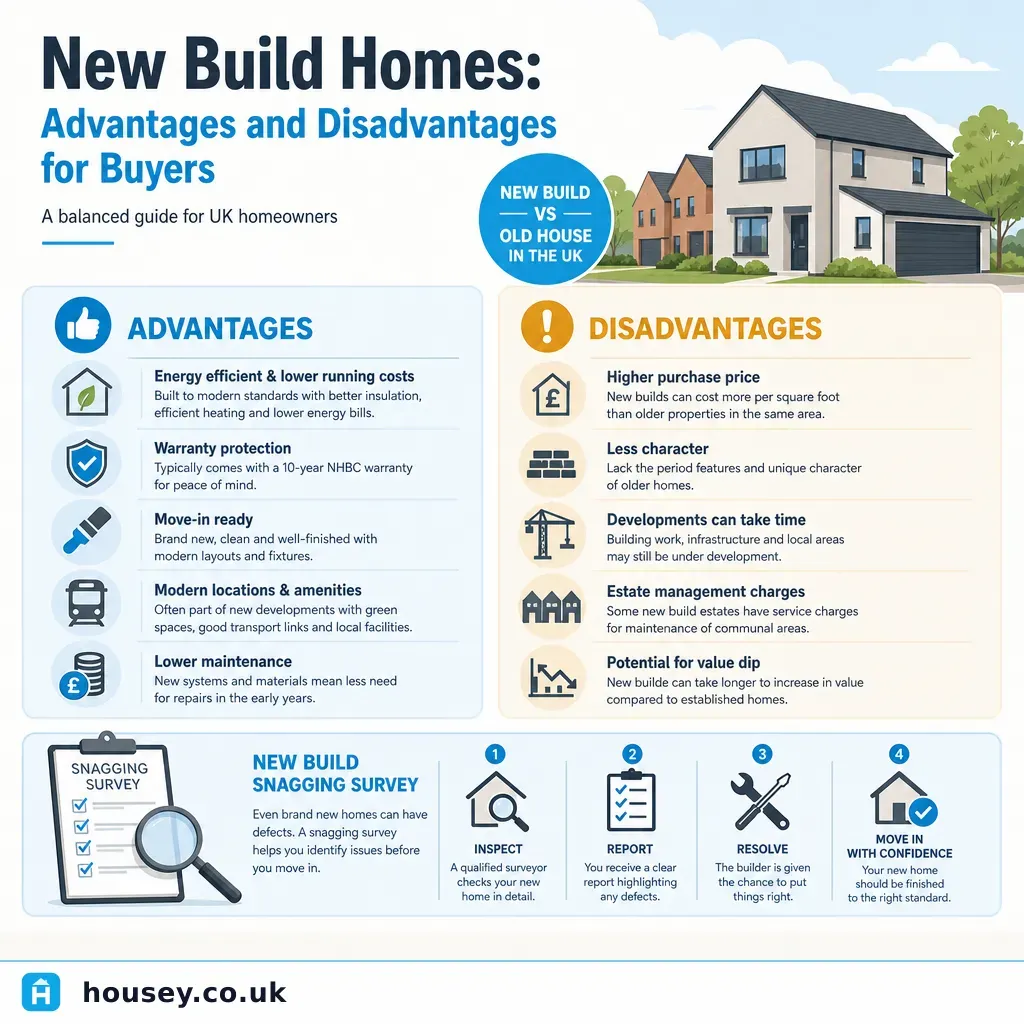
New Build Homes: Advantages and Disadvantages for Buyers
New build homes offer energy efficiency, modern layouts, and structural warranties — typically a 10-year NHBC Buildmark or equivalent.
 Buying & Moving
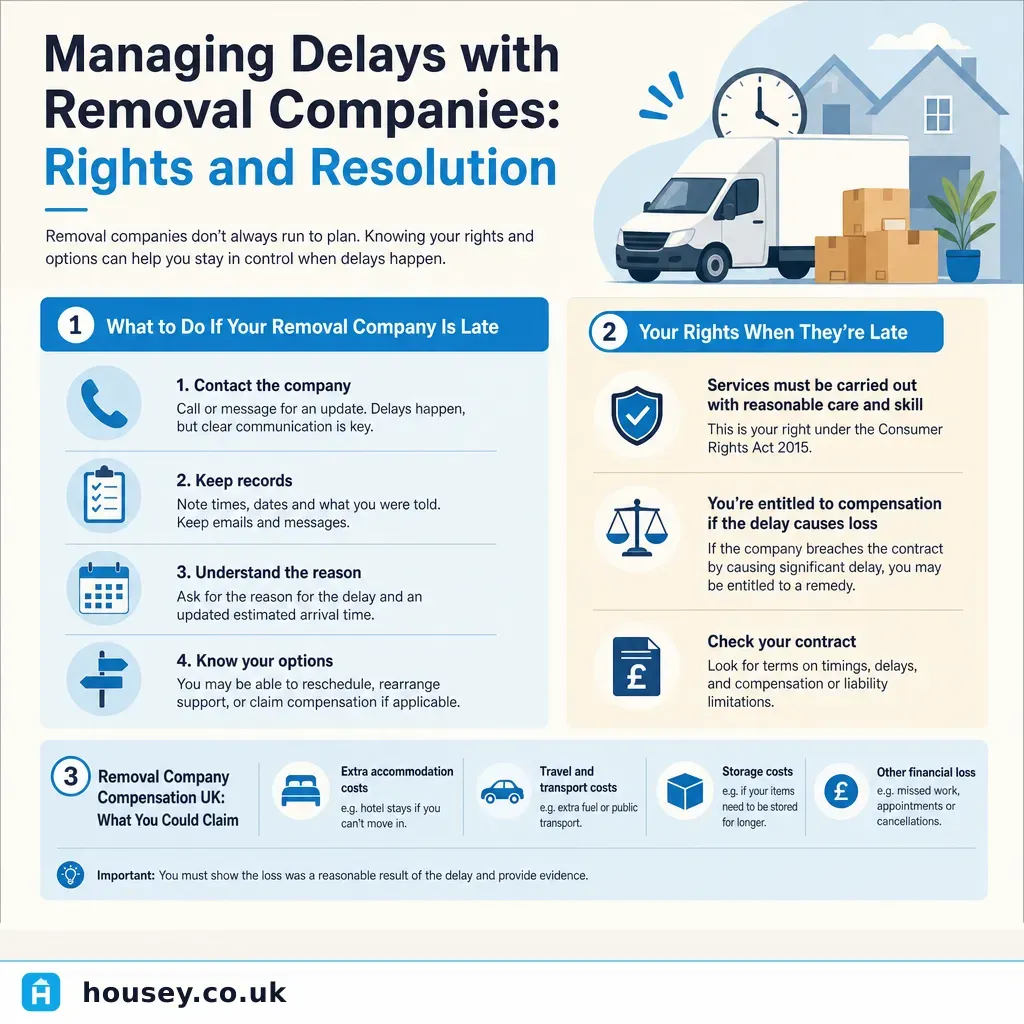
Managing Delays with Removal Companies: Rights and Resolution
If a removal company is late, your rights depend on your contract and whether the company is BAR-registered.
 Buying & Moving
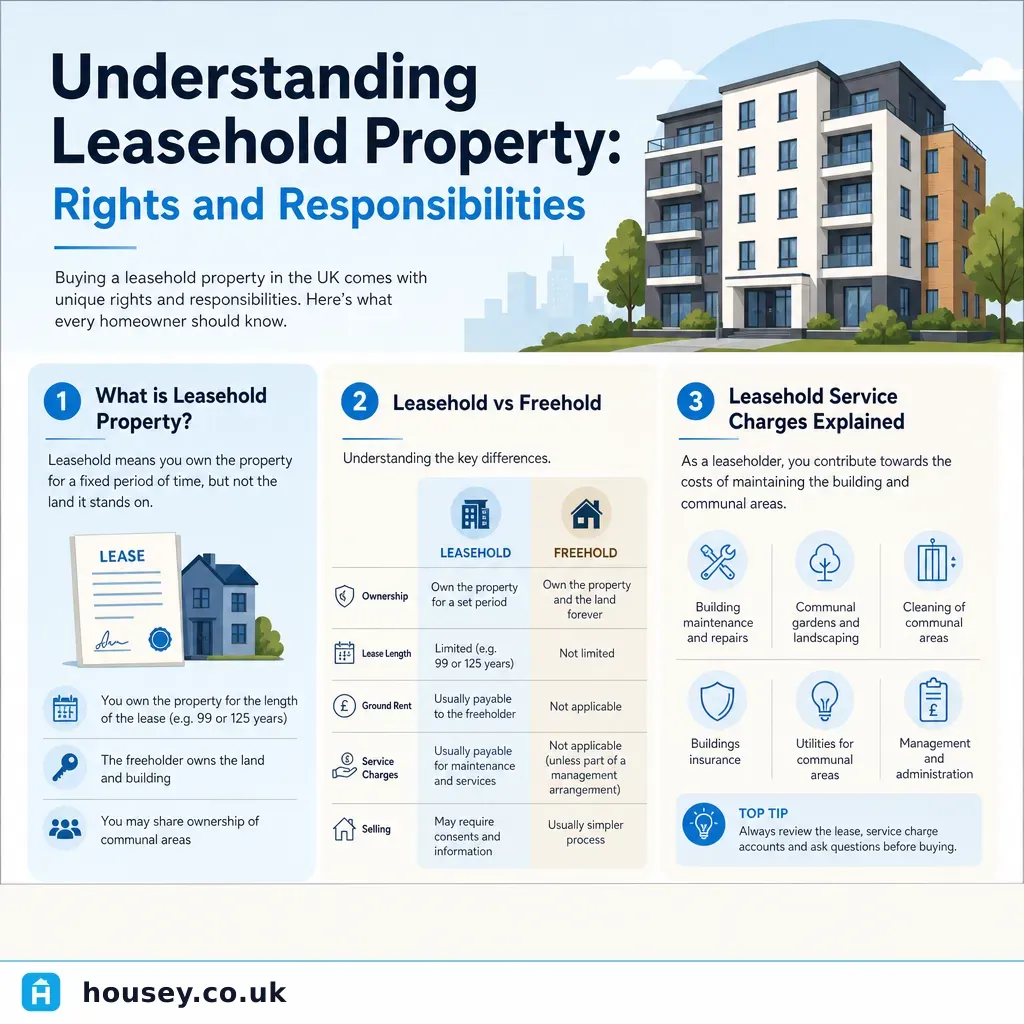
Understanding Leasehold Property: Rights and Responsibilities
Leasehold means you own a time-limited interest in a property while the freeholder owns the land and building.
 Buying & Moving
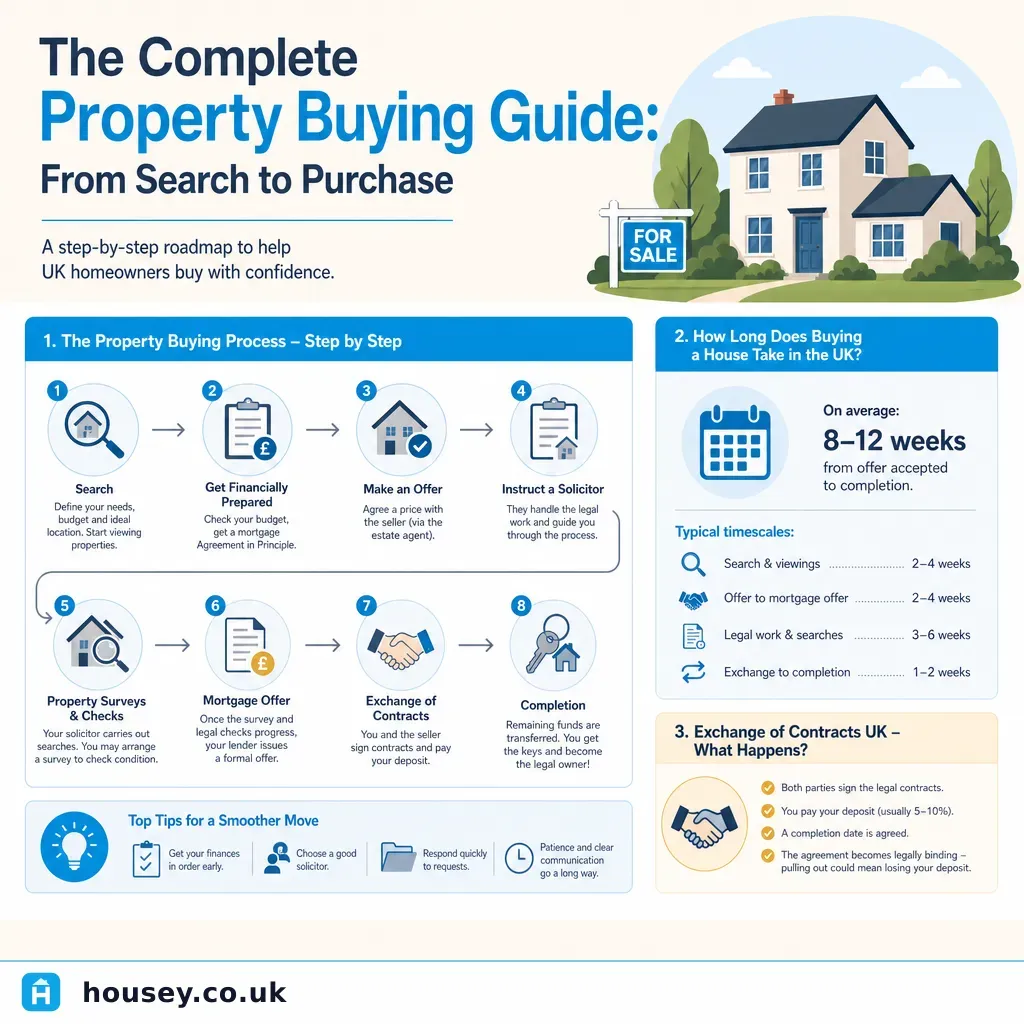
The Complete Property Buying Guide: From Search to Purchase
Buying a property in England and Wales typically takes 3–6 months from accepted offer to completion.