New Build Homes: Advantages and Disadvantages for Buyers
By Housey · Last reviewed 30th of May 2026
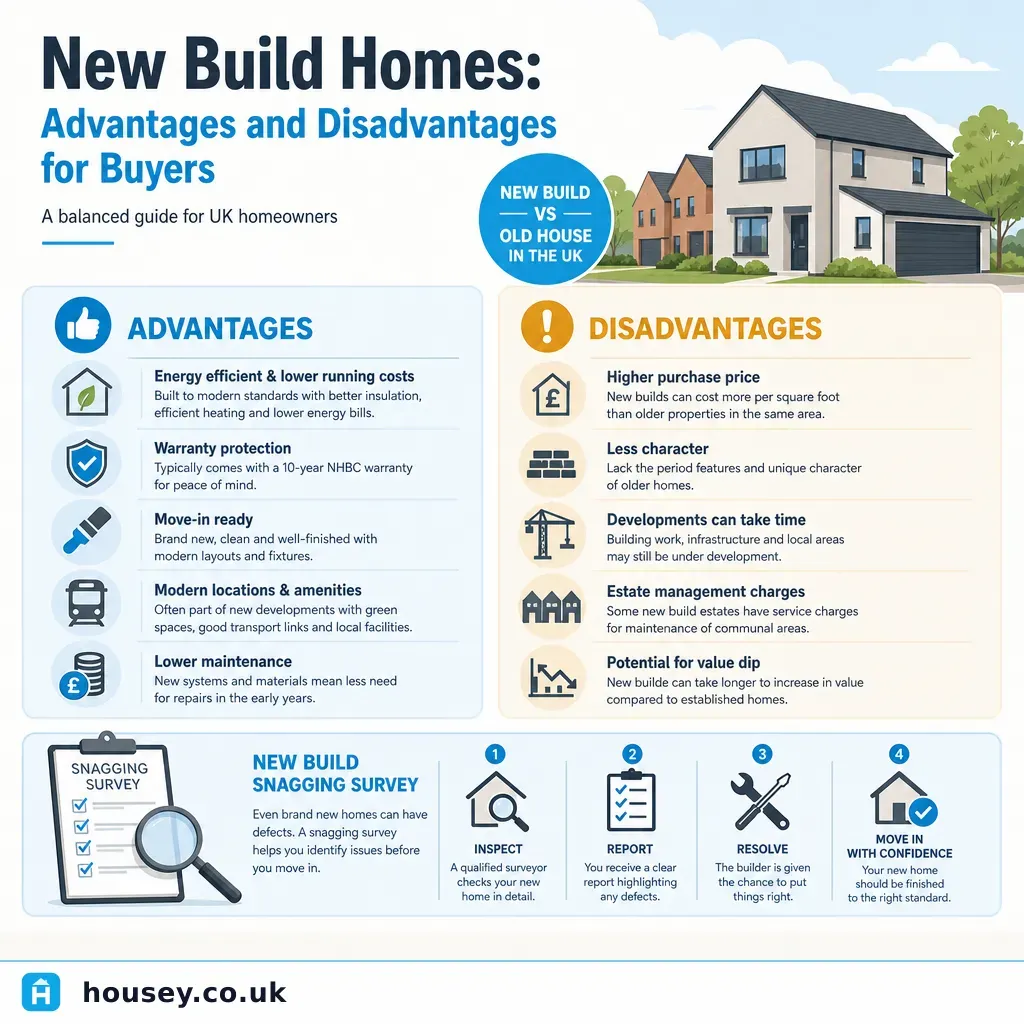
New Build Homes: Advantages and Disadvantages for Buyers
Choosing between a new build and an older property is one of the earliest decisions a UK buyer faces. Whether you are a first-time buyer attracted by developer incentives or a home mover seeking low maintenance and modern energy standards, new builds carry a distinct set of trade-offs shaped by current Building Regulations, structural warranty frameworks, and the ongoing leasehold reform landscape in England and Wales.
Key points
- New builds must meet current Building Regulations Part L, meaning most achieve an EPC rating of B or above — significantly better than the national average of around D for existing homes.
- Most new builds come with a 10-year structural warranty, typically the NHBC Buildmark, covering developer liability for defects in years one and two and major structural problems in years three to ten.
- Research has consistently found new build homes sell at a premium of around 15–20% over comparable second-hand properties in the same area, though this varies by developer, location, and phase of development.
- Independent snagging surveys typically identify 100 or more defects in a new build home at handover; arranging an inspection before legal completion gives you leverage to require remedial work at the developer's cost.
- The Leasehold and Freehold Reform Act 2024 has strengthened leaseholder rights, but new build flats remain predominantly leasehold — always have a solicitor review the specific lease before exchange.
Advantages of buying a new build
Energy efficiency and lower running costs. New builds are constructed to modern insulation and glazing standards, often incorporating heat pumps, solar panels, or mechanical ventilation and heat recovery systems. A home rated EPC B can cost several hundred pounds less to heat annually than an unimproved 1930s semi or Victorian terrace, though actual savings depend on occupancy patterns and prevailing fuel tariffs.
Structural warranty cover. The NHBC Buildmark — or equivalents from LABC Warranty, Premier Guarantee, or Build-Zone — provides reassurance to you and your mortgage lender. In the first two years, the developer must rectify notified defects at their own expense. From year three to ten, the warranty covers qualifying structural defects. The warranty is usually transferable on resale.
No onward chain. Buying directly from a developer removes the risk of a vendor's purchase falling through and collapsing your transaction. This predictability is particularly valuable for buyers who are coordinating a simultaneous sale.
Modern specification. Contemporary layouts, fitted kitchens, integrated appliances, EV charging points, and fibre-ready infrastructure are increasingly standard in new build developments. Buyers avoid the immediate cost of upgrading older systems.
Developer incentives. Some developers offer stamp duty contributions, cashback, or upgraded specification packages. These vary by developer and market conditions — and must be fully disclosed to your mortgage lender, as lenders factor incentives into their loan-to-value assessment.
Disadvantages of buying a new build
Price premium. The new build premium is real and documented. If you need to resell within a few years — particularly while the development still has unsold stock — it may be harder to achieve a price above what you paid.
Snagging defects. Quality control on large developments can be inconsistent. Independent snagging inspectors routinely identify significant numbers of defects at handover. Developers are generally willing to remediate, but the process can be slow, and your leverage weakens once you have legally completed.
Smaller rooms and plots. The Nationally Described Space Standard sets minimum sizes, but many developments were built in areas where it was not adopted as a planning requirement. Room dimensions and garden sizes in recent new builds are often smaller than in 1930s or Victorian equivalents at similar prices.
Leasehold tenure risk. New build flats are almost always sold leasehold. Ground rents have been banned on new residential leases since June 2022, but service charges, management company quality, and lease terms remain significant variables. Review the draft lease with an independent solicitor before paying a reservation fee.
Completion delays. Build programmes slip. A developer may quote a completion quarter, but delays of several months are not uncommon, especially for off-plan purchases. This can create real pressure if you have served notice on a rental property.
Limited character and established amenity. New developments on the edge of towns often lack mature greenery, nearby shops, and an established community feel. Transport links and schools serving a new development may still be planned or under construction at the point of purchase.
New build vs older property: comparison
Factor | New build | Older property |
|---|---|---|
Energy efficiency | Usually EPC B or above | Often EPC D or E; retrofit may be needed |
Structural warranty | 10-year NHBC or equivalent | None; professional survey strongly recommended |
Early maintenance costs | Low — new fabric and fittings | Variable; may need investment shortly after purchase |
Price per sq ft | Often 15–20% higher | Usually lower |
Room sizes | Typically smaller in modern builds | Often larger in pre-1980 stock |
Onward chain | Usually chain-free | Chain common |
Tenure (flats) | Leasehold; ground rent banned since 2022 | Leasehold; terms vary widely |
Snagging inspection needed | Yes — arrange before completion | Not applicable in the same way |
Which should you choose?
- Choose a new build if energy efficiency, low early maintenance, warranty cover, and a chain-free purchase are your priorities, and you can accept the price premium.
- Choose an older property if space, period character, an established neighbourhood, or value per square foot matters more — but budget for surveys and potential upgrade costs.
- Consider both types if your shortlist spans each: compare the total cost of ownership over five to ten years, not just the headline purchase price.
- Take independent legal advice before reserving any new build flat, regardless of how straightforward the developer's solicitor suggests the transaction will be.
New build buyer checklist
Work through this list before signing a reservation agreement:
When to get professional help
Buying a new build feels lower-risk because the property is brand new — but that assumption can be costly. Seek professional advice if:
- The lease terms on a new build flat include unusual service charge arrangements, management company restrictions, or onerous subletting limitations.
- The developer is offering a gifted deposit or significant cashback — your mortgage lender must be informed, and some arrangements can affect your mortgage offer or be treated as undisclosed incentives.
- The build is substantially delayed and you are under notice from a landlord, leaving limited time to resolve the position without financial loss.
How Housey can help
Housey makes it straightforward to find qualified professionals at every stage of a new build purchase. Compare quotes from independent new-build snagging inspectors to protect your position before completion, request a RICS Level 1 condition survey for independent assurance on the build quality, or compare quotes from regulated conveyancing solicitors who are experienced in new build and leasehold transactions.
Frequently asked questions
Do I need a survey on a new build home?
Your mortgage lender will commission a valuation, but this is not an inspection for defects. An independent snagging survey — carried out before legal completion — identifies defects the developer should rectify at no cost to you. Arranging this before you complete gives you practical leverage. Most new builds have over 100 snags at handover; a RICS Level 1 survey can add broader independent assurance.
What is an NHBC warranty and how long does it last?
The NHBC Buildmark is the most widely used 10-year structural warranty for new homes in England and Wales. The developer is responsible for defects notified during years one and two. The NHBC covers qualifying structural defects from years three to ten. The warranty is usually transferable to subsequent buyers within the 10-year period, which can help with resale.
Can I negotiate the price on a new build?
Headline prices are typically firm, especially early in a development phase. Developer incentives — stamp duty contributions, upgraded kitchen or flooring specification — may be more negotiable than the price itself. Negotiation is generally easier later in the build programme when fewer plots remain. Always disclose any incentives in full to your mortgage broker and lender.
What is snagging and when should I do it?
Snagging means identifying defects in a newly built home before or shortly after handover. The best time to arrange an independent snagging inspection is around 7–10 days before your legal completion date, so there is time to issue a snagging list to the developer and agree a remediation schedule before you take ownership and lose your key point of leverage.
Are new builds freehold or leasehold?
New build houses are usually sold freehold. New build flats are almost always leasehold. Ground rents on new residential leases have been banned since June 2022 under the Leasehold Reform (Ground Rent) Act 2022. The Leasehold and Freehold Reform Act 2024 has further strengthened leaseholder rights, but lease terms still vary considerably — always have a solicitor review the specific lease before exchange.
Sources and further reading
- NHBC Buildmark warranty — NHBC
- Leasehold Reform (Ground Rent) Act 2022 — legislation.gov.uk
- Leasehold and Freehold Reform Act 2024 — legislation.gov.uk
- Energy Performance Certificates — GOV.UK
- Building Regulations Approved Documents — GOV.UK
- Nationally Described Space Standard — GOV.UK
Useful next reads
 Buying & Moving
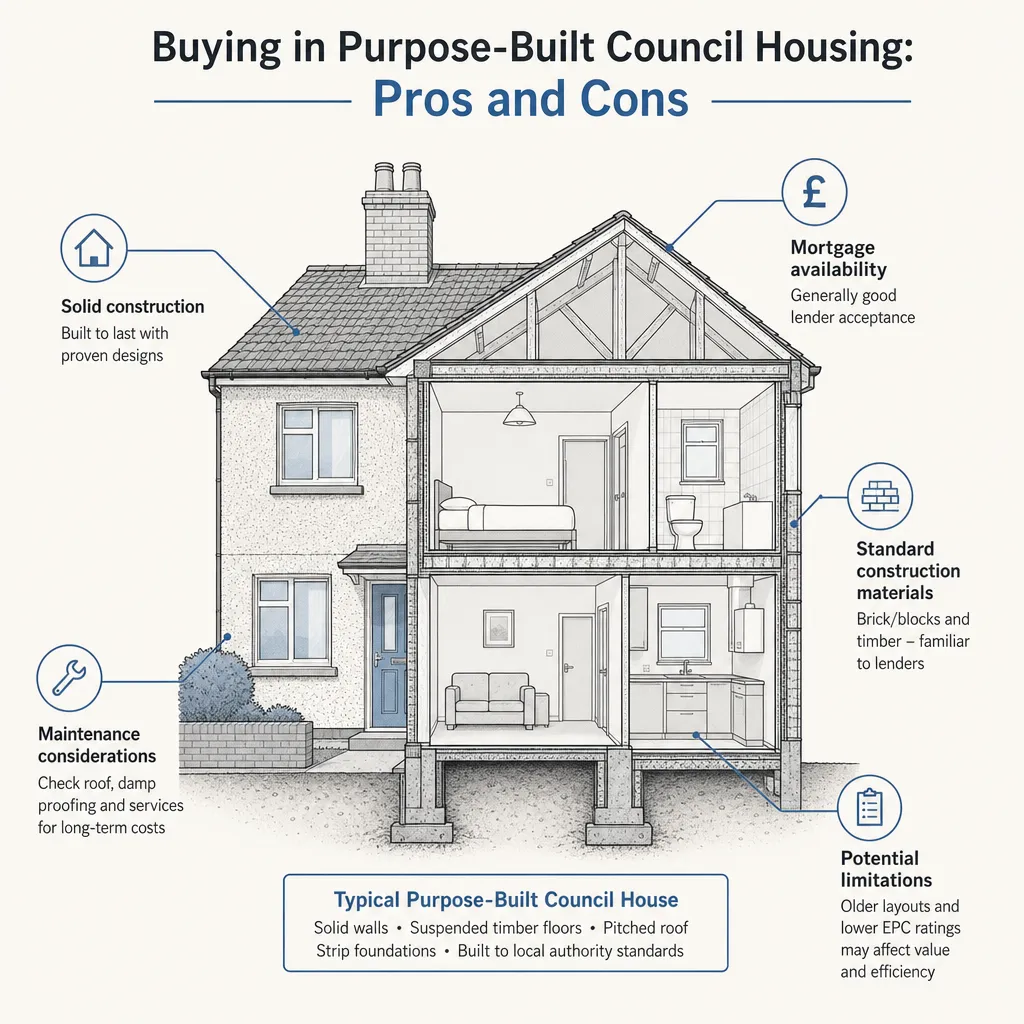
Buying in Purpose-Built Council Housing: Pros and Cons
Purpose-built council housing — typically 1950s–1980s blocks, maisonettes, or estate houses — can offer good value and generous room sizes, but buyers should check construction type before applying for a mortgage.
 Buying & Moving
Referral Fees in Conveyancing: Impact on Your Service Choice
Referral fees in UK conveyancing are legal but must be disclosed to you.
 Buying & Moving
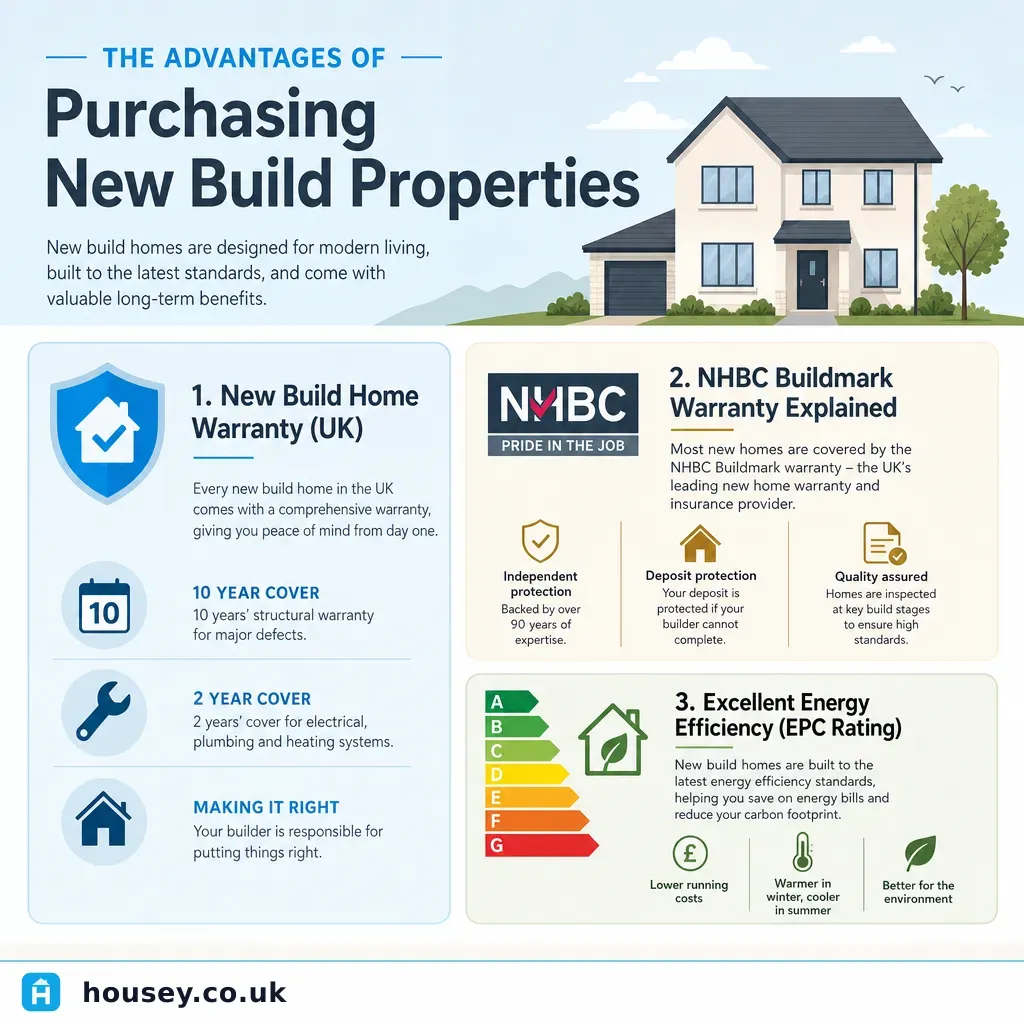
The Advantages of Purchasing New Build Properties
New build homes in the UK typically come with a 10-year NHBC Buildmark warranty, covering defects for the first 2 years and structural issues for years 3–10.
 Buying & Moving
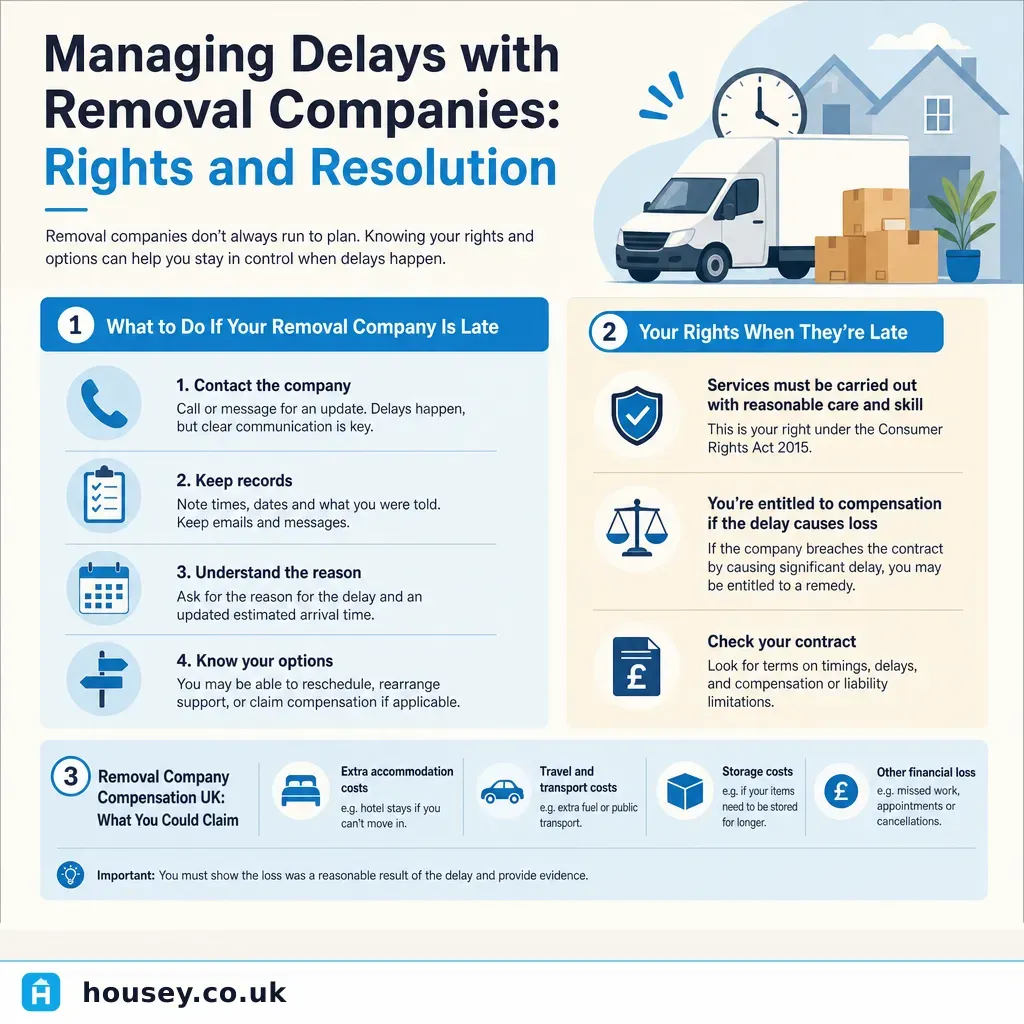
Managing Delays with Removal Companies: Rights and Resolution
If a removal company is late, your rights depend on your contract and whether the company is BAR-registered.
 Buying & Moving
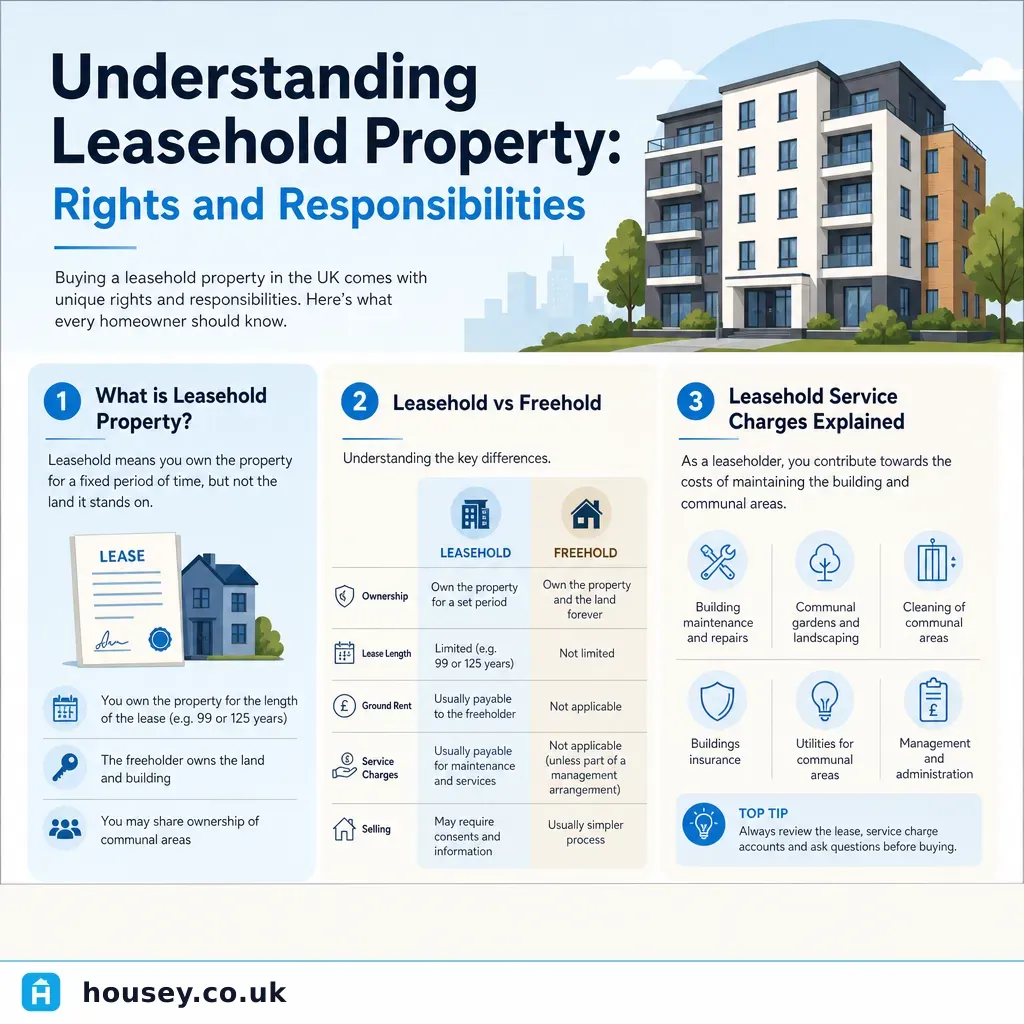
Understanding Leasehold Property: Rights and Responsibilities
Leasehold means you own a time-limited interest in a property while the freeholder owns the land and building.